Panty Size Calculator
Find a practical underwear starting size from your waist and full-hip measurements—then refine it for stretch, rise, coverage, body proportions and the fit problem you actually want to solve.
Quick answer
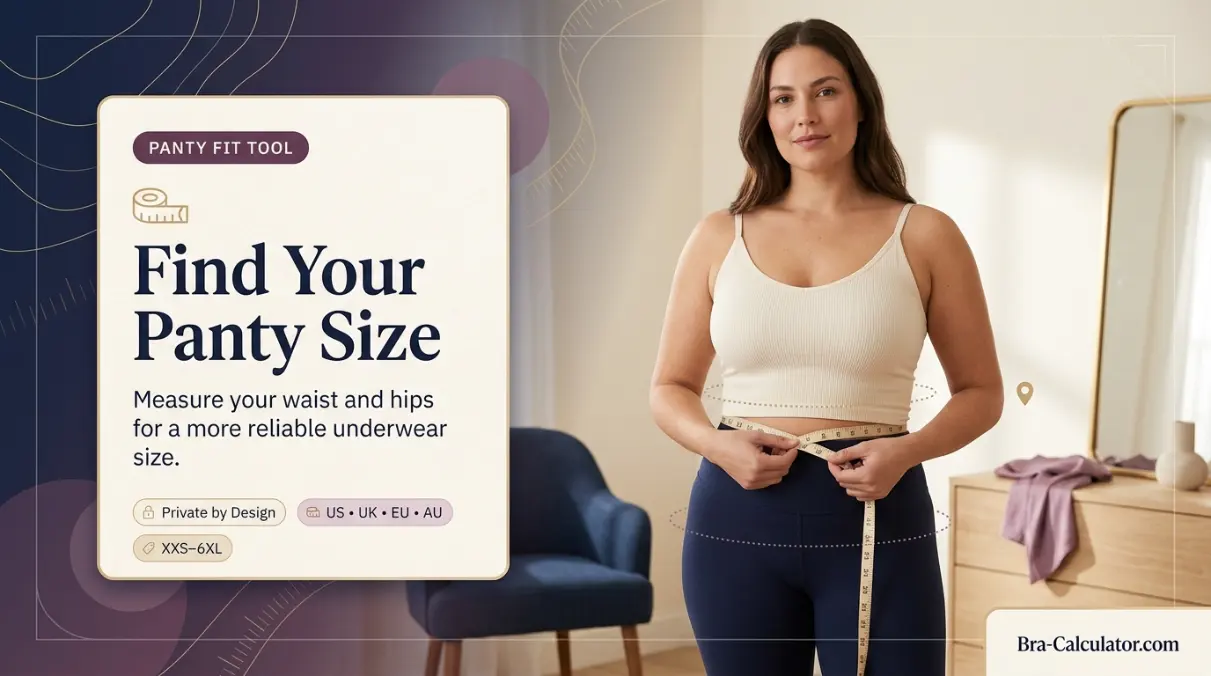
For most panties, the fullest hip measurement is the strongest starting point. The waist measurement then checks whether the waistband is likely to feel tight, loose or prone to rolling. This calculator combines both measurements and adjusts the result for fabric stretch, desired fit and underwear style.
The tool works for anyone who can take waist and full-hip measurements, regardless of gender identity or how they describe their body.
Find your panty size
Complete four quick steps. You can go back at any time without losing your entries.
Start with Medium
Your hips and waist point to the same size range.
Measurement logic
Best starting construction
Also compare
Brand check: Match your measurements to the exact product chart before ordering, especially for period underwear and shapewear.
Your personalized underwear picks
These recommendations are selected from your chosen style, stretch preference and fit concern. They link to current Amazon search results so you can compare available brands, fabrics, colors and multipacks.
The downloaded size card contains your recommended size and fit guidance, not your raw waist or hip measurements.
How to measure for underwear size accurately
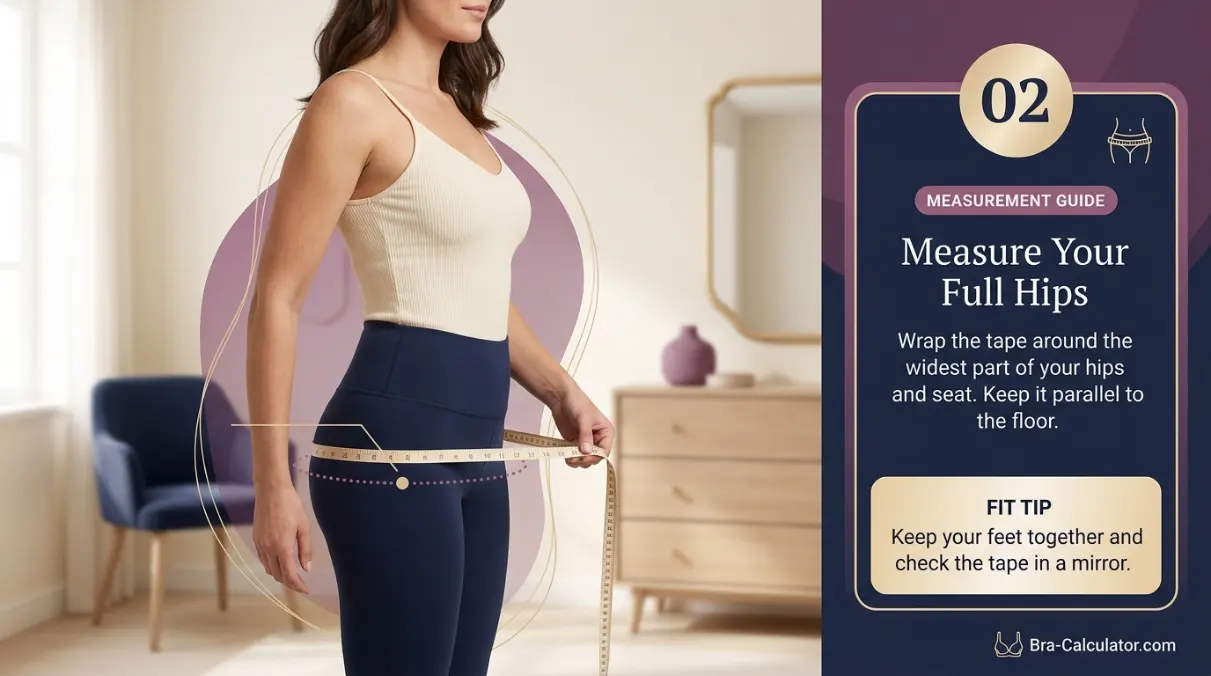
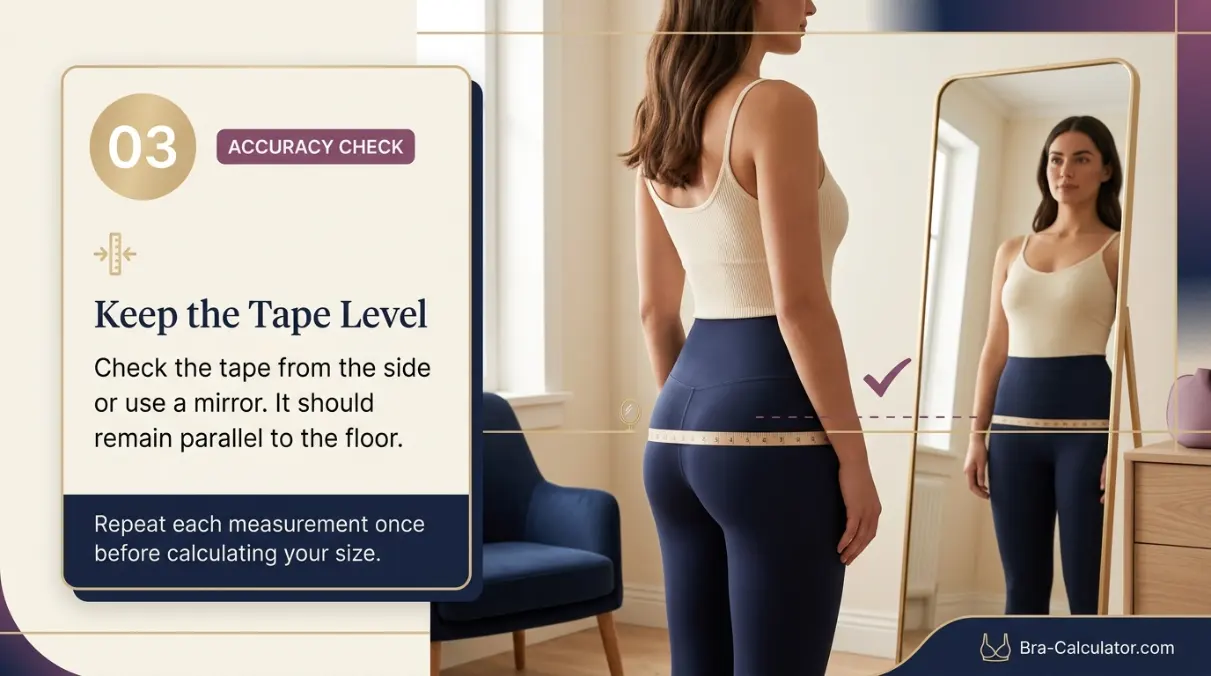
A small measuring error can move you across a size boundary, especially when you are already between sizes. Use a flexible tape, keep it parallel to the floor and repeat each measurement once.
Find your natural waist
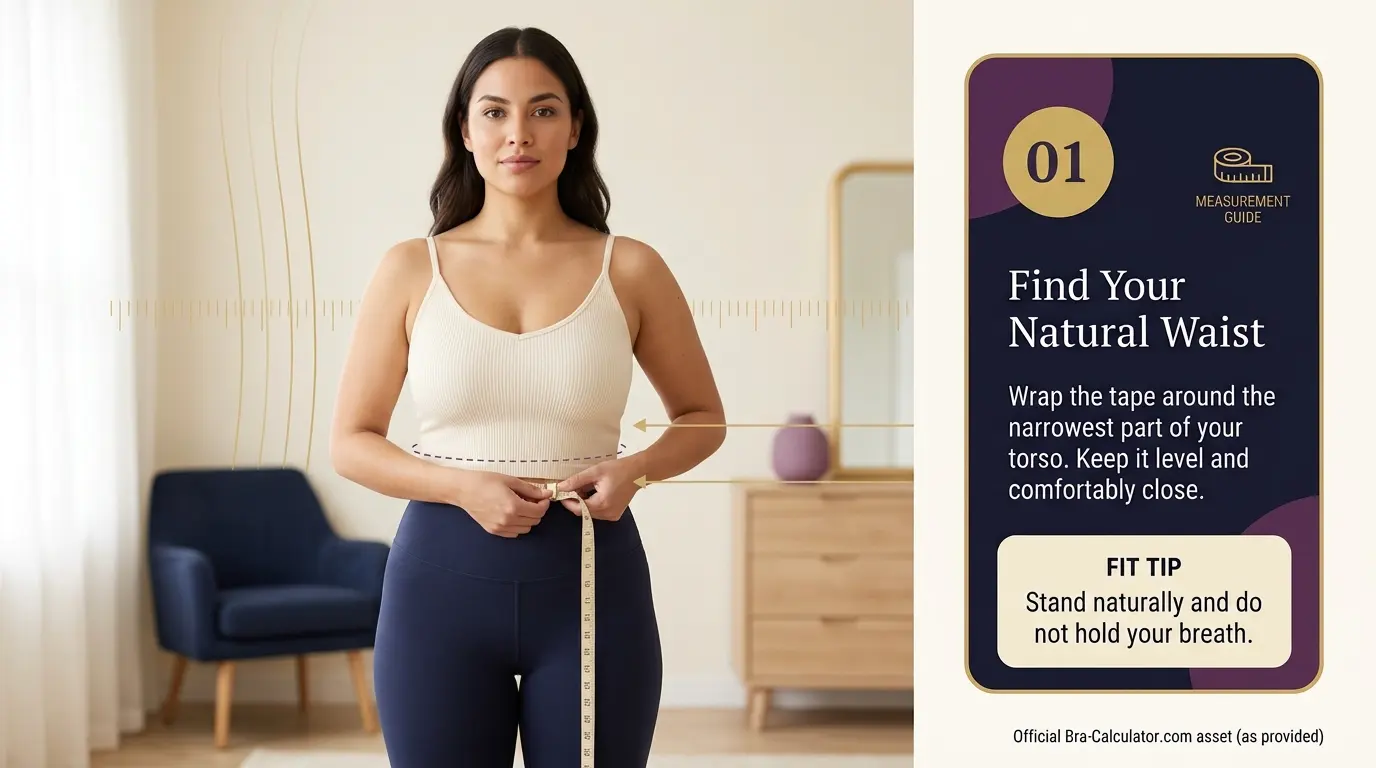
Lean gently to one side and notice where the torso creases. Measure around that level without holding your breath. For high-rise underwear, this point is particularly useful because the waistband may sit close to it.
Measure the fullest hip and seat
Stand with your feet together. Wrap the tape around the widest horizontal circumference of your hips and seat. Check in a mirror that the tape has not climbed at the back.
Use the larger need as the safety check
When waist and hips fall into different sizes, do not average them blindly. The correct construction often matters as much as the label: a stretch waistband or curvy-cut brief can accommodate a smaller waist without squeezing the hips.
Universal panty size chart in inches and centimetres
This chart is a cross-brand starting framework, not a substitute for an individual product chart. It extends beyond many mainstream ranges so more visitors can receive a practical result rather than an unhelpful “out of range” message.
| Alpha size | Natural waist | Full hip | US numeric | UK / AU | EU |
|---|---|---|---|---|---|
| XXS | 22–24.5 in / 56–62 cm | 32–34.5 in / 81–88 cm | 00–0 | 2–4 | 30–32 |
| XS | 24.5–26.5 in / 62–67 cm | 34.5–36.5 in / 88–93 cm | 0–2 | 4–6 | 32–34 |
| S | 26.5–28.5 in / 67–72 cm | 36.5–38.5 in / 93–98 cm | 4–6 | 8–10 | 36–38 |
| M | 28.5–31 in / 72–79 cm | 38.5–41 in / 98–104 cm | 8–10 | 12–14 | 40–42 |
| L | 31–34 in / 79–86 cm | 41–44 in / 104–112 cm | 12–14 | 16–18 | 44–46 |
| XL | 34–37.5 in / 86–95 cm | 44–47.5 in / 112–121 cm | 16–18 | 20–22 | 48–50 |
| 2XL | 37.5–41.5 in / 95–105 cm | 47.5–51.5 in / 121–131 cm | 20–22 | 24–26 | 52–54 |
| 3XL | 41.5–45.5 in / 105–116 cm | 51.5–55.5 in / 131–141 cm | 24–26 | 28–30 | 56–58 |
| 4XL | 45.5–49.5 in / 116–126 cm | 55.5–59.5 in / 141–151 cm | 28–30 | 32–34 | 60–62 |
| 5XL | 49.5–53.5 in / 126–136 cm | 59.5–63.5 in / 151–161 cm | 32–34 | 36–38 | 64–66 |
| 6XL | 53.5–57.5 in / 136–146 cm | 63.5–67.5 in / 161–171 cm | 36–38 | 40–42 | 68–70 |
What to do when your waist and hips suggest different sizes
This is common and does not mean your measurements are wrong. It usually means a straight-size grading pattern cannot perfectly represent your proportions.
Hips need the larger size
Start from the hip size in fitted briefs, boyshorts and low-stretch fabrics. Look for a flexible waistband, a contoured back or “curvy fit” language. Sizing down may stop waist gaping but can create leg digging or ride-up.
Waist needs the larger size
Use the waist result for high-rise briefs, period underwear and shaping styles. Mid-rise or low-rise designs may fit differently because their waistband sits below the natural waist, so the hip measurement can become more important.
You sit on a boundary
Choose the smaller size only when the fabric has strong stretch and recovery and you prefer a close fit. Choose the larger size for firm cotton, rigid lace, thick absorbent layers, sensitive skin or relaxed comfort.
How panty style changes the fit
Size labels are only one part of comfort. The same person may prefer one size in a high-rise cotton brief and a different size in a compression garment or low-stretch period panty.
Briefs and high-rise styles
These use more waistband contact and more body coverage, so both waist and hip measurements matter. A higher rise can reduce rolling when a waistband is currently sitting on a softer or narrower part of the torso.
Bikinis, hipsters and thongs
Because the waistband sits lower, the full-hip measurement usually carries more weight. Side-seam width and elastic tension can make two products with the same size label feel completely different.
Boyshorts and boybriefs
The lower leg line adds another contact point. When leg openings dig or the fabric climbs, a larger size, softer edge, longer leg or more generous back pattern may work better than simply changing the waistband.
Seamless and no-show underwear
High stretch can accommodate a boundary measurement, but recovery still matters. A stretched-out waistband that slides down is not necessarily proof that the original size was too large; the fabric may have lost recovery.
Period underwear
Absorbent panels reduce stretch through the gusset and back. Use the exact brand chart and consider the larger size when you are between sizes, especially if you want comfortable overnight coverage.
Shapewear briefs
Shapewear is designed to provide controlled compression, but smaller is not automatically stronger or smoother. An undersized garment can roll, create pressure points and shift. Follow the product chart rather than deliberately sizing down.
Common underwear fit problems and what they usually mean
Fit symptoms are clues, not absolute diagnoses. Check the size, rise, fabric and construction together before deciding that one measurement is the problem.
Waistband digs in
Try: the next size, a wider waistband, softer elastic or a lower rise if the natural waist measurement is much larger than the low hip.
Waistband rolls
Try: a higher rise, wider band or lighter compression. Rolling can happen because a band is too tight, but it can also happen when it sits at an unstable height.
Leg openings leave deep marks
Try: sizing up, a high-cut leg, a bonded edge or a style with more room through the seat. Avoid assuming the waistband size alone controls the leg opening.
Underwear rides up
Try: more back coverage, a larger hip size, a different rear seam or elastic with better recovery. A too-large back can also shift, so compare the fabric tension.
Waist gaps while hips fit
Try: a contoured waistband, high-rise curvy cut or stretch lace at the waist. Sizing down may solve the gap but create pressure at the hips.
Visible panty lines
Try: bonded seamless edges, a thong, a fuller brief whose edge ends below the fullest seat, or a fabric that lies flat without cutting in.
How this panty size calculator works
The tool is deliberately transparent. It does not pretend that a single universal underwear standard exists.
Maps each measurement separately
The calculator first locates your waist and full hip in an extended alpha-size framework. This preserves the difference between the two measurements rather than merging them immediately.
Weights the measurement by construction
Hip measurement normally carries more influence. High-rise and shaping styles increase the importance of the waist; low-rise and minimal-coverage styles increase the importance of the hip.
Uses fit preference as a boundary adjustment
Snug, relaxed, low-stretch and common fit symptoms can move a borderline recommendation up or down. They do not override a large waist-to-hip size conflict.
Panty size calculator FAQs
Clear answers to the sizing questions shoppers most often face.
For most everyday underwear, use the fullest hip as the main starting point and the waist as a confirmation. High-rise briefs and shapewear require more attention to the waist because the band sits higher and may use firmer material.
Choose the larger size for low-stretch cotton, lace, period underwear, shapewear, sensitive skin or relaxed comfort. The smaller size may work in highly stretchy seamless fabric when you prefer a close fit and neither measurement is above the size range.
Not reliably. Dress and pants sizes vary by brand and may be selected for a different part of the body. Actual waist and hip measurements are a better starting point for underwear.
Not automatically, but sizing up is often worth comparing when you are on the upper edge of a range because absorbent panels can stretch less than ordinary underwear. Follow the specific product chart and consider how you want overnight or active-day coverage to feel.
No. Shapewear is engineered to compress at its intended size. Buying smaller can increase rolling, discomfort and shifting without producing a smoother result.
The back may not have enough coverage or depth for the hips, the leg elastic may be too tight, or the fabric may lack recovery. Compare a fuller back, larger hip size or a different rear-seam construction.
It should stay in place without sharp pressure, numbness, persistent deep indentations or repeated rolling. Light temporary marks can occur with fitted clothing, but discomfort is a reason to reassess the size or construction.
No. The calculation runs in your browser. The optional share link places selected calculator values in the URL you copy; do not share that link publicly if you prefer to keep those measurements private.
Editorial reference framework
The measurement method and conversion logic were checked against current official underwear or lingerie guidance from established retailers and brands. Because size charts change, the calculator presents a universal starting point and repeatedly directs shoppers to verify the exact product chart.
- Aerie official women’s size charts and underwear fit categories.
- Jockey official size-chart measurement instructions for waist and hips.
- ThirdLove official underwear size guidance emphasizing the fullest hip measurement.
- Marks & Spencer official lingerie measuring advice and international conversion framework.
- Calvin Klein, Hanes and Jockey official underwear style guides for coverage, rise and construction context.