Normal Breast Size for Teens
Amelia B. · Bra Fit Specialist · Updated 2026 · Teen breast development, average bra sizes, and bra fit advice for puberty and late teens.
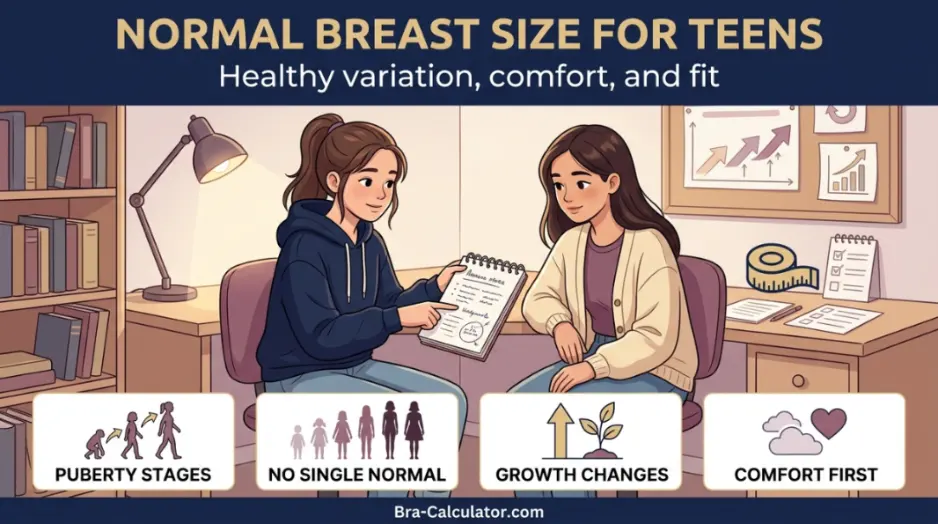
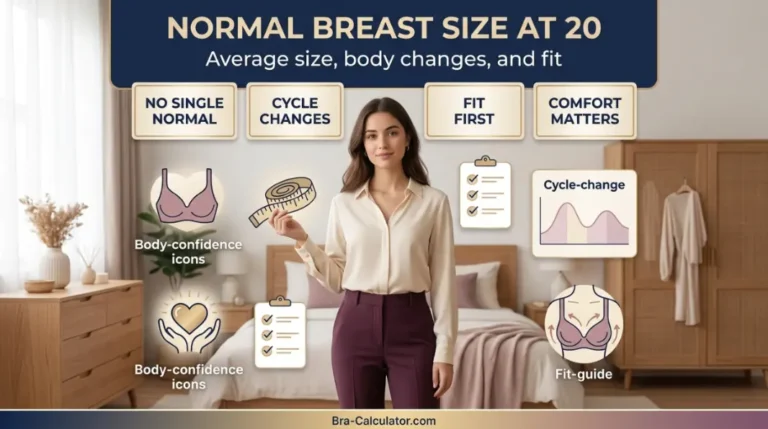
There is no single normal breast size for teens. During puberty, breast development can begin as early as 8 and continue into the late teen years, with growth happening in stages rather than on a fixed schedule. Older teens commonly wear sizes around 32A to 34B, but a much wider range can still be normal depending on genetics, weight, hormones, and where someone is in puberty.
In This Guide
What Is a Normal Breast Size for Teens?
Teen breasts are still developing, so “normal” is about healthy variation, not matching a friend or social media expectation. Some teens develop earlier, some later, and both patterns can be completely normal.
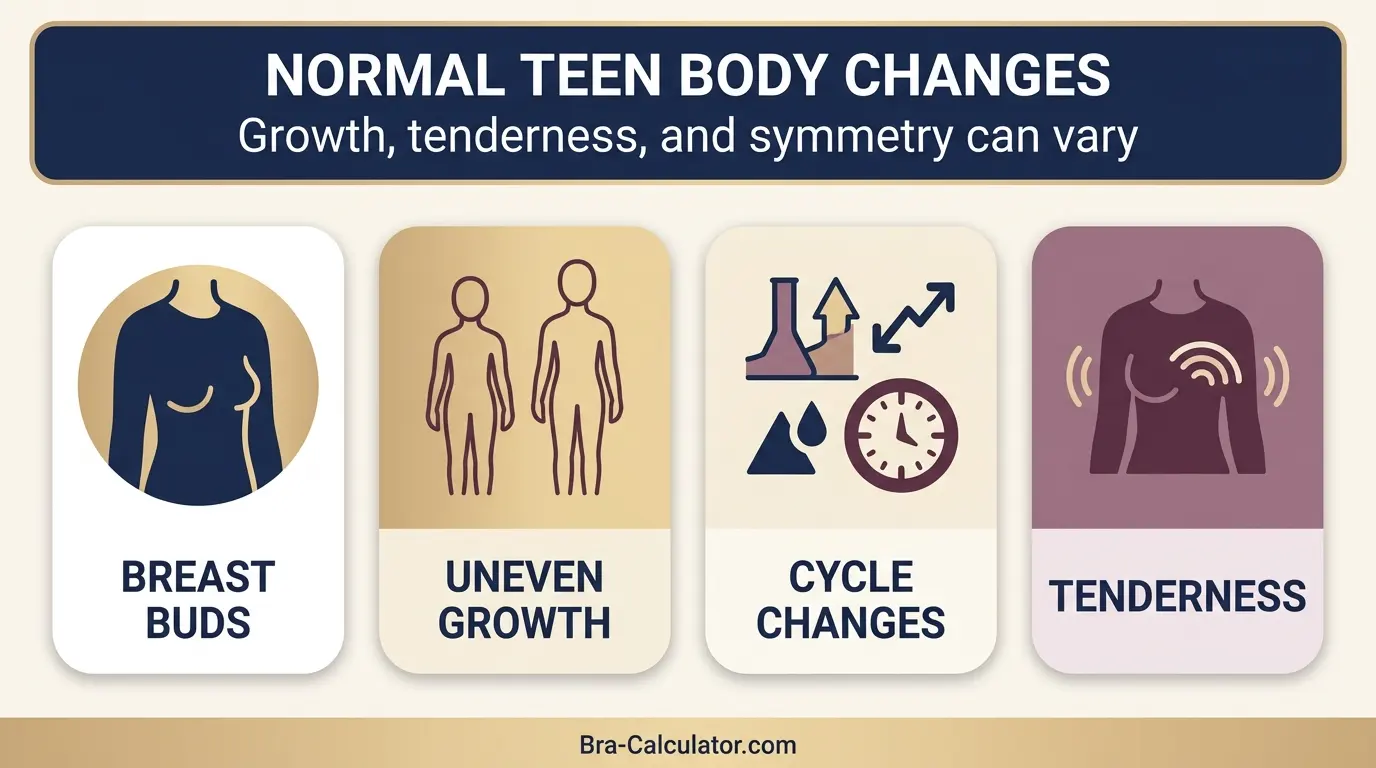
The most important point is that breast size in the teen years is transitional. Breasts may grow unevenly, feel tender before periods, or change noticeably over 12–24 months. One breast being slightly larger than the other is especially common during puberty.
Use this page as a body-awareness and bra-fit guide, not a comparison chart. If bras feel uncomfortable, straps slip, or cups wrinkle, the issue is often poor sizing rather than anything unusual about the body.
Growth Happens in Stages
Breast development usually begins with breast buds, followed by gradual changes in shape and volume over several years.
Often Completely Normal
It is common for one breast to grow faster than the other during puberty. Mild asymmetry often remains into adulthood.
Tenderness Is Common
Hormone shifts around the menstrual cycle can cause temporary swelling, tenderness, or a sense of heaviness.
Comfort Over Guessing
A teenager usually benefits more from an accurate band and cup size than from choosing bras only by S, M, or L labels.
Average Bra Size for Teen Girls and Older Teens
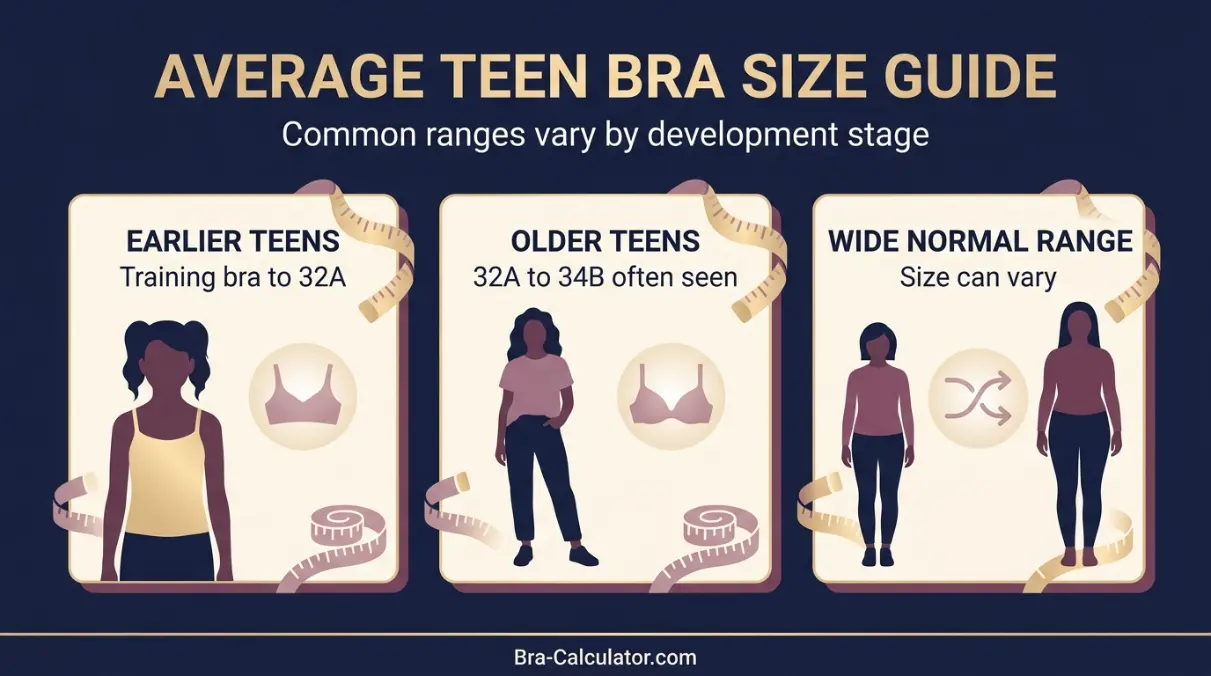
Because the teen years include early puberty through late adolescence, there is no single average that fits everyone. For older teens who are already wearing sized bras, 32A, 32B, and 34B are among the most common retail sizes, but the true normal range is much wider and shifts with body frame and stage of development.
| Range | Typical Sizes | What It Usually Means |
|---|---|---|
| Earlier teens | Training bra to 32A | Many are still developing and may prefer soft bras, crops, or light support styles. |
| Common late-teen range | 32A to 34B | Typical retail pattern for older teens who have completed more of puberty. |
| Fuller late-teen range | 32C to 36D+ | Still normal, especially with strong family patterns, a larger frame, or weight gain. |
What Determines Breast Size for Teens?
Teen breast size is driven primarily by development and hormones, but body composition and genetics matter too. These factors explain why teens of the same age can look very different and still be normal.
Strongest Predictor
Family patterns play a major role in overall breast size, breast shape, and how early or late puberty begins.
Big Short-Term Effect
Girls who enter puberty earlier may appear more developed than same-age peers, even if final adult size ends up similar.
Affects Volume
Breasts contain both glandular and fatty tissue, so body weight can influence how much breast volume is visible during the teen years.
Month-to-Month Changes
Period cycles cause temporary fullness or tenderness. Hormonal treatment or contraception can also alter size slightly.
Support Needs Change
Active teens often notice bounce, discomfort, or chafing sooner and benefit from better sports bra support.
Not Always Even
Breast growth rarely happens in a straight line. Faster and slower phases can alternate over several years.
Breast Changes That Are Normal During the Teen Years
Early Puberty Sign
A small firm area under the nipple, called a breast bud, is usually one of the first visible signs of puberty.
Very Common
One breast may grow first or grow faster. This usually becomes less noticeable over time, though small asymmetry can remain.
Shape Evolves Too
The nipples and areola often enlarge and change shape during puberty alongside breast volume changes.
Hormonal Sensitivity
Soreness before periods or during growth spurts is common. Persistent severe pain should be medically reviewed.
How Breast Size Changes Through Life
Breast size changes over life, but the teen years are where the biggest developmental milestones begin. This makes the teen decade less stable than adulthood.
Puberty & Development
Breast tissue develops in stages, often with asymmetry, tenderness, and changing cup needs as the body matures.
Development Completes
Growth usually settles by the late teens or early 20s, though hormones and weight can still shift size.
Stable for Many
The 30s are often a stable decade unless pregnancy, breastfeeding, or major weight changes alter size.
Perimenopause Starts
Hormonal variation can increase again, changing fullness, density, and bra-fit consistency.
Menopause & Beyond
After menopause, tissue often softens and support needs become more important.
Bra Fit Priorities for Teens
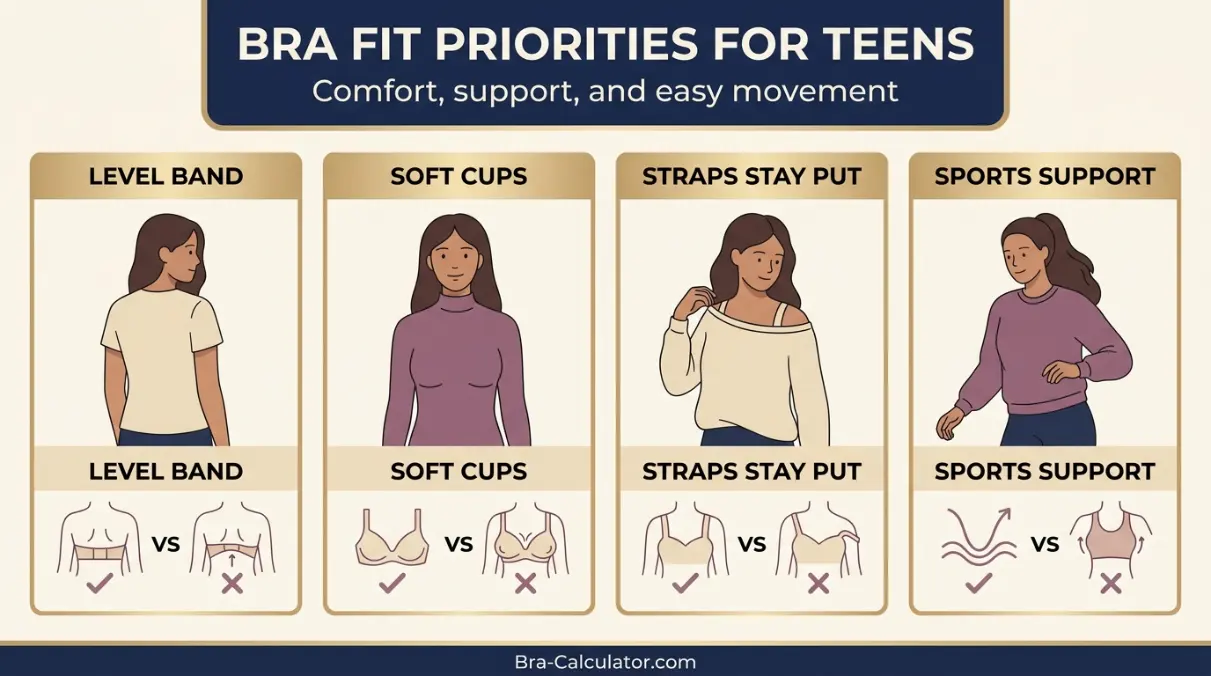
Teen bras should be comfortable, supportive, and appropriate for the stage of development. The goal is not to force adult bra styles too early, but to choose the simplest bra that gives comfort and confidence.
Use the Lightest Support That Works
Earlier teens often do best in soft bras, crop tops, or training bras before moving into seamed or underwire styles.
The Band Should Do the Work
The band should be snug enough to stay level but never painful. If it rides up, support drops immediately.
Reduce Bounce & Discomfort
For PE, dance, or sports, a real sports bra can reduce movement and make exercise much more comfortable.
Growth Changes Fit Quickly
Teen sizes can change within a year. If cups gape, overflow, or straps constantly slip, it is time to check the fit again.
How to Check Your Bra Size for Teens
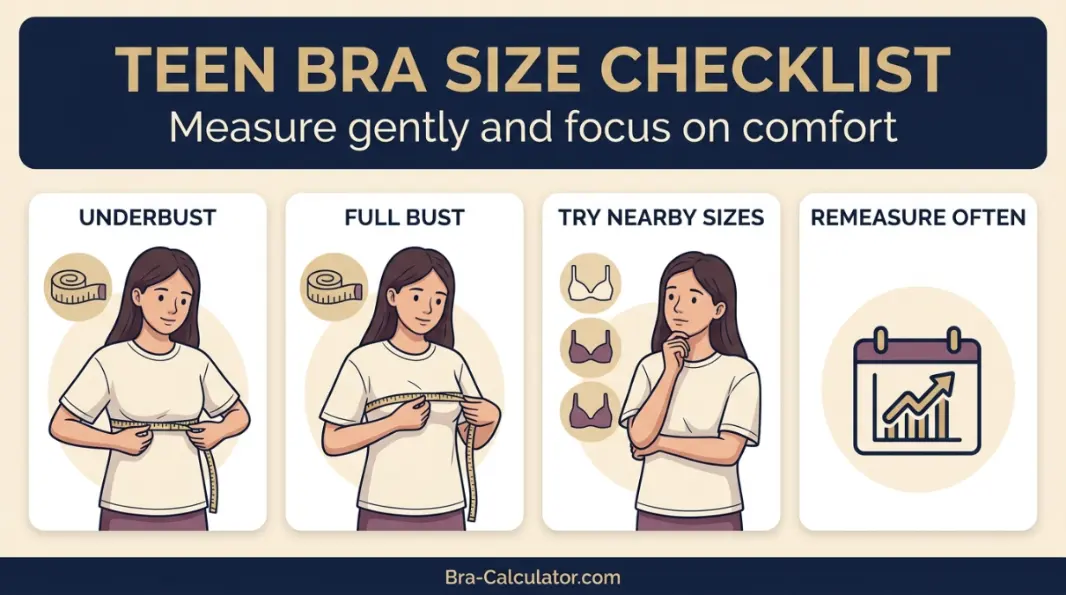
For teens, measuring should be simple and low-stress. Use a soft tape measure around the underbust and the fullest part of the bust while standing naturally. Do not pull the tape too tight, and remember that growth can make the result temporary rather than permanent.
Measure the underbust snugly
The band is the foundation, so get the ribcage measurement first and make sure the tape stays level.
Measure the fullest point softly
The bust measurement should be taken without flattening breast tissue or lifting it higher than normal.
Try two nearby sizes
Teens often fit best by comparing a couple of neighboring sizes rather than relying on one guessed label.
Replace painful bras quickly
Digging, red marks, or a bra that feels too small during growth should not be “waited out.”
| When to Remeasure | Why It Matters |
|---|---|
| Every 6–9 months | Teen growth can change band and cup fit faster than in adulthood. |
| After a growth spurt | Height, torso shape, and breast volume can all shift together. |
| When sports feel uncomfortable | Support needs often show up first during running, dance, or PE classes. |
When a Size Change Needs Extra Attention
Most breast changes in teens are part of normal puberty, but some situations deserve professional guidance. Talk with a doctor if you notice a hard persistent lump, unusual discharge, major redness, severe pain, or a very sudden one-sided change that does not settle. Mild asymmetry and tenderness are common; alarming symptoms are different.
Fit guide rule: a bra calculator can improve comfort and confidence, but it cannot diagnose health problems. If a teen has a firm lump, unusual discharge, marked redness, persistent pain, or a fast one-sided change, treat it as a medical question first and a sizing question second.
For teens, the tone should stay reassuring, development-aware, and careful not to compare growing bodies against fixed adult standards.
Frequently Asked Questions
Know Your Size at Every Stage
Average sizes are less important than a comfortable fit that suits a growing body. Use the free Bra Size Calculator when you are ready to check band and cup size more accurately.