How to Choose Sports Bra Support for Running, Gym, Yoga & Everyday Workouts
Learning how to choose sports bra support is not just about picking a cute workout top. The right sports bra should control bounce, protect comfort, reduce chafing, support your shape, and still let you breathe deeply through every rep, stretch, stride, and jump.
How to Choose Sports Bra Support
Choose a sports bra by matching the support level to your activity first, then checking the band, cups, straps, fabric, and movement test. For high-impact workouts, most people need firmer support, less stretch, and better breast separation. For yoga or walking, softer compression may be enough.
A sports bra should feel snugger than a daily bra, but it should not feel like it is crushing your ribs. The band should sit level around the body, the straps should stay in place without digging, and the cup area should fully contain breast tissue without spilling, gaping, or flattening painfully.
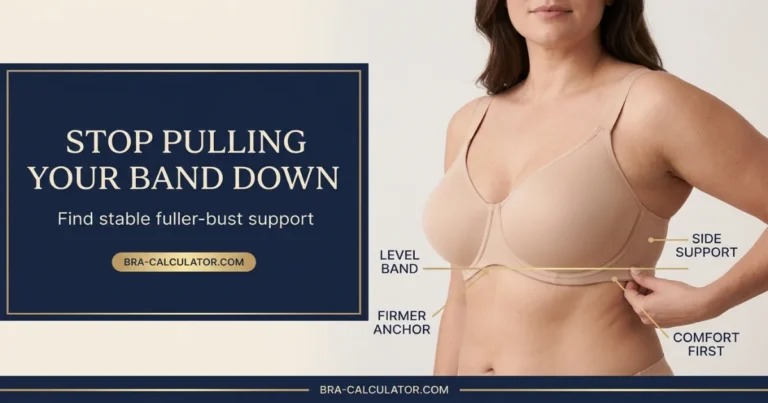
The easiest rule is simple: if you can breathe, move, jump, stretch, and raise your arms without pain, rolling, chafing, or major bounce, you are much closer to the right sports bra. If you have to pull the band down every few minutes or adjust the cups after every set, the bra is not doing its job.
Sports Bra Guide Image Placeholders
Use these images inside the post to make the guide easier to scan on mobile, Pinterest, and Google Discover. Each image uses a 16:9 ratio and includes the focus keyword in the alt text.
Start With Activity Impact, Not Just Cup Size
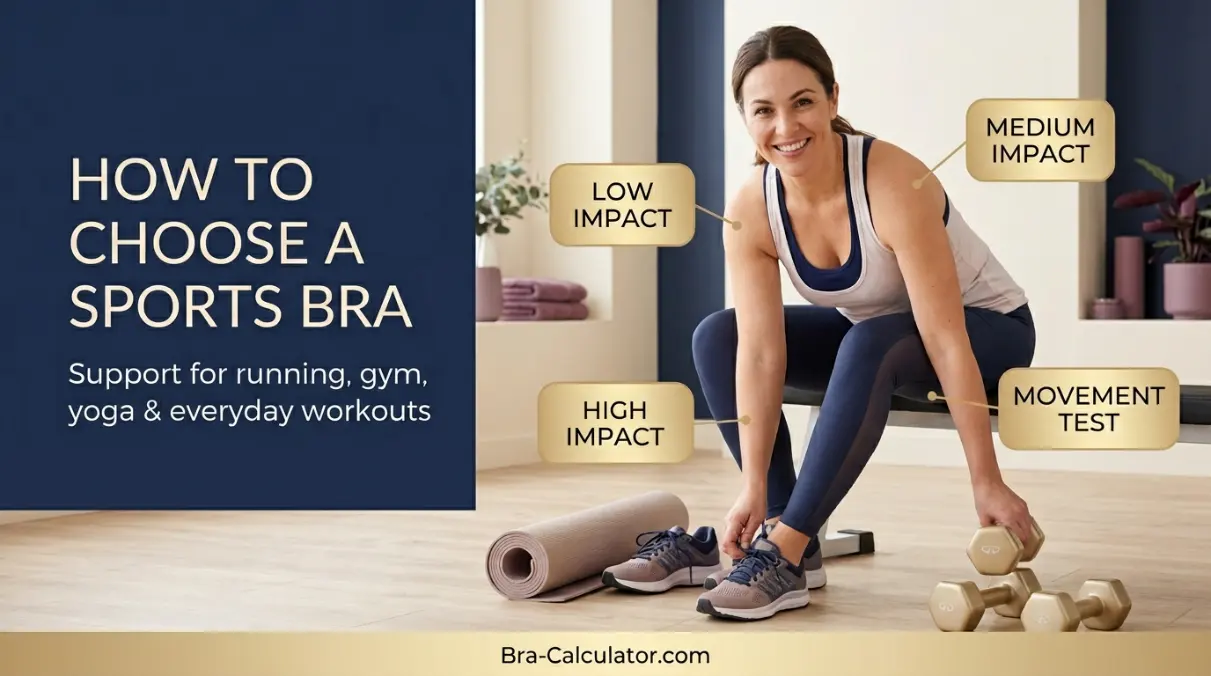
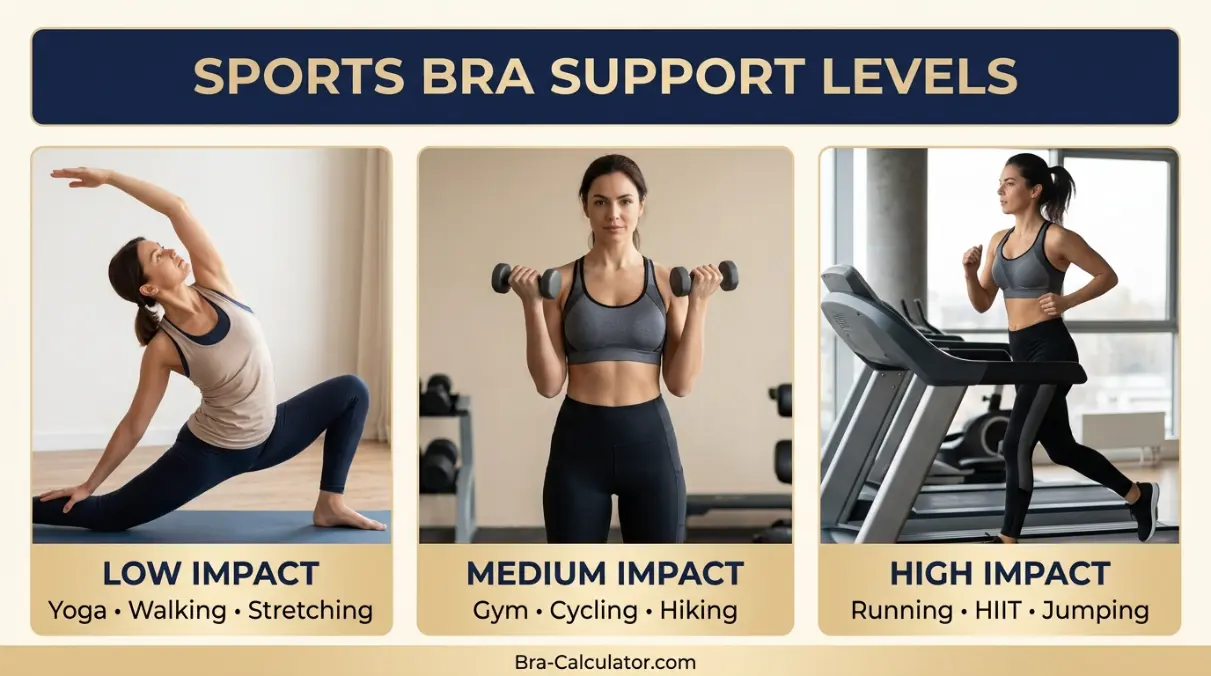
The first step in how to choose sports bra support is matching the bra to the workout. Cup size matters, but activity impact matters just as much. Walking, pilates, yoga, and stretching create less vertical movement than running, jumping, HIIT, tennis, dance cardio, or field sports.
Low-impact activities usually need soft control and flexible comfort. Medium-impact activities need a stronger band, more coverage, and better strap stability. High-impact activities need the most structure because breast tissue can move in multiple directions during running and jumping, not only up and down.
Yoga, stretching, walking
Choose soft compression, breathable fabric, and flexible straps. Comfort matters more than maximum lockdown.
Strength, cycling, hiking
Choose a firmer band, stable straps, and enough coverage so the bra stays smooth during bending and lifting.
Running, HIIT, jumping
Choose high support, structured cups, wide straps, and a strong underband that controls bounce without pain.
People with fuller busts often need higher support even for workouts that brands label as medium impact. A 32G doing incline walking may need more support than a 34B doing the same activity. That does not mean either body is wrong. It simply means sports bra support has to match both movement and body shape.
Choose the Right Sports Bra Type
Sports bras usually fall into three support designs: compression, encapsulation, and combination. Understanding these three types makes shopping much easier because you can stop guessing from the front photo and start reading the structure.
| Sports Bra Type | How It Works | Best For | Watch Out For |
|---|---|---|---|
| Compression sports bra | Presses breast tissue closer to the chest wall as one unit. | Small to medium busts, low to medium impact, yoga, gym basics. | Can create flattening, uniboob, heat, or bounce if used for running with a fuller bust. |
| Encapsulation sports bra | Uses separate cups to lift and hold each breast individually. | Fuller busts, high-impact exercise, running, dance, sports, longer workouts. | May feel too structured if the cup shape or wire placement is wrong. |
| Combination sports bra | Combines separate cups with outer compression for extra control. | High impact, larger cup sizes, bounce-sensitive workouts, treadmill, HIIT. | Must still allow deep breathing. Too much compression can feel restrictive. |
For many people, the best answer is a combination sports bra for high-impact days and a softer compression bra for low-impact days. You do not need one sports bra to do everything. A smart sports-bra wardrobe usually has one high-support style for running or jumping, one breathable style for gym sessions, and one soft style for walking or recovery days.
Use This 6-Point Sports Bra Fit Check
When you are learning how to choose sports bra fit, the mirror alone is not enough. You need a movement check. A bra can look smooth while standing still and still fail the moment you jog, twist, lift, or stretch.
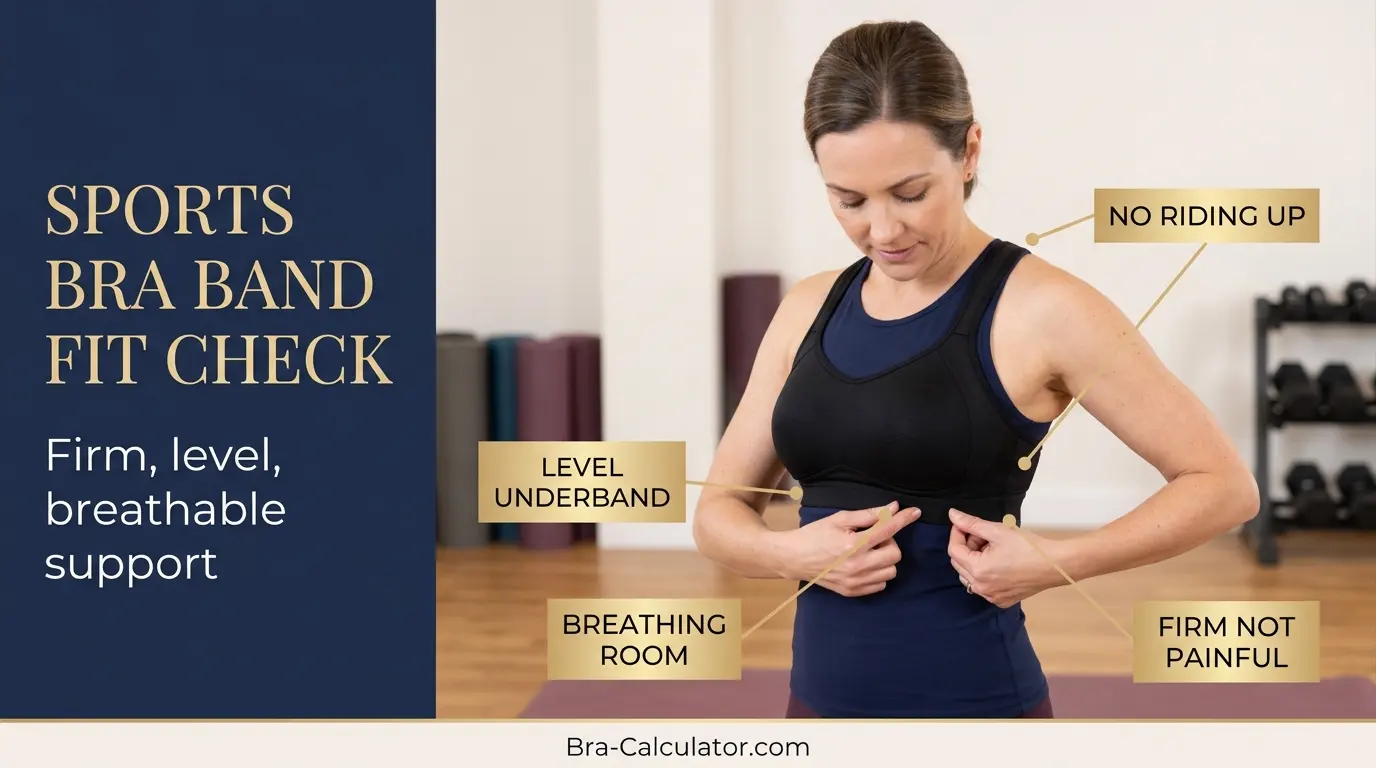
Check the underband first
The underband should sit level around your body and feel firm. Most support comes from the band, not the straps. If the band rides up in the back, the size may be too loose or stretched out.
Take three deep breaths
A supportive sports bra should expand with your ribs. If you cannot breathe deeply, it is too tight or too rigid for training. You should feel held, not trapped.
Raise both arms overhead
The band should not slide upward. The cup edge should not lift away from the chest. If the bra moves with your arms instead of staying anchored, try a firmer band or a different strap design.
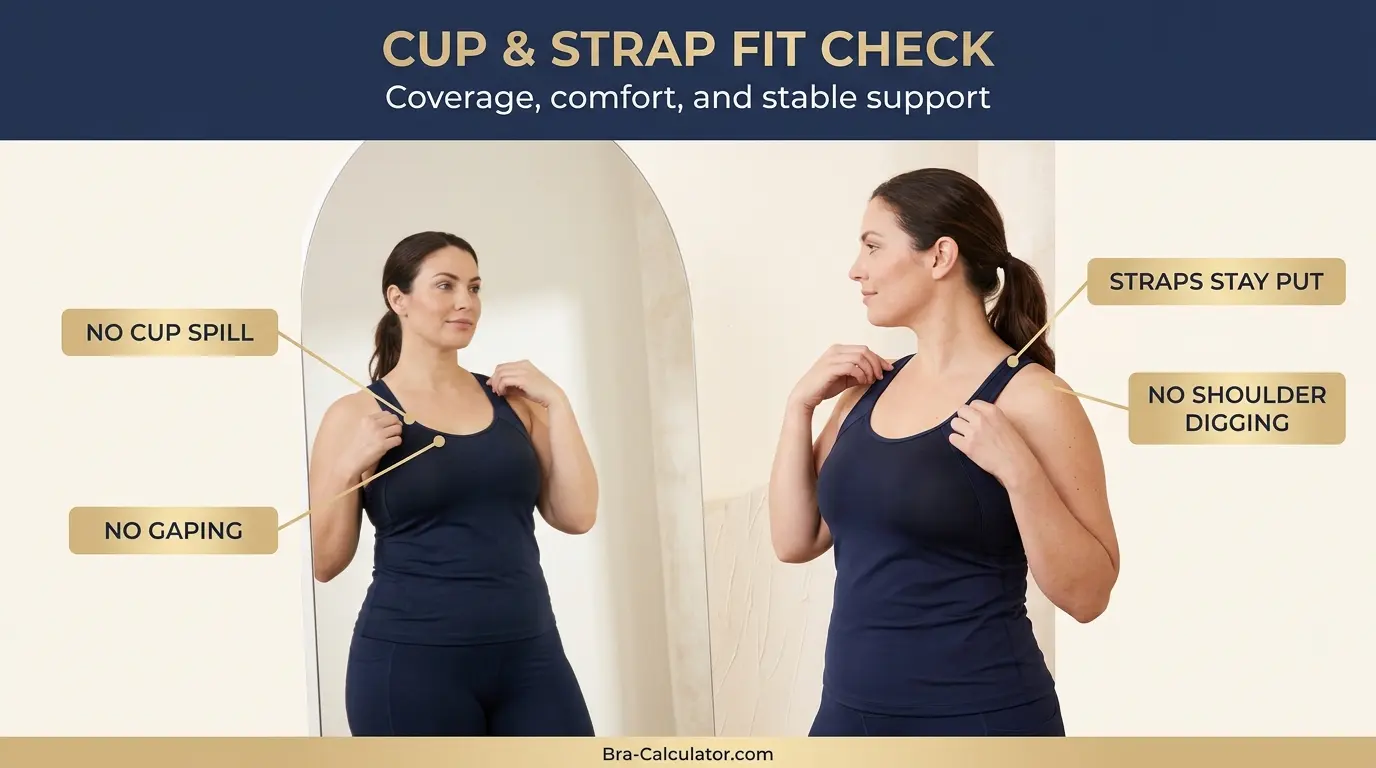
Check cups and coverage
Breast tissue should stay inside the cup area. Spilling at the top, side, or underarm usually means the cup is too small, too shallow, or too low coverage for your shape.
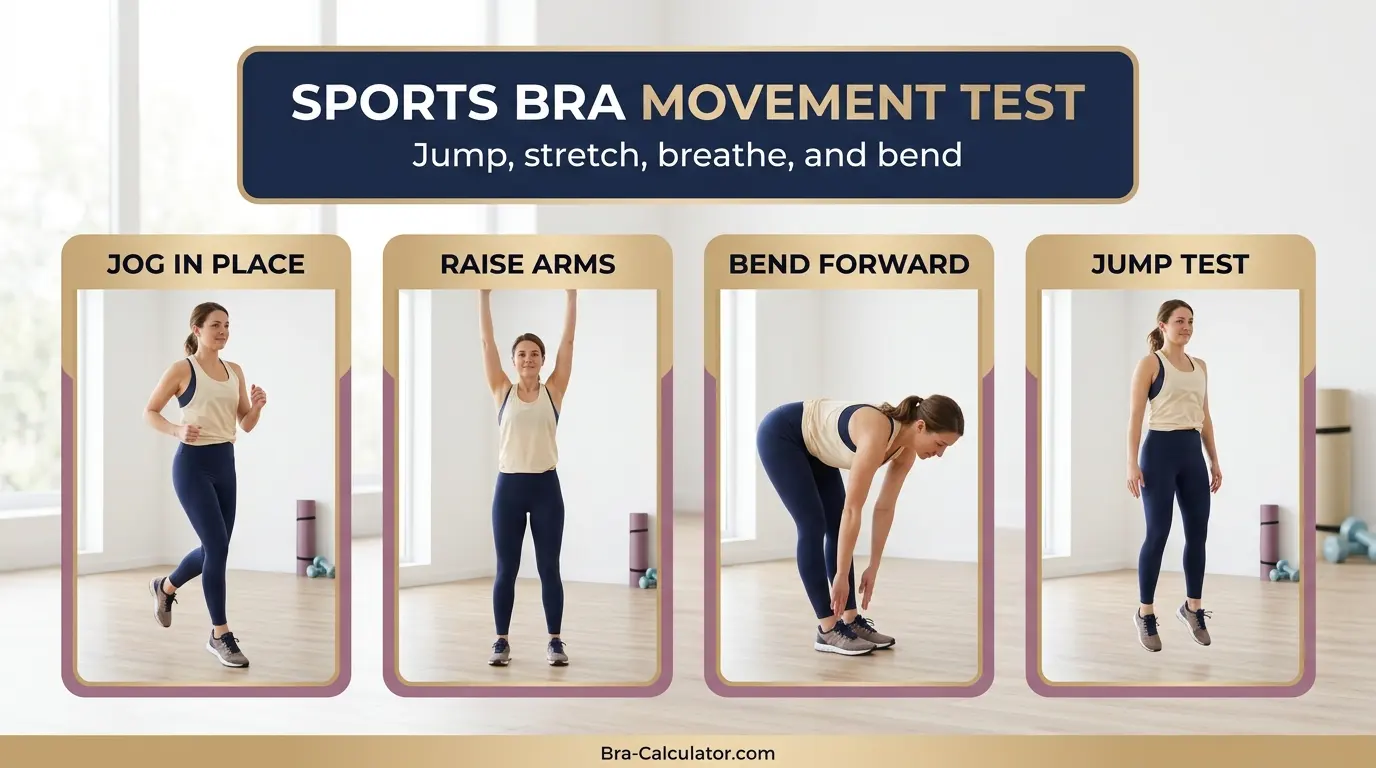
Do a 20-second movement test
Jog in place, jump lightly, bend forward, and twist. You are looking for controlled movement, not zero movement. The goal is comfortable support, not painful restriction.
Notice skin pressure points
Check the shoulders, underarms, sternum, lower band, and side seams. Red marks are not always a problem, but sharp pain, numbness, chafing, or pinching means the fit needs changing.
Before You Buy: Confirm Your Current Bra Size
Sports bras often feel different from everyday bras, but your starting size still matters. If you have not measured recently, use the calculator first, then adjust by brand, cup depth, and activity level.
Weight changes, hormonal changes, pregnancy, breastfeeding, training changes, and aging can all change how a sports bra fits. Measuring again can prevent the two most common mistakes: buying a band too loose or sizing down until the cups become painful.
Calculate Your Bra SizeSports Bra Support Table by Workout Type
This table gives a practical starting point. Your final choice can change based on bust size, tissue softness, sensitivity, posture, workout duration, and how much bounce you personally notice.
| Workout | Suggested Support | Best Design Features | Fit Test |
|---|---|---|---|
| Yoga / Pilates | Low to medium | Soft compression, stretchy straps, smooth fabric, no scratchy hardware. | Forward fold, twist, downward dog, deep breathing. |
| Walking / Travel | Low to medium | Breathable band, soft seams, gentle coverage, easy all-day comfort. | Walk for 5 minutes, sit, stand, and check band pressure. |
| Strength Training | Medium | Stable band, moderate compression, racerback or wide straps, good side coverage. | Squat, hinge, overhead press motion, bench setup. |
| Cycling / Spin | Medium | Moisture-wicking fabric, firm front panel, flexible shoulder movement. | Lean forward, pedal motion, arm reach, sweat comfort. |
| Running / Treadmill | High | Encapsulation or combination support, wide straps, strong underband, high neckline. | Jog, sprint steps, side shuffle, jump test. |
| HIIT / Dance Cardio | High | High coverage, less stretch, secure straps, anti-chafe seams, firm cup control. | Jumping jacks, burpee motion, twist, arm swing. |
| Team Sports | High | Combination support, quick-dry fabric, secure closure, no slipping straps. | Run, stop, turn, reach, and lateral movement. |
Match the Sports Bra to Your Bust Shape
Two people can wear the same size and need completely different sports bras. That is because sports bra comfort depends on shape as well as size. Projection, fullness, tissue softness, root width, and shoulder slope all change the best design.
Choose separation and structure
Look for encapsulation or combination bras, wider straps, a strong band, and higher coverage. Avoid flimsy crop tops for high-impact workouts.
Choose comfort without overbuilding
Soft compression may work well. Still check bounce, band security, and chafing. A small bust can still need high support for running.
Avoid shallow flattening
If the bra presses painfully or creates top spill, try deeper cups or encapsulation. Flattening is not the same as support.
Look for side support
Choose wider fronts, side panels, and cups that do not push tissue outward. Very narrow cups may feel unstable or create side bulge.
Best Sports Bra Features by Goal
Use these tabs to choose based on your main problem: bounce, sweat, shoulder pain, or easy on/off comfort.
For Bounce Control
Choose high support, a firm underband, high coverage, separate cups, and limited stretch through the front. Combination sports bras usually work best for running, HIIT, dance, and jumping workouts.
- Look for “high impact” or “maximum support” wording.
- Choose structured cups if compression alone creates painful flattening.
- Test with jogging and jumping before removing tags.
For Sweat and Chafing
Choose quick-dry fabric, smooth seams, breathable mesh zones, and a lower band that does not curl. Avoid heavy cotton for intense workouts because it can stay wet and increase friction.
- Check underarm seams before long workouts.
- Use anti-chafe balm on known friction zones.
- Wash sports bras after sweaty training to protect fabric recovery.
For Shoulder Comfort
If straps dig, the band may be too loose or the straps may be too narrow. Wider straps can distribute pressure better, especially for fuller busts and longer workouts.
- Check that the band is doing most of the support work.
- Try adjustable straps if fixed racerbacks feel too short.
- Look for soft strap edges and stable hardware.
For Easy On and Off
Very firm sports bras can be hard to pull over the head after sweating. If mobility, shoulder pain, or post-workout removal is a problem, consider front-zip, hook-back, or adjustable back closures.
- Choose a locking zipper or covered zipper guard.
- Check that hooks do not press into your back during floor work.
- Do not choose easy on/off if it sacrifices support for your main workout.
Common Mistakes When Choosing a Sports Bra
Most sports-bra problems come from treating support as a size problem only. The right size matters, but design matters too. A perfectly sized soft lounge bra will still fail during running if it was never built for high-impact movement.
Do This
- Measure your current size before buying.
- Match support level to your workout.
- Try movement tests in the fitting room or at home.
- Choose wide straps and structured cups for high-impact support.
- Replace worn-out sports bras when the band loses recovery.
Avoid This
- Do not size down just to reduce bounce.
- Do not ignore rib restriction or sharp shoulder pressure.
- Do not use low-impact crop bras for running if bounce is uncomfortable.
- Do not keep a sports bra that rolls, slips, or chafes every workout.
- Do not assume one brand’s size will fit the same in every style.
A good sports bra should make exercise easier to start, not harder to tolerate. If you feel distracted by pulling, bouncing, pinching, sweating, or shoulder strain, that is useful feedback. Your body is telling you the style needs adjusting.
How Often Should You Replace a Sports Bra?
Replace a sports bra when it no longer returns to shape, the band rides up, straps feel stretched out, fabric pills heavily, elastic feels crunchy, or bounce increases during workouts that used to feel controlled. There is no perfect calendar rule because washing, sweat, workout frequency, and fabric quality all matter.
If you train often, rotating between multiple sports bras helps them last longer. Elastic needs time to recover after wear and washing. A single favorite sports bra worn for every workout will usually stretch faster than a small rotation.
Band rides up
The underband is no longer anchoring support and may be stretched out.
Bounce increases
If the same workout now feels less supported, the bra may have lost structure.
Fabric rubs
Rough seams, stretched cups, or damaged fabric can create chafing.
Sports Bra Shopping Checklist
Use this checklist before buying online. For best results, order two sizes or sister sizes when return policies allow, especially if you are between band sizes or trying a new brand.
For running and HIIT
Look for high support, structured cups, wide straps, and a firm underband. Best for bounce-sensitive workouts.
View High-Impact OptionsFor fuller bust support
Separate cups can reduce flattening and improve control for larger cup sizes, projection, and high-motion training.
View Encapsulation BrasFor yoga and walking
Choose soft fabric, flexible straps, and enough coverage for stretching without unnecessary compression.
View Low-Impact OptionsHelpful Bra-Calculator Tools Before You Choose
Sports bra support becomes easier when you know your starting size and common fit issues. These tools help you avoid buying based only on small, medium, and large labels.
Bra Size Calculator
Find your current band and cup size before comparing sports bra styles.
Sister Size Calculator
Use sister sizes when a sports bra band feels close but not perfect.
Global Bra Size Converter
Compare US, UK, EU, and international sizing before shopping.
AI Smart Fit Bra Calculator
Diagnose band riding, cup overflow, gaping, strap digging, and underarm pressure.
FAQ: How to Choose Sports Bra Support
Should a sports bra feel tighter than a normal bra?
Yes, a sports bra often feels snugger than a daily bra because it needs to control movement. But snug should not mean painful, breath-restricting, numb, or sharp at the shoulders or ribs.
Is compression or encapsulation better for sports bras?
Compression can work well for low to medium impact and smaller busts. Encapsulation or combination support often works better for fuller busts, running, HIIT, and workouts where bounce is uncomfortable.
How do I know if my sports bra band is too loose?
If the band rides up, shifts during movement, or you keep pulling it down, it is likely too loose, stretched out, or not supportive enough for your workout.
Can I wear the same sports bra for yoga and running?
You can, but it may not be ideal. Running usually needs higher support and less stretch, while yoga needs flexibility and comfort through bending and stretching.
Should I size down for more sports bra support?
No. Sizing down can create cup overflow, shoulder digging, rib restriction, and chafing. Choose a stronger support design instead of forcing a smaller size.
What sports bra is best for a large bust?
Many fuller-bust wearers prefer encapsulation or combination sports bras with wide straps, a strong underband, high coverage, and adjustable closures.
Why does my sports bra roll up?
The band may be too small, too loose, too narrow, stretched out, or sitting on a body area where it cannot anchor. Try a different band size, longerline design, or firmer underband.
How should I test a sports bra before keeping it?
Try deep breathing, arm raises, forward bends, jogging in place, jumping, and the main movement from your workout. Keep it only if support stays comfortable during motion.
Choose Support That Helps You Move
The best sports bra is the one that matches your workout, your size, your shape, and your comfort needs. Start with your current measurements, choose the right impact level, test movement before committing, and never confuse pain with support.
Open Bra Size Calculator