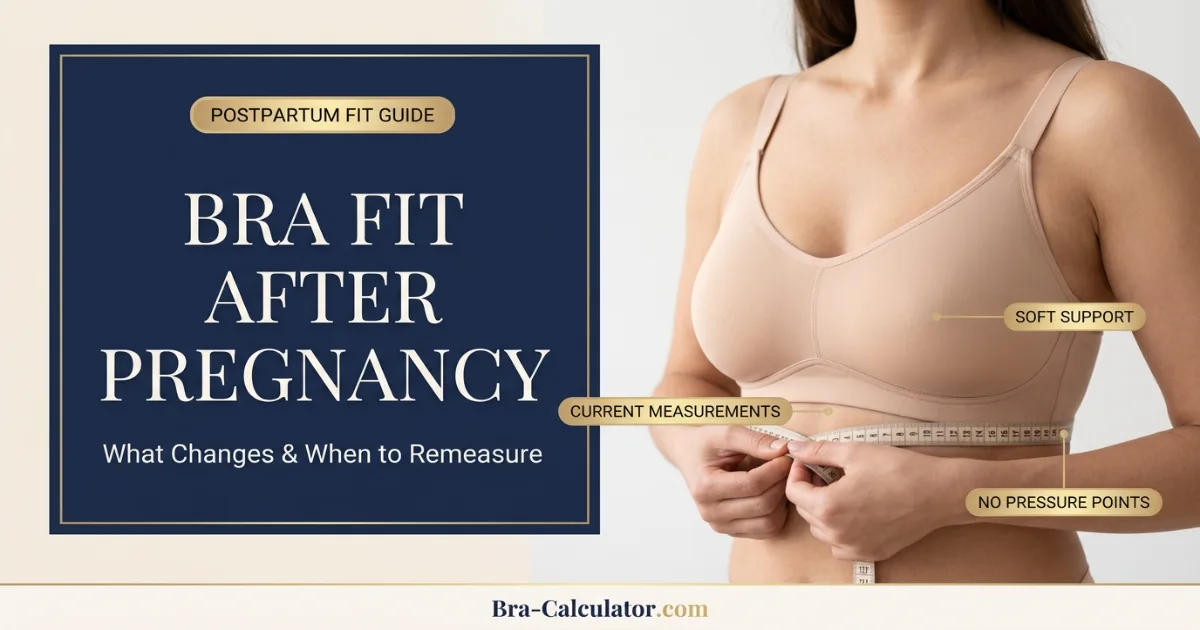
Bra fit after pregnancy can change because your ribcage, breast volume, milk fullness, tissue softness and upper-breast shape may not stay the same from pregnancy through postpartum, breastfeeding, pumping and weaning. Do not force yourself into your pre-pregnancy bra or buy a rigid long-term wardrobe too early. During rapid changes, choose supportive, flexible, non-restrictive bras; remeasure whenever a bra pinches, gaps, rides up or fails to support; and recheck again when feeding-related fullness has settled or after weaning.
Post-Pregnancy Bra Fit at a Glance
| What You Notice | What May Be Happening | Best First Step |
|---|---|---|
| Bra became tight during pregnancy | Ribcage and breast tissue may have expanded; old band/cups may now compress. | Remeasure and choose flexible support rather than enduring pressure. |
| Bra feels much tighter before a feed | Milk fullness or engorgement can temporarily increase breast volume. | Use a non-restrictive nursing bra with stretch and adjustment. |
| Cups gape after feeding or weaning | Upper fullness or tissue softness may have changed. | Remeasure, then try a more flexible cup shape. |
| Band rides up postpartum | Underbust measurement may differ, or the old bra has lost stability. | Check band independently and consider sister sizing only after cup fit. |
| Straps dig in while holding a fuller bust | Band or cups may not be carrying support adequately. | Prioritise stable band and supportive cup containment. |
| One breast changes or feeds differently | Temporary or lasting asymmetry is common during feeding journeys. | Fit the fuller side comfortably; use flexible cups or inserts later if wanted. |
Fit truth: There is no single “normal” postpartum bra size. Some people return close to an old size; others need a different band, cup or cup shape. Your changing body is not failing a bra — the bra needs to adapt to your body now.
Why Bra Size Changes After Pregnancy
Pregnancy and the months after birth can affect bra fit in more than one way. During pregnancy, breasts often feel heavier or more tender as they prepare for feeding, and a band that once felt easy may begin to press against a changing ribcage. After birth, milk production, feeding or pumping can make cup fit vary across the same day. Later, after milk supply reduces or feeding ends, a person may notice less upper fullness, softer tissue or a different overall shape than before pregnancy.
This means the question is rarely only “Did my cup size go up or down?” A postpartum bra may fail because the band is no longer stable, the cup volume no longer contains the breast comfortably, or the cup shape no longer follows softer or redistributed tissue. A molded bra that worked before pregnancy can gape later, while a bra with flexible stretch lace or seamed support may suddenly fit more naturally.
Early postpartum fit needs particular patience. In the first weeks after birth, fullness can change quickly and tender breasts should not be forced into a bra that restricts tissue. If you are nursing or pumping, everyday comfort may require adjustable bands, soft cup edges and room for fullness before feeds. Once daily volume is steadier, a more structured fit assessment becomes more useful.
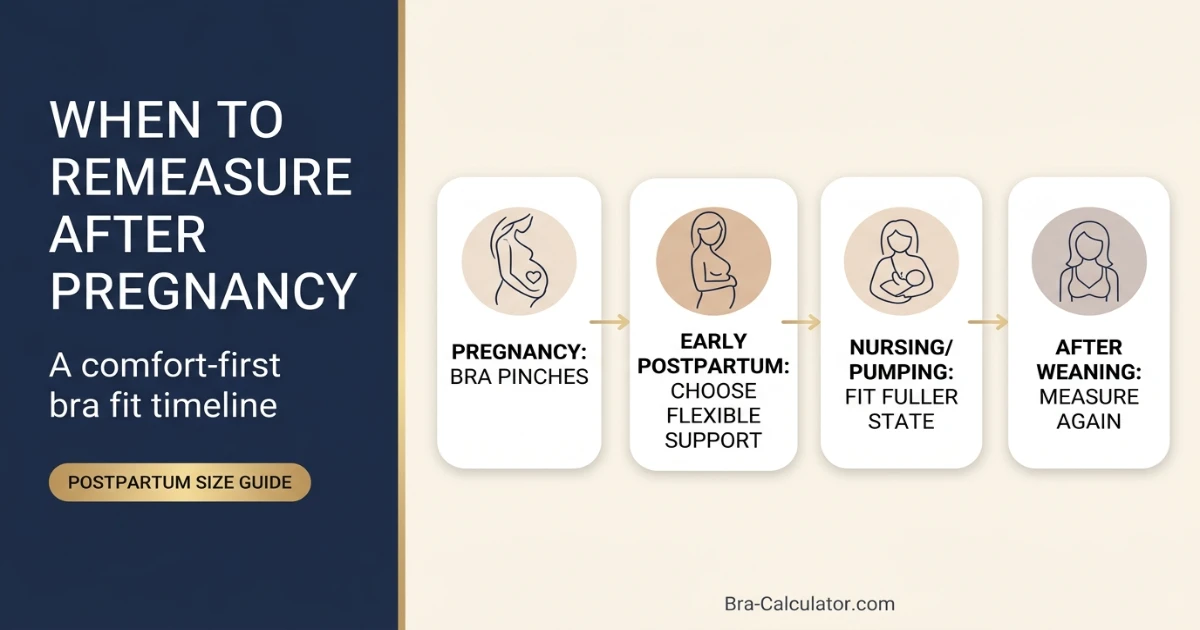
When Your Bra Fit May Change: Pregnancy to Weaning
Use this timeline as a comfort guide, not a strict medical schedule. Everyone’s pregnancy, feeding and recovery experience is different. The useful rule is to measure when your current bra stops working and to postpone expensive long-term bra buying while your fit is changing rapidly.
During Pregnancy
Breasts may become fuller, more sensitive or heavier. Your underbust may also feel broader. Check for pinching, cup overflow and bands that no longer breathe comfortably.
Early Postpartum
Fullness may shift quickly, especially as milk supply develops. Soft supportive non-restrictive bras can be easier to tolerate than rigid cups.
Prioritise flexibilityNursing or Pumping
Cups may feel fuller before a feed and looser afterwards. Adjustable, breathable bras should allow access and accommodate daily fluctuation without painful pressure.
Fit through changeAfter Weaning
As milk-related fullness reduces, breast volume or shape may settle differently. This is often a useful time to measure for everyday structured bras again.
Rebuild your fitFive Checks Before Replacing Your Postpartum Bra
A changing body deserves a fresh fit assessment. Perform these checks when you feel comfortably full but not in severe pain; if feeding or pumping causes daily fluctuations, also note how the same bra feels at fuller and less-full times.
A band should stay level and secure without making breathing uncomfortable. If it rises up, twists or leaves deep painful pressure, the starting band size or construction may not be right.
When nursing or pumping, check the cup edge and underband before a feed as well as afterwards. Painful tightness, pressed tissue or wire-on-breast contact means the fit is not forgiving enough.
Breast tissue should sit inside the cup without side overflow, cutting in or empty rigid space. For softer tissue, a stretch cup may follow shape changes better than stiff molded foam.
A nursing bra should open and close comfortably without losing support. A pumping bra should hold flanges securely without creating painful compression or pinching during use.
Write down when the bra is too tight, too loose or most comfortable. If your size is still changing week to week, buy fewer flexible options first and remeasure before investing in a full wardrobe.
| Fit Sign | Likely Issue | First Fix |
|---|---|---|
| Band and cups painfully tight throughout the day | Current bra likely too restrictive | Remeasure now and try flexible support. |
| Only tight when breasts are fuller before feeding | Daily volume fluctuation | Choose stretch/adjustable nursing fit, not a rigid cup. |
| Cups gape after weaning | Shape or fullness distribution change | Try flexible/seamed cup styles after remeasurement. |
| Wire presses on tissue or sore areas | Unsafe/uncomfortable pressure point | Stop relying on that fit; choose non-restrictive support and seek help if symptoms continue. |
| Band rises while straps carry the bust | Poor band anchor | Check current underbust and cup containment. |
Visual Checks for Post-Pregnancy Bra Sizing
These image placements are designed for clear, modest fit-education visuals rather than generic lifestyle photography. They should help a reader identify exactly what their bra is doing.
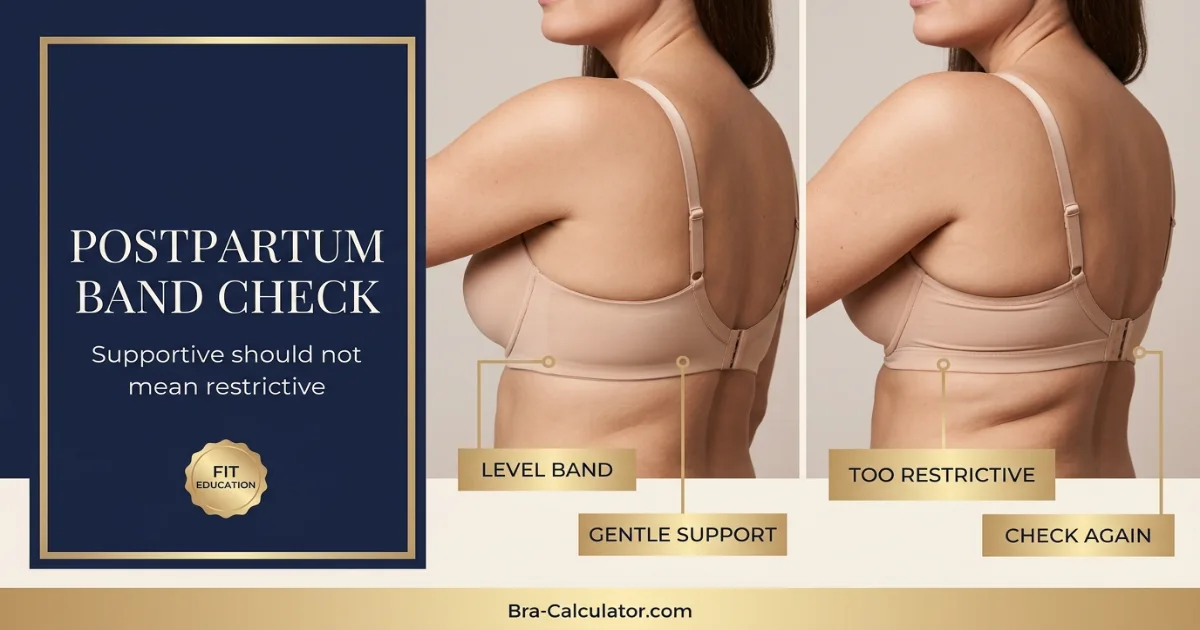
Supportive vs Restrictive Band
A stable band feels secure; painful compression is not required for postpartum support.
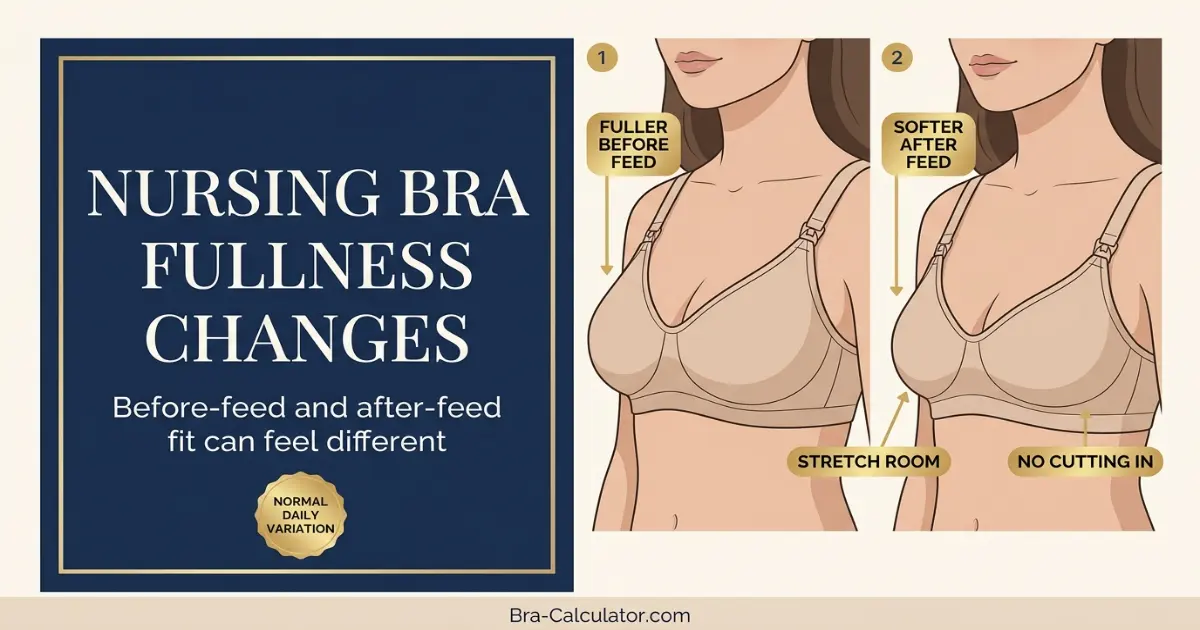
Before-Feed Fullness
A nursing bra must allow normal daily variation without digging into breast tissue.
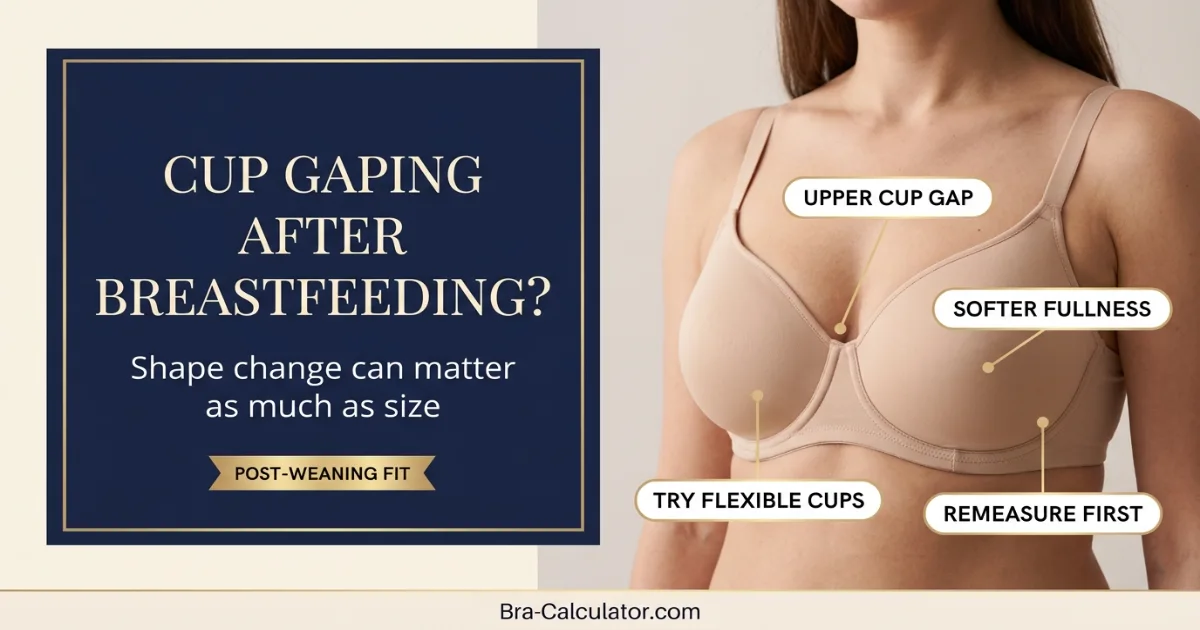
Shape Change After Feeding
A molded neckline may gape even when a softer cup style would fit well.
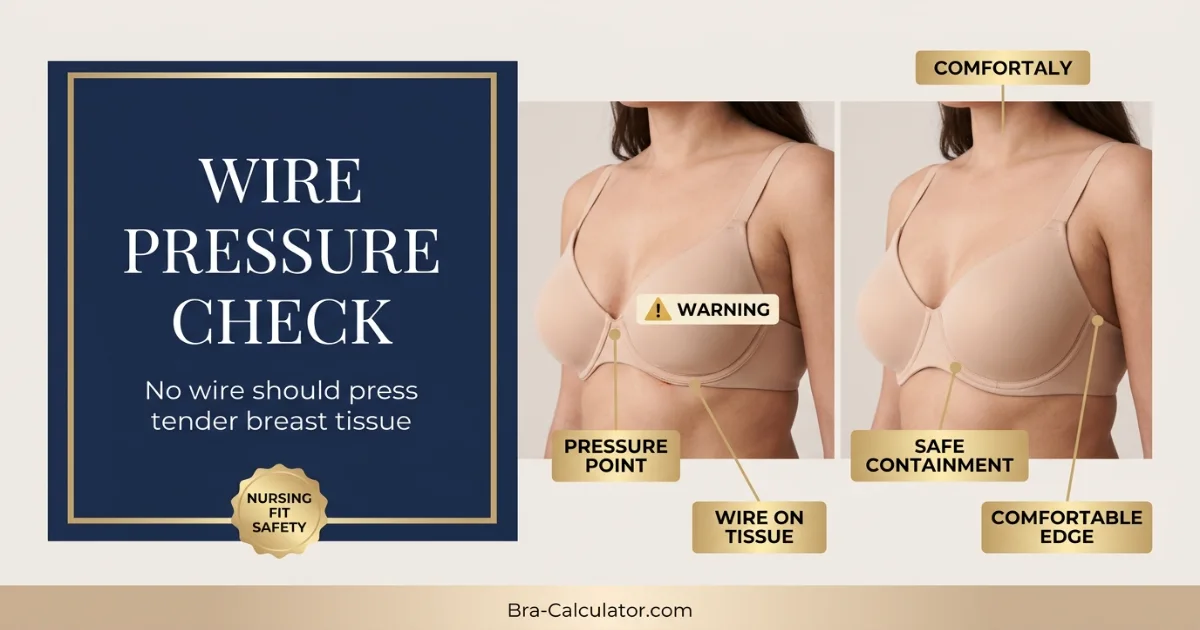
Pressure-Free Containment
No seam, wire or cup edge should create a concentrated painful pressure point.
Why Your Bra After Pregnancy No Longer Fits
1. Band Feels Too Tight
A band bought before pregnancy may press uncomfortably as the ribcage or torso changes. If it feels painful, cuts in deeply or limits comfort, it is no longer giving useful support.
2. Cups Overflow During Pregnancy or Feeding
Increased breast volume can cause cleavage overflow, side spill or a cup edge that cuts into tissue. This is a sign the bra no longer contains your current fullness.
3. Nursing Bra Is Too Loose After Feeding
A soft nursing bra may need to accommodate fullness before feeds, but it should still feel stable enough to support comfortably after feeding or pumping.
4. Cups Gape After Breastfeeding or Weaning
Upper fullness and tissue distribution can be different after a feeding journey. Rigid molded bras may stand away at the neckline even when the size is close.
5. Straps Dig In or Slide Off
Postpartum fit changes can make straps feel unreliable: digging often reflects insufficient band/cup support, while slipping can reflect a loose band, stretched strap or wider-set design.
6. Underwire Sits on Tender Tissue
Underwire is not automatically wrong for everyone, but any wire that sits on breast tissue, compresses a sore area or becomes uncomfortable with fullness should not be worn as-is.
7. An Old Size Still Fastens but No Longer Supports
A bra can technically close while its band rides up, cups wrinkle or tissue spills. Post-pregnancy fitting is about comfort and containment, not fitting back into a label.
When Should You Remeasure After Pregnancy?
There is no universally correct week when every postpartum person should buy a final bra size. The most accurate approach is stage-based: measure whenever an existing bra clearly fails, choose flexibility while size is fluctuating, and measure again when you are ready for a more structured daily bra.
Postpartum Bra Buying Decision Guide
Measurement nuance: Measure under similar conditions when possible. If you are nursing or pumping, a measurement taken when very full may differ from one taken immediately after feeding. Record when you measured and choose a fit that remains comfortable through your normal range rather than chasing a single perfect number.
How a Nursing Bra Fit Should Feel
A nursing bra is not simply a regular bra with a clasp. It must support breast weight while allowing access and accommodating the volume changes that can occur around feeds. A pumping bra adds a second function: it must hold pump flanges reliably without compressing the breast painfully or forcing an awkward posture.
Room for Fullness
Cups should not cut in or create a hard pressure edge as breasts become fuller. Stretch panels, soft cup edges and adjustable support can be useful during fluctuation.
Secure but Gentle Band
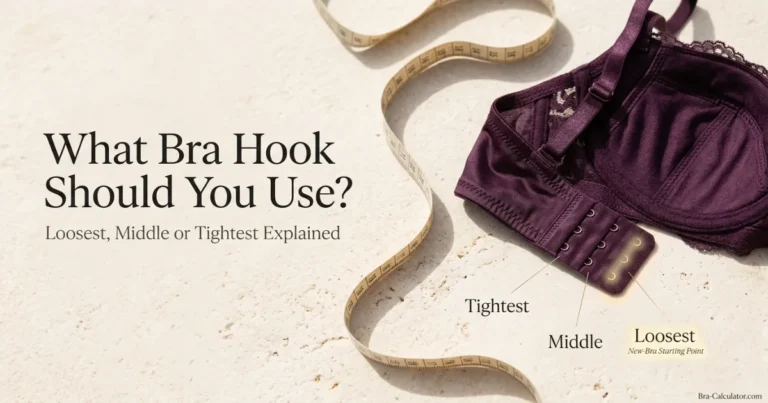
The underband should remain level and supportive but never painful. If you are using the loosest hook immediately and still feel restricted, recheck size.
Functional Access
Nursing clips or pumping openings should work without twisting the bra or leaving the breast unsupported in an uncomfortable position.
Pressure check: During breastfeeding, avoid any bra fit that places concentrated pressure on a tender area or breast tissue. If a breast becomes hot, red, unusually swollen, painful or you feel feverish/unwell, contact a health professional rather than attempting to solve it with sizing alone.
Why Bras May Fit Differently After Weaning
After breastfeeding or pumping decreases and ends, the breast shape that a bra needs to support may change again. Some people find that an old pre-pregnancy bra is now too small; others find its cups look empty at the top or stand away from softer tissue. Neither outcome means you did anything wrong. It simply means the previous bra was designed around a different distribution of volume.
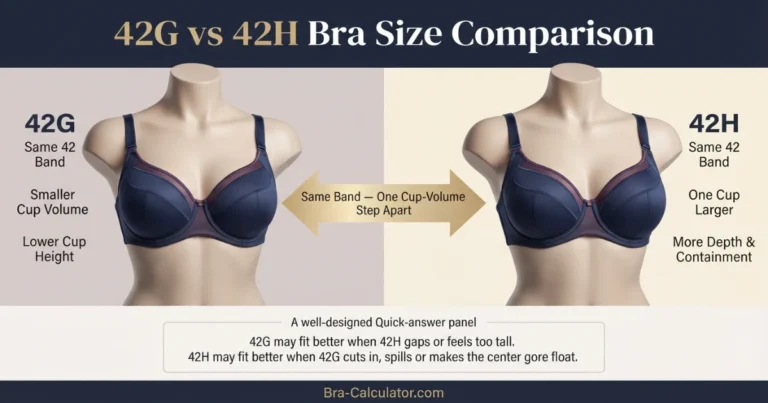
This is where shape becomes as important as measurements. If cups gape at the top while the lower breast fills the cup, a smaller cup is not always the best answer. You may do better in a cup with stretch lace at the top, shorter coverage, side support or flexible spacer construction. Read the bra cup gaping guide when the problem is empty space at the neckline rather than all-over looseness.
If weight also changed during pregnancy or postpartum recovery, band fit may change as well. A stable band should stay level and support comfortably, while straps should guide position rather than carrying the full load. For broader body-size changes, the bra fit after weight loss guide explains remeasurement and shape transitions in more depth.
Fit Guidance for Real Postpartum Days
Post-pregnancy bra fit is not only about standing in front of a mirror. Your support needs may change while resting, feeding, pumping, returning to work or gradually returning to activity. A bra can be technically close in size yet still be the wrong choice for a specific stage or routine.
Engorgement or Sudden Fullness
If breasts become very full or tender, a bra that felt fine earlier can become restrictive. Choose gentle supportive stretch and avoid pressure points; seek health guidance for heat, redness, severe pain or feverish symptoms.
Pumping & Returning to Work
A long day may require a nursing/pumping bra that remains comfortable between sessions, works with your pump and does not become painfully tight when fullness increases.
Tender Torso or Lower Band Sensitivity
After birth, a low or rigid underband may simply feel unpleasant against a recovering torso. Comfort-first soft bands or longline avoidance may matter temporarily even when cup fit looks correct.
Return to Walking or Exercise
A sports bra should limit movement without compressing tender tissue or becoming impossible to remove. When cleared for activity, recheck fit separately from your daily nursing bra.
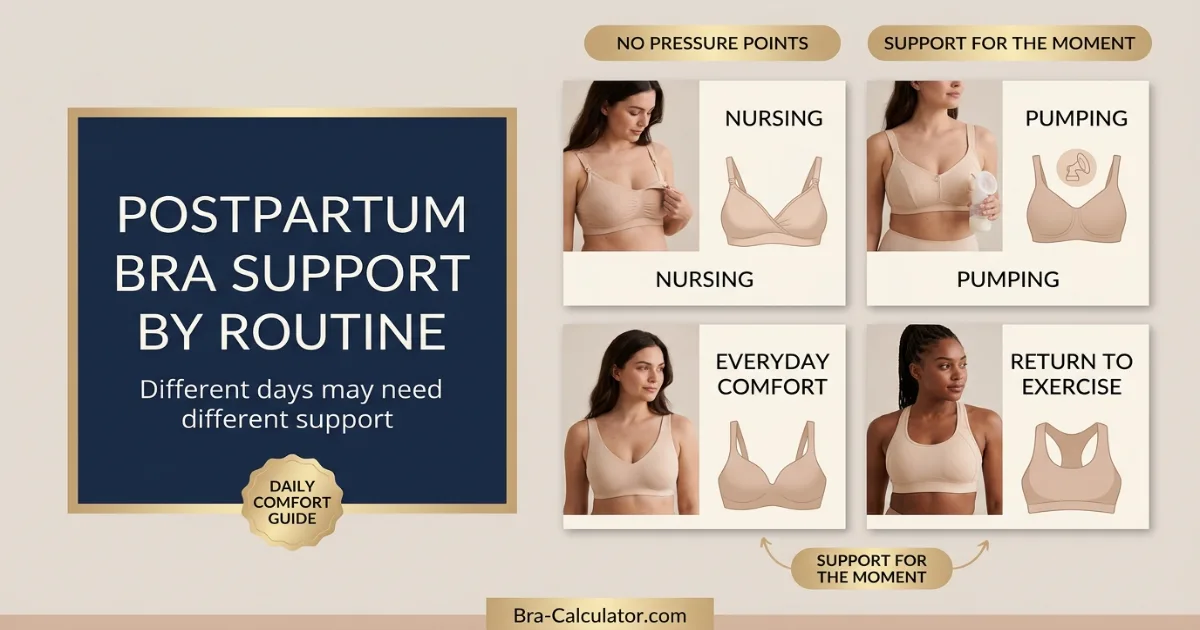
Gentle reminder: A bra that works for feeding at home may not be the same bra that works for pumping at work or moving comfortably during exercise. Matching support to the moment is practical, not excessive.
What Postpartum Bra Problem Are You Solving?
- Band or cup cuts in
- Breathing/comfort reduced
- Wire presses tissue
- Stop tolerating painful pressure
- Remeasure now
- Choose stretch/non-restrictive support
- Fuller before feeds
- Looser after feeding
- Daily cup variation
- Use adjustable nursing bra
- Fit comfortable fuller state
- Avoid rigid compression
- Upper cup empty
- Molded bra stands away
- Often after weaning
- Remeasure
- Try flexible cup shapes
- Do not automatically size down
- Band rides up
- Straps dig in
- Bust feels unsupported
- Test band anchor
- Check cup containment
- Look for supportive construction
Bras That Often Work Better Through Postpartum Change
The most helpful style depends on your stage. A flexible nursing bra may make sense while fullness changes frequently, while a seamed or stretch-lace everyday bra may fit better once you are rebuilding a stable post-breastfeeding wardrobe.
Gentle, non-restrictive support can be easier during tenderness and rapidly changing fullness.
Useful when cup fullness changes between feeds and a rigid cup would feel restrictive.
Designed to hold flanges securely while allowing comfortable support during use.
A flexible neckline can follow softer tissue or reduced upper fullness more smoothly.
Helps gather softer or outward tissue when a supportive structured fit is wanted again.
May restrict fullness, press tender tissue or gape once shape changes.
Buying approach: During pregnancy or active nursing changes, purchase only enough bras to remain comfortable and supported. When your fit becomes more stable, remeasure and then invest in your preferred structured everyday styles.
Support Options to Consider After Checking Your Current Fit
During pregnancy, early postpartum, active nursing or pumping, breast fullness can change through the day. Choose nursing- or pumping-specific support when access and fluctuating fullness are your priority. The comfort options below are best considered for everyday support when your measurements are reasonably stable, or after weaning when rebuilding a comfortable bra wardrobe.
Postpartum buying rule: Do not use a tight structured bra to force rapidly changing breasts into a fixed shape. Any everyday bra should avoid restricting breast tissue, pressing a tender area or interfering with nursing or pumping comfort.

Wide Padded-Strap Full-Coverage Bras
- May suit everyday support after current band and cup measurements become more predictable.
- Wide straps may feel gentler when your bust needs comfortable daily support.
- Not a replacement for purpose-designed nursing or pumping support during active feeding needs.

U-Back Support Bras With Wide Straps
- A broader back design may help keep straps and band positioned once you return to structured bras.
- Useful to compare when straps dig or slip after post-pregnancy shape changes.
- Check for a cup edge that accommodates any changed upper fullness after breastfeeding.

Wireless Comfort Bras With Cushioned Straps
- A softer wire-free option to review when rigid underwire remains uncomfortable.
- Can be considered for gentle everyday wear after confirming your current size.
- For active nursing or pumping, start with a purpose-designed accessible bra instead.
Your Postpartum Body Does Not Need to “Bounce Back” Into an Old Bra
Pregnancy, birth and feeding can ask a great deal of the body. A bra that no longer fits is not evidence that your body is wrong, that you should have recovered faster or that you need to hide a new breast shape. Your comfort matters while caring for a baby, recovering, pumping, feeding, returning to work or simply trying to feel like yourself again.
A supportive new fit can be a small but meaningful form of care. It may reduce daily pressure, help clothing feel more comfortable and make your changing shape feel easier to live in. The goal is not to force a previous size back onto your body. The goal is to find a bra that supports the body you have now — gently, securely and without judgement.
Comfort Is Useful
A bra that feels comfortable while holding your breast tissue safely is not “giving up” on support; it is correct fit prioritisation.
Change Is Normal
A different cup shape or band size after pregnancy is common and deserves the same careful fitting as any other body change.
You Can Refit Again
You do not need one perfect permanent purchase. Measure again when your stage, feeding pattern or comfort needs change.
When to Ask for Help With Postpartum Bra Fit
A professional fitter can help when fit feels impossible
Consider an experienced maternity/postpartum bra fitter if several sizes fail, your breasts fluctuate widely, you need a pumping-compatible fit, wires repeatedly press breast tissue, or you want structured bras after weaning but cannot find smooth containment.
Health note: fit advice is not medical diagnosis
Breast tenderness and fullness may occur around pregnancy and feeding, but contact a healthcare professional for a breast that becomes hot, red or unusually swollen; fever or flu-like symptoms; a new or persistent lump; severe pain; unusual nipple discharge; skin dimpling; or any breast change that worries you. A bra should not be used to dismiss symptoms.
Your Post-Pregnancy Bra Fit Check
Use this checklist when a bra stops feeling right during pregnancy, feeding changes or after weaning.
Frequently Asked Questions
When should I remeasure my bra size after pregnancy?
Remeasure whenever your current bra becomes uncomfortable, unsupported or restrictive. During pregnancy and early postpartum, choose flexible comfort because size can change quickly. If you are breastfeeding or pumping, remeasure again after your breasts feel less changeable between feeds, and again after weaning if your fit changes.
Does bra size always change after pregnancy?
No. Some people return close to a previous size, while others experience changes in band measurement, cup volume, upper fullness, softness or asymmetry. Pregnancy and feeding journeys vary, so use current fit signs and measurements rather than expecting a specific size change.
What bra should I wear immediately postpartum?
Choose a soft, supportive, non-restrictive bra or nursing bra that accommodates fullness changes and allows comfortable feeding or pumping access if needed. Avoid relying on a rigid tight fit while your breasts are swollen or changing rapidly.
Can I wear an underwire bra while breastfeeding?
Some people can comfortably wear underwire bras during breastfeeding, but the wire must not sit on breast tissue or create concentrated pressure. If your breasts change size between feeds, a flexible non-wire nursing option may be more forgiving until fit is steadier.
Why does my nursing bra feel tight before a feed and loose afterwards?
Milk fullness can change breast volume through the day. A bra may feel tighter when breasts are full and looser after feeding or pumping. Look for stretch, adjustability and enough room that the bra never painfully restricts tissue.
How do I know if my postpartum bra band is too tight?
A band may be too tight if it is painful, restricts comfortable breathing, leaves deep persistent marks, presses breast tissue or worsens discomfort when breasts are full. A supportive band should feel secure but not compressive.
What if my cups gape after breastfeeding?
After feeding changes or weaning, upper fullness may be different and a molded cup may no longer match your shape. Remeasure first, then consider softer stretch-lace, spacer, demi or seamed cups rather than assuming one size change solves every gap.
Should I buy expensive bras during pregnancy or early postpartum?
It is often practical to buy a small number of comfortable adjustable bras while your measurements are actively changing, then invest in more structured everyday bras when your fit is more predictable.
How is a pumping bra fit different from a nursing bra fit?
A pumping bra must hold pump flanges securely without painful compression, while a nursing bra prioritizes feeding access and comfort during breast fullness changes. Some combination styles work for both, but fit should be checked during actual use.
When should I get fitted after I stop breastfeeding?
There is no single deadline for everyone. When breast fullness no longer changes noticeably from feeding or pumping and your day-to-day fit feels more stable, measure again and test structured bras. Remeasure later if continued changes affect fit.
Can pregnancy or breastfeeding permanently change breast shape?
Breast shape, volume distribution and softness can change after pregnancy and feeding, although the amount differs from person to person. A different shape does not mean a fit problem cannot be solved; it may mean a different cup style works better.
When should breast pain or swelling be checked medically postpartum?
Seek medical guidance for a hot, red or unusually swollen breast, fever or flu-like symptoms, a new or persistent lump, severe pain, unusual nipple discharge, skin dimpling or any breast change that concerns you.
Do I need a different sports bra after pregnancy?
Possibly. Your band, cup volume and breast sensitivity may differ after pregnancy or during breastfeeding. Once you are ready and medically cleared for activity, choose a sports bra that supports movement without painful compression or pressure on tender breast tissue, and reassess fit if your feeding pattern or size changes.
Find Support for the Body You Have Now
Your bra should adapt to pregnancy, nursing, pumping or post-breastfeeding changes — not ask you to endure pressure or guess your old size. Measure your current fit and choose comfort with confidence.
More pregnancy and nursing bra guides
- Postpartum bra calculator
- Nursing bra sizing timeline
- Pregnancy Weight Gain Calculator
- Maternity Bra Size Calculator (Free 2026) – Pregnancy, Nursing & Pumping Fit
- Best Supportive Nursing Bras for Large Breasts (2026 Guide)
- Best Bra Size After Pregnancy (2026 Guide) – How to Measure & Find Your Perfect Fit