Bra back bulge is common and does not automatically mean your body or bra size is wrong. If the band hurts, rolls, rides up, or cups push tissue toward the sides, your fit or bra construction may need adjustment. Start with comfort: check the band level, cup containment and strap tension. For a smoother look, try wider back panels, flat-edge smoothing styles or a supportive wireless bra before sizing up unnecessarily.
Jump to a Section
Bra Back Bulge at a Glance
| Question | Comfort-First Answer | Best Next Step |
|---|---|---|
| Is it normal? | Yes. Some softness above or below a band is normal on every body type. | Only troubleshoot if there is pain, rolling, spillage or poor support. |
| Band digs painfully | The band may be too tight, too narrow or too rigid. | Remeasure, try a wider band, or test a sister size carefully. |
| Band rides up | The band may be too loose, even if it creates visible lines. | Do not size up automatically; check a firmer supporting band. |
| Cups spill at the sides | Too-small or poorly shaped cups can push tissue backward. | Try more cup volume or a side-support/full-coverage style. |
| Smoother silhouette wanted | Construction matters more than chasing a looser band. | Choose wide-back, seamless-edge or smoothing bras. |
What Does Bra Back Bulge Really Mean?
The phrase “bra back bulge” usually describes soft tissue or visible lines above and below the back band of a bra. It can show under fitted clothing, especially with narrow elastic bands, stiff edges, tight straps or smooth fabric tops. But it is important to begin with the truth: the presence of a line does not prove a bad fit. A bra is an elastic support garment sitting against a soft, moving body, so some indentation can happen even when the bra feels comfortable and supports correctly.
A fit problem begins when the visual concern is paired with discomfort or instability. Warning signs include painful digging, numbness, red marks that stay sore, a band that flips or rolls, a back band that rides toward the shoulder blades, cup overflow, wires sitting on tissue, or straps being pulled extremely tight to obtain support. These clues tell you whether the issue is the band size, the cup fit, the bra construction, or simply a desire for a smoother finish under clothing.
Many people respond to back lines by buying a larger band. That can help if a band is genuinely too tight, but it can make matters worse if your existing band is already riding up. A band that is too loose shifts upward, places more weight on straps and can still create bunching or visible lines. The comfort-first solution is not automatically “go larger”; it is to identify what the bra is actually doing.
There is also no need to shame your body or aim for a completely erased silhouette. If you like a smoother look under a dress, T-shirt or work blouse, that is a clothing preference, not a body correction. Wide wings, flat elastic, smoothing back panels and longline designs can make clothing sit more smoothly while keeping your comfort and support first.
Comfort-First Fit Check for Back Bulge
Before changing size, identify whether the bra is uncomfortable, unstable or simply visible under clothing. Perform these checks in your current bra after putting it on correctly: lean slightly forward, scoop all side tissue into the cups, settle the underwire or cup base into the breast crease, then assess the band and cups.
| What You Notice | Likely Meaning | Comfort-First Fix |
|---|---|---|
| Band is level and comfortable, but visible | The fit may be fine; the edge or fabric shows through clothing. | Try a smoothing bra, wider back panel or different top fabric. |
| Band is tight and painful | Band may be too small or too narrow for comfortable pressure distribution. | Measure again; consider a wider band or sister-size direction. |
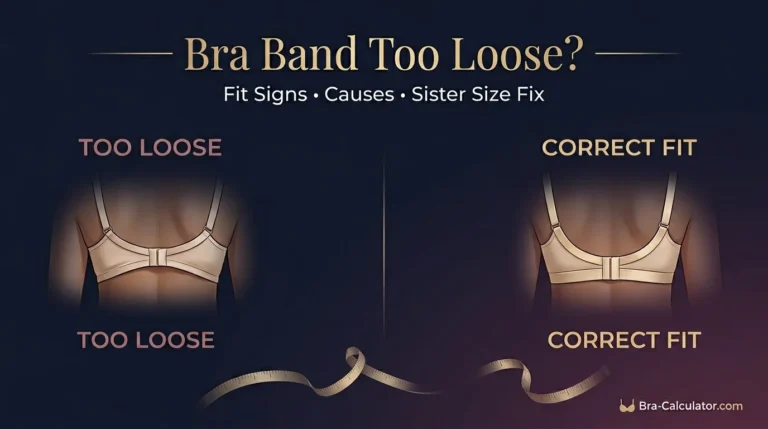
| Band rides up the back | Band may be too loose or stretched out. | Try a firmer band rather than sizing up for appearance. |
| Side fullness spills from cups | Cups may be too small or too narrow. | Try a larger cup or side-support/full-coverage design. |
| Straps dig into shoulders | Straps may be compensating for insufficient band/cup support. | Check band and cup fit before loosening or padding straps. |
The band should stay approximately level. A band creeping upward often needs more stability, not more looseness.
A firm band is normal; a painful, restrictive or sharply digging band deserves adjustment.
Side spillage can make the back and underarm area look fuller because cup volume or wire width is not right.
Try strap adjustment or a smoothing construction first when comfort is fine; remeasure or sister-size only when fit symptoms support it.
Why Does a Bra Create Back Lines or Bulges?
A bra band is designed to provide most of the support, which means it must make contact with the torso. Soft tissue naturally changes shape when elastic rests against it, particularly during sitting, twisting or reaching. A narrow band may concentrate pressure into one line; a wider band tends to distribute the same support across a larger area and can appear smoother.
Fabric also matters. A bra with thick seams, narrow elastic or rigid back edges may be visible under a fine knit top even in an excellent size. A bonded-edge smoothing bra or wide wing design can make a dramatic difference under fitted clothes without changing your body or forcing you into a band that does not support well.
Finally, cup fit affects the back view more than many shoppers realize. When cups are too small or the wire does not surround tissue correctly, fullness can be pushed outward toward the underarm and back. That is why a helpful bra back bulge guide must also check side spillage, underwire position and the center gore—not just the number printed on the band.
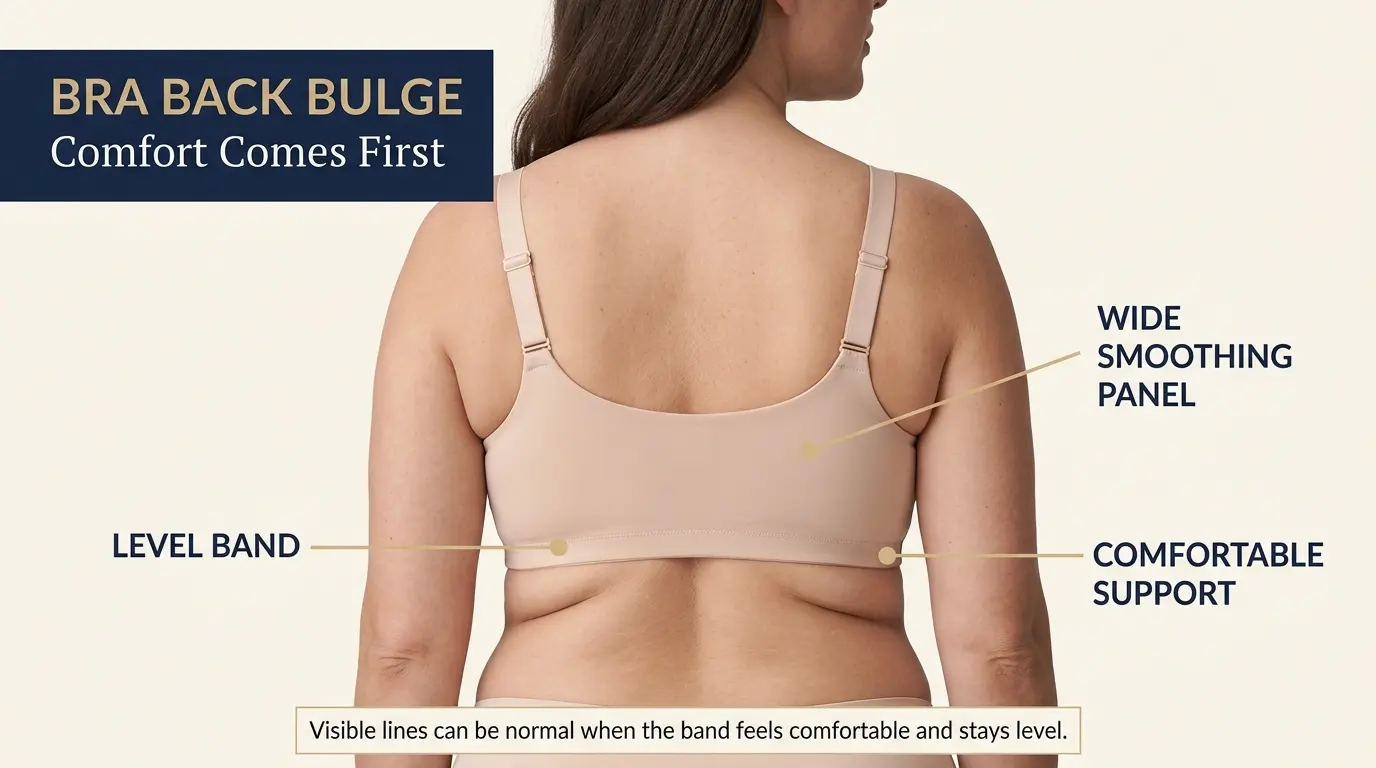
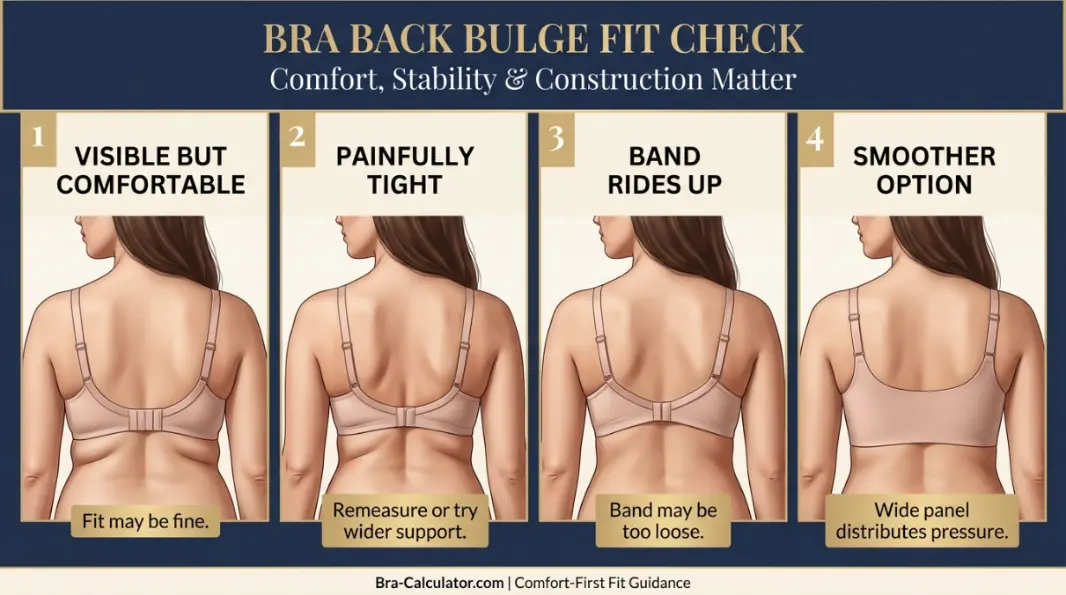
Comfort comes before smoothness. A small line from a correctly supportive band is normal. Change fit when the band hurts, shifts or fails to support—not because a soft body behaves like a soft body.
For a smoother finish under clothing, look first for wider back coverage and flat edges instead of making a supportive band too loose.
Best Bra Styles for Back Bulge Comfort
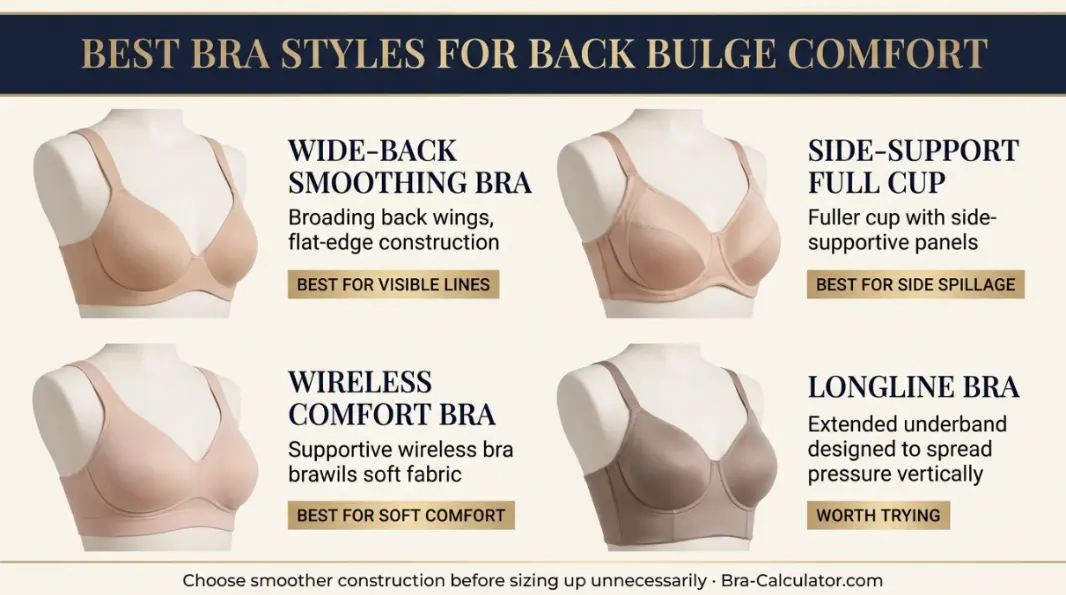
The best bras for visible back lines are not simply tighter or more compressive. They distribute pressure gently, keep the back band level and avoid hard edges under clothing. Check the available size range and your own measurements before buying.

Wide-Back Smoothing Bra
- Broad wings spread pressure more evenly than narrow back bands.
- Flat seams or bonded edges can reduce visible ridges under fitted clothing.
- Best when your current size feels supportive but you prefer a smoother finish.
- Choose comfort and a level band over heavy compression.

Side-Support Full Coverage Bra
- Helps guide side tissue into the cups instead of letting it escape toward the back.
- Useful when back fullness appears alongside cup overflow or underarm spillage.
- Look for wires or cup bases that fully surround tissue without poking.
- Remeasure first if cups visibly cut in or the gore floats.

Wireless Comfort Smoothing Bra
- Can reduce irritation for people who dislike rigid wires or narrow edges.
- Wide underbands and back panels create a softer, more even feel.
- Good for everyday comfort when high-lift structure is not the priority.
- For fuller busts, choose a supportive wireless style with reinforced panels.
How Body Factors Change Back Band Comfort
Every body responds differently to elastic pressure and bra construction. Rather than expecting a single “invisible” result, use your movement, comfort and support needs to choose the most suitable style.
Lines Can Appear Easily
A supportive band may leave a visible impression even when it feels comfortable. Wider wings and smooth edges often feel gentler.
Normal & commonWide Bands Need Testing
A very tall back panel can fold or roll if there is limited torso space. Try moderate-height smoothing styles first.
Watch band heightSupport Matters More
Choosing a loose band only for smoothness may increase shoulder strain. A wide, firm supportive back is often better.
Keep band stablePressure May Be Uneven
One side can show more indentation as the body moves. Adjustable straps and flexible panels may improve comfort.
Assess in motionShould You Size Up for Bra Back Bulge?
Sizing up is only the correct fix when the band is genuinely too restrictive or the measurements indicate a larger band. A visually smoother back is not worth losing support. If your band rides up, sizing up is likely to make fit worse. If the band is painfully tight but the cups fit well, sister sizing can provide more ribcage room with similar cup volume.
| Your Symptom | Do Not Assume | Try First |
|---|---|---|
| Visible back line but comfortable fit | That you need a larger band | Smoothing construction or wider wings |
| Painful band pressure | That discomfort is necessary for support | Remeasure; test a wider band or sister size up |
| Band rides up | That loosening the band will smooth it | Firmer/new band; sister size down if appropriate |
| Cup or side spillage | That the back band caused all fullness | More suitable cup volume or side-support style |
Choose a Fix Based on What You Feel
- Band stays level
- No pain or restricted feel
- Cups contain tissue
- Only visible beneath clothing
- Wide-back smoothing bra
- Seamless or bonded edges
- Smoother base layer
- Keep supportive size
- Painful band pressure
- Sharp digging marks
- Breathing feels restricted
- Cannot tolerate wear
- Remeasure underbust
- Wider, softer band
- Sister size up if cups fit
- Avoid rigid narrow elastic
- Band climbs at the back
- Straps dig for support
- Bra shifts during wear
- Old band is stretched
- Do not size up
- Test a firmer/new band
- Use sister sizing carefully
- Check the band-rides-up guide
- Side tissue escapes cup
- Wire sits on breast tissue
- Top cup cuts in
- Gore does not settle
- Larger or better-shaped cup
- Side-support construction
- Full-coverage style
- Recalculate size
Which Bra Styles Work Best for Back Bulge?
The aim is to find a style that provides stable support while spreading pressure more comfortably. No bra can or should promise to permanently change the body, but better construction can create a smoother finish and a kinder feel.
Ideal when fit feels correct but narrow edges show under clothing.
Best when side spillage contributes to back or underarm fullness.
Gentler option when stiff wires or rigid bands cause discomfort.
Spreads support vertically, but may roll on a shorter torso.
Often provides broad back coverage and easier dressing.
May appear softer briefly but can ride up and reduce real support.
What Else Can Appear With Bra Back Bulge?
A loose or worn band can shift and bunch, creating both poor support and visible lines.
A struggling band or cup can force straps to carry too much weight.
Back and underarm fullness can become more visible when cup volume or wire width is insufficient.
The size may be close, but concentrated pressure can still be uncomfortable.
Weight changes, pregnancy, hormonal cycles and age can affect comfort and measurements.
A smoother look can be a valid clothing goal, without labelling your body as wrong.
Related Tools & Guides for Comfortable Bra Fit
| Guide / Tool | Why It Helps |
|---|---|
| Bra Size Calculator | Use fresh measurements if the band feels too tight, too loose or no longer comfortable. |
| Bra Fit Problem Solver | Diagnose band, cup, strap and wire fit symptoms in one place. |
| Bra Band Rides Up Guide | Understand when back-band issues come from looseness or lack of support. |
| Sister Size Calculator | Change band comfort while maintaining similar cup capacity. |
| Breast Shape Identifier | Find cup shapes and constructions that better contain side tissue. |
| Best Bras for Large Busts | Explore stronger supportive styles when back comfort and support needs are higher. |
Frequently Asked Questions
Not always. A very tight band can create painful pressure, but normal soft tissue can also appear above or below a correctly fitted band. Judge fit by comfort, support, cup containment and whether the band stays level.
Only if the band is genuinely uncomfortable or measurements support a larger band. If the band already rides up, sizing up can reduce support. A wider smoothing back may be the better first choice.
Wide-back smoothing bras, flat-edge seamless styles, supportive wireless bras and some longline bras distribute pressure more broadly and can make clothing sit more smoothly.
Yes. Too-small or too-narrow cups may push tissue toward the sides and back. Check for side spillage, wire sitting on tissue, upper-cup cutting and a floating center gore.
Yes. A soft body may show some indentation from a support band. It becomes a fitting concern when accompanied by pain, rolling, instability, severe digging or overflow.
Yes. Sitting, reaching, twisting and shoulder position can change how the band presses against the body. Assess a bra while moving normally, not only while standing still.
Adjust overly tight straps, put all tissue fully into the cups and check whether the band stays level. If it remains painful or unstable, remeasure or test a different construction.
Use it when the band hurts, rides up, cups overflow or your current bras no longer feel stable. Measurements give a better starting point before you test actual styles.
Find a Bra Fit That Feels Good
Back lines can be normal. When your bra hurts, shifts or spills, use real measurements and comfort signs to find better support without body shame.