On the same band size, DD cup is about 3 cup steps larger than B cup. In many standard systems, B commonly represents about a 2-inch bust-to-underbust difference while DD represents about a 5-inch difference. The best choice depends on real fit signs: whether the cup edge stays smooth, whether side tissue is contained, whether the band stays level, and whether the center gore can sit flat or close without painful pressure.
Jump to a Section
Choose the fit signs you notice in the band, cups, center and straps. We’ll use them to suggest the most useful next step.
Private fit check — your answers stay in your browser and are used only for this on-page guidance. Nothing is stored or submitted.
B Cup vs DD Cup at a Glance
| Attribute | B Cup | DD Cup |
|---|---|---|
| Typical same-band difference | About 2 inches | About 5 inches |
| General role | Smaller / shallower option | Larger / deeper option |
| Key fitting theme | This comparison has a wider visual and fit gap, but sister sizing can still create surprises across bands. | |
| Best clue | Better if the larger cup gaps or feels too tall | Better if the smaller cup cuts in, spills, or feels compressed |
| Core reminder | Cup volume is not fixed. Sister sizes and band changes can reshape the comparison. | |
What Does B Cup vs DD Cup Really Mean?
B Cup vs DD Cup compares a moderate cup with a much fuller same-band cup. On the same band, DD has substantially more depth and support demand than B. But across bands, a small-band DD may not look as large as many people imagine, and a large-band B may have more physical cup volume than expected. That is why this page focuses on band context as much as cup-letter difference.
This comparison has a wider visual and fit gap, but sister sizing can still create surprises across bands. When people search this comparison, they usually want clarity on one of three things: whether the larger cup will stop spillage, whether the smaller cup will stop gaping, or whether the band is actually the hidden problem. That is why this guide compares sizes on the same band first, then explains sister sizing as the second step.
A cup letter alone is not a body size. A 30DD can look smaller than many people expect, while a 40B can have more physical cup volume than the same letter on a smaller band. This is why a reliable page must talk about band size, root width, projection, tissue softness, and bra style together. The best size is not the one that sounds familiar; it is the one that makes the bra stay smooth, centered, and supportive through real movement.
The myth is that DD is automatically oversized. In modern fitting, DD is a common size and often simply means the cup finally has enough room. This matters because many users avoid the size they actually need because of outdated cup-size myths. A correctly fitted larger cup often looks more refined and less bulky than a too-small cup that pushes tissue upward, sideways, or out of the center.
Exact Measurement Difference Between B and DD
In many standard sizing systems, each cup step adds roughly one inch to the difference between the full bust and snug underbust when the band remains constant. Wider comparisons like this can look dramatic on the same band, but sister sizing can still make the visual gap smaller across different bands.
| Fit sign | May point to B | May point to DD |
|---|---|---|
| Cup edge | Wrinkles or gaps in the larger cup | Cutting in or spillage in the smaller cup |
| Center gore | Sits fine but cup feels overbuilt | Floats because the cup lacks enough depth |
| Side wire | Contains tissue without extra room | Smaller cup wire sits on tissue or misses outer fullness |
| Overall feel | Larger cup seems too tall, too roomy, or too open | Smaller cup feels shallow, compressed, or unstable |
Start with the ribcage, because a poor band can distort your cup reading.
Do not compress tissue. Let the tape rest at the fullest point.
Different bra models can hide or exaggerate the difference between B and DD.
If one size contains tissue cleanly and the other does not, the answer is usually clear.
What Does B Cup vs DD Cup Look Like?
Visually, B vs DD can shift from a softer moderate curve into a fuller, more projected, more contained bust shape.
The same comparison can look very different depending on body proportions. On a petite frame, the difference may be easier to notice because the bust occupies more visual space relative to the torso. On a broader frame, the same difference may look calmer or more spread out. Projected tissue often makes the larger cup look more clearly necessary, while shallower tissue can make the larger cup seem too tall or too roomy.
This pair should be tested with firm bands and supportive cup structures, not only fashion bras or heavy padding. The most honest comparison is your own body in the same bra model, under the same clothes, moving through normal life. A supportive bra often makes the correct larger cup look smoother and more centered rather than simply “bigger.”
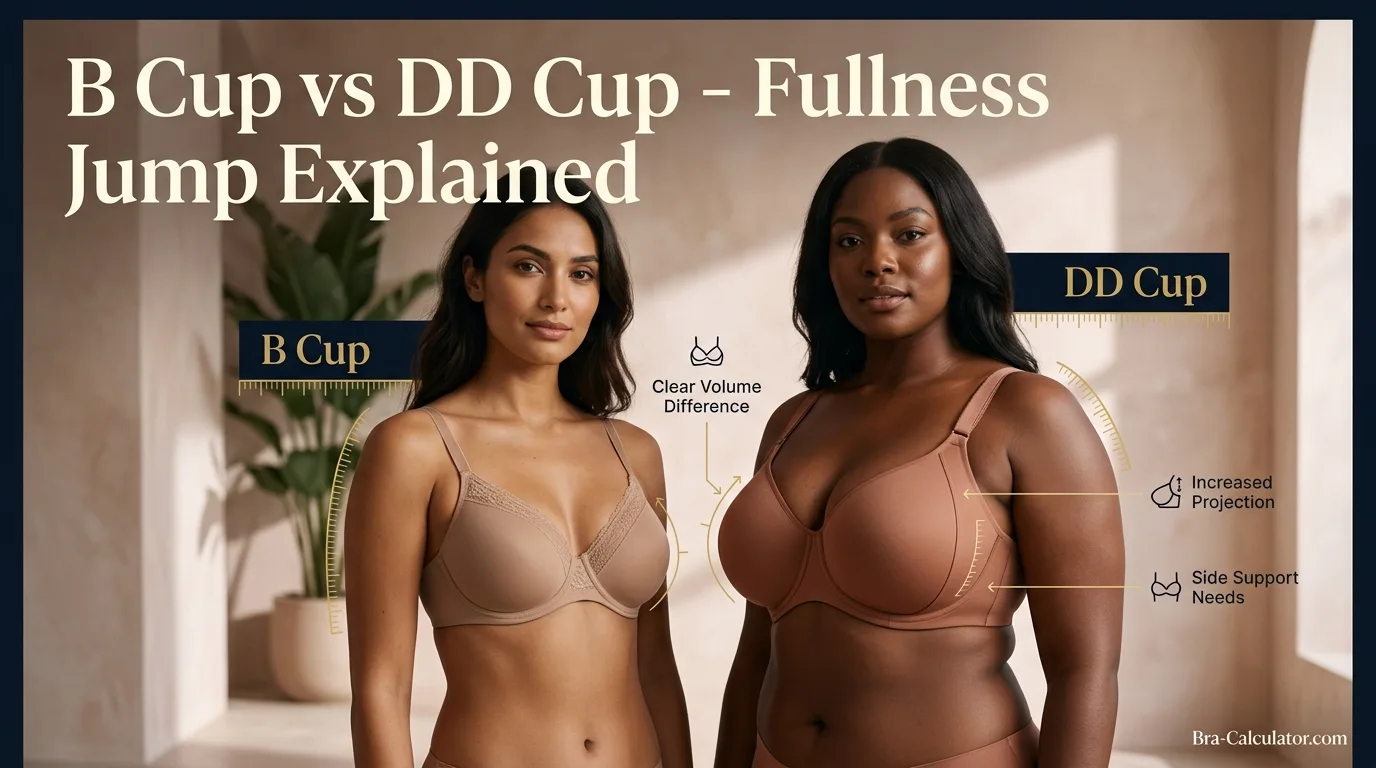
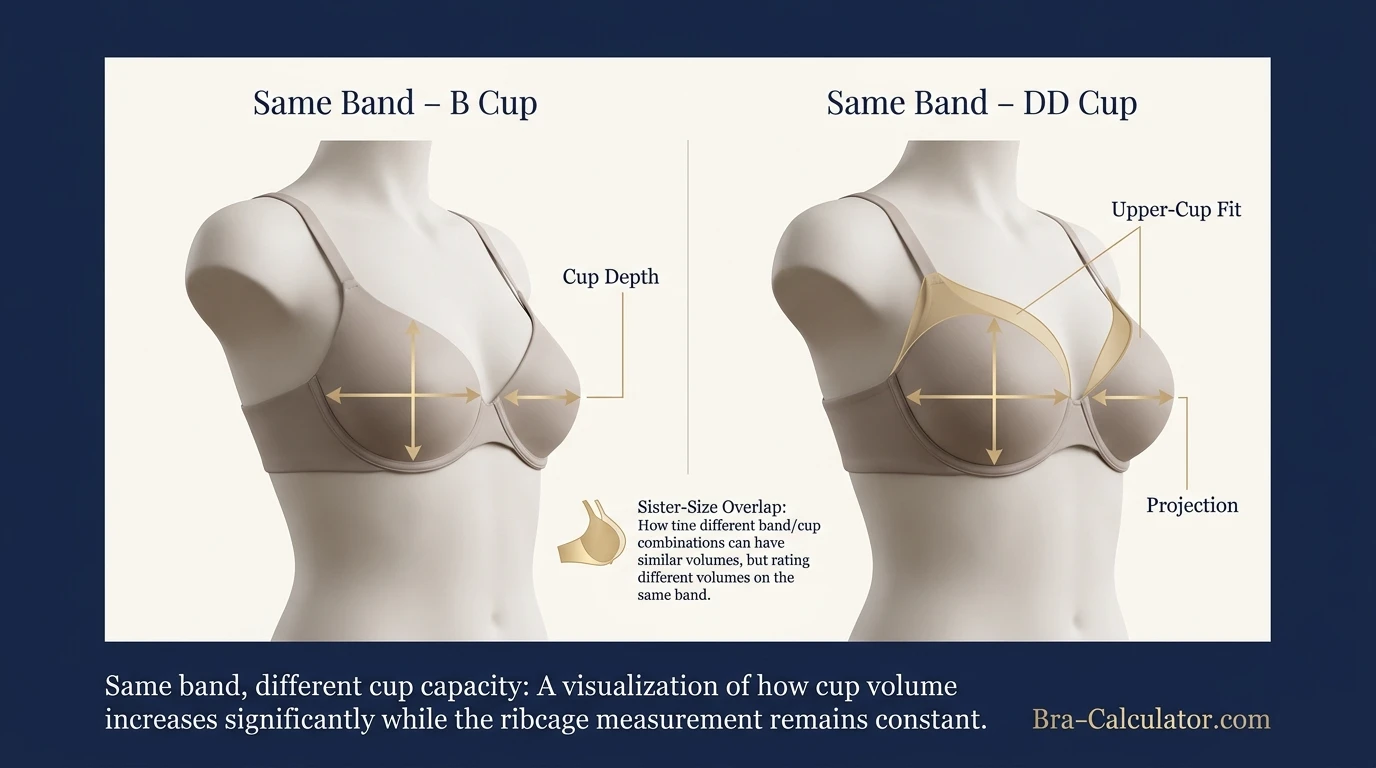
Real fit beats online myths. The right size is the one that looks calmer, sits smoother, and feels more secure on your own body.
In this range, many people discover that the larger cup does not look “too big” when the band and shape are correct.
Best Products to Test B Cup vs DD Cup
The product picks on this page are tailored to the support level and fit behavior that usually matter most in this cup range. Instead of repeating one generic set across every comparison, these picks reflect whether the page is dealing with small, medium, fuller, or advanced cup-depth behavior.

Structured T-Shirt or Full Cup Bra
- Balances smooth shaping with enough structure to show the real difference between cup levels.
- A strong choice when you are between mainstream cup sizes and need stable support.
- Use the same bra model in both cup sizes whenever possible for a fair comparison.
- Prioritize a secure band, smooth cup edge, and stable center gore over the label alone.

Balconette or Side-Support Bra
- Helps center tissue and shows whether the larger cup is needed for cleaner containment.
- Ideal when side tissue and upper-cup pressure are the biggest clues.
- Use the same bra model in both cup sizes whenever possible for a fair comparison.
- Prioritize a secure band, smooth cup edge, and stable center gore over the label alone.

Encapsulation Sports Bra
- Useful when motion makes fit problems more obvious than a mirror check.
- Great for exposing bounce, compression, or hidden cup insufficiency.
- Use the same bra model in both cup sizes whenever possible for a fair comparison.
- Prioritize a secure band, smooth cup edge, and stable center gore over the label alone.
How Body Shape Changes B Cup vs DD Cup
Body shape is one of the biggest reasons online bra comparison pages can mislead readers. The same cup letters can look softer, fuller, wider, or more projected depending on where breast tissue sits and how the torso is built.
Difference May Look Bigger
With less torso space, the gap between B and DD may appear more noticeable and can change neckline fit quickly.
Watch cup heightDifference May Look More Balanced
Volume can distribute across a wider chest, so support and wire width may matter more than visual drama.
Check wire widthDepth Shows Fast
If you are projected, the larger cup often solves center pressure and top-edge cutting more clearly.
Depth mattersShape Can Override Size
Shallow breasts may not fill a taller larger cup even when measurements suggest the letter is right.
Shape match firstB Cup vs DD Cup Sister Sizes
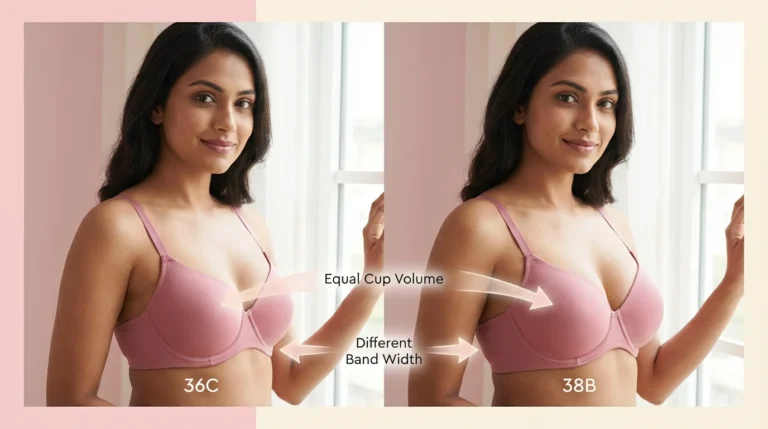
Sister sizing lets you keep similar cup volume while changing the band. That is essential when the cup comparison feels close but the band is clearly too loose or too tight. The usual rule is simple: down one band, up one cup; up one band, down one cup.
If the same-band comparison feels close, sister sizing can help separate a band issue from a true cup-depth issue.
| Situation | Try | Why |
|---|---|---|
| Smaller cup spills | Move to DD on the same band | You likely need more cup depth, not just a different band. |
| Larger cup gaps | Move to B or a different cup shape | The larger cup may be too deep, too tall, or too open. |
| Band rides up | Down one band, up one cup | Keep similar volume with firmer support. |
| Band feels genuinely tight | Up one band, down one cup | Keep similar volume while giving the ribcage more room. |
B vs DD: Real Fit Differences
- Less same-band cup depth
- Better when the larger cup gaps
- Can feel cleaner on shallow shapes
- May cut in if you actually need more space
- More same-band cup depth
- Better when the smaller cup spills
- Often cleaner for projected tissue
- May gap if the shape is wrong
- Often suits shallower or lower-volume tissue
- Can look smoother if the larger cup is too tall
- Best judged in the same bra model
- Often suits fuller or more projected tissue
- Can improve upper-cup smoothness
- Needs shape compatibility as well as depth
- Can feel light and stable when correct
- May become uncomfortable if tissue is compressed
- Often relies on band accuracy for support
- Can relieve pressure if the smaller cup is too tight
- May need more structure in fuller ranges
- Should improve containment, not just size label
- Try if DD wrinkles or stands away from the body
- Check cup edge under thin tops
- Do not fake support by overtightening straps
- Try if B spills, cuts in, or makes the gore float
- Check side wire and center containment
- Use brand charts for international conversions
Which Bra Styles Work Best for B Cup vs DD Cup?
The best styles below were chosen according to the support demands and fitting behavior usually seen in this specific comparison, not reused generically across every page. For the cleanest test, try both sizes in the same model before judging the cup letter.
Ideal for clear containment testing in wider cup gaps.
Great for lift and upper-cup assessment.
Great for cleaner forward shape and side containment.
Better than compression-only bras for honest support feedback.
Practical daily option once the correct cup depth is confirmed.
Often too light to judge a B vs DD gap accurately.
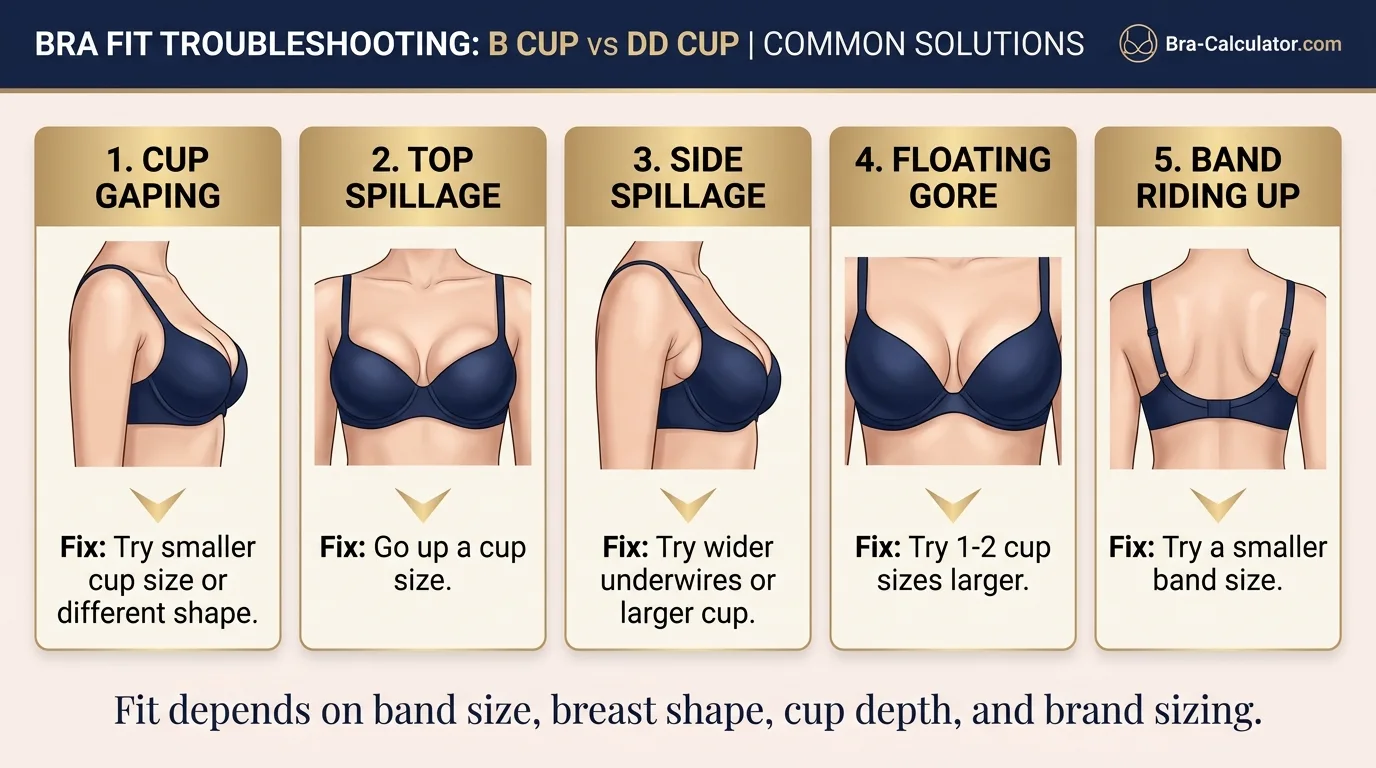
Common Fit Problems in B Cup vs DD Cup
This usually means the smaller cup lacks depth, openness, or both.
This often means the larger cup is too deep, too tall, or simply the wrong shape.
The cup may be too shallow near the center, especially if tissue is projected or close-set.
This is often a band problem disguised as a cup problem.
When the band and cups do not carry support correctly, the straps start compensating.
The smaller cup or wrong wire shape may not be surrounding the full root.
International Conversion Notes for B Cup vs DD Cup
International sizing can change the meaning of cup labels. Smaller letters are often more consistent, while DD, DDD, E, F, G, H, I, J, and K can vary sharply across brands. This is especially important for comparison pages because two labels may look different on paper while behaving similarly in a specific size chart.
Use the Global Bra Size Converter and the Brand Size Decoder before buying across regions.
Related Tools & Guides for B Cup vs DD Cup
| Guide / Tool | Why It Helps |
|---|---|
| Bra Size Calculator | Calculate your band and cup using real measurements rather than guesswork. |
| Cup Size Visuals | Understand visual volume without assuming cup letters are fixed body categories. |
| Sister Size Calculator | Adjust the band while keeping similar cup capacity. |
| Global Bra Size Converter | Check label differences across US, UK, EU, AU, and brand systems. |
| AI Smart Fit Bra Calculator | Diagnose gaping, spillage, strap digging, floating gore, and side tissue issues. |
Frequently Asked Questions
On the same band, DD has more cup depth than B. The actual visible difference depends on the band size, breast shape, and bra style.
Yes. Sister sizes, body shape, and different bra constructions can make different cup letters appear closer than expected.
Choose the size that contains all tissue cleanly, keeps the band level, and leaves the cup edge smooth without cutting in or gaping.
That usually means you are dealing with a shape mismatch. A different cup cut, stretch-lace edge, or wire shape may solve the problem better than the letter alone.
Absolutely. Cup letters only make sense when attached to a band. A better band can change the whole comparison.
Try both sizes in the same bra model, scoop all tissue into the cup, and then check the cup edge, side wire, center gore, and band stability.
Use the brand chart and the converter tools, especially for higher cup letters where naming systems vary more.
Do not chase the label alone. Use measurements, sister sizing, and real fit symptoms to choose the most supportive and comfortable option.
Find Your Best Cup Size
Use your measurements, fit symptoms, and sister-size options to decide whether B, DD, or a nearby band-and-cup combination gives the cleanest fit.