What Size Bra Should a Man With Gynecomastia Wear?
Let’s start with something most guides won’t say out loud: you are not the only man who has Googled this. Gynecomastia affects somewhere between 40% and 65% of men at some point in their lives, yet the conversation around what to actually do about daily comfort and appearance remains weirdly hushed. Finding the right support garment — whether that’s a sports bra, a compression vest, or a standard bra in the right size — is one of the most practical things a man with gynecomastia can do. And it starts with knowing your size.
This guide gives you everything: the measurement method, the size chart, the right garment for your situation, and honest troubleshooting for when things don’t fit quite right. No fluff. No judgment. Just the information you actually need.
Quick Answer: What Size Bra Should a Man With Gynecomastia Wear?
Most men with gynecomastia wear a size between 38B and 44D. To find your size: measure your underbust snugly for the band number, then measure your fullest chest point while leaning forward. Every inch of difference = one cup letter (1 in = A, 2 = B, 3 = C, 4 = D). For daily concealment, compression garments and high-impact sports bras in your correct measured size provide the flattest profile under clothing. The fastest way to confirm your exact size — including sister sizes and garment recommendations — is the free Gynecomastia Men’s Bra Size Calculator.
Understanding Gynecomastia in Men
Before we get into measurements and garments, it helps to understand what you’re actually dealing with — because the type of gynecomastia you have directly determines which garment will work best for you.
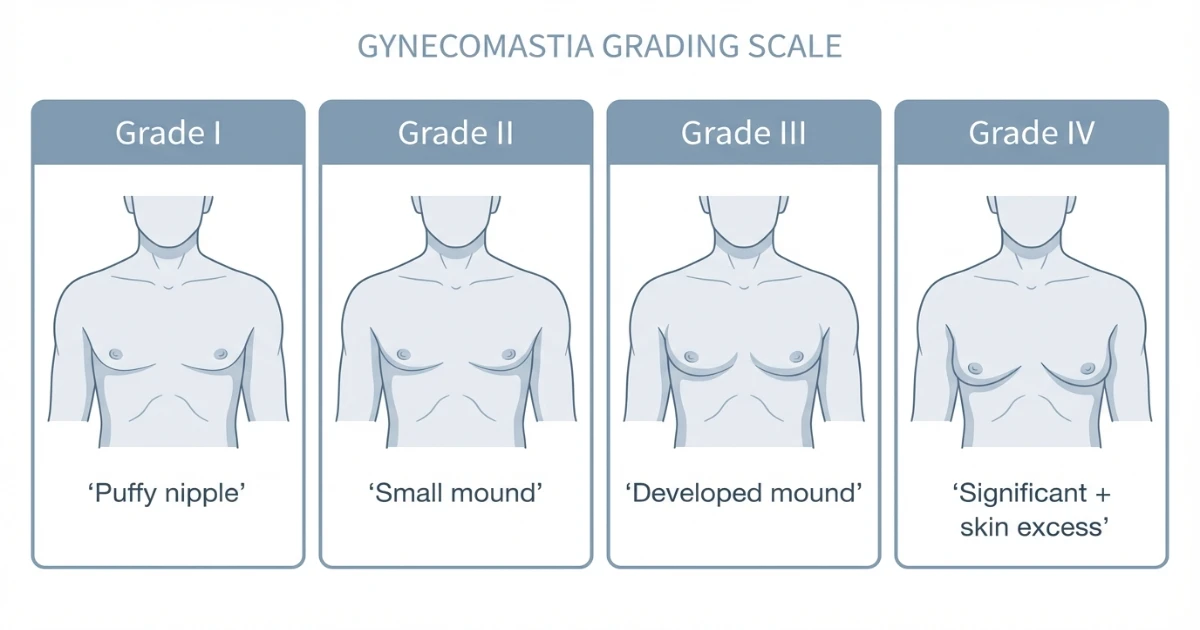
What Is Gynecomastia?
Gynecomastia is the medically recognised enlargement of breast tissue in males, caused by an imbalance between oestrogen and testosterone. It is not the same as pseudogynecomastia, which is caused purely by adipose (fat) tissue without any glandular component. True gynecomastia presents as a firm, slightly rubbery disc beneath the nipple — sometimes tender. Pseudogynecomastia feels uniformly soft. The distinction matters because glandular tissue resists compression in a way that adipose tissue does not.
Soft Adipose Tissue vs Firm Glandular Tissue
Press gently on the centre of your chest tissue. If it feels uniformly soft — like pressing into a pillow — it’s predominantly adipose. Medium-compression sports bras and compression vests will work very effectively. If you feel a firm, slightly rubbery disc (often described as feeling like a marble or a grape) beneath the nipple, that’s glandular tissue. You’ll need higher compression levels and may find that layering (compression vest under a shirt) gives better results than a single garment alone.
Puffy Nipples vs Full Breast Development
Puffy nipples — where only the areola and nipple protrude in a conical shape — are Grade I gynecomastia and the mildest presentation. Light-to-medium compression is usually sufficient. Men with Grades II–IV — where a visible, rounded breast mound has developed — benefit most from the measured band-and-cup system described in Section 4.
Temporary vs Persistent Gynecomastia
Pubescent gynecomastia commonly resolves within one to two years. In adult men, gynecomastia that has been present for more than 12–18 months is unlikely to resolve on its own. If that’s your situation, a well-fitted support garment is a practical, long-term daily tool — not a temporary workaround.
Post-Surgery Swelling Support
After gynecomastia reduction surgery, your surgeon will typically prescribe a compression garment for 4–8 weeks. Post-surgery, you’ll need your pre-surgery band size with a significantly smaller cup (swelling reduces projection quickly). This is why knowing your accurate band measurement before surgery is useful — it gives your surgeon and recovery garment provider a reliable reference point.
Do Men With Gynecomastia Actually Wear Bras?
Yes — and more of them than you’d expect. Communities dedicated to gynecomastia management consistently report that the majority of members use some form of chest support garment daily. The garments vary: some men prefer sports bras for their firm support and wide sizing range; others prefer compression vests for their discretion under formal wear; others use purpose-built men’s gynecomastia vests. The common thread is that they all use the same fundamental measurement system.
| Garment Type | Best For | Compression Level | Visibility Under Shirts | Size System |
|---|---|---|---|---|
| Sports Bra | Gym, athletics, daily wear | Medium–Firm | Low (racerback) | Band + Cup |
| Compression Vest | Office, formal, summer | Medium–Firm | Very Low | S/M/L or Chest cm |
| Chest Binder | Maximum flattening | Firm–Extra Firm | Minimal | Chest cm |
| Minimizer Bra | Reducing projection under dress shirts | Medium | Low (seamless) | Band + Cup |
| Full-Cup Bra | Grade III–IV comfort + shaping | Light–Medium | Moderate | Band + Cup |
For garments that use the band-and-cup sizing system (sports bras, minimizers, full-cup bras), you need your measurements in Section 4. For compression vests and binders, your underbust measurement in inches maps directly to the sizing. Either way, knowing your underbust is the first step.
How to Measure a Man’s Chest for the Right Fit
You need a soft measuring tape and about two minutes. Wear a thin t-shirt or no shirt — thick sweatshirts add an inch or more and will give you a band that’s too large.
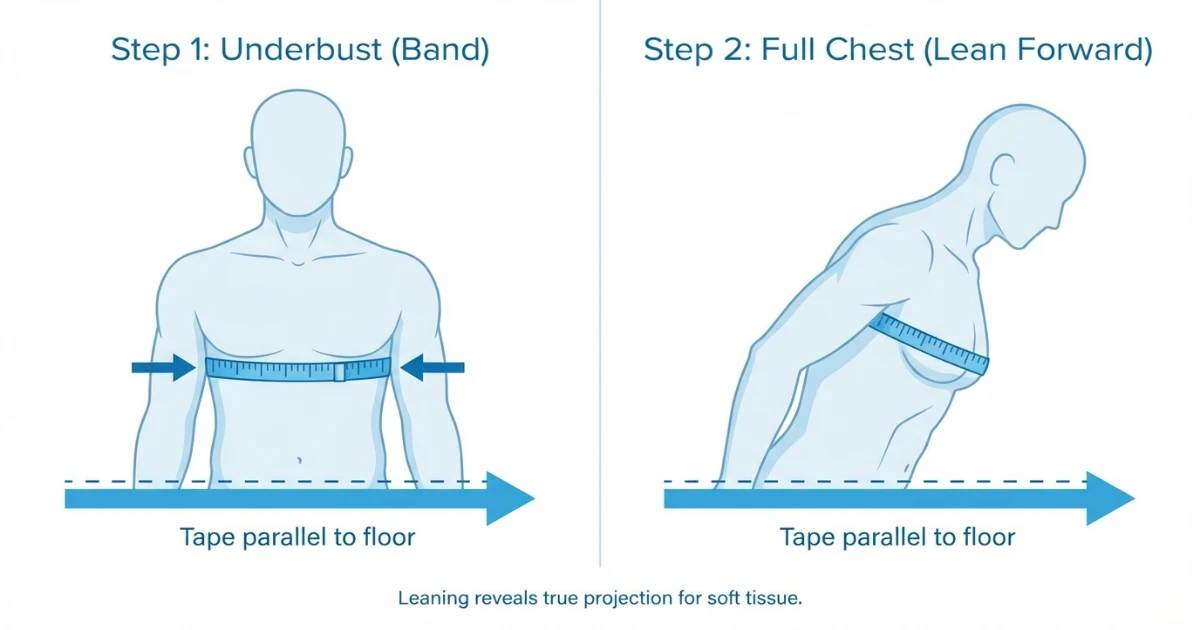
Measure over a thin t-shirt in front of a mirror, write the two numbers in your phone notes, and you’re done. No special equipment. No one needs to know.
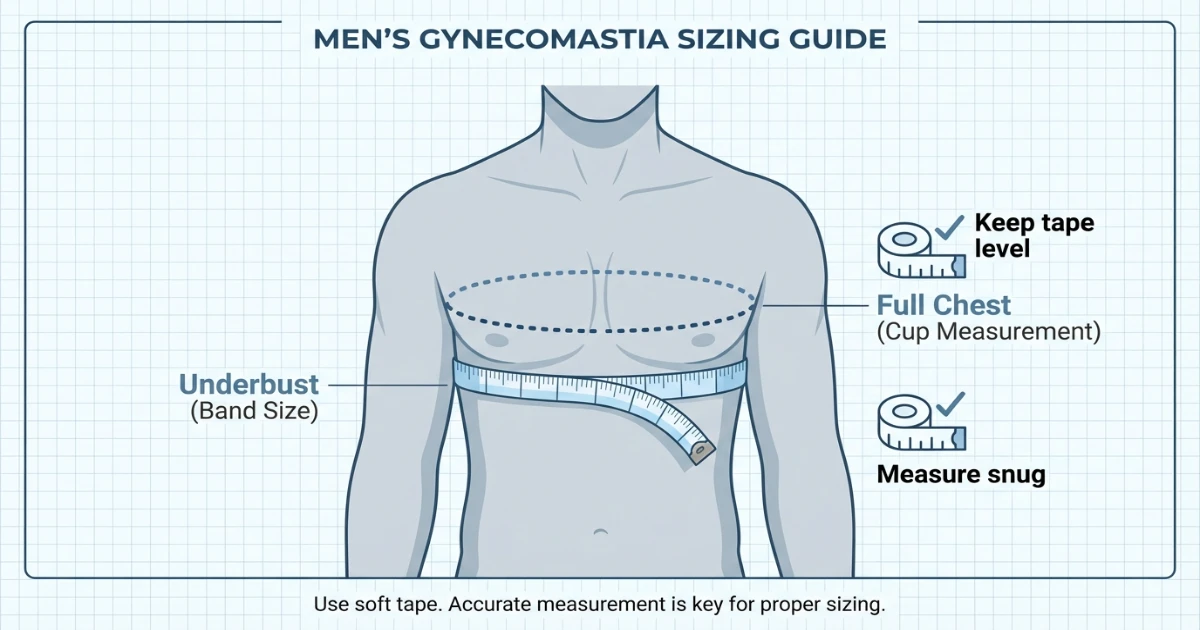
Step 1 — Measure Underbust (Band Size)
Wrap the tape snugly around your rib cage directly beneath the chest tissue, parallel to the floor. Firm but not compressing your ribs. Note this number in inches. If it lands on an odd number, round up to the nearest even — 37 becomes 38, 39 becomes 40. This is your band size.
Step 2 — Measure Full Chest (Cup Projection)
This is the step most guides omit — and it’s the one that changes everything. Lean forward at about 45 degrees before measuring. Wrap the tape around the fullest point of your chest tissue with it parallel to the floor. Leaning forward lets gravity fully reveal the volume of soft adipose tissue that may flatten or compress when you’re standing upright. Note this number in inches.
Step 3 — Calculate Your Cup Letter
Subtract your underbust from your full chest measurement. The difference determines your cup:
| Difference (inches) | Cup Letter (US) | Gynecomastia Grade (Approx) |
|---|---|---|
| Less than 1 in | AA | Very Mild / Puffy Nipples |
| 1 inch | A | Grade I |
| 2 inches | B | Grade I–II |
| 3 inches | C | Grade II |
| 4 inches | D | Grade II–III |
| 5 inches | DD / E | Grade III |
| 6 inches | DDD / F | Grade III–IV |
Example Calculations
Example A: Underbust 38 in, leaning chest 40 in. Difference = 2 in → 38B.
Example B: Underbust 42 in, leaning chest 45 in. Difference = 3 in → 42C.
Example C: Underbust 36 in, leaning chest 40 in. Difference = 4 in → 36D.
The Mistakes Most Men Make
Measuring over a thick sweatshirt adds 1–2 inches to the underbust and results in a band that’s too large (it will ride up within hours). Measuring chest circumference while standing fully upright underestimates projection for soft tissue types by 1–2 inches, resulting in a cup that’s too small (tissue spills at the sides). And rounding band size down to an odd number — rather than up to an even number — results in a band that digs in from day one.
For the most accurate result — especially if you have asymmetric tissue — use the Gynecomastia Men’s Bra Size Calculator. It handles asymmetry, tissue type, and garment style matching in one step. You can also check the full measurement guide for illustrated instructions.
Men’s Bra Size Chart Explained
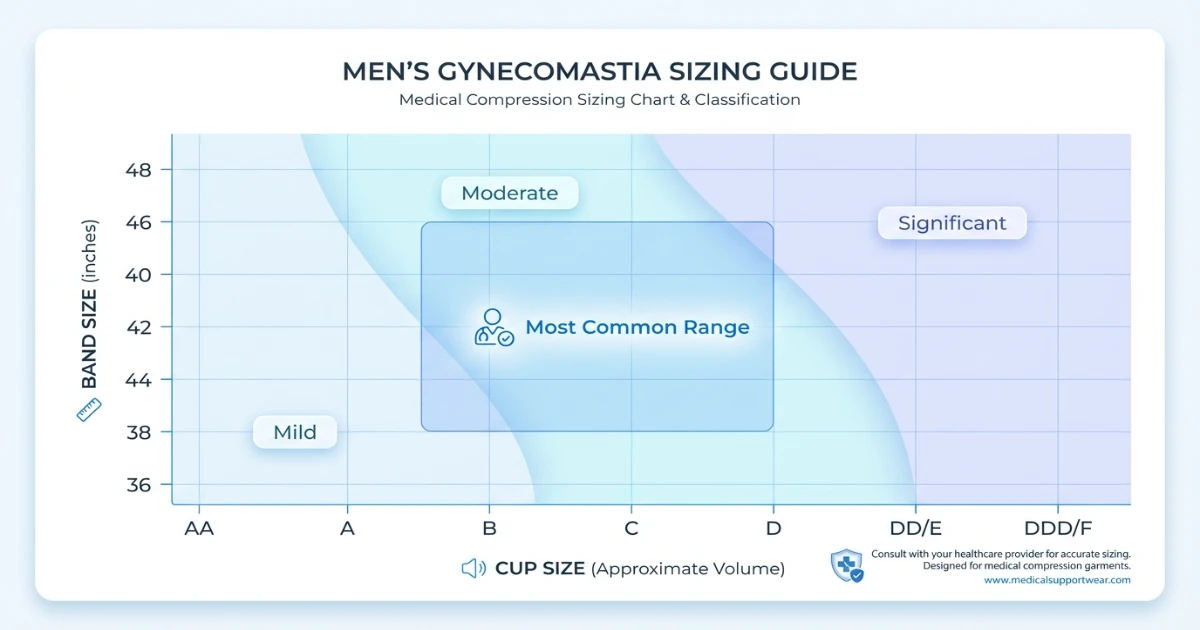
What Does 40C Mean on a Male Frame?
A 40C means a 40-inch rib cage circumference with approximately 3 inches of chest projection — typically Grade II–III gynecomastia. On a male frame this creates a visible, rounded chest profile that sits proud of the pectoral muscle. It’s one of the most frequently reported sizes among men in their 30s and 40s experiencing gradual weight-related or hormonal gynecomastia.
Is 38B Common in Gynecomastia?
38B is one of the most commonly reported sizes in men’s gynecomastia communities — a typical male chest circumference with a modest 2 inches of projection. It corresponds to the “puffy” chest appearance that many men try to conceal under fitted shirts. Light-to-medium compression garments work well at this size, and the range of available garments at 38B is wide.
Sister Sizes: Why They Matter for Men
Cup letters do not represent fixed volumes — they represent a relationship to the band. A 40C and a 42B contain the same breast volume; only the band length differs. If the 40 band is slightly snug but the cup fits, try 42B. If the 40 band fits but the cup slightly overflows, try 40D. These alternatives — called sister sizes — are explained in detail at bra-calculator.com/sister-sizes/.
| Your Size | Smaller Band (Tighter) | Larger Band (Looser) |
|---|---|---|
| 36B | 34C | 38A |
| 38B | 36C | 40A |
| 40C | 38D | 42B |
| 42C | 40D | 44B |
| 42D | 40DD | 44C |
| 44C | 42D | 46B |
International Size Conversions
UK brands (Marks & Spencer, Bravissimo, Panache) carry a much wider range of extended band sizes — which matters for men, since many need 38–48 bands that US brands don’t stock. UK band numbers are identical to US, but cup letters diverge above DD: US DD = UK E, US DDD = UK F, and so on. Use the Global Bra Size Converter for instant conversions. Full reference tables are also available in the Bra Size Charts.
What Compression Level Do You Need?
Finding the right size is step one. Finding the right compression level is equally important — and the step most guides skip. A correctly sized garment at the wrong compression level will either do nothing useful or cause genuine harm.
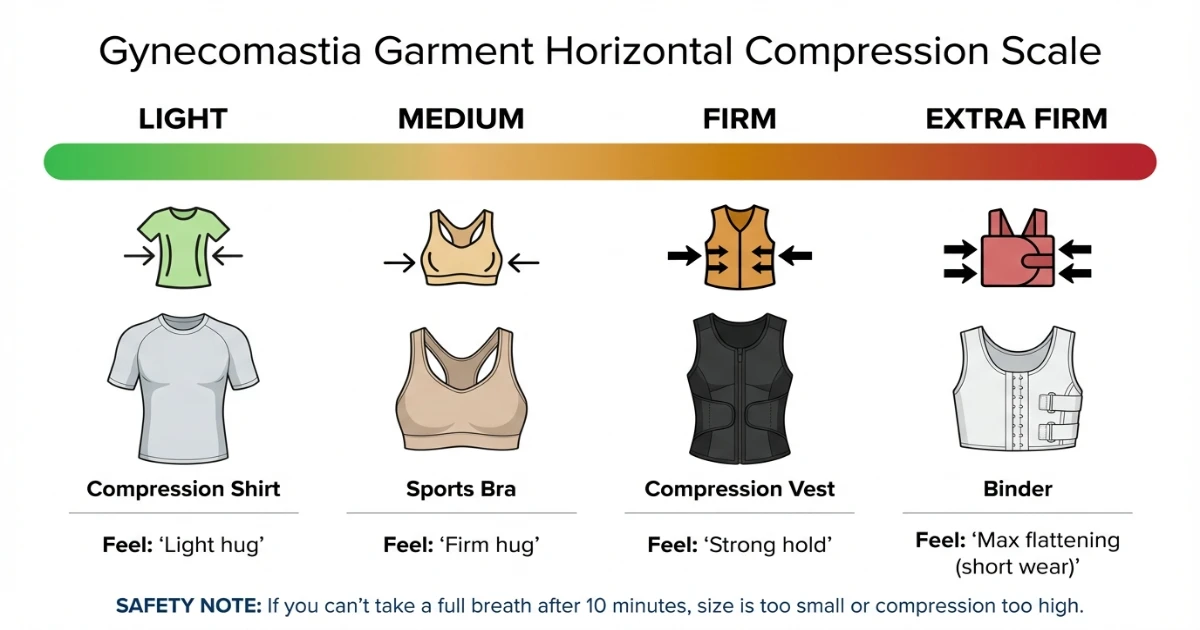
Light Compression — Puffy Nipples & Grade I
Soft-cup bralettes, seamless athletic compression shirts, and standard sports crop tops. Enough to reduce the nipple outline under a shirt without any meaningful chest discomfort. Works well for men with purely adipose-type puffy nipples. Not effective for glandular tissue or for men with a Cup C or larger.
Medium Compression — The Daily Workhorse (Grade II)
High-impact sports bras, compression vests rated 20–30 mmHg, and minimizer bras all operate in this range. Medium compression is suitable for the majority of men with gynecomastia for all-day wear — providing a flat-to-slightly-rounded chest profile without rib discomfort over an 8–10 hour day. Use the Sports Bra Calculator to find your activity-specific size within this range.
Firm Compression — Athletic & Glandular Tissue (Grade II–III)
Wide-band encapsulation sports bras, post-surgical compression vests, and medical-grade compression garments rated 30+ mmHg. Suitable for physically active men, those with glandular tissue, and anyone who needs maximum concealment. A garment at this level should feel genuinely firm but must allow a slow, full deep breath.
⚠️ Over-Compression Warning
Chronic use of an over-tight garment — particularly a chest binder worn too long — can cause rib bruising, shortness of breath, shoulder nerve compression, and in extreme cases, stress fractures. The rule is non-negotiable: if you cannot take a full, slow deep breath within 10 minutes of putting it on, the garment is too small or too firm. Never wear any compression garment for more than 8–10 continuous hours. Remove it immediately if you feel numbness, tingling, or rib pain.
The goal is a flat silhouette — not the complete elimination of all chest profile. Men with larger glandular gynecomastia (Grade III–IV) will typically retain some visible chest shape even in firm compression. That is both medically safe and visually acceptable.
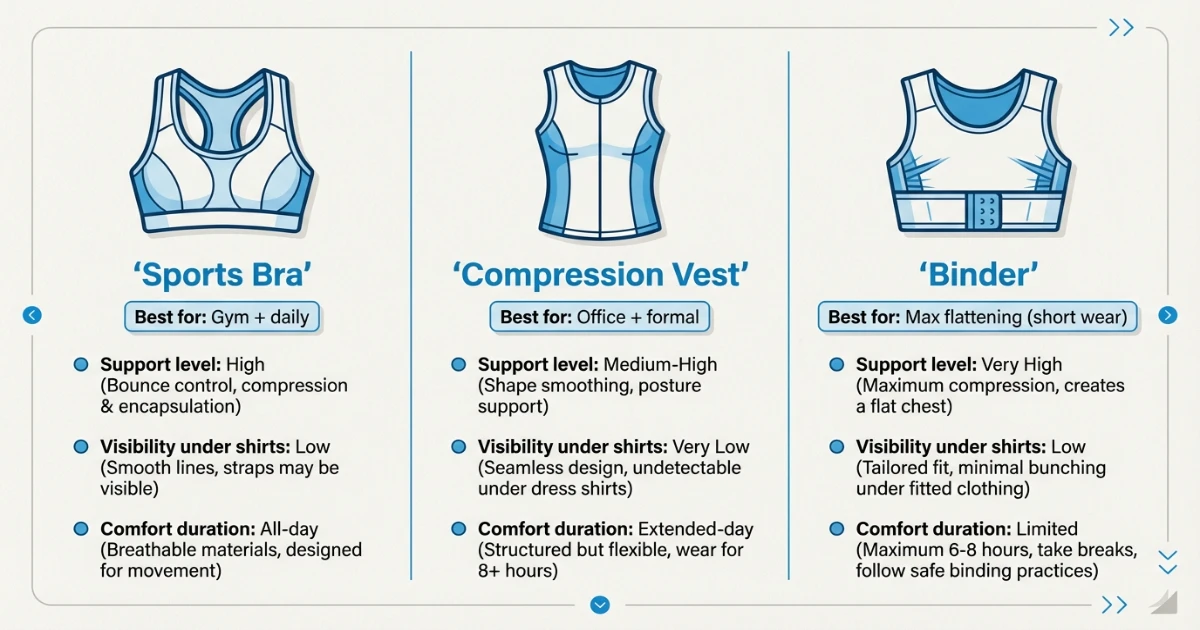
Sports Bra vs Compression Vest vs Chest Binder: What Works Best?
There is no single best garment. The right choice depends on your lifestyle, your clothing, and the severity and type of your gynecomastia. Here is an honest breakdown:
Sports Bra
- Best: Gym, running, daily
- Widest size range (AA–K)
- Racerback = minimal strap visibility
- Easy to size with calculator
- Excellent shape control
- ✅ Most versatile overall
Compression Vest
- Best: Office, formal wear
- No straps — fully discreet
- Smooth profile under dress shirts
- Full torso coverage
- Great for summer heat
- ✅ Most discreet choice
Chest Binder
- Best: Maximum short-term flat
- Highest concealment effect
- Not for all-day use
- Requires sizing caution
- Use 8 hrs max only
- ⚠️ Most aggressive option
Decision Tree: Which Should You Choose?
🌿 Find Your Best Garment
Q: Is your tissue soft and adipose-dominant?
→ Yes: Medium-compression sports bra or compression vest works well.
→ No (firm glandular tissue): High-impact sports bra or firm compression vest; consider layering both.
Q: Primary need: concealment under work clothing?
→ Yes: Compression vest — no straps, smooth profile under dress shirts and blazers.
→ No: Sports bra or standard bra at your measured size for ease and comfort.
Q: Are you physically active most days?
→ Yes: High-impact sports bra. Use the Sports Bra Calculator for an activity-specific fit.
→ No: Medium compression vest or minimizer bra at your measured size.
Q: Grade III or IV (full breast development)?
→ Yes: A cupped minimizer or full-cup bra at your measured size for all-day comfort, plus a firm compression vest for concealment on important occasions. Surgical consultation is also worth discussing with a doctor if quality of life is significantly affected.
Signs You’re Wearing the Wrong Size
A garment in the wrong size doesn’t just feel uncomfortable — it often fails entirely at its job. Here are the five most common fit problems men encounter, what’s causing them, and the exact fix:
Band Riding Up at the Back
The back of the garment creeps upward throughout the day. Cause: Band is too large. Fix: Drop one band size, go up one cup to maintain the same chest coverage (e.g., 40C → 38D). The band should stay level at the same height around the full torso.
Tissue Spilling at the Sides or Underarm
Chest tissue escapes the cup or garment edge, creating a visible bulge at the side. Cause: Cup too small, or garment doesn’t have adequate side coverage. Fix: Go up one cup size. Also look for garments with side panel construction — they capture axillary tissue that standard cups miss. See the Breast Shape Identifier for shape-specific garment recommendations.
Breathing Restricted or Rib Pressure
You feel compressed and cannot take a full breath. Cause: Garment is too small or compression level is too high for all-day wear. Fix: Return to your correct measured size. Choose a lower compression rating for daily wear and reserve high compression for gym sessions only. This is not a situation to push through.
Straps Digging In & Shoulder Grooves
Straps leave red marks by end of day. Cause: Band is too loose, so straps are bearing the support load. Fix: Go down one band size and up one cup size. The band should provide 80% of the support. Straps should be easy to slip a finger under — they are stabilisers, not load bearers.
Garment Rolling Up from the Bottom
The lower edge curls toward the rib cage by mid-afternoon. Cause: Band too tight relative to natural waist expansion during breathing, or a compression vest too short for your torso. Fix: Try a longer vest, use band extenders, or go up a band size with a longer torso style.
Is It Normal for Men to Wear Support Garments?
Completely. And it’s far more common than the silence around the topic suggests.
Chest support garments for men are used daily by long-distance runners (compression tops have been standard in men’s marathon running for decades), rugby players, post-surgical patients, bodybuilders managing gynecomastia from hormonal shifts, and millions of everyday men who simply find the right garment transforms their comfort and confidence.
The fact that these garments overlap with women’s sizing conventions is a practical reality of anatomy and manufacturing — not a statement of identity. Bodies have tissue. Garments have measurements. If a 40C sports bra provides the support you need, the label on the tag is irrelevant. What matters is that your chest doesn’t bounce, you can breathe properly, and you can move through your day without self-consciousness.

Gynecomastia is estimated to affect more men than prostate cancer — yet it receives a tiny fraction of the public health conversation. That is changing slowly. Men who manage it actively, on their own terms, consistently report improvements in posture, willingness to exercise, and general quality of life. Choosing to address it practically is not vanity. It’s common sense.
When a Support Garment Isn’t Enough
A compression garment manages appearance and daily comfort — it doesn’t treat the underlying cause. The following situations warrant a medical consultation:
- Pain or tenderness — mild tenderness during active development is common, but persistent or worsening pain needs evaluation.
- Rapid growth — tissue that increases noticeably over weeks (not months) should be assessed to rule out rare but serious causes including malignancy.
- Hard or fixed lumps — gynecomastia tissue is typically rubbery and slightly mobile. Hard, fixed, or irregular lumps require prompt evaluation.
- Nipple discharge — any discharge from male nipples requires immediate assessment.
- Associated hormonal symptoms — fatigue, significant loss of libido, or mood changes alongside gynecomastia may indicate a treatable hormonal imbalance (testosterone, oestrogen, or thyroid).
- Significant impact on daily life or mental health — if gynecomastia is preventing you from exercising, swimming, or living normally, a conversation with your GP or an endocrinologist is a rational and legitimate next step.
Gynecomastia surgery (subcutaneous mastectomy) is a well-established, typically outpatient procedure with high patient satisfaction rates. It is not cosmetic vanity — it is the surgical treatment of a recognised medical condition.
The Most Accurate Way to Find Your Gynecomastia Bra Size
The measurement formula in Section 4 gets you to roughly 80–85% accuracy — good enough to narrow down your range. But there are variables the formula alone can’t account for: asymmetric tissue (one side larger than the other, which is common), tissue type (soft adipose vs firm glandular), and how different garment styles fit differently even at the same nominal size.
The Gynecomastia Men’s Bra Size Calculator closes that gap. Built specifically for men, it accounts for tissue type and asymmetry alongside your two measurements, and outputs:
- Your confirmed band and cup size in US sizing
- Sister sizes for band flexibility when shopping compression vests or international brands
- International size conversions via the Global Bra Size Converter
- Garment style recommendations based on your gynecomastia grade and tissue type
- Compression level guidance for daily vs athletic use
Stop guessing your size.
Two measurements. Sixty seconds. Your confirmed size, sister sizes, and garment recommendation — built specifically for men with gynecomastia.
→ Open the Gynecomastia Size CalculatorFree. No email required. No account needed. 100% private — nothing is stored or shared.
You can also use the broader Bra Size Calculator for general sizing, the AI Smart Fit tool for shape-specific recommendations, or the Bra Cup Size Measurement Guide for a detailed illustrated reference. The Cup Size Visuals page is also useful for understanding how different cup sizes actually look on different frames.
Frequently Asked Questions
Most men with gynecomastia wear between 38B and 44D, depending on rib cage size and chest projection. Measure underbust (band) and leaning chest (cup), subtract the two for your cup letter. Confirm with the Gynecomastia Men’s Bra Size Calculator.
40C indicates moderate gynecomastia — a 40-inch underbust with 3 inches of projection, typically Grade II. It’s among the more common reported sizes. It is noticeable and benefits from medium-to-firm daily compression in a garment at your confirmed size.
Yes. Women’s bras in the correct measured size work well — full-cup styles and minimizer bras are most practical. The sizing system is identical. See the complete Bra Size Charts for reference across US, UK, and EU sizing.
No. Forcing a smaller band creates rib pressure without improving the visual result. Choose a garment with a higher compression rating at your true measured size instead. Sizing down introduces health risks without the benefit you’re looking for.
Like a firm, stable hug — snug enough that the chest doesn’t bounce during movement, but you can still take a slow, full deep breath at all times. If you can’t inhale fully within 10 minutes of putting it on, the garment is too small or the compression level is too high for all-day wear.
Community fitting reports suggest the most common range is 38B to 42C. Men with broader frames or more advanced gynecomastia (Grade III–IV) often fall in the 44C–46D range. Very mild cases (puffy nipples only) may measure as an A cup.
Yes — high-impact sports bras are among the most effective daily garments for gynecomastia management. They offer firm compression, lay flat under clothing, and are available in extended band sizes. Use the Sports Bra Calculator for your exact sport-specific size.
Compression significantly flattens visual appearance under clothing but does not reduce underlying tissue. Soft adipose-dominant tissue responds well. Firm glandular tissue resists compression and may ultimately require surgical treatment for permanent resolution. Use the Breast Weight & Volume Calculator to understand the scale of tissue you’re managing.
Use the Global Bra Size Converter. UK band numbers are the same as US, but cup letters diverge above DD. EU sizing uses centimetres for the band. Enter your US size and get instant conversions for any country.
Asymmetric gynecomastia is very common — one side being noticeably larger than the other affects a significant portion of men with the condition. When sizing, always measure and fit to the larger side. The Gynecomastia Men’s Bra Size Calculator includes asymmetry handling specifically for this reason.
More gynecomastia support guides
- Gynecomastia bra guide
- Gynecomastia bra size chart
- The Most Advanced Gynecomastia / Men’s Bra Size Calculator (2026 Complete Guide)
- Gynecomastia Workout Compression: 7 Best Gym Support Tips
- Gynecomastia Support for Travel: 7 Smart Comfort Tips
- Best Discreet Bras for Men with Gynecomastia (Under Clothes)
- Why Men with Gynecomastia Should Wear Bras: Comfort & Confidence