34DD vs 34DDD: What’s the Real Cup Size Difference? (Complete Bra Fit Guide 2026)
By the bra fitting team · Updated 2026 · 10 min read
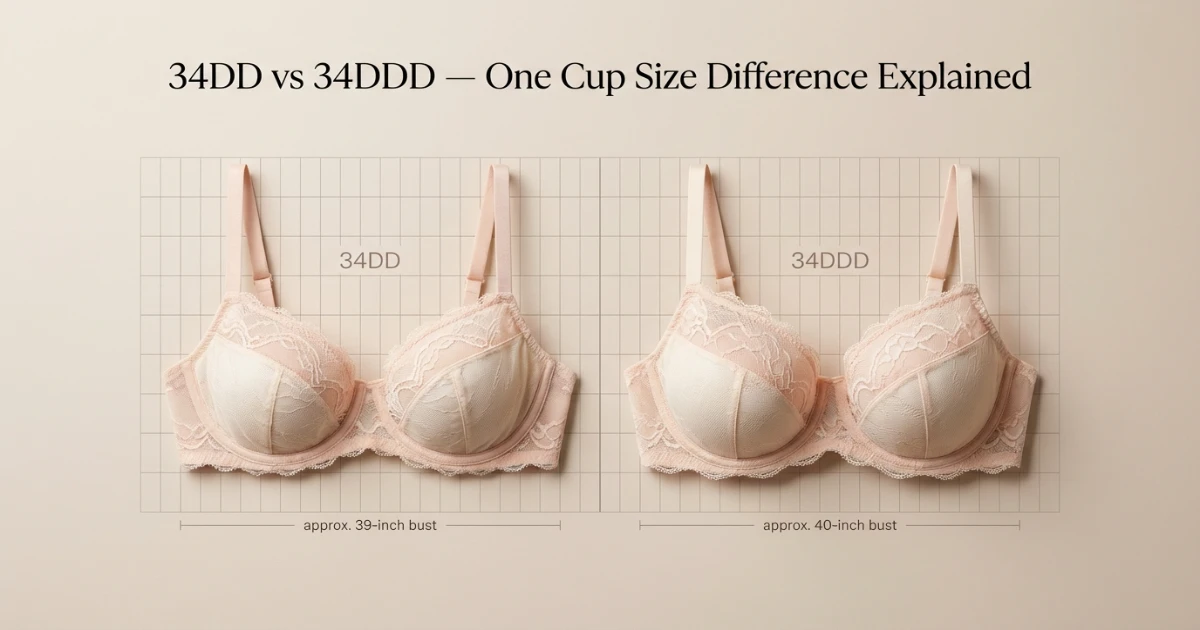
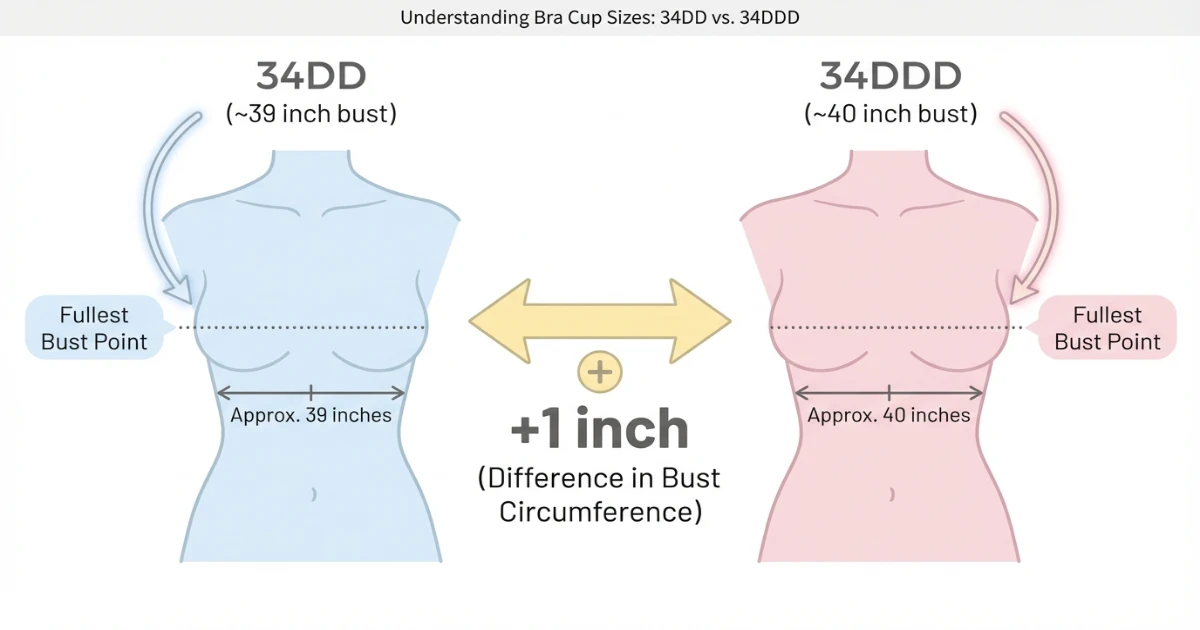
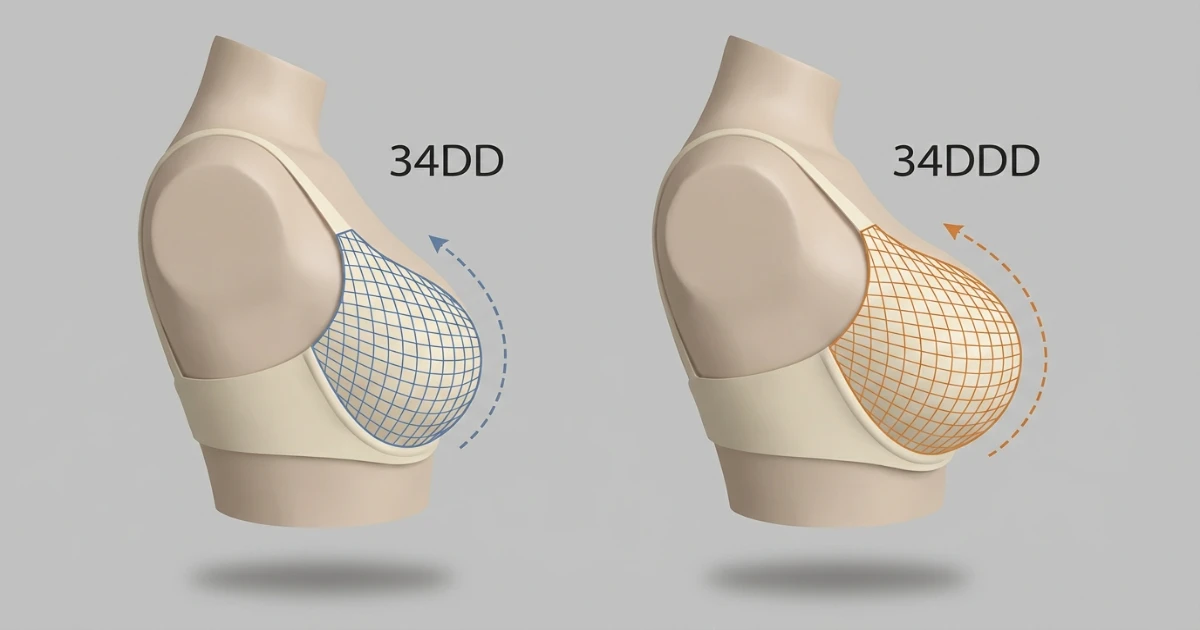
Yes — 34DDD is one full cup size larger than 34DD. Both bra sizes share the same 34-inch band measurement, but a 34DDD cup has approximately one additional inch of bust circumference at the fullest point — roughly 39 inches for a 34DD versus 40 inches for a 34DDD — creating meaningfully more cup depth, projection, and coverage.
Key Takeaways
- 34DDD holds approximately one inch more bust volume than a 34DD at the fullest point of the chest.
- Both sizes use the same 34-inch underbust band — band fit and torso support are identical.
- Moving from 34DD to 34DDD adds cup depth and forward projection, not just surface area coverage.
- A significant number of women wearing 34DD are actually closer to a 34DDD — cup sizes at the fuller end of the range are consistently undersized in mass-market retail.
- 34DDD is equivalent to a 34F in UK/European sizing — the same physical cup, just a different label.
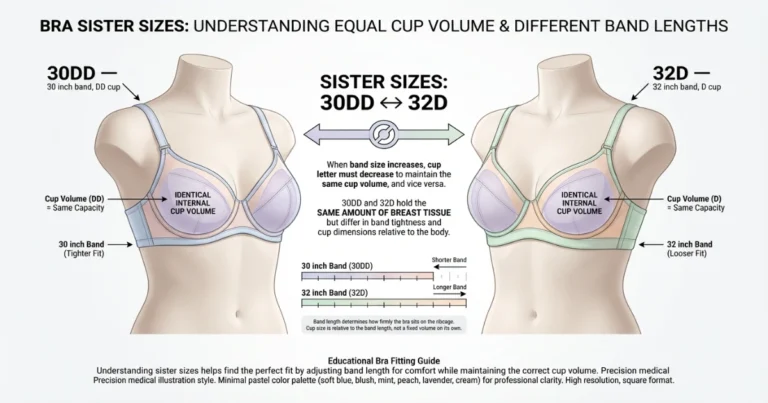
- Sister sizing means a 34DDD shares cup volume with a 32F and a 36DD — useful when a specific style is unavailable in your exact size.
- Signs you have outgrown a 34DD include persistent tissue overflow at the top and sides, underwire pressing into breast tissue, and significant strap tension.
- Bra sizing conventions differ between brands and countries — always treat size labels as a starting point, not a fixed measurement.
Bra Size Basics: What Do Band Numbers and Cup Letters Actually Mean?
Before comparing 34DD and 34DDD side by side, it helps to understand precisely what each part of a bra size communicates — because even experienced shoppers often misread the relationship between band numbers and cup letters.
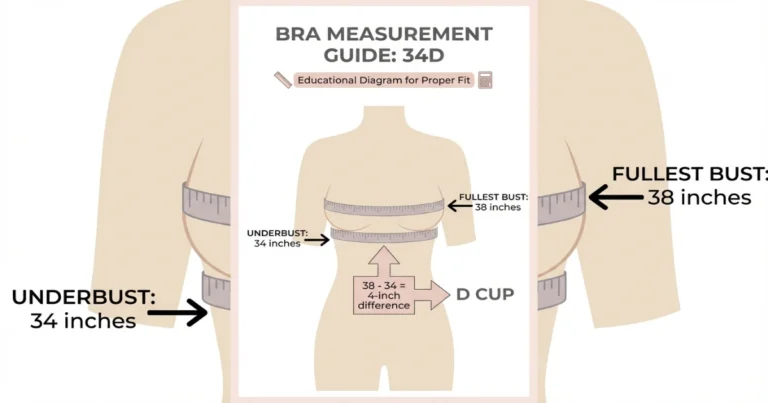
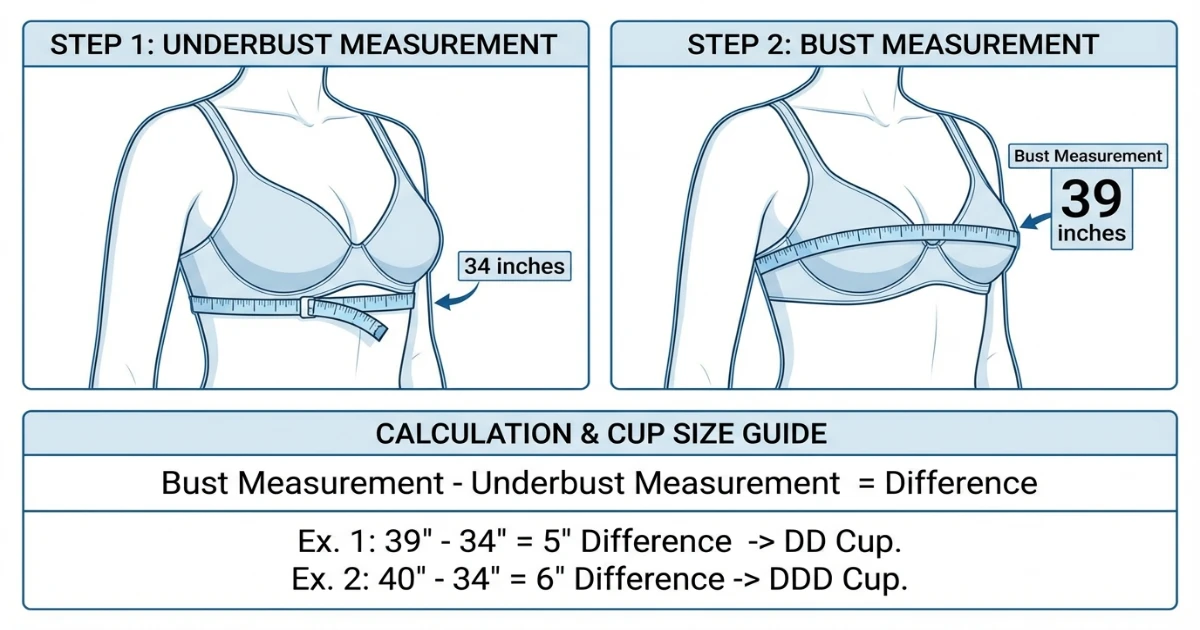
Reflects your underbust circumference — the measurement taken snugly around the ribcage directly beneath the breasts. A 34 band is typically worn by someone with an underbust of approximately 30–32 inches, depending on the measuring convention and how much stretch is applied.
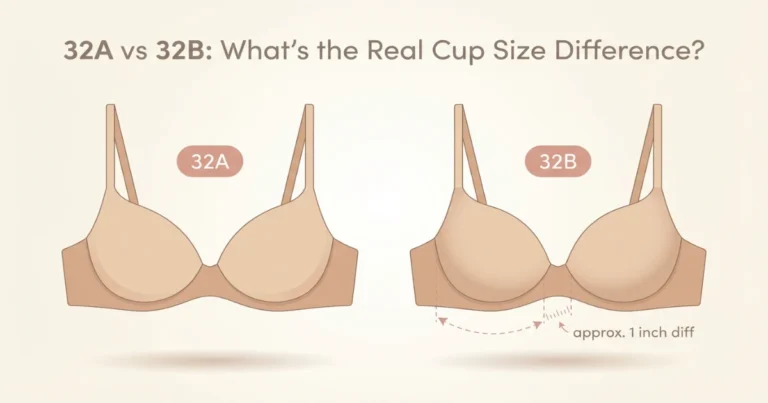
Reflects the difference between the bust measurement (fullest point) and the underbust measurement. Each cup letter represents approximately one inch of difference. DD = roughly 5 inches; DDD = roughly 6 inches. Volume is always relative to band size — a 34DDD and a 38DDD are very different in actual cup capacity.
This relative nature of cup sizing is why so many women find conventional size charts confusing. A DDD cup on a 30 band holds considerably less breast tissue than a DDD cup on a 38 band, even though the letters are identical. When we compare 34DD and 34DDD specifically, we are working with a fixed band, which means the only variable is cup depth and volume — a clean, useful comparison.
For the full letter-by-letter breakdown of how cup sizes scale, visit our complete bra size chart.
Measurement Breakdown: 34DD vs 34DDD in Real Numbers
Putting precise measurements to each size removes guesswork from the comparison. The figures below represent standard sizing averages — individual brands may vary by a small margin.
34DD
- Underbust: ~30–32 in (76–81 cm)
- Bust (fullest point): ~39 in (99 cm)
- Bust–underbust difference: ~5 in (12.5 cm)
- Cup depth: Full projection
- UK/EU equivalent: 34DD / 75DD
34DDD
- Underbust: ~30–32 in (76–81 cm)
- Bust (fullest point): ~40 in (102 cm)
- Bust–underbust difference: ~6 in (15 cm)
- Cup depth: Very full projection
- UK/EU equivalent: 34F / 75F
One practical note worth highlighting: in US sizing, DDD is the standard notation for the sixth cup size. In UK and most European sizing, the equivalent is called an F cup. This means that if you are shopping internationally or from a brand that uses UK sizing conventions, a 34F and a 34DDD are the same physical bra — just labelled differently. This distinction matters when buying imported brands or ordering from international retailers.
Not confident in your underbust and bust measurements? Our step-by-step bra measurement guide walks you through the process accurately at home using a standard soft tape measure.
Cup Volume Difference: How Much Bigger Is a DDD Cup Than a DD?
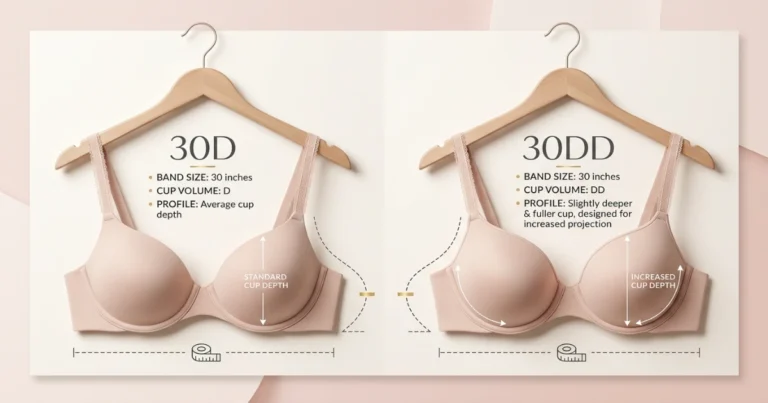
The single-inch difference in bust circumference between a 34DD and a 34DDD represents a more substantial change in three-dimensional cup volume than the raw number suggests. Cup volume is not a flat measurement — it scales outward, upward, and forward simultaneously. As the circumference at the fullest point increases, the interior dome of the cup expands in all directions to accommodate the additional tissue.
In concrete terms, a 34DDD cup compared to a 34DD:
- Projects further forward from the chest wall, requiring deeper cup construction
- Has a wider cup opening to accommodate a broader breast base
- Provides more upper-cup coverage, reducing the risk of tissue escaping at the neckline
- Requires stronger internal structure — most reputable brands reinforce underwires, side panels, and centre gores at this cup level to manage the additional weight
- Will often have wider-set underwires to match the naturally wider breast root that typically accompanies fuller breast tissue
It is also worth noting that at the DD and DDD range, the difference in underwire width between sizes becomes more pronounced than it does between, say, B and C cups. A DDD cup often requires a genuinely different underwire shape — not just a deeper one — which is why some styles that fit well as a 34DD will not simply “scale up” correctly to a 34DDD in the same design.
See how each cup letter compares visually in our illustrated cup size visual guide.
Real Fit Differences: What Actually Changes Between 34DD and 34DDD?
The most reliable way to identify whether you need to move between these two sizes is not a tape measure — it is observing how your current bra behaves during wear. Here is what different fit problems indicate:
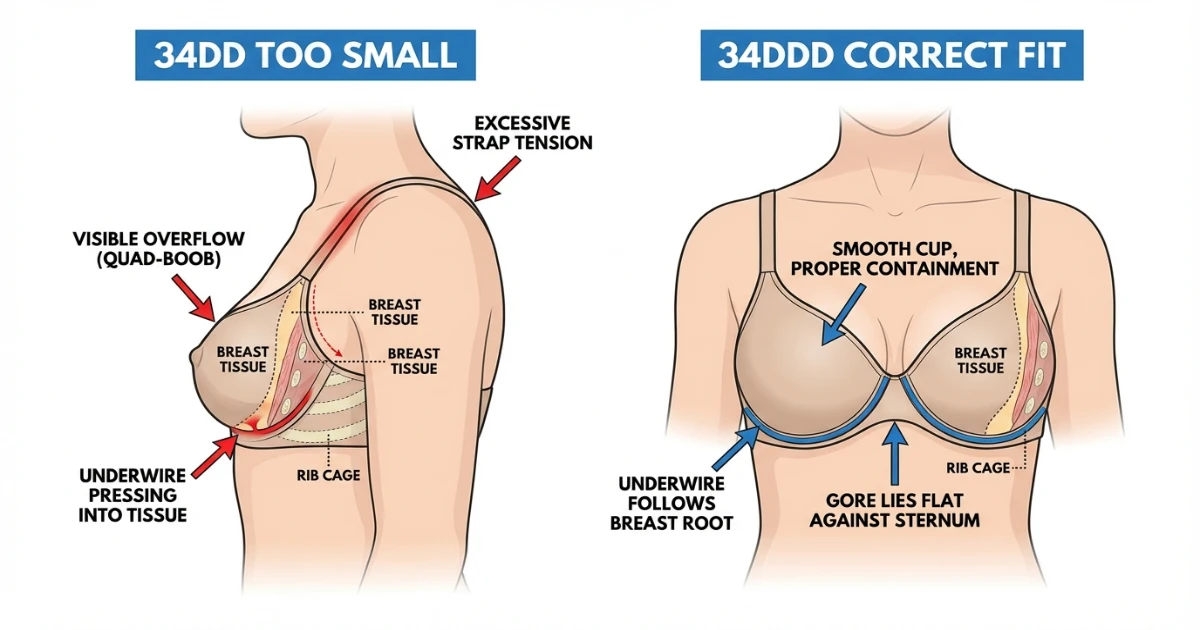
Signs Your 34DD Is Too Small (You May Need a 34DDD)
- Tissue overflowing at the top of the cup: If breast tissue creates a visible bulge above the cup’s upper edge, the cup is too shallow for your projection. This is the most common sign at this size range.
- Side tissue escaping toward the armpit: The cup’s outer wall is not tall or deep enough to contain breast tissue that extends toward the underarm. Moving to a DDD cup adds height and coverage on the outer panel.
- Underwire sitting on breast tissue: The underwire’s entire circumference should sit on the ribcage, behind all breast tissue. If any part of the wire presses into the underside or sides of the breast, the cup is too small for the breast’s root diameter.
- Strap dig-in without loosening helping: When straps compensate for inadequate cup support, tightening or loosening them will not fix the root problem. A deeper cup distributes weight more effectively across the band, reducing strap load.
- Bra riding up at the back: Though primarily a band issue, a cup that is too small can cause the bra to shift and ride up as it compensates for the mismatch between breast tissue and cup volume.
Signs Your 34DDD Is Too Large (A 34DD May Fit Better)
- Cup fabric wrinkling or folding at the top: Excess fabric with no tissue behind it is the clearest sign of too much cup volume.
- Centre gore not lying flat: If the gore tents away from the sternum, the cups are pulling forward because they are wider than your breast separation requires.
- Cups swivelling or shifting: In unstructured or soft-cup styles, the cups rotate laterally if there is insufficient tissue to anchor them in place.
For a comprehensive visual breakdown of each fit problem and what it indicates about your size, explore our complete bra fit problems guide.
Who Should Choose a 34DD?
A 34DD is the correct fit when your bust measurement consistently sits at approximately 39 inches against a 30–32 inch underbust. Beyond the numbers, certain breast shape characteristics tend to correspond well with the DD cup at the 34 band:
- Moderate projection with wider base: Breasts that are wider across the chest wall but do not project dramatically forward often find that a DDD cup is too deep at the apex, creating a gap at the top while overflow occurs at the sides. A well-fitted 34DD with a wider underwire shape typically resolves both issues.
- East-west or splayed placement: Tissue that points outward rather than straight forward requires a shallower cup with a broad underwire — a profile the DD cup accommodates better than the DDD in many styles.
- No significant overflow in your current 34DD: If all breast tissue is fully encapsulated and the cup shows no signs of stress — no wrinkles, no overflow, gore lying flat — you are in the right cup.
- 34DDD cups consistently wrinkle on you: Persistent excess fabric at the top of a DDD cup is a reliable indicator that your volume does not require it.
Understanding your breast shape is just as important as knowing your measurements when selecting cup depth and underwire width. Use our breast shape identifier tool to determine whether you have a shallow, projected, full-on-top, or east-west shape — then match that profile to the right styles.
Who Should Choose a 34DDD?
A 34DDD is appropriate when bust measurements sit around 40 inches against a 30–32 inch underbust, or when you are currently in a 34DD and experiencing any of the overflow or underwire-displacement symptoms described above. This cup size tends to serve:
- Full, projected breast shapes: Tissue that extends significantly forward from the chest wall requires the added cup depth that a DDD provides. In a shallower DD cup, projection causes the upper cup to gap open while the lower cup is under pressure simultaneously.
- Full-on-top shapes: Breasts that carry significant volume above the nipple line will overflow out of a DD cup at the neckline. A DDD provides the additional upper-cup coverage that contains this tissue properly.
- Close-set or centre-full shapes: Breasts that sit close together in the centre often correspond with fuller, more projected tissue overall — which benefits from the deeper encapsulation of a DDD cup.
- Anyone experiencing consistent strap or back discomfort in 34DD: When a cup is too small, the straps carry disproportionate weight. Upgrading the cup redistributes load back to the band — the correct primary support structure — and commonly eliminates shoulder and upper back discomfort without any other changes.
Still uncertain whether your fit issues point to a cup problem, a band problem, or a style-compatibility issue? Our bra fit diagnostic guide walks through each symptom methodically to identify the root cause.
Sister Sizes: The Same Cup Volume in a Different Band
Sister sizing is a fundamental concept in bra fitting that opens up significantly more options — particularly useful at the DD and DDD cup range, where not every style is produced in every size. The principle: moving up one band size requires moving down one cup letter to maintain identical cup volume, and vice versa.
34DD Sister Sizes
Same cup volume as 34DD:
34DDD Sister Sizes
Same cup volume as 34DDD:
A practical example: if you are a 34DDD but a particular bra style you love is not produced in that size, try a 36DD for a looser band feel, or a 32F for a firmer band. The cup volume inside all three sizes is the same — only the band tension and body fit will differ. This technique is especially valuable when shopping brands that use UK sizing, since their 34F is precisely the same bra as what US sizing calls a 34DDD.
Learn more about how sister sizing works across the full range in our sister size guide, or find your complete sister size options using the interactive sister size bra calculator.
Quick Bra Fit Test: 5 Steps to Check Right Now
Put your current bra through this five-point check while wearing it normally — no measuring tape required.
- Band check: Slide two fingers under the band at your back. If you can pull it more than two inches from your body, the band is too loose. If you cannot fit one finger, it is too tight. Proper band fit is the foundation of all other fit points.
- Gore check: Press the centre panel between the cups flat against your sternum. It should lie completely flush with no lifting, tenting, or gap. A floating gore nearly always indicates cups that are either too small or too widely spaced for your breast separation.
- Cup check — overflow: Look for breast tissue escaping over the top edge or sides of the cup. Any tissue outside the cup boundary means the cup is too shallow or too narrow for your breast shape.
- Cup check — gaping: Look for excess fabric folding inward at the top of the cup, particularly in moulded styles. Persistent wrinkling indicates the cup is deeper than your breast projection requires.
- Strap check: Straps should stay in place during normal movement without needing tension for support. If you rely on tight straps to prevent the bra from slipping down, the band is likely too large and the straps are compensating inappropriately.
Still unsure about your bra size?
Our AI-powered bra size calculator combines your measurements with breast shape data to give you a personalised fit recommendation — far more accurate than tape measures and standard size charts alone.
Try the AI Bra Size Calculator →34DD vs 34DDD: Full Comparison Table
| Feature | 34DD | 34DDD |
|---|---|---|
| Band size | 34 inches (same) | 34 inches (same) |
| Bust measurement | ~39 in / ~99 cm | ~40 in / ~102 cm |
| Bust–underbust difference | ~5 inches | ~6 inches |
| Cup depth / projection | Full | Very full / deeper |
| Cup volume relative | Baseline | ~1 cup size larger |
| International equivalent | 34DD (UK) / 75DD (EU) | 34F (UK) / 75F (EU) |
| Upper cup coverage | Full coverage | Extended coverage |
| Spillage risk (if tissue is larger) | Higher | Lower |
| Gaping risk (if tissue is smaller) | Lower | Higher |
| Best for: breast shape | Wide-based, moderate projection, east-west | Projected, full-on-top, centre-full, round |
| Sister sizes | 32E, 36D, 38C | 32F, 36DD, 38D |
| Mainstream availability | Widely available | Available; specialist brands offer more styles |
For a broader exploration of how these sizes relate to the full spectrum of bra sizing, try our bra size chart calculator.
People Also Ask: 34DD vs 34DDD Bra Size Questions
Is 34DDD bigger than 34DD?
Yes. A 34DDD is one full cup size larger than a 34DD. Both share a 34-inch band, but a 34DDD cup has approximately one additional inch of bust circumference at the fullest point — roughly 40 inches versus 39 inches for a 34DD — resulting in a deeper, more voluminous cup with greater forward projection.
How much bigger is a DDD cup than a DD cup?
A DDD cup represents approximately one inch more bust-to-underbust difference than a DD cup — 6 inches versus 5 inches on the same band. In practical terms, this means noticeably more cup depth, forward projection, and breast encapsulation. The volume difference is especially visible in moulded or padded cup styles held side by side.
Is 34DDD considered a large bra size?
A 34DDD sits at the fuller end of mainstream sizing but is by no means extreme. In UK sizing it is called a 34F, which is stocked by most specialist lingerie retailers. Bras above DD/E are often categorised as “full bust” sizes, which have their own dedicated fitting considerations around wire width, band strength, and strap placement.
What is the sister size of 34DD?
The sister sizes of a 34DD are 32E (smaller band, same cup volume), 36D (larger band, same cup volume), and 38C (even larger band, same cup volume). All three sizes contain the same amount of cup space as a 34DD — only the band circumference and cup letter change. This is useful when a style is unavailable in 34DD specifically.
Why does 34DD sometimes feel too small?
A 34DD can feel too small if your bust is closer to 40 inches than 39, if you have a projected breast shape that needs a deeper cup, or if the specific bra style runs small in the cup. Many women in the DD–DDD range find that mainstream retail consistently undersizes them. Try a 34DDD, or its sister size 32F, as an alternative.
Can someone wear 34DDD instead of 34DD?
Yes, when the measurements and fit evidence support it. If bust measurements sit around 40 inches, or if fit problems like cup overflow, underwire displacement, or strap dig-in occur consistently in a 34DD, trying a 34DDD is the logical next step. Always assess fit on the body — measurements provide a starting point, not a verdict.
Does cup size change with band size?
Yes — this is the basis of sister sizing. As band size increases by two inches, the cup letter decreases by one to keep internal cup volume constant. For example, 34DDD = 36DD = 38D in terms of cup space. As band size decreases, the cup letter increases: 34DDD = 32F. The physical volume inside all three is identical.
How do DDD cups compare to DD cups in terms of support?
Support level depends primarily on the band, not the cup. A 34DDD and a 34DD provide the same band-based support because the band is identical. However, in a 34DDD the cup is better able to contain and distribute the weight of fuller breast tissue, which indirectly reduces strap and shoulder pressure compared to wearing a too-small 34DD.
Is 34DD a medium bra size?
In mainstream retail terms, a 34DD is typically categorised as a medium-to-full bust size. It is substantially more common than it was two decades ago as fit education has improved average cup sizing upward. A 34DD is among the most commonly fitted sizes in specialist lingerie stores in the US and UK.
What happens if your bra cup is too small?
Wearing a cup that is too small causes breast tissue to escape over or around the cup edges, underwire to press into breast tissue, straps to carry excessive load, and overall reduced lift and shape. Over time, consistent poor cup fit can contribute to neck, shoulder, and upper back discomfort and can affect posture in women with fuller busts.