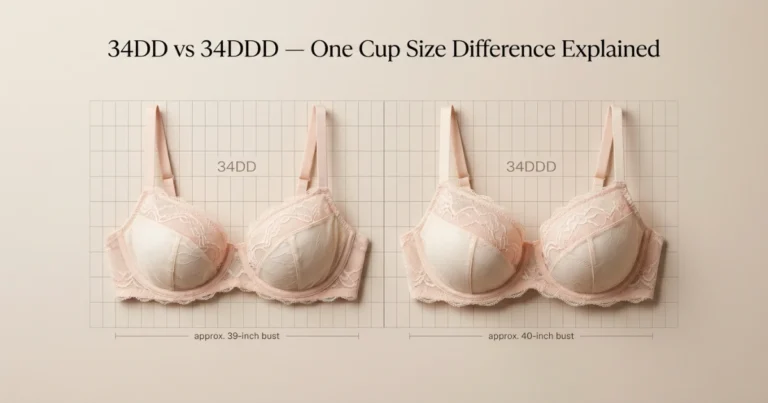
34B vs 38B: Why the Same Cup Letter Doesn’t Mean the Same Size (2026 Guide)
By the bra fitting team · Updated 2026 · 10 min read
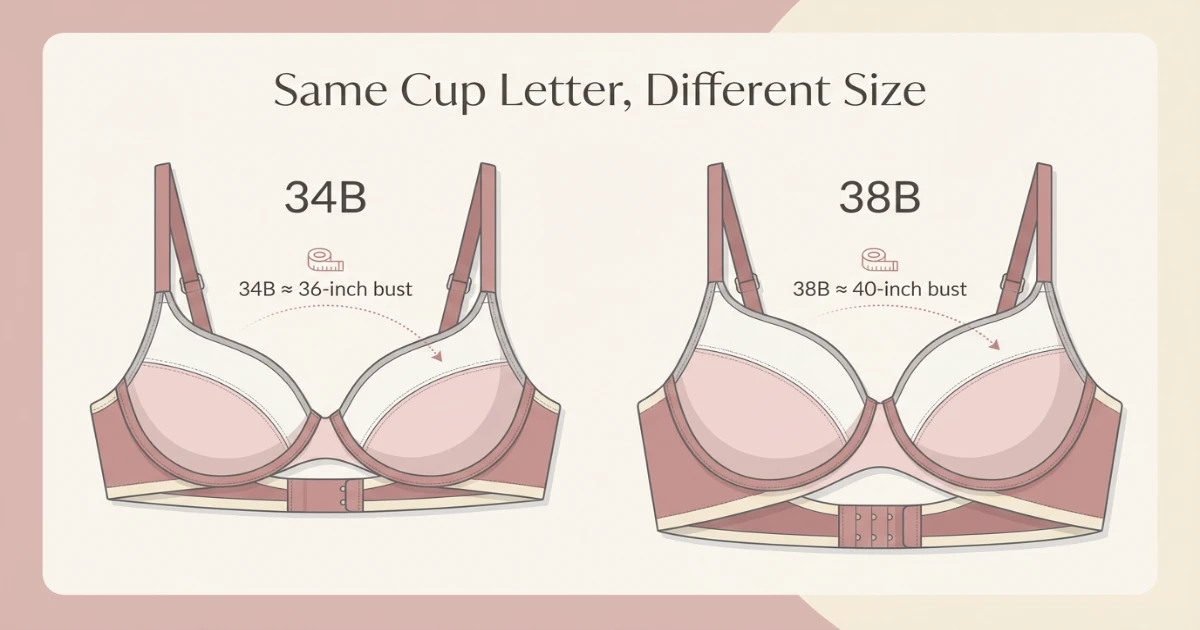
Yes — 38B is significantly larger than 34B, even though both use the letter B. A B cup represents a 2-inch difference between underbust and bust, but on a 38 band that 2-inch difference occurs at a much wider starting circumference, producing a physically larger, deeper, and more voluminous cup than a B cup on a 34 band.
Key Takeaways
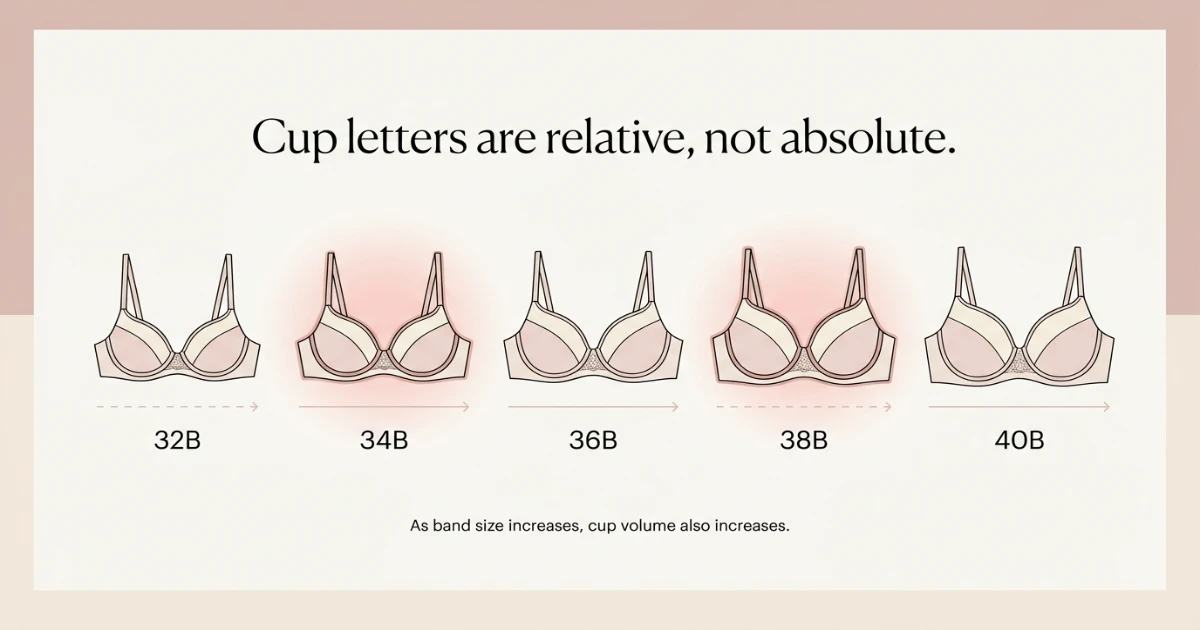
- Cup letters are relative, not absolute. A B cup on a 38 band contains considerably more breast volume than a B cup on a 34 band.
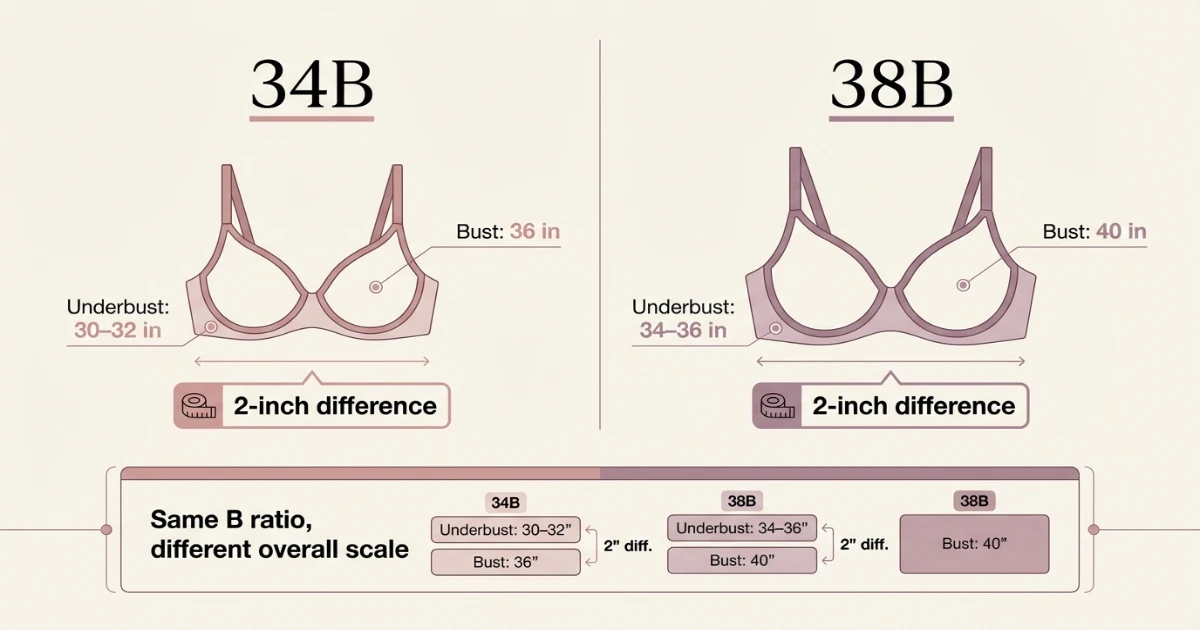
- The 38B bust measures approximately 40 inches at the fullest point; the 34B bust measures approximately 36 inches — a 4-inch difference in total circumference.
- Band size determines how tightly the bra wraps around your ribcage — a 34 band fits a 30–32 inch underbust; a 38 band fits a 34–36 inch underbust.
- Wearing the wrong band size is one of the most common bra fit errors — up to 80% of women are estimated to wear a band that is too large, meaning cups that are too small as a consequence.
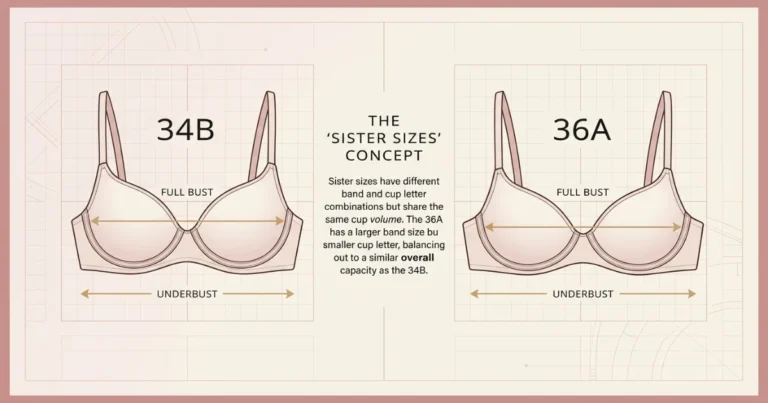
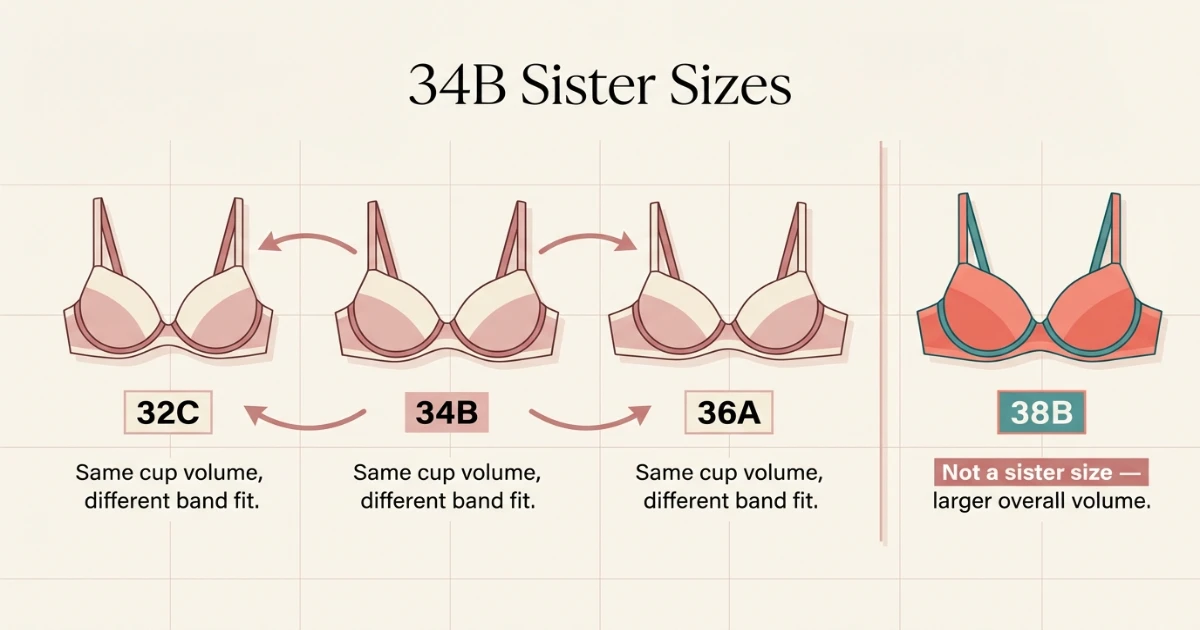
- Sister sizing links 34B and 36A (same cup volume, different band) but not 38B, which is a genuinely different volume class entirely.
- A tighter, correctly fitted band provides the majority of a bra’s support — the band, not the straps, should carry around 80% of breast weight.
- The correct bra size is determined by your actual underbust and bust measurements — not by the size you wore previously or by what mainstream retailers most commonly stock.
- Bra sizing varies between brands — always try before committing, and use measurements as your starting point rather than a fixed rule.
Understanding Bra Band Size: The Foundation of Bra Fit
The band size in a bra — the number that precedes the cup letter — is the single most important measurement in bra fitting. It dictates where the bra sits on your body, how much structural support it delivers, and, crucially for this comparison, how large the cups actually are.
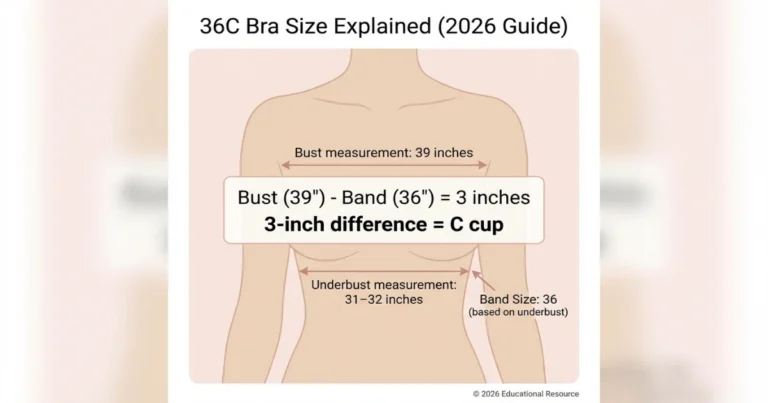
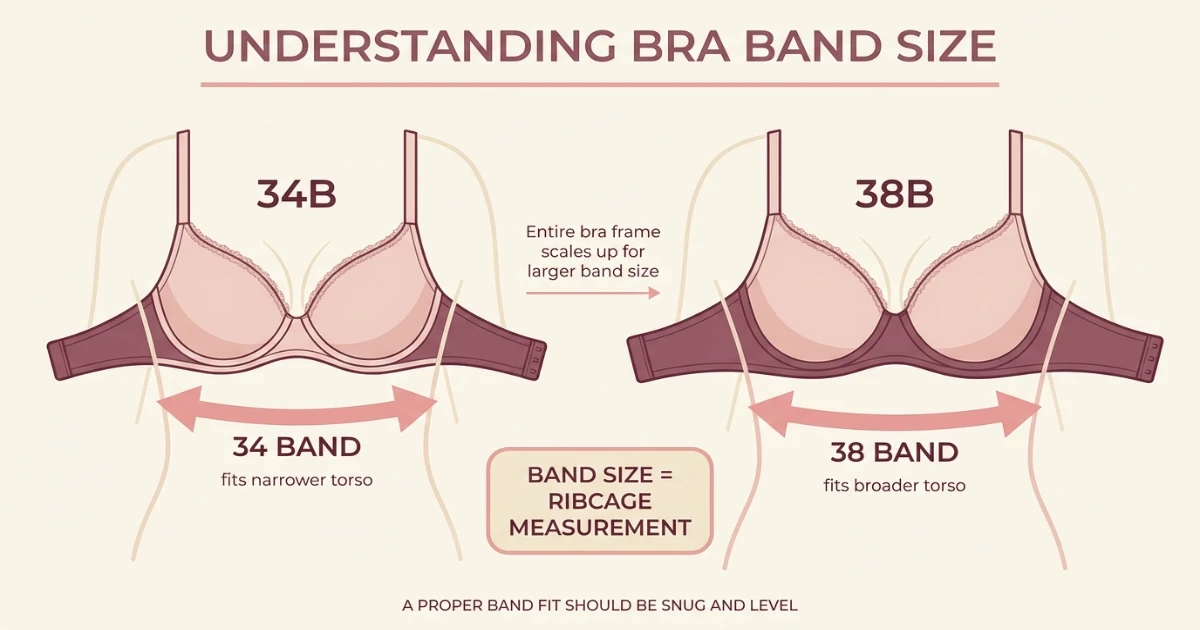
Band size corresponds to the circumference of your ribcage directly beneath the breasts. A 34 band is worn by someone with an underbust of approximately 30–32 inches; a 38 band fits an underbust of approximately 34–36 inches.
A correctly fitted band provides approximately 80% of a bra’s total support. It anchors the bra horizontally around the torso, preventing the bra from riding up and keeping the cups positioned correctly over the breast tissue.
Because cup volume is calculated as a proportion of the band circumference, a larger band produces larger cups — even with an identical cup letter. This is the central reason 34B and 38B are not equivalent sizes.
A band that is too large allows the bra to rise at the back during wear, shifting the cups downward and forward so they no longer sit correctly over the breast. A band that is too small creates visible skin bulge at the sides and back, and may cause discomfort around the ribcage — particularly during extended wear or physical activity.
Finding your correct band size requires one simple measurement taken with a soft tape measure. Follow our detailed bra measurement guide to get an accurate underbust reading at home.
Measurement Breakdown: 34B vs 38B in Real Numbers
The numbers below make the difference concrete. A B cup always represents a 2-inch difference between underbust and bust — but as the underbust measurement grows, so does the total bust circumference required, and therefore so does the physical size of the cup.
34B
- Underbust: ~30–32 in (76–81 cm)
- Bust (fullest point): ~36 in (91 cm)
- Bust–underbust difference: ~2 in (5 cm)
- Cup depth: Shallow to moderate
- Band tension: Firm and supportive
38B
- Underbust: ~34–36 in (86–91 cm)
- Bust (fullest point): ~40 in (102 cm)
- Bust–underbust difference: ~2 in (5 cm)
- Cup depth: Moderate, wider base
- Band tension: Relaxed, wider circumference
The bust-to-underbust difference is identical in both sizes — 2 inches — which is why both carry the letter B. But the absolute bust measurement differs by 4 inches: 36 inches for a 34B versus 40 inches for a 38B. Those 4 inches represent not just a wider band but a physically larger cup opening, deeper cup cavity, and broader underwire footprint.
Think of it this way: a B cup on a 38 band is constructed to enclose the same proportional amount of breast tissue as a B cup on a 34 band, but scaled up to fit a body with a 38-inch ribcage. The cup letter describes a ratio; the band number describes the scale at which that ratio is applied.
See how B cups compare across every band size in our complete bra size chart.
Cup Volume Scaling Chart: Why the Same Cup Letter Can Still Be a Different Size
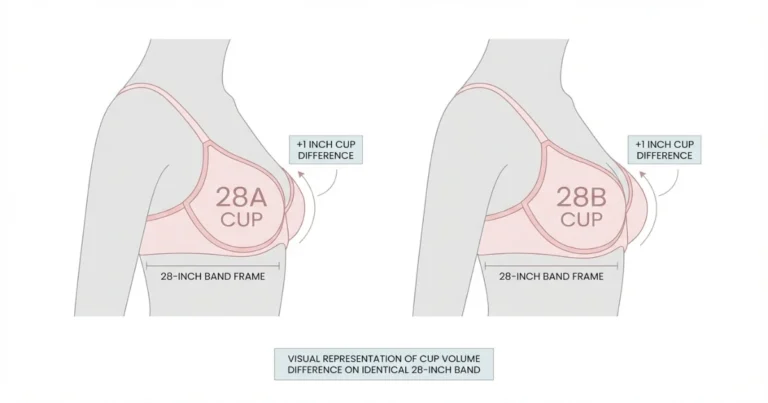
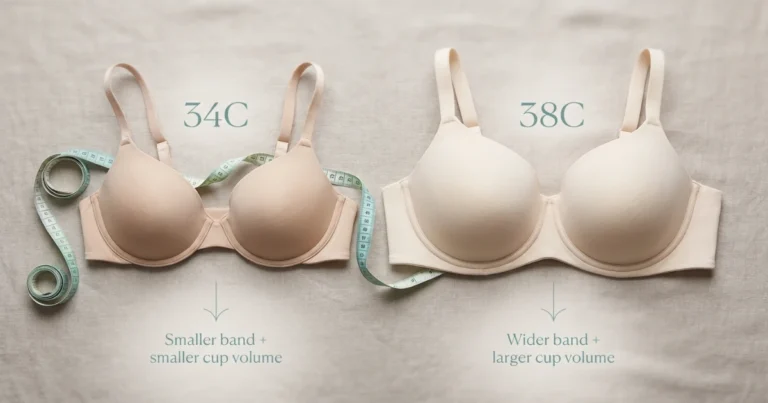
One of the most misunderstood parts of bra sizing is that a cup letter is not a fixed volume on its own. A 32C, 34C, and 36C do not all hold the same breast volume. As the band size increases, the cup volume increases too. That is why comparisons like 32C vs 36C, 34B vs 38B, and 34C vs 38C are so important for understanding real bra fit.
Volume Scaling Table
Use this chart to understand how cup letters scale across different band sizes. This helps explain why the same letter can feel very different from one band to another.
| Band Size | A Cup | B Cup | C Cup | D Cup | DD Cup |
|---|---|---|---|---|---|
| 30 | Smallest A volume | Smallest B volume | Smallest C volume | Smallest D volume | Smallest DD volume |
| 32 | Larger than 30A | Larger than 30B | Larger than 30C | Larger than 30D | Larger than 30DD |
| 34 | Larger than 32A | Larger than 32B | Larger than 32C | Larger than 32D | Larger than 32DD |
| 36 | Larger than 34A | Larger than 34B | Larger than 34C | Larger than 34D | Larger than 34DD |
| 38 | Larger than 36A | Larger than 36B | Larger than 36C | Larger than 36D | Larger than 36DD |
Example: 36C holds more breast volume than 32C, even though both use the letter C.
Why This Matters for Bra Fit
Many bra fit problems happen because people focus only on the letter and ignore the band. In reality, the band changes the frame of the bra, the wire width, and the total cup volume. That is why one bra may feel too loose, too tight, too shallow, or too small in the cups even when the letter seems correct.
- Same letter, different total size: a 34B and 38B are not the same overall size because the 38B cup is larger.
- Same band, one cup step up: pages like 34C vs 34D explain pure cup progression on the same band.
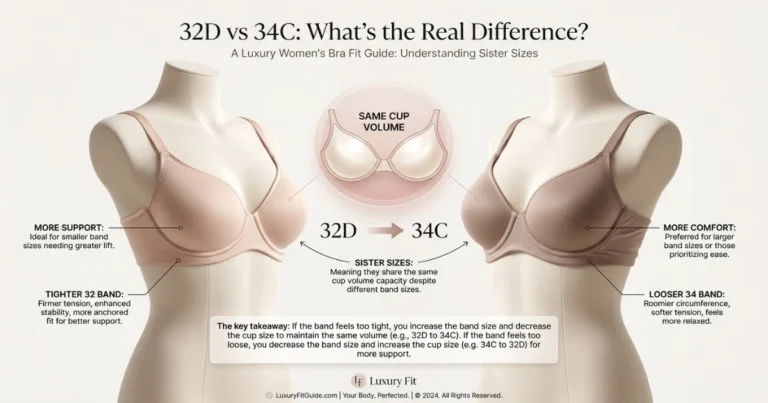
- Similar volume, different band: pages like 32D vs 34C help explain sister sizes more accurately.
- Band support still matters: if your band is wrong, even the right cup volume can feel off. See why bra bands ride up in back.
Best Pages to Explore Next
Learn how band and cup change together in the full Sister Sizes guide.
Use the Sister Size Bra Calculator to find a nearby match.
See more size progression examples in Cup Size Visuals.
Start with the basics using the guide on how to measure bra size.
Still not sure which size is closest?
Check your measurements with the AI Smart Fit Bra Calculator, or browse the full Breast Size Comparison hub to compare nearby sizes more accurately.
Cup Volume: Why the Same Letter Holds Very Different Amounts
This is the concept that trips up the most people — including many retail fitting staff. Cup letters do not describe a fixed physical volume. They describe a ratio. Specifically: the difference in inches between a person’s bust measurement and underbust measurement. Every size with the same letter shares that ratio, but the underlying measurements — and therefore the actual cup size — vary enormously.
Total bust circumference
Total bust circumference
A useful analogy: imagine two pizza boxes labelled “medium.” One is from a small restaurant, one from a large chain. Both are called “medium” relative to their own size scale — but they are clearly not the same size box. Bra cup letters work the same way. A 34B and a 38B are both “B” relative to their respective band sizes, but the 38B contains considerably more physical volume.
In practical terms, a 38B cup will have:
- A wider underwire to span the broader breast base of a larger torso
- A deeper cup cavity to accommodate proportionally more breast tissue
- Wider side panels and a larger cup opening overall
- A longer band circumference that wraps a larger ribcage
This is also why you cannot simply “size up” in the band and keep the same cup letter if your breast volume has not changed — doing so will leave you in a cup that is now too large. Our cup size visual guide illustrates how cup volume scales across band sizes with clear comparative diagrams.
Real Fit Differences: What Changes on the Body Between 34B and 38B?
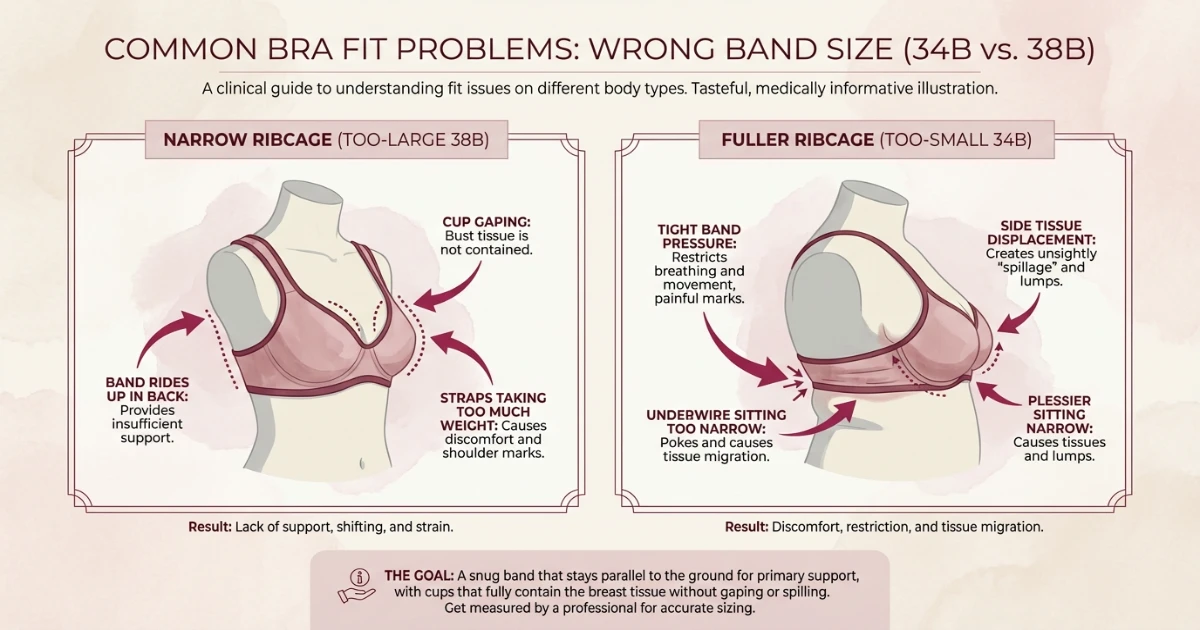
Wearing the wrong band size — too large or too small — produces a specific set of fit problems that are easy to identify once you know what to look for. Here is how each mismatch scenario presents:
If You Have a 30–32 Inch Underbust and Try to Wear a 38B
- Band rides up at the back: The most immediate sign of an oversized band. When the band is too large to stay horizontal around the ribcage, it migrates upward at the back, pulling the cups downward and forward.
- Cups too large for your breast tissue: A 38B cup is built for a proportionally larger bust than someone with a 30–32 inch underbust would typically have. The result is gaping at the top of the cup and fabric wrinkling throughout.
- Straps doing all the work: When the band cannot anchor the bra, all load transfers to the straps — leading to shoulder groove marks, neck tension, and upper back fatigue.
- Bra shifting during wear: An oversized band allows lateral rotation of the bra, meaning the cups swivel out of position with normal movement.
If You Have a 34–36 Inch Underbust and Try to Wear a 34B
- Band too tight to fasten comfortably: A 34 band is constructed for a 30–32 inch underbust. On a 34–36 inch ribcage, the band will be genuinely constrictive and may not close on the loosest hooks.
- Cup dimensions mismatched to your torso: Even if cup volume seems approximately right, the cup’s underwire width and cup opening will be narrower than a 38-band cup, causing wire displacement and side tissue escaping.
- Discomfort and marks at the band: A band that is too small for the ribcage leaves visible pressure marks and may cause discomfort across the ribcage throughout the day.
Both scenarios are avoidable with a correct underbust measurement. For a full illustrated guide to identifying and resolving each fit problem, visit our bra fit problems guide.
Who Should Choose a 34B?
A 34B is the correct starting size if your underbust measures approximately 30–32 inches and your bust at the fullest point measures approximately 36 inches. Beyond the tape measure, a 34B is a strong match for:
- Smaller frames and narrow ribcages: A 34 band sits firmly on a 30–32 inch underbust, providing excellent horizontal anchor and allowing the cups to stay correctly positioned over the breast tissue throughout the day.
- Anyone for whom a 36 or 38 band feels loose: If you fasten a larger band on the tightest hook and the bra still has significant give, a 34 band will provide the firm support that a bra is designed to deliver.
- People who prefer firmer band support: Athletes, those with larger busts relative to frame size, and anyone who wants maximum day-long stability will appreciate the secure anchor a correctly sized 34 band provides.
- Petite builds where a wider band physically does not fit: On a narrower torso, a wide 38-band underwire simply sits in the wrong place — the wire ends extend past the breast tissue into the armpit area, causing discomfort and reducing effectiveness.
To confirm whether a 34B is fitting correctly on your body, use our bra fit diagnostic guide and run through the five-point check described in Section 10 below.
Who Should Choose a 38B?
A 38B is appropriate if your underbust measures approximately 34–36 inches and your bust at the fullest point measures approximately 40 inches. Specifically, a 38B fits best for:
- Broader ribcages and larger torso frames: A 38 band is designed to encircle a substantially wider torso. Trying to compress this into a 34 band creates discomfort, marks, and a bra that cannot close correctly.
- Anyone for whom a 34 band feels tight or uncomfortable: If fastening on the loosest hook of a 34 band still feels restrictive around the ribcage, your body requires a longer, wider band.
- Proportionally smaller busts on fuller frames: A B cup proportional difference (2 inches) on a wider body is genuinely achieved by some women — not because their breasts are small in absolute terms, but because their ribcage is wide enough that the bust-to-underbust ratio produces a B cup result.
- Post-pregnancy or body-change transitions: Ribcage measurements can change meaningfully during and after pregnancy. Someone who previously wore a 34B may find they now require a 36B or 38B if their underbust measurement has increased.
For a full breakdown of how to interpret your measurements across different band sizes, our bra size charts cover every band and cup combination with measurement ranges.
Sister Sizes: How to Adjust Band Size Without Changing Cup Volume
Sister sizing is the system that allows you to move between band sizes while maintaining the same cup volume. It is built on a simple rule: for every band size you go up, drop one cup letter; for every band size you go down, increase one cup letter.
Here is the complete sister size ladder for a 34B:
Notice that 38B is not a sister size of 34B. A 38B holds meaningfully more breast volume than a 34B — it is in a different size family entirely. The sister size of 34B that uses a 38 band would be 38AA, which represents the same cup volume ratio shifted to a 38-inch band. This illustrates precisely why 34B and 38B are not interchangeable: they are not equivalent sizes linked by sister sizing; they are genuinely different bras for genuinely different bodies.
Understanding sister sizing is particularly useful when a favourite bra style is out of stock in your exact size. For example, a 34B wearer might try a 32C if a firmer band is preferred, or a 36A if a slightly looser feel is wanted — both will encapsulate the same breast volume. Explore the full sister size concept and find all your options with our sister size guide or the interactive sister size bra calculator.
Quick Bra Fit Test: 5 Steps You Can Do Right Now
Whether you are currently wearing a 34B, a 38B, or something else entirely, this five-step check will confirm whether your current bra is fitting correctly or whether a size adjustment is warranted.
- The two-finger band test: Slide two fingers under the bra band at your back. You should be able to fit two fingers but not pull the band more than about two inches away from your body. If you can pull it further, the band is too large. If two fingers cannot slide in, it is too tight.
- Check the band angle: Look in a mirror at the angle of your band. It should form a perfectly horizontal line all the way around your body — same height at the front and back. If it rides up at the back, your band is too large. If it digs in at the sides or front, it may be too small.
- Check the cup for overflow: Look for any breast tissue spilling over the top edge or sides of the cup. Any tissue outside the cup boundary means either the cup is too small or too shallow for your breast shape. A correctly fitted cup contains all breast tissue within its boundary.
- Check the cup for gaping: Run a finger along the top edge of the cup. If the fabric gapes away from your body with space between the cup and your breast, either the cup is too large in volume or too deep for your breast shape. The cup should lie smooth and flat against the breast throughout.
- Check the gore: Press the centre panel (gore) between the cups flat against your sternum. It should lie completely flush — no tenting, no lifting. A floating gore nearly always indicates cups that are too small relative to breast projection or volume.
Still unsure about your bra size?
Our AI-powered bra size calculator factors in your exact measurements and breast shape to give you a personalised size recommendation — far more accurate than general size guides alone.
Try the AI Bra Size Calculator →34B vs 38B: Full Comparison Table
| Feature | 34B | 38B |
|---|---|---|
| Band size | 34 inches | 38 inches |
| Target underbust | ~30–32 in / 76–81 cm | ~34–36 in / 86–91 cm |
| Bust measurement | ~36 in / 91 cm | ~40 in / 102 cm |
| Bust–underbust difference | ~2 inches (same) | ~2 inches (same) |
| Cup volume | Smaller — B at 34-band scale | Larger — B at 38-band scale |
| Cup letter meaning | Relative to 34 band | Relative to 38 band |
| Band tension | Firm, high support | Relaxed, wider circumference |
| Support level | High — firm band anchors effectively | Moderate — depends on correct ribcage fit |
| Underwire width | Narrower | Wider |
| Spillage risk (if bust is larger) | Higher if bust exceeds 36 in | Higher if bust exceeds 40 in |
| Sister sizes | 32C, 36A | 36B (same band family — different volume) |
| Best for | Narrow to medium frames, 30–32 in underbust | Medium to fuller frames, 34–36 in underbust |
For a complete size reference across all band and cup combinations, visit our bra size chart calculator.
People Also Ask: 34B vs 38B Bra Size Questions
Is 38B bigger than 34B?
Yes — significantly so. A 38B has a bust circumference of approximately 40 inches versus 36 inches for a 34B. Both use a B cup ratio (2-inch bust-to-underbust difference), but applied to different band sizes, the 38B cup is physically much larger and deeper, fitting a substantially bigger torso and breast volume than the 34B.
Does cup size increase with band size?
Yes. Cup volume scales proportionally with band size. A B cup on a 38 band is physically larger than a B cup on a 34 band, because the same proportional difference (2 inches) is applied to a wider starting circumference. This is why cup letters are described as relative measurements rather than fixed sizes.
Why does the same cup letter fit differently on different band sizes?
Because cup letters represent a ratio, not a fixed volume. A B cup means the bust is 2 inches larger than the underbust — but that 2-inch difference on a 38-inch band produces a much bigger cup than the same difference on a 34-inch band. The band number is the scale; the cup letter is the proportion applied to it.
Can someone wear 38B instead of 34B?
Only if their underbust measurement genuinely falls in the 34–36 inch range. These are not interchangeable sizes — they fit different body types. A person with a 30–32 inch underbust wearing a 38B will experience a loose, unsupportive band and cups that are too large. The correct size depends entirely on underbust and bust measurements.
What is the sister size of 34B?
The sister sizes of a 34B are 32C (smaller band, same cup volume) and 36A (larger band, same cup volume). Note that 38B is NOT a sister size of 34B — it contains significantly more cup volume and fits a much larger body. Sister sizes only exist within one step up or down the band size ladder.
Why does band size matter in bras?
The band provides approximately 80% of a bra’s support. It anchors the bra horizontally around the ribcage, keeps cups positioned correctly, and distributes breast weight across the torso rather than the shoulders. A band that is too large or too small compromises every aspect of bra fit — comfort, cup position, support, and shape.
How do bra cup letters work?
Bra cup letters represent the difference in inches between your bust measurement (fullest point) and your underbust measurement. A = 1 inch difference, B = 2 inches, C = 3 inches, D = 4 inches, and so on. Because this is a ratio, the same letter produces a larger physical cup on a larger band, making cup letters relative rather than absolute measurements.
Is 34B a common bra size?
Yes — 34B is one of the most widely stocked bra sizes in mainstream retail in the US and UK. However, fitting research consistently finds that a significant proportion of women who think they are a 34B are actually a 32C or 30D — the same cup volume but on a tighter, more supportive band that better matches their underbust measurement.
Does a bigger band mean bigger cups?
Yes, when the cup letter remains the same. A 38B cup is physically larger than a 34B cup because the band circumference is wider, scaling up the entire bra structure. However, if you move to a larger band while also dropping a cup letter (e.g., 34B to 36A), the cup volume remains constant — this is the principle of sister sizing.
How do you calculate bra size?
Measure your underbust snugly in inches — this gives your band size (adding an even number if needed depending on the method). Then measure your bust loosely at the fullest point. Subtract the underbust from the bust measurement: each inch of difference corresponds to a cup letter (1 in = A, 2 in = B, 3 in = C, 4 in = D, etc.).