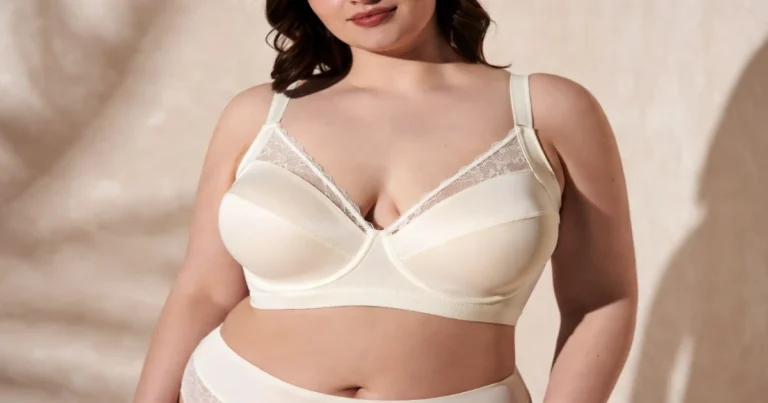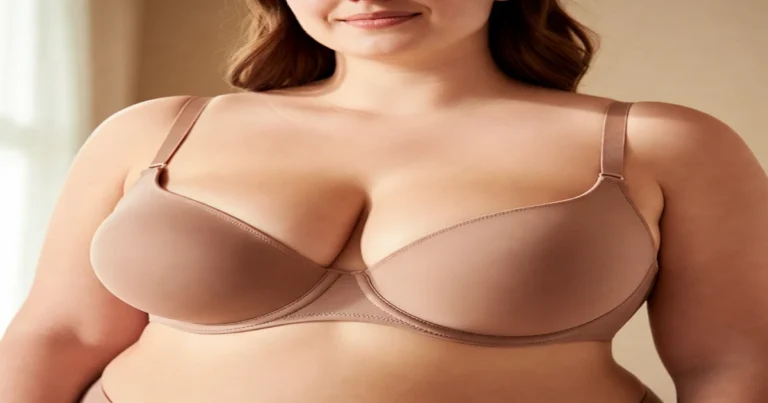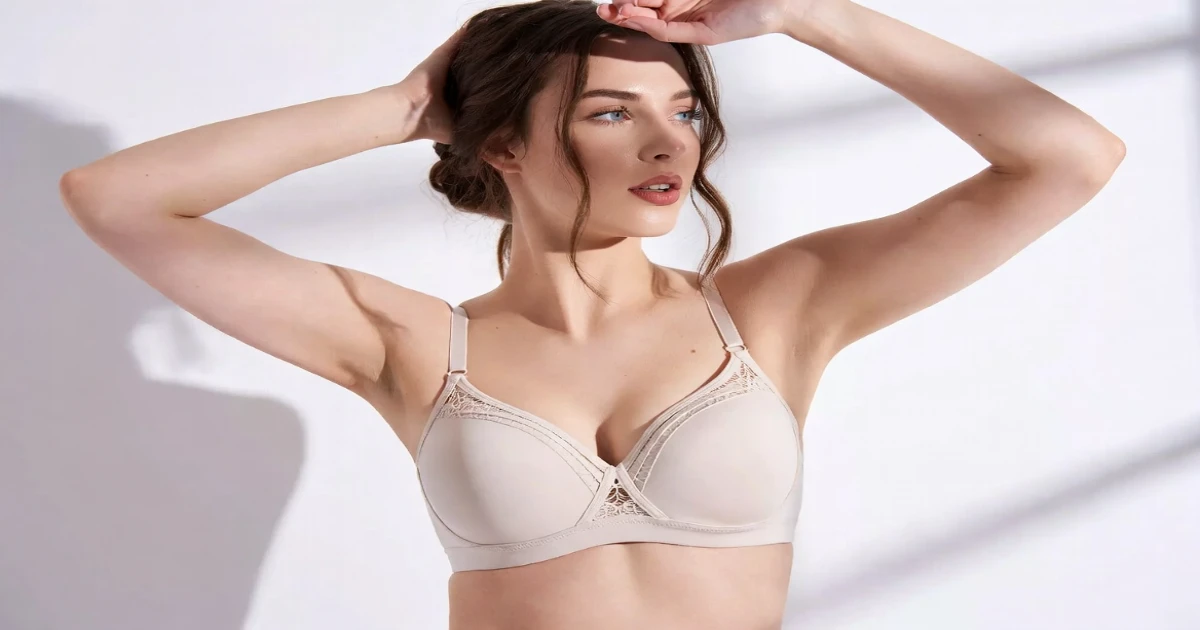
Non-wired bras for large busts provide secure support without the torture of metal. Most have wide bands, tall wings, and full, shaping and lifting cups.
Soft but strong fabrics, such as power mesh and spacer foam, inject breath and support. They usually cover sizes 30 to 46 bands and D to K cups and feature side slings and padded straps to spread weight.
To contrast comfort, bounce management and fit, the guide under lists tested picks, fit tips and care steps for extended wear.
- The Non-Wired Bra Challenge
- How Wireless Support Works
- Finding Your Perfect Fit
- The Psychological Shift
- Beyond The Everyday Bra
- Debunking Wireless Myths
- Conclusion
- Frequently Asked Questions
- Are non-wired bras supportive enough for large busts?
- How should a wireless bra fit for a large bust?
- What fabrics work best in wireless bras for full cups?
- Can I exercise in a non-wired bra with a large bust?
- How do I find my size in a wireless bra?
- Do wireless bras help with posture or shoulder pain?
- How do I care for wireless bras to keep support?
The Non-Wired Bra Challenge
Non-Wired Bras for Large Busts require thoughtful design to provide the necessary lift, shape, and hold without a stiff frame. While a wired bra has traditionally been the go-to for bigger busts, the best wireless bras are changing that mentality. New constructions show that engineered fabric and fit can offer comfortable support, but it can be tricky to find a good style since slippage, sagging, and thin foam can dismantle support quickly.
1. Support
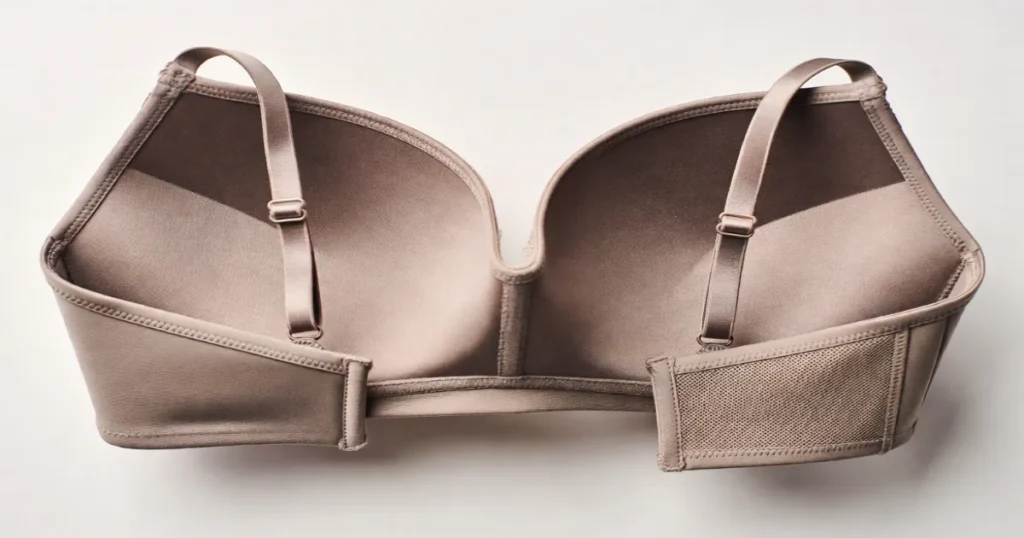
Wide underbands do the heavy lifting, so choose bands 4 to 6 cm or more tall with firm elastic that hugs the ribcage. A tight band holds weight near the body, which reduces bounce and shoulder stress.
Strategic stitching helps mimic a wire’s cradle. Seek out multi-layered cups featuring inner slings and power-mesh zones beneath the bust. Side support panels and molded cups prevent tissue migration toward the underarm and minimize spillage at the neckline.
Adjustable straps are key for lift on heavy breasts. Select wide, low-stretch straps that adjust completely front or back. A full-coverage soft cup with a firm band and inner side slings often matches a wired t-shirt bra for everyday performance.
2. Separation
A firm center panel or vertical seams keep a clean split and avoid the uni-boob look. Soft cup bras and structured bralettes with dual-layer cups give defined cleavage without a wire.
Avoid ultra-stretchy knits that allow breasts to merge, particularly single-layer cotton. It should leave air space at the sternum. V-neck, plunge, and full-coverage styles in wireless builds all vary in the amount of center depth for your root shape.
3. Shape
Molded or lightly padded cups assist in supporting a rounded line underneath tees. Seek soft shaping, not bulky foam, to maintain a natural slope.
Plunge shapes flatter low necklines, and balconette-inspired wireless cuts lift from underneath for a tidy shelf. Check in the mirror: the cup should look round and lifted, not pointy or flat. Some women experience equivalent lift to wired bras, while others feel less “locked in” depending on tissue softness.
4. Slippage
Grippy bands, silicone strips, and wide underbands prevent slide-down, a must for heavier busts. The band should be nice and snug around the ribcage without rolling.
Do a raise-and-reach test. If the band rides up, size down in band or choose a firmer fabric. Skip thin bands or loose elastic because they slide as you move or sweat.
5. Longevity
Sturdy blends, such as nylon, spandex, and polyester, maintain form superior to floppy cotton, while mesh and cotton linings introduce breathability for snoozing or low-impact activity.
Either hand wash or put in a lingerie bag then lay flat to dry. Rotate your bras so that the elastic has a chance to rest between wearings. Inspect seams, bands and straps for stretch or deformation.
Experiences vary: some find wireless more comfy and stable all day. Others still prefer wired for long office hours. Materials vary as well—mesh, cotton, and spandex combinations alter texture and rigidity.
How Wireless Support Works
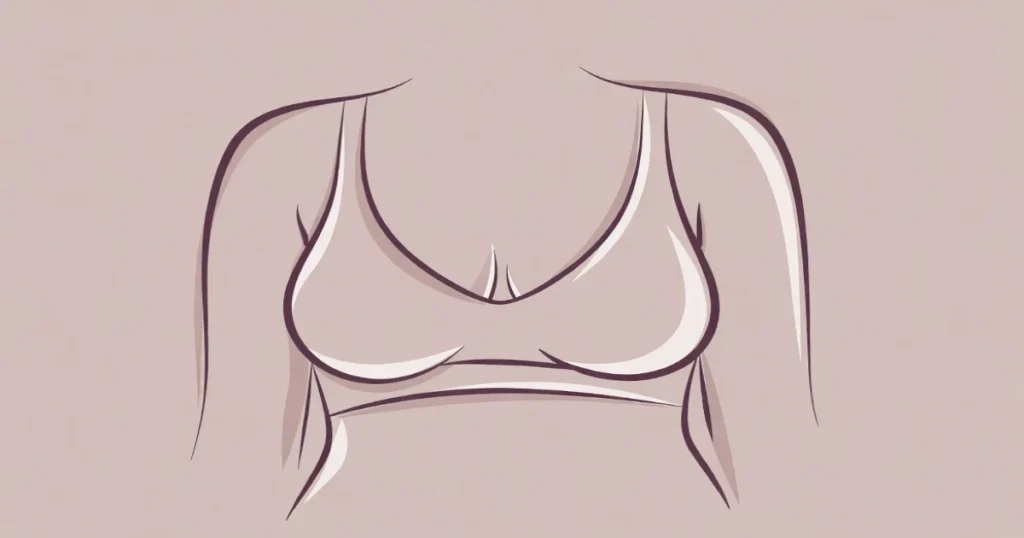
Wireless bras use fabric engineering, not metal, to hold shape and lift. Support comes from wide bands, reinforced seams, layered fabrics, and firm but flexible cups. New knit structures, molded foams, and bonded edges add structure without stabby wires, so the bra moves with you.
For larger busts, the goal is stable anchoring at the ribcage, controlled stretch, and smart shaping that mimics an underwire’s cradle. Fit still rules: a wirefree bra in the right size lifts, separates, and stays put, while the wrong size undercuts all that design work.
Fabric
Breathable, moisture-wicking fabrics assist with extended wear, heat, and humidity. Keep an eye out for mesh zones at the center gore and side wings to vent sweat during those warmer months or active days.
Soft spandex mixes with nylon or polyamide provide a tailored sensation. They stretch where needed and bounce back, so the bra retains shape after many washes. Seamless polyamide can form a smooth line under sheer tops, minimizing show-through.
If you have sensitive skin, look for certified clean materials like OEKO‑TEX Standard 100 or similar. Steer clear of plastic or stiff-feeling coatings because they retain heat and can make you itchy.
Styles vary: padded or unpadded, seamless T-shirt, sports, even strapless. Select firmness by need; firmer knits provide all-day support and softer ones are for lounging.
Seams
Flat, soft seams reduce friction in high movement areas such as underbust and side panels. This is important if you walk a lot or deal with hot climates.
Supportive stitching can create lift and separation with focused tension. Vertical darts or side sling seams channel tissue forward so the booty appears centered.
No heavy or raised seams that print through light shirts. If you want a crisp line, bonded seams minimize edges that catch light. They assist in pressure distribution without digging.
Band
The band does all the work, not the straps. Select a broad, strong band that encircles the ribcage evenly. It should lie taut throughout 70 to 95 cm stretches with uniform pressure.
Several hook columns allow you to pull tighter as the material loosens. A new bra can seem a bit tight. It will loosen after a couple of wears. Avoid thin bands that roll or warp. They lose support and comfort quickly.
Too many people have the wrong size, as many as 80 percent according to some studies, which compromises wireless efficacy.
Straps
Opt for wide, padded, or plush-lined straps to distribute weight and minimize shoulder dimples. They should slide easily and stay put after days of wear.
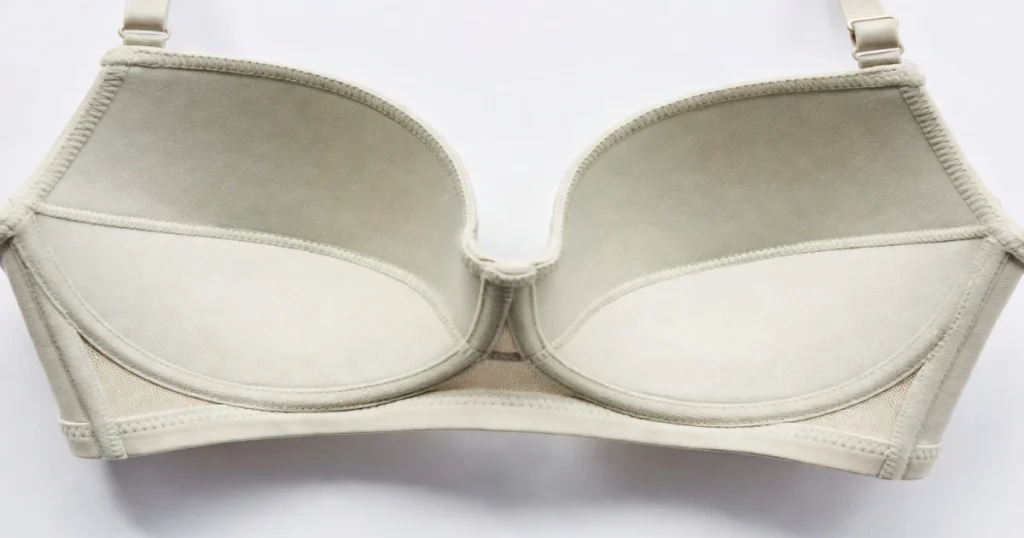
Convertible options assist necklines. Crisscross styles provide lift, halter styles work for open backs, and removable options are best for strapless in structured wireless styles.
Stay away from thin ribbon straps because they dig, particularly over 80 cm bust depth. Adjustable straps fine-tune fit and shape, helping wireless bras feel natural, free to move, and still secure.
Many of us find wire-free to be the most comfortable to wear every day. For those with larger busts, sometimes a firmer fabric or side slings are necessary to provide the support needed.
Finding Your Perfect Fit
Non-wired bras for large breasts require a delicate mix of coverage and tightness. The best wireless bras provide comfortable support by distributing weight across the band and cups, ensuring a secure fit for hours, not just a few minutes in a fitting room.
Measure Correctly
Measure with a soft tape. Wrap it tight under your bust, even all the way around, and that’s your band base number in centimeters. Then take the measurement around the fullest part of your bust, with the tape measure relaxed.
Take the band from the bust to estimate cup size and compare both figures with each brand’s size chart. A 90C in one label might be equivalent to an 85D in another.
List your measurements in cm and inches for cross-border brands. Revisit every 6 to 12 months. Size can fluctuate with age, weight, hormones, or training. What fits well at 24 may not at 34 or 44.
Note your size, how it fits, and any strap dig, side spill, or center gape problems to inform your next fitting.
Assess The Band
Yea, the band does the majority of the work in a wireless bra. It should sit level and not ride up at the rear. Slip two fingers underneath; it should be snug, not tight.
If it rides up or rolls, the band is too loose. If it pinches or leaves deep marks, it’s too tight. A loose band looks lumpy under a T-shirt, and a tight one feels harsh and shortens your wear time.
Try bands with wider wings, double-layer power mesh, or sturdy elastic if you carry more upfront. Utilize all hook settings; begin on the loosest and tighten as the elastic relaxes over months.
For long torsos or rib flare, seek out taller side panels and U-shaped backs.
Check The Cups
Cups should contain all breast tissue with no spill over the top or sides and absolutely no gaping. Flatten the material, pull and position tissues from sides to middle, then examine for any wrinkles or puckers.
These indicate that the cup is too big or the shape is wrong. Edges should lay flat without digging in.
Try various cup shapes to suit your form. Full coverage is perfect for fuller-on-top or projected busts and comes in handy if you want less bounce.
Plunge is the way to go if you have close-set breasts or low necklines. Balconette can open the neckline while maintaining lift. Look for side slings, inner support frames, or bonded linings that simulate light structure without wires.
Wear the bra for a couple of hours at home to really judge comfort. A proper fit doesn’t sting, although it might still seem nice to slip off at night.
Anticipate trial and error, particularly for those over 40 and across brands and sizes. Bodies differ, therefore your ideal fit is individual.
The Psychological Shift
Altering our psychology about support is frequently more difficult than changing our clothes. For many, underwires are associated with control and sculpting, so transitioning to non-wired bras can seem precarious, particularly for more generous cup sizes. Self-concept shifts tend to occur with life transitions—new roles, health incidents, or relocation—and studies observe these periods can activate new goals and values.
That same shift can happen in the lingerie drawer: a re-check of what comfort, support, and confidence mean day to day.
Redefining Comfort
Comfort translates as soft and airy, practically weightless to the touch against skin. We’re talking about smooth microfiber, modal, or bamboo viscose, breathable mesh zones, flat seams, and tag-free labels. Seamless cups minimize rub on the sternum and underarm, making the best wireless bras a great option for everyday wear. A brushed hook-and-eye mellows contact along the back, ensuring a comfortable fit.
Old shape rules love to reward rigid lift at all costs. Those dictates can conflict with reality when late nights, heat, or travel require simplicity. Opting for comfort instead of contour can be a minor yet genuine value shift, especially for women seeking versatile bra styles.
It’s about the psychological shift. A wireless bra ought to flex as you twist, reach, or sit—not poke. Search for stretch recovery that bounces back from wear without sagging out.
Make a short checklist: wide, stable band (at least 5 to 8 cm), double-lined cups, breathable fabrics, soft side slings, cushioned straps, and a tall center front for separation. Attempt samples such as molded wireless T-shirts for the work days, ribbed lounge styles for the weekends, and longline bralettes with power mesh for the evenings.
Trusting The Structure
Today’s wireless designs rely on firm knit liners, laminated fabrics, and strategically placed bonding to generate genuine lift. Engineers place tension where it counts: in the band and cradle, not a metal wire. Ditch the myth that only wire lifts; molded cups with internal sling panels, reinforced seams, and side boning (soft, not metal) center and secure breasts.
Observe the three to four hook back and eighteen to twenty-five millimeter straps distribute load and reduce shoulder dig. Wear them for a week of business as usual—commutes, desk work, leisurely walks—to let them earn your trust through usage.
A psychological shift typically involves uncertainty. Confronting boundaries and trying out new equipment incrementally lessens that angst and develops new habituated responses.
Embracing Natural Shape
A wireless bra provides a natural slope with soft lift, not a ridge. That is less compress and reshape and more harmony with your skeleton. Ditch squash for smaller shapes and opt for plunge or balconette-inspired wireless cuts with inner slings that celebrate your curves.
I hear a lot of folks report a feeling of relief, even liberation, following these sorts of shifts, similar to life transitions, becoming a parent, changing careers, recovering from illness, where priorities rebalance. The transition can seem uncomfortable and intimate, and stimuli vary among individuals, but studies associate these transitions with improved perspectives and enhanced day-to-day toughness.
Share what works: brand, size, fabric, and use case (hot days, long flights, formal events). Actual experiences allow others to take a first wireless choice with no guesswork.
Beyond The Everyday Bra
Non-wired bras for big busts, such as the best wireless bras, now extend beyond the day-to-day. Our new builds cater to various activities like sport, lounge, and smart layering. Featuring flexible fabrics like mesh and cotton, these bras include adjustable straps, removable pads, and molded cups for comfortable support.
Strapless Options
Wireless strapless bras are a great option for bardot tops, halter bridesmaids dresses, and square neck jumpsuits. Look for a wide, sturdy band with silicone grips on the top and bottom edge that locks the frame in place without digging. Side boning helps the cup maintain its line, while molded cups minimize seam show and provide a rounded silhouette under satin or crepe. For those seeking comfortable support, consider styles like the best wireless bras that offer flexibility and ease of wear.
For sizes D–H+, test lift by lifting arms and twisting at the waist. If the center front floats, opt for a snugger band or a taller wing. Removable padding can help even out size asymmetry or add modesty under thin fabric. As one reviewer explained, the elastic in the band stretched out after a few months, making it essential to find a fitting bra that maintains its shape over time.
Try each style with the actual outfit: off-the-shoulder blouses, deep V gowns, and one-shoulder knits behave differently. Brands differ widely in cup depth and wire-free scaffolding, so contrast silhouettes across several two or three labels before you commit. This ensures you find the perfect supportive option that complements your curves and enhances your overall look.
Sports Bras
High-impact, wireless sports bras are designed with a compressive knit and wide, stable straps to curb bounce during running, HIIT, or court drills. Seek out full-coverage fronts, higher sides, and firm underbands. Exoskeleton-style wireless cups can separate to prevent heat build-up, while molded fronts streamline lines under training tops.
Breathable, moisture-wick fabrics keep skin dry. Mesh panels at the center gore and back boost airflow. If you train outside, soft seams stop rub at distances greater than 5 kilometers. Removable pads, such as these, are nice for wash and dry speed and for shape control when you transition from gym to errands.
Fit notes are important. Jog in place in the fitting room – the bra should hold without sharp pressure. If you cross-train, rotate: high-impact for sprints and jumps and low-impact for yoga, Pilates, and walks. Rotation helps to extend fabric life and minimize band stretch.
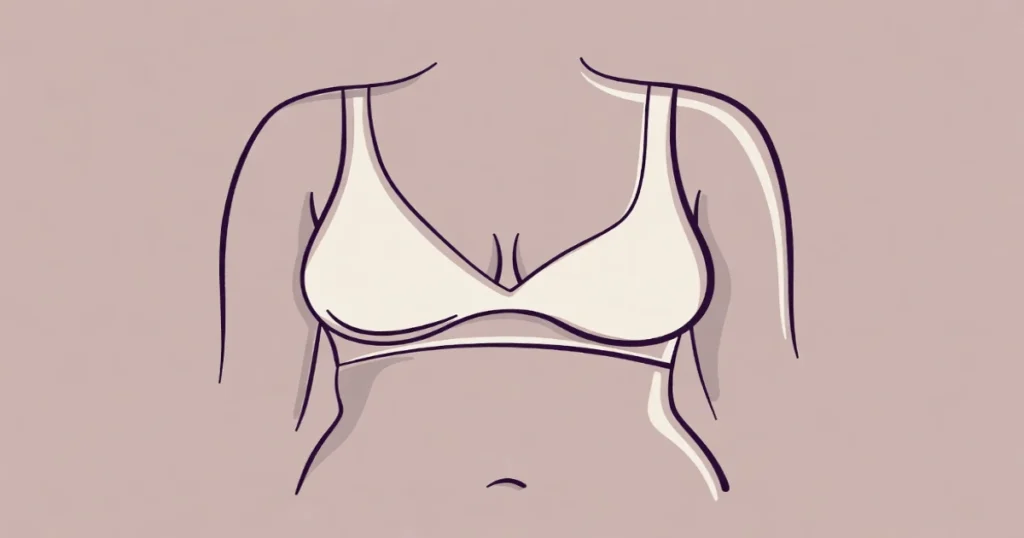
Bralettes, Layering, And Building A Set
Wireless bralettes go with lounge, sleep, and casual layers. Opt for modal or cotton for soft touches, or mesh for lighter warmth. Scoop, plunge, and V-neck lines allow you to coordinate with tees and wrap tops.
For a flexible drawer, keep four roles covered: strapless for open shoulders, high-impact sport for bounce control, low-impact for stretch days, and a soft bralette for rest. Toss in one molded, wire-free T-shirt bra for a smooth day-to-night silhouette.
Anticipate varying comfort experiences, as some will wear all day long and others won’t. Fit and fabric are the determining factors.
Debunking Wireless Myths
Wireless bras for large breasts are not a compromise. They rely on smart fabric, firm bands, and cup engineering to hold, lift, and shape without a rigid wire. The right design spreads weight across the frame, so comfortable support feels even and stable throughout the day.
Modern wireless bras can support heavy breasts because most support comes from the materials and the band, not a metal wire. In well-built styles, firm power mesh, dense knits, and wide wings do the heavy work, often up to 80% of total support. A snug, level band in the correct size anchors the cups, while inner slings and multi-layer cups add side control and lift.
When fit and fabric do their job, you get less bounce, better posture, and less strain on shoulders. Completely debunking the wireless myths of lift and shape, modern wire-free bras employ molded cups for a sleek silhouette beneath clingy shirts. They also use spacer foam for gentle shaping and ventilation, and seamed cups to shape and divide, making them a great option for women seeking comfort.
Plunge cuts work beneath low necklines, while full-coverage styles distribute weight and control spillage. For added support, select wide straps, U-shaped backs, and tall centers that lie flat. Many longline bands provide added leverage, which assists with ample busts without digging, offering a supportive option for everyday wear.
Wireless doesn’t mean fragile. Durability comes from stitching, elastic recovery, and fabric density. Strong elastane blends and reinforced seams hold shape after multiple wears. To prevent any bra from sagging prematurely, rotate styles and wash on delicate in cool water, then air-dry.
Unless you’re visibly soiled, target two to three wears before washing. Your unwashed bra can trap oil, sweat, and bacteria that can irritate your skin or cause breakouts. Daily attention keeps the momentum, whether you choose a wireless bra or an underwire bra.
Comfort myths work both ways. Others believe wireless must always be scratchy and irritating, but silky linings, flat seams, and snag-resistant, stretch knits can minimize chafing. Some are afraid underwires lead to cancer, a statement that originated from ancient myths about tight clothing and blood circulation.
Underwires do not cause breast cancer. Going wire or wire-free should be comfortable and fun, not scary. Real-world wins demonstrate the point. High-support wireless bras with molded cups and side slings support up to approximately 100 cm band and G–K cups when properly fitted.
Sports-inspired, wire-free styles with wide bands and encapsulated cups stand up to long days. Because size can shift, get a pro fit every six months or following major life changes such as surgery or pregnancy to lock in the perfect band and cup.
Conclusion
In other words, a non-wired bra can lift, hold, and breathe with a large bust. Smart cuts do the heavy work: wide bands, tall wings, firm cups, and strong straps. Fit still reigns supreme. A nice fit at the band, full cup coverage, and firm straps create an actual difference. Daily wear feels weightless. Sleep is improved. Workouts feel less like a grind with high-hold styles. Travel gets easy with quick-dry knits. Myths evaporate quickly when you try on actual specs and actual brands.
For a jump start, grab one soft cup for lounging, one molded cup for the office, and one longline for clubbing. Try each on for 10 to 15 minutes of jumping, bending, and power walking. Share what worked for you below, or request brand recommendations by size and requirements.
Frequently Asked Questions
Are non-wired bras supportive enough for large busts?
Yes. These days, the best wireless bras employ powerful underband elastic, multi-ply cups, side slings, and seaming to lift and center. Seek out wide straps, a solid band, and great fabrics for comfortable support. It’s all about structure and fit, not wires.
How should a wireless bra fit for a large bust?
The band should feel snug on the loosest hook without moving up. Cups must completely encapsulate tissue with no spill or gap, making it essential for a comfortable support experience. Straps should stay put without digging, ensuring that you feel supported from the band, not the straps.
What fabrics work best in wireless bras for full cups?
Opt for power mesh, high-gauge microfiber, and cotton-modal blends for the best wireless bras. These materials strike a balance between stretch and containment, providing comfortable support while wicking heat and holding their shape. Breathable linings wick away sweat, helping to reduce friction and enhance comfort.
Can I exercise in a non-wired bra with a large bust?
For low-impact movement, it’s essential to ensure the bra features compressive fabric and a solid band. For running or high impact, a great option is a wireless sports bra that offers encapsulation, a tall center panel, and wide straps. Always perform a bounce test with a few jumps before purchasing.
How do I find my size in a wireless bra?
To find the best wireless bras, measure snug underbust for band size and full bust at the fullest point. Convert using a brand’s size chart, considering that fit differs from brand to brand, so ordering two sizes is a great option for determining your ideal fit.
Do wireless bras help with posture or shoulder pain?
They can. A sturdy band, wide wings, and supportive straps shift weight away from the shoulders. For comfortable support, seek out tall side panels and U-shaped backs in versatile bra styles. If the pain doesn’t go away, consider posture support bras or see a fitter for custom alternatives.
How do I care for wireless bras to keep support?
Handwash your favorite wireless bra in cool water with mild detergent. Rinse out well and press with a towel, avoiding wringing. Reshape the cups and allow to flat dry. Rotating your bras and skipping the heat helps preserve elasticity, ensuring comfortable support and lift.