The Complete 2026 Guide to Getting It Right the First Time
Most men who buy a compression vest or chest binder for the first time make the same mistake:
They use their shirt size.
And almost every time, it fails.
Not because the garment is bad. Not because the brand is wrong. But because male chest support garments are not built around shirt sizing.
They’re built around three completely different variables:
- Rib cage tension
- Tissue projection
- Fabric stretch tolerance
Once you understand that difference, everything changes.
If you’re dealing with gynecomastia, puffy nipples, or simply want smoother chest shaping under clothing, this guide will walk you step by step through the correct way to Measure Male Chest for a Support Garment — clearly, calmly, and confidently.
⚕️ Medical Note:
This guide is educational. If you suspect hormonal imbalance, glandular growth, or feel a distinct lump behind the nipple, consult a qualified healthcare provider before relying solely on compression garments.
The 5-Step How to Measure Male Chest for a Support Garment
If you just want the fast version:
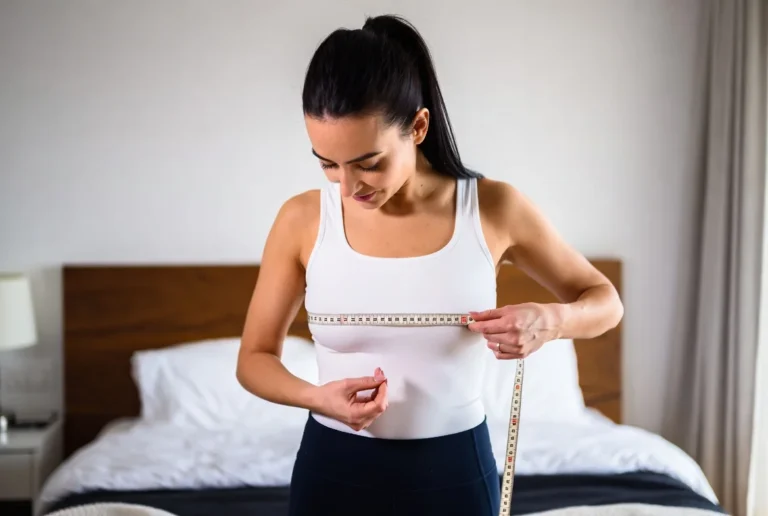
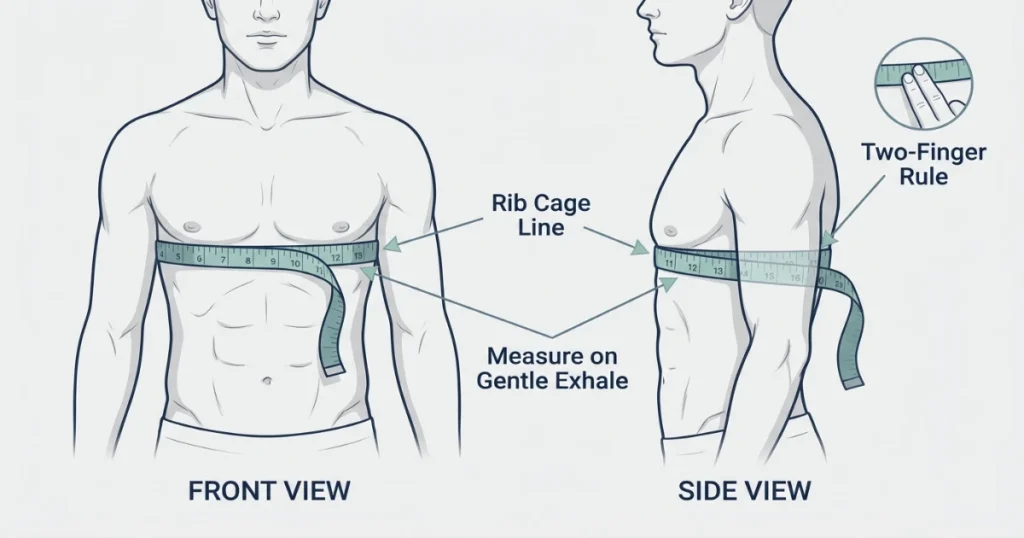
- Measure underbust (rib cage) — Tape snugly under the chest on a gentle exhale. Two fingers should fit underneath.
- Measure the fullest chest point — Tape horizontal at maximum projection (usually nipple level), arms relaxed.
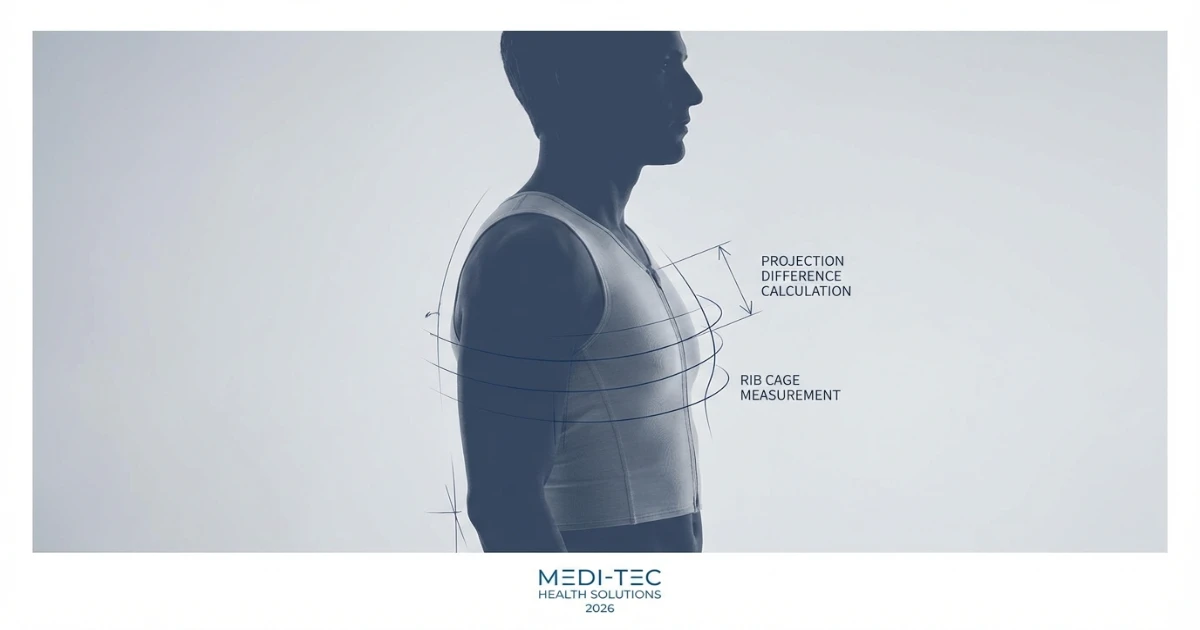
- Subtract underbust from fullest chest — This gives your projection difference.
- Match compression level
- 0–1 inch → Light
- 1–2 inches → Light–Moderate
- 2–3 inches → Moderate
- 3+ inches → High / Structured
- Adjust for tissue type — Firm tissue needs stronger compression than soft tissue, even at the same measurement.
For a personalized recommendation that includes rib compression index, tissue type classification, bounce risk, and asymmetry logic, use the Gynecomastia Men’s Bra Size Calculator (most users finish in under 45 seconds).
Why Measuring Correctly Changes Everything
A garment that’s slightly too small doesn’t just feel tight.
Over time, it can:
- Restrict full breathing
- Create rib pressure
- Cause numbness under the arms
- Trigger posture compensation
- Lead to upper back soreness
A garment that’s too large has the opposite problem:
- The band rolls up
- Tissue shifts sideways
- Puffy nipple visibility returns
- Bounce control disappears
When measured correctly, compression garments should:
- Distribute pressure evenly
- Support posture naturally
- Remain comfortable for 8–12 hours
- Flatten without suffocating
That balance is the goal.
What You’ll Need
Keep this simple:
- Soft, flexible fabric measuring tape
- Full-length mirror
- Relaxed standing posture
- Shirt removed (or ultra-thin layer only)
- Calm, natural breathing
💡 Measuring alone?
Yes, absolutely. Take 2–3 readings per point and average them.
Measurement Reference Table
| Measurement | What It Controls | Common Mistake | Why It Matters |
|---|---|---|---|
| Underbust (Rib Cage) | Band stability | Measuring too tight or too high | Prevents riding up |
| Fullest Chest Point | Tissue projection | Flexing pecs | Determines compression level |
| Projection Difference | Overall sizing signal | Rounding inconsistently | Guides light/moderate/high choice |
All three work together. Shirt size only measures one circumference — that’s why it fails.
Step 1 — Measure Your Underbust (Rib Cage)
This is the foundation.
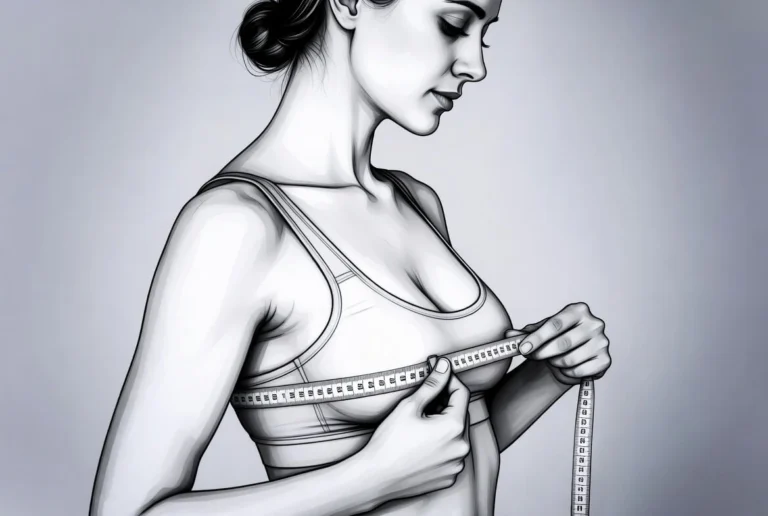
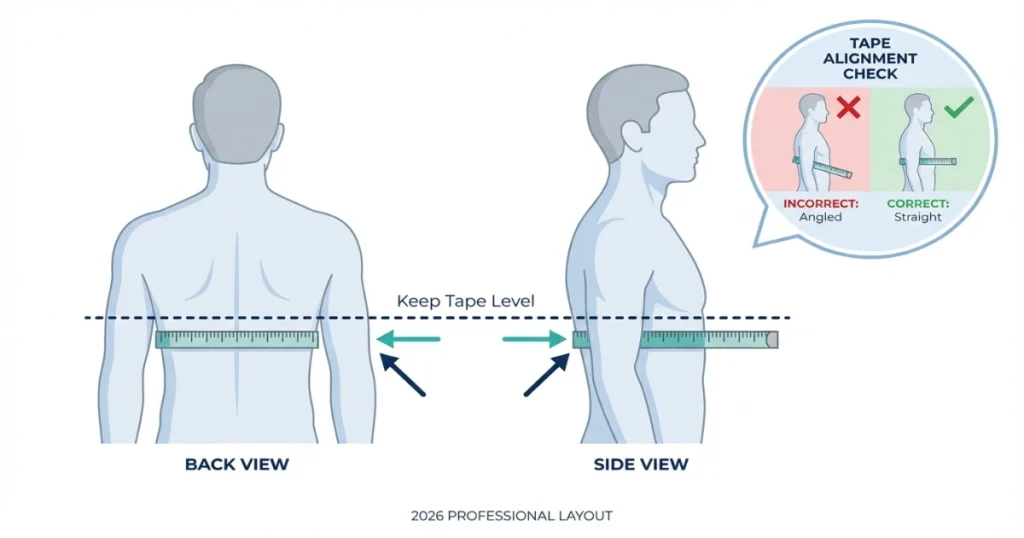
Place the tape directly under your chest tissue — where a bra band would sit.
Keep it:
- Level all the way around
- Snug but not squeezing
- Two fingers should fit underneath
- Measured on a gentle exhale
Why exhale?
Because your rib cage expands when you inhale. Measuring on inhale gives you a number that’s too large — which leads to a band that won’t stay anchored.
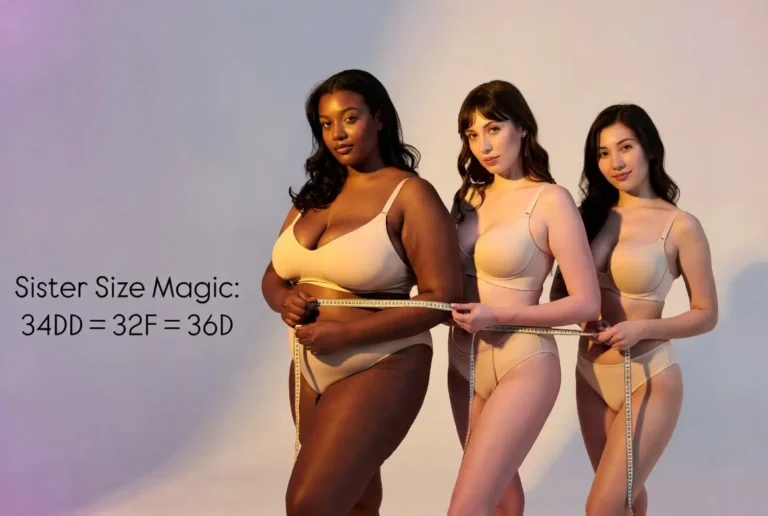
If your measurement falls between standard band sizes, see our Men’s Bra Sister Sizes Explained guide for adjustment options.
Step 2 — Measure the Fullest Chest Point
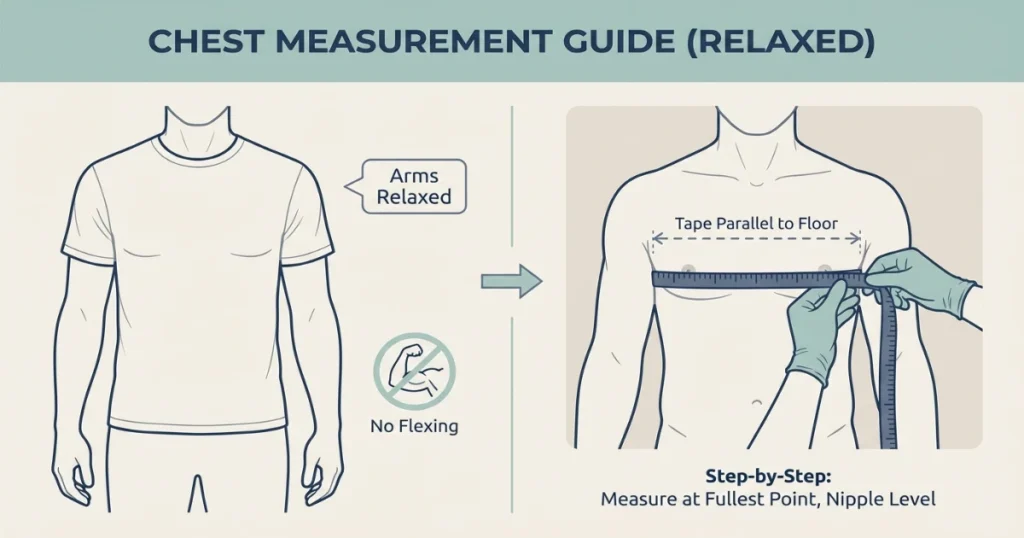
Now measure the widest horizontal part of your chest.
For most men, that’s across or just below the nipple line.
Important:
- Arms relaxed
- No flexing
- No pressing tissue down
- Tape parallel to the floor
Let the tissue exist naturally. That’s what the garment has to manage.
Step 3 — Calculate Your Projection Difference
Subtract:
Fullest chest – Underbust = Projection Difference
Use this chart:
- 0–1 inch → Light compression
- 1–2 inches → Light–Moderate
- 2–3 inches → Moderate
- 3+ inches → High / Structured
⚠️ If your tissue feels firm or rubbery (true glandular gynecomastia), treat your difference as one level higher when choosing compression.
For deeper explanation, read our Soft vs Firm Gynecomastia Tissue Guide.
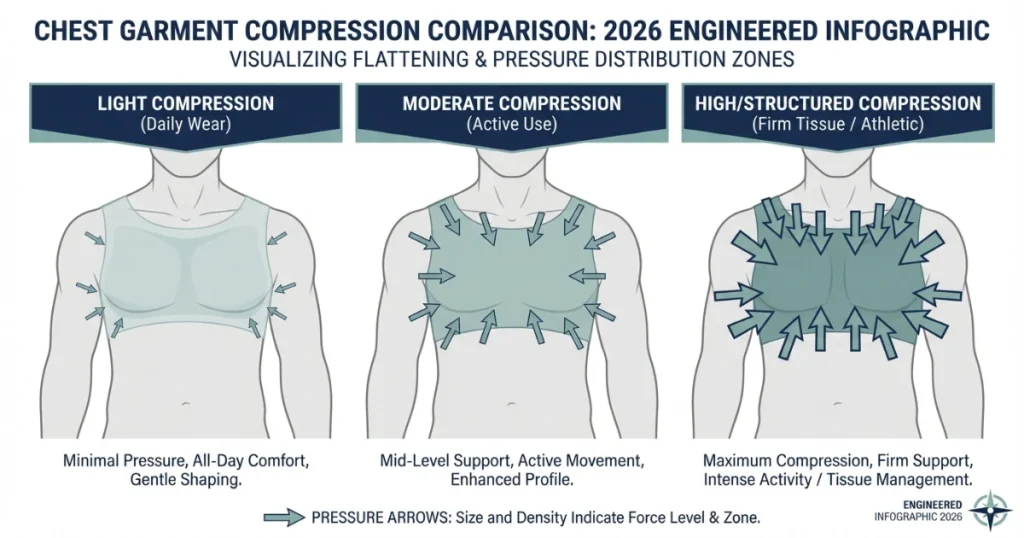
Choosing the Right Compression Level
Compression is not about squeezing as tight as possible.
It’s about controlled, even pressure distribution.
| Level | Best For |
|---|---|
| Light | Puffy nipples, soft adipose tissue |
| Moderate | Mixed tissue, daily active wear |
| High / Structured | Firm glandular tissue, athletic bounce, post-surgery |
If you’re unsure whether a vest or bra-style support garment suits you better, see our guide on Compression Vest vs Sports Bra for Men.
Top-Rated Compression Garments on Amazon
Once you’ve measured correctly, choosing the right garment makes all the difference. These highly rated options are popular for gynecomastia support, chest flattening, and daily compression wear.
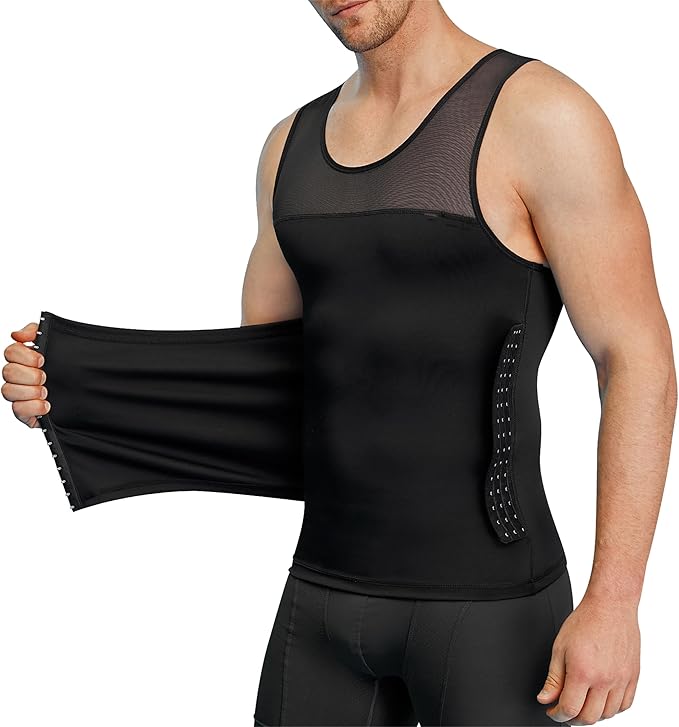
Men’s High-Elastic Compression Vest
- ✔ Balanced moderate-to-high compression
- ✔ Breathable for 8–12 hour wear
- ✔ Ideal for soft & mixed tissue types
- ✔ Discreet under clothing

Structured High Compression Chest Vest
- ✔ Strong front compression panel
- ✔ Designed for firmer glandular tissue
- ✔ Better athletic bounce control
- ✔ Post-surgery supportive option
Disclosure: As an Amazon Associate, we may earn from qualifying purchases at no extra cost to you.
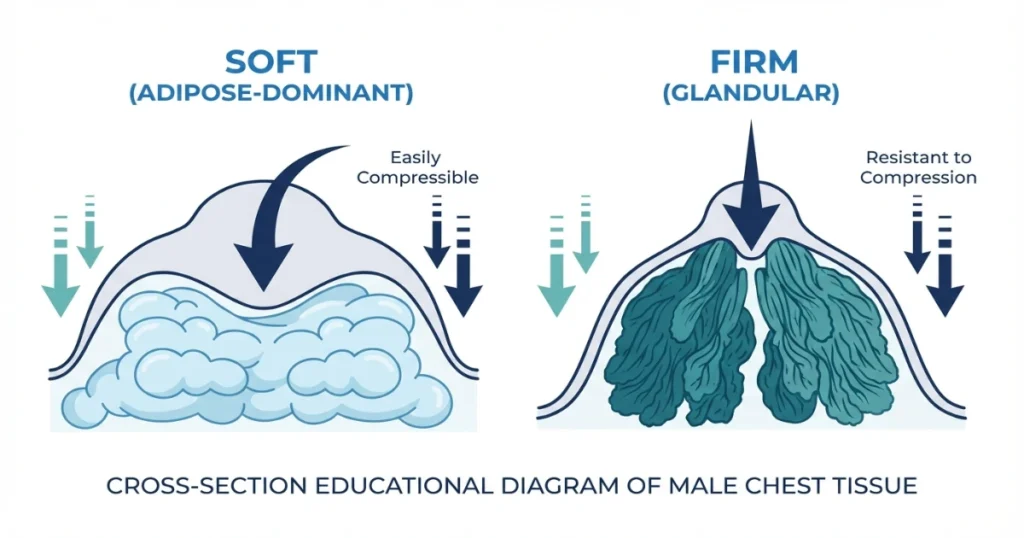
Soft vs Firm Gynecomastia — Why It Matters
Two men can have identical measurements — but need different compression.
Soft (Adipose-Dominant)
- Feels squishy
- Compresses easily
- Light–moderate compression works well
Firm (Glandular)
- Feels rubbery or disk-like
- Resists compression
- Needs structured, stronger support
Mixed presentations are common.
If any portion feels glandular, size for that tissue type.
Chest Binder vs Compression Vest
They’re not the same.
Chest Binders
- Low stretch
- Stricter sizing
- Never size down
- Shoulder width matters
Compression Vests
- More elastic
- More forgiving
- Focus mainly on underbust accuracy
- When between sizes, size up for comfort
If you’re exploring product options, start with our Best Compression Vests for Gynecomastia guide.

When Should You Re-Measure?
Your body changes. So should your sizing.
Re-measure when:
- You gain or lose 5+ lbs
- After surgery recovery
- After significant chest muscle gain
- If your garment rides up
- Every 6–12 months
Elastic fatigue is real. Fabrics lose tension over time.
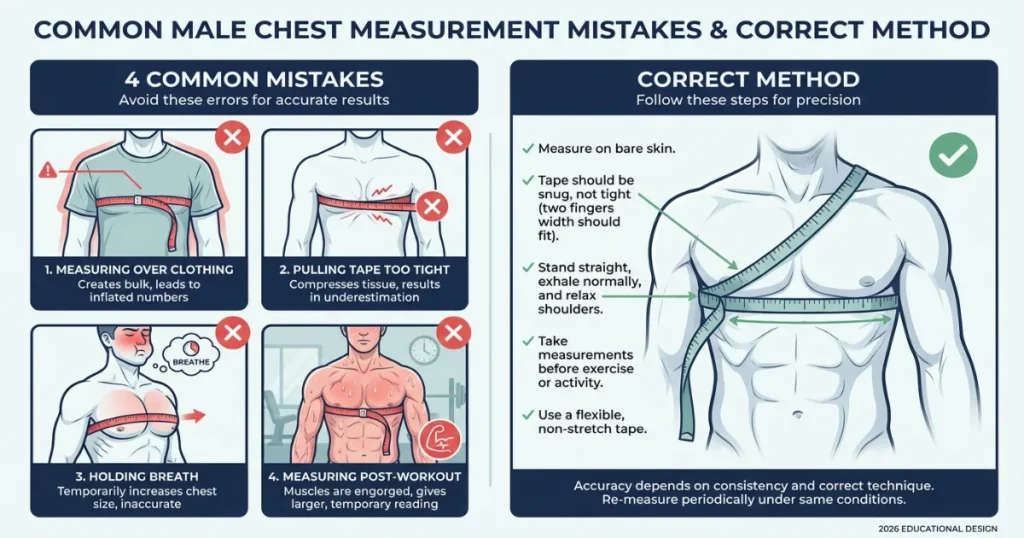
Common Measurement Mistakes
Avoid these:
- Measuring over clothing
- Holding your breath
- Pulling tape too tight
- Measuring immediately after workouts
- Using shirt chest size
If you’re between sizes, round up.
How Tight Should It Feel?
A proper fit should feel:
- Snug
- Supportive
- Breathable
- Non-painful
You should be able to take three full deep breaths comfortably.
No sharp digging.
No numbness.
No persistent red marks.
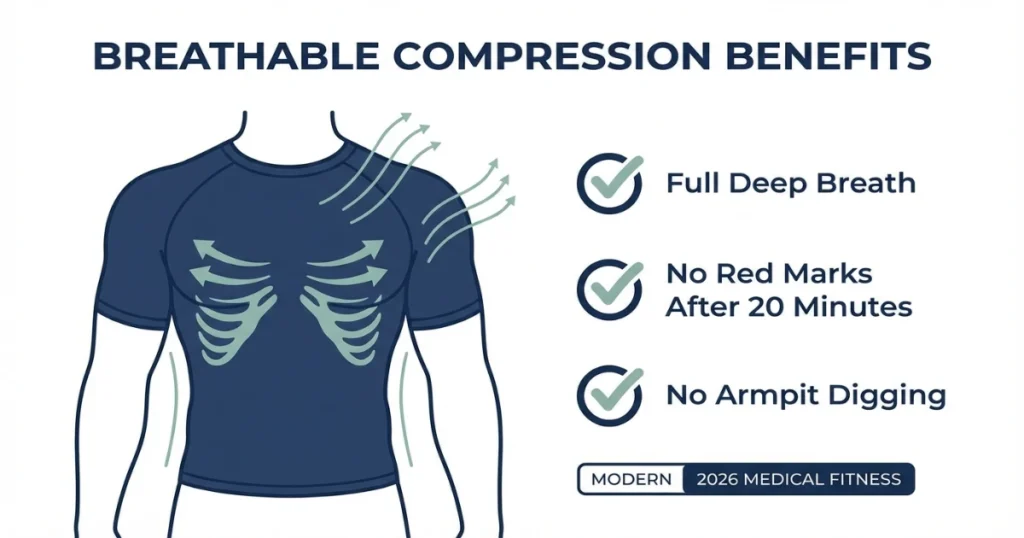
If pain appears in the first 20 minutes, the band is too small.
Frequently Asked Questions
How do I measure my chest as a man for compression?
Measure underbust snug on exhale, then fullest chest relaxed. Subtract to get projection difference.
Is shirt size the same as compression size?
No. Shirt size uses only chest circumference. Compression sizing requires underbust + projection difference.
Can I measure alone?
Yes. Use a mirror and take multiple readings.
Should I inhale or exhale?
Exhale gently for underbust. Measure fullest chest in neutral breathing.
How do I know if my tissue is glandular?
Firm, rubbery disk behind the nipple suggests glandular tissue. When unsure, consult a healthcare provider.
The Bottom Line
Underbust first.
Fullest chest second.
Projection difference third.
Tissue type as your calibration layer.
Most compression problems come down to:
- Wrong band size (usually too small)
- Wrong compression level (usually too light for glandular tissue)
Measure carefully once — and you’ll avoid months of discomfort.
If you’d rather skip manual calculation, use the Gynecomastia Men’s Bra Size Calculator for a personalized recommendation based on rib compression index, tissue behavior, and support goals.