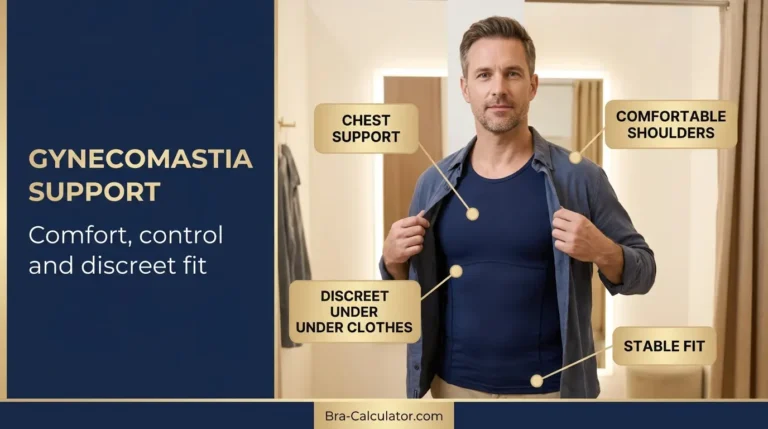
Grade 3 gynecomastia usually needs more structure than a basic compression undershirt, but it still should not be painfully tight. The best support is often a wide-panel compression vest, longline compression tank or breathable firm undershirt that spreads pressure across the chest and torso. Look for stable hems, broad panels, moisture-wicking fabric and enough support to reduce movement without restricting breathing.
Medical disclaimer: This guide is for comfort and support education. It does not diagnose, grade or treat gynecomastia. Compression can improve comfort and clothing appearance while worn, but it cannot remove glandular tissue. Seek medical advice for persistent pain, a hard lump, nipple discharge or bleeding, skin changes, fast one-sided enlargement or significant worry.
Grade 3 Gynecomastia Compression at a Glance
| Grade 3 Need | Best Support Direction |
|---|---|
| Visible fullness under most shirts | Wide-panel compression vest or firm matte compression undershirt. |
| Chest movement while walking | Structured vest or high-support longline compression top. |
| Rolling at stomach | Longline support with stable hem and correct waist fit. |
| Heat and sweat | Breathable firm support, moisture-wicking fabric and rotation between garments. |
| Skin rubbing or folds | Smooth seams, soft edges, dry fabric and careful end-of-day skin checks. |
| Best first choice | Wide-panel longline support because Grade 3 needs structure plus torso stability. |
What Grade 3 Gynecomastia Usually Means for Compression
Grade 3 gynecomastia usually means the chest is more visibly enlarged and often harder to smooth with a basic undershirt. In practical support terms, the main issues are not just shirt cling. They may include visible projection, movement while walking, rubbing under the chest area, heat, and difficulty finding support that stays in place.
This is where many people make the mistake of choosing the smallest possible compression size. But Grade 3 support usually needs better structure, not just more tightness. A small, narrow compression shirt may squeeze the ribs while doing very little to stabilize the chest. A wider panel, longer length and firmer but breathable construction often works better.
Because grading can vary and only a clinician can evaluate your individual condition, this page treats Grade 3 as a support-planning category: more visible fullness that usually needs stronger, more stable support than Grade 2.
Grade 3 support truth: Stronger support should feel more stable — not more painful. If you can only control movement by restricting breathing, the garment design is wrong.
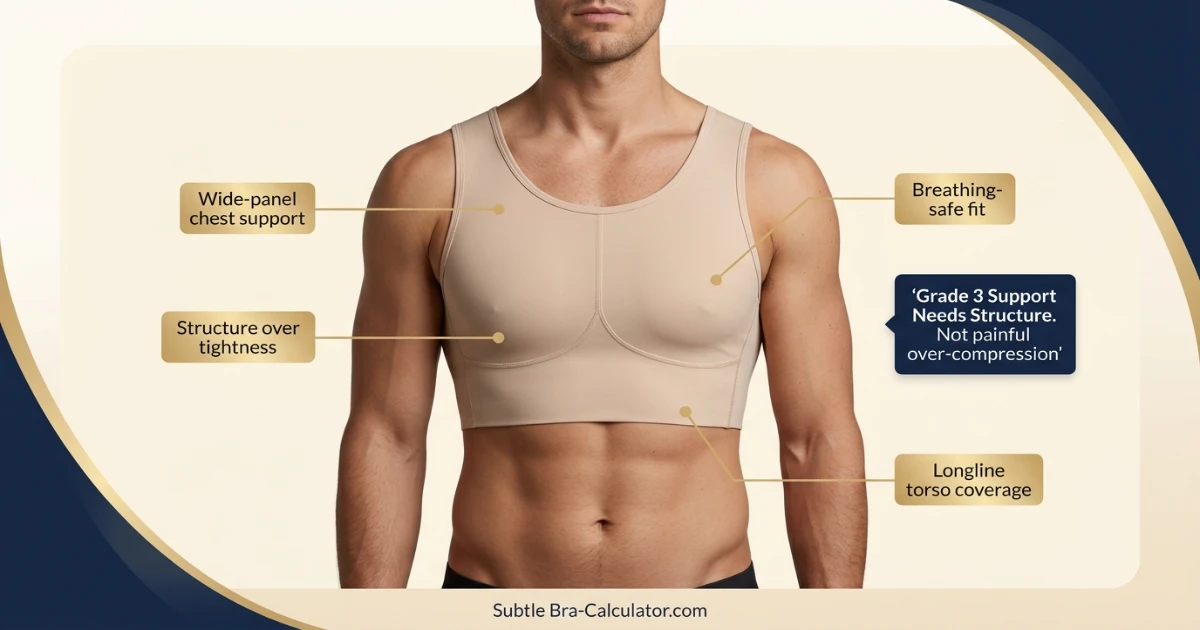
The Real Goal for Grade 3 Compression: Control, Coverage and Comfort
For Grade 3, the best result usually comes from balancing three goals: controlling movement, spreading pressure safely, and improving how clothing sits over the chest. Compression should not be treated like a cure or a way to force the body into a smaller shape. It is a comfort and clothing tool.
The strongest garment is not always the best daily garment. A firm vest may work for walking, gym or important clothing situations, while a breathable longline undershirt may be better for long workdays. Many people need two support levels: one for daily comfort and one for higher-movement situations.
Reduce walking bounce, shirt pull and distracting movement.
Wide panels distribute support better than narrow tight bands.
Longline length helps support stay down over the torso.
Soft seams and dry fabric help reduce rubbing and irritation.
Structured shirts improve appearance without extra compression.
Pain, numbness or restricted breathing means the support is not safe for you.
Best Compression Features for Grade 3 Gynecomastia
| Feature | Why It Matters | Best For | Avoid |
|---|---|---|---|
| Wide front panel | Spreads compression across the chest instead of pinching one line. | Visible projection and movement. | Narrow chest strips. |
| Longline length | Helps prevent rolling and supports chest plus upper torso together. | Rolling, larger torso, stomach comfort. | Short tops that ride up. |
| Breathable firm fabric | Allows stronger support without trapping heat as badly. | Daily wear and warm climates. | Thick non-breathable shapewear. |
| Stable lower hem | Keeps support anchored during sitting and walking. | Work, travel, walking. | Weak curling hems. |
| Smooth seams | Reduces rubbing under chest, nipple area and side chest. | Tenderness and skin comfort. | Rough seams or tags. |
| Grade 3 winner | Wide-panel longline compression with breathable fabric and safe rib expansion. | ||
Compression Vest vs Compression Shirt for Grade 3
For Grade 3, a regular compression shirt may feel more discreet, but a vest often gives better structure. The right choice depends on where the support is failing: visibility, movement, rolling, heat or breathing comfort.
| Option | Best For | Strength | Weakness |
|---|---|---|---|
| Firm compression undershirt | Work, school, discreet daily wear. | Low-profile and easier under clothes. | May not control Grade 3 movement enough. |
| Longline compression tank | Rolling, torso smoothing, plus-size fit. | Better hem stability and torso coverage. | Armhole fit matters. |
| Wide-panel vest | Movement control and stronger support. | More stable than a shirt. | Warmer and may show under thin clothing. |
| Sports compression vest | Gym, walking, running support. | Better impact and sweat control. | Not always comfortable for all-day wear. |
| Best Grade 3 system | Use a breathable undershirt for daily wear and a stronger vest for movement-heavy situations. | ||
Heat, Sweat, Chafing and Skin Checks with Grade 3 Compression
Grade 3 support often uses more fabric and more structure, so heat and skin comfort become major issues. A garment that looks effective but causes sweat buildup, rubbing or skin irritation will not be wearable for long.
Pay attention to the under-chest fold area, side seams, underarms, nipple area and lower hem. Skin should not feel raw, numb or trapped. If support causes irritation, try smoother seams, moisture-wicking fabric, a better size, a different cut, or shorter wear periods.
| Skin / Comfort Issue | Likely Cause | Better Fix |
|---|---|---|
| Under-chest rubbing | Sweat, movement or rough seams. | Smooth seams, moisture-wicking fabric and proper fit. |
| Rib pressure | Too-small size or narrow compression band. | Wide-panel design and correct sizing. |
| Overheating | Heavy vest or non-breathable fabric. | Breathable support and garment rotation. |
| Rolling hem | Short length or tight stomach fit. | Longline support with stable flexible hem. |
| Deep red marks | Too much pressure or poor edge design. | Size adjustment or softer garment edge. |
How to Choose Compression for Grade 3 Gynecomastia
Grade 3 support needs enough front coverage and enough torso stability. Do not buy only by shirt size.
If support is weak, upgrade to wider panels or longline construction before sizing down aggressively.
Consider breathable firm compression for daily wear and a stronger vest for gym, walking, travel or high-movement days.
Support should reduce movement without shallow breathing, numbness, overheating, chafing or deep marks.
Medium-weight shirts, structured overshirts and jackets can improve results without more compression.
Seven Fit Tests Before Keeping Grade 3 Compression
| Fit Test | Good Sign | Problem Sign |
|---|---|---|
| Deep breath test | You can inhale fully without rib restriction. | Breathing feels shallow or chest feels squeezed. |
| Walking test | Movement is reduced and support stays stable. | Chest still moves sharply or garment shifts. |
| Sitting test | Hem stays down and ribs feel comfortable. | Compression rolls, digs or presses hard. |
| Heat test | Fabric feels wearable after 20 minutes. | You feel trapped, sweaty or overheated quickly. |
| Skin fold test | No rubbing under chest or side seams. | Rawness, itch, chafing or wet friction appears. |
| Shirt test | Outer clothing looks smoother without obvious garment lines. | Vest edges, seams or neckline show sharply. |
| End-of-day test | No numbness, deep marks, irritation or urgent need to remove it. | Pain, tingling, bruising, rash or breathing discomfort. |
Best Grade 3 Compression by Main Problem
| Main Problem | Best Support Type | Why It Works | Watch Out For |
|---|---|---|---|
| Visible projection | Wide-panel vest | More front structure than light compression. | Vest edges under thin shirts. |
| Movement while walking | Firm compression vest | Stabilizes chest better than undershirt alone. | Breathing restriction. |
| Rolling at waist | Longline compression tank | Anchors support lower on the torso. | Too-tight stomach fit. |
| Daily work wear | Breathable firm undershirt | More discreet and cooler than a vest. | May provide less control. |
| Gym or running | Sports compression vest | Better sweat control and movement support. | Not ideal for all-day sitting. |
| Tenderness or rubbing | Smooth support top or lined compression | Reduces friction without harsh seams. | Less flattening. |
| Best Grade 3 first system | Longline + wide-panel support | Structure over tightness | Always test breathing and skin. |
Best Compression Options for Grade 3 Gynecomastia
These are product categories, not medical treatments. Replace placeholder images and generic Amazon searches with selected products when ready.
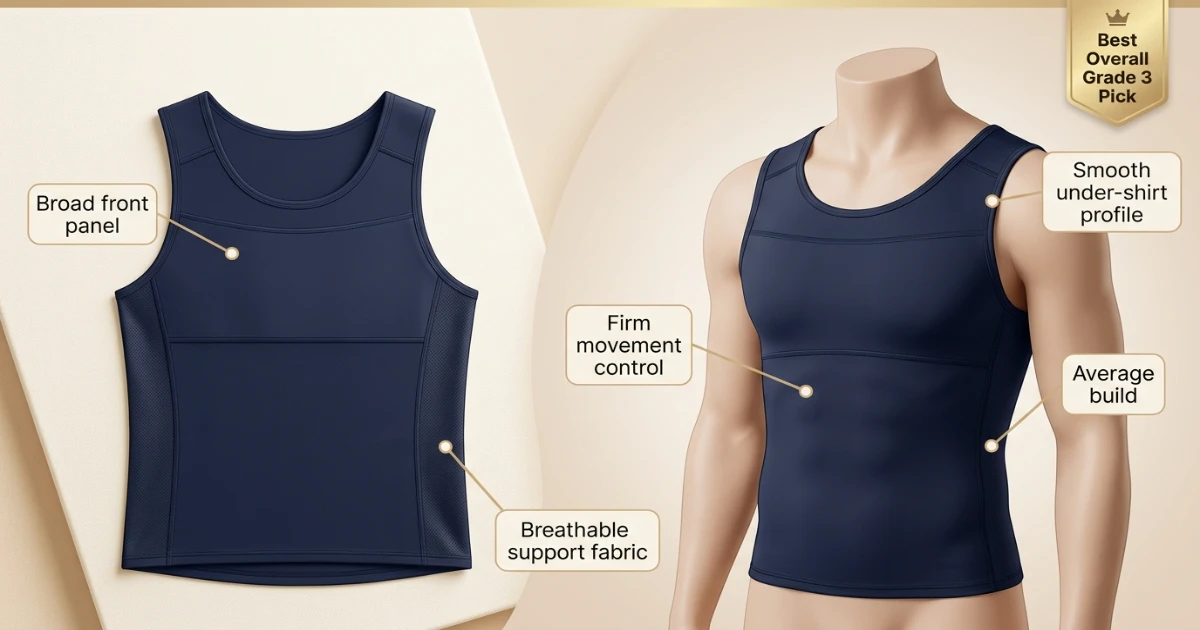
Wide-Panel Compression Vest
Best when Grade 3 fullness needs more support than a regular compression shirt. A wide-panel vest spreads pressure across the chest and helps reduce movement during walking or activity.
- Chest movement is distracting
- Daily compression feels too weak
- You wear structured outer layers
- It restricts breathing
- You overheat quickly
- Vest edges show under thin shirts
Grade 3 buying tip: Choose broad, breathable panels. A narrow tight vest may squeeze without stabilizing properly.
View Options on Amazon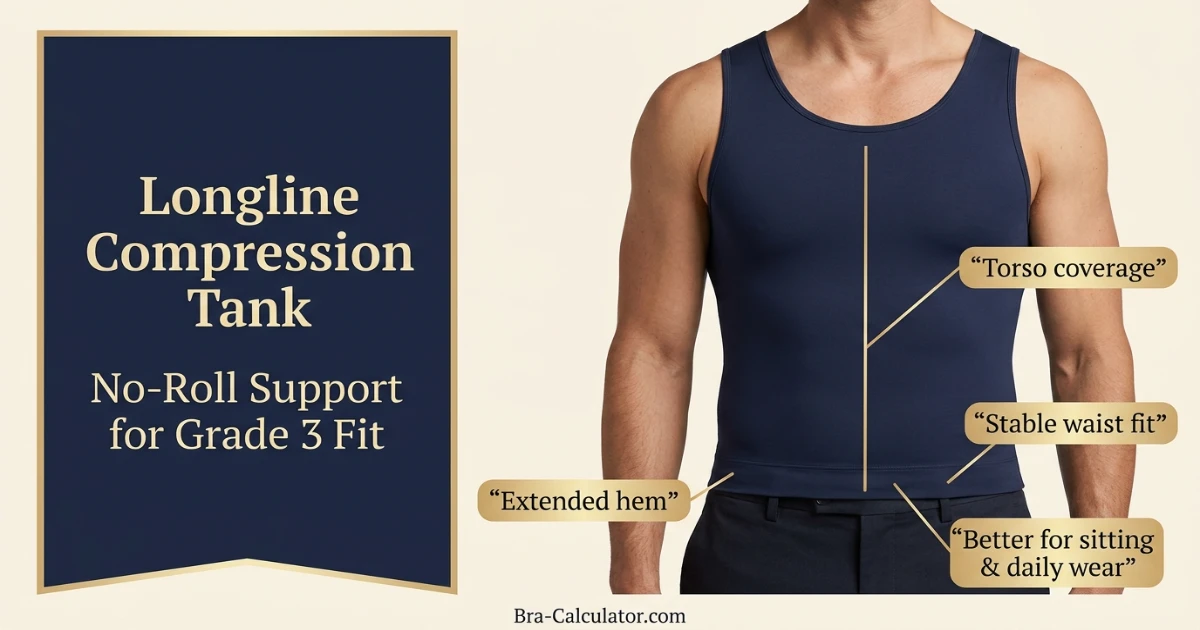
Longline Compression Tank
Best if short compression shirts ride up, roll at the stomach or create a visible waist ridge. Longline support smooths the chest and upper torso together.
- Compression rolls up
- You sit for long hours
- You need chest + torso coverage
- Armholes rub
- You need maximum chest control
- The lower hem squeezes the stomach
Grade 3 buying tip: Check torso length and waist measurement. A longline garment must fit the stomach, not just the chest.
View Options on Amazon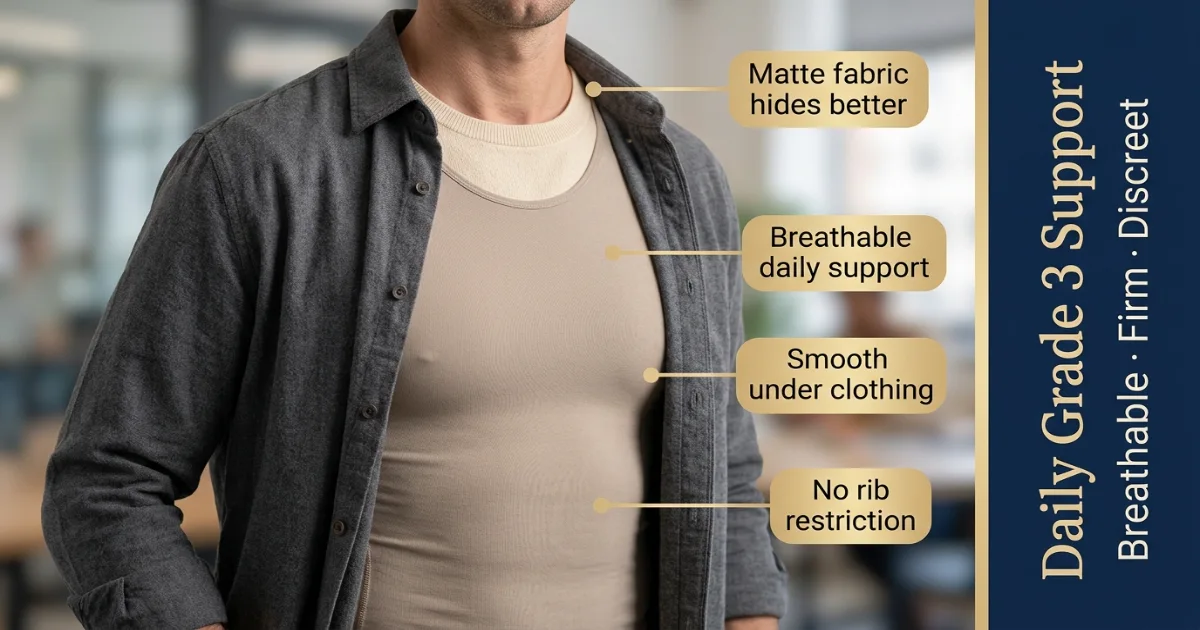
Breathable Firm Compression Undershirt
Best when you need more support than a soft undershirt but want something more discreet and cooler than a full vest for work, school or errands.
- You need daily support
- Vest feels too bulky
- Heat control matters
- Movement remains high
- Fabric stretches out quickly
- Hem rolls during sitting
Grade 3 buying tip: Matte fabric hides better under clothing than shiny athletic compression.
View Options on AmazonGrade 3 Compression Notes by Body Type
Longline First
Torso coverage helps reduce rolling and stomach cutting.
LonglineLow-Profile Edges
Vest lines can show more on slim frames, so seams matter.
SeamlessWide Panels
Support should work with pec shape, not flatten unevenly.
WideArmhole Fit
Avoid underarm cutting from narrow vest openings.
ArmholesBreathable Firm
Use the lowest effective support level in moisture-wicking fabric.
CoolSmooth Lining
Soft inner fabric can reduce rubbing under stronger compression.
SoftExtended Hem
Short compression often rides up on longer torsos.
ExtendedTwo-Garment System
Use lighter daily support and stronger support for activity days.
RotationWhat to Wear Over Grade 3 Compression
Grade 3 compression works best when clothing helps too. A vest under a thin clingy shirt may show more than a firm undershirt under a structured shirt. The goal is to reduce the outline without adding painful pressure.
| Outer Clothing | Best Support Pairing | Why It Helps | Avoid |
|---|---|---|---|
| Medium-weight T-shirt | Firm compression undershirt. | Better drape and fewer visible edges. | Thin stretch cotton. |
| Polo shirt | Matte compression layer. | Texture hides seams and outline better. | Shiny compression underneath. |
| Overshirt | Wide-panel vest or longline tank. | Adds vertical lines and relaxed coverage. | Tight buttons pulling at chest. |
| Blazer / jacket | Low-profile vest. | Structured layer hides garment edges. | Too-tight jacket chest. |
| Dark subtle pattern | Any low-profile support. | Breaks up chest outline. | Bright, thin, solid shirts. |
| Best Grade 3 formula | Wide-panel support + medium-weight dark shirt + open overshirt or structured jacket. | ||
Choose Grade 3 Compression by Your Main Problem
- Chest movement is distracting
- Walking causes bounce
- Undershirts feel too weak
- Wide-panel compression vest
- Broad front support
- Breathing-safe firm fit
- Compression rides up
- Hem rolls at stomach
- Sitting makes it worse
- Longline compression tank
- Stable flexible hem
- Correct waist sizing
- Vest feels too warm
- You sweat quickly
- Skin gets irritated
- Breathable firm undershirt
- Moisture-wicking fabric
- Garment rotation
- You need work support
- You want lower visibility
- All-day comfort matters
- Firm matte undershirt
- Medium-weight shirt
- Vest only for high-need days
Grade 3 Compression Mistakes to Avoid
Smaller size can squeeze ribs without giving better chest stability.
Strong support fails if it becomes too hot to wear.
Firm compression is usually not for sleep unless a doctor says otherwise.
Wide support spreads pressure and improves movement control.
Look for rubbing, redness, deep marks or irritation after wear.
Use different support levels for daily wear, activity and special clothing.
What People Often Notice with Better Grade 3 Compression
These are practical comfort outcomes, not medical promises.
“A wider panel worked better than a smaller size.”
Better structure often controls movement more safely than over-tight compression.
“I needed a daily option and a stronger option.”
Many Grade 3 users prefer one breathable garment for daily wear and one vest for high-movement situations.
“Longline support stopped the rolling problem.”
Extra length can make stronger compression much more wearable.
“Clothing helped as much as compression.”
Structured shirts and outer layers can improve the result without extra pressure.
Medical References and Disclaimer
This guide is for comfort, clothing and support education. It is not medical advice and does not diagnose or grade gynecomastia. A clinician can evaluate whether chest fullness is gynecomastia, pseudogynecomastia, medication-related change or another condition.
Seek medical advice for persistent breast or nipple pain, a hard lump, nipple discharge or bleeding, skin changes, sudden one-sided enlargement, severe pressure pain, numbness, skin breakdown, or significant worry or distress.
Frequently Asked Questions
What is Grade 3 gynecomastia support?
Grade 3 support usually means stronger structure for more visible chest fullness, often using wide-panel compression, longline tanks or low-profile vests instead of light undershirts alone.
What compression is best for Grade 3 gynecomastia?
A wide-panel compression vest or longline compression tank is often best because Grade 3 usually needs more structure, movement control and torso stability than light daily compression.
Should Grade 3 compression be very tight?
No. It should feel secure and supportive, not painful. It should not restrict breathing, cause numbness, dig into ribs, overheat or leave deep marks.
Is a compression shirt enough for Grade 3 gynecomastia?
Sometimes, but many Grade 3 users need more structure than a basic compression shirt. A firm undershirt may work for daily wear, while a vest may work better for movement control.
How do I stop Grade 3 compression from rolling up?
Choose longline length, correct waist sizing, a stable hem and enough torso coverage. Rolling often means the garment is too short, too tight at the stomach or weak at the hem.
Can compression treat Grade 3 gynecomastia?
No. Compression can improve comfort and appearance while worn, but it cannot reduce glandular tissue or replace medical evaluation.
What should I wear over Grade 3 compression?
Medium-weight shirts, polos, structured overshirts, dark subtle patterns and jackets usually hide support better than thin clingy fabric.
When should I see a doctor for Grade 3 gynecomastia?
See a doctor for persistent pain, a hard lump, nipple discharge or bleeding, skin changes, sudden one-sided swelling, or significant worry or distress.
Choose Compression That Controls Movement Without Blocking Comfort
Measure first, choose wide-panel or longline support, test breathing and skin comfort, and use stronger vests only when your daily compression is not enough.
More gynecomastia support guides
- Gynecomastia bra guide
- Gynecomastia bra size chart
- Gynecomastia Bra Buying Guide: How to Choose the Right Support
- Compression Too Tight: How to Fix Gynecomastia Support Fit
- Choosing the Right Compression Level for Gynecomastia Support
- Men’s Bra Sister Sizes Explained: How to Find Your Perfect Fit (2026)
- How to Measure Male Chest for a Support Garment