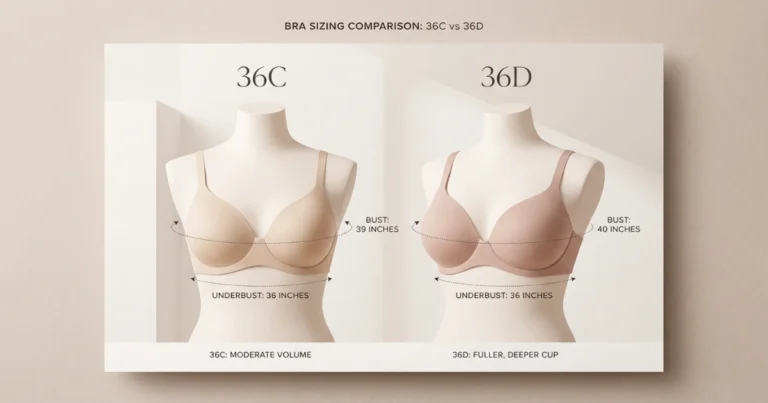
32C vs 34B: Are They Sister Sizes?
A Complete Bra Fit Guide — cup volume, band support, and how to choose the right size for your body
If you have ever tried on a 32C and a 34B and noticed that they fill similarly, you are not imagining things. These two sizes are officially called sister sizes, a concept that every bra wearer benefits from understanding. This guide breaks down exactly what that relationship means, why it matters for support and comfort, and how to figure out which size truly fits your body. For a broader look at how different bra sizes relate to one another, visit the breast size comparison hub on this site.
Quick Answer
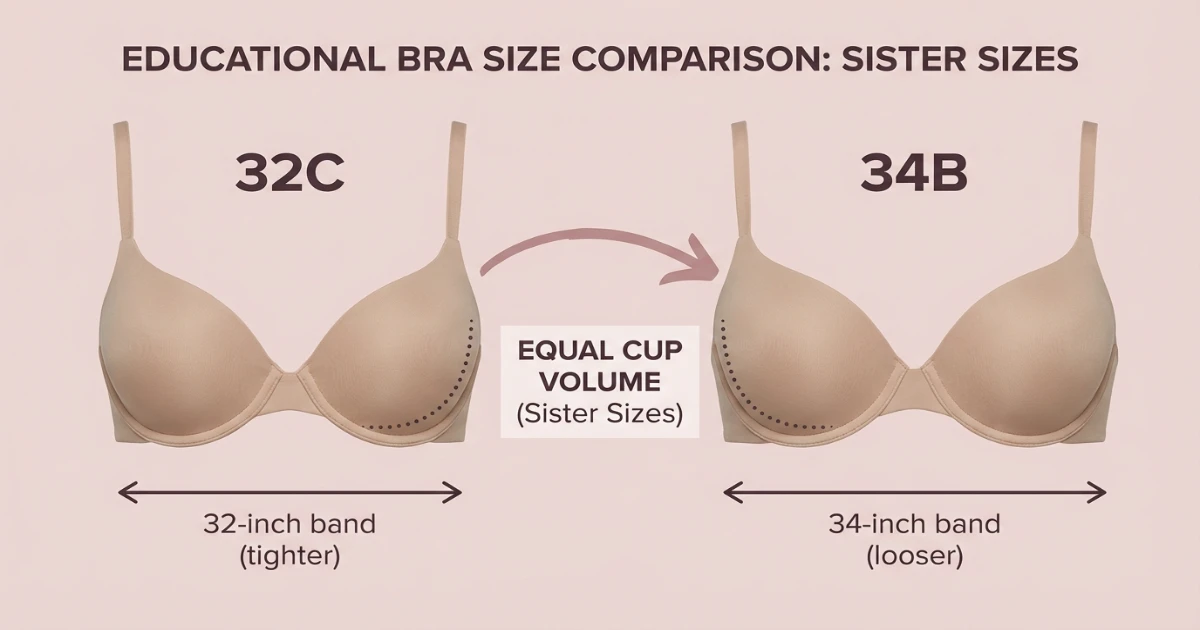
32C and 34B are sister sizes, meaning they hold almost the same cup volume but use different band sizes. A 32C has a tighter band and slightly deeper cups, while a 34B has a looser band with slightly wider cups. The best choice depends on ribcage measurement and how much band support you need.
Key Takeaways
- 32C and 34B share nearly the same cup volume — the breast tissue they contain is almost equal.
- The band size is the critical difference: 32 is snugger, 34 is two inches wider.
- A tighter band delivers more lift and support because it stays stable against the ribcage.
- You can try the sister size if your current bra fits in the cup but not in the band.
- Accurate underbust and full-bust measurements are the only reliable way to find your correct size.
What Does 32C Mean?
A 32C bra has two distinct components. The number 32 refers to the band size — the circumference of the bra around the ribcage, just below the bust. The letter C is the cup size, indicating that the full-bust measurement is approximately three inches larger than the band measurement.
Women who wear a 32C typically have a relatively narrow or petite ribcage (roughly 28–30 inches measured snugly around the underbust) and a full-bust measurement around 34–35 inches. The band sits firmly around a slimmer torso, which naturally means the band can do more of the work of supporting the breast tissue.
It is worth noting that “C cup” carries different absolute volumes depending on the band. A 32C cup is smaller in absolute terms than a 38C cup, even though both are labelled “C.” This is exactly the logic behind sister sizing, explained in detail below.
What Does 34B Mean?
A 34B bra also has two components. The number 34 is the band size — two inches wider than the 32 band — and the letter B means the full-bust measurement is approximately two inches larger than the band measurement.
Women who wear a 34B generally have a medium-width ribcage (roughly 30–32 inches underbust) with a full-bust measurement around 35–36 inches. Because the band is wider, it wraps around slightly more torso. The looser fit can feel more comfortable for some bodies, while others find it provides less independent support.
For many shoppers, 34B is one of the most commonly stocked sizes in mainstream retail, which can make it tempting to settle into even when a different size — like 32C — might actually fit better.
Are 32C and 34B Sister Sizes?
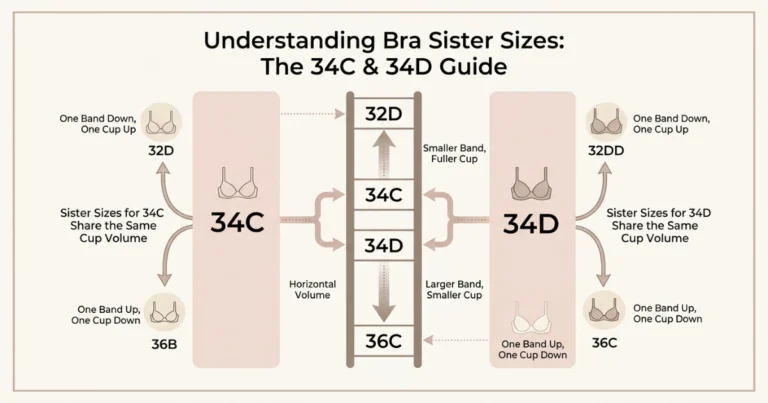
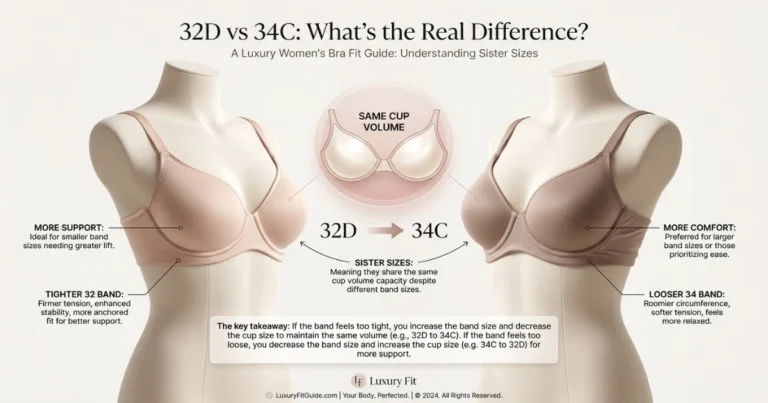
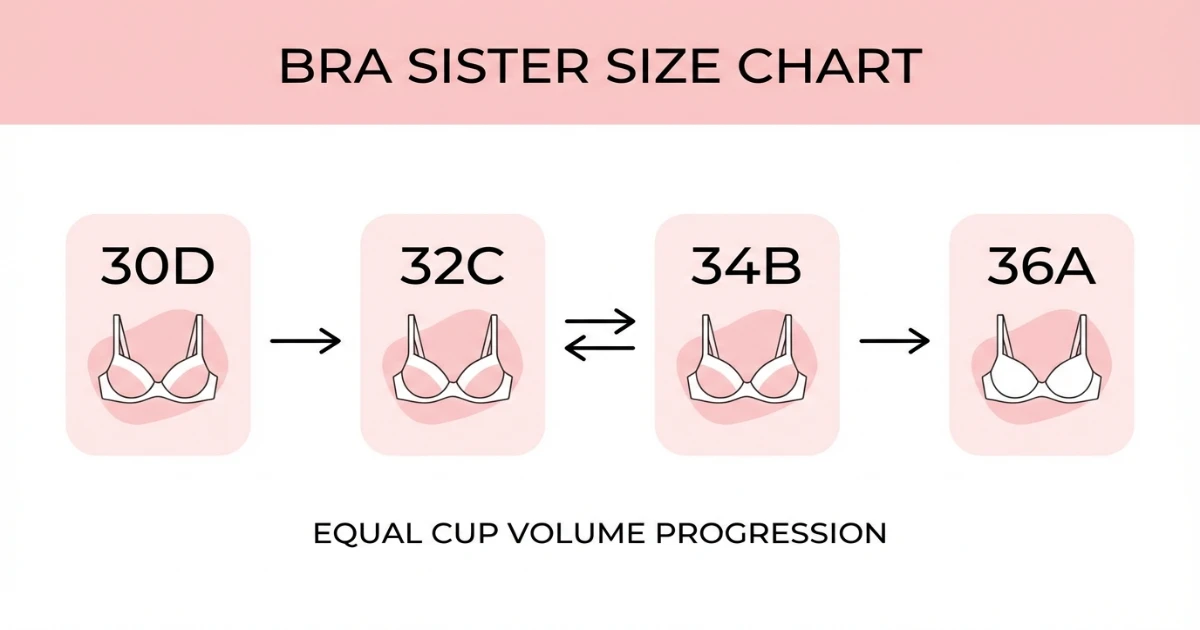
Yes. 32C and 34B are sister sizes. The sister-size relationship means that when the band size goes up by one increment (two inches), the cup letter steps down by one letter — and vice versa. The result is that the actual volume of the cup stays approximately equal across sister sizes.
In the case of 32C and 34B, moving from a 32 band to a 34 band means the torso circumference increases by two inches, which adds room around the chest. To keep the cup volume the same, the cup letter must decrease by one step — from C to B. The breast tissue being enclosed remains roughly equivalent in either bra.
All sizes above hold nearly the same cup volume. The band size and cup letter simply adjust together. See the full sister sizes guide or use the sister size calculator to explore your options.
Cup Volume Comparison Explained 32C vs 34B
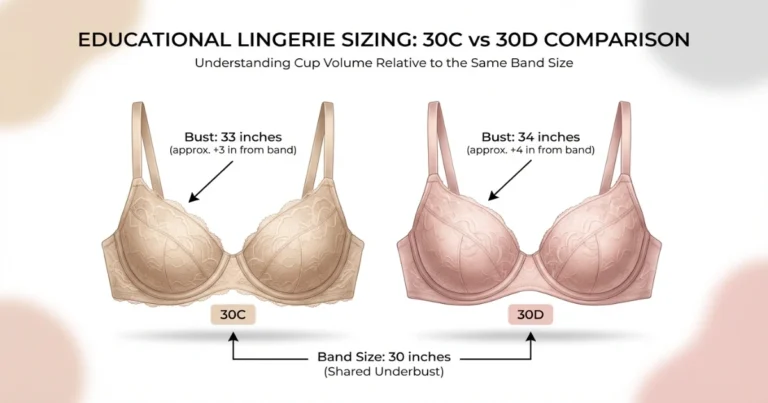
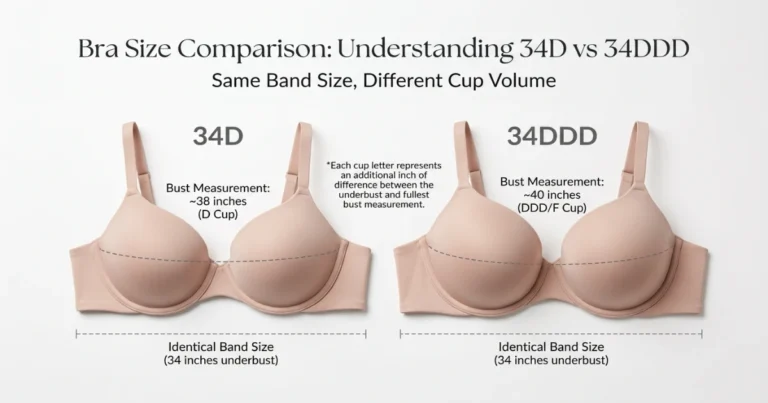
Cup volume is calculated as the difference between the full-bust measurement and the band measurement. A cup letter does not represent a fixed, absolute volume on its own — it always exists in relation to its band number. This is one of the most misunderstood aspects of bra sizing.
| Measurement | 32C | 34B |
|---|---|---|
| Band Size (inches) | 32 | 34 |
| Cup Letter | C (3-inch difference) | B (2-inch difference) |
| Approximate Full Bust | 35 inches | 36 inches |
| Cup Volume (relative) | ~Equal | ~Equal |
| Band Tension | Firmer / snugger | Looser / softer |
| Cup Shape | Slightly deeper, narrower | Slightly shallower, wider |
| Lift and Support | Higher (band works harder) | Moderate (more strap reliance) |
When you look at a C cup on a 32 band alongside a B cup on a 34 band, the cups contain approximately the same amount of breast tissue. The 32C cup is cut with a slightly more projected, narrower shape because the narrower band naturally positions the cups differently. The 34B cup is cut slightly wider and shallower to accommodate the broader band spacing. For a visual breakdown, the cup size visuals page is a useful reference.
Band Size Difference Explained
The band is the single most important structural element of any bra. Bra fitting experts consistently note that the band provides up to 80% of a bra’s total support. Understanding how band size affects your experience helps you make a much more informed size choice.
Why the Band Does Most of the Work
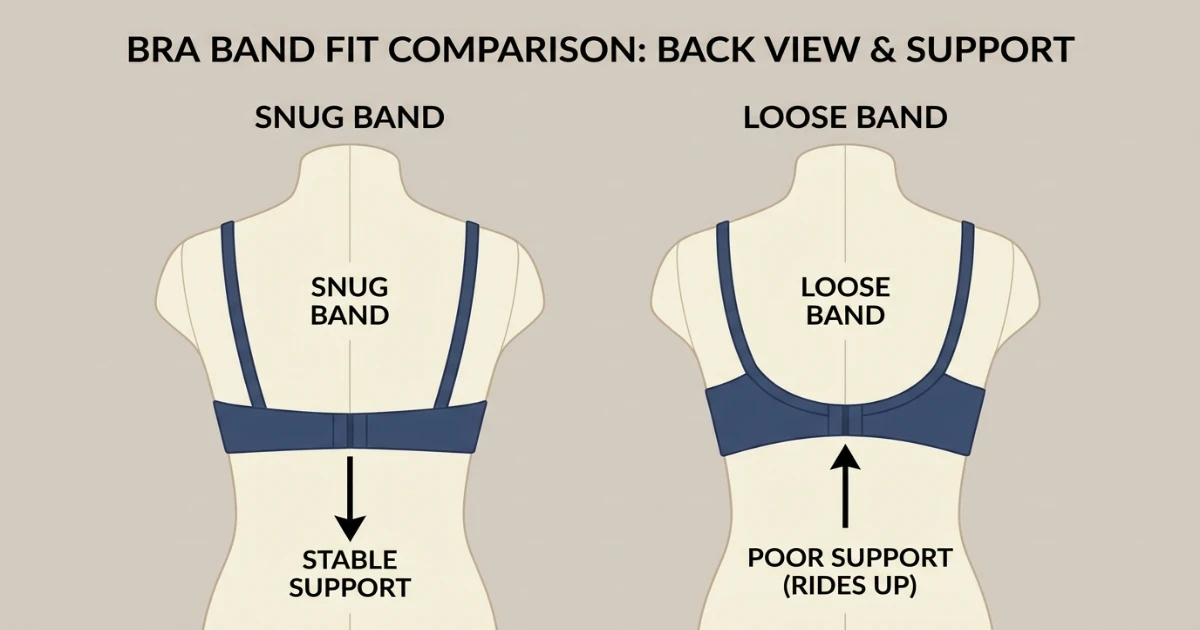
A properly fitted band sits parallel to the floor all the way around the torso. It creates a stable anchor point that prevents the bra from riding up, the cups from gaping, and the straps from digging into the shoulders. When the band is too loose, it shifts upward at the back, pulling the cups down and transferring all the load onto the shoulder straps.
32 Band vs 34 Band
- A 32 band measures 32 inches around when comfortably snug. It provides firm, consistent compression against the ribcage, which is especially beneficial for active lifestyles or those who need significant lift.
- A 34 band measures 34 inches around and allows a little more give. It can feel more comfortable for those with a fuller ribcage or for everyday casual wear where maximum support is less critical.
- Most bras are designed with the expectation that the wearer starts on the loosest hook when new, tightening over time as the elastic stretches. A new 34B should feel snug on the first hook setting.
Visual Fit Differences
Even though the cup volumes are close, 32C and 34B look and feel noticeably different on the body:
| Fit Detail | 32C | 34B |
|---|---|---|
| Band at the back | Stays low, hugs the torso | May ride up slightly if ribcage is narrow |
| Cup silhouette | Rounder projection, slightly deeper | Softer projection, slightly flatter |
| Under-clothing look | Cleaner line due to firm band | Slightly more relaxed silhouette |
| Strap adjustment needed | Less, since band supports more | More, to compensate for looser band |
| Overall feel | Structured and secure | Comfortable and relaxed |
Who Should Wear 32C?
You are likely a good candidate for a 32C if:
- Your measured underbust circumference falls between approximately 28 and 31 inches.
- Your full-bust measurement is around 34–35 inches (roughly 3 inches above the underbust).
- You find that 34B cups fit your breast shape but the band feels uncomfortably loose or shifts around during the day.
- You prefer structured support and do not want to rely heavily on shoulder straps.
- You are active and need a band that stays put during movement.
Petite frames often find the 32 band more proportionally flattering, since the narrower band does not add bulk at the sides or back. If the 32C cup feels slightly small in terms of coverage, consider also trying 32D for comparison.
Who Should Wear 34B?
A 34B is likely a better fit if:
- Your underbust circumference is between approximately 30 and 33 inches.
- Your full-bust measures around 35–36 inches (roughly 2 inches above the underbust).
- You find 32C bands digging in uncomfortably, leaving marks, or feeling restrictive when you breathe.
- You prefer a softer, more relaxed feel around the torso throughout the day.
- You have a medium-width frame and find narrow bands feel proportionally small on your body.
For those exploring adjacent sizes, you might also review the 34C vs 34D comparison to understand how the cup steps work within the same band size.
Common Bra Fit Problems With These Sizes
Recognising fit problems early saves discomfort and helps you course-correct quickly. Use the bra fit problem solver for specific scenarios, or visit the full bra fit problems guide for a comprehensive reference. Here are the most common issues specific to this size range:
In 32C
- Band too tight: Red marks, difficulty breathing, or the band digging in beneath the arms. Solution: check your underbust measurement — you may need a 34 band.
- Cup overflow: Breast tissue spilling over the top or sides of the cup. Solution: try 32D.
- Cup gaping: Empty space at the top of the cup. Solution: the cup may be too large or the wrong shape for your breast profile.
In 34B
- Band riding up: The back of the bra climbs toward your shoulder blades during the day. This is the most common sign that the band is too large for your ribcage.
- Underwire poking or lifting: If the underwire sits away from the chest wall, the band may be too loose or the cup too small.
- Straps constantly slipping: Usually a band-size issue — the band is not doing its job, so the straps are overworked.
The guide to knowing when a bra fits correctly walks through each of these signs with clear diagnostic advice.
How to Measure Bra Size Correctly
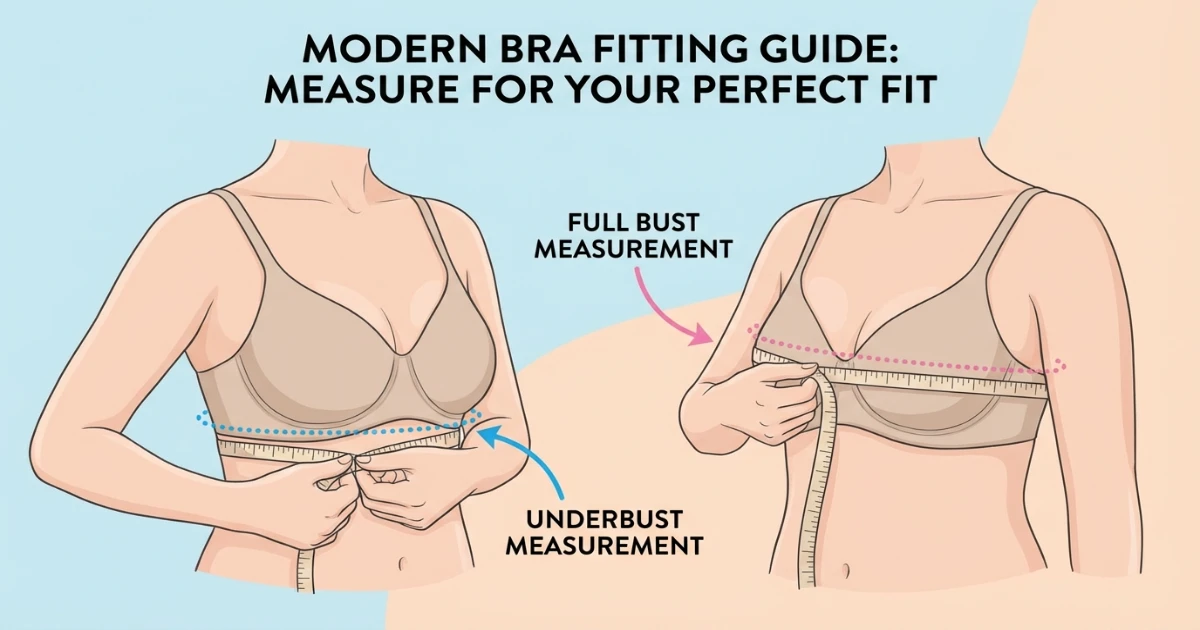
Measuring yourself properly is the only reliable way to know whether 32C, 34B, or another size entirely is right for your body. For a full walkthrough, see the how to measure page. The essential steps are:
-
Step 1 — Measure Your Underbust Wrap a soft measuring tape around your ribcage directly beneath your bust. Keep the tape snug — not tight — and parallel to the floor. Note this number in inches. This is your underbust measurement and is used to determine your band size.
-
Step 2 — Measure Your Full Bust Wrap the tape around the fullest part of your chest, typically across the nipple line. Keep the tape level and comfortably relaxed — not pressed in. Note this measurement in inches. Measure while wearing a non-padded bra or bralette for the most reliable result.
-
Step 3 — Calculate the Difference Subtract your underbust measurement from your full-bust measurement. This difference corresponds to your cup letter: 1 inch = A, 2 inches = B, 3 inches = C, 4 inches = D, and so on.
-
Step 4 — Determine Your Band Size Round your underbust measurement to the nearest even number. If your underbust is 30 inches, your band is 30 or 32 depending on how snugly you prefer the fit. If it is 31, try both 32 and 34. Use the bra size chart calculator to confirm.
-
Step 5 — Confirm Cup Containment and Band Support Try the size on. The band should sit level all the way around, allow two fingers underneath snugly, and not ride up. The cups should contain all breast tissue with no overflow or gaping. The underwire, if present, should sit flat against the chest wall. Use the AI Smart Fit Bra Calculator for a personalised recommendation.
You can also use the bra size calculator on the homepage to get a complete size recommendation including sister size options, or the global bra size converter if you shop international brands. The size charts page provides a full reference table.
Best Bra Styles for 32C and 34B
Both sizes work well across a wide range of bra styles. The key is choosing a style that matches your support needs and the occasion:
Best for 32C
- Underwire balconette: Supports projection and provides lift without relying on thick padding.
- T-shirt bra (underwire): The firm band and smooth cups work well under fitted tops.
- Sports bra (encapsulation style): The snug band keeps everything stable during exercise.
- Plunge style: Works well with deeper necklines; the narrower frame of a 32 band keeps the plunge proportionate.
Best for 34B
- Soft-cup bralette: The relaxed band feel suits casual wear and everyday comfort.
- Lightly padded T-shirt bra: Common in 34B and widely available; provides shape with moderate support.
- Longline bra: The extended band adds structure even when the basic band is wider, distributing support.
- Wireless bra: A well-structured wireless style in 34B can offer comfort with adequate coverage.
Conclusion
The relationship between 32C and 34B is one of the clearest examples of how bra sizing actually works. Cup volume is not absolute — it only makes sense in relation to the band it is attached to. Because these two sizes share nearly identical cup volume while using different band widths, they are true sister sizes that can often substitute for each other when one element of the fit is slightly off.
Choosing between them comes down to one practical question: what does your ribcage actually measure? If your underbust sits closer to 29–30 inches, a 32C will likely deliver firmer, more efficient support. If it sits closer to 31–32 inches, a 34B may fit without the band feeling restrictive. Neither size is inherently better — the correct size is always the one that fits your body as measured.
If you are still unsure, the sister size calculator can map out your full range of sister options instantly. And for everything from measurement guides to comparison tools, bra-calculator.com is your complete bra fit resource. You may also find the related comparisons — 32DD vs 34D and 34D vs 36C — useful if you are exploring the next cup or band step.
Not sure which size is right for you?
Use our free tools to find your perfect fit — including sister sizes, global conversions, and AI-powered recommendations.
Try the AI Smart Fit Calculator →Frequently Asked Questions
Are 32C and 34B sister sizes?
Yes. 32C and 34B are sister sizes. They hold approximately the same cup volume because the two-inch increase in band size is offset by a one-letter decrease in cup size. Moving from a 32 band to a 34 band while going from a C cup to a B cup keeps the overall cup capacity nearly equal. Use the sister sizes guide to explore this concept further.
Is 32C bigger than 34B?
In terms of cup volume, 32C and 34B are nearly the same. However, a 32C cup is cut slightly deeper and narrower due to its smaller band, while a 34B cup is slightly shallower and wider. The overall cup capacity they enclose is approximately equivalent. Neither is definitively “bigger” — they simply fit differently shaped torsos.
Which size gives better support — 32C or 34B?
For most people, a 32C provides better structural support than a 34B because the tighter 32 band anchors more firmly to the ribcage. Since the band contributes the majority of a bra’s support, a snugger band means the straps do less work, reducing shoulder strain and keeping the cups in a higher, more lifted position throughout the day.
Can I switch from 32C to 34B?
You can try switching if your 32C fits well in the cup but feels too tight or uncomfortable around the band. However, verify your underbust measurement first — if it genuinely falls in the 32 band range, simply moving to a 34B may result in a band that rides up and provides less support. Try the sister size calculator and the measurement guide before making the switch.
Why does band size affect bra support?
The bra band is a firm, elastic structure that encircles the ribcage and serves as the primary load-bearing element of the bra. A correctly sized band sits parallel to the floor, stays stable during movement, and carries most of the weight of the breast tissue. When the band is too large, it shifts upward, the cups drop, and the shoulder straps are forced to compensate — leading to marks, aches, and poor silhouette. The bra fit guide covers these mechanics in depth.