Are Bra Marks Normal? Red Lines, Indentations & Signs Your Bra Is Too Tight
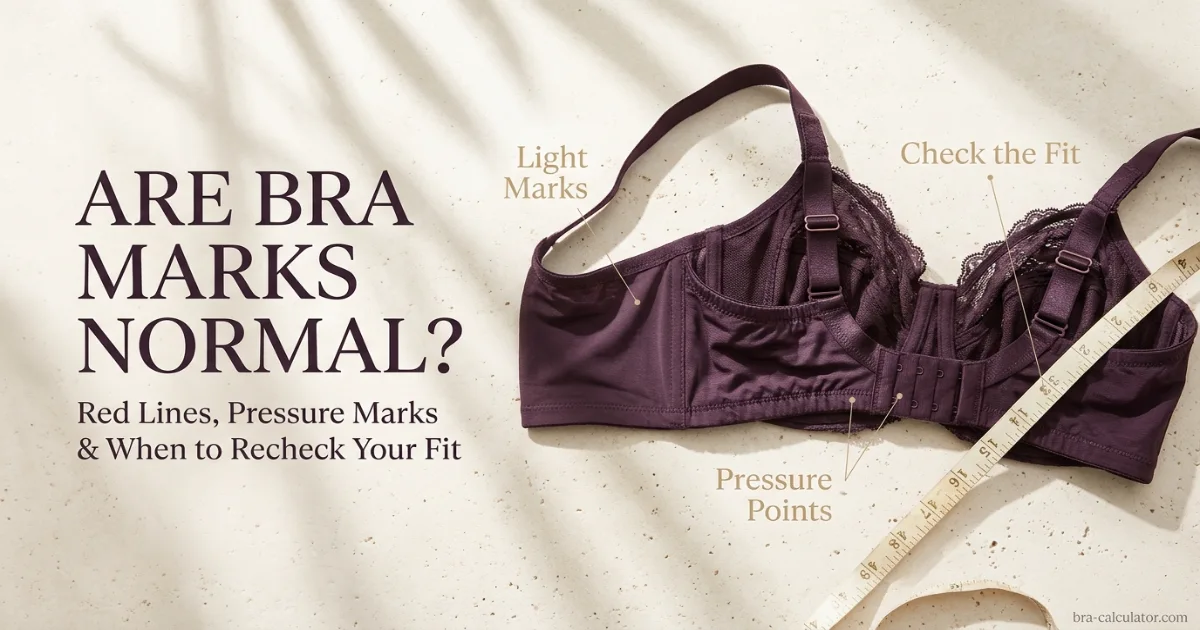
Are bra marks normal? Light pressure lines that fade quickly and do not hurt can happen with a supportive garment. Deep, painful, itchy or persistent marks are different: they are a reason to check the band, cups, wires, straps and fabric instead of simply accepting discomfort.
Quick answer: are bra marks normal?
Sometimes. A faint line that disappears soon after you remove a well-fitting bra can be ordinary pressure from close-fitting clothing. What is not a good fit signal is pain, burning, numbness, broken skin, a mark that stays for a long time, repeated rash, wire pressure on breast tissue or breathing discomfort. Those signs call for a fit change—and persistent skin symptoms deserve medical advice.
Are Bra Marks Normal or a Sign the Bra Is Too Tight?
A bra has to make contact with your body to provide support, so seeing some imprint after several hours does not automatically mean the size is wrong. The useful question is not simply “Did the bra leave a line?” but what did the mark feel like, where was it, and how quickly did it settle after the bra came off?
Usually less concerning
- Faint, even pressure line
- No pain, burning or numbness
- Skin is intact
- Mark fades relatively quickly
- Band stays level instead of riding up
- You can sit, move and breathe normally
Recheck the fit
- Deep grooves or sharply defined indentations
- Pain, pinching, burning or tenderness
- Persistent redness or swelling
- Rash, itching, broken or blistered skin
- Numbness or tingling
- Wire marks sitting on breast tissue
Do not judge the band from one red line alone. Your existing bra band too tight guide is useful when the whole band feels restrictive. A cup that is too small can also make the band feel tighter than it really is, so band and cup fit should be checked together.
What the Location of a Bra Mark Can Tell You
Where the mark appears often tells you more than its color. A line under the band, a groove at the shoulder and a red arc from the underwire are different fit problems and should not all be solved by “buy a bigger bra.”
| Where the mark appears | Possible fit clue | What to check next |
|---|---|---|
| Around the ribcage | Band may be firm, narrow or too small | Test band without the cups; check whether pressure is painful or simply snug |
| Under the breast / wire line | Wire may be sitting on tissue, cup may be too small or wire shape may not suit you | Check cup containment, center gore and wire width |
| Top edge of the cup | Cup may be too small, too closed on top or wrong for your shape | Look for cutting in, quad-boob or tissue escaping |
| Side near the armpit | Wire may be too tall/wide, side wing may rub, or cup may be too narrow | Check whether wire surrounds rather than sits on breast tissue |
| Shoulders | Straps may be too tight, or band may be too loose and shifting support to the straps | Loosen straps and check whether the band stays level |
| Underband fold or lower edge | Band may roll, fabric may be too narrow, or torso shape may need a different construction | Try a wider or smoother wing rather than only changing size |
Band Marks: Snug Support vs Too Much Pressure
The band is the structural anchor of a bra, so it should feel firm and stay roughly level around the torso. A new bra is normally tested on the loosest hook so there is room to tighten it as the elastic relaxes with wear. Firmness is useful; pain is not.
A light, even line under a comfortable band may simply show where the elastic was sitting. A much stronger clue is how the band behaves when you move. If it rides up at the back, it can actually be too loose. If it feels restrictive even when the cups are moved out of the way, the band itself or its construction may be the problem.
The backwards-and-upside-down band test
- Fasten the bra around your ribcage with the cups hanging down your back. This removes most cup pressure from the test.
- Check comfort on the loosest hook. The band should feel secure but not painful.
- Take a normal breath and sit down. A technically correct size still needs to work in real movement and posture.
- Compare with the bra worn normally. If it suddenly feels much tighter once your breasts are inside the cups, cup volume or cup shape may be creating the pressure.
Do not automatically size up the band if the cups are spilling. If the cups fit well and only the band is tight, a sister size may help. For example, moving from 34D to 36C keeps approximately similar cup volume while giving more band room. Use the Sister Size Bra Calculator rather than guessing.
Underwire Marks: Where Should the Wire Sit?
An underwire should frame the breast rather than rest on it. After you remove the bra, the wire imprint should generally trace the ribcage around the breast root. If the red arc repeatedly crosses soft breast tissue, ends on tissue at the side, presses sharply into the sternum or leaves one intense painful spot, the issue may be cup size, cup depth or wire shape rather than the band.
If your cups spill, the center gore floats or the wires sit on tissue, confirm your measurements with the Bra Size Calculator. A larger or deeper cup can sometimes make the entire bra feel more comfortable without increasing the band.
Should Bra Straps Leave Marks on Your Shoulders?
Straps can leave light temporary impressions, especially with heavier breast volume, but they should not feel as if they are carrying the full weight of the bra. Deep shoulder grooves, numbness, repeated soreness or straps that must be tightened aggressively are reasons to inspect the band first.
If the band is too loose, it can ride up and transfer more load to the shoulder straps. Tightening the straps harder may improve lift for a few minutes, but it does not fix the underlying support problem. Check whether the band stays level, then adjust the straps only enough to remove slack.
Quick strap check
- Loosen the straps slightly and see whether the band still anchors the bra.
- Check that straps are not cutting into the shoulder or sliding constantly.
- Look for wider or cushioned straps if pressure is concentrated in a narrow area.
- For asymmetry, adjust each strap independently rather than forcing both sides to match.
What If the Mark Is Itchy, Burning or Rash-Like?
Not every bra mark is a sizing problem. Skin can also react to repeated rubbing, sweat, rough seams, trapped moisture, dyes, elastic or other materials. The Cleveland Clinic’s chafing guidance explains that friction against clothing can cause redness, irritation, burning or tenderness, and moisture can make rubbing worse.
That distinction matters. If one specific seam creates irritation while the rest of the bra feels comfortable, changing the entire size may not solve it. A smoother band, softer fabric, tag-free construction, wider wing or different wire channel may work better.
More likely a fit-pressure problem
- Pressure follows the entire band or wire
- Bra feels restrictive immediately
- Marks match areas that dig or pinch
- Problem improves when size or cup depth changes
More likely friction / skin irritation
- Burning or itching at seams or edges
- Worse with heat and sweat
- Rough, damp or folded fabric rubs repeatedly
- Skin is flaky, cracked, blistered or rash-like
How to Fix Bra Marks Without Losing Support
The goal is not a bra so loose that it leaves no imprint at all. The goal is stable support without painful pressure or skin damage. Use this order so you do not solve one problem by creating another.
- Check the cups first. Scoop tissue fully into the cups and look for spillage, a floating gore, wires on tissue or strong lower-cup compression.
- Test the band independently. Use the backwards-and-upside-down test. If it still hurts, try a roomier band or softer construction.
- Use sister sizing when the cups already fit. Go up one band and down one cup step for similar cup capacity.
- Look at construction. Wider wings, smooth elastic, softer wire channels and fewer abrasive seams can distribute pressure better.
- Adjust the straps last. The straps should stabilize the cups, not rescue an unstable band.
- Retest after sitting and moving. A bra that looks perfect standing still may become uncomfortable after a desk session, meal or active movement.
- Remeasure when the pattern keeps returning. Body size, hormones, pregnancy, weight change and bra wear can all alter fit over time.
Not sure whether the band or cup is causing the mark?
Start with fresh measurements, then compare the result with the bra that is leaving pressure marks.
Calculate My Bra SizeSeven Bra Marks That Deserve a Fit Recheck
| Mark / symptom | Why it matters | Best next move |
|---|---|---|
| Deep band grooves | May mean excess band pressure or narrow elastic concentrating force | Band test, sister size or wider wing |
| Red wire line on breast tissue | Wire should frame tissue rather than sit on it | Recheck cup size, depth and wire width |
| Persistent redness | Pressure or friction may be continuing beyond normal temporary imprinting | Stop the irritating fit and reassess |
| Itchy rash | Could involve friction, sweat or skin sensitivity | Change fabric/construction; seek care if persistent |
| Broken or blistered skin | Skin barrier has been damaged | Stop wearing the bra until addressed |
| Numbness or tingling | Not an acceptable support trade-off | Remove pressure and seek advice if it persists |
| Breathing discomfort | Band is not comfortably wearable | Stop wearing and reassess size/style promptly |
When Should You Get Medical Advice?
This guide is about bra fit, not diagnosis. A bra adjustment can help when pressure or friction is clearly coming from the garment, but not every breast or skin symptom should be blamed on a bra.
Stop wearing the bra that is aggravating the area and consider medical advice when you have persistent or worsening pain, broken or blistered skin, discharge, significant swelling, signs of infection, numbness that does not settle, or a new lump or breast change that is not simply a surface pressure mark. Cleveland Clinic also advises getting medical care when chafing does not improve or becomes worse.
A mark is not a diagnosis. If something feels new, severe or unrelated to where the bra contacts your body, treat it as a health question rather than assuming the bra is the sole cause.
Frequently Asked Questions
Are bra marks normal?
Light marks that fade relatively quickly and do not hurt can occur with a supportive, close-fitting bra. Deep, painful, itchy or persistent marks are a reason to check the fit, fabric and construction.
How long should bra marks last?
There is no single exact time that applies to everyone. The practical distinction is whether the mark is light and settling after removal or remains pronounced, painful, itchy or irritated. Persistent marks deserve a fit recheck.
Do red marks mean my bra band is too tight?
Not automatically. A light line may come from ordinary garment contact. Test the band without the cups and look at comfort, breathing, movement and how long the mark persists.
Why does my underwire leave red marks?
The wire may be pressing firmly against the ribcage, but if the mark sits on breast tissue, feels sharp or remains painful, recheck cup volume, cup depth and wire shape.
Why do my bra straps leave deep marks?
The straps may be overtightened, or the band may be too loose and shifting too much support onto the shoulders. Check band stability before tightening the straps further.
Can a bra cause chafing?
Yes. Repeated rubbing from fabric, seams or edges can irritate skin, especially with sweat or moisture. A smoother, better-fitting construction may reduce friction.
Should I size up if my bra leaves marks?
Only after identifying the cause. If the cups fit and the band alone is too tight, a roomier sister size may help. If the cups are small, increasing only the band can create a new fit problem.
When are bra marks not normal?
Pain, persistent redness, numbness, broken skin, significant rash, blistering or breathing discomfort are not good fit outcomes. Stop wearing the irritating bra and seek medical advice when symptoms persist or worsen.
Related Bra Fit Guides
Share This Fit Guide
About this guide: Prepared for Bra-Calculator.com and reviewed by Amelia, Founder & CEO. It explains bra-fitting principles for educational purposes and does not diagnose skin or breast conditions. Persistent, severe or unusual symptoms should be discussed with a qualified healthcare professional.