Nursing Bra vs Regular Bra: What Actually Changes?

In this guide
- The real difference between nursing and regular bras
- Nursing bra vs regular bra comparison
- Which one is more supportive?
- Can you wear a regular bra while breastfeeding?
- When nursing-specific design is genuinely useful
- Wireless, flexiwire and underwire
- 60-second fit check
- Pumping changes the decision
- When to switch back to regular bras
- A realistic mixed rotation
- Cost and durability
- Three useful examples
- FAQs
The Real Difference Between a Nursing Bra and a Regular Bra
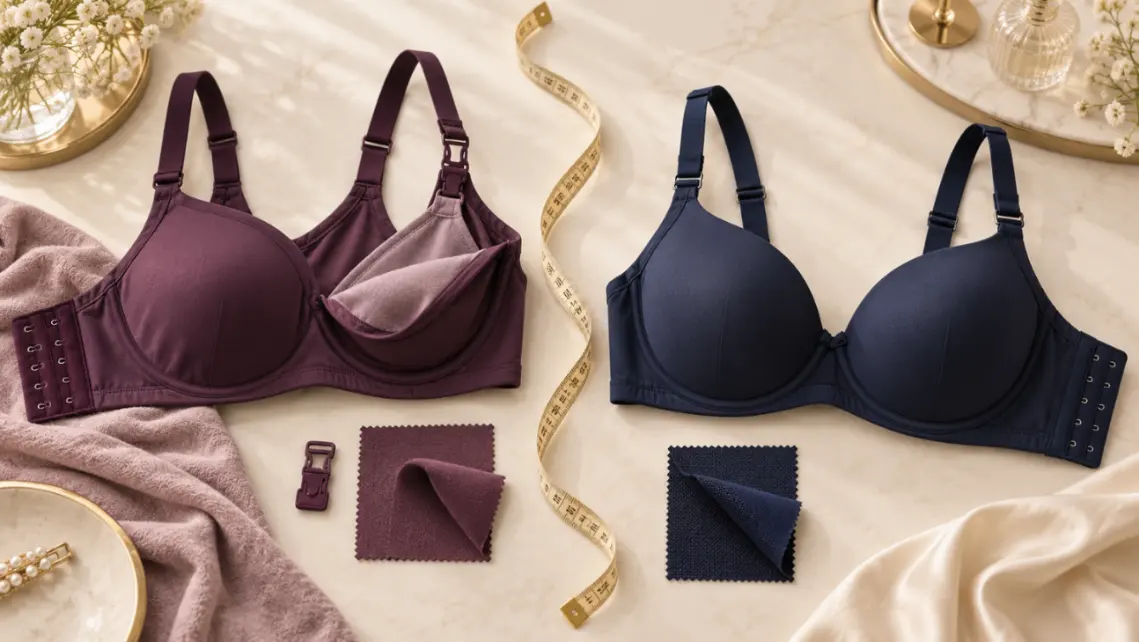
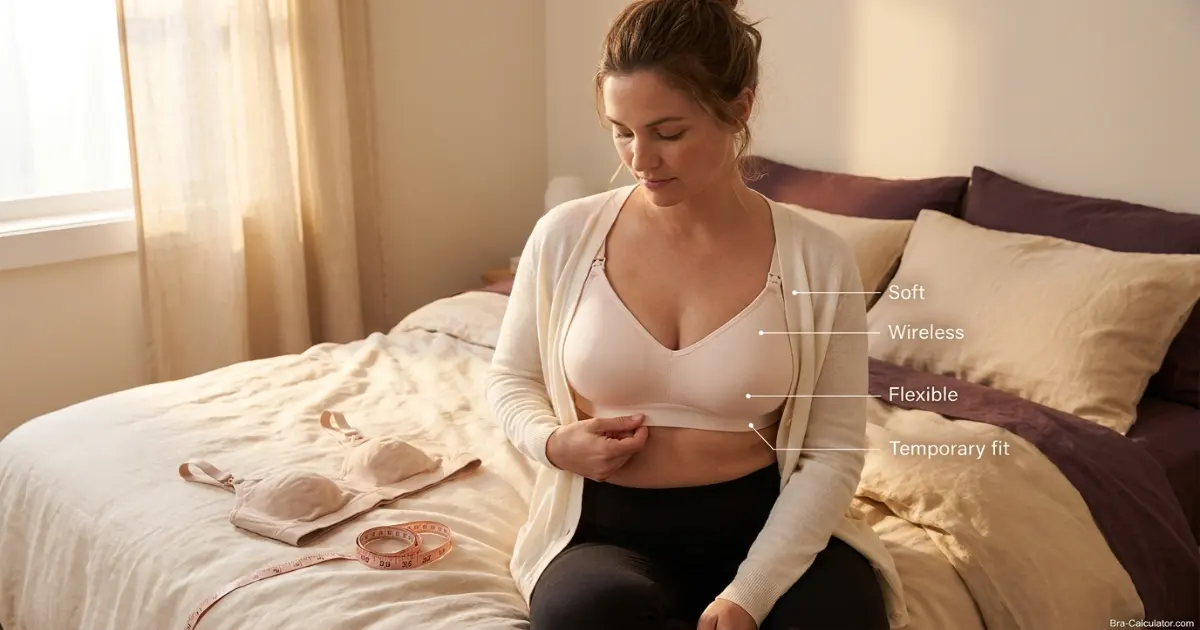
The most important difference is simple: a nursing bra is designed to let you expose one breast without taking off the entire bra. Everything else varies by style.
Some nursing bras are soft and stretchy. Some are structured. Some have removable pads. Some use traditional band-and-cup sizing; others use S–XL sizing. Some are wireless, while others use flexiwire or underwire. That variety matters because the phrase “nursing bra” describes a function, not one universal construction.
A regular bra can be just as soft, just as supportive, or just as flexible. What it usually lacks is purpose-built nursing access. That difference can feel minor when you are feeding only occasionally, but enormous when you are nursing a newborn repeatedly overnight or pumping several times during a workday.
Find Your Best Bra Match
Answer a few fit questions to get bra styles matched to your support needs, breast shape and everyday preferences.
Question 1 of 5
Why it matches
What to look for
What may not work
Private fit matching: your answers are used only to build the recommendation on this page. No measurements or fit selections are submitted to Bra-Calculator.com.
This tool suggests a starting bra style, not a medical or diagnostic recommendation. Individual brands and bra models can fit differently.
Nursing Bra vs Regular Bra: Side-by-Side Comparison
| Feature | Nursing bra | Regular bra |
|---|---|---|
| Breast access | Designed for clip-down, crossover, pull-aside or pumping access | Usually fixed; access may require pulling the cup aside or removing the bra |
| Size flexibility | Many styles use stretch or adjustable features to tolerate normal fullness changes | Usually designed around a more stable fit, although soft bralettes can be flexible |
| Support | Ranges from light lounge support to highly structured full-bust support | Also ranges from light to highly structured; category alone does not predict support |
| Wires | Wireless, flexiwire and underwired options all exist | Wireless and underwired options are common |
| Pumping | Some styles hold flanges or wearable pumps; ordinary nursing bras may not | Usually not designed to secure pump parts |
| Long-term use | Some transition well beyond nursing; others are very purpose-specific | Often more useful once size and feeding access needs have stabilized |
| Main buying question | Does it fit and make access easy? | Does it fit comfortably for the activity? |
Is a Nursing Bra More Supportive Than a Regular Bra?
No—not automatically. This is one of the biggest misconceptions in the comparison.
Support comes from the whole bra working together: band tension, cup volume, cup depth, seam or panel structure, fabric recovery, wing construction, strap placement and how well the shape matches your body. A soft nursing sleep bra can be far less supportive than a structured everyday regular bra. A well-engineered full-bust nursing bra can be far more supportive than a thin fashion bra.
The word nursing tells you what the bra is designed to do when you need breast access. It does not tell you how much lift it provides.
Can You Wear a Regular Bra While Breastfeeding?
Yes. There is no rule that every bra worn during breastfeeding must be marketed as a nursing bra.
A regular bra is a reasonable option when it fits comfortably, does not compress sensitive breast tissue, and gives you enough access for your routine. This becomes especially practical when feeds are less frequent, your day-to-day fullness is more predictable, or you are mostly wearing the bra for times when feeding access is not needed.
The mistake is not “wearing a regular bra.” The mistake is forcing yourself into a bra that has become too tight because your size changed, or repeatedly bending a rigid cup out of shape to feed because the bra is not suited to the way you are using it.
A regular soft bra may work well when:
- your breast size feels relatively stable across the day;
- you can pull the cup aside easily without the edge cutting into tissue;
- you are not pumping frequently in that bra;
- the band stays level without feeling restrictive;
- you simply prefer the shape or appearance of your regular bras.
When Nursing-Specific Design Is Genuinely Useful
Nursing-specific construction earns its place when access is frequent enough that convenience becomes part of fit.
For a newborn feeding many times in 24 hours, a one-handed clip can save repeated wrestling with a fixed cup. For someone pumping at work, a pumping-and-nursing design can eliminate changing bras several times a day. For a body still changing between pregnancy, early postpartum and established milk supply, a stretchier cup or included extender may give more usable fit range.
Do Nursing Bras Have to Be Wireless?
No. Wireless nursing bras are common because they can feel forgiving while breast fullness is changing, but wireless is not a requirement. Flexiwire and underwired nursing bras also exist.
The useful question is not “wire or no wire?” It is whether the wire and band are correctly positioned and free from painful or restrictive pressure. A well-fitted wire should surround the breast tissue rather than rest on it. If swelling or fullness changes during the day, a bra that fit in the morning may feel different later.
If any bra—nursing or regular—creates a painful pressure point, leaves a wire sitting on breast tissue, or feels increasingly restrictive as fullness changes, stop treating the label as proof that the fit is safe. Reassess the size or switch to a less rigid option.
The 60-Second Fit Check for Either Bra Type
You can use essentially the same fit check for a nursing bra and a regular bra. Run through it after putting the bra on, then repeat after moving around for a few minutes.
- Band: It should stay roughly level around the torso instead of creeping upward at the back.
- Cups: Breast tissue should sit inside the cup without persistent cutting in, spilling or empty areas caused by obvious shape mismatch.
- Center and sides: Nothing should press painfully into breast tissue.
- Straps: They should feel secure without needing to be shortened so much that they dig into the shoulders.
- Movement: Raise your arms, sit, bend and walk. The bra should remain stable.
- Nursing access: For a nursing bra, open and close the cup. The remaining support sling and cup edge should not twist painfully or become difficult to restore.
Pumping Changes the Comparison
A standard nursing bra and a pumping bra are not necessarily the same thing. A clip-down nursing bra can provide excellent feeding access while doing nothing to hold a pump flange in place.
If you pump frequently, ask a separate question: does this bra securely support the pump system I actually use? Some bras have flange openings. Others are designed around wearable pumps. Some hybrid models offer both nursing access and hands-free pumping support.
This is one area where a regular bra usually loses on convenience. You can sometimes use separate pumping accessories or change bras, but a purpose-built pumping bra often makes repeated sessions simpler.
When Can You Switch Back to Regular Bras?
There is no medically meaningful calendar date when everyone should “graduate” from nursing bras. Six weeks, six months and one year can all be too early, too late or irrelevant depending on the person.
A better signal is your routine. If your size feels reasonably stable, pumping has reduced or stopped, and you no longer need quick breast access through most of the day, regular bras become easier to use again.
Many people transition gradually. One regular bra enters the rotation first. Then another. Nursing-specific styles stay available for nights, travel, pumping days or the feeds where clips are still convenient. That approach avoids buying an entirely new bra drawer based on one temporary week of stable sizing.
Re-measure before buying a new regular-bra wardrobe
Do not assume your pre-pregnancy size is waiting for you unchanged. Ribcage circumference, breast volume and breast shape can all be different after pregnancy and breastfeeding. Measure your current body and treat the result as a new starting point rather than trying to “get back” to an old label.
A Realistic Mixed Bra Rotation
The most practical answer to “nursing bra or regular bra?” is often both.
For example, someone who nurses morning and evening but pumps twice during an office day might keep two pumping-and-nursing bras for work, one comfortable clip-down bra for direct feeding, and one or two regular soft bras for evenings or days when feeding access is less important.
Someone who is nursing a newborn frequently may reasonably wear nursing bras almost all the time. Someone who is weaning may keep only one nursing bra in the drawer. The mix should follow the job each bra needs to do rather than a rule about postpartum age.
Cost, Durability and the “Maternity Markup” Question
Nursing bras can cost more than very simple regular bras, but price differences are not explained by one universal “maternity markup.” Extra closures, nursing clips, internal slings, adjustable fit features, pumping panels or more complex cup constructions can add material and manufacturing steps. On the other hand, premium regular bras can cost just as much—or considerably more.
Durability also depends more on fabric, construction, care and frequency of wear than the category name. Nursing bras often go through heavy rotation and frequent washing during the months when they are used most, so even a well-made bra can appear to “wear out faster” simply because it is doing more work.
Three Nursing-Bra Examples That Show the Range
These examples are useful because they demonstrate how different “nursing bra” can look in practice. They are not ranked as universal winners, and Bra-Calculator.com has not physically lab-tested every model. Current size charts, listings and return terms should be checked before purchase.
Bravado Designs Body Silk Seamless Nursing Bra
A stretchy seamless nursing style with clip-down access. Bravado’s current official listing includes expanded cup-fit options and states that the range now extends up to a K cup in its sizing system.
Best comparison lesson: nursing bras can combine simple alpha-style sizing with dedicated fuller-cup variants rather than using one identical fit block for everyone.
View Options on Amazon Affiliate link · Availability and price can change
Kindred Bravely Simply Sublime Nursing Bra
The current official version is wireless, seamless and clip-down, with Regular, Busty and Super Busty fit groupings. Kindred Bravely also describes it as compatible with standard wearable breast pumps.
Best comparison lesson: a nursing bra can be designed around convenience and flexible sizing without trying to behave like a rigid molded regular bra.
View Options on Amazon Affiliate link · Availability and price can change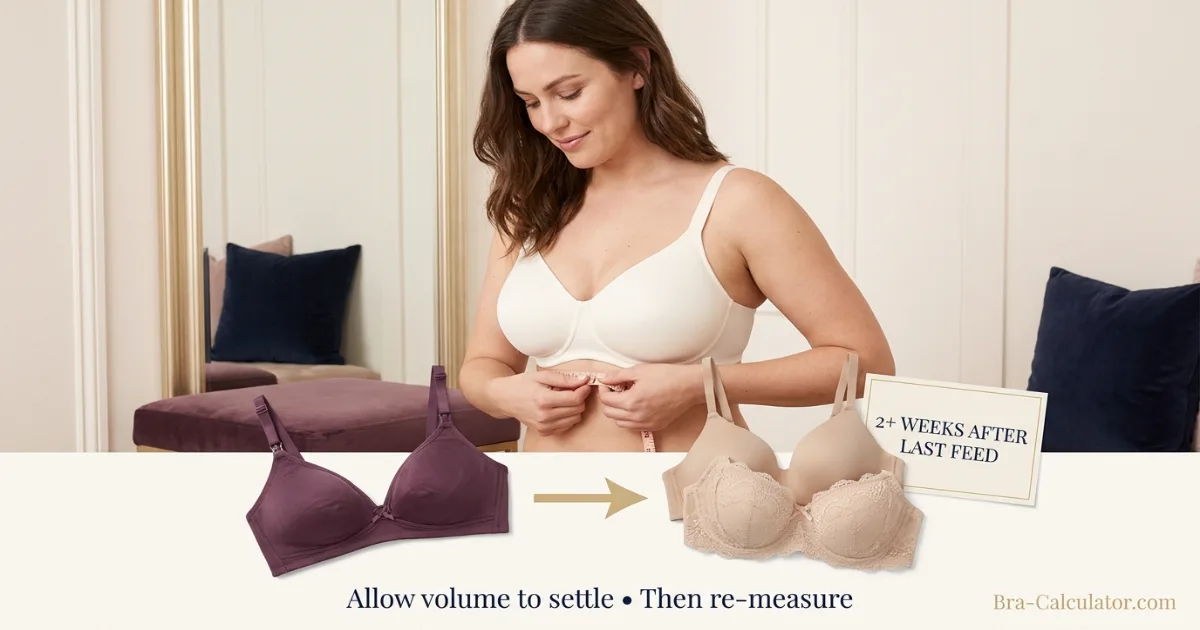
Bodily The Everything Bra
Bodily positions this as a clip-down maternity-to-postpartum bra designed for use beyond nursing, which makes it a useful example of how the line between “nursing” and “regular” can become deliberately blurred.
Best comparison lesson: some nursing bras are intentionally designed to remain useful after frequent feeding access is no longer needed.
View Options on Amazon Affiliate link · Availability and price can changeWhich Type Should You Reach for Today?
| Situation | Usually easiest starting point | Why |
|---|---|---|
| Frequent newborn feeds | Nursing bra | Quick one-handed access matters repeatedly through the day and night. |
| Regular office pumping | Pumping-and-nursing bra | Hands-free flange or wearable-pump support can save changing time. |
| Size still fluctuates noticeably | Flexible nursing bra | Stretch and adjustability may tolerate normal fullness changes better. |
| Occasional feeding, no pumping | Either | Choose the bra that fits and gives enough access without pressure. |
| Weaning and size mostly stable | Regular bra or mixed rotation | Nursing access may be useful only occasionally. |
| Exercise | Activity-specific supportive bra | Impact control is a separate design problem from nursing access. |
Not sure what size to start with?
Frequently Asked Questions
- Can I wear a regular bra while breastfeeding?
- Yes. If it fits comfortably, does not create restrictive pressure and works with your feeding routine, a regular bra can be fine. Nursing-specific access is mainly a convenience and usability feature.
- Is a nursing bra more supportive than a regular bra?
- Not automatically. Support depends on the band, cup shape, materials, construction and fit. A nursing bra can be light-support or highly structured, just like a regular bra.
- Do nursing bras have to be wireless?
- No. Wireless, flexiwire and underwired nursing bras all exist. The important point is correct fit without the wire or band pressing painfully into breast tissue.
- When can I switch back to regular bras?
- There is no universal month. Switching becomes easier when your size is more stable and frequent feeding or pumping access is no longer important. A gradual transition is often more practical than replacing everything at once.
- Can a regular bralette work for nursing?
- For some people, yes. A soft stretchy bralette that moves aside easily can be enough for occasional feeds, provided it remains comfortable and supportive. It is usually less convenient for frequent pumping.
- Why do nursing bras sometimes have more hooks?
- Some designs include a wider adjustment range because torso measurements can change during pregnancy and postpartum. But extra hook positions are not a requirement for every nursing bra and do not guarantee better support.
- Should I buy my pre-pregnancy bra size after weaning?
- Measure again first. Your current band, cup volume and breast shape may differ from your pre-pregnancy fit even if your body weight is similar.
- Is a pumping bra the same as a nursing bra?
- Not always. A nursing bra gives feeding access; a pumping bra is designed to secure pump parts. Some products combine both functions.
Editorial Sources & Product Checks
Amelia
Founder of Bra-Calculator.com, former lingerie buyer and bra-fit specialist. Amelia reviews sizing and fit guidance with a practical, measurement-first approach and separates garment-fit advice from medical care.
Read Amelia’s bio & editorial methodology →This page provides general garment-fit and shopping information, not medical diagnosis or individualized lactation care. Seek qualified clinical or lactation support for persistent breast pain, fever, worsening redness, a painful lump, wound concerns, or feeding/pumping problems. As an Amazon Associate, Bra-Calculator.com earns from qualifying purchases.