Normal Breast Size for a 20 Year Old
Amelia B. · Bra Fit Specialist · Updated 2026 · Average sizes, what affects them, and fit advice for women in their 20s.
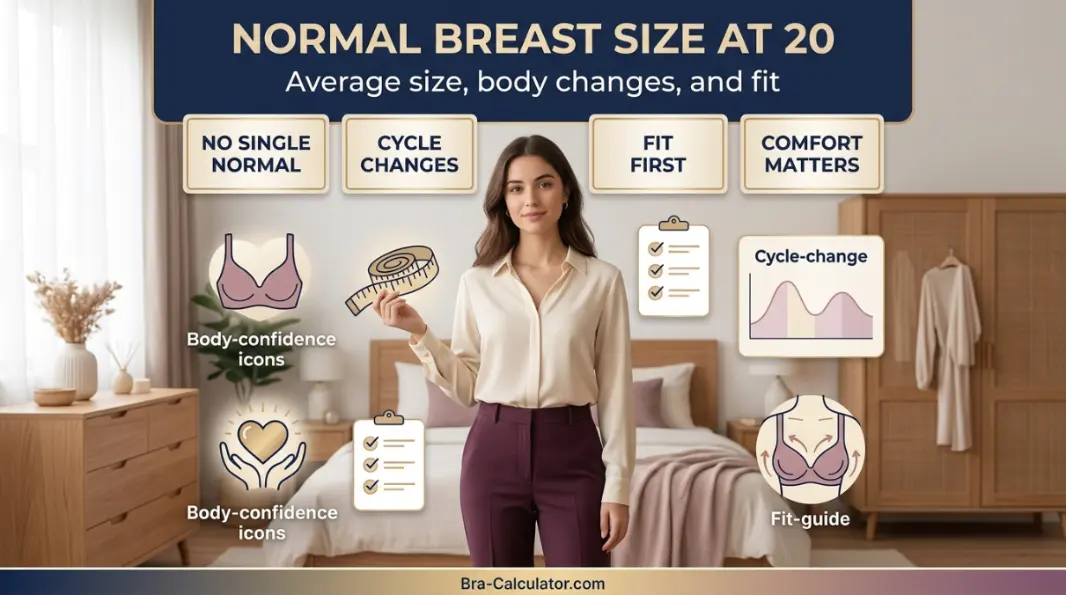
There is no single ‘normal’ breast size for a 20 year old. In your 20s, breast development is typically complete by age 21, and most women in this decade wear a 34B or 34C in the US — though the genuine range spans 32A through 38DD and beyond. Genetics, body weight, hormones, and whether you have been pregnant all influence size more than age alone.
In This Guide
What Is a Normal Breast Size at 20?
In your 20s, breast development is complete — full breast maturity typically occurs between ages 18 and 21. This means the size you have in your early 20s is likely to remain relatively stable through the decade, barring significant weight changes or pregnancy.
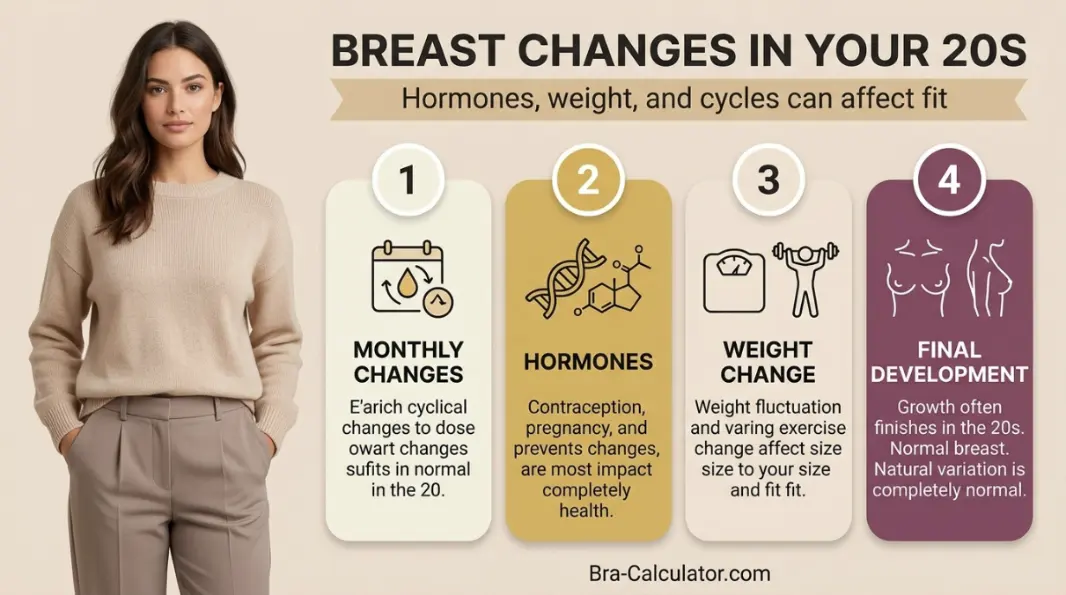
Use this page as a fit guide, not a comparison chart. At 20, breast size can be influenced by cycle fluctuation, contraception changes, fitness routines, and final development settling; the most accurate answer is the size that fits your current body comfortably.
What varies most between women in their 20s is not age but genetics, ethnicity, body composition, and hormonal sensitivity. Studies of young adult women show a wide range of sizes considered medically normal, with the most commonly measured bra sizes clustering around 34B–34C in US fitting data — but this reflects what is most stocked and worn, not a universal standard.
The most important thing to understand: breast size is not a health indicator. There is no size that is medically “normal” or “correct” for your age. The range of typical sizes is wide, and where you fall within it is determined by genetics, hormones, body composition, and life history — not health or fitness.
The averages on this page are drawn from population studies and fitting data. They describe what is common, not what is required.
Average Bra Size for Women in Their 20s
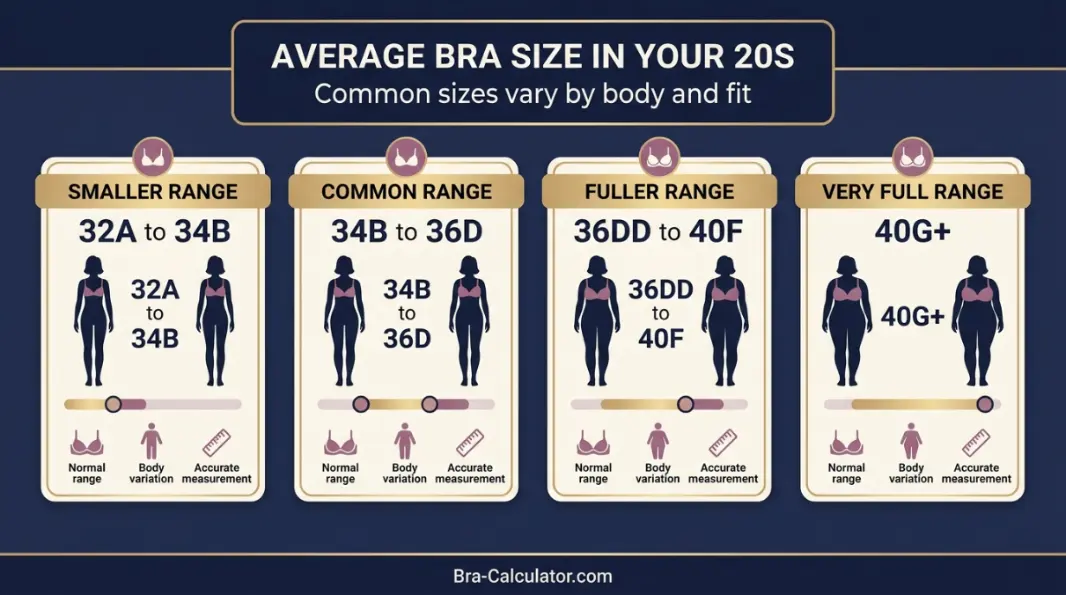
US fitting studies place the most common bra size for women in their 20s at 34B or 34C. However, this reflects retail availability as much as biology — specialist fitting data suggests many women in this category are actually better fitted in a 32C or 32D, as mainstream stores undersell smaller bands.
| Percentile | Typical Bra Size | What It Means |
|---|---|---|
| Smaller range | 32A – 34B | Completely normal — smaller breast volume relative to frame |
| Common range | 34B – 36D | Most frequently measured in population studies |
| Fuller range | 36DD – 40F | Larger volume — equally normal, different support needs |
| Very full range | 40G+ | Specialist sizing needed — not uncommon, not abnormal |
What Determines Breast Size at 20?
Breast size at any age is determined by a combination of factors, most of which are outside your control. Understanding what drives size helps explain why it varies so much between women of the same age.
Biggest Factor
Breast size is approximately 50–80% heritable. Your mother’s and maternal grandmother’s breast size is the strongest predictor of yours.
Fatty Tissue Component
Breasts are approximately 50% fatty tissue. Body weight changes — both gain and loss — directly affect cup volume, sometimes by 1–2 cup sizes.
Monthly Fluctuation
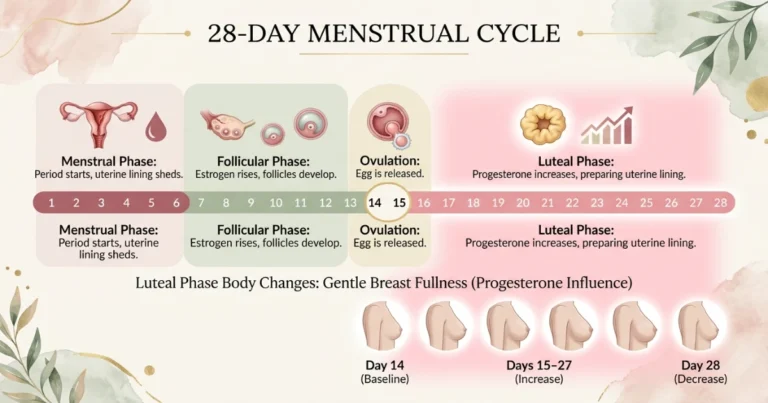
Estrogen and progesterone cause breast tissue to swell and recede during the menstrual cycle. Many women fluctuate by half to a full cup size through the month.
Hormonal Influence
Hormonal contraceptives (pill, patch, implant) can increase breast size by influencing fluid retention and fatty tissue distribution. Effect varies by individual and formulation.
Population Variation
Research shows variation in average breast size across different ethnic groups, driven by both genetic and socioeconomic factors that affect body composition.
Minimal Direct Effect
Exercise does not directly affect breast tissue (which has no muscle). It can reduce fatty tissue with sustained low body fat, or increase pectoral muscle behind the breast.
Breast Changes That Are Normal in Your 20s
Monthly Size Fluctuation
In your 20s, hormonal cycles are typically regular and pronounced. Breast swelling in the luteal phase (days 14–28) is normal and can increase perceived size by half a cup.
Significant Temporary Increase
Pregnancy typically increases breast size by 1–4 cup sizes. Some women retain this increase after nursing; others return to their pre-pregnancy size.
Direct Volume Impact
Gaining or losing body weight at any level affects breast size. A significant weight loss (20+ lbs) can reduce cup size by 1–2 letters.
Stable by Early 20s
Most women complete breast development by age 20–21. If you are still in development, small further increases may occur through the early 20s.
How Breast Size Changes Through Life
Breast size is not fixed — it changes across decades in response to hormones, pregnancy, menopause, weight, and ageing. This timeline shows what is typical at each life stage.
Development & Stabilisation
Breast tissue reaches full development by the early 20s. Size may still fluctuate with weight and hormonal cycles. Most women are wearing the wrong bra size at this stage.
Stability with Hormonal Influence
Relatively stable decade for most women unless pregnancy occurs. Pregnancy and nursing can increase size by 1–4 cup sizes temporarily or permanently.
Perimenopausal Changes Begin
Perimenopause typically starts in the mid-40s, causing hormonal fluctuations that affect breast density and size. Weight changes are common and affect cup volume.
Menopause & Tissue Changes
Menopause causes estrogen decline, leading to reduced glandular tissue and increased fatty tissue. Breasts often become softer, may increase slightly in size, and change in position.
Post-Menopausal Settling
Breast tissue continues to soften and reposition. Most women experience increased ptosis (droop) and a shift in where volume sits. Support becomes more critical.
Bra Fit Priorities for Women in Their 20s
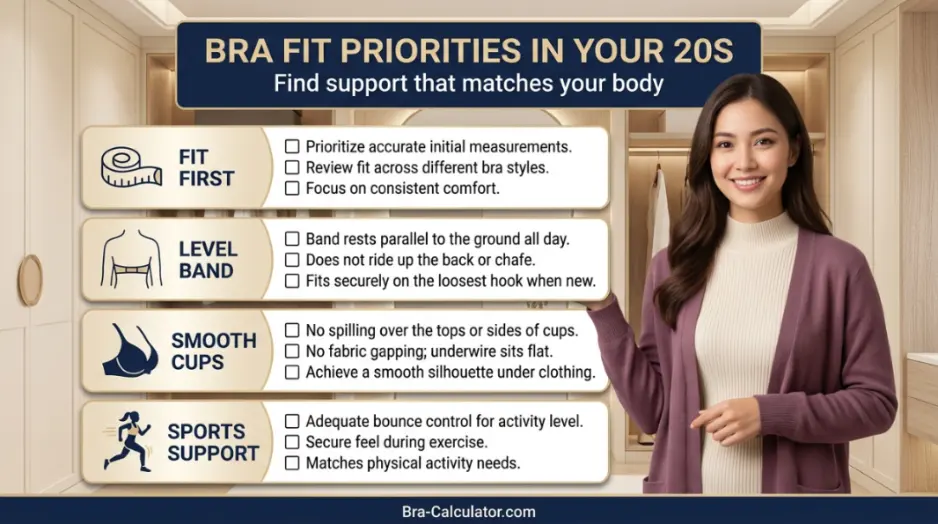
Whatever your size, the right bra fit makes a significant difference to comfort, posture, and how clothing sits. These are the most important fit considerations for women at this life stage.
Get Measured Properly
Studies show 70–85% of women wear the wrong bra size. In your 20s, many women are in too large a band and too small a cup. Measure using snug underbust and natural full bust.
Size Fluctuates With Cycle
If you notice cups feeling tight in the second half of your cycle, consider sizing up by one cup for that period or choosing bras with stretch lace at the cup edge.
Foundation Matters
In your 20s, establishing a correctly fitting bra creates good habits. A well-fitted bra improves posture, reduces shoulder strain, and makes clothing fit better.
Active Lifestyle
If you exercise regularly, a high-impact sports bra in the correct size reduces Cooper’s ligament strain — which is irreversible. Don’t rely on a standard bra for high-impact activity.
How to Check Your Bra Size at 20
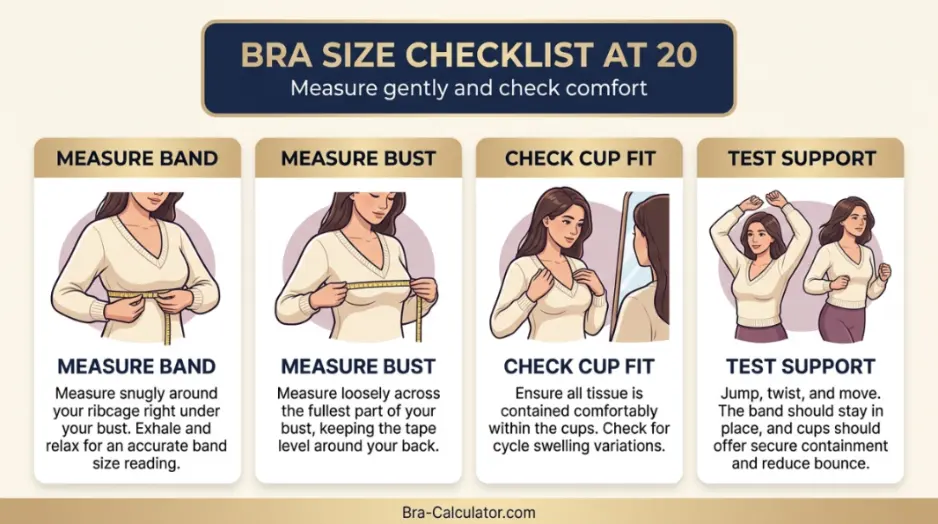
At 20, the best way to understand your size is to separate natural body variation from bra-fit error. A cup that feels tight before your period may be normal swelling, while a band that rides up or straps that dig usually points to the wrong size. Measure on a calm day in your cycle, then recheck if your body changes noticeably.
Measure the band first
Use a snug underbust measurement directly under the breast root. The band should provide most of the support, not the straps.
Check cup containment
The cup should hold breast tissue without spillage at the top, side, or underarm. If the band feels firm but the cup overflows, increase cup size before increasing band size.
Account for cycle swelling
Keep one flexible or stretch-lace bra for the days when breasts feel fuller or tender before your period.
Own a real sports bra
For running, jumping, gym training, or dance, choose a sports bra by bra size rather than small/medium/large sizing whenever possible.
| When to Remeasure | Why It Matters |
|---|---|
| Every 6–12 months | Best routine schedule when weight, cycle pattern, and contraception are stable. |
| After contraception changes | Hormonal changes can change fullness, tenderness, or fluid retention. |
| After 10–15 lb weight change | Breast tissue contains fat, so visible body-weight change can alter cup volume. |
When a Size Change Needs Extra Attention
Most breast-size changes at 20 are normal and linked to hormones, body weight, contraception, or training changes. What deserves attention is a sudden one-sided change, a new lump, skin dimpling, nipple discharge that is not related to pregnancy or nursing, or pain that does not settle. In those situations, use a medical professional rather than an online size guide.
Fit guide rule: a bra calculator can help you find a better band and cup size, but it cannot evaluate symptoms, lumps, skin changes, or pain. If something feels new, one-sided, persistent, or unusual for your body, treat it as a health question first and a bra-fit question second.
For a 20-year-old reader, the strongest page value is reassurance plus practical measurement. The content should never suggest that one size is more feminine, mature, or healthy than another.
Frequently Asked Questions
Know Your Size at Every Stage
Average sizes are interesting — but your accurate personal size is what matters. Use the free Bra Size Calculator to find your exact band and cup measurement today.