Normal Breast Size for a 60 Year Old
Amelia B. · Bra Fit Specialist · Updated 2026 · Average sizes, post-menopausal changes, and supportive bra advice for women in their 60s.

There is no single normal breast size for a 60 year old. In the 60s, most women are fully post-menopausal, and the most common worn sizes are often around 36D to 38D in the US, though the true normal range is much wider. Hormonal history, genetics, body weight, pregnancies, and long-term tissue changes all matter more than age alone.
In This Guide
What Is a Normal Breast Size at 60?
Your 60s are usually a post-menopausal decade, which means the biggest change is often not “bigger or smaller” but softer tissue, altered shape, and different support needs. Breasts may sit lower, spread wider, or feel less dense than they did in earlier decades.
This is also the decade when many women notice they need a different bra construction even if the letter on the label has changed only slightly. Fuller side support, smoother cup edges, and a stable band often become more important than ever.
Use this page as a fit guide, not a comparison chart. A normal 60s breast size is a wide range, and the best fit is the one that supports your body comfortably and safely.
Most Changes Are Structural
By the 60s, breast tissue has usually completed the transition to a softer, fattier composition with less glandular density.
Shape Matters More
Support needs rise because softer tissue can settle lower, spread wider, or move more in the cup.
Torso Fit Often Changes
Over time, torso width and posture changes can increase band size even if cup volume feels similar.
Support Should Feel Gentle
A good 60s bra should lift and stabilize without sharp underwire pressure, pinching straps, or stiff seams.
Average Bra Size for Women in Their 60s
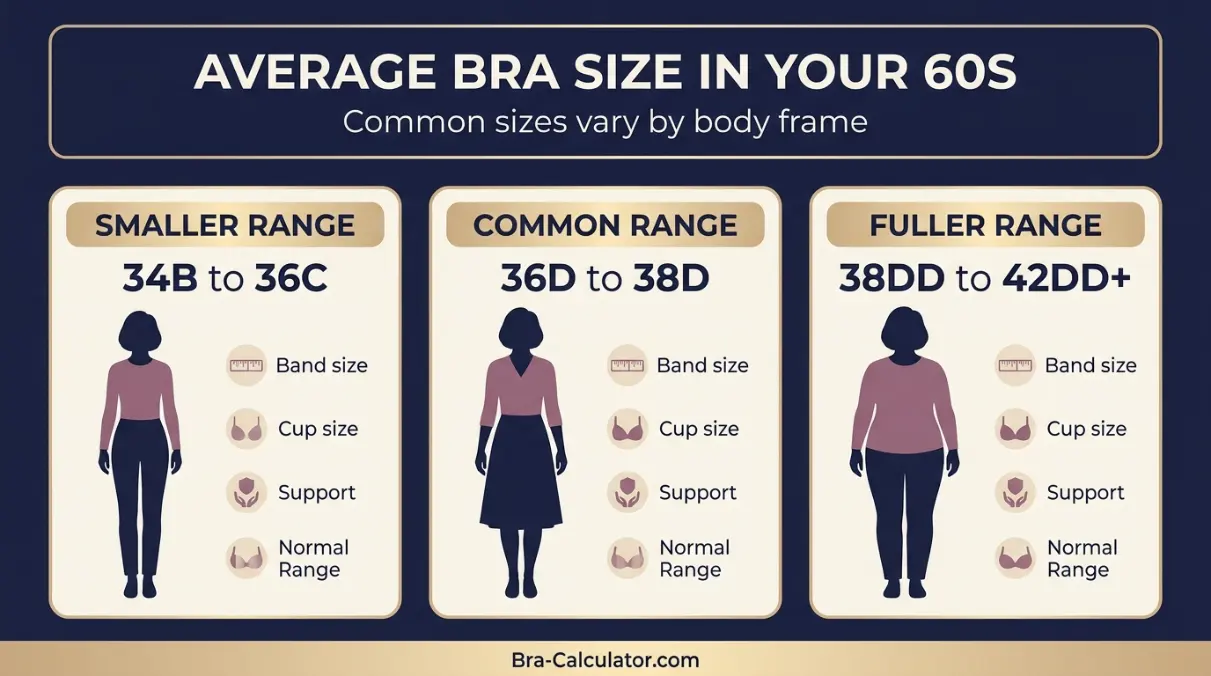
Retail patterns suggest that commonly worn sizes in the 60s are often around 36D, 38C, and 38D, but those numbers reflect what is sold and worn — not the full biological picture. A properly fitted 60-year-old woman may land anywhere from 34B to 42DD or beyond depending on frame, body weight, and post-menopausal tissue distribution.
| Range | Typical Sizes | What It Usually Means |
|---|---|---|
| Smaller to medium range | 34B to 36C | Common in women with a lighter frame or long-term lower body weight. |
| Common retail range | 36D to 38D | Often reflects both post-menopausal band changes and fuller tissue distribution. |
| Fuller range | 38DD to 42DD+ | Still completely normal, especially with larger frames, pregnancies, or weight gain across decades. |
What Determines Breast Size at 60?
In the 60s, breast size is shaped by a long history of hormonal change rather than active development. The body has usually settled into a post-menopausal pattern, but weight and bra structure strongly influence how size presents.
Baseline Pattern
Family traits still influence volume, projection, spacing, and how the breasts age over time.
Major Ongoing Driver
Because post-menopausal breasts contain more fatty tissue, body weight can have a strong effect on cup volume.
Long-Term Influence
Pregnancy and breastfeeding can permanently alter tissue distribution, skin elasticity, and where volume sits.
HRT Can Matter
Women who use hormone replacement therapy may notice different density, fullness, or tenderness compared with women who do not.
Support Needs Rise
Age-related stretching affects how the breast sits, making lift and side support increasingly important.
Band Fit Evolves
Changes in ribcage comfort, posture, or shoulder slope can alter how bras feel even when size numbers seem familiar.
Breast Changes That Are Normal in Your 60s
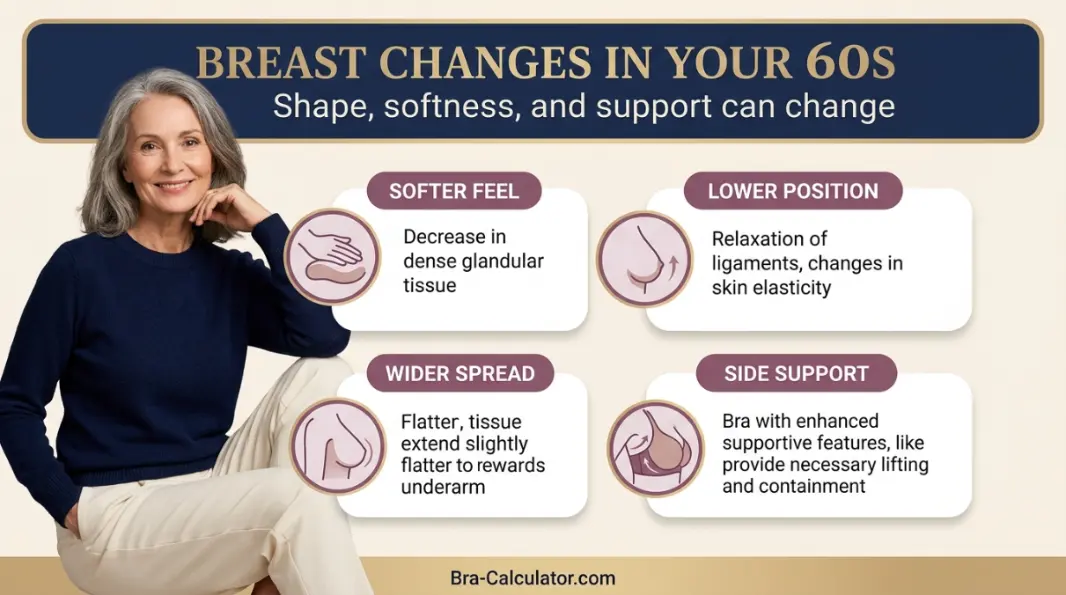
Density Is Lower
Lower glandular density after menopause makes breast tissue feel softer and often less firm than it did earlier in life.
Ptosis Continues
Breasts often sit lower on the chest wall over time, especially after decades of pregnancy, weight fluctuation, or gravity.
Side Support Helps
Some women notice tissue sitting farther toward the underarm, making side-support or full-cup bras more effective.
Monthly Swelling Usually Stops
Most cyclical swelling ends after menopause, so persistent new pain deserves more attention than it might have in the teen or 20s years.
How Breast Size Changes Through Life
Breast size and shape evolve across life. In the 60s, the body is usually in a stable post-menopausal phase, but support needs are often higher than ever.
Development Complete
Size stabilizes for many women, though hormones and weight can still shift it.
Pregnancy-Linked Change
This decade is often steady unless pregnancy, breastfeeding, or major weight changes occur.
Perimenopause
Fluctuation begins again as hormones change and density can start to shift.
Menopause Transition
Breasts often become softer and less dense as menopause progresses.
Post-Menopausal Settling
The body is usually more hormonally stable, but tissue softness, lower position, and changing support needs become the main story.
Bra Fit Priorities for Women in Their 60s
A good 60s bra should support softer tissue, feel gentle on the skin, and stay comfortable for long wear. For many women, this means moving away from shallow molded cups and toward fuller, more stable constructions.
Better for Softer Tissue
Full-cup or side-support bras often contain soft tissue more effectively than demi or very shallow molded styles.
Distribute Weight Better
Broader straps often feel more comfortable on shoulders, especially for fuller cups or long wear.
Comfort Is a Valid Priority
Many women in their 60s prefer wire-free or softer underwires that support without pressing into sensitive skin.
Old Favorites May Need a New Size
Even if you love a familiar bra model, your ideal band and cup combination may have changed over the years.

How to Check Your Bra Size at 60
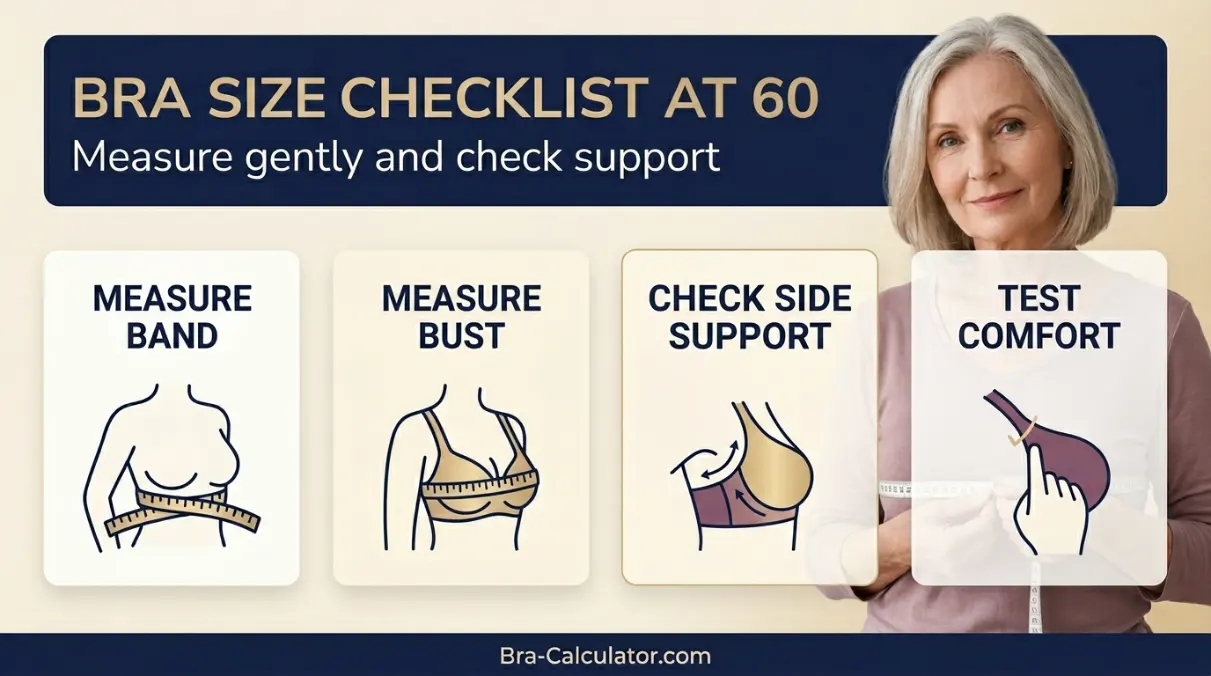
At 60, remeasuring is useful because body changes can be gradual enough to miss. Measure the underbust snugly, then the fullest part of the bust while standing naturally. If tissue is soft, seamed bras often give a more realistic fit test than stiff molded cups.
Start with the band
A stable band should sit level and support most of the weight without riding up during the day.
Look for side containment
If tissue sits wider than before, try side-support or full-cup styles that guide it forward.
Watch the upper cup edge
Wrinkling can mean a mismatch in shape, while cutting in can mean the cup is too small or too closed on top.
Prioritize comfort features
Soft fabrics, wider straps, smooth closures, and gentle underwire channels improve daily wear.
| When to Remeasure | Why It Matters |
|---|---|
| Every 6–12 months | Support needs and comfort can change gradually over time, even without a major weight change. |
| After 10–15 lb weight change | Because fatty tissue plays a bigger role after menopause, weight shifts can significantly alter fit. |
| When a familiar bra stops supporting well | A once-perfect model may no longer suit softer tissue or a changed torso shape. |
When a Size Change Needs Extra Attention
Most breast changes in your 60s relate to ageing and post-menopause, but you should never ignore new one-sided changes, skin dimpling, unusual discharge, a new lump, persistent localized pain, or sudden swelling. Those are medical questions, not just bra-fit issues. Use this page for fit guidance only.
Fit guide rule: a bra calculator can help you find a more supportive band and cup size, but it cannot evaluate symptoms. If something feels new, one-sided, persistent, or unusual for your body, speak with a healthcare professional first.
For a 60-year-old reader, the page should be comfort-led, post-menopause-aware, and clear that support structure matters just as much as size numbers.
Frequently Asked Questions
Know Your Size at Every Stage
Average sizes are useful for context, but the best bra fit in your 60s is the one that supports softly, contains tissue well, and feels comfortable all day.