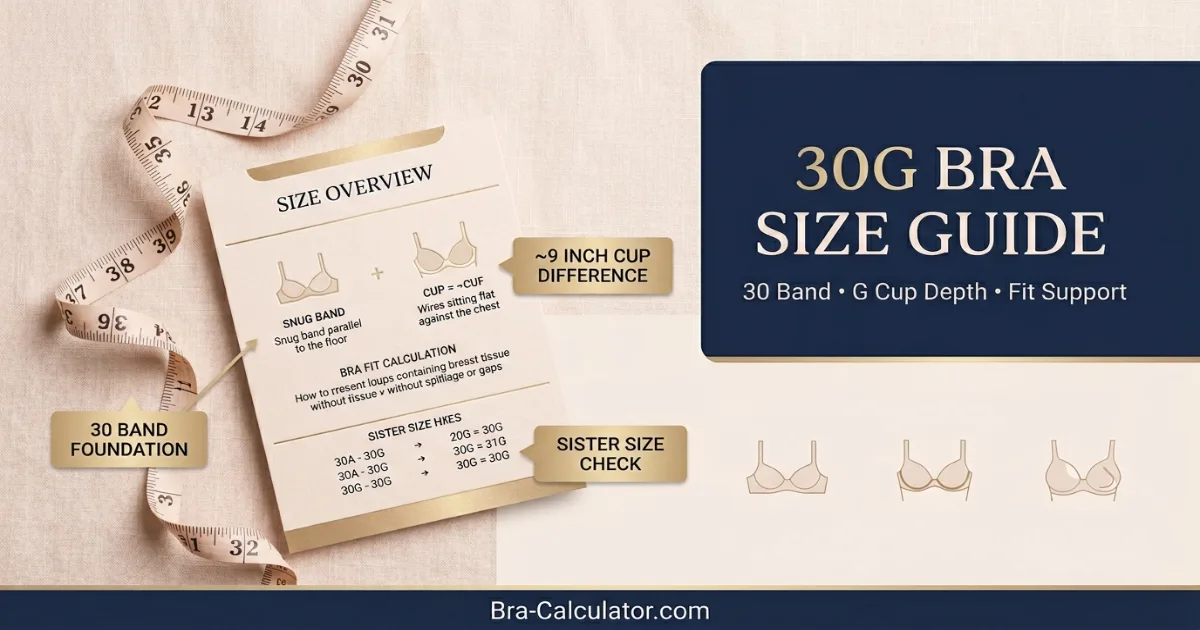
30G means a 30 band with a G cup. In standard inch-based sizing, this usually points to a snug underbust around the 27–29-inch snug-underbust range and a bust-to-underbust difference near 9 inches. The real fit still depends on shape: root width, projection, tissue softness, strap placement, and how the bra brand builds its cups.
Jump to a Section
30G at a Glance
| Attribute | 30G Fit Detail | What to Check |
|---|---|---|
| Band | 30 band | Should sit level and firm without riding up. |
| Cup | G cup | Should contain tissue without top, side, or center spillage. |
| Approximate cup difference | 9 inches from band to full bust | Use as a starting point, not a final verdict. |
| Support category | Fuller Cup | Strong band anchoring, deeper cups, reinforced seams, and side support matter more than decorative padding. |
| Main fit mistake | Judging the cup letter without checking the band | A 30 band changes how the cup volume looks and feels. |
What Does 30G Really Mean?
A 30G bra size combines a 30 band with a G cup. The band number refers to the ribcage support zone, while the cup letter describes the difference between the underbust and the fullest part of the bust. This is why the same cup letter can look completely different on another band. A G cup on a 30 band is not the same physical cup volume as the same cup letter on a 30 or 34 band.
The 30 band is an important size family because it often sits between mainstream straight-size shopping and fuller support shopping. Some people in this range need soft comfort and low-profile shaping, while others need strong lift, side support, and deeper cups. The cup letter gives a clue, but the real answer comes from the whole fit picture.
For 30G, the goal is not to force the body into a label. The goal is to make the band carry most of the support, the cups surround all tissue, the straps guide rather than lift the entire bust, and the center area sit as close to the chest as the body shape comfortably allows. A good bra should make clothing look smoother, movement feel easier, and the shoulders feel less overloaded.
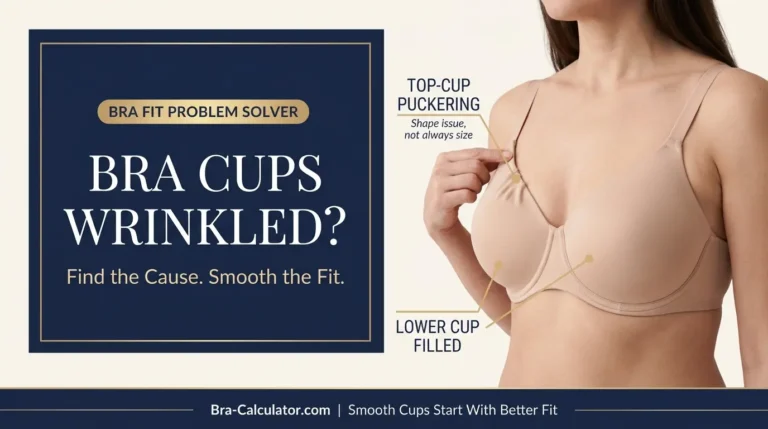
Many fit issues happen because shoppers size around discomfort instead of measuring again. A loose band can make the cup wrinkle. A cup that is too small can make the band feel tight. A tall cup can gap even when the volume is technically close. That is why this 30G guide looks at measurements, sister sizes, shape, product types, and fit symptoms together.
Exact Measurement Logic for 30G
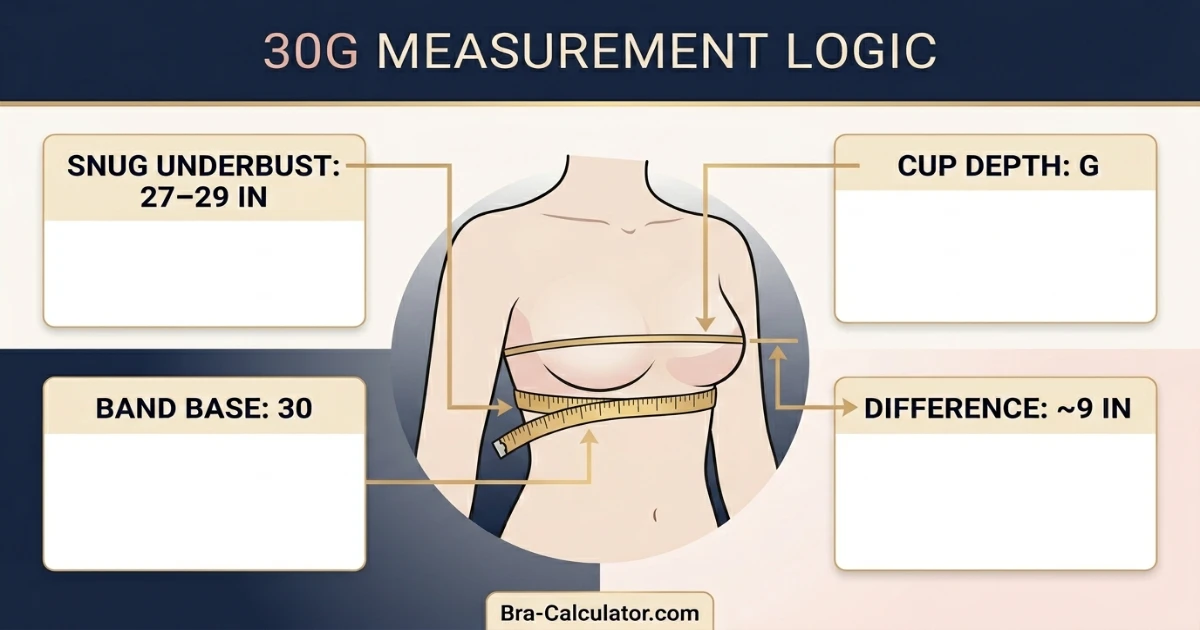
Start with the underbust. For many people wearing a 30 band, the snug underbust will sit close to the 27–29 inch range depending on measuring method, ribcage shape, body softness, and comfort preference. The G cup then estimates the bust difference. In this guide, 30G is treated as roughly a 9-inch cup difference, with realistic fit confirmation coming from the mirror test and movement test.
| Measurement Step | What to Do | Why It Matters |
|---|---|---|
| Snug underbust | Measure directly under the bust with the tape level. | This decides whether 30 is the right support base. |
| Standing bust | Measure around the fullest point without compressing tissue. | This gives the first cup-depth clue. |
| Leaning bust | Measure while leaning forward if tissue is soft or projected. | This can reveal hidden volume that a standing measurement misses. |
| Fit test | Try the size in a structured bra and move naturally. | The best size must work when sitting, reaching, and walking. |
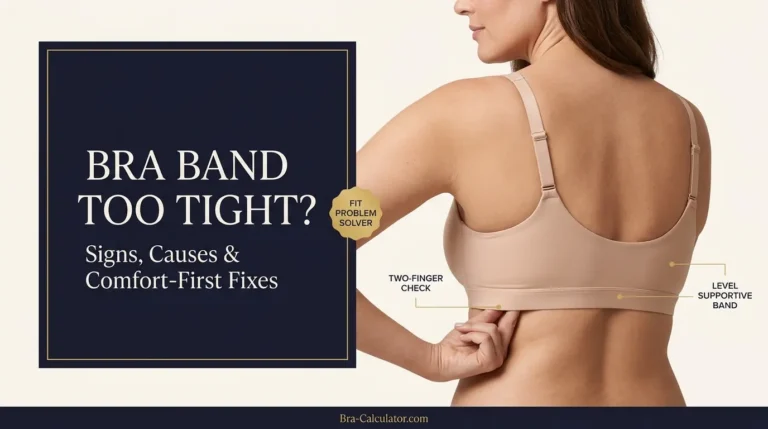
Start on the loosest hook. The band should feel secure but not painful.
Bring tissue forward from the sides so the cup test is not misleading.
The top edge should lie smoothly without cutting, curling, or standing away.
Reach, sit, and walk. A correct 30G should stay stable without constant strap adjustment.
What Does 30G Look Like in Real Fit?
The visual appearance of 30G depends on height, torso width, shoulder slope, breast root width, tissue distribution, and bra construction. On a narrower frame, this size may look more projected. On a broader frame, the same cup volume may look more spread out and less dramatic. Neither look is more correct; fit is about support, comfort, and tissue containment.
Projection is especially important. A person with projected tissue may need the G cup because a shallower cup pushes tissue upward or outward. A person with shallow tissue may technically measure near 30G but need a lower-cut or stretch-edge bra to avoid upper-cup gaping. This is why image comparisons online should be treated as education, not as a body standard.
Real fit beats size myths. The right 30G bra should make the bust look calmer and more supported, not squeezed, flattened, or pushed into the wrong place.
If the cup looks almost right but the band moves, test sister sizes before assuming the cup letter is wrong.
Best Bra Product Types for 30G
The product cards below follow the locked Bra-Calculator.com affiliate system and are selected for the type of support usually needed in the 30G range. Use them as category suggestions, then verify the brand chart and return policy before buying.

Wide Padded-Strap Full-Coverage Bra
- Designed for fuller cups where strap comfort and cup containment matter.
- Use the same bra model when testing nearby cup sizes for the cleanest comparison.
- Prioritize a level band, centered straps, and cups that contain tissue without cutting in.
- Best used after confirming your measurements with the Bra-Calculator.com sizing tools.

U-Back Support Bra With Wide Straps
- Helps distribute weight across the back instead of loading the shoulders.
- Use the same bra model when testing nearby cup sizes for the cleanest comparison.
- Prioritize a level band, centered straps, and cups that contain tissue without cutting in.
- Best used after confirming your measurements with the Bra-Calculator.com sizing tools.

Wireless Comfort Bra With Cushioned Straps
- A practical option for long wear when wires feel too intense.
- Use the same bra model when testing nearby cup sizes for the cleanest comparison.
- Prioritize a level band, centered straps, and cups that contain tissue without cutting in.
- Best used after confirming your measurements with the Bra-Calculator.com sizing tools.
How Body Shape Changes 30G
Two people can both wear 30G and need different bra styles. Shape decides whether the cup needs to be open or closed at the top, narrow or wide at the wire, shallow or projected through the center, and firm or flexible at the gore.
Depth Matters First
Projected shapes often need deeper cups so the gore can sit closer and the cup edge can stop cutting in.
Check center depthCup Height Can Mislead
A cup can have the right volume but still gap if it is too tall or too projected for your shape.
Try lower cupsWire Width Matters
If the wire sits on tissue at the side, try a wider wire or side-support construction.
Watch side tissueContainment Matters
Soft tissue may need a smoother edge, firmer band, or more coverage to prevent overflow during movement.
Stability first30G Sister Sizes
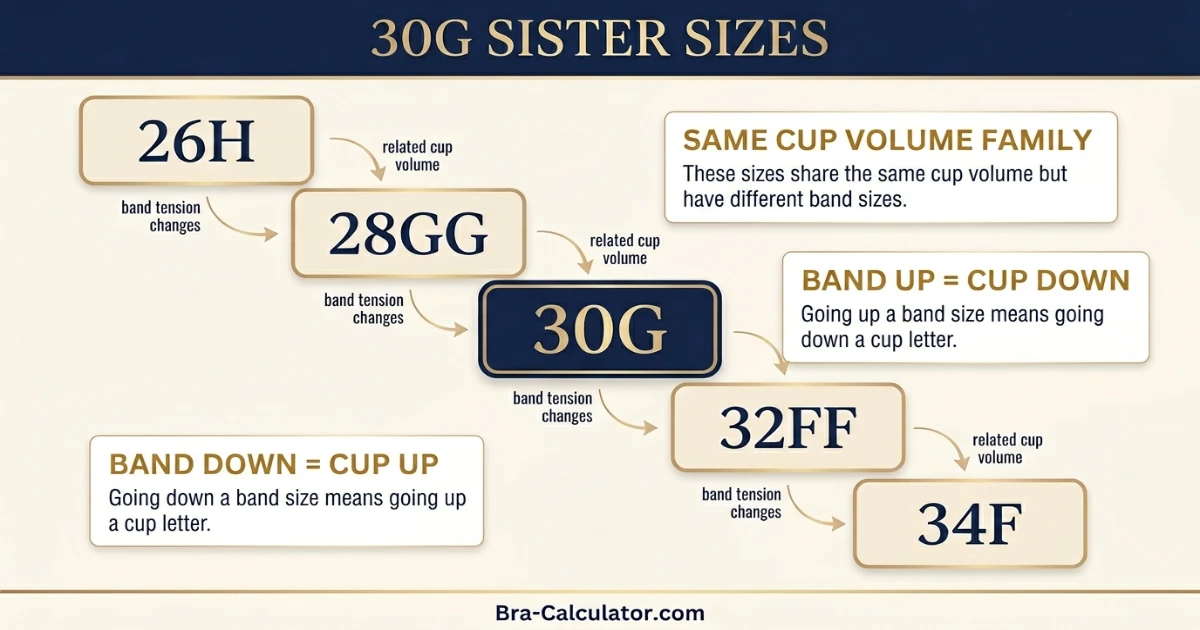
Sister sizes help when the cup volume feels close but the band is not right. The rule is simple: if you go down one band, go up one cup; if you go up one band, go down one cup. This keeps related cup capacity while changing how firmly the bra anchors around the ribcage.
| Fit Situation | Likely Move | Reason |
|---|---|---|
| Band rides up | Try a firmer sister size | The band is not anchoring enough support. |
| Band feels painfully tight | Try a looser sister size | Keep related cup volume while giving the ribcage more room. |
| Cups spill but band is good | Go up in cup on the same band | You likely need more cup depth, not a different band. |
| Cups gap but band is good | Try a different cup shape first | Gaping may be a shape issue, not automatically too much volume. |
30G Fit Diagnosis Tabs
- Stays level across the back
- Feels firm on the loosest hook
- Does not slide up when arms lift
- Carries support without strap over-tightening
- Rides upward or twists
- Feels tight only because cups are too small
- Allows the front to drop
- Needs constant pulling down
- Contains tissue at top, side, and center
- Allows the wire to sit outside breast tissue
- Creates smooth lines under clothing
- Cuts into the top edge
- Gapes away from the body
- Pushes tissue toward the armpit or center
- Straps guide instead of carrying all weight
- Breast tissue feels lifted but not compressed
- Movement feels controlled
- Shoulders feel overloaded
- Bust drops when the band loosens
- Cups collapse or fold at the base
- Check brand size charts
- Read reviews for cup depth and wire width
- Choose returns-friendly stores for first tests
- Buying only by old size memory
- Using strap tightness to fix cup issues
- Ignoring style differences between molded and seamed cups
Best Bra Styles for 30G
For 30G, style choice can decide whether the size feels perfect or completely wrong. Molded cups create a smooth look but can gap on shallow shapes. Seamed cups often give better depth and lift. Wireless bras can be comfortable, but they still need a stable band and enough cup structure.
Provides coverage, depth, and containment for fuller cups.
Brings tissue forward and reduces side escape.
Creates lift and shape without relying on thick padding.
Improves back stability and strap comfort.
Useful for movement testing and bounce control.
Usually too soft for reliable support in this range.
Common 30G Fit Problems
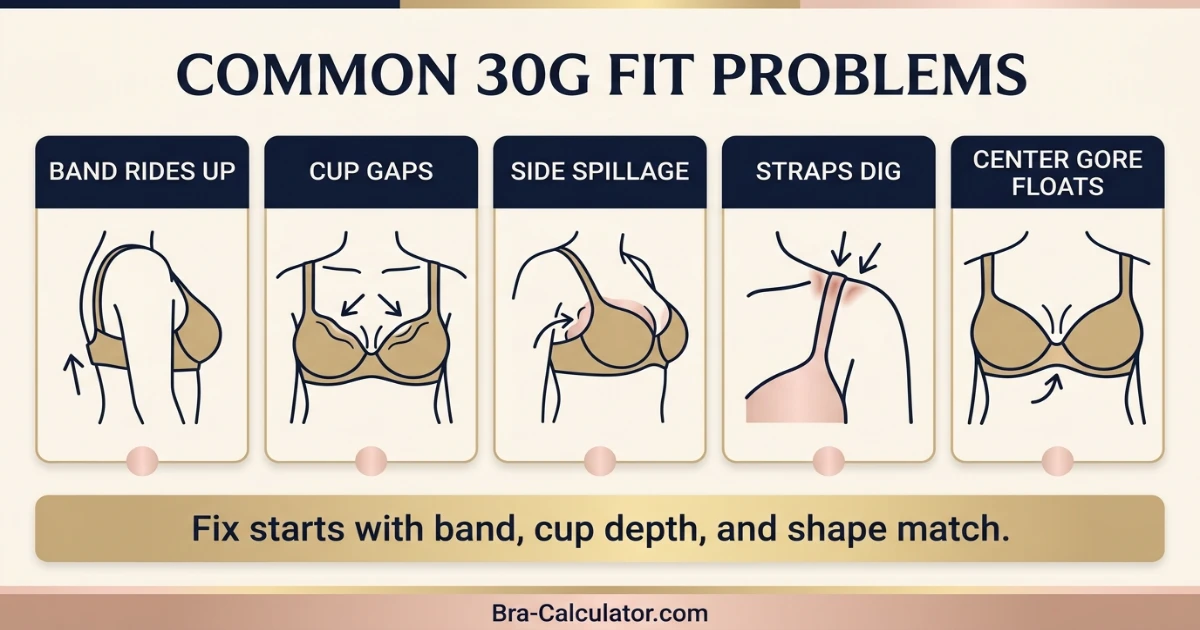
The band is too loose or the straps are being tightened to compensate for missing support.
The cup may be too small, too closed at the top, or too shallow for your tissue.
The cup may be too tall, too projected, or not matched to your upper fullness.
The wire may be too narrow or the cup may lack side containment.
The band and cup are not carrying enough support, so the straps are doing too much work.
The cup may be too shallow at the center or the style may not suit close-set tissue.
International Conversion Notes for 30G
International bra sizing can change the way cup letters are named. A 30G label may not convert perfectly between US, UK, EU, AU, and brand-specific systems. This becomes especially important around DD, DDD, E, F, FF, G, GG, H and above, where naming sequences often split.
Use the Global Bra Size Converter and the Brand Size Decoder before buying across regions.
Related Tools & Guides for 30G
| Guide / Tool | Why It Helps |
|---|---|
| Bra Size Calculator | Calculate your band and cup using real measurements rather than guesswork. |
| Bra Size Chart | Compare the 30 band family against neighboring sizes. |
| Sister Size Calculator | Adjust the band while keeping related cup capacity. |
| AI Smart Fit Bra Calculator | Diagnose gaping, spillage, strap digging, floating gore, and side tissue issues. |
| Cup Size Visuals | Understand why cup letters are not fixed body categories. |
Frequently Asked Questions
A 30G usually starts with a snug underbust around 27–29 inches and an approximate bust-to-underbust difference near 9 inches, but shape and brand construction can change the final fit.
It is best described as a 30-band fuller cup size. The cup letter only makes sense with the band, so the same cup on a different band can look and fit differently.
Nearby sister sizes include 26H, 28GG, 32FF, 34F. These keep related cup volume while changing band tension.
Top gaping can happen when the cup is too tall, too open, or too projected for your breast shape. It does not always mean you need a smaller band.
Side spillage usually points to a cup that is too narrow, too shallow, or not centered enough. A side-support or fuller coverage style often helps.
The best styles are the ones that match the support level: strong band anchoring, deeper cups, reinforced seams, and side support matter more than decorative padding. Start with one structured everyday bra and one shape-friendly seamed or side-support bra.
Yes. Rechecking measurements helps separate a true cup issue from a band issue, especially on a 30 band where sister sizing can change comfort quickly.
Yes. Cup depth, wire width, gore height, and fabric stretch vary by brand, so the same printed size can fit differently across styles.
Find Your Best Bra Fit
Use your measurements, fit symptoms, and sister-size options to decide whether 30G or a nearby size gives the cleanest support.