A compression shirt usually rolls up because it is too short, too tight, too weak at the hem, wrong for your waist or torso shape, or made with fabric that loses stretch recovery. For gynecomastia support, rolling is especially common when the shirt is trying to flatten the chest and compress the stomach at the same time. The best fixes are a measured size, moderate compression, longline length, a stable anti-roll hem, waist-friendly shaping, or a different support type such as a compression tank or low-profile vest.
Safety note: Rolling is usually a fit problem, but remove the garment if it causes breathing trouble, numbness, severe rib pressure, skin color changes or post-surgery symptoms. Support garments can help comfort and clothing appearance while worn, but they do not diagnose or treat gynecomastia.
Compression Shirt Rolling Up at a Glance
| What Happens | Most Likely Cause |
|---|---|
| Rolls at the stomach | Too short, too tight or not shaped for your waist. |
| Bunches under the chest | Chest compression pushes fabric upward. |
| Rides up when sitting | Torso length is too short or hem tension is too high. |
| Rolls during walking | Fabric recovery or hem stability is weak. |
| Creates a visible ridge under shirts | The bottom hem is curling into a band. |
| Most common fix | Longline moderate compression with a stable anti-roll hem. |
Why Does a Compression Shirt Roll Up?
A compression shirt rolls up when fabric tension has nowhere stable to go. Instead of staying flat, the hem moves toward the narrowest or least-resistant part of the body. That is why rolling often starts at the stomach, waist, lower ribs or under the chest.
For gynecomastia support, the problem is more specific. The shirt is often trying to smooth the chest while also compressing the torso. If the chest panel is too firm, the shirt is too short, the waist is too tight, or the fabric has poor recovery, the garment starts climbing upward.
The biggest mistake is assuming rolling means you need a smaller size. In many cases, the shirt is already too tight. More tension creates more rolling, more ridges and more discomfort.
Fit truth: A compression shirt that only stays down while standing still is not a reliable daily fit. It should stay reasonably flat while sitting, walking, bending and raising your arms.
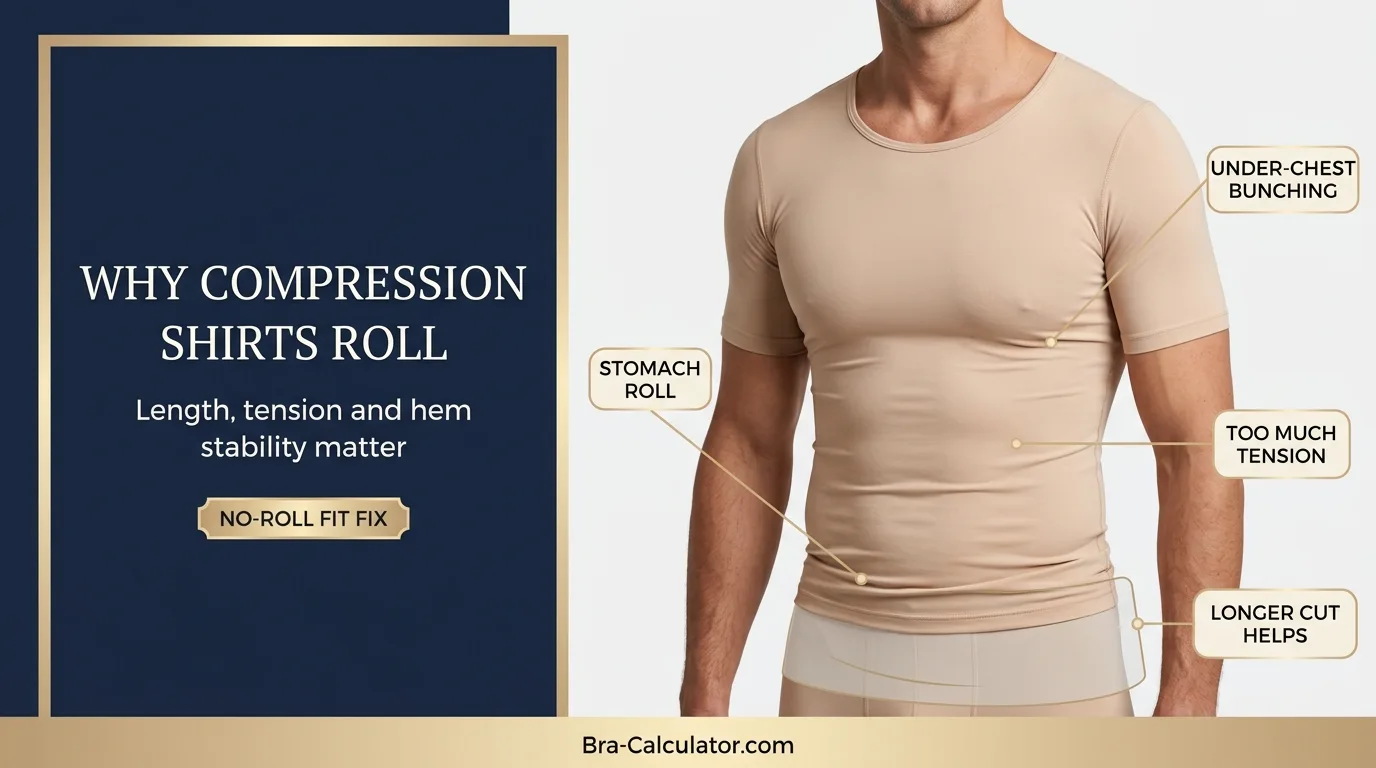
Where It Rolls Tells You What to Fix
The exact rolling location matters. A shirt that rolls at the stomach needs a different fix from a shirt that bunches under the chest.
Usually caused by short length, too much waist tension or a hem that sits on a wider stomach area.
Often caused by aggressive front compression pushing fabric upward under the chest.
Usually means the side panels are too narrow, too firm or not shaped for your torso width.
Common when the shirt is too short or the hem cannot handle bending and seated posture.
Often caused by fabric with poor stretch recovery or a daily shirt being used for sports movement.
If it rolls within minutes, do not wait for a break-in. The size, cut or compression level is likely wrong.
How to Stop a Compression Shirt from Rolling Up
Check if it rolls at the stomach, under the chest, on the sides, during sitting or only during workouts. The location tells you what to fix first.
Too much compression tension often makes rolling worse. If the shirt squeezes ribs or stomach, try measured size and moderate compression.
Chest measurements are not enough. A shirt can fit the chest and still fail because the torso is too short or the waist fit is wrong.
Look for longer length, stable hem, good stretch recovery, smooth fabric and a cut that does not narrow too aggressively at the waist.
Sit, walk, raise your arms and bend forward. If a ridge shows through your shirt, the garment is not working for daily wear.
Why Your Compression Shirt Rolls: Cause and Fix Table
| Problem | Likely Cause | Best Fix | Best Product Direction |
|---|---|---|---|
| Rolls at stomach | Too short or too tight at waist. | Choose longer length and stop sizing down. | Longline shirt |
| Bunches under chest | Front compression is too aggressive. | Use moderate support or a different chest panel. | Moderate undershirt |
| Rides up sitting | Torso length is too short. | Measure seated fit and choose longer cut. | Longline tank |
| Rolls while walking | Weak fabric recovery or unstable hem. | Choose performance stretch and anti-roll hem. | Stable hem |
| Shows ridge under shirt | Bottom hem curls into a thick band. | Try smoother hem or longer garment. | Flat hem |
| Every shirt rolls | Shirt-style support may not match your torso. | Try tank, vest or soft support alternative. | Different support type |
| Most common pattern | Too much compression + too little length. | Lower tension and add length. | Longline moderate compression |
Five Tests to Know If a Compression Shirt Will Stay in Place
| Fit Test | Good Sign | Problem Sign |
|---|---|---|
| Sit test | Hem stays mostly flat while seated. | Bottom rolls immediately at stomach. |
| Arm raise test | Shirt returns to place after lifting arms. | Shirt rides up and stays bunched. |
| Walk test | Fabric stays smooth after movement. | Hem creeps upward every few steps. |
| Bend test | No painful waist ridge appears. | Hem curls into a tight band. |
| Outer shirt test | No visible roll line under clothing. | Rolled hem creates a clear ridge. |
Features That Help a Compression Shirt Stay Down
More length gives the shirt a better chance of staying flat while sitting and bending.
A smooth, firm-but-not-cutting hem helps prevent curling into a visible ridge.
Nylon/spandex or performance blends usually return to shape better after movement.
A cut that allows the waist to breathe often stays flatter than a sharply tapered shirt.
Smooth fabric reduces bunching and shows fewer lines under shirts.
A harsh narrow hem can roll faster and create a painful line at the stomach.
Best Product Types When a Compression Shirt Rolls Up
These are product categories, not medical treatments. Replace placeholder images and generic Amazon searches with selected products when ready.
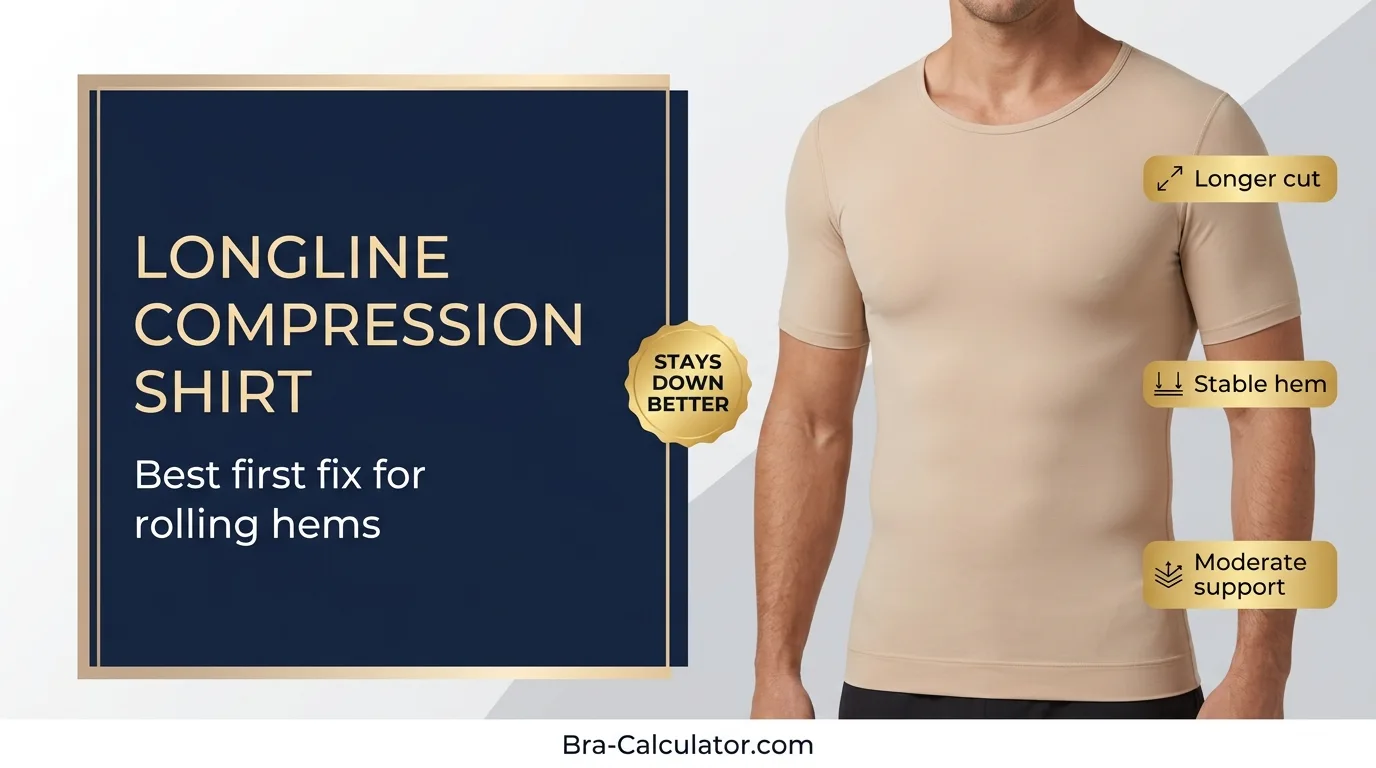
Longline Compression Shirt
Best if your current compression shirt rolls at the waist or rides up while sitting. Length is usually the first feature to upgrade.
- Better for seated movement
- Reduces short-shirt ride-up
- Good daily first fix
- Too-tight longline shirts still roll
- May feel warm in summer
- Needs waist-friendly fit
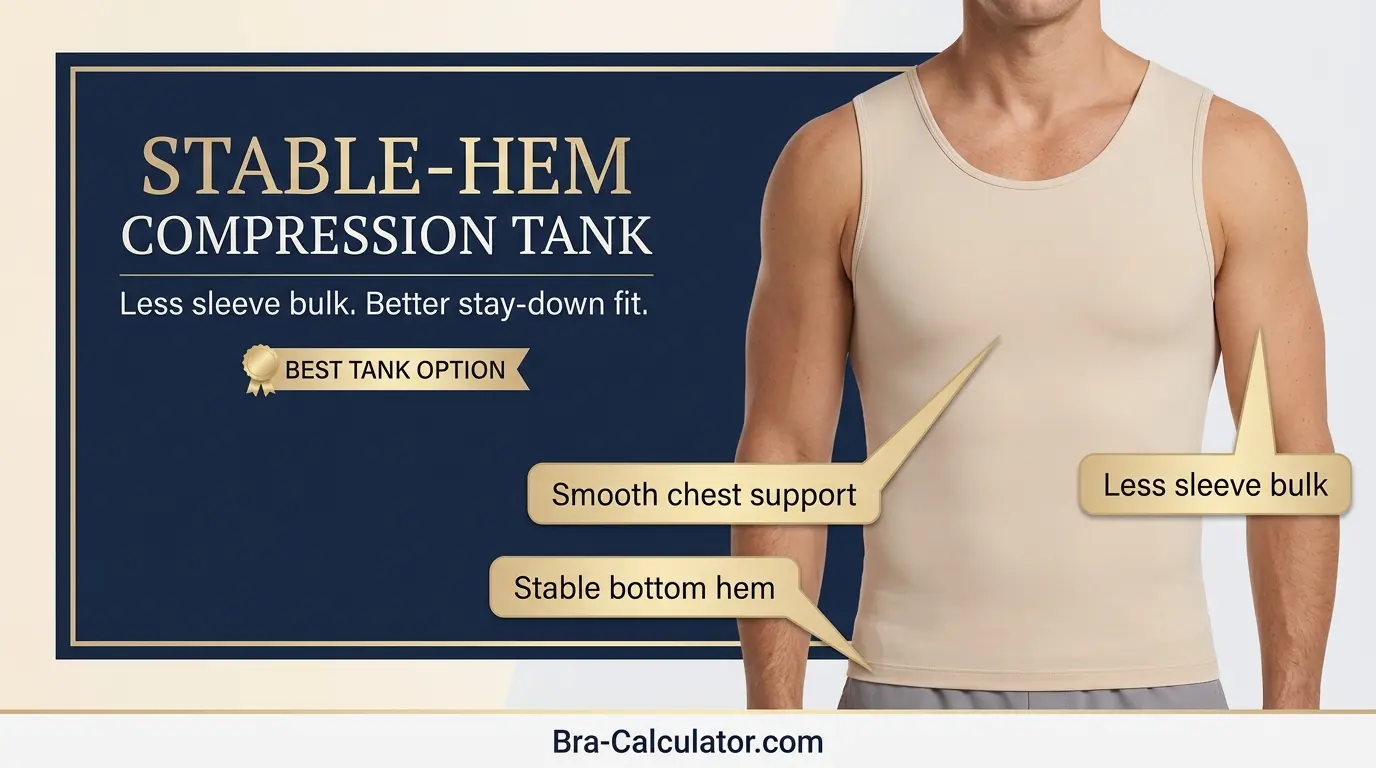
Compression Tank With Stable Hem
Best if sleeves create bulk or heat, but you still need chest support that stays flatter under casual shirts.
- Less sleeve bulk
- Good in warmer weather
- Can hide under casual shirts
- Neckline can show
- Armholes can print through
- Too-small tanks still ride up
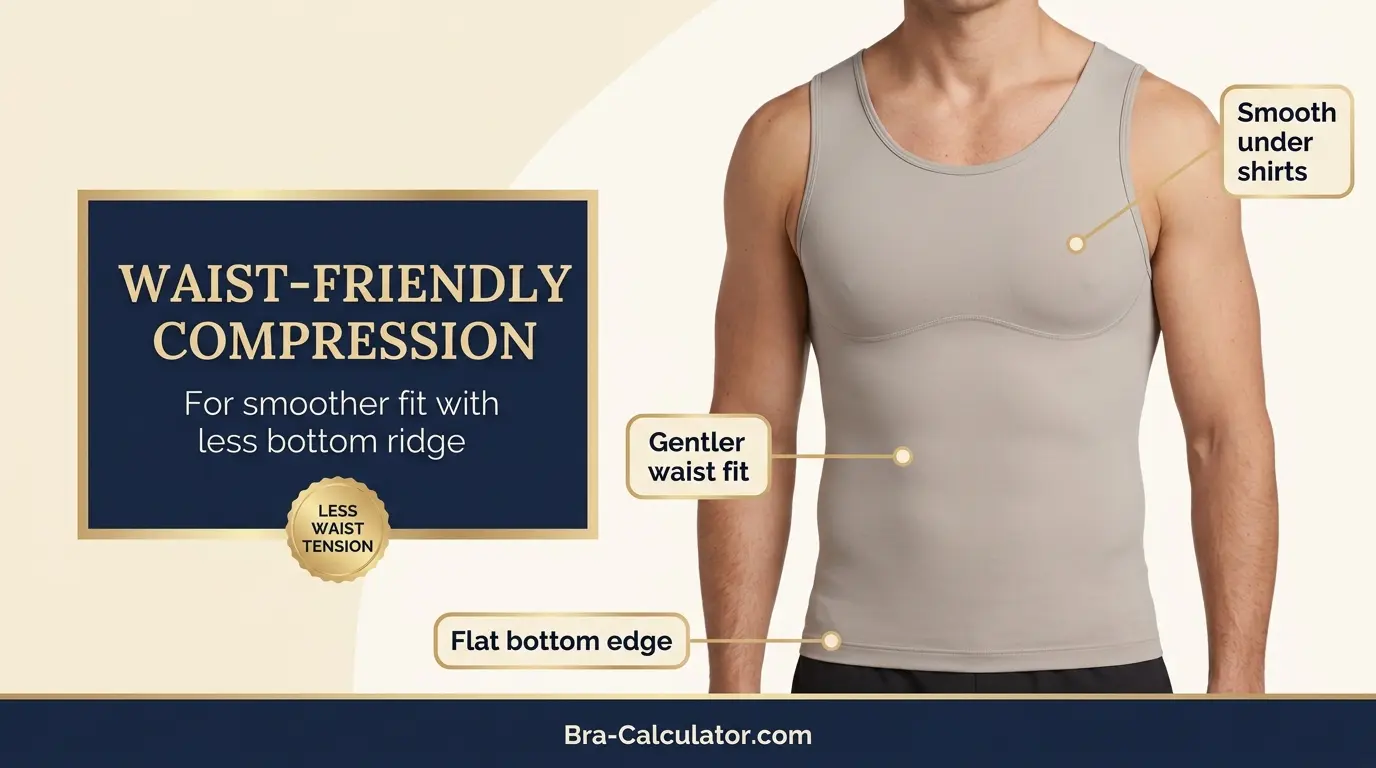
Waist-Friendly Compression Undershirt
Best if your shirt fits the chest but squeezes or rolls at the stomach. A less aggressive taper can stay flatter.
- Better for larger stomachs
- Less bottom-hem pressure
- More realistic daily fit
- May feel less compressive
- Needs good chest panel support
- Check outer-shirt visibility
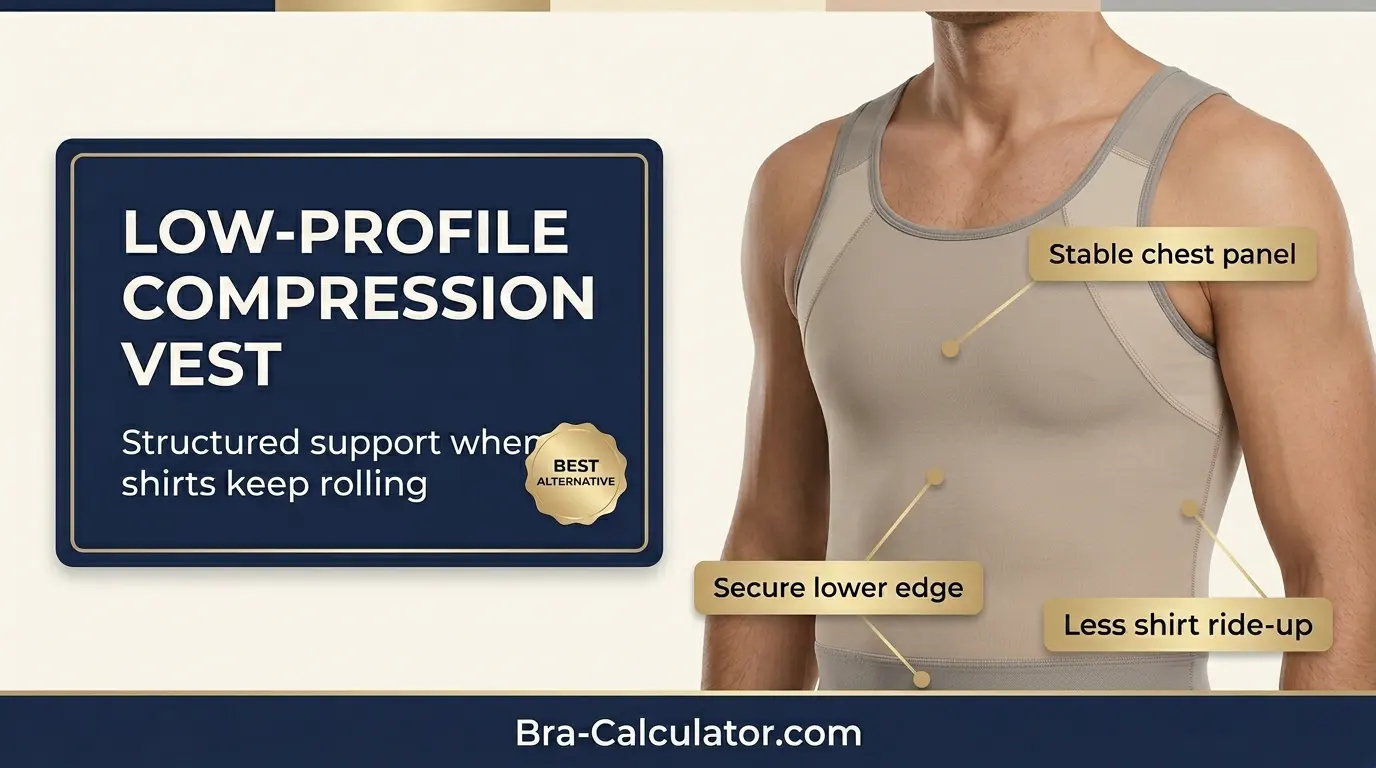
Low-Profile Gynecomastia Compression Vest
Best if every compression shirt rolls or chest movement is still not controlled. A vest may stay more stable, but it can feel warmer or show under thin clothing.
- More structure than shirts
- Better movement control
- Useful when shirts fail repeatedly
- Can be hotter
- May show under light shirts
- Must not restrict breathing
Why Compression Shirts Roll on Different Body Shapes
Hem Climbs
The shirt may move upward toward a narrower area when waist pressure is high.
Longline fitShort Shirt
Standard length may not stay down when sitting or bending.
Measure lengthSide Pull
Chest width can pull fabric upward if panels are too narrow.
Wide panelsFabric Shifts
Strong chest tension may pull the shirt toward the waist.
Stable hemToo Firm
Firm compression may bunch because the body resists pressure.
Moderate supportMotion Roll
Daily compression may not handle running, lifting or twisting.
Sports cutSweat Slip
Sweat can make poor fabric slide and bunch faster.
Wicking fabricAsk Surgeon
Do not change post-op compression to fix rolling without surgeon approval.
Medical firstWhat Should You Fix First?
- Hem rolls at waist
- Visible ridge under shirt
- Pressure increases while sitting
- Longline compression
- Waist-friendly cut
- Stop sizing down
- Fabric bunches under chest
- Chest panel feels too firm
- Support pushes upward
- Moderate compression
- Smoother chest panel
- Different support type
- Looks fine standing
- Fails while seated
- Rides up at desk or driving
- Measure torso length
- Choose longline
- Test seated fit
- Rolls during lifting or running
- Sweat makes it slide
- Fabric loses shape
- Sports compression
- Wicking fabric
- Better stretch recovery
Mistakes That Make Compression Shirts Roll More
1. Sizing Down for a Flatter Look
More tension often makes fabric climb faster.
2. Buying Short Compression Shirts
Short length has less fabric to resist seated movement.
3. Ignoring Waist Fit
A shirt can fit the chest but fail at the stomach.
4. Using Gym Compression for Daily Wear
Sports fabric may move well but show or slide under casual clothing.
5. Relying Only on Tucking
Tucking can hide the problem temporarily but does not fix tension or length.
6. Keeping Fabric That Has Lost Recovery
Old fabric may curl, stretch and roll after washing.
What Usually Improves When a Compression Shirt Stays in Place
These are practical fit outcomes, not medical promises.
“I stopped pulling it down every hour.”
Better length and hem stability usually reduce constant adjusting during normal daily movement.
“The ridge under my shirt disappeared.”
A flatter hem can make the outer shirt look smoother and less distracting.
“Sitting finally felt normal.”
Longline support often works better for desk work, driving and daily seated movement.
“I realized the shirt was too short, not just too loose.”
Many rolling problems improve after fixing length and waist shape instead of adding more compression.
Medical References and Disclaimer
This guide is for comfort, clothing and support-fit education. It is not medical advice and does not diagnose or treat gynecomastia. Compression shirts can improve support and clothing appearance while worn, but they cannot identify the cause of chest fullness or remove glandular tissue.
Seek medical advice for sudden swelling, a hard lump, ongoing pain, nipple discharge, bleeding, skin changes, fast one-sided enlargement, or tight-compression symptoms such as numbness, severe pain, breathing trouble or skin color changes.
Frequently Asked Questions
Why does my compression shirt roll up?
A compression shirt usually rolls up because it is too short, too tight, too weak at the hem, wrong for your waist or torso shape, or made with fabric that lacks stretch recovery.
How do I stop a compression shirt from rolling up?
Choose the correct size, avoid sizing down, try a longline cut, measure waist and torso length, look for a stable bottom hem, and switch garment type if regular shirts keep failing.
Does rolling mean my compression shirt is too small?
Often yes, but not always. Rolling can mean the shirt is too tight, too short, poorly shaped for your waist, or made with weak fabric recovery.
Should I tuck in a compression shirt to stop rolling?
Tucking can help temporarily, but it does not fix poor sizing, weak hem grip or short length. If the shirt still rolls while tucked, the fit or construction is wrong.
Are longline compression shirts better for gynecomastia?
Longline compression shirts are often better for gynecomastia if regular shirts roll up, especially for longer torsos, larger stomachs or people who sit and bend often.
Is a compression vest better if shirts keep rolling?
A compression vest may work better if shirts keep rolling because they cannot control chest movement or stay stable at the waist, but it should still fit without breathing restriction or painful pressure.
Can compression shirts treat gynecomastia?
No. Compression shirts can improve comfort, movement control and clothing appearance while worn, but they do not diagnose, treat or remove gynecomastia tissue.
When should I seek medical advice?
Seek medical advice for sudden swelling, a hard lump, ongoing pain, nipple discharge, bleeding, skin changes, fast one-sided enlargement, or tight-compression symptoms such as numbness or breathing trouble.
Stop Guessing Why Your Compression Shirt Rolls Up
Start with measurements, then choose the right fix: longer length, moderate compression, stable hem, waist-friendly cut or a different support type.