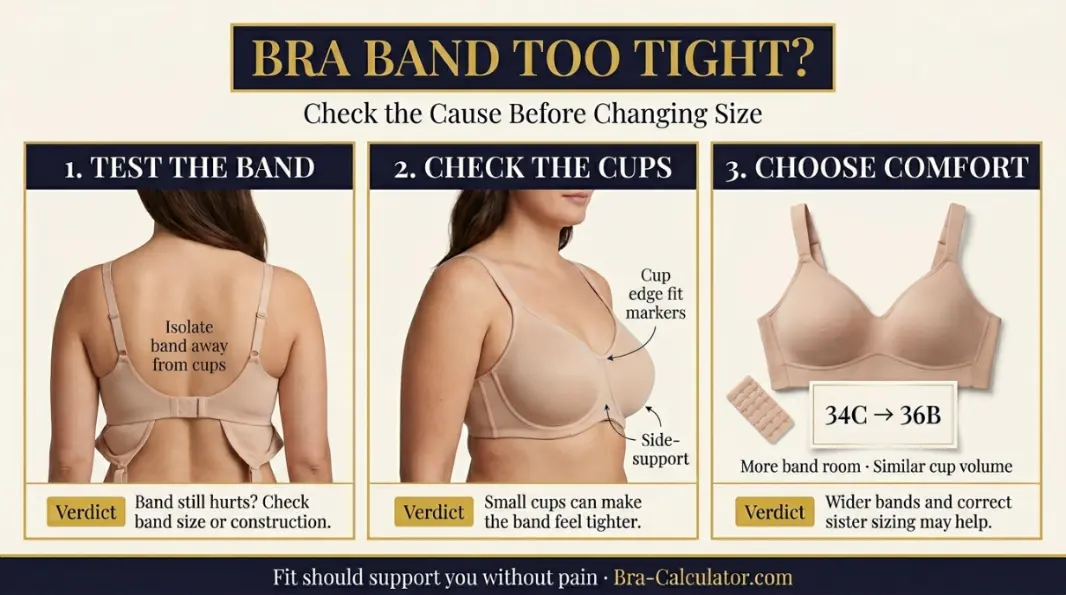
A bra band may be too tight when it feels painful, restricts normal movement or breathing, causes persistent irritation, or cannot pass a gentle two-finger comfort check on the loosest hook. Before sizing up, check whether the cups are too small, because cup pressure can make the band feel tighter. If the cups fit correctly and only the band is tight, go up one band and down one cup letter to preserve similar cup volume, such as 34C to 36B.
Jump to a Section
Bra Band Too Tight at a Glance
| Attribute | What to Check | Comfort-First Response |
|---|---|---|
| Main symptom | Painful pressure, persistent irritation or difficulty relaxing in the bra | Remove pressure and recheck size/style |
| Quick fit test | Two fingers should slide under the band with gentle resistance | Test on the loosest hook in a new bra |
| Hidden cause | Too-small cups can add tension and mimic a tight band | Check for spillage, wire pressure and floating gore |
| Correct sister-size move | Band up while keeping similar cup capacity | 34C → 36B, not 36D |
| Style solution | Wider, smoother and more flexible band construction | Try comfort-focused or wire-free options |
| Health reminder | Pain, broken skin, numbness or breathing discomfort is not normal fit | Stop wearing that bra and seek medical advice for persistent symptoms |
What Does a Tight Bra Band Really Mean?
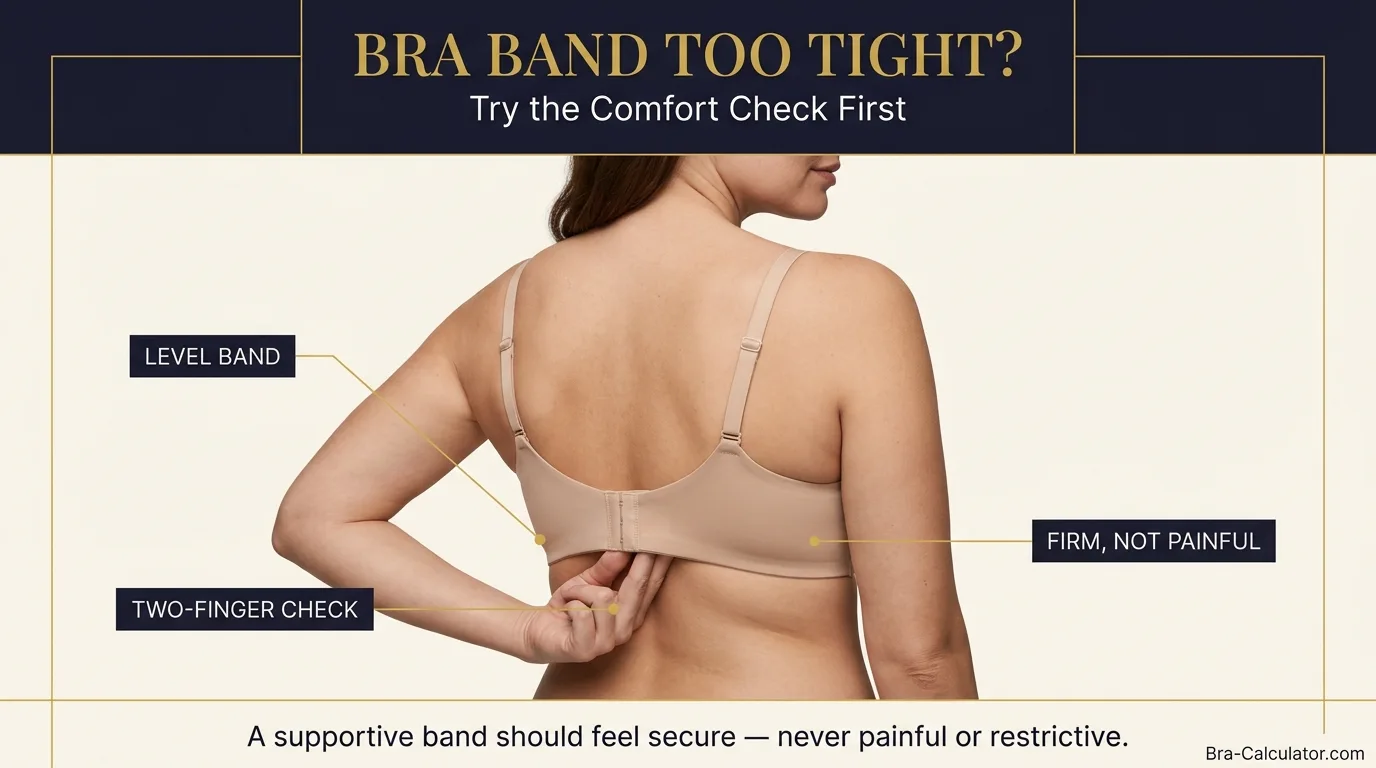
The band is the foundation of a supportive bra. It should sit level around the torso, feel secure on the loosest hook when new, and remain stable during everyday movement. Secure does not mean painful. A band that leaves you eager to remove the bra after an hour is giving you useful fit information.
A tight feeling can come from more than one source. Sometimes the band is simply too small or too firm for your ribcage. Sometimes a cup that is too shallow or too small pushes breast tissue against the wires and band, so the whole bra feels restrictive. In other cases, the numbered band size is fine, but the construction is not: narrow elastics, firm sports compression, stiff strapless grip, rough side seams or rigid underwire channels can create local pressure.
That is why a comfort-first diagnosis starts by separating band size, cup fit and bra construction. Making the band larger without checking the cups can reduce support and create gaping. Keeping the same size while enduring pain is not a solution either. The goal is a level band, smooth cup fit and a bra you can breathe and move in comfortably.
Fit does not require suffering. Mild contact marks can happen with fitted clothing, but pain, numbness, persistent irritation, broken skin or restricted breathing are signals to change the bra and, where symptoms continue, speak with a healthcare professional.
Signs Your Bra Band May Be Too Tight
Instead of judging one mark or one moment, check the pattern: how the bra feels at first wear, after sitting, after movement and when you remove it. These checks help identify whether the solution is a size adjustment, a softer construction or a cup correction.
| Sign | What It May Mean | Next Check |
|---|---|---|
| Band painful around most of the torso | Band may be too small or unusually firm | Backward/upside-down band test |
| Band feels tight only when cups are worn normally | Cups may be too small or shallow | Look for spillage or wire-on-tissue |
| Back rises upward | Band may be loose, not tight | See the band-rides-up guide |
| Pressure at one wire point | Wire shape or cup fit problem | Try wider/softer cup construction |
| Light marks that fade quickly without discomfort | May occur with a secure garment | Monitor comfort, not marks alone |
| Numbness, rash, broken skin or breathing discomfort | Unacceptable pressure or irritation | Stop wearing and address promptly |
Why Does a Bra Band Feel Too Tight?
1. The band size is genuinely too small. If the band alone feels restrictive during the backwards-and-upside-down test, a larger band is worth trying. Measurements can shift with body changes, recovery, pregnancy, menopause, weight fluctuation or simply between brands.
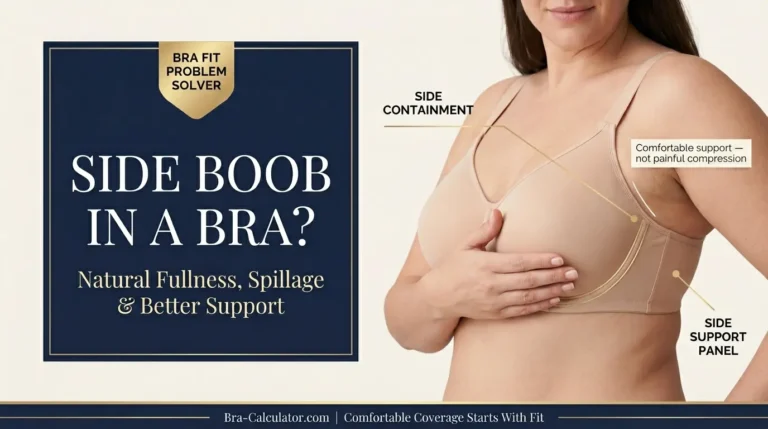
2. The cups are too small. When breast tissue cannot settle fully inside the cups, the bra is pushed away from the body and additional tension is felt through the band. Common clues include upper spillage, side overflow, wires resting on tissue or a center gore that cannot sit comfortably.
3. The style is firm by design. Strapless bras, high-impact compression sports bras and some shaping bras often use firmer bands. A size that feels fine in an everyday bra may feel restrictive in these constructions.
4. The elastic or fabric is not working for your body. A narrow elastic band can cut in even when its circumference is technically adequate. Rough seams or stiff underwire channels can also create pressure that feels like a tight band.
5. Temporary body fluctuation is changing comfort. Bloating, hormonal shifts, heat, posture and long periods sitting can change how a bra feels across the day. For occasional tightness, a bra extender may be useful; for repeated discomfort, reassess the size or style.
6. Care or wear has changed the garment. Heat-damaged elastic may lose its comfortable stretch or become misshapen. Older bras can also pull unevenly even when the label remains the same.
How to Fix a Too-Tight Bra Band
A comfortable correction should protect support as well as relieve pressure. Use this sequence before buying a replacement bra, because it identifies whether you need a new band, a different cup, a new construction or only temporary flexibility.
Put the bra on backwards and upside down so the cups hang away from your body. If the band still feels painfully tight, the band or its construction is likely the issue.
Wear the bra normally, scoop tissue into the cups and check for spillage, a floating gore or wires sitting on breast tissue. These clues mean the cup needs attention.
If the cups fit well but the band is tight, go up a band and down a cup letter for similar cup capacity: 34C → 36B. If cups are also too small, use the calculator and try a fuller overall size.
Look for wider wings, smooth elastics, flexible fabrics, soft-cup support or a temporary extender if tightness varies only occasionally.
Sit, bend, take normal breaths and wear the bra long enough to assess comfort. The band should stay level without painful pressure.
| Your Fit Situation | Try This | Why It Helps |
|---|---|---|
| Band tight; cups fit smoothly | Go up one band and down one cup letter | More room with similar cup volume |
| Band tight; cups spill or wires press tissue | Remeasure and test larger cups | The cup may be causing pressure |
| Only strapless/sports style hurts | Try a softer or less compressive style | Construction can be the problem |
| Only occasional end-of-day tightness | Try a bra extender | Adds temporary breathing room |
| Pain, rash or persistent irritation | Stop wearing that bra | Comfort and skin health come first |
What to Look For in a Bra When the Band Feels Tight
Instead of shopping only by size label, look for features that distribute support comfortably. These style recommendations are focused on construction characteristics rather than promising that one product fixes every body.

Wide-Band Full-Coverage Style
- Wider wings can spread pressure across more fabric instead of one narrow elastic line.
- Useful when a thin band digs in even after size has been confirmed.
- Choose smooth seams and a band that lies level without rolling.

Wireless Soft-Band Bra
- Removes rigid wire pressure points while still offering everyday coverage.
- Helpful when wire channels or stiff frames are the main discomfort source.
- Support still depends on choosing a stable, correctly fitted band.

Supportive Style With Wide Wings
- Helps keep the band stable while reducing narrow-edge digging.
- Look for contained cups so the band is not compensating for cup overflow.
- Best paired with a fresh measurement and cup-fit check.
How Body Changes Affect a Tight Band
Band comfort can change even when the size label in your drawer has not. Bodies shift over time and through ordinary life, so a comfortable fit is not a fixed achievement; it is something worth reassessing whenever your bra begins to feel wrong.
Watch Band Width
A tall or rigid band can take up more ribcage space and feel restrictive. Softer, lower-profile wings may feel better.
Gentler edgesDistribute Pressure
Wide, smooth bands can feel more comfortable than narrow elastic that concentrates tension in one line.
Wider wingsRemeasure as Fit Changes
Ribcage and bust comfort may shift during pregnancy and after birth. Use flexible styles or maternity fitting support.
Flexible supportAllow Temporary Room
When tightness is occasional rather than constant, an extender can add comfort without replacing every bra.
Extender optionSister Sizing for a Tight Bra Band
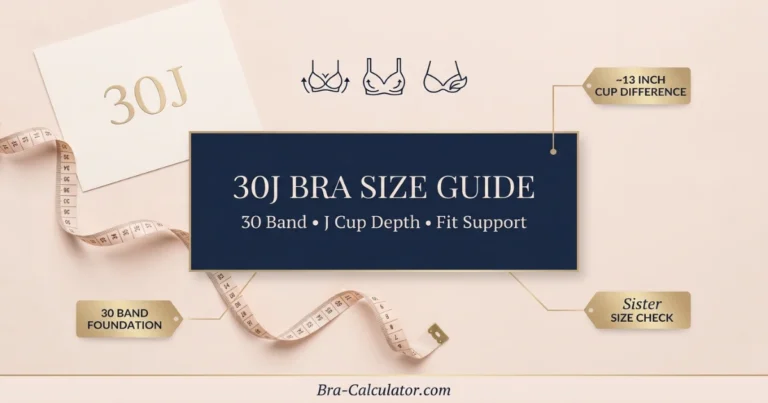
Sister sizing changes the band while keeping approximately similar cup capacity. When a cup already fits correctly but the band feels too tight, the usual comfort move is up one band size and down one cup letter.
| Current Size | Try for a Looser Band | Volume Logic |
|---|---|---|
| 30D | 32C | Similar cup volume, roomier band |
| 32C | 34B | Similar cup volume, roomier band |
| 34C | 36B | Similar cup volume, roomier band |
| 34DD | 36D | Similar cup volume, roomier band |
| 36F | 38E | Similar cup volume, roomier band |
| 38G | 40F | Similar cup volume, roomier band |
Important exception: if your cups also spill, cut in or feel too shallow, do not automatically reduce the cup letter as you increase the band. A full recalculation or larger cup may be needed.
Is It the Band, the Cup, or the Style?
- Band feels tight even when tested without cups
- Pressure is fairly even around the torso
- New bra cannot feel comfortable on loosest hook
- Try roomier sister size if cups fit
- Band stays level during movement
- Firm support without pain
- Two fingers fit with gentle resistance
- No persistent irritation
- Band feels better when cups hang away
- Spillage or tissue under wire
- Center gore floats or presses sharply
- Cup depth/shape needs correction
- Test a larger or deeper cup
- Check breast shape compatibility
- Keep band stable if it fits alone
- Use calculator to recheck size
- Only one bra type feels too tight
- Strapless grip or compression sports band
- Narrow elastic digs at one edge
- Rigid wires cause local discomfort
- Wider, smoother band
- Encapsulation sports style
- Wireless comfort construction
- Soft flexible wing panels
- Only certain days or evenings
- Comfort varies with bloating or sitting
- Band otherwise stable and supportive
- Not painful or irritating most of the time
- Use a bra extender temporarily
- Choose stretchier bands on sensitive days
- Remeasure if changes become regular
- Never tolerate pain
Best Bra Styles When Your Band Feels Tight
Distributes support more evenly and can reduce narrow elastic pressure.
Helpful when rigid underwire or side channels create painful points.
Spreads contact over a broader area when a narrow band feels harsh.
Useful for mild short-term fluctuation without changing your entire wardrobe.
May feel less compressive than styles that flatten the entire chest.
Can intensify discomfort unless specifically fitted for comfort and support.
Common Mistakes When Fixing a Tight Band
This gives additional band room and larger cup volume, which may lead to gaping if the cups already fit.
Light temporary marks can happen, but pain, persistent redness, itching, numbness or broken skin are meaningful warning signs.
A cup problem can make the whole bra feel restrictive.
A harsh strapless or compression design may continue to hurt even in a technically suitable size.
Frequently Asked Questions
A band may be too tight when it feels painful, limits comfortable movement or breathing, produces persistent irritation, or feels restrictive even when tested without the cups. A secure band should feel firm and level, not painful.
If your cups fit well and only the band is tight, try a roomier sister size: go up one band and down one cup letter, such as 34C to 36B. If the cups are also small, recalculate your size rather than automatically reducing the cup.
Yes. Small or shallow cups can push tissue outward and increase tension through the whole bra. Put the bra on backwards and upside down to check whether the band alone is still uncomfortable.
No. Light marks that fade and do not hurt can occur with supportive clothing. Marks paired with pain, rash, persistent redness, numbness, broken skin or breathing discomfort indicate that the fit or fabric needs changing.
Comfort can vary with posture, meals, bloating, heat or hormonal changes. A temporary extender can help occasional shifts, while frequent painful tightness means you should reassess the fit.
Try smooth wider bands, flexible wings, softer fabrics and wire-free or lightly structured options. The band should still stay level; a very loose band is not the answer to pressure discomfort.
Yes. Your ribcage and bust may change during and after pregnancy. Remeasuring and choosing adjustable, flexible maternity or nursing styles can make support more comfortable.
Stop wearing it if it causes pain, broken skin, numbness, significant rash or breathing discomfort. Persistent symptoms deserve medical advice, because comfort problems should not be endured as normal bra fit.
Find a Supportive Band Without the Pain
Use your measurements, cup-fit signs and sister-size options to find a bra band that stays level, supports comfortably and does not create painful pressure.