Sports Bra Buying Guide: Match Your Support to Your Movement
Your breasts can move in more than one direction at once during exercise — up, down, sideways, and slightly forward. The right sports bra is not just a cute gym top. It is a movement-control garment that should match your measured size, your workout intensity, and the way your breast tissue sits on your frame.
A sports bra should feel secure without feeling punishing. A good one reduces bounce, keeps tissue contained, lets you breathe deeply, and does not leave red marks that last for hours. A poor one can make the same workout feel harder because you keep adjusting the straps, pulling the neckline up, or bracing your chest during jumps. That is why this guide starts with fit and movement instead of simply listing popular styles.
The biggest mistake shoppers make is buying by small, medium, large labels when they actually need a band-and-cup fit. Two people can both wear a medium top, but one may be a 32B and the other a 34F. Their support needs are completely different. Your best sports bra is the one that controls movement at your real size, in your real workout, without flattening or forcing breast tissue into the wrong place.
Anatomy of Support
Every sports bra is built around one of three support systems: compression, encapsulation, or hybrid construction. Marketing names change from brand to brand, but these three ideas stay the same. Once you understand them, product pages become much easier to read.
Compression
Presses breast tissue against the chest wall as one mass. Simple, low-bulk, and best suited to A–B cups or low-to-medium movement.
Encapsulation
Uses individual cups to support each breast separately. It works closer to a regular bra and is usually better for C–H+ cups.
Hybrid
Combines internal cups with an outer compression layer. This is the strongest option for larger busts and high-impact movement.
Compression bras can feel wonderfully smooth for yoga, walking, Pilates, and lounging, but they are not always enough for larger cup sizes. When compression is too aggressive, it can push tissue sideways, create side spillage, or cause a flat-but-unstable feeling. Encapsulation reduces that problem by letting each breast sit in its own cup. Hybrid sports bras add another layer of control, which is why many runners and full-bust athletes prefer them.
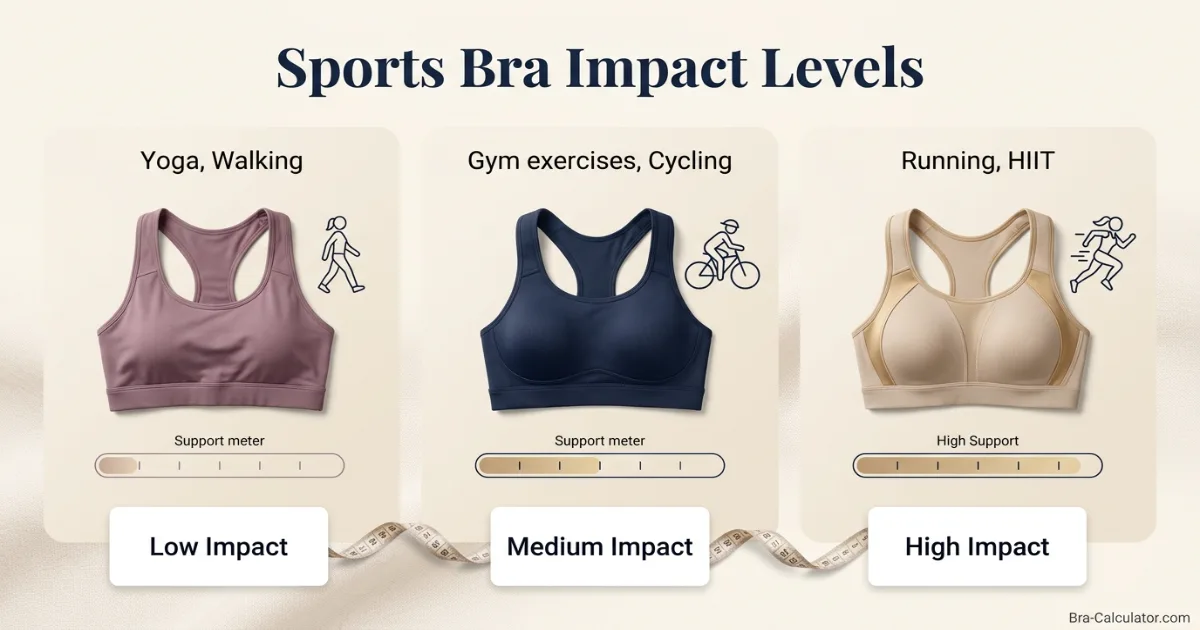
| Impact Level | Best For | Recommended Cup Range | Typical Construction |
|---|---|---|---|
| Low | Yoga, Pilates, walking, barre | A–C | Compression |
| Medium | Cycling, hiking, dance, weight training | All, especially C–DD | Compression or hybrid |
| High | Running, HIIT, jumping, team sports | D+ and any high-movement activity | Encapsulation or hybrid |
The Impact-Level Playbook
Impact level is about movement, not your fitness level. A gentle strength session can be low impact even if the weights are heavy, while a short HIIT class can be high impact because of jumping and fast direction changes. Choose the bra for the most demanding movement in your workout, not the easiest part.
Low Impact — Yoga, Walking, Pilates
Low-impact bras should feel soft, breathable, and stable enough for bending, stretching, and daily movement. You do not need a rigid shell for slow workouts, but you still need a band that stays in place. For smaller cups, a seamless compression bra may be perfect. For larger cups, choose a low-impact bra with a wider band and more front coverage so tissue does not shift during forward folds or side bends.
Look for
- Soft, wide underband
- Breathable, seamless fabric
- Simple pull-on compression fit
- Coverage that stays put when bending
Skip
- Rigid underwire for gentle workouts
- Heavy multi-layer padding
- Narrow straps that dig in
- Low necklines that shift during stretches
Medium Impact — Cycling, Dance, Gym Training
Medium-impact sports bras are the most useful category for everyday training. They need enough support for movement, but they should not feel as locked-down as a race-day running bra. This is the range where adjustable straps become valuable. If the band feels right but the neckline is unstable, strap adjustment can fine-tune the fit. If you are C cup or above, light encapsulation usually feels more secure than a basic pullover crop.
Look for
- Adjustable straps for fine-tuning
- Racerback or crossback design
- Light encapsulation for C+ cups
- Moisture-wicking fabric for longer sessions
Skip
- Pure compression in D+ cups
- Non-adjustable one-size bands
- Thin, unlined cups for larger busts
- Fashion-first designs with weak elastic
High Impact — Running, HIIT, Jumping
High-impact bras should reduce bounce without squeezing your ribs so tightly that breathing becomes difficult. The band should do most of the support work, while the straps help stabilize the cup position. For D+ cups, look for actual cup shaping, firm fabric, and a closure or adjustable band whenever possible. If a high-impact bra feels supportive only because the straps are painfully tight, it is usually the wrong size or the wrong construction.
Look for
- Firm, non-stretch underband
- Wide straps, ideally 1 inch or more
- Encapsulation or hybrid cups
- Secure front, back, or hook closure
Skip
- Stretchy, low-support bands
- Compression-only in D+ cups
- Thin spaghetti straps
- Necklines that allow vertical bounce
The Fit Science: How to Get It Right
Most sizing mistakes come from measuring once and never again. Bodies change with training, cycles, weight shifts, posture, age, and even the time of day. A sports bra that worked six months ago may now feel loose in the band or too shallow in the cups. Remeasuring every few months is normal, especially if you exercise regularly.
- Band size — Measure snugly under your bust, exhale fully, and round to the nearest even number. For sports bras, the band should feel firmer than an everyday bra but not restrictive.
- Bust size — Measure around the fullest part of your bust with arms relaxed. Keep the tape level and avoid pulling it so tight that it compresses tissue.
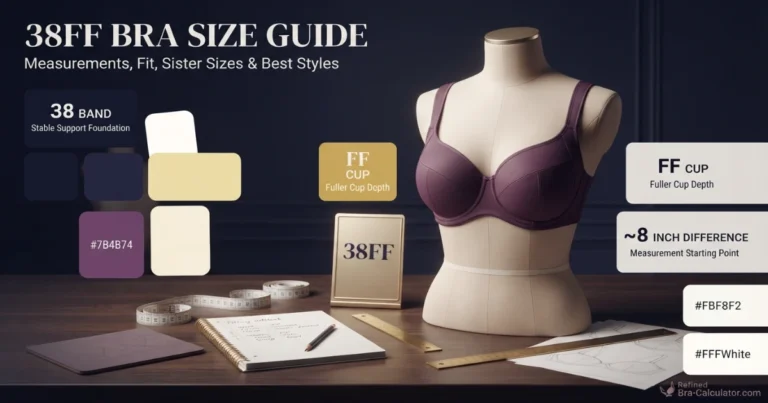
- Cup size — Subtract band from bust measurement. For example, a 38-inch bust and 34-inch band gives a 4-inch difference, often around a DD cup depending on brand system.
- Confirm with the calculator — Cross-check your result with the free bra size calculator tool so you can see sister sizes and edge cases.
- Test in motion — A sports bra should be judged while moving, not while standing still in a mirror. Do a few jumps, arm circles, bends, and deep breaths before deciding.
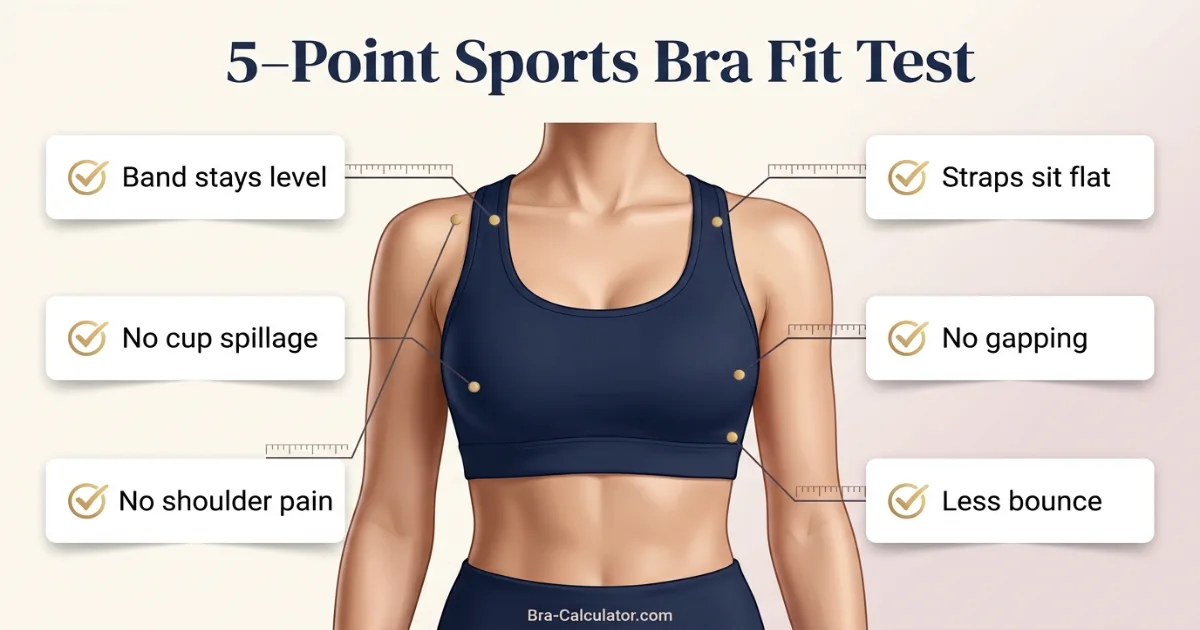
The 5-Point Fit Test
Record a short jumping-jack test on your phone and check for these five signs before you commit to a size. The goal is not zero movement; natural movement is normal. The goal is controlled movement without pain, spillage, gaping, or constant adjustment.
Common Sports Bra Fit Problems
If a sports bra almost works, diagnose the symptom before buying a completely different style. A band riding up usually means the band is too loose. Shoulder pain usually means the straps are doing work the band should be doing. Side spillage usually means the cup is too small, too shallow, or too compressive for your tissue shape.
| Fit Problem | Likely Cause | Try This First |
|---|---|---|
| Band rides up | Band too loose or fabric too stretchy | Go down one band size and up one cup size |
| Shoulders hurt | Straps carrying too much weight | Choose a firmer band and wider adjustable straps |
| Side spillage | Cup too small or too narrow | Try a larger cup or encapsulation style |
| Neckline gaps | Cup too tall, too shallow, or straps too loose | Adjust straps or try a lower-volume cup shape |
| Still bouncing | Wrong support level for the workout | Move from compression to hybrid or encapsulation |
How to Use This Guide While Shopping
When you open an Amazon listing or a brand product page, do not start with the color or sale price. First, check whether the bra is labeled low, medium, or high impact. Second, look for the construction clues: molded cups, separate cup panels, adjustable straps, hook-and-eye closure, front zip, or a firm underband. Third, compare the available sizing to your calculator result.
If the product only comes in small, medium, and large, it may still work for smaller cups, but fuller cups usually need a more precise band-and-cup option. Finally, read reviews from people who mention your approximate cup range and workout type. A glowing yoga review does not prove the bra will work for running, and a high-impact running review may not matter if you only need soft studio support.
Not Sure of Your Exact Size?
Get your precise band, cup, and sister-size match in under a minute, then choose your support level with confidence.
Sports Bra Picks by Impact Level
These product cards are sports-bra only and organized by movement level. Use them as a shopping shortlist, then confirm the brand’s current size chart before ordering. If your size is between two bands, prioritize the band that stays firm without limiting breathing, because a stable band is the foundation of bounce control.

Nike Dri-FIT Indy — Light Support
A soft, low-profile option for yoga, walking, and studio classes. Best when you want breathable compression without a bulky high-impact feel.
Check Price on Amazon Best for: low-impact workouts, A–C cups, and smooth layering.
Lululemon Energy Bra — Medium Support
A compressive studio-style bra with a wide band feel. Good for strength work, Pilates, cycling, and lower-bounce training days.
Check Price on Amazon Best for: studio workouts, compact support, and medium movement.
Under Armour Mid Crossback
Designed for gym sessions, cycling, and training days where you need more structure than a yoga bra but not maximum lockdown.
Check Price on Amazon Best for: gym training, cycling, and medium-impact routines.
Brooks Dare Scoopback
A running-focused pick for mixed-intensity training. The scoopback design can feel easier to wear than very rigid racerback styles.
Check Price on Amazon Best for: running, cardio circuits, and medium-high bounce control.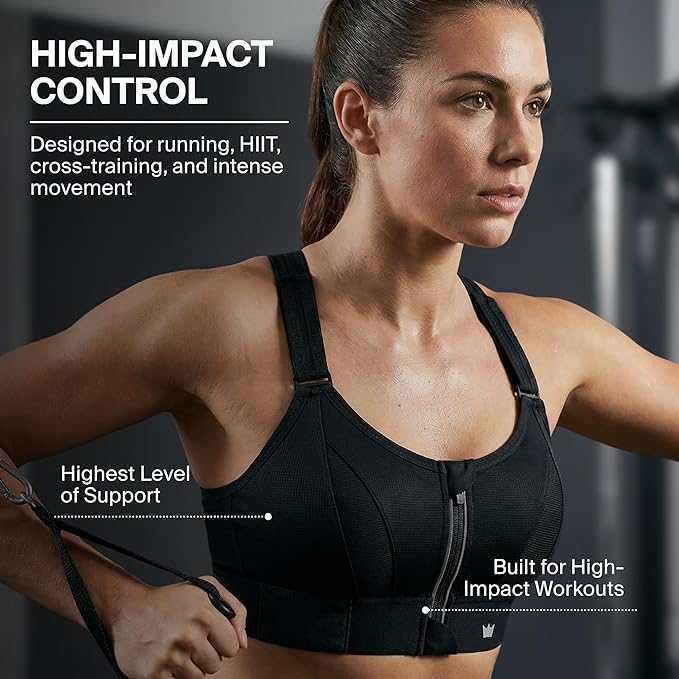
SheFit Ultimate — Adjustable Impact
A highly adjustable high-impact design for users who need tighter band and strap control. Especially useful when standard pullovers shift too much.
Check Price on Amazon Best for: D+ cups, HIIT, running, and strong adjustability.
Enell Maximum Control
A full-coverage high-impact option built for fuller busts and plus-size athletes who want strong containment rather than light compression.
Check Price on Amazon Best for: full-bust support, running, court sports, and maximum control.Quick Match: Cup Size to Sports Bra Type
Your cup size does not decide your athletic ability, but it does influence the construction that will feel supportive. Smaller cups may prefer lighter fabrics because too much structure can feel bulky. Larger cups usually benefit from deeper cups, firmer bands, and wider straps because breast weight needs to be distributed across the ribcage instead of hanging from the shoulders.
| Cup Size | Best Construction | Priority Feature | Good Starting Point |
|---|---|---|---|
| A–B | Compression or light hybrid | Breathability over rigidity | Low to medium impact crop-style bra |
| C–DD | Medium-to-high hybrid | Adjustable straps | Medium support with shaped cups |
| D–G+ | High-impact encapsulation | Firm, non-stretch band | Band-and-cup sports bra |
| Plus-size D–O | Adjustable high-impact hybrid | Wide straps + wide band | Maximum control with front or back closure |
Band, Strap, Cup and Closure Details
The band is the anchor. It should sit level around the body and feel firm on the loosest hook if the bra has one. A band that rides up is not supporting you, even if the straps feel tight. For high impact, avoid very thin elastic bands unless your cup size and activity level are both low.
Straps should stabilize, not carry all the weight. Wide adjustable straps are especially helpful for D+ cups because they spread pressure more comfortably. Racerbacks can feel secure, but they can also pull on the neck if the size is wrong. Crossbacks often create a middle ground: more stability than straight straps, but less neck tension than a very tight racerback.
Cup shape matters too. If your breasts are projected, shallow compression bras may squash the front while letting tissue escape at the sides. If your tissue is softer, a high neckline and side panels can help containment. If you are close-set, a very high center panel may feel crowded; if you are wide-set, side support may be more important than cleavage control.
Care & Longevity
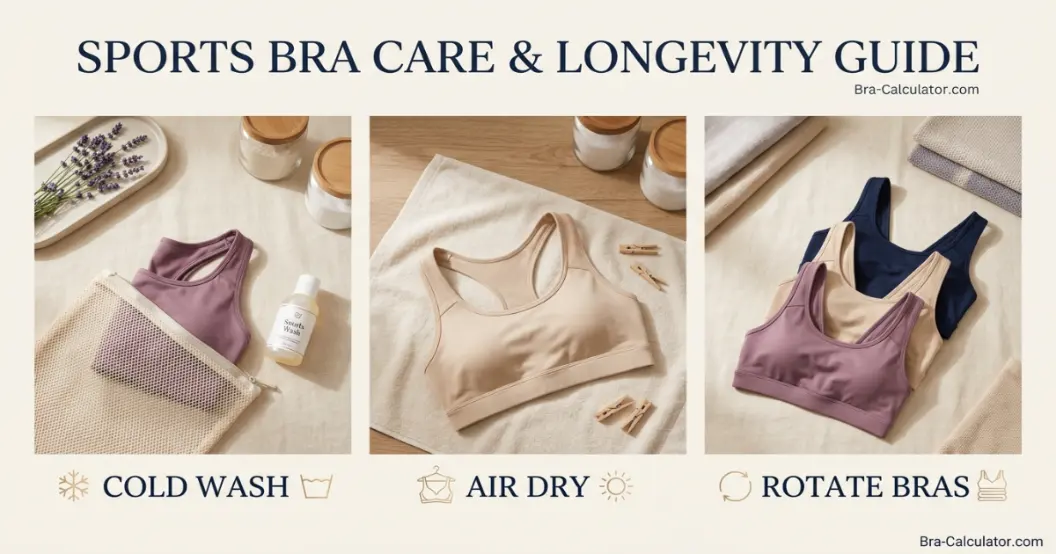
Sports bras work hard. Sweat, heat, friction, and repeated stretching all break down elastic over time. A bra that once controlled bounce can slowly become a lounge bra without looking obviously damaged. If the band feels looser, the straps need constant tightening, or the fabric no longer snaps back after washing, the support system is wearing out.
Do
- Wash on cold, inside a mesh bag
- Air-dry flat, out of direct sun
- Rotate 4–5 bras across the week
- Fasten hooks before washing
Don’t
- Tumble dry — it breaks down elastic fibers
- Use fabric softener — it coats moisture-wicking fabric
- Wear the same bra two days running
- Store cups crushed under heavy clothing
Frequently Asked Questions
Can I wear a sports bra as a regular everyday bra?
Yes. Medium-support seamless styles can be comfortable for daily wear, especially for smaller to medium cup sizes. For larger cups, choose a style that does not flatten tissue painfully or dig into the shoulders.
How do I prevent chafing during workouts?
Choose moisture-wicking fabric with smooth seams, confirm the band does not slide, and use anti-chafe balm where the band or straps rub. Chafing often means the bra is moving too much.
What is the difference between front-zip and pullover sports bras?
Front-zip bras are easier to put on and remove, especially after sweating. Pullover styles are simpler and can be very comfortable for low-impact exercise, but they may be harder to remove when tight.
Are underwire sports bras safe for workouts?
Yes, when properly fitted. Underwire can add extra lift and separation for D+ cups, as long as the wire sits flat against the ribcage without poking breast tissue.
Do I need different bras for different workouts?
It helps. Low-impact styles suit yoga or walking, medium-impact suits gym sessions or cycling, and high-impact suits running, HIIT, jumping, and team sports.
How tight should a sports bra feel?
Firm, not painful. You should be able to take a deep breath, move your arms freely, and fit two fingers under the band with light resistance.
Why does my sports bra roll under the bust?
The band may be too loose, too narrow, or too soft for your bust weight. Try a firmer band, a wider underband, or a band-and-cup sports bra.
Can teens wear high-impact sports bras?
Yes, especially for running, sports, dance, or active PE. Seamless medium-impact styles are a reasonable starting point, with high-impact styles recommended for larger cups or high-intensity activity.
How many sports bras should I own?
A mix of four to five bras works well for regular exercise: one low-impact, two medium-impact, and two high-impact. Rotation gives elastic time to recover between wears.
When should I replace a sports bra?
Replace it when the band stretches out, bounce control drops, straps no longer hold adjustment, or the fabric feels loose after washing. Heavy workout bras usually wear out faster than low-impact bras.
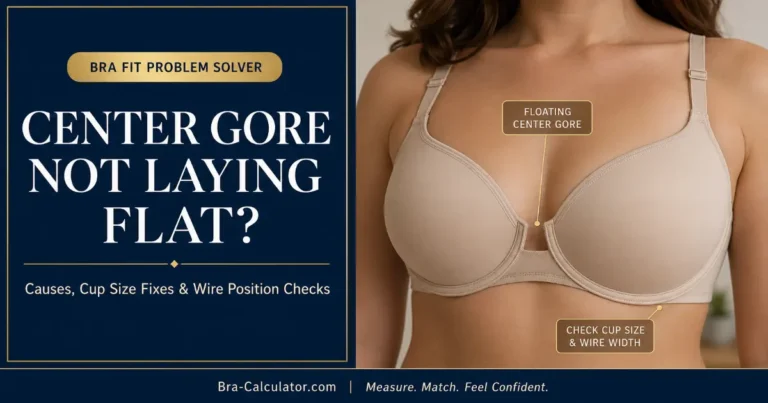
For more fit troubleshooting, see our guides to common bra fit problems and how to tell your bra fits correctly.
Get Your Exact Size Before You Shop
Impact level and construction only work if the band and cup are right. Confirm your size in under a minute, then match it to a low, medium, or high-impact sports bra above.
Calculate My Size Now →