36C vs 36D: What’s the Real Difference in Cup Size? (2026 Fit Guide)
A 36C and a 36D share the exact same band size — both wrap around a 36-inch ribcage — but the D cup holds approximately one inch more bust projection, giving noticeably more cup volume and depth. If your 36C cuts into the top of your breast or leaves tissue spilling at the sides, a 36D is very likely the right next step. If your cups wrinkle or gap after properly scooping all tissue in, a 36C is the better fit.
⚡ Key Takeaways
- Same band, different cups: Both sizes use a 36-inch band. Only the cup volume changes — one letter, one inch.
- 36D holds more volume: The D cup is deeper and wider than the C cup, better suited to fuller or more projected breast shapes.
- Spillage over the cup = try 36D. Wrinkling or gaping cups = stay with 36C.
- Shape matters as much as size: A 36D may gap on shallow breasts even if the volume calculation says it should fit.
- Sister sizes exist: 34DD and 38C both share the same cup volume as 36D — helpful if the band needs adjusting too.
- Explore how these sizes relate to others in our breast size comparison hub.
- Band behavior is the same for both sizes — if your 36 band feels wrong, that’s a separate issue to fix first.
If you’ve ever stood in a fitting room holding a 36C and a 36D — both seeming close to right — this guide will settle it. The answer comes down to your actual measurements, your breast shape, and a few honest fit checks you can do at home.
Choose the fit signs you notice in the band, cups, center and straps. We’ll turn them into a practical next step for 36C.
Private fit check — your answers stay in your browser and are used only for this on-page guidance. Nothing is stored or submitted.
Understanding How Cup Letters Work
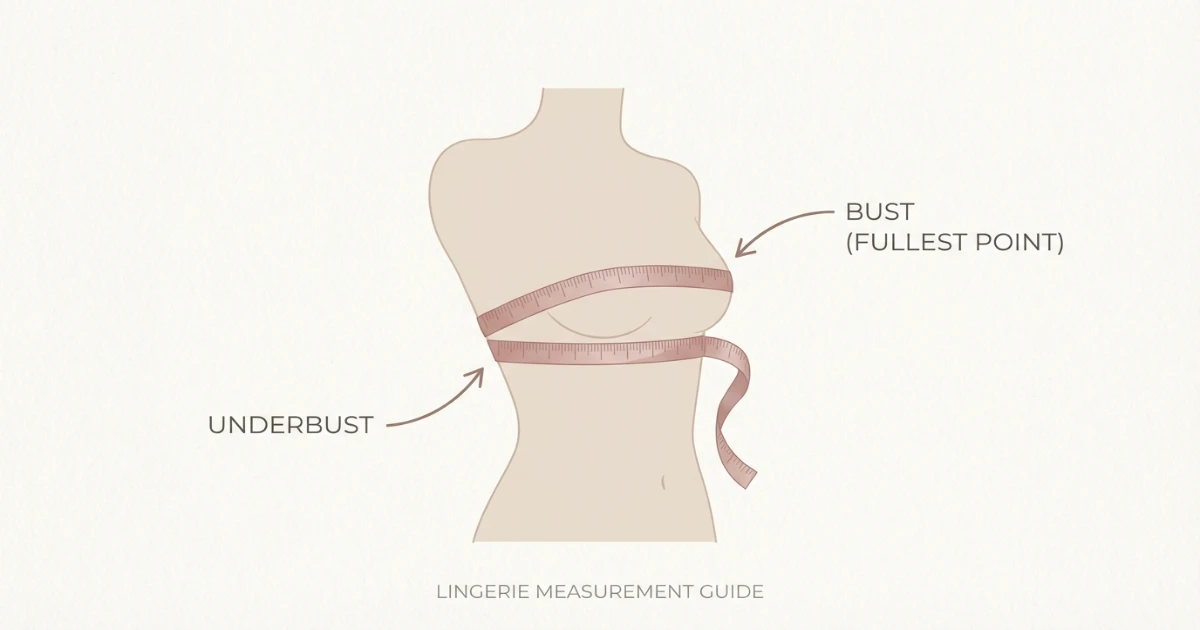
Cup letters only have meaning when paired with a band number. A D cup on a 30-band holds far less volume than a D cup on a 38-band. Within the same band size, each letter represents one additional inch of difference between your bust (fullest point) and underbust (directly under your breasts):
- 36A = 1-inch difference
- 36B = 2-inch difference
- 36C = 3-inch difference
- 36D = 4-inch difference
- 36DD / 36E = 5-inch difference
Moving from 36C to 36D adds one full inch of cup depth. That sounds minor — on the body, it’s the difference between a cup that fully contains your tissue and one that leaves it behind. Use our bra size calculator to get a measurement-based starting point before you shop.
36C vs 36D: Measurement Breakdown
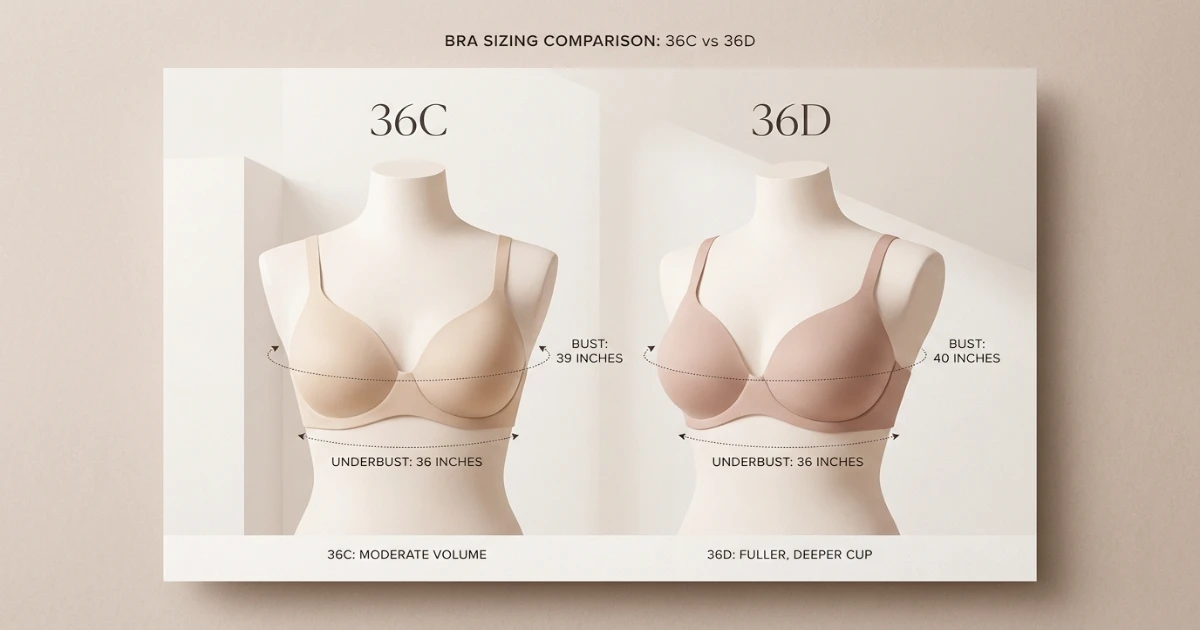
Both sizes share the same 36-inch band. The difference is entirely in the cup. Here’s how the numbers typically break down in US sizing:
36C
- Band (underbust, snug): ~32–34 in / 81–86 cm
- Bust (fullest point): ~38–39 in / 96–99 cm
- Bust-to-underbust difference: ~3 in / ~7.5 cm
- Cup depth: Moderate; suits medium-projected shapes
36D
- Band (underbust, snug): ~32–34 in / 81–86 cm
- Bust (fullest point): ~39–40 in / 99–102 cm
- Bust-to-underbust difference: ~4 in / ~10 cm
- Cup depth: Fuller; suits projected or larger shapes
If your underbust measures in the 32–34 inch range and you’re struggling with both sizes, it may be worth checking whether a smaller band with a larger cup fits you better. Our bra measuring guide walks you through the process step by step.
Cup Volume: How Much Bigger Is 36D Than 36C?
One cup letter represents roughly one inch of additional projection — which translates to approximately 150–200ml of additional cup space. That’s meaningful, not trivial.
Moderate cup volume
~150–200ml more
Noticeably fuller cup
The 36D cup is also physically cut wider across the chest wall and deeper from front to back, compared to the 36C. This affects how it sits against different breast shapes — not just how much it holds. For a visual breakdown of how cup volume scales across dozens of sizes, visit our cup volume comparison tool.
One thing that catches many women off guard: a cup that’s too small doesn’t just spill — it distorts your whole bra structure. The underwire gets pushed outward, the gore can’t sit flat, and straps end up bearing weight they shouldn’t. Sizing up one cup letter often resolves issues that feel like “band problems.”
Fit Differences You’ll Actually Notice
Spillage at the top or sides
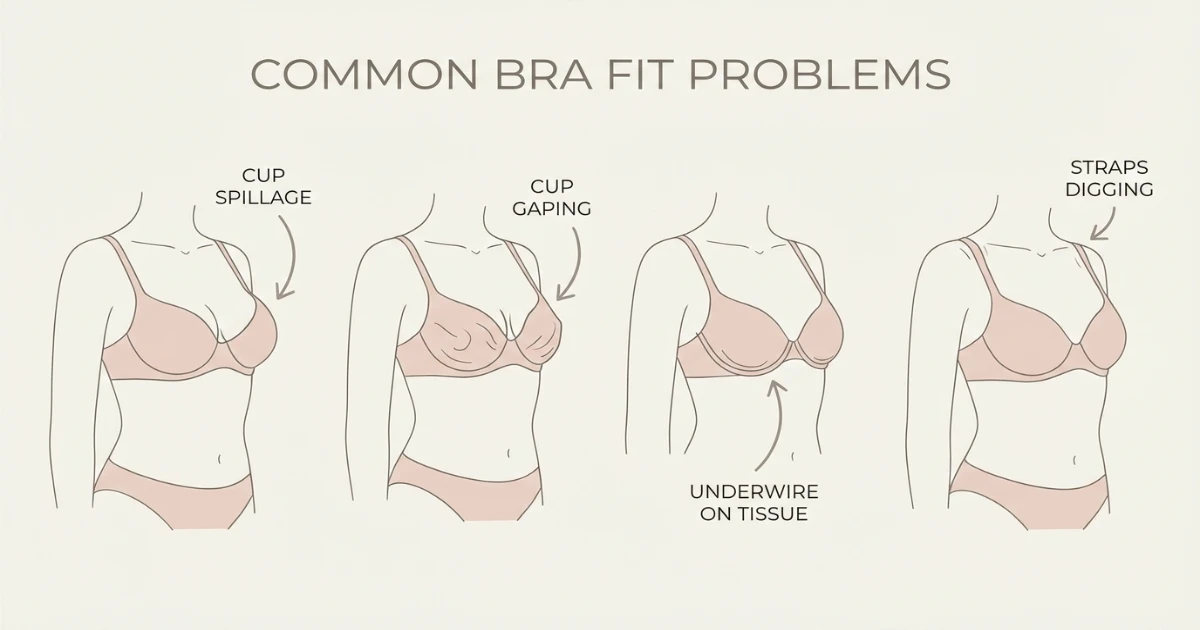
If breast tissue bulges over the cup edge — especially when you raise your arms or lean forward — the cup is too small. Tissue escaping toward the armpit also belongs in the cup. Both are clear signals to try a 36D. For a full breakdown of what each fit problem means, see our guide to common bra fit problems.
Underwire sitting on breast tissue
The underwire should anchor entirely on your ribcage and chest wall. If you feel it pressing into the bottom or sides of soft tissue, the cup is too small. A 36D’s deeper cup moves the underwire further down and out, housing your tissue correctly.
Straps digging in or needing constant tightening
When cups are too small, they can’t carry breast weight — so it migrates to the straps. If tightening straps is your instinctive fix for “not feeling supported,” your cups likely need to go up. A properly fitting 36D should let straps sit at a comfortable mid-tension without digging.
Cup wrinkling or gaping
If the cup fabric creases or you can see a gap between the cup and your breast at the top, the cup is too large. A 36C will sit more snugly and give a smoother line. Note: wrinkling in the lower cup often means the cup is too shallow — which may actually call for a 36D in a different style, not a size down.
Gore not tacking flat
The center bridge between the cups should lie flat against your sternum. If it floats away, the cups are usually too small and pushing the underwires outward — try 36D. If it digs uncomfortably into your chest, a different bra style (wider gore, softer underwire) may be more effective than changing sizes.
Who Should Choose 36C vs 36D
✓ Choose 36C if…
- Your bust measures approx. 38–39 in with a 36 band
- The 36D cup wrinkles or gaps at the top after scooping all tissue in
- You have a wide-rooted, shallow, or less projected breast shape
- The 36D underwire sits wide of your breast root
- You prefer demi, balconette, or lower-coverage styles
- Your 36C fits smoothly with no overflow after scoop and swoop
✓ Choose 36D if…
- Your bust measures approx. 39–40 in with a 36 band
- Your 36C cuts into or overflows the top of the cup
- The underwire in your 36C presses on soft tissue
- The gore in your 36C doesn’t lie flat against your chest
- Your straps dig in even at medium-loose tension
- You have projected, pendulous, or full-on-bottom breasts
- You want a full-coverage or plunge style with proper containment
Best Bras for 36C& 36D
Tested by real women. Ranked by comfort, fit, and everyday wearability.

Warner’s Easy Does It
Wireless Bra
The comfort pick our readers keep coming back to — no underwire, no digging, just smooth all-day softness with a clean silhouette under any top.
- Seamless look under fitted t-shirts
- Stays comfortable through long wear days
- Soft stretch fits both 32C & 36B well


Bali Full Coverage
Underwire Bra
When lift and structure matter more than softness — this is the pick. Dependable underwire support with a clean, polished shape that holds all day.
- Fuller coverage, no gaps or gaping
- Firm lift and defined silhouette
- Ideal for workwear and structured outfits
Quick At-Home Fit Test: 36C or 36D?
Put on the size you’re testing and work through these steps in order. Stop as soon as you get a clear answer.
- Scoop and swoop first — always. Lean forward, reach into each cup from the side, and pull all breast tissue forward and up. Most women leave tissue sitting at the sides and underarms. Assessing fit without this step gives a false picture. Our measuring guide explains the technique.
- Look at the cup top edge. Does your breast sit smoothly below the cup edge? Good. Does it overflow? → Try 36D. Does the cup fabric wrinkle with visible empty space? → Try 36C (or a shallower cup style in 36D).
- Check the underwire track. Run a finger along the underwire. Is it sitting entirely on bone and ribcage? If it’s pressing into any soft breast tissue → Try 36D.
- Press the gore. Does the center panel lie flat against your sternum? If it pokes away → Cups may be too small, try 36D. If it digs painfully → Try a wider gore style rather than changing cup size.
- Raise both arms overhead. Does tissue escape over the cup when your arms go up? → Try 36D. Does the cup hold neatly in place? → Your size is likely 36C.
- Check the straps. Sitting at mid-tension with no digging? Good. If you’ve tightened them fully and still feel unsupported → The cup isn’t carrying its share. Try 36D.
- Wear for 30 minutes. Walk around, sit, move normally. If you’re adjusting or pulling at the underwire — note whether the problem is overflow (36D) or excess fabric (36C). That’s your answer.
💡 Pro tip: Always scoop and swoop before making any size judgments. A significant proportion of apparent “cup too small” issues resolve simply by getting all tissue into the cup first. What looks like a size problem is often a placement problem.
Common Bra Fit Mistakes When Choosing Between These Sizes
🚫 Worth knowing: If you’ve worn a 36C for years without re-measuring, it’s worth taking fresh measurements. Weight changes, hormonal shifts, and age all affect cup size. Many women discover they’ve been in the wrong size for a long time — and the physical relief of a correct fit is genuinely significant.
Sister Sizes to Try Around 36C and 36D
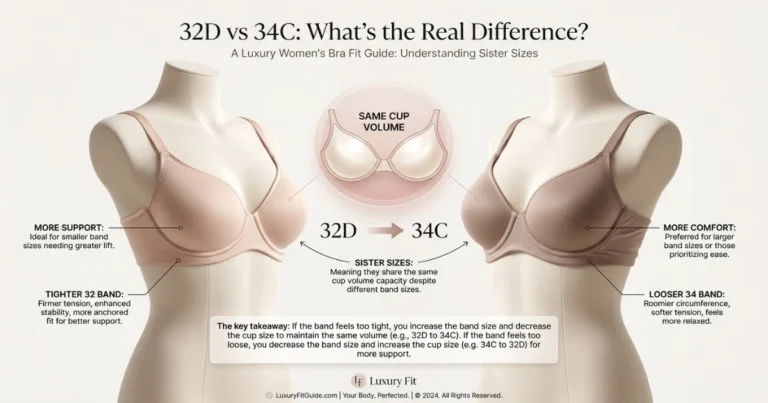
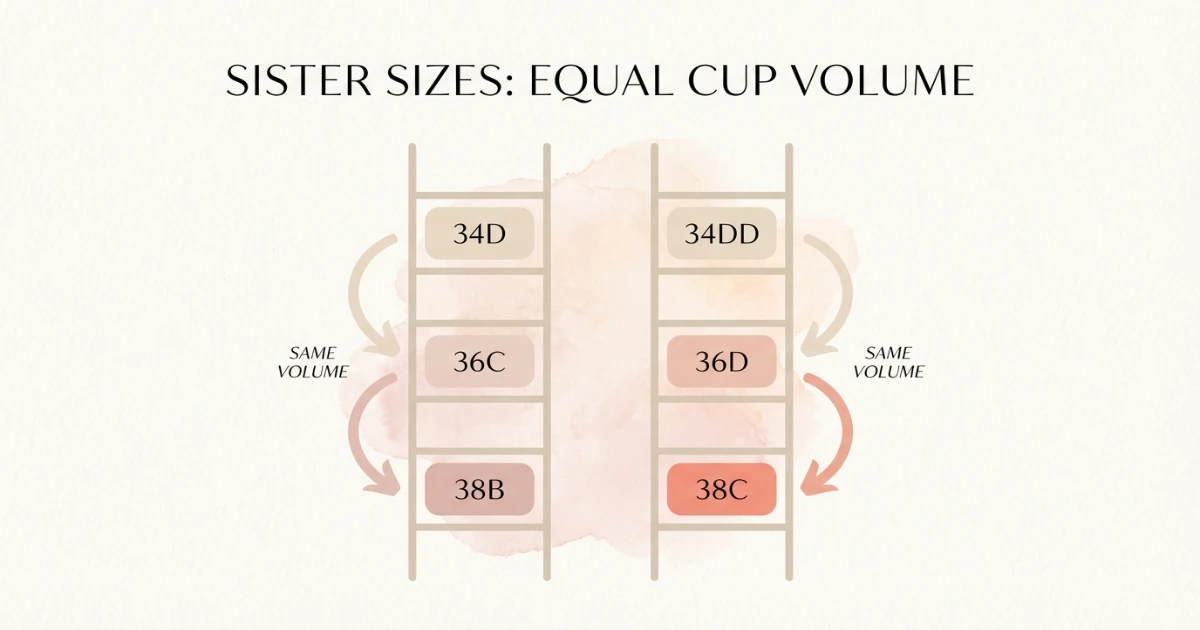
Sister sizes are bra sizes that share the same cup volume despite having different band numbers and letters. They’re useful when you need to adjust band fit without losing cup volume — or when your true size is sold out.
Sister sizes for 36C
Sister sizes for 36D
A useful detail: 36D and 38C are sisters — same cup volume, different bands. If you need 36D-level cup space but find the 36 band slightly firm, a 38C gives you the same volume in a relaxed band. And 34D and 36C are also sisters — if your underbust is smaller than 36, a 34D gives you the same 36C volume in a snugger fit. See every relationship in our full sister size chart.
36C vs 36D: Side-by-Side Comparison
| Feature | 36C | 36D |
|---|---|---|
| Cup coverage | Moderate; works for medium-volume breasts | Fuller; better for larger or more projected breasts |
| Support level | Good when cup volume matches breast size | Better when breast tissue exceeds 36C capacity |
| Spillage risk | Higher if bust approaches 40 inches | Lower; more room to contain tissue fully |
| Gaping risk | Lower for smaller or shallower breast shapes | Higher for wide-set or shallow breast shapes |
| Comfort | Comfortable when matched; straps may dig if cup is too small | Comfortable for fuller shapes; may feel loose if too large |
| Best breast shapes | Wide-rooted, shallow, evenly rounded, smaller projected | Projected, full-on-bottom, pendulous, fuller overall |
People Also Ask
Is 36D bigger than 36C?
Yes. A 36D has a larger cup than a 36C — approximately one inch more of bust-to-underbust difference, translating to roughly 150–200ml of additional cup volume. The band size is identical; only the cup changes.
How much bigger is a D cup than a C cup?
Within the same band size, each cup letter represents approximately one inch of additional bust depth. A D cup is one inch deeper than a C cup on the same band — meaningful in terms of both volume and how the cup sits against different breast shapes.
Should I size up to 36D if my 36C spills over?
Almost certainly, yes. Before buying, do the scoop and swoop to make sure all tissue is inside the cup — some apparent spillage is tissue that’s been left outside. If your breast still overflows after scooping, a 36D is the right next step.
Why does my 36C feel tight even though it seems to fit?
A tight feeling can come from the band or the cup. If the band feels fine but you have pressure across the top of the breast or at the underwire, the cup is likely the issue — try 36D. A cup that’s too small pushes the underwire outward and puts pressure in unexpected places, which mimics the feeling of a tight band.
What sister sizes work for 36D?
The main sister sizes for 36D are 34DD (34E), 38C, and 32F — all hold the same cup volume on different band sizes. A 38C is the most common alternative if the 36 band feels firm. Visit our sister size chart for the complete picture.
Can I wear a 36D for a strapless bra if I currently wear 36C?
If your 36C shows cup spillage, yes — a 36D strapless will give better coverage and stability since there are no straps to help. If your 36C fits well, stay with it. For detailed strapless recommendations visit our strapless bra sizing guide.
My 36D gaps at the top. Should I go back to 36C?
Not necessarily. Top gaping often means the cup style doesn’t match your breast shape rather than the size being wrong. A plunge or balconette cut on full-on-top breasts will frequently gap. Try 36D in a full-cup or t-shirt style before concluding you need the smaller size. Our bra fit guide covers this in detail.
The Right Cup Size Changes How Your Whole Day Feels
The gap between 36C and 36D is one letter — but on the body it’s the difference between a bra that supports you all day and one you’re adjusting by lunchtime. Measure accurately, scoop properly, and let your body tell you which size is right.
Our free size calculator takes your measurements and gives you a starting size plus all your sister sizes in under a minute.
Try the Free Bra Size CalculatorComparing more sizes? Our full bra size comparison guide maps hundreds of size pairs side by side — from cup-to-cup comparisons on the same band to full cross-band sister size analysis.