38E vs 38F: Cup Difference, Fit Signs & Which Size to Choose
Same band, different cup space. The right choice usually reveals itself at the cup edge, center gore and side wire—not in the band.

Choose the fit signs you notice in the band, cups, center and straps. We’ll turn them into a practical next step for 38E.
Private fit check — your answers stay in your browser and are used only for this on-page guidance. Nothing is stored or submitted.
38E vs 38F: the practical difference
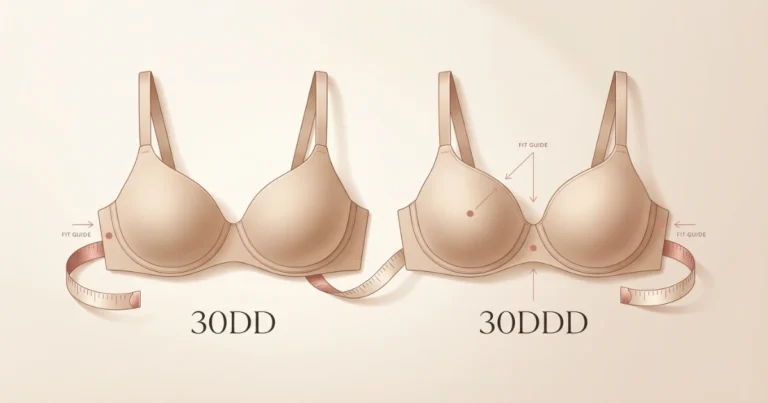
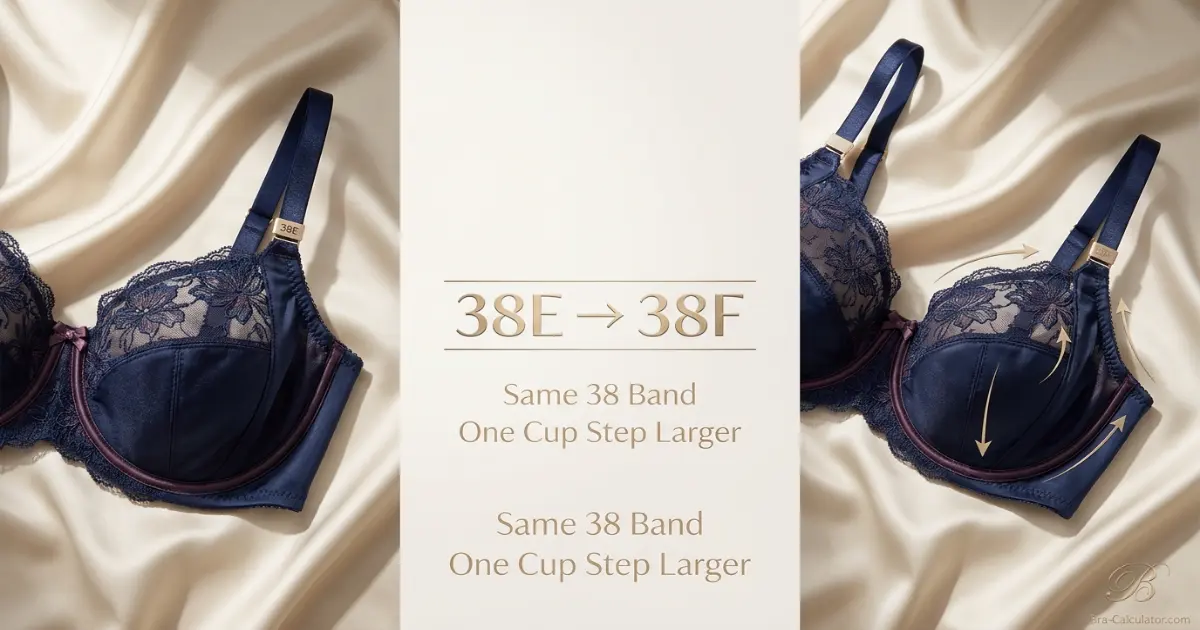
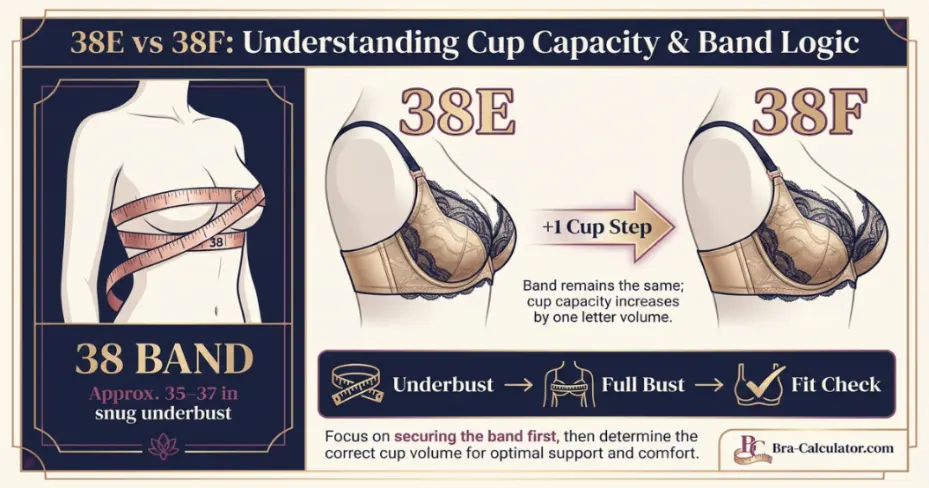
If the 38 band already feels secure, keep it fixed and solve the cup. Choose 38E when 38F leaves empty space, wrinkles or a cup that feels too tall. Choose 38F when 38E compresses tissue, creates top or side spill, or pulls the center gore away from the chest. In brands that label E and F consecutively, F is the roomier cup; always confirm the brand’s cup sequence before ordering.
Which Should You Choose: 38E or 38F?
38E is the better starting point when your current 38F looks generous at the neckline, the cup fabric never fully fills after scooping, or the wire feels wider than your breast root. A smaller cup can also feel more stable on softer or less projected tissue when the larger cup is simply too tall.
38F makes more sense when 38E feels crowded rather than merely firm. Look for tissue escaping at the center or sides, a gore that hovers, or a wire that is pushed downward because the cup lacks depth. More cup room should improve containment without changing the 38-band anchor.
Best comparison method: For this same-band comparison, keep the bra model fixed and change only the cup. That makes neckline tension, gore contact and side-wire position much easier to interpret than comparing two unrelated bras.
Why 38E and 38F Can Feel Dramatically Different
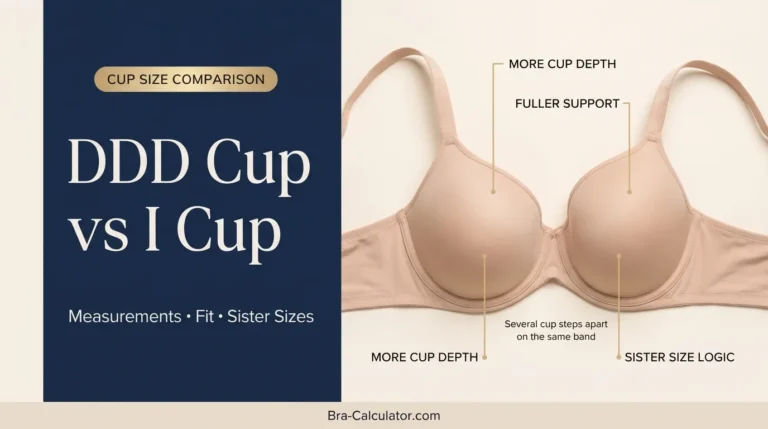
One cup letter can look like a tiny change on a label, yet the construction change is three-dimensional. A larger cup can be deeper, taller, wider, or some combination of the three. That is why one person notices immediate relief at the gore while another simply gets extra fabric at the top.
This comparison is easiest when both bras are the same model. Switching brands at the same time introduces new wire widths, strap positions and cup shapes, so you no longer know whether the improvement came from size or design. Treat the bra model as the control and the cup as the variable.
Also remember that E/F notation is not universal. Some US brands prefer DD and DDD/F terminology, while UK and EU sequences can use E and F differently. The printed letter matters less than where that letter sits on the brand’s own chart.
How Measurements Change the 38E vs 38F Decision
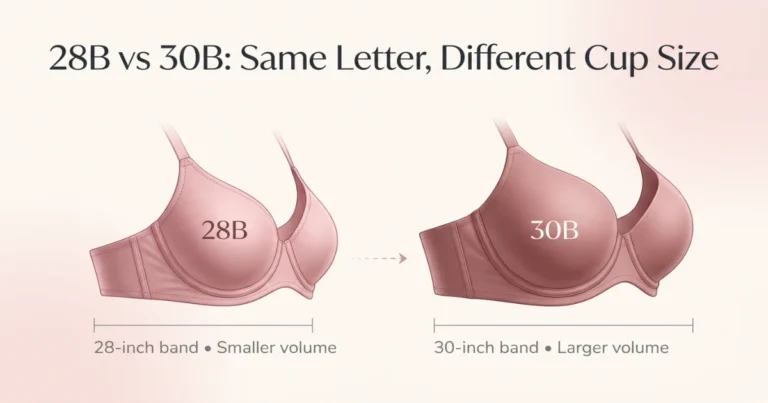
Because both options use a 38 band, the ribcage anchor should remain broadly the same in the same style. If the band rides up in both sizes, neither cup change will solve that foundation problem. If the band is level and comfortable, the useful evidence comes from cup containment, wire position and gore stability.
Do not use a standing bust number as a verdict by itself. Projection, root width and tissue softness change how much usable cup depth you need. A person with forward projection may need the roomier cup even when the neckline looks modest; a shallow shape may prefer the smaller cup or a different cut entirely.
Read the Bra, Not Just the Size Tag
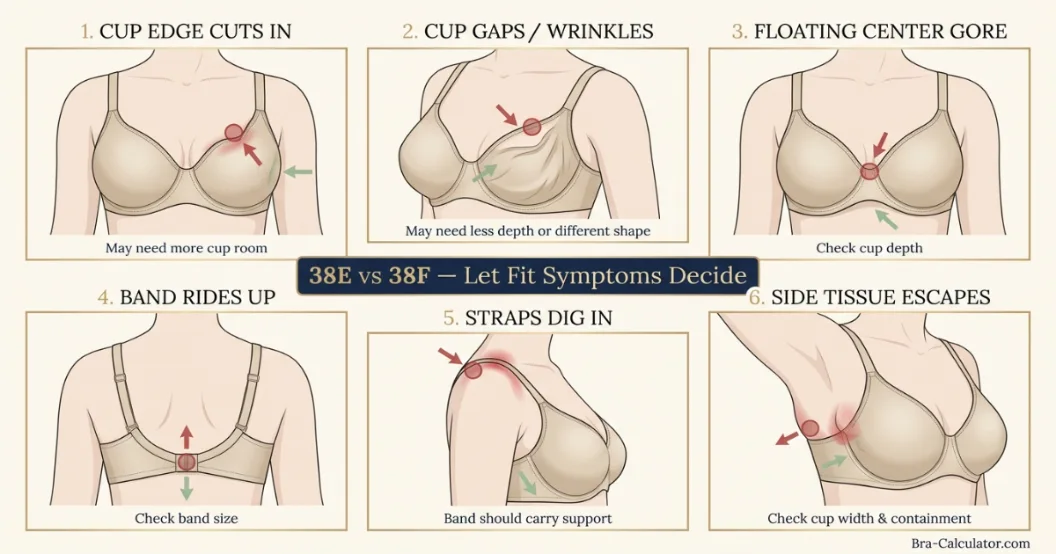
| Fit area | What you want | What the comparison may reveal |
|---|---|---|
| Top edge | Smooth after scooping; no loose lace or empty molded space | Cuts in, creates a ridge, or tissue escapes when you move |
| Center gore | Sits as close as your anatomy comfortably allows | 38E is more likely to be pushed outward when cup depth is insufficient |
| Side wire | Follows the breast root without sitting far behind it | Too narrow can trap tissue; too wide can feel unstable or rub |
| Cup depth | Breast settles into the base of the cup | 38E may feel compressed; 38F may feel empty if you do not need the extra depth |
| Band | Level and firm on the loosest hook | A riding band is a band issue, not a reason to keep changing cups |
With 38E and 38F, do not let one symptom make the decision. A smooth neckline matters, but so do the wire at the breast root, the center front and whether the cup stays settled after you move.
How to Compare 38E and 38F Without Guessing
Start with the band
Fasten each bra on the loosest hook. Make sure the 38 band stays horizontal before judging either cup.
Scoop fully
Bring side tissue forward into the cup so apparent gaping or spillage is not caused by incomplete settling.
Check three contact points
Look at the neckline, center gore and side wire. These usually expose an E-versus-F mismatch faster than strap tension does.
Move for two minutes
Reach, sit and bend. The winning cup should stay smooth without cutting in or opening up.
Ignore the prettier label
Keep the size that behaves better on your body, even if it is not the letter you expected.
Three Bra Constructions That Make the Difference Easier to See
For an E-versus-F decision, the most useful test bras are the ones that reveal cup depth rather than hide it. Seamed cups, side support and encapsulation each expose a different kind of mismatch.

Seamed Full-Cup Test Bra
Seamed cups make depth and overflow easier to read than a stiff molded shell. Use it when you are unsure whether 38E is compressing you or 38F is simply too roomy.
- Visible seam structure makes fit clues easier to spot
- Fuller coverage helps reveal side containment
- Useful as a controlled E-vs-F fitting test

Side-Support Everyday Bra
A side-support frame can show whether the issue is really cup volume or tissue drifting outward. It is especially helpful if both sizes seem fine at the neckline but differ at the side wire.
- Side panel guides tissue forward
- Stable band reduces false “cup too small” signals
- Good everyday shape for a 38 band

High-Support Encapsulation Bra
The third option is useful when your everyday bra seems fine while standing but shifts during walking or exercise. Compare how each cup contains movement without relying on extreme strap tension.
- Separate cup structure improves containment
- Movement exposes hidden overflow or empty space
- Useful second check after an everyday bra
Breast Shape Can Change Which Size Looks Right
If you are projected, the larger cup may solve pressure at the base even when the top edge does not look obviously small. If you are shallow or fuller on the bottom, a tall 38F can gape while a well-shaped 38E sits cleanly. That is a shape clue, not a judgment about breast size.
Close-set tissue can make the gore the deciding factor: a lower or narrower gore may work better than simply moving up or down a cup. Wide-set tissue often makes side support and wire width more informative. When one size spills and the other gaps, change cup shape before chasing another letter.
Use Sister Sizing Only After You Know the Correct Cup Position
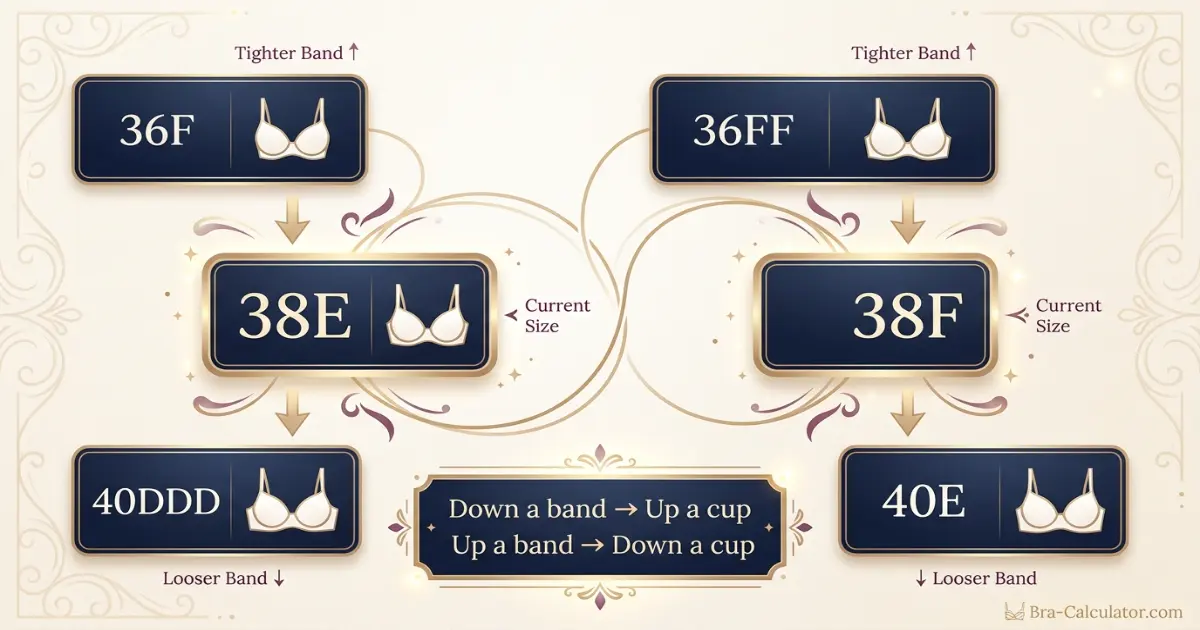
Sister sizing is not the first move here because the 38 band is intentionally constant. First decide whether E or F gives the better cup behavior. Only after that should you change band size if the 38 itself is too tight or too loose.
For example, the direct sister label depends on the sizing system used by the brand. Do not assume a universal letter conversion. Use the brand chart or the sister-size calculator to preserve cup capacity while changing the band.
Open the Sister Size Calculator → · Check International Conversions →
If You’re Ordering 38E or 38F Online
When ordering online, compare 38E and 38F in the exact same color and model if possible. Even color can slightly change fabric feel in some bras, and a molded T-shirt cup is a poor control if your main question is immediate depth. A seamed everyday bra gives you more readable evidence.
If returns are easy, order both and keep the tags on while you do the home test over a clean layer or as the retailer permits. Photograph the side wire and gore in each size for your own comparison; those views often make the difference clearer than a front-facing mirror check.
What Usually Goes Wrong in a 38E vs 38F Comparison
- Loosening the straps to hide an overflowing 38E instead of testing more cup room.
- Tightening the straps to force a roomy 38F to sit flat.
- Comparing 38E in one brand with 38F in another and calling the result a pure size test.
- Assuming E and F have the same meaning in every US, UK and EU chart.
- Judging fit before scooping side tissue into the cups.
Tools That Help You Confirm the Fit
38E vs 38F FAQs
Is 38F bigger than 38E?
On the same 38 band, F is typically the roomier cup when a brand uses E and F as consecutive labels. The exact step depends on that brand’s sizing sequence.
Will the 38 band feel the same in both sizes?
It should be similar in the same bra model, but a too-small cup can make a band feel tighter because breast tissue pushes the whole bra away from the body.
Why does 38E spill while 38F gaps?
That often points to a shape mismatch: 38E may be too shallow while 38F may be too tall or too open. Try a different cup cut before assuming you need a third size.
Which size is better for a floating gore?
If the band is stable and the gore floats because the cup is crowded, 38F is the logical next test. A very close-set shape may still need a lower-gore style.
Can I decide by bust measurement alone?
No. Measurements narrow the range, but cup depth, root width, tissue firmness and bra construction determine which size actually fits.
Should I sister-size from 38E or 38F?
Only after you identify the better cup volume. Then change the band and cup together using the specific brand’s sizing system.
The Bottom Line on 38E vs 38F
For 38E vs 38F, keep the 38 band as your control and let the cup tell the story. The better size is the one that contains tissue, keeps the wire in the breast fold and stays smooth while you move—not the one with the more familiar letter.
Still Between 38E and 38F?
If you are still split between 38E and 38F, remeasure once, then wear both in the same model. The size that stays quiet on your body—no cutting, collapsing, sliding or constant adjusting—is the better starting point.