32D vs 32DDD: How Much Bigger Is the Cup Jump?
Same band. Dramatically different cup. Here’s everything you need to know about the real difference in volume, depth, projection, and fit between 32D and 32DDD.
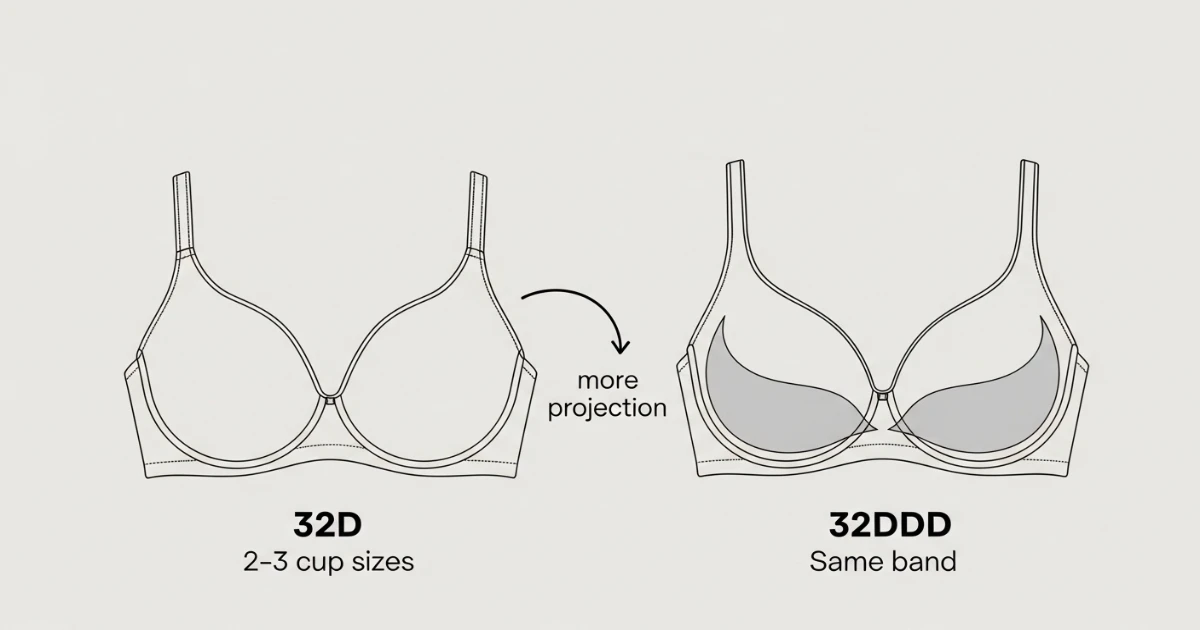
32DDD is noticeably larger than 32D because the band stays the same while the cup increases by multiple steps. This means 32DDD offers more cup depth, more volume, and more projection, making it better for fuller breast tissue on the same 32-inch ribcage. The cup capacity difference is significant — roughly three full cup increments separate these two sizes.
Key Takeaways
- 32D and 32DDD share the exact same band measurement — the 32 refers to a 27–28 inch underbust.
- 32DDD is three cup steps larger than 32D, with meaningfully more cup depth, volume, and forward projection.
- The letter alone does not describe physical breast size — band size and cup letter must always be read together.
- Common signs you’ve outgrown 32D include cup spillage, side boob, underwire sitting on breast tissue, and centre-gore lift-off.
- Bra style choices differ significantly between 32D and 32DDD — fuller cups require specific constructions for proper support.
- Always remeasure before changing cup sizes; a few millimetres in your bust measurement can shift you by a full cup.
What Does 32D Mean?
A 32D bra consists of two measurements working together. The 32 is the band size, representing an underbust circumference that typically falls in the 27–29 inch range (depending on the brand’s sizing convention). The D is the cup size, indicating that the full bust measurement sits roughly 4 inches larger than the band measurement.
In practical terms, 32D describes someone with a relatively narrow ribcage whose breasts project enough to create a 4-inch difference between their underbust and full bust measurements. On a 32 band, this is considered a moderate-to-full cup — not a small size by any standard.
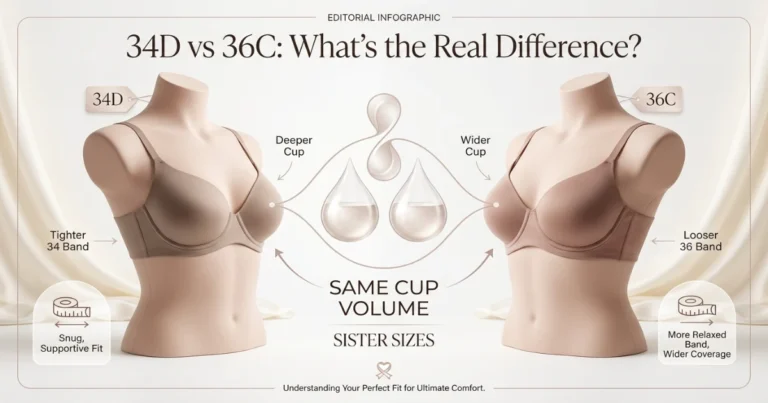
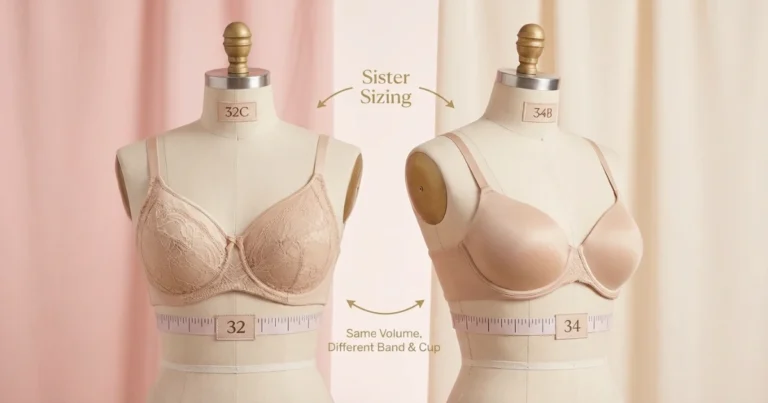
Despite the widespread misconception that “D is big,” cup letters are only meaningful when paired with a band size. A 32D holds considerably less volume than a 38D, even though both carry the same letter. This is the essence of the sister sizing system and why cup comparisons must always anchor to a specific band.
What Does 32DDD Mean?
A 32DDD bra carries the same 32 band — the same 27–29 inch underbust — but the cup size increases to DDD, which represents a full bust measurement approximately 7 inches greater than the band. This is a substantial difference. In US sizing, DDD is often written as F in European and UK sizing systems, though the exact equivalency varies by brand.
32DDD is classified as a fuller cup size. The bra cups are noticeably deeper, project further from the body, and are engineered to contain a larger volume of breast tissue without compression or spillage. Wearers of 32DDD typically have a narrow-to-average ribcage combined with a fuller, more projected breast shape.
If you’re unsure where you currently fall, the AI Smart Fit Bra Calculator can help you identify your correct size based on your actual measurements.
Cup Progression Explained: D → DD → DDD
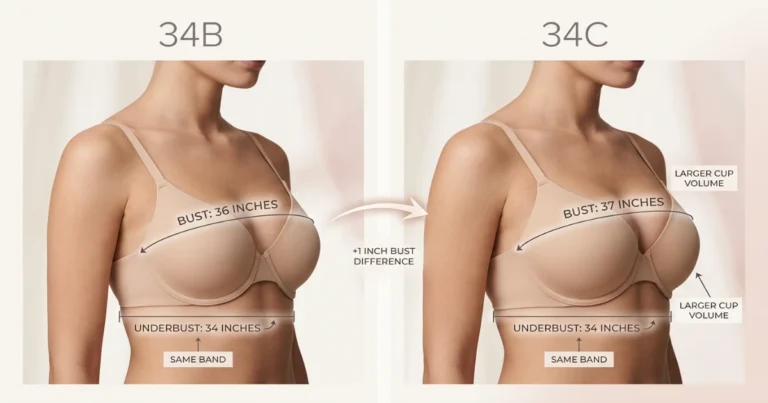
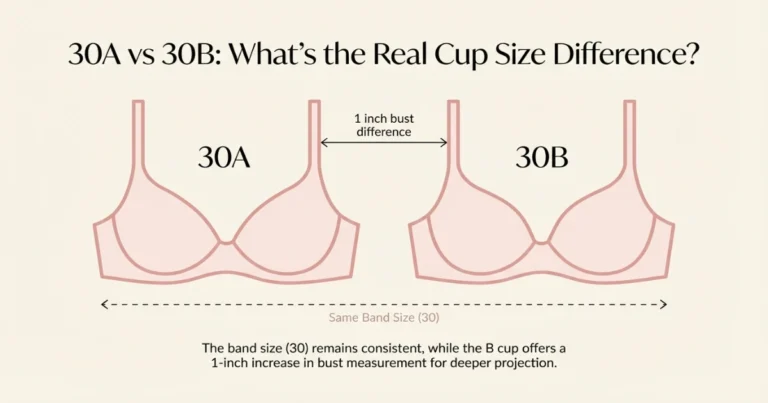
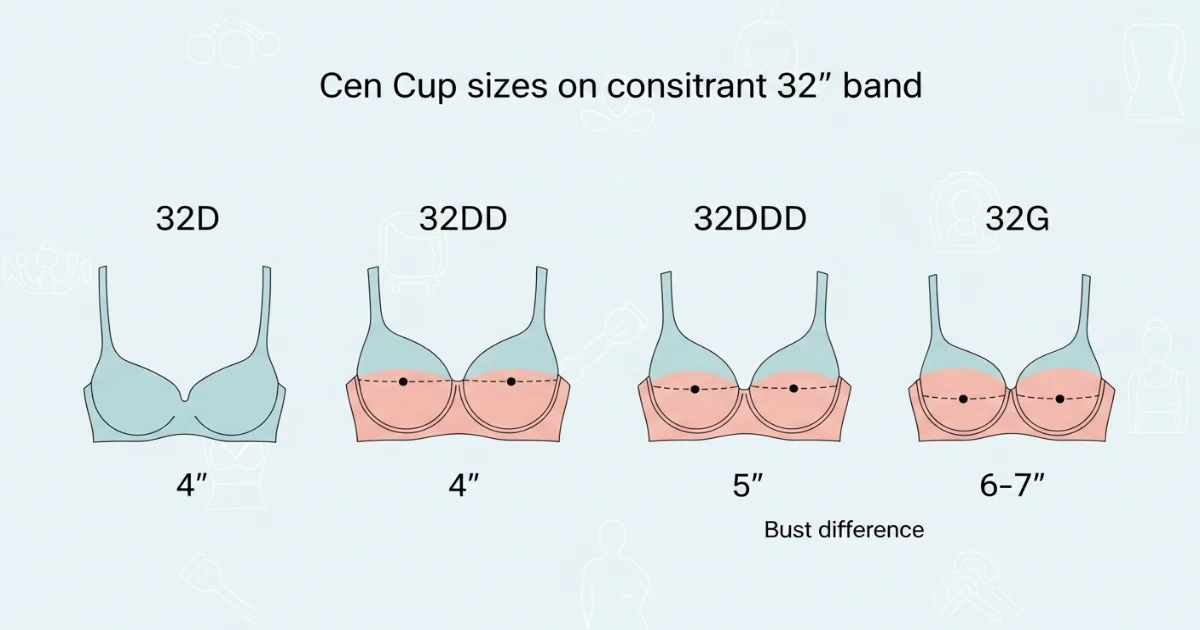
Understanding the 32D vs 32DDD difference requires understanding how cup progression works on a fixed band. Each cup letter represents approximately one additional inch of difference between the underbust and the full bust measurement. This is sometimes called the bust-to-band difference.
| Cup Size | Bust–Band Difference | UK/EU Equivalent | Volume vs 32D |
|---|---|---|---|
| 32D | ~4 inches | 32D | Baseline |
| 32DD | ~5 inches | 32E | ~1 cup larger |
| 32DDD (32F) | ~6–7 inches | 32F / 32FF | ~2–3 cups larger |
| 32G | ~8 inches | 32G | ~4 cups larger |
As you can see, the jump from 32D to 32DDD is not a single increment — it spans two to three full cup sizes depending on whether you recognise the DD as its own distinct step. You can explore this in detail in our guide to D cup vs DD cup differences, which breaks down how each increment changes fit, shape, and support.
Why the Cup Letter Alone Is Misleading
Many people read “DDD” and assume it is an extreme outlier. In reality, on a 32 band a DDD cup holds less total volume than a 36C or 38B. Cup size is always relative to the band. This is why using a bra size chart that shows absolute volume differences — not just letters — leads to far better fit outcomes.
The same logic applies in reverse: a person in 32D may feel their cups are “big” when compared to a 28D wearer, even though their cup letter is identical. Band size always anchors the cup’s real-world dimensions.
How Much Bigger Is 32DDD Than 32D?
On the same band, 32DDD is two to three full cup increments larger than 32D. Translated into practical geometry:
- Cup depth: 32DDD cups are measurably deeper from the fabric edge to the innermost point of the cup, meaning the breast sits further inside the cup rather than pushing outward.
- Cup volume: The total internal capacity of a 32DDD cup is significantly greater — roughly 2–3 times the additional volume beyond what a 32D cup holds, depending on the bra’s construction.
- Projection: 32DDD cups project further from the chest wall. This matters for wearers whose breast tissue sits forward on the chest rather than spreading to the sides.
- Underwire diameter: The underwire of a 32DDD is wider and taller than that of a 32D to accommodate a larger breast root while still fitting the same 32-inch ribcage.
| Feature | 32D | 32DDD |
|---|---|---|
| Band size | 32 (same) | 32 (same) |
| Cup letter | D | DDD / F |
| Bust–band difference | ~4 inches | ~6–7 inches |
| Cup depth | Moderate | Full / deeper |
| Forward projection | Moderate | High |
| Underwire width | Standard for 32 band | Wider for 32 band |
| Cup construction | Often 2–3 panels | Often 3–4 panels with seams |
| Supportive structure | Moderate | Enhanced (sling, side support) |
| UK/EU cup equivalent | 32D | 32F (UK) / 32FF (some EU) |
Visual Fit Differences on the Body
The physical appearance of 32D and 32DDD on the body can differ more dramatically than the letters suggest. From the front, a 32DDD wearer will typically show more forward projection — the breasts extend further out from the chest plane. From the side profile, the cup will be noticeably taller and deeper. The overall silhouette difference between these two sizes is usually visible even through clothing.
You can explore a detailed visual breakdown of how different cup sizes appear on the same band by visiting our cup size visuals gallery.
Projection vs Spread
Not all breast tissue projects the same way. Some wearers have projected breasts (tissue sits forward on the chest), while others have spread tissue (tissue fans wider to the sides). A 32DDD bra is typically designed to handle both, but fuller projected shapes tend to benefit most from the deeper cup construction. Wearers with wide-set tissue at this volume may find that specialty designs with side slings or additional panel structure offer a better result.
Common Signs That 32D Is Too Small
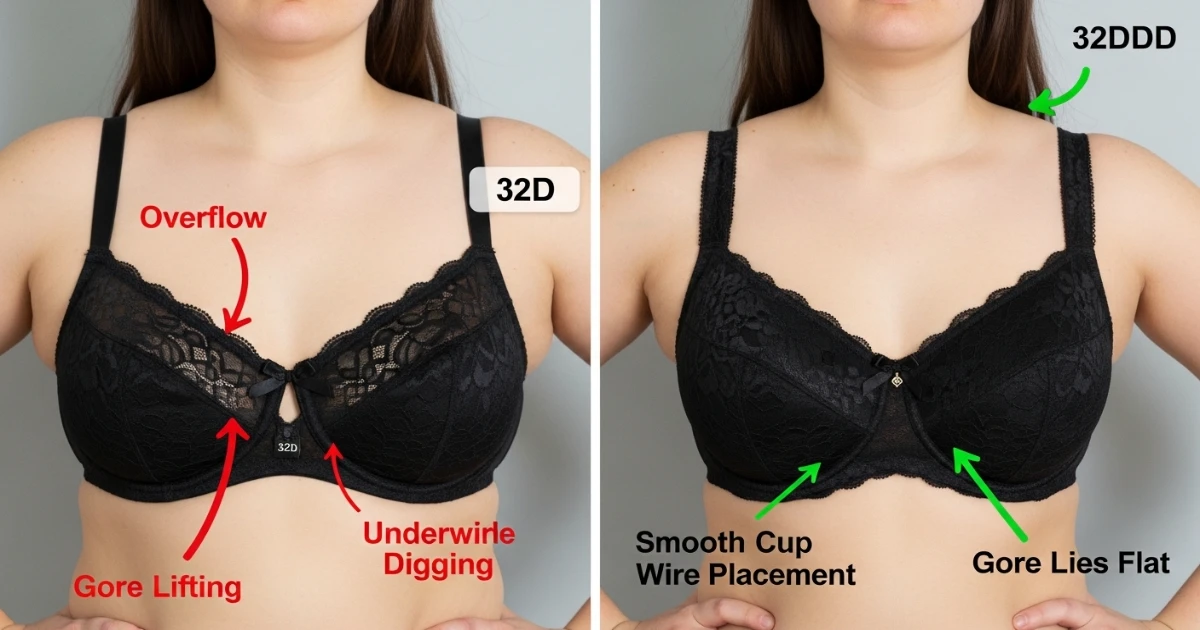
Before moving to 32DDD, it’s useful to understand whether your current 32D is actually fitting correctly. Many people wear a cup that’s too small without realising it. These signs suggest your 32D cup has run out of room:
- Cup fabric is stretched, taut, or bulging at the seam lines
- Breast tissue spills over the top edge of the cup
- Side breast tissue escapes under the arm or past the underwire
- The underwire digs into breast tissue rather than sitting flat on the ribcage
- The centre gore (the panel between the cups) lifts away from your sternum
- You feel the need to constantly readjust — scooping tissue back into the cup
- The upper cup has persistent “wrinkles” in some bras but overflow in others (inconsistent fit across brands)
- Shoulder strap grooves that worsen through the day despite correct strap tension
If three or more of these apply regularly, a cup size increase is likely needed. Our bra fit problem guide provides a full diagnostic breakdown of these symptoms.
Who Should Wear 32D vs 32DDD?
32D is a good fit if you have:
- A 27–29 inch underbust measurement
- A full bust ~4 inches larger than underbust
- Moderate breast volume without overflow or spillage
- No centre-gore lift-off in a well-fitted bra
- Underwire that sits flat on the ribcage, not on tissue
32DDD is a better choice if you have:
- A 27–29 inch underbust measurement
- A full bust ~6–7 inches larger than underbust
- Fuller volume with consistent overflow in a 32D or 32DD
- High forward projection or wide breast roots
- Difficulty containing tissue in standard-depth cups
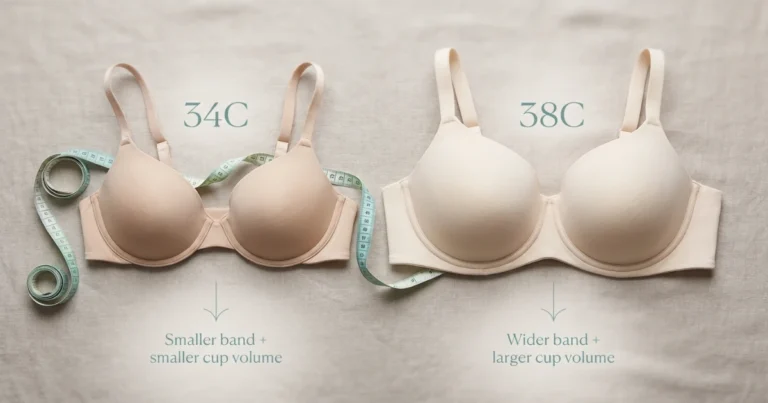
If you’re between sizes, or have been wearing a larger band size for comfort rather than fit, consider using the bra size chart calculator to cross-reference your measurements with sister sizes across band widths. You might find that a 32D is equivalent to a 34C in sister sizing, while a 32DDD corresponds to a 34F or 36E on a looser band.
Best Bra Styles for Each Size
Best Bra Styles for 32D
32D wearers have considerable flexibility in bra styles. The cup is full enough to benefit from structure, but light enough to work in many construction types:
- T-shirt bras with smooth moulded cups are excellent for everyday wear and clean lines under clothing.
- Balconette styles provide good uplift and work well for moderate projection.
- Wireless bras with adequate cup structure can work well during lower-impact activities.
- Plunge bras with a low centre gore suit projected shapes at this size.
Best Bra Styles for 32DDD
32DDD requires more structural support to contain and lift the additional volume properly. Underwired styles with multi-panel cups tend to perform best:
- Full-cup bras with vertical or diagonal seaming offer maximum coverage and control.
- Side-support bras direct lateral tissue forward, improving projection and shape under clothes.
- Minimiser bras can reduce apparent projection if a flatter silhouette is desired, though they work best when not compressing the tissue entirely.
- Supportive sports bras with encapsulation rather than compression are strongly recommended for exercise.
- Soft cup bras from specialist fuller-bust brands (Freya, Panache, Elomi, Bravissimo) are constructed with deeper cups suitable for this volume.
For a broader range of size comparisons on the 32 band, also see our guides on 32DD vs 34D and 32D vs 34C for context on how cup volume shifts across band sizes.
Best Bras for 32D& 32DDD
Tested by real women. Ranked by comfort, fit, and everyday wearability.

Warner’s Easy Does It
Wireless Bra
The comfort pick our readers keep coming back to — no underwire, no digging, just smooth all-day softness with a clean silhouette under any top.
- Seamless look under fitted t-shirts
- Stays comfortable through long wear days
- Soft stretch fits both 32C & 36B well

Bali Full Coverage
Underwire Bra
When lift and structure matter more than softness — this is the pick. Dependable underwire support with a clean, polished shape that holds all day.
- Fuller coverage, no gaps or gaping
- Firm lift and defined silhouette
- Ideal for workwear and structured outfits
How to Measure Your Bra Size Correctly
Before deciding between 32D and 32DDD — or any size change — measuring accurately is essential. Many people estimate, guess, or rely on old measurements. A small measurement error can place you in entirely the wrong cup. Our detailed how to measure guide covers this fully, but here are the core steps:
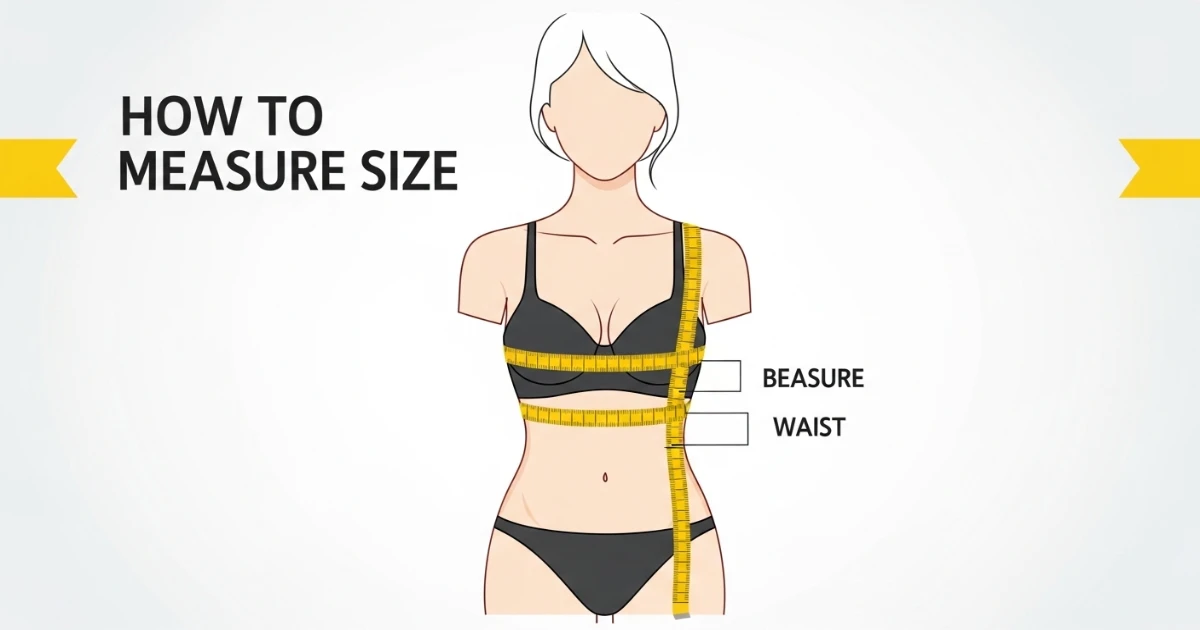
- Measure your underbust Wrap a soft measuring tape snugly around your ribcage, just below the breasts. Exhale normally, keep the tape parallel to the ground, and record in inches. For a 32 band, this number typically falls between 27 and 29 inches (brands add 3–5 inches of ease differently, so check the brand’s convention).
- Measure your full bust Lean forward at a 90-degree angle and measure around the fullest part of your bust, keeping the tape parallel to the floor. This “bent-over” method captures the full volume of breast tissue, including tissue that falls forward when unsupported.
- Calculate the bust-to-band difference Subtract your underbust measurement from your full bust measurement. If the difference is ~4 inches, your starting point is a D cup. If it’s ~6–7 inches, you are likely looking at a DDD/F cup. See the progression table above for the full range.
- Determine your likely cup size Match your difference to the cup progression chart. Remember that this gives you a starting point, not a definitive answer — cup shape, breast root width, and projection all affect which specific bra fits best within your size range.
- Confirm fit with a physical bra Try the bra on the loosest hook, ensure the underwire sits flat on the ribcage (not on tissue), check that the centre gore lays flat against your sternum, and confirm no breast tissue escapes the cup from any angle. Use the how to know your bra fits checklist for a full assessment.
You can also use the global bra size converter to translate your US size (32DDD) into UK, EU, FR, IT, AU, or Japanese sizing — especially useful when shopping from international brands.
Common Bra Fit Problems and How to Fix Them
Whether you’re in 32D or 32DDD, certain fit issues appear across the spectrum. Here are the most frequent problems and their most likely solutions:
Problem: Cups wrinkle and gape
Likely cause: Cup is too large. Fix: Try one cup size smaller (32C from 32D; 32DD from 32DDD) or a sister size with a smaller cup (34C instead of 32D).
Problem: Breast tissue escapes over or to the side
Likely cause: Cup is too small. Fix: Size up the cup (from 32D to 32DD or 32DDD). Also try “scoop and swoop” — lean forward, reach into the cup, and manually guide all breast tissue into the cup before checking fit again.
Problem: Band rides up the back
Likely cause: Band is too large. Fix: Try a 30 band with a larger cup (sister sizing down, e.g. 30DDD instead of 32DD). The band should remain parallel to the floor at the back.
Problem: Centre gore doesn’t lie flat
Likely cause: Cup is too small, or underwire style doesn’t suit your breast spacing. Fix: Increase the cup size first. If the gore still floats, try a plunge bra with a lower-set centre.
Problem: Shoulder strap grooves deepen by afternoon
Likely cause: Cups are too small, causing straps to carry weight the band should be handling. Fix: Ensure 80% of support comes from the band, not straps. Size up the cup so breast tissue is fully contained and the band carries the load.
For a complete interactive diagnosis, use the bra fit problem solver on bra-calculator.com, or browse the full bra fit problems guide.
Conclusion: Choosing Between 32D and 32DDD
The 32D vs 32DDD cup jump is one of the most significant size changes you can make on the same band. Three cup increments separate these two sizes, translating to measurably more depth, more volume, more forward projection, and a noticeably different silhouette — despite the ribcage measurement remaining identical.
If your current 32D is fitting correctly — no overflow, no underwire on breast tissue, gore flat against the sternum — there is no reason to change. But if you are experiencing any of the overflow or containment signs described in this guide, a properly fitted 32DDD (or an intermediate 32DD step) may transform both your comfort and your body’s support.
The key is always measurement first. Use a reliable bra sizing resource to anchor your decisions in actual numbers, not guesswork or label familiarity. Whether you land at 32D, 32DDD, or somewhere in between, the best bra size is the one that fits — not the one you’ve always worn or the one that sounds right.
Explore more size comparisons including 34C vs 34D and 36C vs 36D in our breast size comparison hub.
Not Sure Which Size Is Right for You?
Use our free tools to calculate your exact bra size from your measurements — no guessing required.
Frequently Asked Questions
How much bigger is 32DDD than 32D?
32DDD is approximately two to three full cup sizes larger than 32D on the same band. The bust-to-band difference increases from roughly 4 inches (32D) to roughly 6–7 inches (32DDD), meaning the cup is noticeably deeper, holds more volume, and projects further from the chest wall. The band — and therefore the ribcage measurement — is identical in both sizes.
Are 32D and 32DDD the same band size?
Yes. Both 32D and 32DDD use the same 32-inch band, which corresponds to an underbust measurement of approximately 27–29 inches. The number 32 refers entirely to the ribcage and does not change when the cup size increases. Only the cup depth, volume, and projection differ between these two sizes.
What are the signs that 32D is too small?
The clearest signs that 32D is too small include breast tissue overflowing the top or sides of the cup, the underwire sitting on breast tissue rather than on the ribcage, the centre gore lifting away from the sternum, and the need to constantly readjust tissue back into the cup. Persistent strap grooves and tight or stretched cup fabric are additional indicators. Our bra fit checklist covers all these signs in detail.
Can I skip from 32D to 32DDD?
Yes, you can move directly from 32D to 32DDD if your measurements and fit symptoms support it. However, it is worth trying a 32DD as an intermediate step first, particularly if you are close to the D/DD boundary. Cup progressions are gradual; the right cup for your breast tissue depends on actual volume and shape, not just the number of steps you skip. If your bust-to-band difference measures approximately 6–7 inches, 32DDD is the logical direct target.
What bra styles work best for fuller cups like 32DDD?
Fuller cup sizes like 32DDD perform best in structured underwired styles with multi-panel seamed cups that create three-dimensional space for breast tissue. Full-cup bras, side-support styles, and balconette designs from specialist brands (Freya, Panache, Curvy Kate, Elomi, Fantasie) are typically better engineered for this volume than mass-market styles. For sports activities, encapsulation sports bras with individual cup sections outperform compression-only designs at this size.