30DD vs 30DDD: What’s the Real Cup Size Difference?
If you are stuck between 30DD and 30DDD, the good news is that the difference is simple once you see how bra sizing actually works. These two sizes share the same band, but the 30DDD cup gives you one full cup step more room. That sounds small on paper, yet in real life it can completely change comfort, support, and how a bra sits on your body.
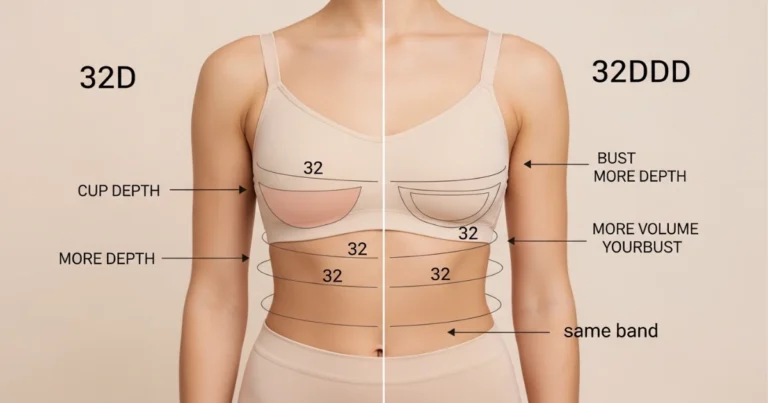
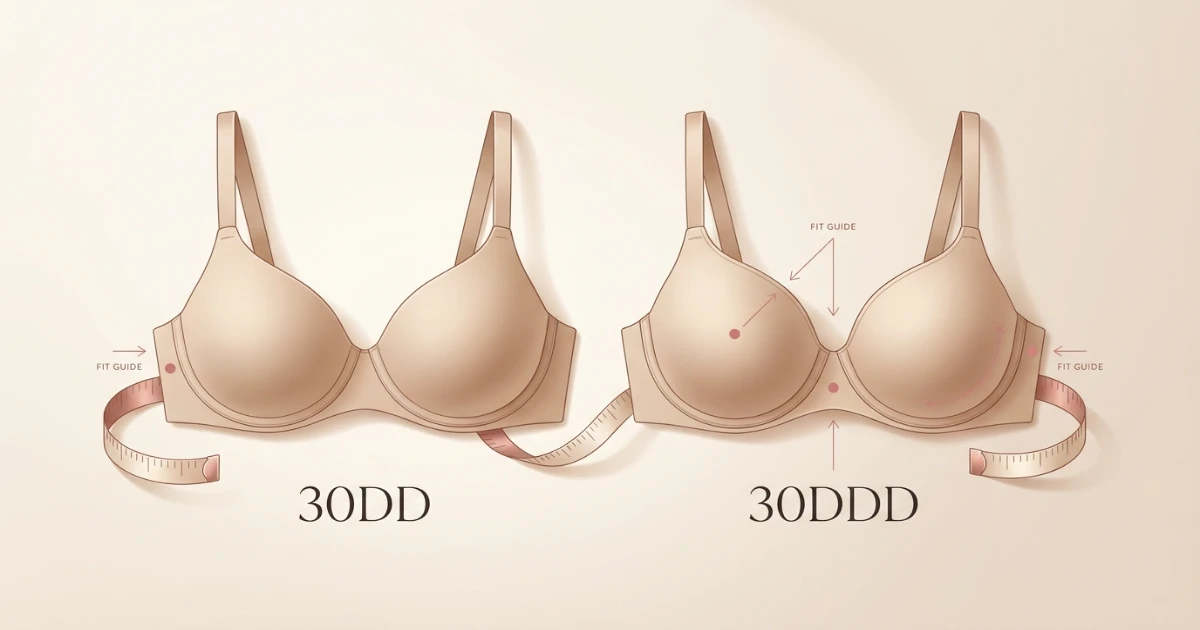
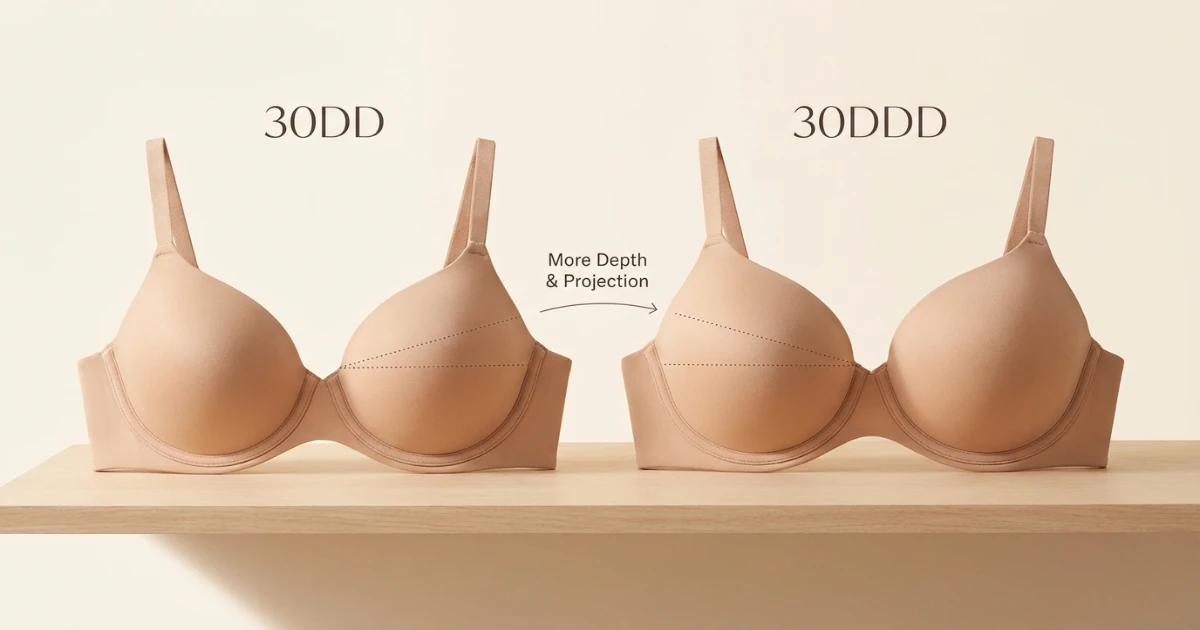
30DDD is one cup size larger than 30DD. Both have the same 30 band, but a 30DDD holds more breast volume and usually gives more depth, more projection, and a little more containment at the top and sides of the cup. If your 30DD causes spilling, side pressure, or a center gore that will not lie flat, moving up to 30DDD is often the right fix.
Key Takeaways
- 30DD and 30DDD use the same band size. The only real change is cup volume.
- 30DDD is one cup step bigger than 30DD, so it holds more tissue and usually feels deeper.
- 30DDD in US sizing is often written as 30E by some brands, while international labeling can vary.
- If your bra fits in the band but feels tight in the cups, you usually need the bigger cup, not a bigger band.
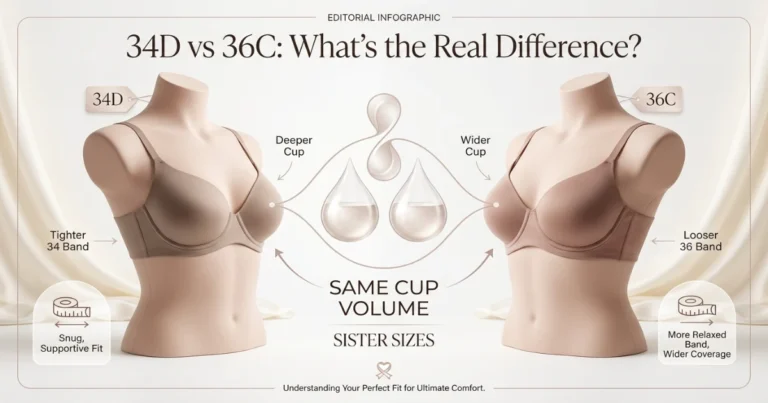
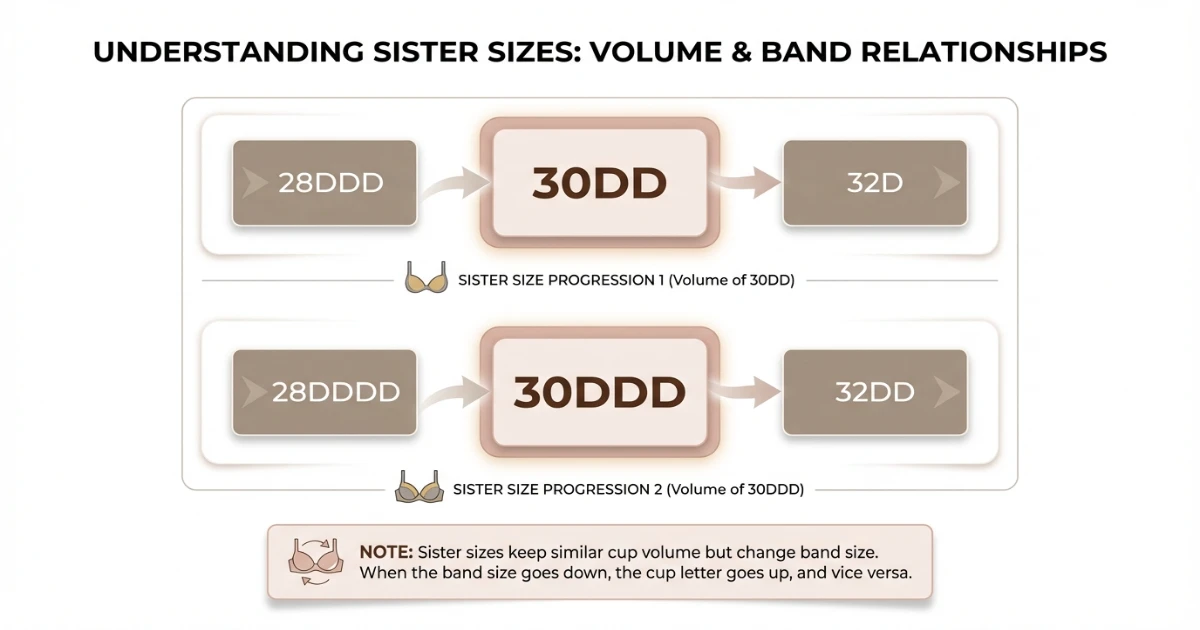
- Sister sizes matter: 30DD = 32D in cup volume, and 30DDD = 32DD in cup volume.
- The easiest way to confirm your fit is with a proper measurement and a bra size calculator.
30DD vs 30DDD at a Glance
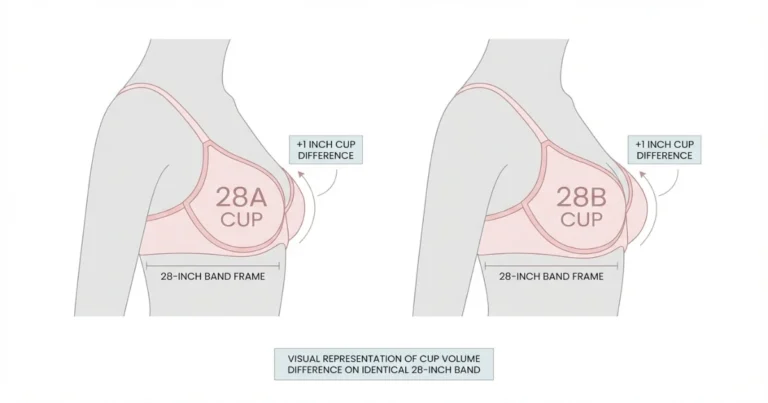
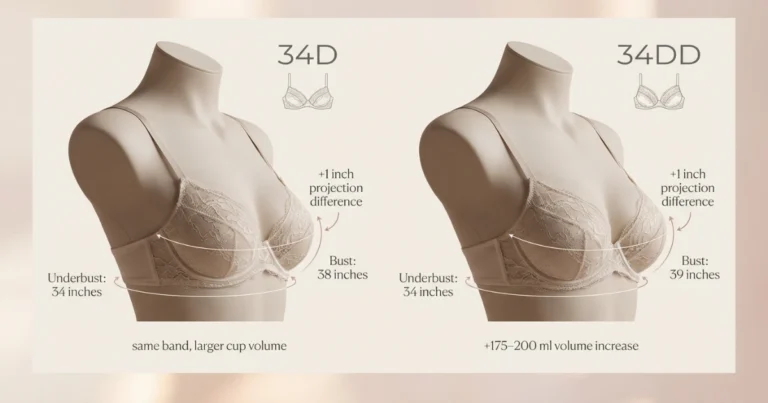
The easiest way to think about this comparison is: same band, bigger cup. A 30DD and a 30DDD both wrap around roughly the same ribcage. What changes is the amount of room in the cup. That extra room can matter a lot if you have fuller tissue, more projection, or a bra that currently cuts in at the top.
Many people expect a jump from DD to DDD to look dramatic. It usually is not dramatic visually, but it is often very noticeable in fit. A bra that was slightly compressing you in 30DD may suddenly sit smoother, feel lighter, and look better under clothes in 30DDD.
- Band30
- Bust differenceAbout 5 inches
- General fitFull but not overflowing
- Sister size up32D
- Sister size down28DDD
- Band30
- Bust differenceAbout 6 inches
- General fitMore depth and containment
- Sister size up32DD
- Sister size down28DDDD
How Much Bigger Is 30DDD Than 30DD?
In bra sizing terms, 30DDD is one cup size bigger than 30DD. On the body, that usually means:
- more room at the deepest part of the cup
- slightly more coverage at the top edge
- less pressure on tissue near the underarm
- a better chance that the center gore will tack properly
- less risk of spilling or “quad-boob” in fitted tops
The important part is this: the difference is not just about appearance. It is about whether the breast tissue is being fully contained and supported. A bra can look “almost right” and still be one cup too small.
Signs 30DD Is Too Small
This is where most people get clarity. If you are currently wearing 30DD and any of the signs below sound familiar, you may actually need 30DDD:
- breast tissue spills over the top edge of the cup
- the underwire sits on soft tissue instead of behind it
- the center gore does not lie flat against the sternum
- you feel pressure near the outer side of the cups
- the bra looks fine when standing still but shifts badly when you move
- straps start doing too much of the support work because the cups are undersized
What that usually means
When a cup is slightly too small, the bra often compensates in sneaky ways. The band may feel tighter than it really is. The straps may dig more. The wires may feel narrower and harsher. In many cases, the problem is not the band at all — it is the cup volume.
Signs 30DDD May Be Too Big
A larger cup is not always the answer. You may be better off in 30DD if:
- the top of the cup gaps even after proper scoop and swoop
- there is clear empty space in the cup
- the bra wrinkles noticeably at the apex
- the wires feel too wide for your breast root
- the style is designed for fuller tissue than you have
Cup fit is also affected by shape, not only size. For example, a bra can gap because it is too tall or too open on top, even if the volume is technically correct.
Sister Sizes Explained
Sister sizes are sizes that keep the same cup volume while changing the band. This is useful when you like how the cup fits but need the band to feel tighter or looser.
Sister sizes for 30DD
Sister sizes for 30DDD
Sister sizing is helpful, but it is still a backup strategy. Your best fit usually comes from wearing your true band size first, then adjusting only when a particular bra runs tight or loose.
Measurement Breakdown
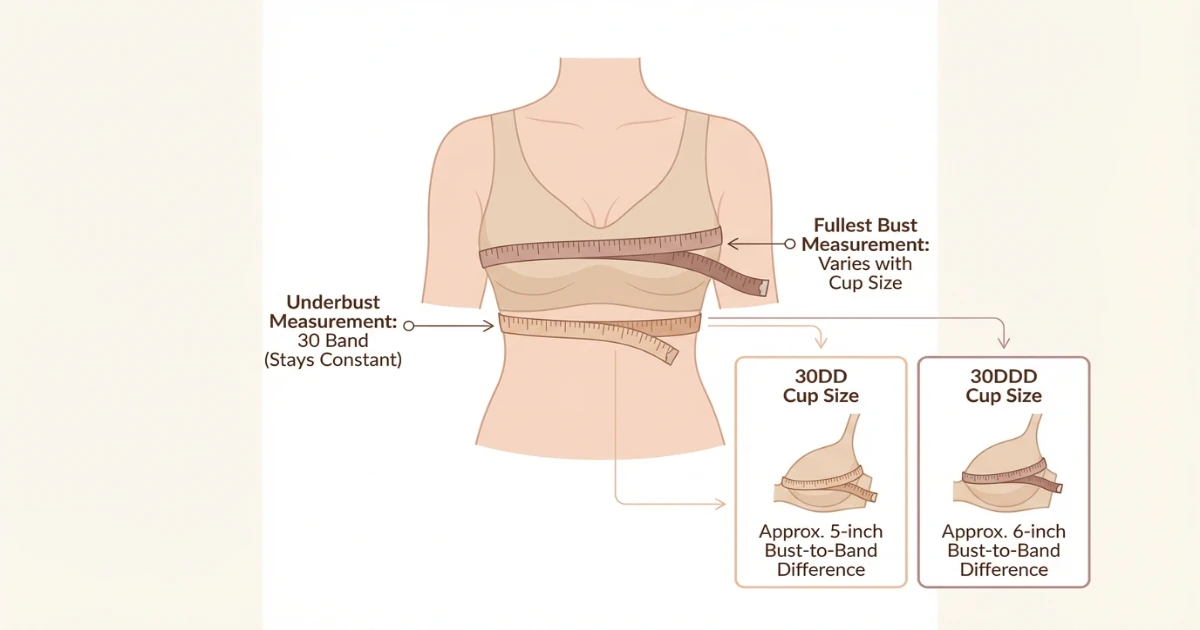
Bra sizes are built from two measurements: your underbust and your full bust. While brand charts vary a little, the general rule is simple:
| Feature | 30DD | 30DDD |
|---|---|---|
| Band size | 30 | 30 |
| Bust minus underbust | About 5 inches | About 6 inches |
| Cup volume | Smaller | One cup step larger |
| Typical feel | Secure for moderate fullness | Better for fuller or more projected tissue |
| US alternate label | 30DD | 30DDD / sometimes 30E |
| Larger sister size | 32D | 32DD |
| Smaller sister size | 28DDD | 28DDDD |
Real bras are also shaped differently by brand, so two 30DDD bras can feel different even when the size label matches. That is why shape, wire width, cup height, and fabric matter too.
How to Tell Which Size Fits Better
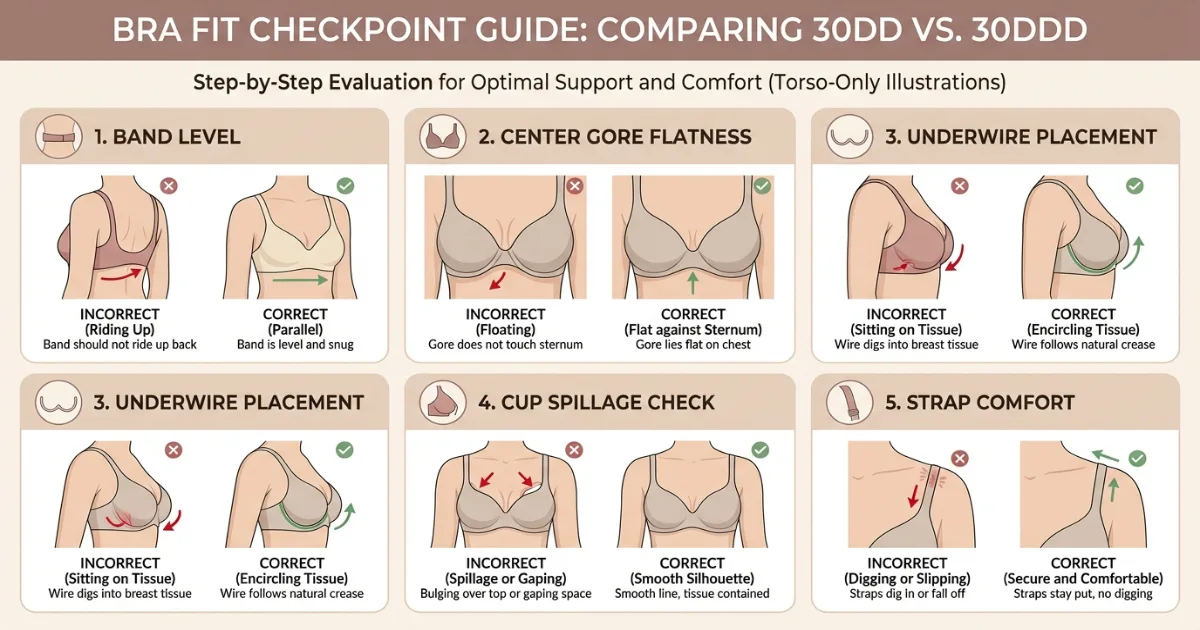
Use this quick fit test while trying on either size. Wear the bra on the loosest hook and do a full scoop and swoop before judging the fit.
- Check the band first. It should sit level and feel snug, not painfully tight.
- Check the center gore. It should lie flat against your sternum.
- Check the wires. They should sit behind all breast tissue, including at the sides.
- Look for top spillage. If tissue cuts over the edge, the cup is too small.
- Look for gaping. If there is empty room after adjusting properly, the cup may be too large or too open in shape.
- Move around. Raise your arms, sit down, and twist a little. A good bra stays stable.
- Check strap pressure. Straps should support lightly, not do all the heavy lifting.
If 30DD fails because the cups feel crowded, try 30DDD before you size up in the band. If 30DDD feels roomy or tall in the cups, 30DD may still be the better choice.
Still Not Sure Between 30DD and 30DDD?
Use our calculator to check your measurements, cup difference, and likely sister sizes in seconds. It is the fastest way to stop guessing and start wearing the size that actually supports you.
Use the Bra Size CalculatorWhich One Should You Choose?
Choose 30DD if your current bras already contain your tissue well, your cups sit smooth, and you do not get cutting, pinching, or top overflow.
Choose 30DDD if your 30DD feels close but not quite right — especially if the band feels okay and the real issue is cup pressure. That one extra cup step can make a bra feel more balanced, more flattering, and much more comfortable over a full day.
For many people, the real breakthrough is realizing that a “bigger cup” does not automatically mean a “big size.” On a 30 band, cup letters are always relative to a smaller ribcage. That is why a 30DDD is simply a proportion, not a dramatic or unusual size.