30C vs 30D: What’s the Real Cup Size Difference? (2026 Fit Guide)
If you’ve ever stood in a fitting room wondering whether you belong in a 30C or a 30D, you are not alone. The jump from C to D sounds significant — almost dramatic — but the actual difference is far more subtle than most people expect. This guide breaks everything down clearly, from raw measurements to real-world fit, so you can stop guessing and start wearing a bra that actually works.
Quick Answer: 30C vs 30D at a Glance
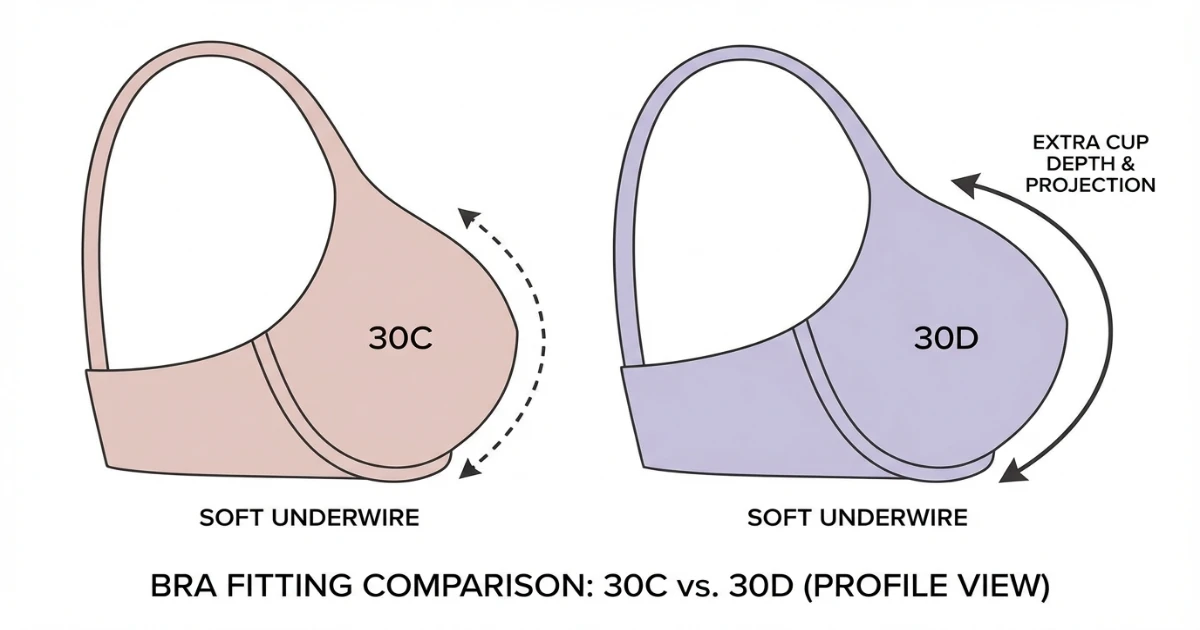
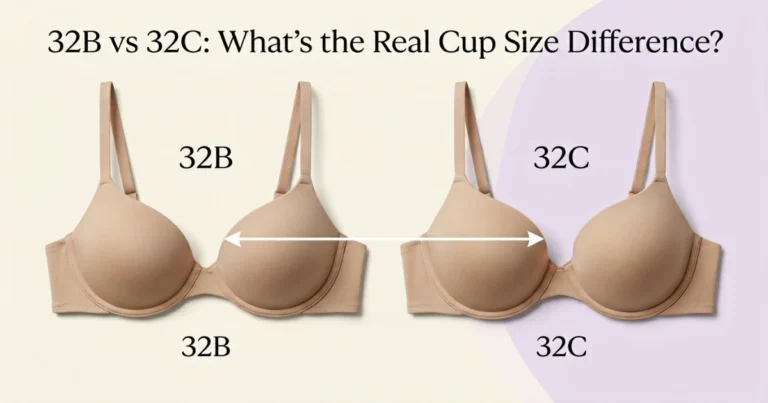
30D is exactly one cup size larger than 30C. Both sizes share the same band — a 30-inch underbust measurement — but the D cup holds approximately one inch more of bust projection than the C cup. In practical terms, that translates to roughly 1 inch (about 2.5 cm) more volume around the fullest part of the bust. It is a meaningful difference in fit and coverage, but not the dramatic size leap many women imagine when they hear the word “D.”
Key Takeaways
- Same band, different cup: Both 30C and 30D have a 30-inch band. Only the cup volume differs.
- One-inch projection difference: A 30D bust measures approximately 1 inch (2.5 cm) larger at the fullest point than a 30C.
- Not the same as a “big D”: A 30D is proportionally much smaller than, say, a 36D — cup size is always relative to band size.
- Spillage vs. gaping: If your 30C causes spillage or a quad-boob effect, try 30D. If cups wrinkle in 30D, stick with 30C.
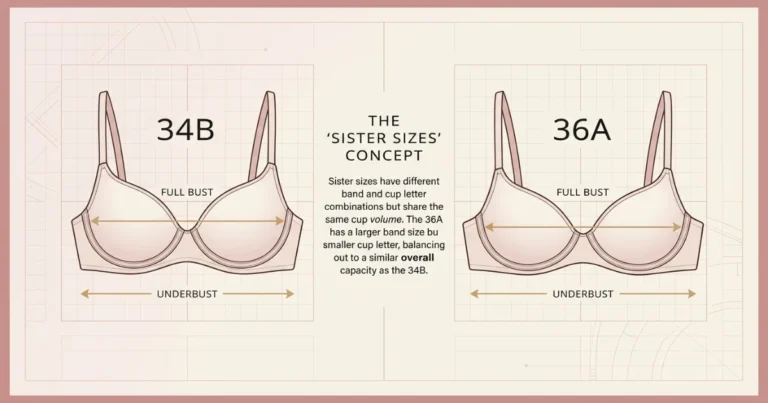
- Sister sizes exist: 30C shares volume with 28D and 32B. 30D shares volume with 28DD and 32C.
- Breast shape matters: Fuller, rounder, or deeper breast shapes typically suit the D cup better; shallower or less projected shapes often fit best in C.
- Brand variation is real: Sizing is not universal — always try before you buy, or measure carefully.
Understanding How Bra Cup Letters Actually Work
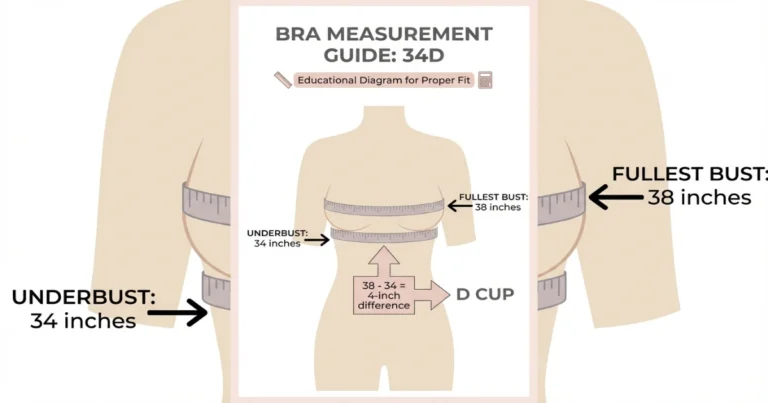
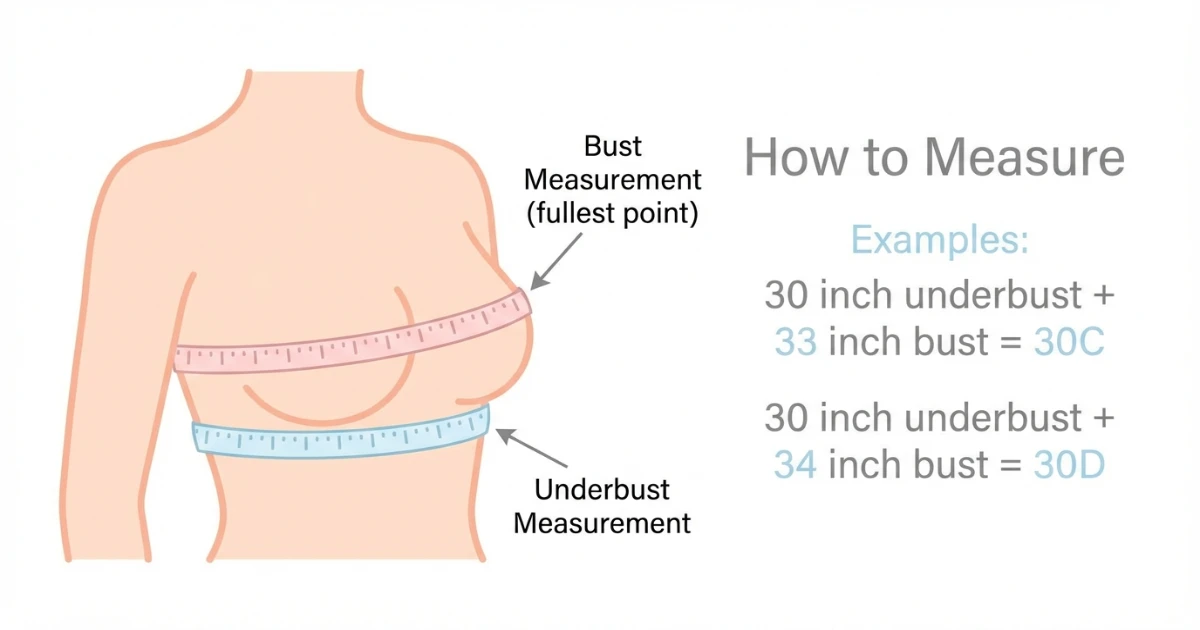
Bra cup letters tend to carry a lot of cultural baggage. In reality, they are simply a measurement of the difference between your underbust (band) measurement and your bust (fullest point) measurement. That difference — called the cup differential — determines your cup letter.
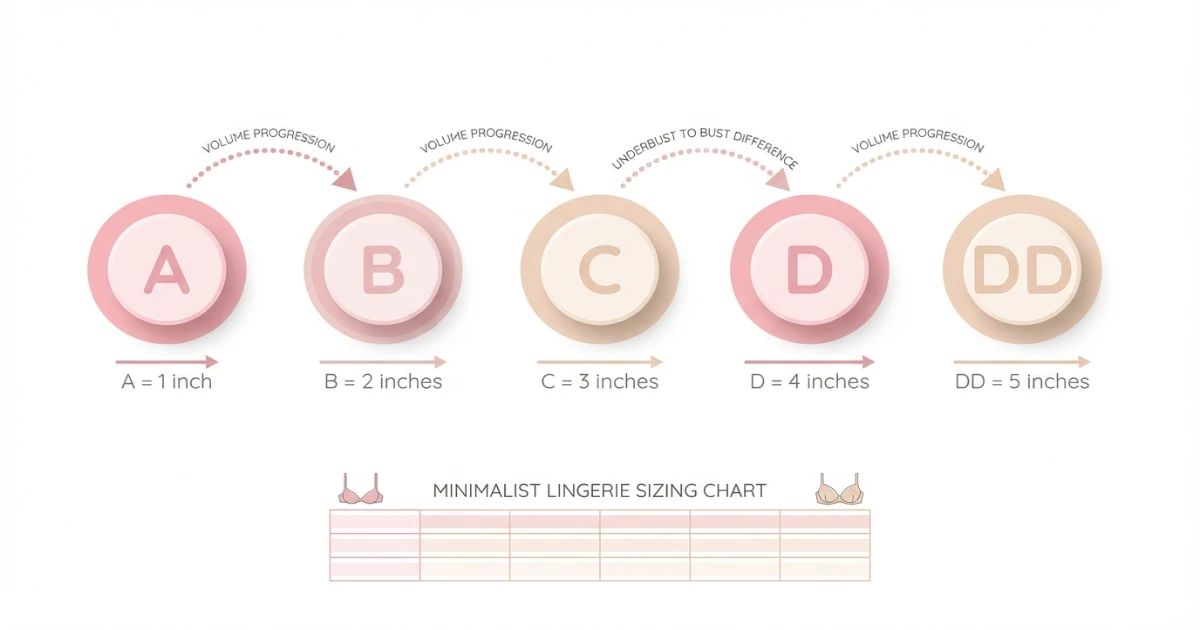
Here is how the standard US sizing ladder works:
- A cup = 1-inch difference
- B cup = 2-inch difference
- C cup = 3-inch difference
- D cup = 4-inch difference
- DD/E cup = 5-inch difference
Moving from C to D simply means the cup holds one additional inch of volume. The letter goes up; the band stays put. This is why a 30D and a 38D are nowhere near the same size — the cup letter only tells you half the story. The band number is equally important because it anchors the cup volume to a specific ribcage size.
For a full breakdown of how cup sizing scales across band sizes, visit the bra size charts guide at bra-calculator.com.
The Measurement Breakdown: 30C vs 30D in Inches and Centimeters
Let’s put real numbers on this comparison. These figures reflect standard US bra sizing — your individual measurements may vary slightly depending on the measuring method you use, but this gives you a solid reference point.
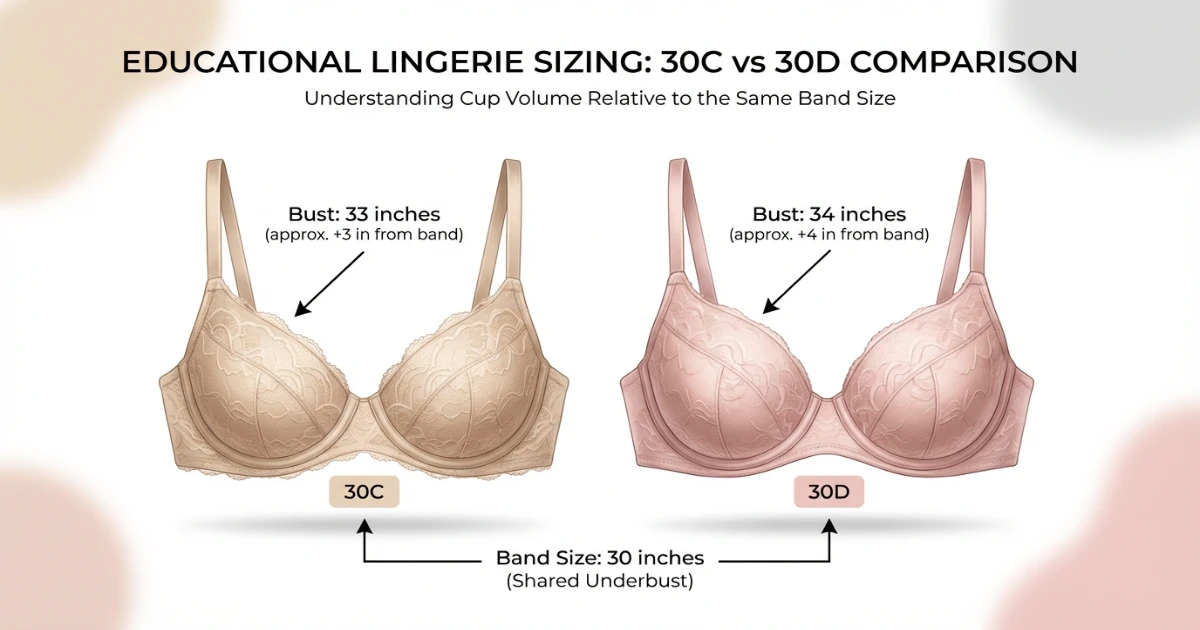
Underbust: ~30 in / ~76 cm
Bust (fullest): ~33 in / ~84 cm
Cup differential: 3 inches
Underbust: ~30 in / ~76 cm
Bust (fullest): ~34 in / ~86 cm
Cup differential: 4 inches
The band measurement is identical for both sizes — around 30 inches (76 cm) — which means the underwire width, the back panel length, and the overall band structure are essentially the same. The sole difference is that the 30D cup is cut deeper, with roughly 1 extra inch of projection compared to the 30C.
In centimeters, you’re looking at a 2.5 cm difference in bust circumference between the two cup sizes. That might not sound like much when you read the number, but across the three-dimensional curved shape of a bra cup, that translates into a noticeable amount of additional fabric and volume.
Why Your Measured Size May Differ from Your Wearing Size
Bra sizing formulas are starting points, not verdicts. Breast tissue density, shape, projection depth, and even posture can all affect how a specific bra cup feels on your body. This is why fit-testing in the actual bra always takes priority over the tape measure alone.
If you have not measured yourself recently, the step-by-step guide at how to measure your bra size covers everything from posture tips to which numbers to write down.
Cup Volume Difference: How Much Larger Is 30D Really?
Volume is the clearest way to understand what separates these two sizes. Think of each cup as a three-dimensional container — and going from C to D means expanding that container in all directions: height, width, and depth.
In volumetric terms, studies of bra cup geometry suggest each cup size step increases the cup’s volume by approximately 50–80 milliliters depending on the band size. For a 30-band specifically, the jump from C to D is on the more modest end of that range — but it is still enough to see and feel when you are wearing the bra.
What This Looks Like in Practice
In a 30C, the cup is designed to hold a bust with approximately 3 inches of projection beyond the ribcage. In a 30D, that projection extends to about 4 inches. For someone with fuller, rounder, or deeper breast tissue, the 30D provides the additional depth needed to avoid compression and spillage. For someone with shallower or less projected tissue, the 30D may gape at the top of the cup.
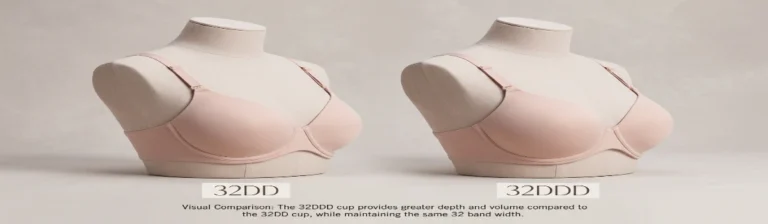
You can see side-by-side cup volume comparisons at the cup size visuals guide, and then use the bra size chart calculator to cross-reference your measurements with the full sizing grid.
Fit Differences You Will Actually Notice
The real-world difference between 30C and 30D shows up in specific, recognizable ways. Here’s what to look for when you’re trying both sizes on.
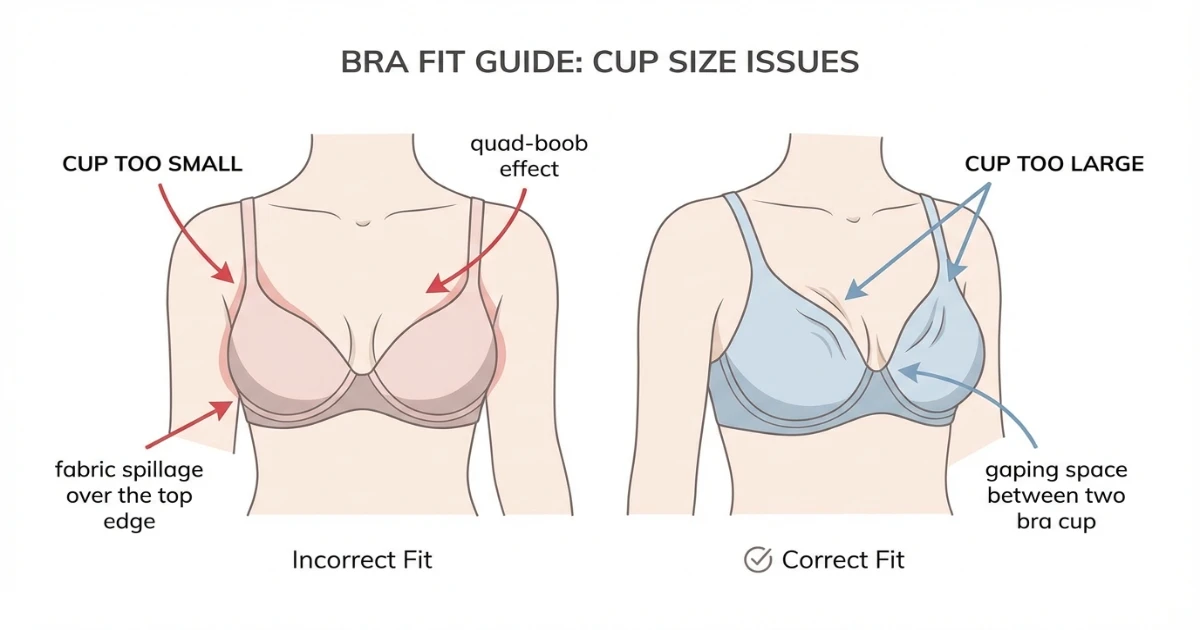
Signs Your 30C May Be Too Small
- Mild spillage at the top or sides of the cup — breast tissue escaping over the cup edge, especially when you move or lean forward.
- Quad-boob effect — the cup edge cuts into breast tissue, creating a visible double-breast line under clothing.
- Cups tilting forward or away from your chest — the underwire is not sitting flat against your ribcage because the cup is slightly under-volumed.
- Strap pressure increasing — when a cup is too small, straps tend to compensate by bearing more of the lift load, which leads to digging in.
- Persistent center gore gap — sometimes a small cup causes the center piece between the cups to float away from the sternum.
Signs Your 30D May Be Too Large
- Wrinkling or puckering fabric across the top of the cup when you stand or move.
- Cups gaping away from your chest, particularly at the upper pole of the breast.
- Too much empty space at the bottom of the cup — you can fit a finger or more between the cup and your bust.
- The underwire sitting on breast tissue rather than fully behind it on the ribcage.
For a full walkthrough of these fit signals, the bra fit problems guide covers the most common issues with photos and solutions.
Who Should Choose 30C?
The 30C is not a “small” bra by any absolute measure — it is simply the right bra for a specific combination of band size and bust projection. You are likely a strong candidate for the 30C if:
- Your cups consistently wrinkle or pucker at the top when you try a 30D, suggesting you don’t fill the additional depth.
- You have a shallower breast shape — meaning your tissue is spread across a wider base rather than projecting outward significantly.
- You have less breast projection and tend to sit closer to the chest wall.
- You find that the underwire in a 30D sits partially on breast tissue rather than fully behind it.
- You feel comfortable and fully covered in your 30C with no spillage, gap, or strap issues.
Breast shape plays a genuinely important role in cup fit that goes beyond letter size alone. The breast shape identifier tool can help you figure out whether your shape is likely to suit a C or D cup profile, and which bra styles are best designed for your specific tissue distribution.
Who Should Choose 30D?
The 30D suits women with a slender ribcage who carry a slightly fuller bust volume than the C cup provides. You are likely better suited to a 30D if:
- You experience consistent spillage at the top or sides of your 30C cups, even in bra styles that usually fit you well.
- You have fuller, rounder, or more projected breast tissue that fills out the cup from the front rather than spreading wide.
- You notice your 30C underwire lifts away from your chest wall because there is too much tissue for the cup to contain it against the ribcage.
- You need more upper-cup coverage for comfort in everyday wear or physical activity.
- Straps in your 30C dig in constantly, suggesting the cup is doing too little of the support work.
For more guidance on recognizing whether your current bra is actually fitting you correctly, the how to know if your bra fits guide gives you a thorough checklist.
Sister Sizes: The Closest Alternatives to 30C and 30D
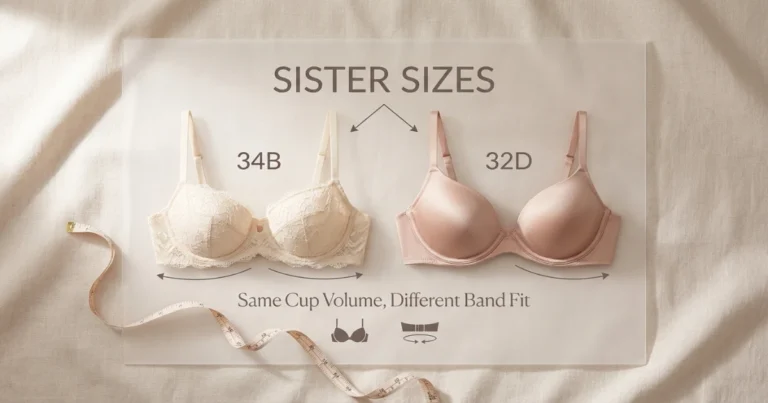
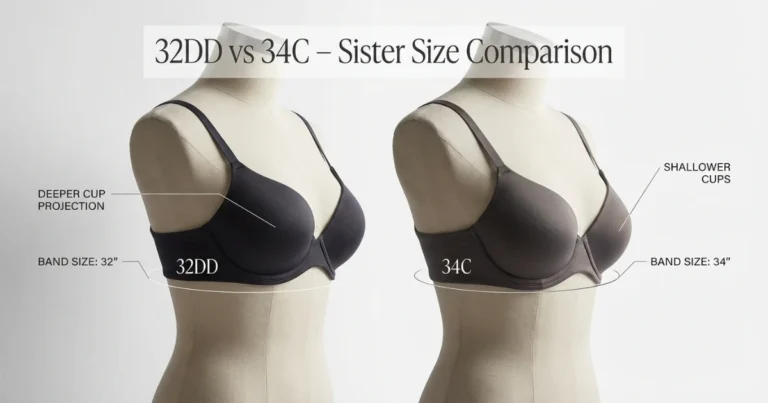
Sister sizes are bra sizes that share the same cup volume but in a different band size. When you go up one band, you go down one cup to maintain the same volume — and vice versa. This matters because if you find a style that fits perfectly in the cup but the band runs large or small, a sister size may be the solution.
30C Sister Sizes
- 28D — same cup volume, smaller band
- 32B — same cup volume, larger band
If a 30C cup fits but the band is too tight, try 32B. If the band is too loose, try 28D.
30D Sister Sizes
- 28DD — same cup volume, smaller band
- 32C — same cup volume, larger band
If a 30D cup fits but the band is too tight, try 32C. If the band is too loose, try 28DD.
Sister sizing is incredibly useful when shopping brands that do not carry 30-band sizes, which is more common than it should be. You can explore the full sister size grid at the sister sizes guide, or use the interactive sister size bra calculator to find every equivalent across all band sizes.
Quick Bra Fit Test: 30C or 30D?
Put on your current bra and run through these checks. They take less than two minutes and will tell you a great deal about whether your cup size is working for you.
- Look in a mirror from the front. Is there any breast tissue escaping over the top edge or sides of the cup? That is spillage — try one cup size up.
- Look from the side. Does the underwire sit flat against your ribcage, or is it hovering above your skin? Floating underwire often means the cup is too small to anchor properly.
- Slide two fingers under the center gore (the bridge between the cups). Does it lie against your sternum? A gap here can signal a cup-size issue.
- Check your straps at the end of the day. Do they leave marks? Straps should never dig in — if they do, your cup is likely too small and your straps are overcompensating.
- Gently tug the cup away from your breast. Is there space behind the fabric? Wrinkling or loose fabric indicates the cup is too big.
Still unsure about your bra size? Our AI-powered calculator uses your measurements to recommend your most accurate fit — no guesswork needed.
Try the AI Bra Size Calculator →30C vs 30D: Full Comparison Table
| Feature | 30C | 30D |
|---|---|---|
| Band size | 30 inches / 76 cm | 30 inches / 76 cm |
| Bust measurement | ~33 in / ~84 cm | ~34 in / ~86 cm |
| Cup differential | 3 inches | 4 inches |
| Cup volume | Smaller | Approx. 50–80ml more than 30C |
| Support | Adequate for smaller bust projection | Better for fuller projection |
| Coverage | Less upper-cup coverage | More upper-cup coverage |
| Spillage risk | Higher if bust is full | Lower for fuller bust |
| Gaping risk | Lower for shallower shapes | Higher if bust is shallow |
| Comfort | Best for shallower, wider tissue | Best for deeper, more projected tissue |
| Best breast shapes | Shallow, wide-set, east-west, splayed | Round, full, projected, close-set, pendulous |
| Sister sizes | 28D, 32B | 28DD, 32C |
People Also Ask: 30C vs 30D
Is 30D bigger than 30C?
Yes. 30D is one cup size larger than 30C. Both share the same 30-inch band, but the D cup holds approximately 1 inch (2.5 cm) more bust volume than the C cup. The band fit will feel the same; only the cup depth and coverage differ.
How much bigger is a D cup than a C cup?
Each cup size step equals 1 inch of additional bust-to-band difference. A D cup therefore holds about 1 inch more bust projection than a C cup when the band size is the same. In volume, the difference is roughly 50–80 ml depending on the band size — noticeable in fit, but not dramatic in appearance.
Is 30D considered a large bra size?
No — 30D is a relatively petite size overall. Because cup size is always relative to band size, a 30D is much smaller in total volume than a 36D or 38D. On a 30-inch ribcage, the D cup represents modest bust fullness, not a large bust in the conventional sense.
What is the sister size of 30C?
The sister sizes of 30C are 28D (smaller band, same cup volume) and 32B (larger band, same cup volume). These sizes hold the same amount of breast tissue — only the band length changes. Sister sizes are useful when your measured size is hard to find in stores.
Why does 30C sometimes feel too small?
If your breast tissue is fuller or more projected than a C cup can accommodate, the cup will feel tight or cause spillage. Breast shape, density, and distribution all affect how a cup size fits in practice. If you are experiencing spillage, a quad-boob effect, or strap digging, it is worth trying a 30D.
Can someone wear 30D instead of 30C?
Yes, if their bust volume and projection align with the larger cup. If the 30C consistently causes spillage or discomfort, sizing up to 30D is the logical next step. However, if the 30D causes wrinkling or gaping, the 30C is the better fit. The only way to know for certain is to try both.
Does cup size change when band size changes?
Yes — this is the principle behind sister sizing. If you go up one band size (for example, from 30 to 32), you need to go down one cup letter (from D to C) to maintain the same cup volume. Cup letters only mean something in the context of their specific band size.
What does D cup mean in bra sizing?
In US bra sizing, a D cup means your bust measurement is 4 inches larger than your underbust (band) measurement. It is one step above C (3 inches) and one step below DD or E (5 inches). The letter D does not describe an absolute bust size — it only describes the relationship between band and bust on that particular person’s body.
How do I know if I’m a 30C or 30D without trying bras on?
Measure your underbust snugly (this is your band size) and your bust at the fullest point while wearing a non-padded bra. If the difference is 3 inches, you are likely a 30C. If the difference is 4 inches, you are likely a 30D. Always treat these as starting measurements and refine from there based on how specific bras actually fit.
Explore More Bra Size Comparisons
Understanding the difference between two specific sizes is a great start — but bra sizing is a system, and seeing how other size pairs compare can make everything click faster. Whether you are curious about how 30D compares to 32C, or how the C-to-D jump looks at larger band sizes, the breast size comparison hub has detailed guides for dozens of size pairings.
You can also use the bra size chart calculator to see where any two sizes sit relative to each other on the full sizing grid, or revisit your measurements with the measurement guide if you want to double-check your numbers before your next purchase.