Find your perfect fit.
Free Post-Weight Loss Bra Size Calculator (2026)
Enter your before and after measurements — we’ll calculate your new bra size, show exactly what changed, and guide your next steps.
Step one — your measurements before
Tape snugly around your ribcage, directly under your breasts. Take a breath out.
Loosely around the fullest part of your chest, arms relaxed at your sides.
Shown on your results card — not used in the size calculation.
Step two — your measurements now
Same technique — snug tape directly under the bust, after exhaling.
Level and loose around the fullest point, arms relaxed.
Same cup volume — different band length. Go up a band + down a cup for more ease; down a band + up a cup for more support.
Your body changed.
Here’s what happened to your bra size.
Weight loss reshapes your body in ways a mirror can’t fully show. Your bra size — band, cup, and even breast shape — shifts with every pound. Here’s exactly what changes, why it happens, and how to find your perfect new fit right now.
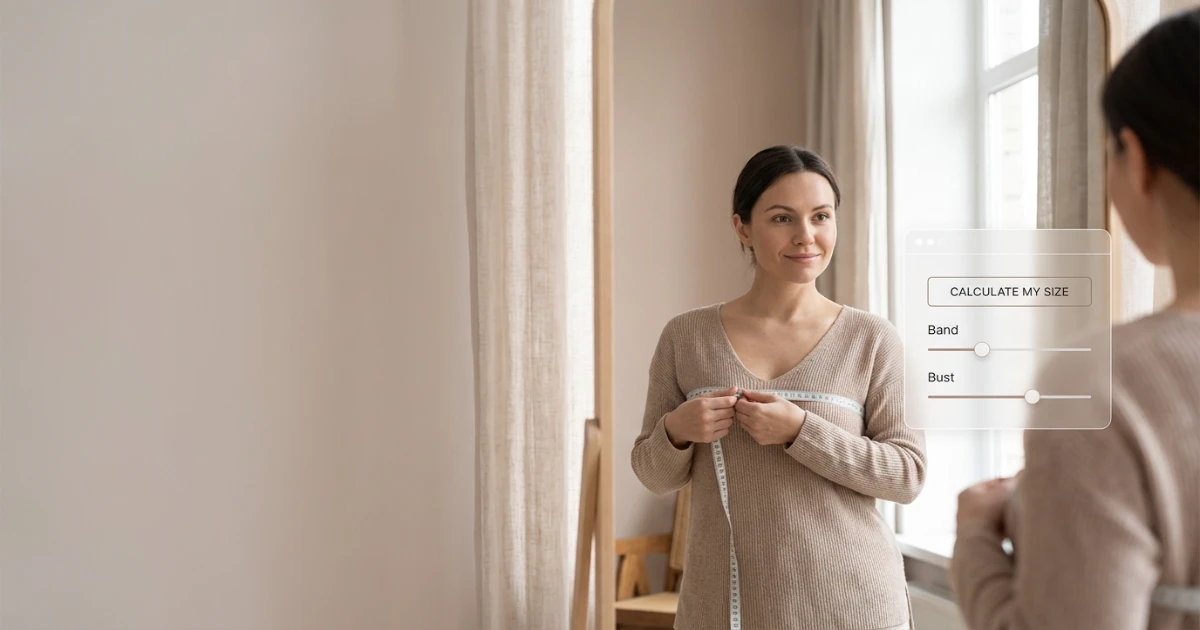
Yes — weight loss changes your bra size. Your underbust (band) typically shrinks first, then your bust volume (cup size) follows. Most people drop 1–2 band sizes and 1 cup size per major weight-loss phase. Re-measure after every 10–15 lbs and use the recalculator above to find your exact new size instantly.
Why Does Weight Loss Change Bra Size?
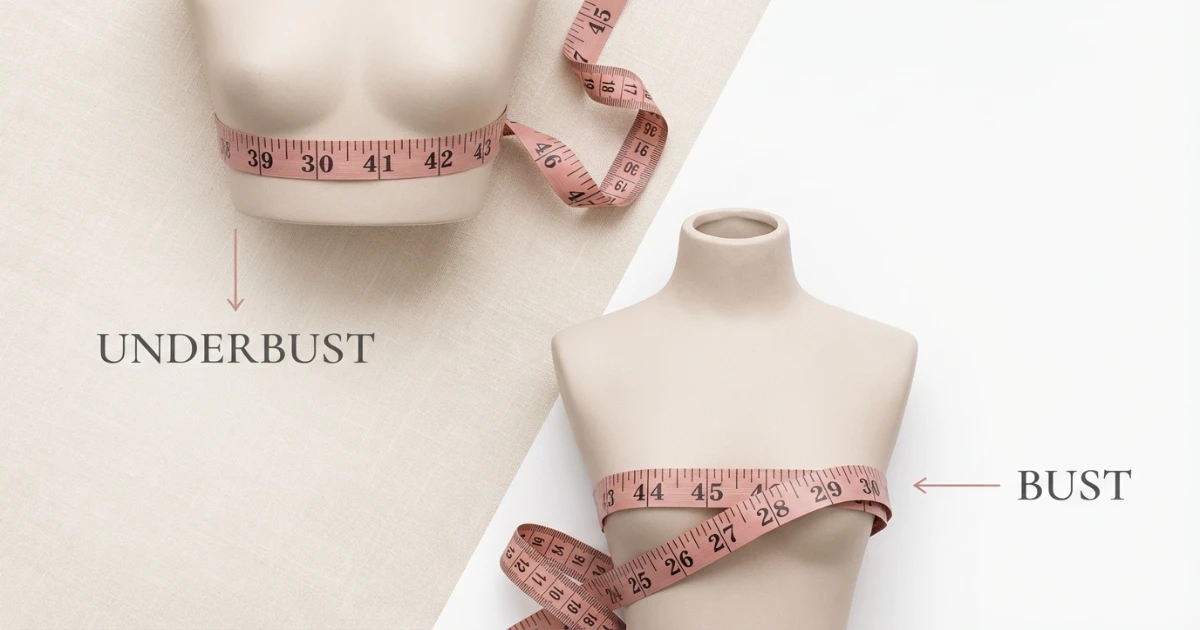
Your bra size is built from two measurements: your underbust (the band) and your full bust (which determines the cup). Both contain tissue that responds to fat loss — and they respond at different rates.
The ribcage and torso tend to slim measurably first, often dropping a full band size (2 inches) before significant bust volume change. This is why many women feel their band has become too loose long before the cups start to feel different.
Breast tissue itself is roughly 50–80% adipose (fat) tissue, so fat loss will reduce breast volume. The rate varies significantly by genetics, body composition, and where your body preferentially loses fat — but virtually everyone who loses more than 15 lbs will see a change in at least one component of their bra size.
Band Size, Cup Size, or Both? What Actually Shifts
The most common pattern after meaningful weight loss:
| What Changes | Typical Pattern | Effect on Bra Size |
|---|---|---|
| Underbust / ribcage | Shrinks first, most predictably | Band size ↓ |
| Bust volume | Follows fat loss, varies by person | Cup size ↓ |
| Breast shape | Upper fullness often reduces first | Style preference changes |
| Tissue firmness | May soften slightly | Support needs change |
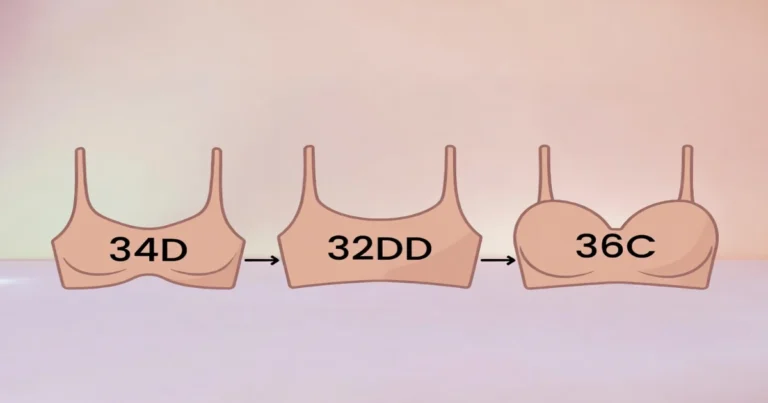
It’s important to understand that cup size is relative to band size. A 34C and a 32D hold the same breast volume — they’re sister sizes. This means even if your breast volume stays roughly the same, going down two band sizes could shift you from a C to a DD on the label — while the actual fit feels very similar.
Don’t assume your cup letter goes down just because you lost weight. If your band shrank faster than your bust volume, your cup letter could actually go up — because cup size is the difference between bust and band, not an absolute measure of breast size.
How to Measure for Your New Size (The Right Way)
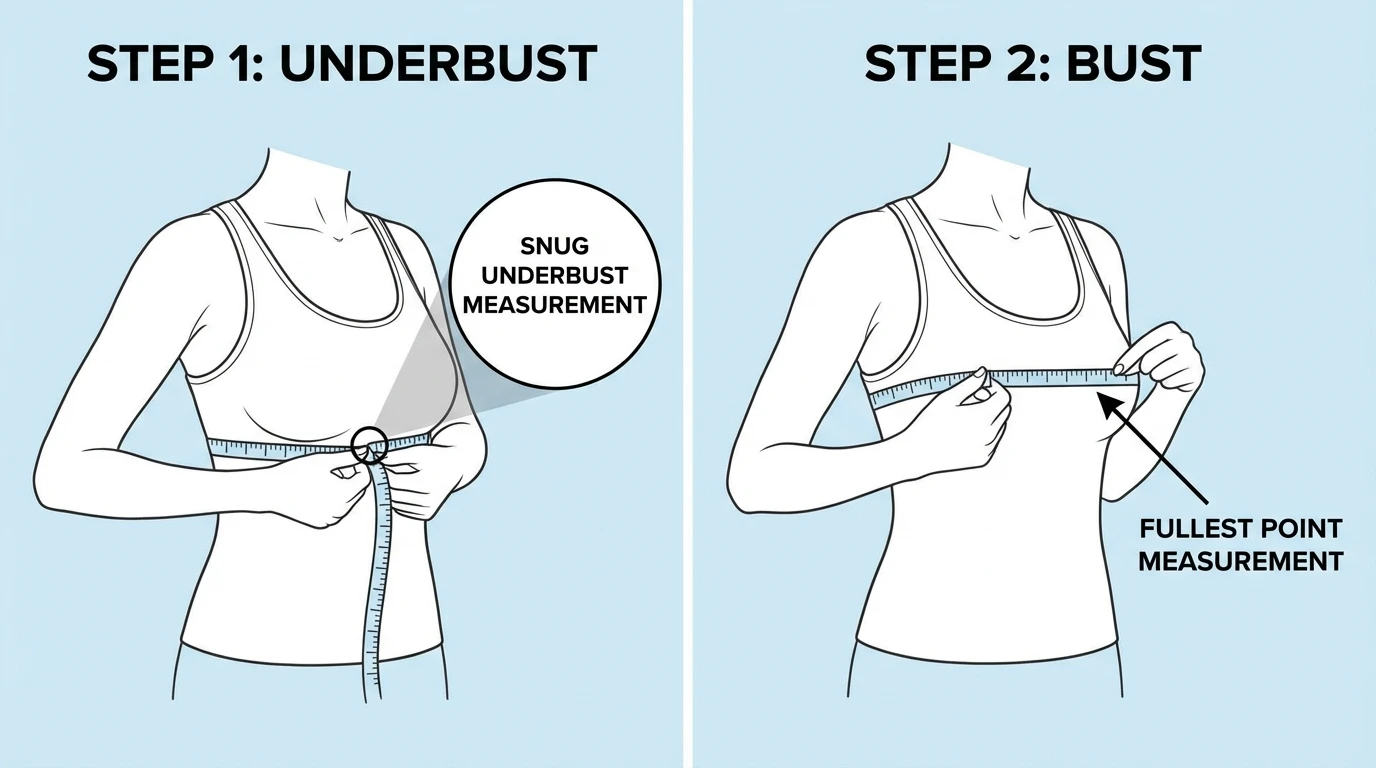
Step 1 — Underbust (determines your band)
Wrap a soft tape measure snugly around your ribcage, directly under your breasts. Breathe out normally and read the number. This is your underbust measurement. For your band size, round to the nearest even number (e.g. 31.5 inches → band size 32).
Step 2 — Full Bust (determines your cup)
With your arms relaxed at your sides, wrap the tape loosely and level around the fullest part of your chest. The tape should be parallel to the floor. Do not pull tightly — this is not a snug measurement.
Step 3 — Use the calculator above
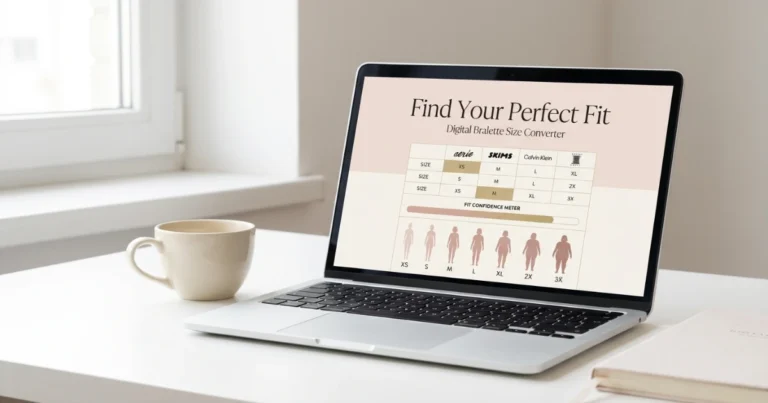
Enter both your before and after measurements in the Post-Weight Loss Bra Recalculator at the top of this page. It calculates both sizes, shows you what changed in band and cup, gives your UK and EU equivalents, and recommends sister sizes to try on alongside your primary size.
For a full visual guide on technique, including common mistakes to avoid, see our detailed how to measure your bra size guide.
Ready to find your new size?
Enter your before and after measurements — get your exact new size in under 60 seconds, completely free.
📏 Use the Free RecalculatorSister Sizes: Your Secret Weapon After Weight Loss
After significant weight loss, your ribcage shape — not just its circumference — changes. A bra that fits perfectly by the numbers may feel different because the band’s geometry has shifted. This is where sister sizes become invaluable.
Sister sizes share the same cup volume with a different band length. So if your new calculated size is 32C, your sister sizes are 30D (firmer band, same cup volume) and 34B (looser band, same cup volume). Trying all three gives you a much better chance of finding a truly comfortable fit — and is exactly what a professional bra fitter will do.
When to Re-Measure (and How Often)
There’s no single rule, but every 10–15 lbs of change is a reliable trigger for remeasuring. During active weight loss, keep these signals in mind:
Your bra likely no longer fits if: the band rides up at the back; the underwire sits on breast tissue rather than the chest wall; cups are wrinkling or gaping; or you need to wear the tightest hook to get any support. Any of these is a clear sign your current size is outdated.
For international shoppers, our international bra size conversion chart maps your new US size to EU, UK, French, Italian, Australian, and Japanese sizing in one table — helpful if you’re shopping across borders or using overseas brands.
Your calculator result is your starting point, not a final answer. A lingerie boutique fitting — where a trained fitter observes how the bra actually sits on your body — remains the gold standard for post-weight loss bra shopping. Book one once your weight has stabilised or at least slowed.
Frequently Asked Questions: Free Post-Weight Loss Bra Size Calculator
-
Almost always, yes. Even modest fat loss — 10 to 15 lbs — can shift your underbust measurement enough to change your band size. Cup size changes tend to follow larger amounts of weight loss, though this varies by body composition. The only reliable way to know is to re-measure and recalculate.
-
Usually yes — but not always. Because cup size is the difference between bust and band measurements, if your band shrank more than your bust, your cup letter can actually go up. This is one of the most common post-weight loss fitting surprises. Our calculator shows you exactly what happened to both measurements.
-
Re-measure your underbust and full bust on bare skin with a soft tape, then use the free Post-Weight Loss Bra Recalculator at the top of this page. It takes under 60 seconds and gives you your US, UK, and EU sizes, what changed, and which sister sizes to try.
-
There’s no universal threshold, but for most people the band starts shifting noticeably at around 10–15 lbs of fat loss. Cup size tends to change later or more gradually. Body composition matters too — those who carry more fat in their torso will see faster band changes than those whose fat is distributed elsewhere.
-
A sister size is a bra with the same cup volume but a different band length — for example, 34C, 32D, and 36B are all sister sizes. After weight loss, your ribcage shape changes even if the measurement is similar, so sister sizes give you more options to find a truly comfortable fit. See our full sister size chart for all equivalents.
More Free Tools
Everything you need for accurate, confident bra fitting — all on bra-calculator.com.