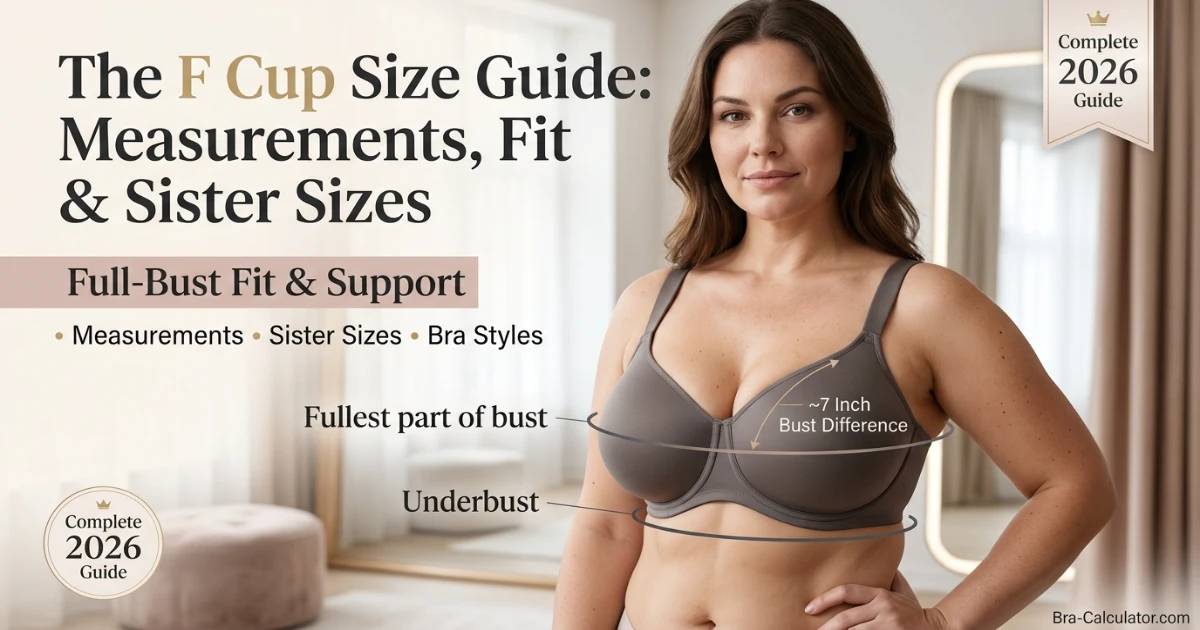
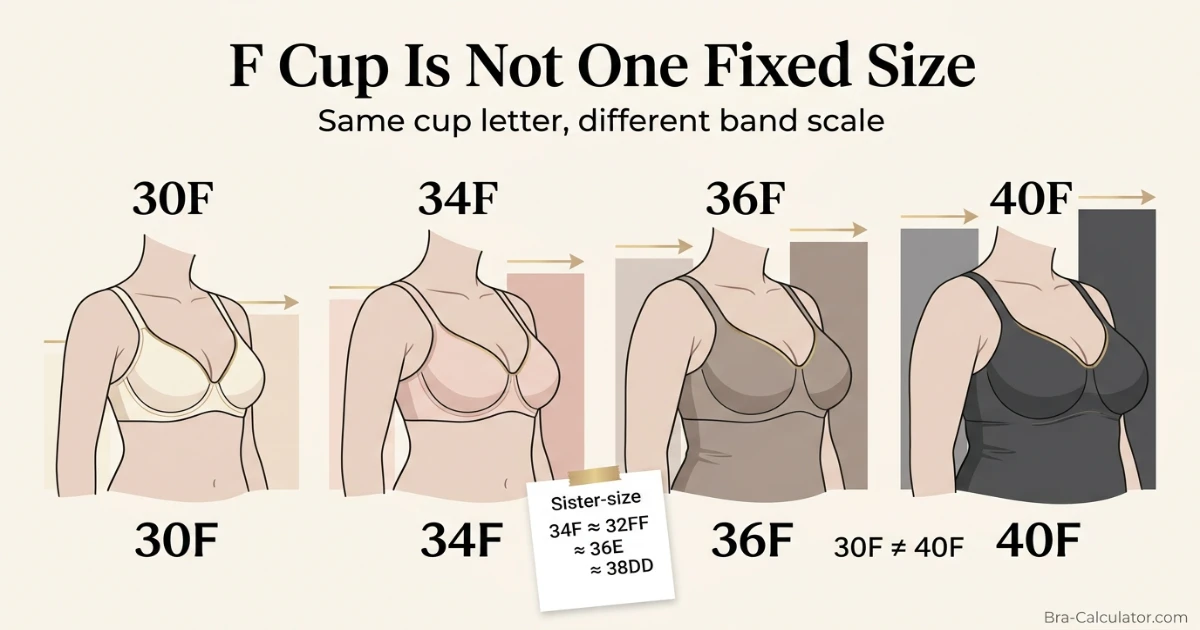
An F cup usually means your full bust is about 7 inches larger than your underbust. It is generally considered a full-bust cup size, but real volume still depends on band size. A 30F, 34F, 38F, and 40F all use the same cup letter, but they do not hold the same breast volume. F cup is where full-bust engineering becomes essential: the band must anchor firmly, the cups need real depth, the wires must fully surround the tissue, and side support becomes more important than padding.
F Cup at a Glance
| Attribute | Detail |
|---|---|
| Cup Difference | About 7 inches between underbust and full bust |
| General Category | Full-bust cup volume |
| Common Reference Size | 34F, but F cup exists across many band sizes |
| Common Sister Sizes | 34F ≈ 32FF ≈ 36E ≈ 38DD in UK-style sizing |
| Most Common Fit Issue | Floating gore, side spillage, shallow cups, narrow wires, band riding up, and strap pressure |
| Best Bra Styles | Side-support bras, seamed balconettes, full-cup bras, deep plunge bras, structured full-bust T-shirt bras |
| Usually Avoid | Shallow molded cups, loose-band push-up bras, thin bralettes, weak bands, and fashion bras without cup depth |
| US / UK / EU / AU Cup Label | Varies by brand; UK F, US F/G depending on progression, EU often G, AU often F |
| Unique F Cup Fit Rule | F cup needs full-bust engineering: firm band, deep cup, strong side support, stable wires, and wider straps. |
| Important Rule | F cup volume changes as band size changes |
What Is an F Cup Size?
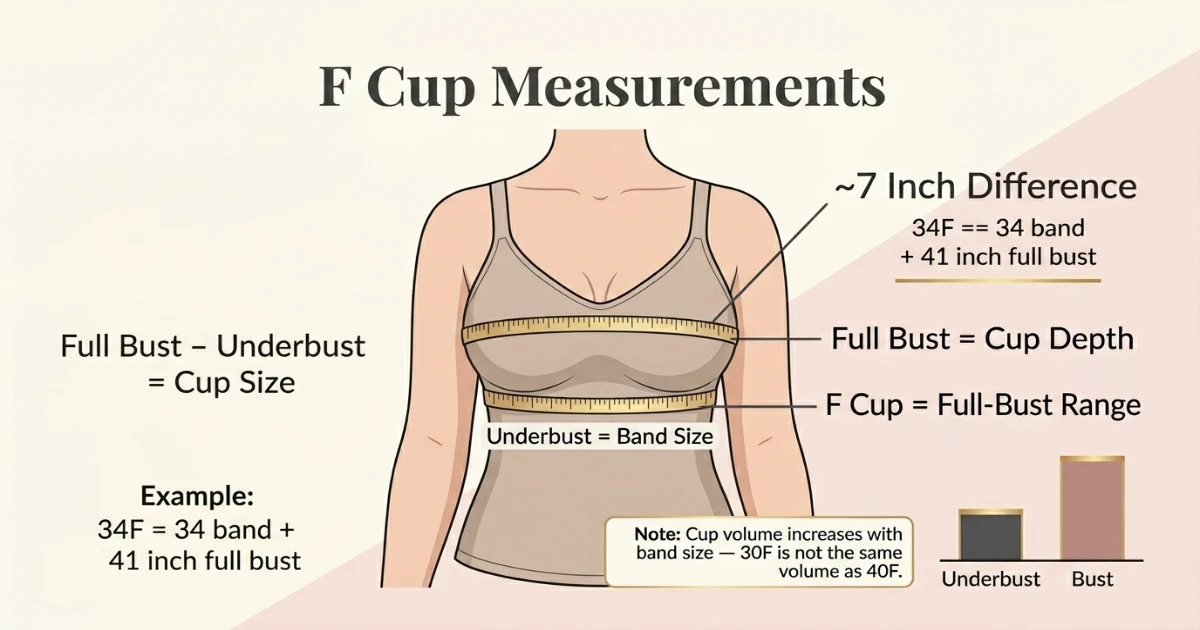
An F cup is a bra cup size where the full bust is usually about 7 inches larger than the underbust. For example, if your underbust is around 34 inches and your full bust is around 41 inches, you may be close to a 34F. If your underbust is around 32 inches and your full bust is around 39 inches, you may be close to a 32F, depending on the brand’s sizing system.
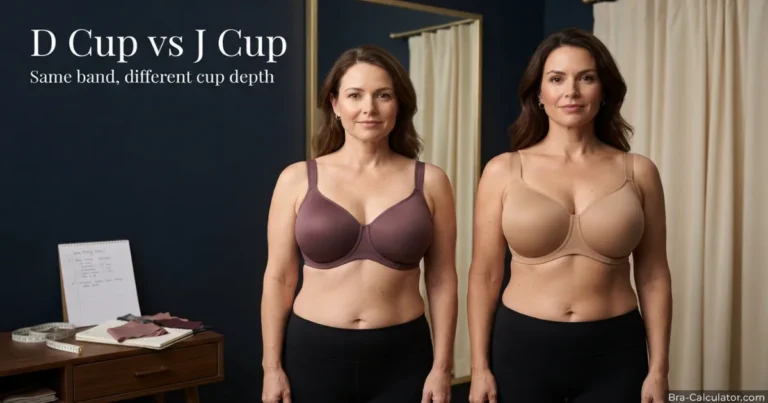
F cup is usually considered a full-bust size, but it is still not one fixed breast size. F cup only makes sense when paired with the band. A 30F can look projected and compact on a narrow frame, while a 40F holds much more total volume because the cup is built on a wider band. The band tells you the scale; the cup letter tells you the difference.
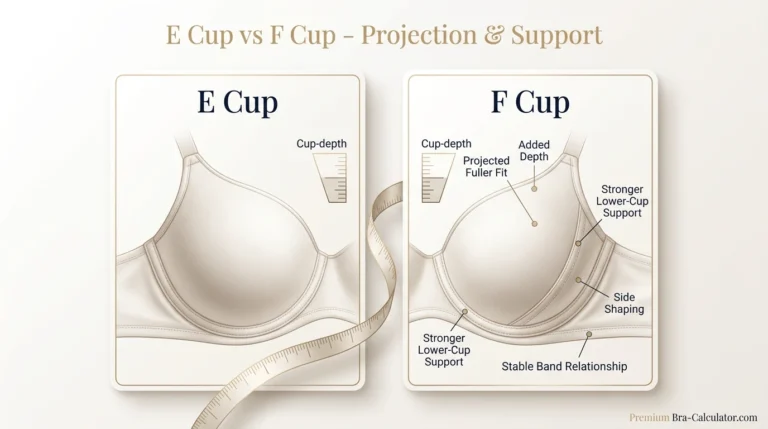
Compared with DDD / E cup, F usually has more cup depth, stronger projection, and a greater need for stable support. Compared with G cup, F is still one step smaller in many systems and often easier to find from full-bust brands. This is the point where bra design stops being mostly about shape and starts being about architecture: lift, wire width, side containment, lower cup depth, and band tension all have to work together.
The most common F cup mistake is choosing a bra that looks smooth but is too shallow. Shallow foam cups can flatten the bust, push tissue sideways, make the center gore float, or create spillage near the underarm. A well-fitted F cup bra should lift from the band, keep the bust centered, fully surround the breast root, and feel secure without needing the straps to be painfully tight.
Another common mistake is sizing up in the band to feel comfortable. A loose band may feel easier for a few minutes, but it usually rides up, shifts the cups, and makes the straps carry weight. For F cup, the band is not optional support — it is the foundation. If your band is loose, the entire fit will collapse by the end of the day.
F Cup Measurements
To calculate an F cup, measure your underbust and full bust. The underbust gives the band size, while the bust-minus-underbust difference gives the cup depth. For F cup, the difference is usually about 7 inches, or about 17.5 cm, depending on sizing system and brand progression.
About 7 inches difference = F cup range
| Example Size | Typical Underbust | Typical Full Bust | What It Means |
|---|---|---|---|
| 30F | 29–30″ | 36–37″ | Full cup on a narrow band |
| 32F | 31–32″ | 38–39″ | Projected full-bust size |
| 34F | 33–34″ | 40–41″ | Common F cup reference size |
| 36F | 35–36″ | 42–43″ | Full cup on a wider frame |
| 38F | 37–38″ | 44–45″ | Larger total volume than 34F |
| 40F | 39–40″ | 46–47″ | Fuller volume; strong support required |
Wrap the tape directly under the bust. Keep it level and snug. For F cup, band firmness matters because the band should carry most of the breast weight.
Measure around the fullest part of the bust. Do not pull tight. Full-bust tissue can be underestimated if the tape compresses or if the bust is not fully included.
If your bust is about 7 inches larger than your underbust, you are likely in the F cup range. Around 6 inches may suggest DDD/E. Around 8 inches may suggest G or FF depending on system.
The center gore should sit flat or close, the band should stay level, the cups should contain side tissue, and the straps should not dig. If the gore floats or tissue spills, the cup may be too small or too shallow.
F Cup Measurement Visual
What Does an F Cup Look Like?
An F cup usually creates a full, rounded, projected bust shape. It is noticeably fuller than DDD / E and generally needs deeper cups and stronger support. But F cup still does not look the same on every body. A 30F may look compact and projected on a narrow torso, while a 40F has much more total volume because the cup scales with the band.
On a smaller band like 30F or 32F, the bust may look full but proportionate, especially on a petite or athletic frame. On a 34F, it often appears clearly full-bust. On 38F or 40F, the same letter holds more volume and usually requires stronger full-cup construction. This is why “F cup size” visuals can look inconsistent online if the band size is not shown.
In clothing, a well-fitted F cup can create a lifted and elegant silhouette. The wrong bra, however, can make the bust look wider, lower, or heavier than it really is. Side-support bras are especially useful because they bring tissue forward and reduce the wide, spread-out appearance caused by shallow cups. For dresses, a deep plunge or balconette can work beautifully if the cup has enough depth and the band stays secure.

Seamed Balconette Bra — Lift, Depth & Support for F Cup
- Multi-part cup construction supports full-bust volume
- Helps create lift without excessive padding
- Useful when shallow molded bras flatten or spill
- Works well under fitted tops, dresses, and everyday outfits

Wireless Seamless Bralette — Relaxed Comfort for F Cup
- Soft stretch fabric adapts to full-bust volume
- Good for lounging, travel, and low-impact days
- Wide underband gives more stability than thin bralettes
- Best for relaxed wear, not high-impact movement
Projected Fullness
30F or 32F can look very projected on a small ribcage. A firm band and deep cup are essential.
Deep cup fitFull-Bust Balance
34F often creates a full but balanced silhouette. Side support helps keep the bust centered.
Side supportSide Tissue
Look for wires wide enough to surround all breast tissue. Narrow wires can poke or cause side spillage.
Wider wiresNeeds Containment
Soft F cup tissue often benefits from full cups, stretch lace, and stronger side panels.
Full coverageIs an F Cup Considered Large?
F cup is generally considered a full-bust size, but “large” still depends on band size and body frame. A 30F can look compact and projected. A 34F often looks clearly full. A 40F has much more total volume because the cup is wider and deeper. So the most accurate answer is: F is a full cup letter, but its real-life appearance changes with the band.
F cup is also where many people start noticing the limits of mainstream fashion bras. A bra that works in C or D may fail in F because the cup is too shallow, the band is too stretchy, or the wires do not surround the breast root. A proper F cup bra should feel supportive from the band, not suspended from the shoulders.
F cup is a full-bust size, but not one universal visual size. The band size, cup depth, wire width, tissue shape, and sizing system all affect how F cup looks and feels.
If your F cup bra feels heavy or unstable, check the band before blaming the cup. A loose band makes the straps carry weight and can make the bust feel heavier than it really is.
How Much Do F Cup Breasts Weigh?
F cup breast weight can feel significant, especially when the band is loose or the cups are too shallow. The actual weight changes by band size because cup volume increases as the band gets larger. These estimates are practical fitting estimates only; real breast weight varies by tissue density, hormones, age, and body composition.
| F Cup Size | Approx. Breast Weight | Fit Note |
|---|---|---|
| 30F | Approx. 1.10–1.60 lb per breast | Full cup on narrow band; needs depth without a loose band. |
| 32F | Approx. 1.35–1.95 lb per breast | Projected full-bust volume; side support improves comfort. |
| 34F | Approx. 1.65–2.35 lb per breast | Common reference; firm band and full cup structure matter. |
| 36F | Approx. 2.00–2.85 lb per breast | Wider-frame full cup; choose strong back-band support. |
| 38F | Approx. 2.40–3.35 lb per breast | Larger total volume; avoid weak straps and shallow cups. |
Important: These are not medical measurements. They are fitting estimates to help explain why support structure matters more as cup volume increases.
For F cup wearers, shoulder discomfort often means the band is not anchoring properly. A firmer band, deeper cups, side support, and wider straps usually help more than simply tightening the straps.
F Cup Sister Sizes
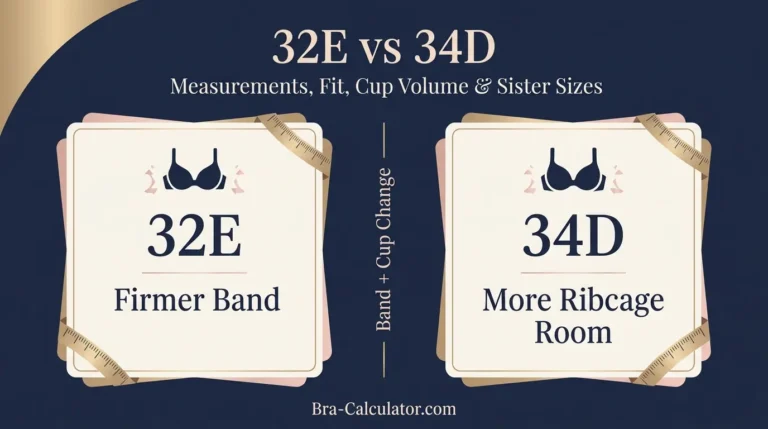
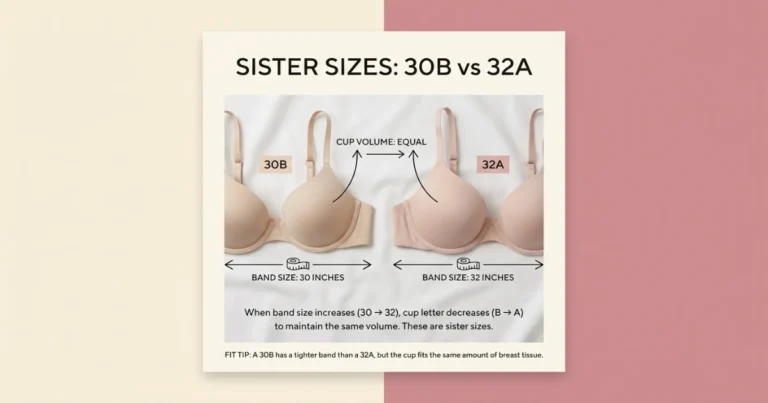
Sister sizes preserve similar cup volume while changing the band. For F cup, sister sizing is useful when the cup volume feels right but the band is wrong. If a 34F cup fits but the band rides up, try 32FF in UK-style sizing. If a 34F band feels too tight but the cup volume feels close, try 36E.
Remember that sister sizes are similar in volume, not identical in feel. Wire width, strap placement, and cup shape can shift as the band changes. For F cup, the tighter sister size often gives better support because the band anchors more firmly.
Rule: Up one band → Down one cup | Rule: Down one band → Up one cup | Example: 34F ≈ 32FF ≈ 36E ≈ 38DD.
| Reference Size | Tighter Sister Size | Looser Sister Size |
|---|---|---|
| 32F | 30FF | 34E |
| 34F | 32FF | 36E |
| 36F | 34FF | 38E |
| 38F | 36FF | 40E |
F Cup vs Other Sizes
These comparisons help you understand when F cup is right and when you may need E, G, or a sister size instead. At F cup, small fit errors become obvious because cup depth, gore position, side containment, and band tension all affect comfort.
- About 7-inch bust difference
- More cup depth than E / DDD
- Better if E cup spills or gore floats
- About 6-inch bust difference
- One cup smaller in many systems
- Better if F cup wrinkles or feels too deep
- Full-bust size
- Usually easier to find than G in mainstream brands
- Good if cups contain smoothly
- More depth and volume
- Try G if F cup cuts in, spills, or feels too shallow
- Reference F cup size
- Good if 34 band stays level and firm
- Tighter sister size
- Similar cup volume
- Better if 34 band rides up
- Firmer band than 36E
- Usually better support if underbust is closer to 33–34 inches
- Looser sister size
- Similar cup volume
- Use only if 34 band is genuinely too tight
Best Bra Styles for F Cup
F cup usually needs bras built for real support, not just shape. The best F cup bras have a firm band, enough lower cup depth, stable wires, supportive side panels, and straps that help distribute pressure. Heavy padding is rarely the answer. Structure is the answer.
Brings side tissue forward, creates a narrower silhouette, and reduces underarm spillage.
Multi-part cups provide depth and lift without relying on stiff foam or bulky padding.
Great for soft tissue, fuller shapes, and anyone who wants more coverage and movement control.
Works for close-set breasts or low necklines, as long as the cup has enough depth.
Can flatten the bust, push tissue sideways, or make the center gore float.
Fine for resting, but usually not supportive enough for long wear at F cup.
Common Fit Problems with F Cup
The cup may be too small, too shallow, or too closed at the top.
The cups may not have enough depth, or the band may be too loose to pull the bra into position.
The band is too loose and cannot anchor full-bust volume properly.
The cup may be too small or the wire too narrow for your root width.
The straps are carrying too much weight because the band is not supporting enough.
International Size Conversion for F Cup
F cup conversion can vary across countries and brands. In UK sizing, F is a clear step after E. In some US brands, the equivalent may be labeled G or F depending on whether the brand uses DDD, E, F, or G in its sequence. EU sizing often shifts the label again. This is why you should always check the brand’s chart before buying.
For example, a UK 34F may convert differently in US brands depending on the cup sequence. Use the Global Bra Size Converter before buying internationally so you match both the band and cup correctly.
Related F Cup Tools & Guides
Use these supporting pages to confirm your size, compare cup visuals, and find a better sister size if your current F cup bra does not fit smoothly.
| Guide / Tool | Why It Helps |
|---|---|
| Bra Size Calculator | Calculate your exact band and cup size from measurements. |
| Cup Size Visuals | Compare F cup with A, B, C, D, DD, DDD/E, G, H, and J visually. |
| Sister Size Calculator | Find sister sizes like 34F, 32FF, 36E, and 38DD. |
| Global Bra Size Converter | Convert F cup sizes across US, UK, EU, AU, FR, JP, and more. |
Continue the Cup Size Guide Series
If F cup is close but not perfect, compare it with nearby cup sizes and sister sizes before buying. At this range, cup depth, side support, wire width, and band tension can completely change the fit.
| Next Step | Best For |
|---|---|
| ← DDD / E Cup Size Guide | Use this if F cups wrinkle, feel too deep, or leave empty space. |
| G Cup Size Guide → | Use this if F cups spill, cut in, or make the center gore float. |
| Cup Size Visuals → | Compare F cup with all nearby cup sizes visually. |
| AI Smart Fit Calculator → | Check whether the issue is cup depth, band tension, wire width, or sizing-system confusion. |
Frequently Asked Questions
An F cup usually means your full bust is about 7 inches larger than your underbust. The real volume depends on band size and the brand’s sizing system.
F cup is generally considered full-bust, but a 30F is much smaller in total volume than a 40F because cup volume scales with band size.
In UK-style sizing, common sister sizes of 34F include 32FF and 36E. 38DD is another looser sister size with similar cup volume.
Usually yes, F is one cup larger than DDD / E in many systems. But US and UK labels vary, so always check the brand chart.
Choose F cup if E cups spill, cut in, or make the center gore float. Choose E if F cups wrinkle, gape, or feel too deep.
Side spillage usually means the cup is too small, too shallow, or the wire is too narrow. Try deeper cups, side-support bras, or one cup larger.
34F and 36E are sister sizes in UK-style sizing with similar cup volume, but 36E has a looser band and may feel less supportive.
Yes, but choose wireless bras with a strong underband, wide straps, and structured cups. Thin fashion bralettes are usually better for lounging.
E or DDD is usually one cup smaller than F in many sizing systems, though labels vary by brand.
G cup or UK FF is usually the next step up depending on the sizing system.
The band may be too loose. The band should carry most of the support. Try a firmer band, wider straps, and better side support.
Projected F cup breasts usually fit best in seamed balconettes, deep plunge bras, side-support bras, and full-cup bras with immediate depth near the wire.
Find Your Best F Cup Fit
Measure your underbust and bust to confirm whether F cup, E cup, G cup, or a sister size is your most comfortable match.