Cups Fit but Band Too Tight? Find the Right Sister Size
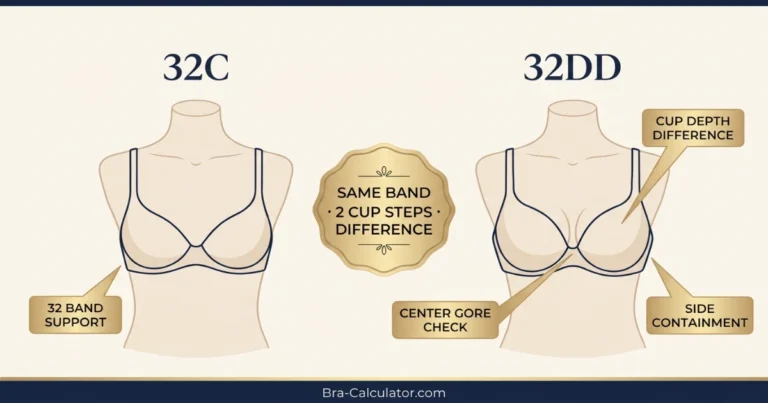
If your cups fit but band too tight is the problem, do not automatically buy the same cup letter on a larger band. The cleaner adjustment is usually a sister size: one band up and one cup step down, after confirming the cups really do fit.

Quick answer: cups fit but band too tight—what size next?
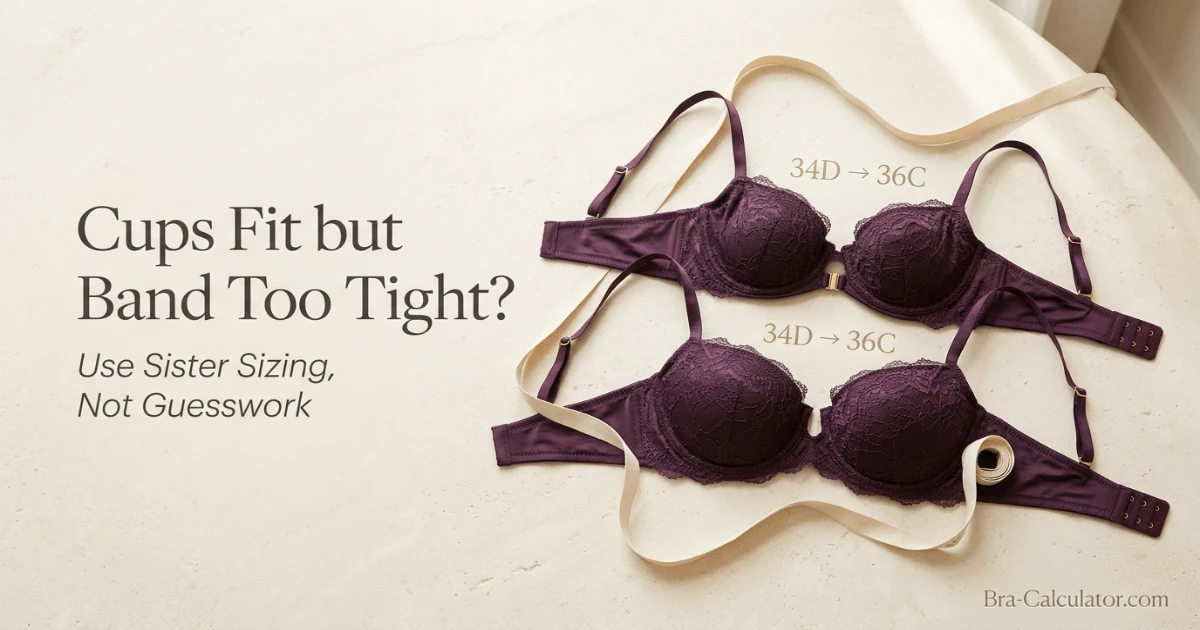
Usually move up one band and down one cup step. For example, 34D commonly sister-sizes to 36C for more band room with roughly similar cup capacity. But first make sure a too-small or too-shallow cup is not creating false band tightness.
Cups Fit but Band Too Tight: What Does That Mean?
If the cups genuinely fit but the band is too tight, the cleanest adjustment is usually a sister size: move up one band size and down one cup letter step. That keeps cup capacity approximately similar while giving the ribcage more room.
First Confirm That the Cups Really Fit
“The cups fit” should mean more than “I can get my breasts inside them.” Before changing the band, check that the cup is holding tissue without overflow, wrinkling or wire pressure.
- The top edge lies smoothly without cutting in.
- The center gore is stable when the bra design is intended to tack.
- The underwire surrounds breast tissue rather than sitting on it.
- The lower cup has enough depth and is not being pushed down.
- There is no obvious empty fabric or repeated gaping.
If the cups fail several of these checks, use the Bra Size Calculator instead of sister sizing from an already-wrong starting point.
Use the Band-Only Test
Fasten the bra backwards and upside down so the cups hang away from the body. This isolates the band.
- Use the loosest hook.
- Take a comfortable full breath.
- Sit and move normally.
- Notice whether the band alone still feels painfully tight.
If the band becomes comfortable when the cups are removed from the equation, the cup size or cup shape is probably contributing to the pressure.
How Sister Sizing Fixes a Tight Band
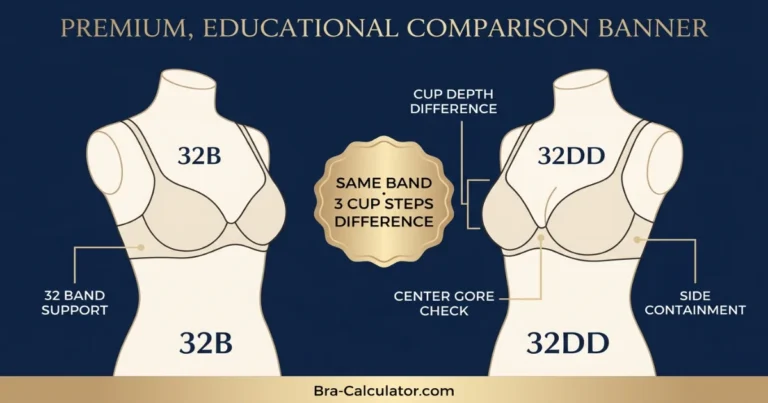
Sister sizes preserve approximately similar cup volume across neighboring band sizes. When you go up one band, you normally go down one cup step. When you go down one band, you go up one cup step.
| Current size | If band is too tight | If band is too loose |
|---|---|---|
| 32DD | 34D | 30E / equivalent depending on system |
| 34D | 36C | 32DD |
| 36C | 38B | 34D |
| 38DD | 40D | 36E / equivalent depending on system |
Because cup lettering changes between US, UK and EU systems, use the Sister Size Bra Calculator or Global Bra Size Converter when the brand uses a different progression.
When a Bra Extender Makes More Sense
If the band is only slightly firm, a non-elastic extender can be a practical bridge. It is especially useful when you are between sizes, the cups and wires fit beautifully, or the band is likely to relax after a few wears.
An extender is not the best fix when the band is several inches too small, the cup is too shallow, the wires sit on tissue, or the entire bra frame feels distorted.
Sometimes the Band Size Is Fine but the Construction Is Wrong
Two bras in the same labeled size can feel very different. Narrow elastic concentrates pressure. Wide wings distribute it. Firm power mesh feels tighter than soft stretch fabric. Longline bands, tall side wings and rigid underwire frames can also change comfort.
If one 34D feels painful and another 34D feels perfect, do not assume your body is the problem. The pattern and materials may simply suit you differently.
What If the Tight Band Leaves Marks?
Light temporary lines can happen with close-fitting support. Deep grooves, persistent redness, pain, burning, numbness or broken skin are different. Use Are Bra Marks Normal? to separate ordinary pressure from a fit problem.
Best Adjustment Order
- Scoop and swoop fully. Make sure tissue is actually inside the cups.
- Confirm cup containment. Look for overflow, floating gore and wire pressure.
- Test the band by itself.
- If cups fit and band is genuinely tight, sister-size up one band.
- If the band is only slightly firm, consider a non-elastic extender first.
- Retest in the same bra model. Sister sizing is most informative when construction stays constant.
Important: A sister size is a fit adjustment, not a statement that two labeled sizes are identical. The cup wire, strap position and frame can still change as the band changes.
Need the exact sister size?
Enter your current size and move one band up or down without guessing the matching cup.
Find My Sister SizeFrequently Asked Questions
What should I do if the cups fit but the band is too tight?
If the cups truly fit and the band alone is too tight, move up one band and down one cup step to a sister size, or try a non-elastic extender for a small adjustment.
What is the sister size of 34D for a looser band?
A common sister-size move is 34D to 36C. The band becomes larger while cup capacity stays approximately similar.
Can small cups make a bra band feel too tight?
Yes. If the cups are too small or shallow, breast tissue can push the bra away from the body and increase tension around the band.
Should I just buy a bigger band?
Not without adjusting the cup. Going up a band while keeping the same cup letter also increases cup volume and may create a new fit problem.
Is a bra extender better than sister sizing?
An extender is useful for a small temporary adjustment when the cups and wires fit well. Sister sizing is better when the band itself is clearly the wrong size.
Why does one bra band feel tighter than another in the same size?
Elastic firmness, wing height, fabric, seam construction and pattern grading can make bras with the same label feel different.
Will a sister size fit exactly the same?
No. Cup capacity is approximately similar, but wire width, strap spacing and frame proportions can change with the band.
Related Bra Fit Guides
Share This Fit Guide
About this guide: Prepared for Bra-Calculator.com and reviewed by Amelia, Founder & CEO. This page explains bra-fitting principles for educational purposes. Persistent pain, unusual breast changes or significant skin symptoms should be discussed with a qualified healthcare professional.