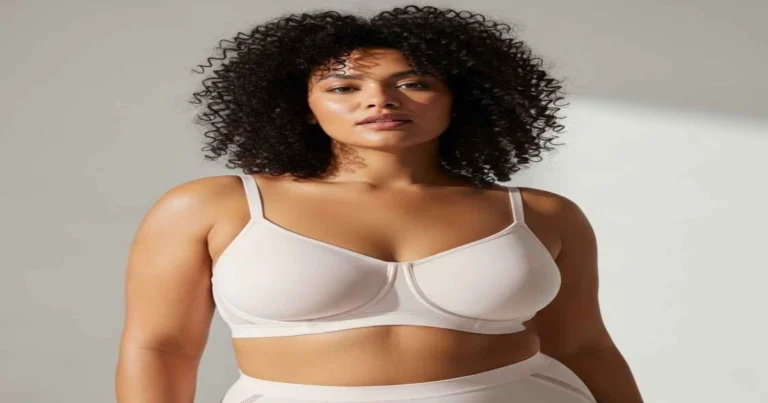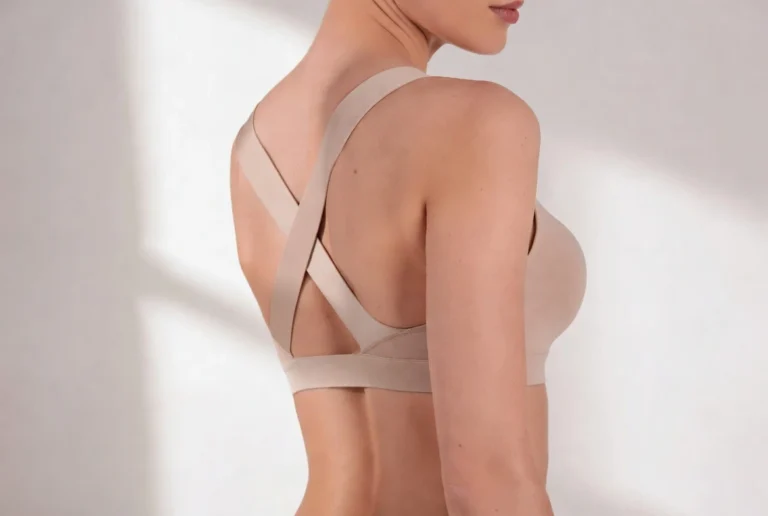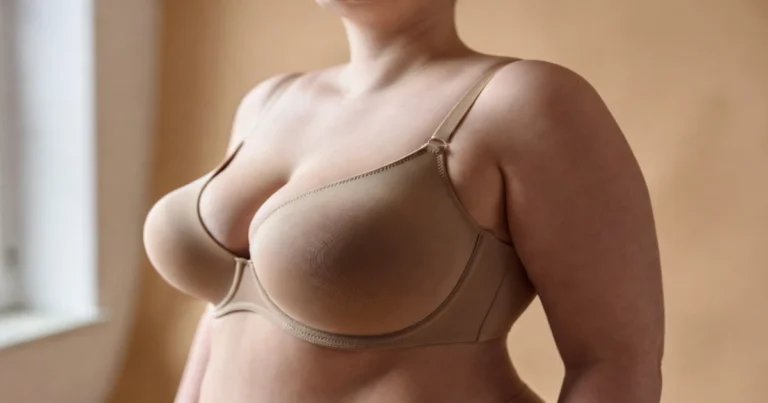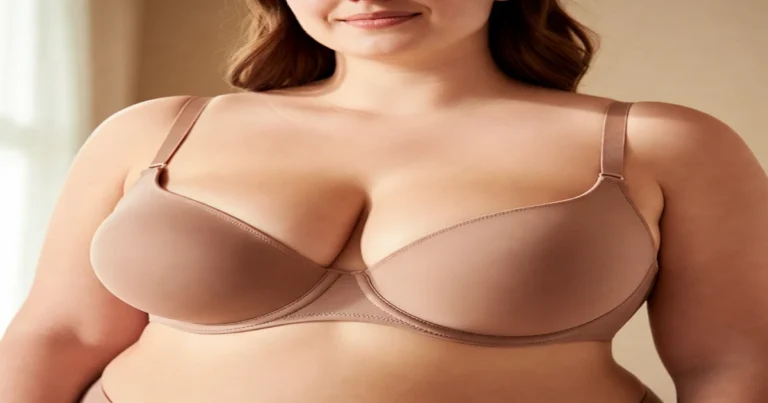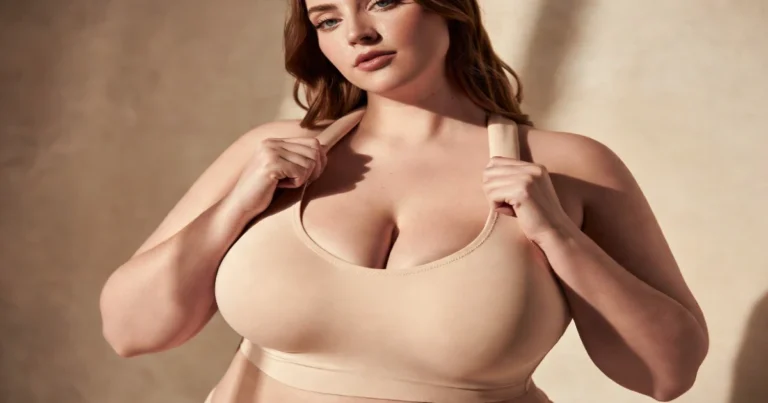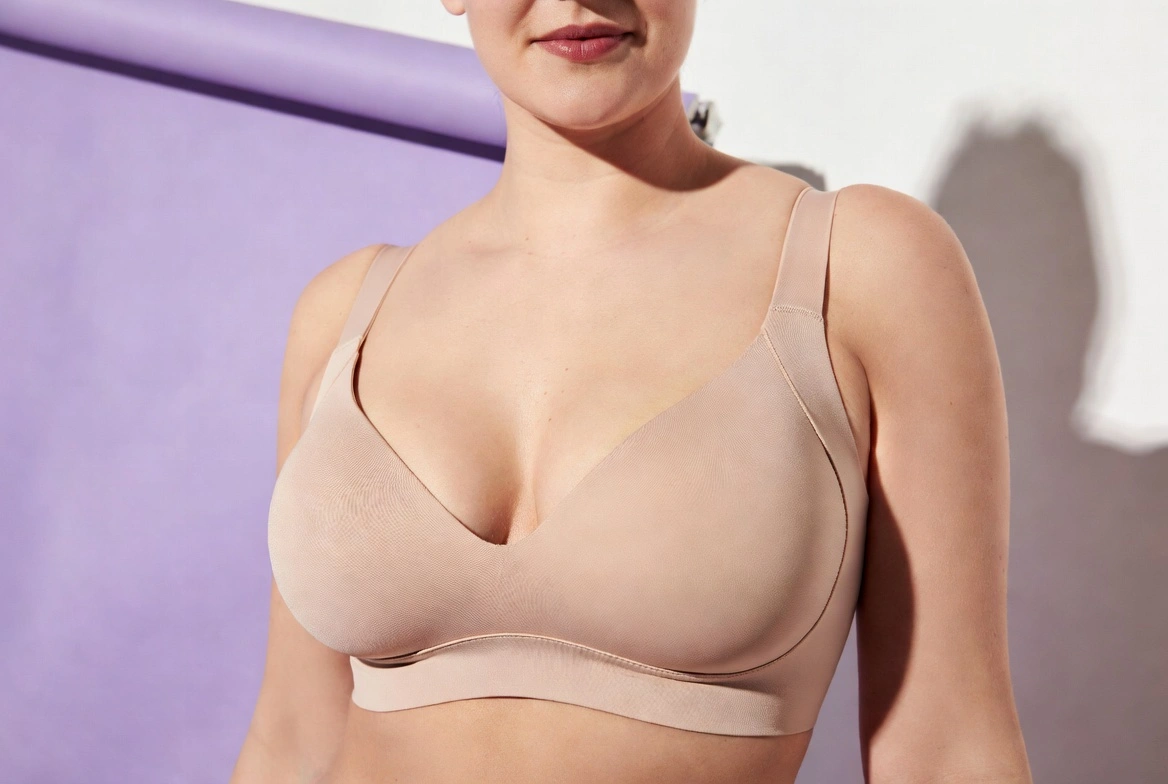
Lifting bras for large busts provide solid lift, stable support and a sleek silhouette without tension. Well-designed bras feature wide straps, sturdy underwire or molded cups, and side panels that direct breast tissue to the front.
Breathable fabric, tall wings and U-shaped backs cut bounce and spread weight. The right fit employs tight bands, centered gores, and no-spill cups.
To help you choose wisely, the guide below breaks down styles, fit tips, and best picks by need.
What Defines Large Bust Lifting Bras?
Large bust lifting bras utilize firm construction and impeccable sizing to provide the right fit for larger breasts. These supportive bras are designed to raise breast tissue off the torso, reduce bounce, and maintain posture without pressure points throughout the day.
- Reinforced bands and wings
- Full coverage cups with shaping panels
- Wide, sturdy straps with minimal stretch
- Cushioned underwires or engineered wire-free frames
- Moisture-wicking, breathable fabrics
- Multiple hook-and-eye rows for fit and stability
- Options like minimizer, posture, balconette, demi, and wireless styles
1. The Band
A wide, firm band is the foundation of lift. It should carry most of the weight so shoulders do not. Seek sturdy elastic and a back closure with three or more hook-and-eye rows for a solid, customizable fit.
Check fit by pulling the band at the back. It should give about 5 centimeters, two inches, sit level around the torso, and not ride up. If it rides up, go down a band size or tighten the hooks.
Hard, flexible materials such as power mesh or spandex blends provide stiffness without cutting edges. Side boning can assist in keeping the band flat.
2. The Cups
Full coverage bras with cups prevent spill and maintain shape stability during movement, making them ideal for larger breasts. For heavy breasts, supportive bras with seamed cups, such as cut-and-sew, three-part, or side-support, often lift better than molded T-shirt cups. Demis and balconettes can work effectively when seamed for added structure.
Considering the right fit is crucial, so search DD+ to H and beyond for a suitable size range that offers real depth and width. Internal slings and side panels direct tissue forward and up, enhancing posture and minimizing strain on the body.
Molded or spacer cups can still lift effectively when combined with firm bands. Wireless bras with molded cups and reinforced frames create a chill, off-duty option for everyday wear.
3. The Straps
Choose wide, padded or even fully adjustable straps to distribute weight and alleviate shoulder discomfort.
Opt for low-stretch or textured straps that don’t slip. Racerback or J-hook options provide back support and pull weight inward. Thin straps dig and slip, which increases pressure and can lead to indentations.
4. The Wires
Soft, supportive underwires lift and separate when the cup completely encases tissue without prodding. Wire placement should follow the root from center to side to avoid shifting.
If wires aren’t your jam, seek out wireless frames featuring inner slings and a fortified band for secure lift.
5. The Fabric
Breathable, moisture-wicking knits handle heat for everyday wear or light sport. Soft organic cotton, nylon-spandex or power mesh blends provide stretch with recovery.
Smooth and seamless hide under thin tops. Lace or mesh can be stylish and backed by firm linings.
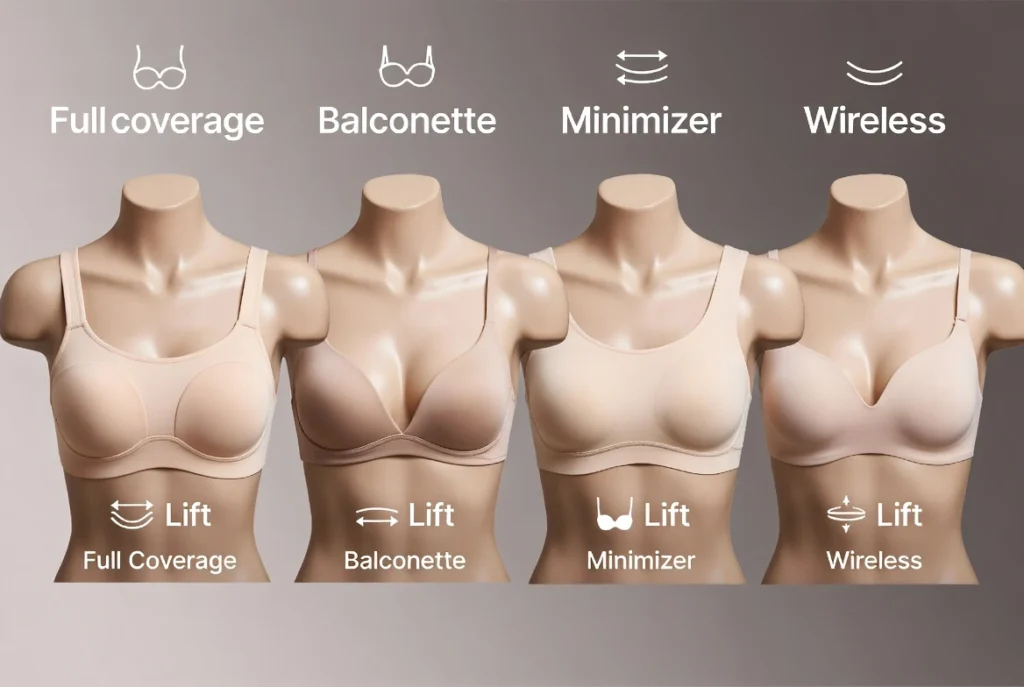
Find Your Perfect Lift
Large bust lifting bras work best when style complements shape and support desires. Begin by recording breast shape (full on top, full on bottom, wide-set, close-set, or asymmetric) and select cup construction accordingly.
Three or four-part cups shape and separate beautifully, while full cups feel secure all day. Fit the band first; it should feel snug and level as the band does most of the work while straps contribute roughly 20 percent of support.
List must-have features like full coverage, minimizer or wire-free to whittle down your options. Test more than one style — balconette, plunge or high-support sports — since underwire versus wireless can shift comfort.
Use brand size charts or online fit tools, then recheck size annually. Breast size changes with weight, hormones, and age.
| Bra Style | Lift Level | Best For | Pros | Cons |
|---|---|---|---|---|
| Full Coverage Bra | ★★★★★ High | Daily wear, all-day hold, heavy busts | Maximum lift, no spill, great posture | Higher neckline |
| Balconette Bra | ★★★★☆ Medium-High | Scoop tops, wide-set breasts | Beautiful shape, open neckline lift | Not ideal for very soft tissue |
| Minimizer Bra | ★★★★☆ Medium-High | Button-downs, projection reduction | Smooths silhouette, reduces bounce | Can feel compressive |
| Wireless Lifting Bra | ★★★☆☆ Medium | Comfort days, travel | No wire pain, supportive band | Not as strong as underwire |
| Posture Support Bra | ★★★★★ High | Neck pain, back strain | Alignment support, reduces tension | Not ideal for low necklines |
| Side-Support Seamed Bra | ★★★★★ High | Wide-set or east-west tissue | Centers fullness, strong uplift | Seams may show under thin tops |
| High-Impact Sports Bra | ★★★★★ High | Exercise, bouncing control | Maximum stability | Bulky for daily wear |
Full Coverage
Full coverage bras hold in the volume and prevent spill at the center and sides, which provides smoothing lines under light knits and work tops. A full cup is an easy, cozy choice to keep you going through those long days.
They fit daily wear, commutes, and desk work where constant support is key. Seek out breathable, premium fabrics that feel soft yet still maintain their form through hours, heat, and movement.
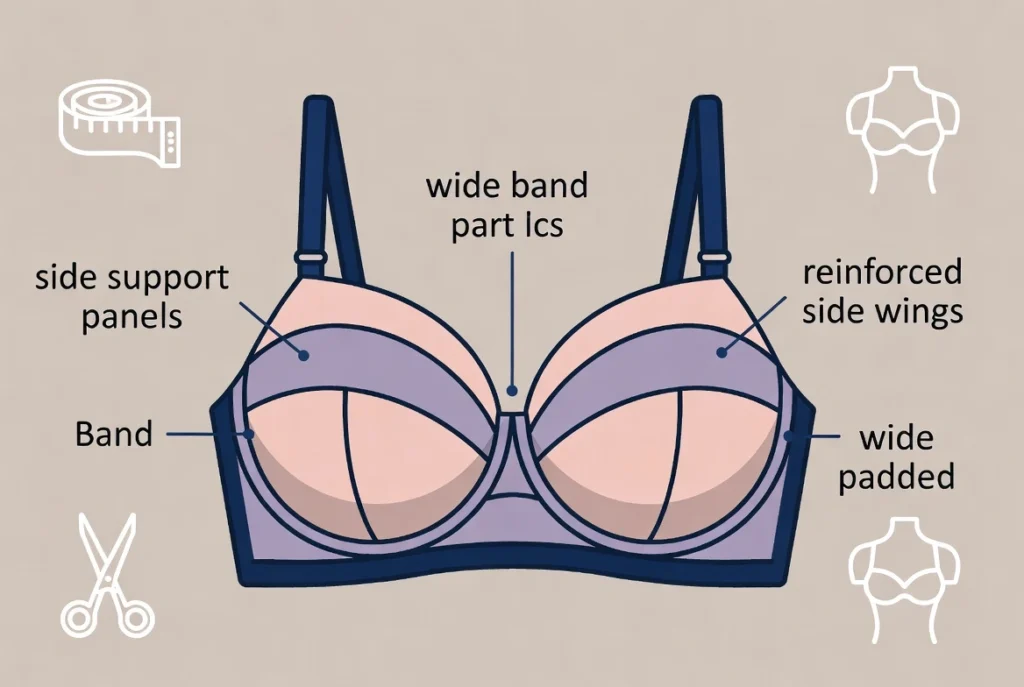
Reinforced side panels direct tissue forward for lift and a smoother silhouette. Wide bands stabilize the ribcage. Padded straps ease pressure and reduce shoulder strain.
The right support can aid posture and reduce late-day pain.
Balconette
A balconette lifts from the base and provides a rounded top with a lower neckline. It makes space for scoop and square necks while not losing support.
To build cleavage with control, opt for durable underwire and molded cups. Wide-set straps distribute weight favorably on the shoulders and remain inconspicuous near open necklines.
Mind the band first. A snug, parallel band keeps the cups anchored so the lift holds up from morning to night.
Minimizer
| Feature | What it does | Best for | Sizing note |
|---|---|---|---|
| Compression + shaping | Redistributes tissue for a smaller look | Button-downs, fitted tops (no gaping) | Broad size range, multiple cup volumes |
| Full coverage cups | Limits spill and smooths profile | Workwear, uniforms | Check brand chart before buying |
| Reinforced seams | Adds structure and lift | All-day support | Three- or four-part cups shape best |
Opt for breathable fabrics with solid bands in supportive bras. This holds the chest steady and alleviates shoulder tension throughout the day.
Wire-Free
Wireless styles are for the girls that want comfort without sacrificing lift. Choose molded cups, a broad, sturdy band, and side support panels.
It’s the band that has to do the heavy lifting. These are great for lounging, sleeping, and low-impact days. Premium fabrics keep the bra’s shape while remaining cool on skin.
Adjustable straps count for a personalized fit. Check size again once a year. Fit shifts and the right size lifts posture and day-long comfort.
| Breast Shape | Best Lifting Bra Styles | Why It Works |
|---|---|---|
| Full on Top | Full Coverage, Balconette, Side-Support | Prevents cutting-in, enhances roundness |
| Full on Bottom | Balconette, 3-Part Seamed, Posture Bra | Lifts from the base and boosts projection |
| Wide-Set | Side-Support Bra, Balconette, Narrow Gore Styles | Centers the tissue and reduces east-west spread |
| Close-Set | Plunge, T-Shirt Bra, Light Minimizers | Creates defined separation without pressure |
| Asymmetric | Stretch Lace Cups, Multi-Part Seamed Cups | Flexibility on one side, balanced profile |
| Shallow / Wide-root | Minimizer, Balconette, Molded Cups | Distributes volume evenly and adds structure |
| Projected / Narrow-root | Full Coverage, Deep Cups, Posture Bras | Allows vertical space + keeps tissue lifted |
The Posture Connection
Posture-support bras, especially for larger breasts, take care of the burden of a heavy bust, alleviating pain and slouch. Breasts change biomechanics significantly. A study connects bra size and use to thoracic spine load and muscle strain. A D-cup pair can weigh roughly 1.5 kg, adding stress on your back and shoulders daily.
- Slouching and rounded shoulders? Lift and center the bust to ensure reduction.
- Support your spine with posture bras and closure posture back bras that gently pull the shoulders back.
- Reduce lower neck and upper back strain with even weight distribution.
- Improve breathing by freeing the rib cage.
- Cut pressure points for long work or travel.
- Support long-term musculoskeletal health when used daily with a good fit.
Weight Distribution
Even weight across the band and straps is what counts the most. The band does the majority of the lift, while the straps fine-tune lift without digging. This balance diminishes hotspots and maintains upper body alignment for hours on end.
Choose wide, cushioned straps and a firm, three to four hook band. Seek out full coverage cups with stiff fabric or a lightly lined cup that maintains shape. These features come in handy whether you’re jogging for a bus, sitting at a desk, or standing in a lab all day.
Posture bras with reinforced back panels provide balance. The Posture Connection A U-shaped or criss-cross back can steady your shoulder blades and curb their forward roll. Suspect anything with thin straps or loose bands that slip and shove all the weight to the trapezius.
If you’re yanking or readjusting all day, that’s a red flag. Get a refit every 6 to 12 months, as body changes can impact support.
Spinal Alignment
Supportive bras, particularly full coverage bras, lift the bust back closer towards the body’s center of mass, reducing forward pull on the thoracic spine. Research associates larger breasts with thoracic kyphosis and pain, especially in postmenopausal women. Therefore, alignment assistance is not just aesthetic; it is skeletal.
Select posture bras with back target designs, such as criss-cross or posture-back closures, that cue upright posture. Wide bands and full coverage cups stabilize soft tissue, help shoulder blades glide and reduce rib flare. Good alignment can relieve neck pain and breathing feels less labored during extended meetings or commutes.
Daily cues help: set reminders to relax the jaw, drop the ribs, and stack ears over shoulders. A good supportive bra ensures these cues last longer.
Muscle Strain
Without support, it puts strain on the neck, shoulders, and upper back. Breast and chest pain, slouching, and back pain are common complaints of large-breasted women when bras don’t hold weight properly.
Use ergonomic features: padded straps, reinforced bands, and side support to reduce muscle fatigue. Cycle styles—posture-back one day, high-support T-shirt the next—to prevent overuse of the same muscle groups.
Fit is step one for pain control and fewer tension headaches: snug band measured in centimeters, centered wire, straps that don’t dig, and cups without spill.
Beyond the Label
Zero in on build, not buzzwords. Use a simple checklist before you buy: cup structure (multi-part or molded), seam placement, side and back panels, closure type and strength, strap width and options, band firmness, fabric breathability, edge finishes, and size range.
Note fit cues: the band should feel snug on the first set of hooks, straps adjust without digging, cups enclose tissue with no spillage, and closures sit flat. Track comfort for the top two brands and models at 2 hours and 8 hours. Inspect quality: even stitching, stable elastics, smooth linings, and fabrics that hold shape over time.
Seam Construction
Seams contour the cup, define lift height, and control weight, making them essential for finding the right fit in supportive bras. Vertical and diagonal seams serve as scaffolding, guiding tissue forward and upward without the use of hard padding, which is especially beneficial for larger breasts. For heavy or uneven breasts, a three or four part seamed cup provides a more precise contour than a one molded cup, ensuring that your full coverage bra appears tidier under woven shirts.
When selecting your bra, choose styles with clean, flat seam joins and soft thread to enhance comfort. Raised or scratchy seams can chafe along the apex or underarm and be visible through thin knits, so opt for multi-part cups with a side support panel. This feature centers fullness and minimizes east-west spread, ensuring your large busts are well supported.
Say goodbye to cheap seams that fall apart by lunch or wide, bulky seams that print through T-shirts. For a smoother silhouette, look for ‘low-profile’ seamed cups that employ fine lining to quiet seam lines, making them a game changer bra for everyday wear.
Panel Design
Side support panels and inside slings give you shape and prevent side spill. They steer tissue anteriorly, enhancing lift and decreasing the ‘wide under the top’ appearance. Seek out targeted panels near the underarm to squelch bulging and inner slings that support the base of the breast for inflexible stability during motion.
Posture bras with reinforced back or front panels can aid alignment if you sport weight high on the chest. A firm U-back can stabilize straps and relieve neck tension. Panel placement drives comfort: a tall wing smooths the side, while a cushioned bridge supports close set tissue.
Match fabric to skin needs. Light, breathable linings feel cooler. Some fabrics can dig or itch, so test for hotspots.
Closure System
Opt for multi-hook back closures with three or four hooks in larger bands for security, even pressure, and convenient daily tightening as elastics loosen. Front closures are great for those who want easy on-off or have restricted shoulder mobility.
Make sure the clasp is secure and does not press against the sternum. Strong, well-bartacked closures maintain lift throughout long work days. See where the closure sits. Low back placements can rub, while padded back tabs ease pressure points.
Rotate bras, monitor for any frayed, pilled, or stretched-out fabric, and pay attention to color selections—some lines have more than twenty—but measure longevity based on quality, wear, and maintenance.
Convertible adjustable straps, such as crisscross, halter, or regular, can help dial in the fit between sizes, but keep in mind the band does the heavy lifting. Fit is personal: band, cup, and strap settings all matter.
The Sizing Reality
Sizing isn’t universal and large-bust lifting bras accentuate that divide. Brands have various sizing systems, such as US, EU, and FR, so the same individual may fit into varying tags in each. Record your existing size, favorite wire width, cup depth, and band tension in a notes app.
Consult brand-specific charts before you shop and have sister sizes on hand for quick discoveries.
| System | Band Labeling | Example Size | Sister Size (same cup volume) |
|---|---|---|---|
| US | 28–46 | 34F (US) | 32G, 36E (US) |
| UK | 28–46 | 34F (UK) | 32FF, 36E (UK) |
| EU | 60–105 | 75G (EU) | 70H, 80F (EU) |
| FR | 75–120 | 90G (FR) | 85H, 95F (FR) |
Note: Sizing shifts by brand. Confirm each chart. A fast size quiz gets you in the ballpark, but tape measures and try-ons close the deal.

Band Measurement
Sizing Truths. Measure firmly, not tight, around the ribcage under the bust. Measure in centimeters for precision, then convert to the brand’s band scale.
The band ought to remain flat and parallel to the ground. If it rides up, your band is too loose. If it digs or rakes deep scars, it is probably too small or the rubber is hard.
Change the band when you experience slip, bounce, or pain. The band provides approximately 80% of support, while straps provide around 20%. Therefore, it is the band that should be adjusted first when lift is insufficient.
For heavy tissue, a strong band with a high wing or hook count of 3 to 4 can secure more effectively than a soft band. Check the center gore: it should rest flat on the sternum. If it floats, your band and cup combo is wrong.
Cup Volume
Take your bust measurement at the fullest point and subtract the ribcage measurement taken snugly. Convert that difference to the brand’s cup scale. Search for an even line from cup to breast.
Keep an eye out for spaces, overflow, or creases. Gaping is usually indicative of too big a cup or too shallow a shape. Spillage or a high center gore digging in indicates too small a cup or too narrow a wire.
Seek extended ranges: DD+, DDD/F, G, H, and beyond. Most large bust lines begin true lift at G to K. Shape matters: projected breasts often prefer deeper cups and narrower wires.
Wide-root or shallow shapes like wider wires and more open necklines. A perfect fit is like a second skin. There are no pinches, no slip, and there is solid support through dance moves.
Sister Sizing
Sister sizing maintains cup volume as you move the band up or down. Move down one band from 36 to 34 and up one cup letter from E to F, or vice versa, to contain the same volume.
With sister size charts, map frequent swaps across US/UK/EU labels. That comes in handy when your size is sold out or one brand’s elastic runs loose or firm.
Experiment with sister sizes to address issues with wire width, strap placement, or gore height. It provides space to accommodate various ribcage shapes and tissue placement.
Rotate bras, hand-wash or use a mesh bag, and lay flat to dry. Proper maintenance saves lift and life!
Highest Lift
Full Coverage • Side Support • Posture Bras
Perfect for heavy busts, posture improvement, and strong daily support.
Best Shape
Balconette • 3-Part Seamed Cups
Gives a round, lifted shape ideal for fitted tops and open necklines.
Most Comfortable
Wireless • Soft Molded • Spacer Cup
Great for long days, travel, and breathable comfort.
Projection Reduction
Minimizer Bras
Best for button-downs, uniforms, and smoothing front silhouette.
Best for Pain Relief
Posture Bras • U-Back Styles • Wide Bands
Helps reduce neck strain, trap tension, and rounded shoulders.
Bounce Control
High-Impact Encapsulation Sports Bras
Provides maximum lift and stability during running or workouts.
My Fitting Philosophy
Strong lift for a large bust starts with a good supportive bra, not as an add-on but as the base layer that shapes how clothes sit, move, and feel. The goal is simple: comfort, support, and quiet confidence you do not need to think about all day. That takes a practical plan you can use anywhere, even if options are slim where you live.
Prioritize comfort, support, and confidence in every choice
Comfort is not mushy at any price. To me, it translates to a band that’s solid and stays straight, cups that contain without compressing, and straps that assist but never burrow. For lift, seek out three or four piece cups, side panels, and a center gore that lays flat.
Flat seams under a t-shirt bra, a U-back for strap stability, and wide wings help smooth and anchor. If it feels good when you take it off, the fit was wrong. My fitting philosophy is that the right bra should make your clothes hang clean and your shoulders relax.
Reassess size and fit as your body changes
Bodies move throughout the day, month, and year. Heat, travel, salt, weight fluctuations, and hormones will all swell tissue a few centimeters. Re-fit every 6 to 12 months or after any change.
Use a mirror test: the band stays at the mid-back, wires sit behind breast tissue, there is no top or side spill, and straps are adjusted so two fingers fit underneath. If the top cup cuts in by evening, attempt a stretch-lace upper cup or move up a cup with a firm band.
Try styles, brands, and features to find your best match
Tags are different. A 34F here fits like a 32G there. Track what works: cup depth, wire width, wing height. For daily wear, molded t-shirt bras smooth lines.
For high impact, encapsulation sports bras with a firm band reduce bounce. For work shirts, minimizers redistribute volume for a flatter front. For wide-set breast tissue, gores that come together on your sternum work best.
For petite torsos, shorter gores and slimmer wires are ideal. If stores are sparse, order two sister sizes online and send back what does not fit. Become adept at skimming size charts and cup depth in centimeters and return policies.
Invest in quality for posture, health, and well-being
Quality reduces weight from the neck and distributes load across the torso, which aids posture and limits strain. Anticipate ambitious bands, grounded fabrics, solid elastics and cup seams that retain form after countless washes.
So, once and for all, here’s my fitting philosophy – pay once for a bra that lasts, not cycle through cheap stretch. Hand wash or bag, line dry, and rotate three to five bras to extend life. This is an investment in you, not a luxury.
Conclusion
Strong lift begins with fit, not hyperbole. Know your measurements. Know your shape. Examine band tension. Look at the cup height. Test under arm wire width. Little hacks repair major pull. A snug band steals load off your shoulders. Supportive straps stabilize the elevation. A tall gore centers and holds.
Real lift manifests in your daily experience. Less bounce on a brisk walk. Less red marks at the end of a long day. More free breath and a taller stance at your desk. Consider balconette for open necklines. Go full cup for maximum hold. Go for side support if tissue travels east west.
Next step: take three sizes into a well-lit room. Walk, twist, sit down. Track comfort and lift. Need assistance? Drop your band, cup, and goals! I can at least point you in the direction of a short list!
Frequently Asked Questions
1. What features matter most in a lifting bra for a large bust?
A strong band, multi-part cups, reinforced side panels, wide straps, and moisture-wicking fabric are the core elements that ensure secure lift without shoulder strain.
2. Are seamed cups better for heavy breasts?
Yes. Three- or four-part seamed cups shape and lift more effectively than molded cups because seams act as structural support lines for heavier tissue.
3. Can wireless bras really lift a large bust?
Modern wireless bras with inner slings, molded spacer cups, and firm power-mesh wings can lift well, though underwire still provides the strongest anchoring.
4. Why does the band provide most of the lift?
The band stabilizes the ribcage and carries 70–80% of the weight. A tighter, firmer band prevents bouncing and reduces pressure on the traps and shoulders.
5. What cup shape works best for wide-set breasts?
Balconette and side-support cups with a narrow gore help push tissue forward, correcting east-west spread and improving posture.
6. How do I know my straps are adjusted correctly?
Straps should allow two fingers under them, provide gentle lift, and stay in place without digging or creating shoulder dents.
7. Should I choose a minimizer bra for daily wear?
Yes—if you prefer a smooth silhouette under button-downs. Minimizers redistribute breast volume, reducing projection while maintaining support.
8. Why does my bra band ride up during the day?
A riding band indicates it’s too loose or stretched out. Move down a band size or tighten to the first row of hooks.
9. How do posture-support bras help large busts?
They stabilize shoulder blades, lift weight closer to the body’s center of mass, and reduce chronic pain in the upper back and neck.
10. Can the wrong bra worsen back and shoulder pain?
Absolutely. Loose bands, narrow straps, and shallow cups shift weight upward, increasing muscle strain and encouraging slouching.
11. How often should large-bust bras be replaced?
Every 8–12 months depending on usage. If the band stretches out, straps slip, or cups lose shape, it’s time for a new one.
12. What’s the best bra style for open necklines and heavy breasts?
A balconette with firm underwire, side-support seams, and wide-set straps offers lift while accommodating lower or square necklines.