Shapewear Size Calculator
Amelia B. · Bra Fit Specialist · Use waist, hip, garment type and compression preference to find a safer starting size — without sizing down for stronger pressure.
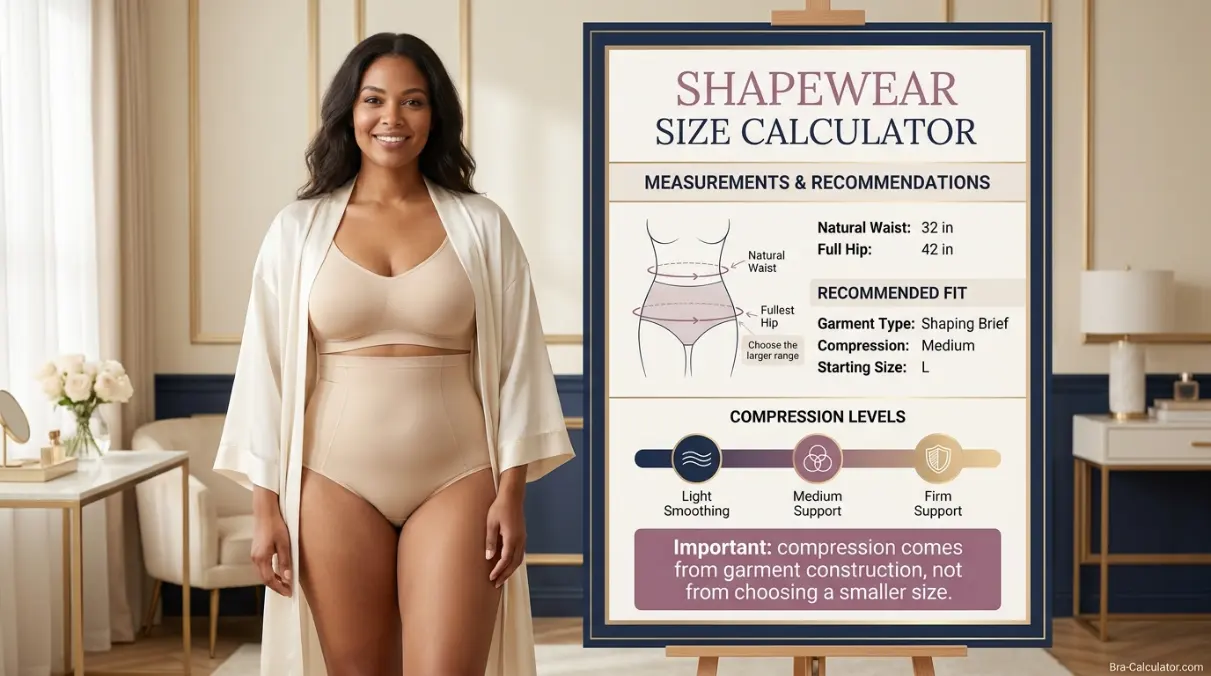
Find your shapewear size using your current natural waist and fullest hip measurements — whichever is larger determines your starting size. Do not size down for more compression. Instead, choose a medium- or firm-support product in the correct size. If measurements fall in different ranges, protect the larger area.
A shapewear size calculator is a tool that takes your natural waist and fullest hip measurements (in inches or centimetres) and returns a starting garment size based on published sizing ranges. It also factors in garment type — brief, cincher, or bodysuit — and compression level (light, medium, or firm) to help you choose the right product, not the smallest label.
In This Guide
- Use the interactive calculator
- Why sizing down fails
- Measurements by garment type
- Choose the compression level
- Why shapewear rolls
- Mixed waist and hip measurements
- Comfort and safety check
- Our measurement-first method
- Verify the product chart
- Compression level vs. size
- At-home fit test
- Common sizing mistakes
- Amazon product comparisons
- Frequently asked questions
Shapewear starting-size calculator
Enter current measurements. The support level changes the product — not the size range.
Why sizing down is not better shaping
Shapewear panels are engineered to create their intended effect at the published size. Selecting a smaller label overloads the fabric, causes seams to distort, concentrates pressure at the hips or waist, and is the primary reason shapewear rolls down or migrates. Discomfort is not evidence of more effective compression.
If you want stronger shaping than a light-smoothing garment provides, choose a medium- or firm-support product in the correct charted size. The support comes from the panel design and fabric density — not from wearing a smaller garment.
Measurements by garment type
Different shapewear garments use different measurements. Using the wrong measurement point is one of the most common reasons a correctly sized garment still fits poorly. If you are unsure how to take these measurements accurately, the How to Measure Panty Size guide explains tape placement for each body point.
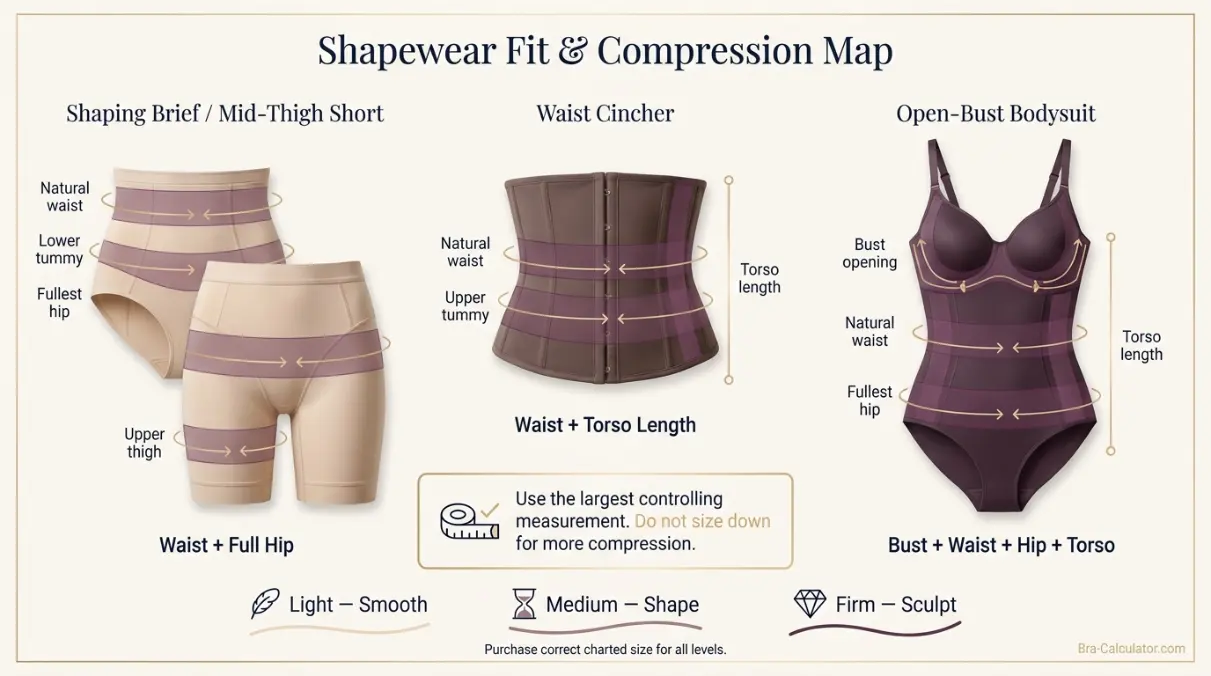
Waist + full hip
Both measurements matter. Long-leg shorts also depend on thigh opening and inseam. Protect the hip if it suggests a larger size than the waist.
Natural waist + torso length
The hip measurement matters less if the garment ends above the fullest hip. Focus on natural waist and the length from your underband to the waistband.
Bust, waist, hip + torso
Bodysuits require four measurements. Torso length determines whether the crotch sits comfortably. Use the brand’s dedicated bodysuit chart, not a generic panty chart.
How to choose the right compression level
Light support uses flexible fabric to smooth visible seams and create a more even layer under clothing. It is usually the most comfortable for full-day wear. Medium support uses structured panels to create a more defined effect in a target zone (waist, tummy, or thigh). Firm support uses denser panels and stronger elastic and provides the most shaping — but should still allow comfortable breathing and two fingers beneath the waistband when seated.
Choose the lightest compression level that achieves the result you need. Moving to a firmer level in the correct size is always preferable to forcing a smaller garment.
Smooth + flexible
Reduce seam lines and create an even base layer. Easiest to wear all day. No significant silhouette change.
Shape + anchor
Mapped panels hold the waist or tummy. Should not roll in the first 30 minutes. Check that the hip fits fully inside the leg band.
Sculpt + hold
Strongest panel design. Follow wear-time guidance from the brand. Never choose this via a smaller size — choose it via product design.
Why shapewear rolls — and how to fix it
Rolling at the waistband is the most common shapewear complaint. It is almost always a fit or design mismatch, not a reason to size down. Common causes and solutions:
Waistband ending at a fold point
If the waistband sits exactly at the widest point of your natural waist curve, movement will push it down. Try a higher-rise style that sits above the curve, or a bodysuit that anchors at the shoulders.
Hip tension pulling the waist down
If the hips are too compressed, the garment tries to migrate upward, pulling the waistband down as a counterforce. The fix is the correct hip size, not a tighter waistband.
Garment bottom sitting too high
If the gusset or leg opening reaches your thigh crease before the fabric is fully extended, the garment has nowhere to go. Choose a style with a longer torso or an open-bottom design.
Outer clothing pulling
Tight pencil skirts or fitted trousers can grip shapewear fabric and pull it down. A longer leg or thigh band, or a smoothing slip layer between garments, reduces this effect.
If you experience persistent rolling despite correct sizing, the Underwear Fit Problems guide covers rise, waistband, and coverage diagnostics in detail.
When waist and hip suggest different sizes
This is the most common sizing conflict in shapewear. The rule is straightforward: protect the larger measurement. Forcing a smaller garment over the hips to achieve a tighter waistband creates pressure, discomfort, and rolling — not a better result.
Start with the hip size
Choose a brief or short in the hip size. Look for styles with contoured waistbands, wide elastic, or ruched back panels that allow more waist flexibility within a larger hip range. This is the same principle as the dress size vs panty size trade-off.
Start with the waist size
For waist cinchers or high-waist briefs, the waist measurement takes priority. Choose a style with enough stretch in the hip panel to accommodate a smaller hip without pulling or gaping at the seat.
Comfort and safety check
Correct-sized shapewear should feel firm but not painful, stable without constant adjustment, and breathable during normal seated and standing activity. If a garment requires hours of “breaking in” to become tolerable, it is the wrong size or compression level.
Our measurement-first method explained
Shapewear labels are not standardised across the industry. A letter label such as “Large” can represent a different waist and hip range depending on brand, compression level, and garment type. Two bodysuits with identical labels from different brands may have completely different torso lengths, panel positions, and fabric recovery.
Our method treats the size label as a starting hypothesis, not a permanent identity. We calculate the starting size from body measurements, then direct shoppers to verify against the specific product chart — because that chart governs what happens in the fitting room.
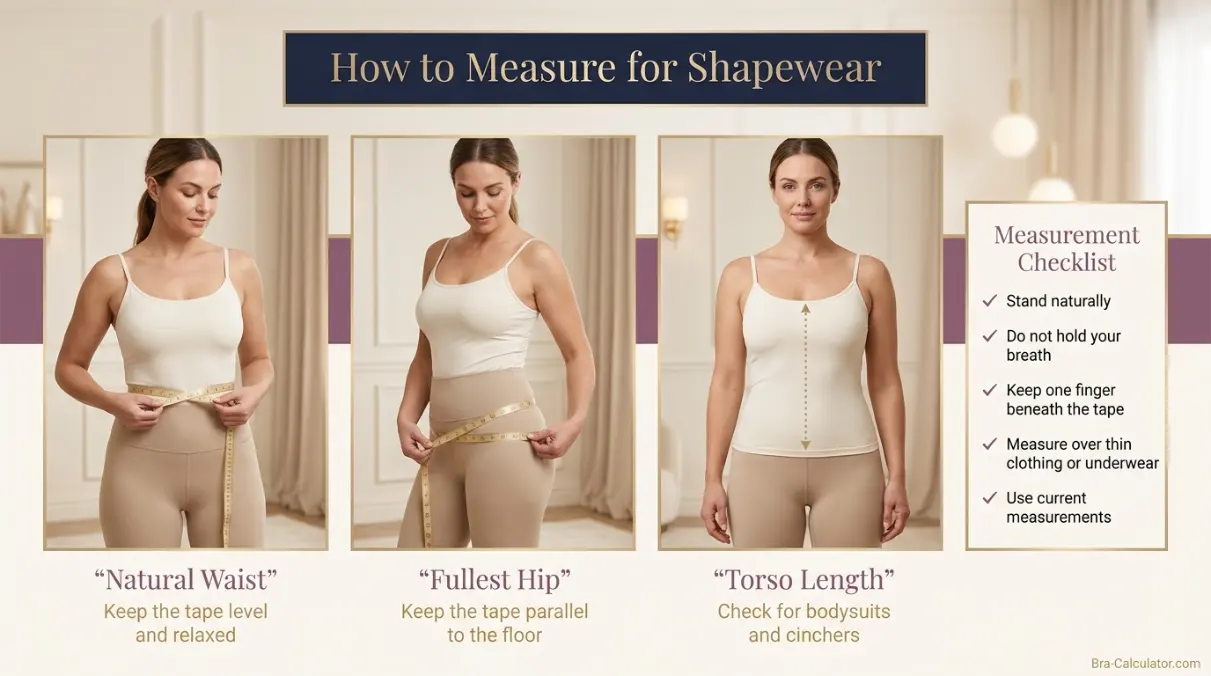
- Measure accurately, not from memory. Use a flexible tape measure and take both waist and hip within the same session. Body measurements change; a measurement from six months ago is not reliable for a compression garment.
- Identify the controlling measurement. For most briefs and shorts, the fullest hip governs. For waist cinchers, the natural waist governs. For bodysuits, use the largest across all measured points.
- Choose the compression level by product design, not by label size. Light, medium, and firm describe how the garment is built — not a prompt to move up or down a label.
- Verify the exact product chart. Confirm that the chart shows body measurements (not garment measurements), and check whether the product uses a separate shapewear chart or shares a chart with regular underwear.
How to verify the product chart before ordering
Find the product-specific chart
Do not assume every collection from the same brand shares one chart. Shapewear, period underwear, and maternity lines frequently use separate charts with different measurement ranges.
Confirm it shows body measurements
Some charts list garment measurements (the actual fabric dimensions), not body measurements. A garment measurement includes ease and stretch — comparing it directly to your body size will give the wrong answer.
Check the return policy before ordering
When two sizes are close, buy both if the retailer permits hygienic return. Try over clean close-fitting underwear, move normally for five minutes, and return the one that fits less well before removing hygiene liners.
Compression level changes the feel — not the size range
Light smoothing, medium shaping, and firm sculpting describe how the garment is engineered. Choosing a higher compression level means selecting a product with denser panels and stronger elastic — in the same size. It does not mean selecting a smaller label.
Everyday, extended wear
Reduces visible lines under fitted clothing. Should feel close, flexible, and easy to sit in for hours. No significant silhouette change expected.
Moderate targeted support
Mapped panels define a specific zone. The waist should feel anchored, not strangled. Hip and seat should have full range of movement when seated.
Firm engineered compression
Choose true chart size. The extra pressure is in the panel density, not the label. Follow brand wear-time guidance. Two fingers under waistband = correct fit.
How to confirm the result after delivery
Use the recommended starting size as a hypothesis. Let movement, pressure and garment stability confirm or reject it before removing hygiene liners.
Check pressure and position
The waistband should stay where the style is designed to sit. It should not create sharp pressure, fold, slide downward or require constant adjustment. A light temporary impression is normal; pain or persistent deep marks are not.
Walk, sit, lift one knee
Leg edges should follow the body contour without cutting into the hip crease or gaping. If they dig while the waist feels loose, the issue is hip room — not an all-over size problem.
Check for calm fabric in motion
Panels should lie flat during seated and standing activity. Bunching, wrinkling, or fabric that needs repeated repositioning indicates a torso length or rise mismatch, not purely a size issue.
Take a full breath seated
Sit fully in a chair and take a slow, deep breath. Correct shapewear allows unrestricted breathing. If you cannot take a full breath comfortably while seated, the garment is too small or the compression level is too high.
- Test for five minutes minimum indoors. Stand, sit, bend, walk and use stairs. A true rolling problem shows up within five minutes.
- Compare one variable at a time. When trying two sizes, keep brand, style, compression level, and fabric identical.
- Notice how often you adjust. The correct fit is the one you stop thinking about within ten minutes.
- Keep all packaging and liners intact until the fit is confirmed. Check the seller’s return window before purchasing.
Common mistakes with shapewear sizing
Using an old measurement
Body measurements shift while familiar clothing labels stay the same. Compression garments are less forgiving than woven fabric. Use a measurement taken this season for any shapewear purchase.
Mixing measurement points
Natural waist, high hip and fullest hip are three different circumferences. Measure exactly where the product chart requests — not where your favourite pair of jeans happens to sit.
Assuming stretch means size down
Stretch describes how far the fabric extends. Recovery describes whether it returns and holds. High stretch with weak recovery causes sagging and rolling. Strong recovery with less stretch can feel smaller than labelled. Neither justifies sizing down.
Treating all shapewear brands identically
A Medium in one brand’s shaping brief may equal a Large in another’s firm bodysuit. Only the specific product chart is authoritative for that product.
How this guide handles uncertainty
Bra-Calculator.com separates body measurement, size label, and garment construction because each answers a different question. Your measurements suggest a starting range. The regional label helps you navigate a retailer’s catalogue. The panel design and fabric construction determine how that label performs during wear.
Brand guidance referenced in this guide was verified on 2026-07-20. We do not state that any universal chart overrides a seller’s current product chart, and we do not publish price, stock, or review data that can become outdated. Where waist and hip measurements conflict, we explain the trade-off rather than presenting false precision.
Primary editorial references
- SPANX Size Guide — Measurement and product chart guidance for shapewear.
- SPANX Shapewear Sizing Guidance — Explicit advice against sizing down for stronger compression.
- Honeylove Sizing Guidance — Natural-waist and fullest-hip measurement instructions for shapewear.
- Jockey Size Charts — Reference for waist and hip measurement methodology.
- Wacoal Size Charts — Published panty and shapewear waist and hip ranges.
Relevant products to compare
These recommendations are selected by construction and fit purpose. They open current Amazon search results rather than making fixed price, stock, or rating claims.
Affiliate disclosure: As an Amazon Associate, Bra-Calculator.com earns from qualifying purchases at no extra cost to you. Recommendations are based on fit criteria, not commission rates.
High-waist shaping briefs
Compare torso length, waistband width and panel anchoring. Check that the hip range comfortably covers your fullest hip measurement.
- Compare the exact seller size chart.
- Check rise, fabric and coverage before ordering.
- Prices and availability change — verify before purchase.
Mid-thigh shapewear shorts
Check the leg band placement, gusset access design, and whether the thigh band remains stable when seated. The hip size governs for this style.
- Compare the exact seller size chart.
- Check rise, fabric and coverage before ordering.
- Prices and availability change — verify before purchase.
Open-bust bodysuits
Use your own bra while smoothing the entire torso and hip area. Requires waist, hip and torso length — check all three against the product chart.
- Compare the exact seller size chart.
- Check rise, fabric and coverage before ordering.
- Prices and availability change — verify before purchase.
Frequently asked questions
No. Sizing down in shapewear overloads the panels, causes the waistband to roll, and concentrates uncomfortable pressure at the hips and waist. To get stronger compression, choose a medium- or firm-support product in your correct charted size rather than forcing a smaller label. SPANX and Honeylove both advise against sizing down explicitly.
Firm-support shapewear can require care to step into and position correctly, but it should not cause pain, numbness, skin marks, or restricted breathing once on. If you cannot take a full breath while seated, or if the garment leaves deep marks after a short period, the compression level or size is wrong. Correct shapewear feels firm, not painful.
Rolling usually signals a fit or design mismatch. Common causes include the waistband ending at a natural body fold, a torso length that is too short for the garment, excessive compression for the fabric weight, or a size that is too small at the hips pulling the band downward. A higher-rise style, a bodysuit, or a wider waistband design often resolves persistent rolling.
It depends on garment type. High-waist briefs and shorts need both natural waist and fullest hip — protect the larger one. Waist cinchers prioritise natural waist and torso length. Bodysuits require bust, waist, hip, and torso length. When measurements conflict, always choose the size that comfortably accommodates the largest measurement.
Your panty size is a useful starting reference, but shapewear uses different chart ranges because the compression level, panel construction, and fabric weight change the measurement ranges. Always cross-reference your current waist and hip measurements against the dedicated shapewear chart for the exact product. Shapewear and everyday underwear from the same brand can differ by a full size.
Light compression shapewear uses flexible, breathable fabric to smooth visible seam lines and create an even layer under fitted clothing without restricting movement or reshaping the silhouette. It is the most comfortable for extended wear, the easiest to put on, and the best starting level for anyone new to shapewear. It smooths rather than sculpts.
Always protect the larger measurement. If your hips suggest a Large and your waist suggests a Medium, start with the Large. Then look for a style with a contoured or adjustable waistband, proportion-specific panels, or extra hip room designed into the cut. Forcing the smaller size creates pressure at the larger measurement area, which is the main cause of rolling and discomfort.
Follow the specific product guidance and your personal comfort. Most shapewear is designed for occasional, event-based wear rather than extended daily use. Remove the garment immediately if you experience pain, numbness, tingling, breathing difficulty, or skin irritation. Correct-sized shapewear should be comfortable enough to wear for the intended duration without constant adjustment or discomfort.
Continue through the sizing system
Measure First. Then Choose the Construction.
Use the Panty Size Calculator for a private starting size, regional equivalents, fit-conflict explanation and product suggestions matched to your rise and comfort preferences.
Similar Posts
Best Bra Size Calculators 2026: 7 Tools Compared
7Calculators tested side-by-side Buyer’s Guide · Updated 2026 Best Bra Size Calculators 2026: 7 Tools Compared, Tested Side-by-Side Nearly every major bra…
Flange Size Calculator: Find Your Pump Size in mm (2026)
Free calculator · 2026 Flange Size Calculator: Find Your Breast Pump Flange Size From Your Nipple Measurement Enter your nipple diameter in…
Best Sports Bra Calculator for Running & HIIT (2026)
Fit Lab Pro · 2026 Sports BraSize Calculator Measurement-based sizing with activity-specific support recommendations and international region output. AA–K supported (E &…
Underwear Size Converter: US, UK, EU & AU
⇄ Bra-Calculator.com · US · UK/AU · EU Converter · 2026 Underwear Size Converter Amelia B. · Bra Fit Specialist · Translate…
AI Smart Fit Bra Calculator: The Next Era of Bra Sizing (Size + Shape + Comfort)
FITFORM · AI Bra Sizing System Perfect Fit, Every Time. Our intelligent fitting engine analyzes your measurements, breast shape, and lifestyle to…
Pregnancy Weight Gain Calculator
✦ bra-calculator.com Best Pregnancy WeightGain Calculator Get your personalized weight gain roadmap — with breast size changes, trimester milestones, and expert guidance…