36DD vs 36DDD: What Is the Difference? Same Band, One Cup Size Apart Explained (2026)
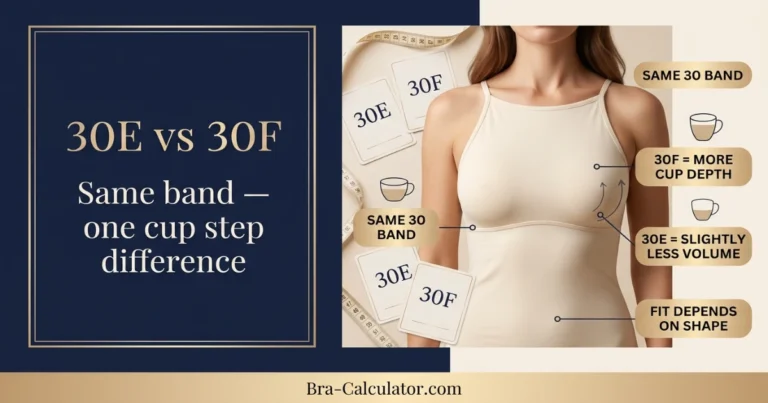
Quick Answer: 36DD and 36DDD are not the same size and cannot substitute for each other. They share the same band, so both are built for roughly the same underbust range, but the 36DDD cup holds more breast tissue than the 36DD. This is a same-band, one-cup-step comparison, which makes it very different from a sister-size comparison. If your 36DD band fits well but the cups feel too small, 36DDD is the immediate next size to test.
⚠️ One cup size apart on the same band. 36DD and 36DDD are adjacent sizes on the 36 band. There is no size between them. The band fit stays the same, but the cup gets fuller, deeper, and slightly roomier when you move from 36DD to 36DDD.
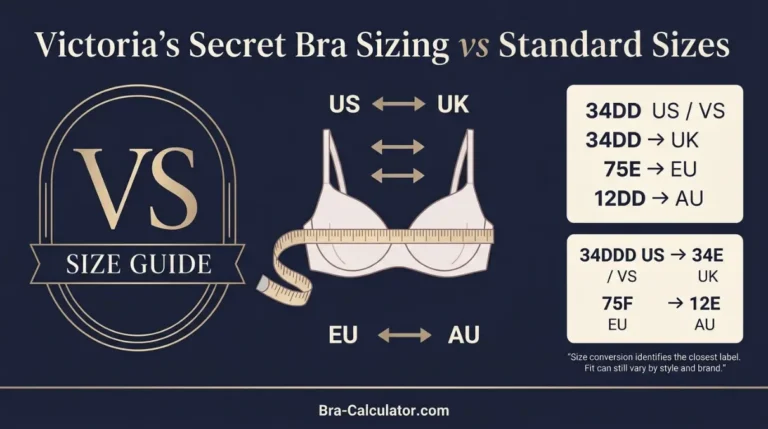
Size naming note: In many US brands, DDD and F are treated as equivalent. That means 36DDD is often the same as 36F depending on the label. UK and EU brands may use different naming systems, so always verify with the brand chart before ordering.
Choose the fit signs you notice in the band, cups, center and straps. We’ll turn them into a practical next step for 36DD.
Private fit check — your answers stay in your browser and are used only for this on-page guidance. Nothing is stored or submitted.
⚡ Key Takeaways
- 36DDD is bigger: it holds more volume than 36DD on the same band.
- One full cup step apart: 36DD → 36DDD is a direct next-size move.
- Same band: both use the 36 band, so underbust fit is essentially the same.
- Not sister sizes: same band means volume changes directly with the cup letter.
- 36DD sister sizes: 34DDD and 38D.
- 36DDD sister sizes: 34G and 38DD, depending on brand naming.
- Best use case: move from 36DD to 36DDD only when the band fits but the cups do not.
- Common sign: overflow, cutting in, or a floating gore in 36DD often means 36DDD is needed.
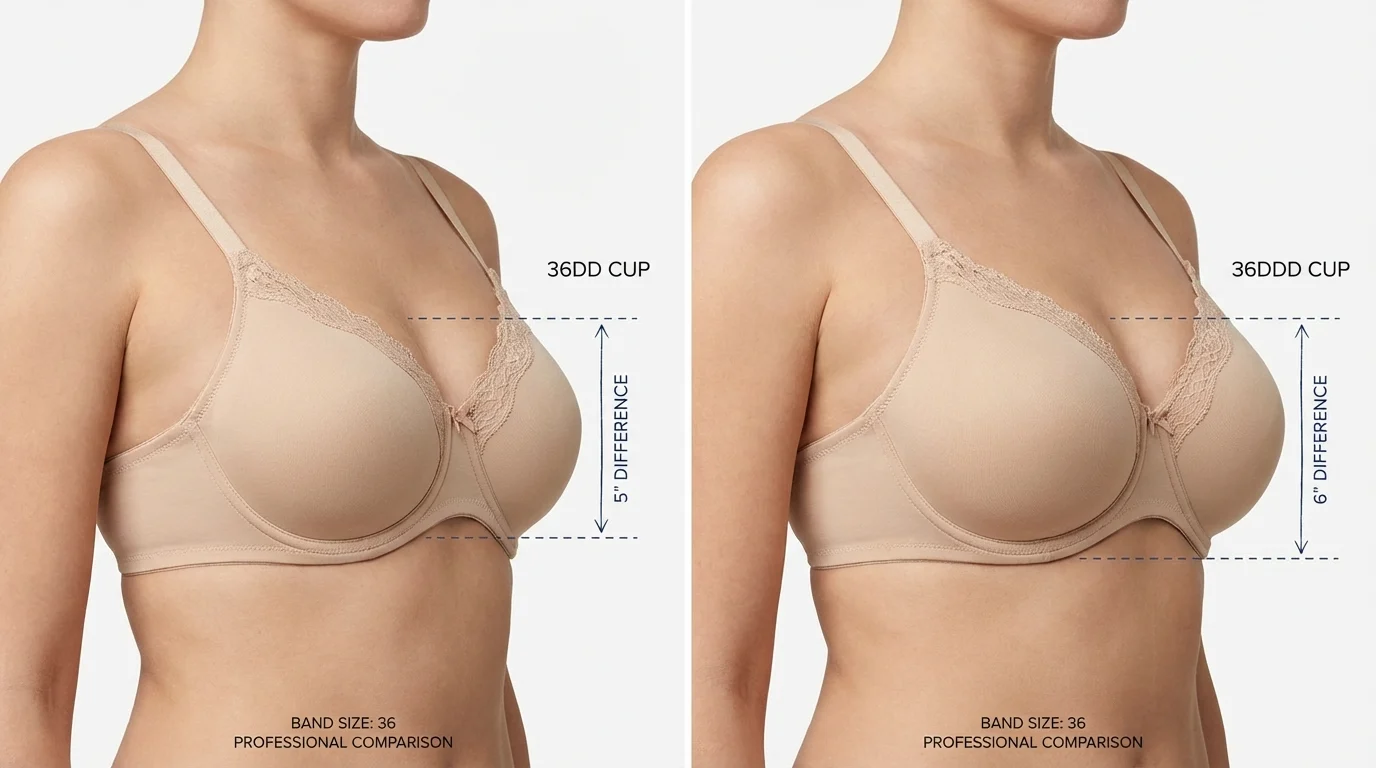
Same Band, One Cup Size Apart: How 36DD and 36DDD Compare
When two bras share the same band number, cup letters become a direct volume comparison. That means if the band stays at 36, every step upward in the cup alphabet adds more volume. This is why 36DDD is clearly larger than 36DD, even though both bras fit the same ribcage range.
Unlike sister sizing, there is no band change here to offset the cup difference. The 36 band stays constant, so the cup difference is absolute. That makes this one of the clearest bra comparisons possible: same frame, next cup up.
If you are already comfortable in a 36 band and the only problem is cup volume, then this comparison matters a lot. A woman in 36DD who spills over slightly usually does not need a new band. She often needs the immediate next cup: 36DDD. That is why understanding same-band progression can solve fit problems quickly without unnecessary trial and error.
Measurement Breakdown: 36DD vs 36DDD
| Size | Underbust (Band) | Bust (Fullest Point) | Cup Difference | Volume |
|---|---|---|---|---|
| 36DD | ~31–32″ (79–81 cm) | ~37″ (94 cm) | 5″ | Smaller |
| 36DDD | ~31–32″ (79–81 cm) | ~38″ (97 cm) | 6″ | Larger |
Both sizes fit the same approximate underbust because the band number does not change. The difference is the bust measurement and total cup capacity. A 36DDD is built to hold more breast tissue than a 36DD, typically with slightly more depth, height, and coverage through the cup.
This is why 36DD and 36DDD are not interchangeable. If the 36DD band fits correctly but the cups feel too tight, switching to 36DDD often solves the problem without changing the band stability. Use our international size charts to compare how different brands label DD, DDD, and F sizes.
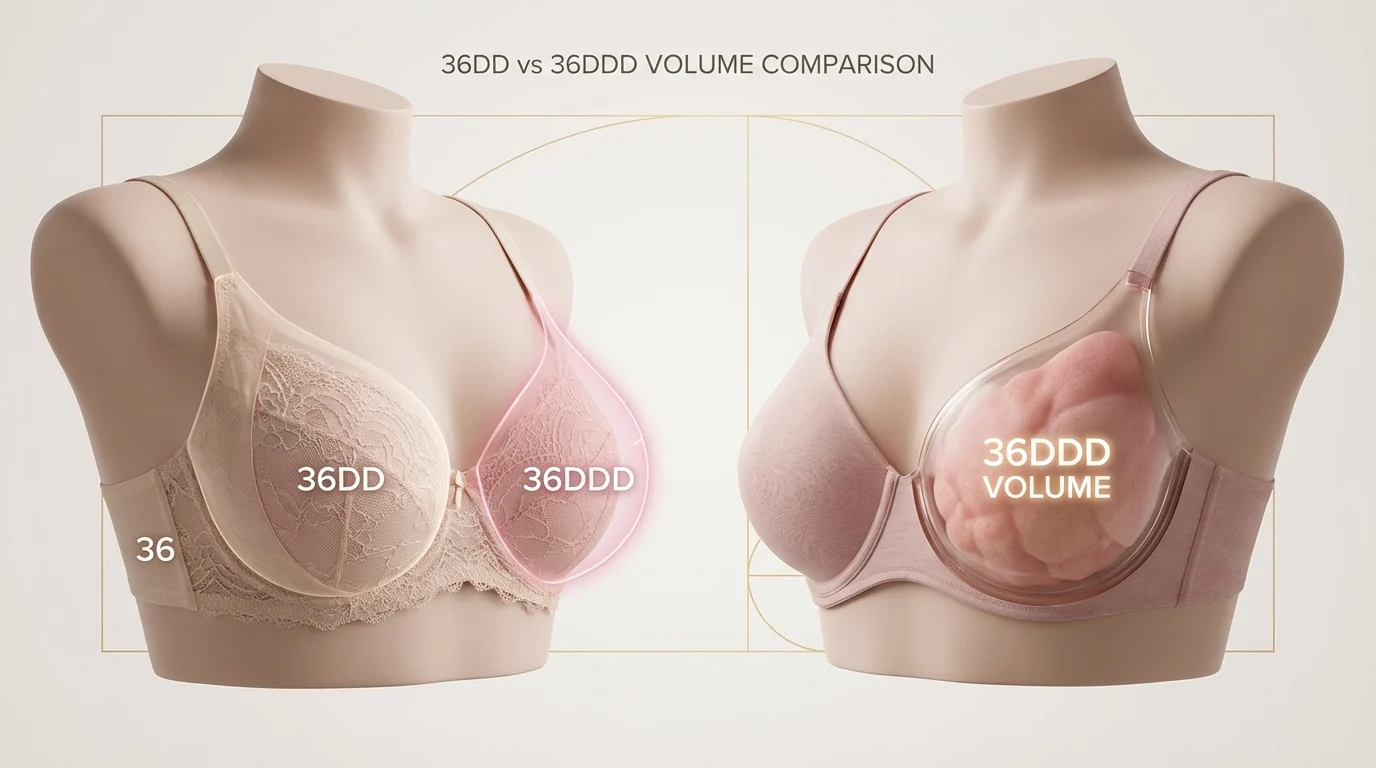
Different Sister Size Families: 36DD and 36DDD Do Not Share the Same Volume Row
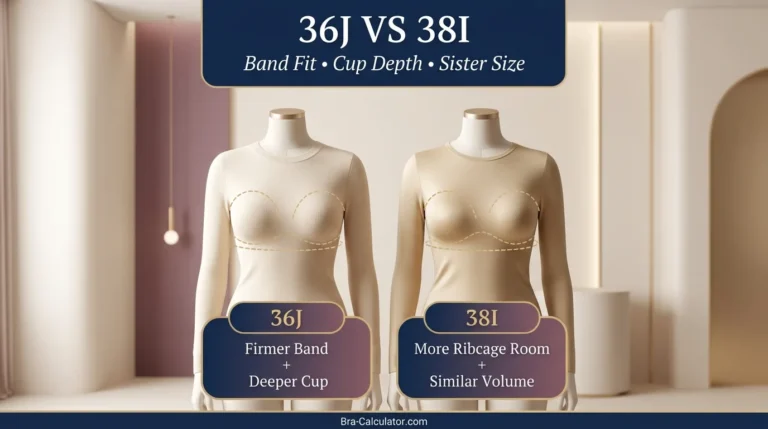
Because 36DD and 36DDD do not hold the same volume, they belong to different sister-size families. This matters when your size is unavailable and you need a substitute. You should not use 36DDD as a substitute for 36DD just because the band is the same. If you need a true substitute, you need a sister size, not the next cup up.
36DD Sister Size Family
36DDD Sister Size Family
This is a useful distinction: if your 36DD is unavailable and the cups fit correctly, the closest substitutes are 34DDD for a tighter band or 38D for a looser band. If you move to 36DDD instead, you are not preserving volume — you are increasing it. Explore the full logic on our sister sizes guide or use the sister size bra calculator.
Real Fit Differences Between 36DD and 36DDD
Band Fit Is the Same
Since both bras use the same 36 band, the band experience should be almost identical. If the 36 band already feels correct — level around the body, secure on the loosest hook, and not riding up — then there is usually no reason to change the band when comparing these two sizes.
Cup Depth and Fullness
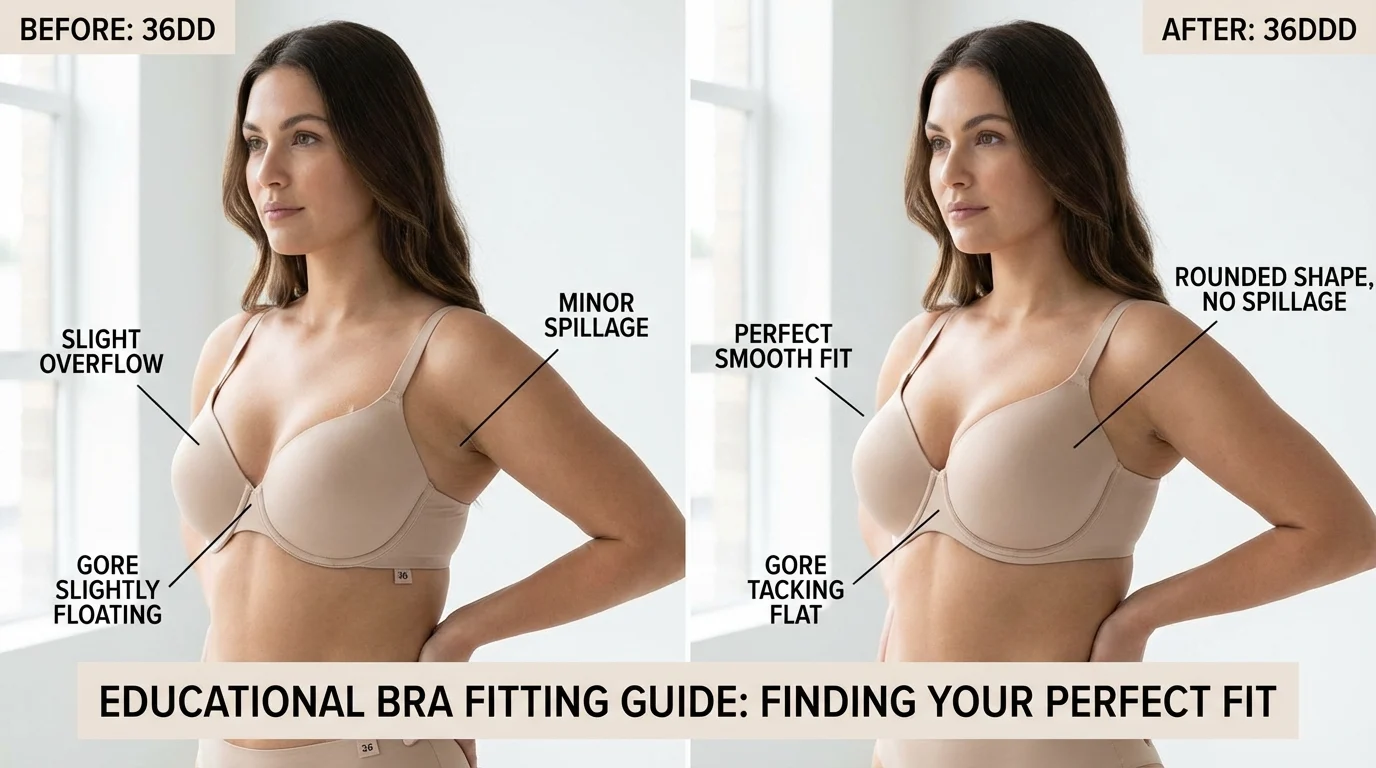
The biggest change happens in the cup. A 36DDD offers more room in depth and total capacity. That can make a major difference if your 36DD cuts in at the top, causes side spillage, or creates a floating center gore. On the other hand, if a 36DDD wrinkles or gaps while the 36DD fits smoothly, then the larger cup is probably too much.
Wire Width and Outer Coverage
As cup volume increases, the underwire often gets slightly wider too. That means 36DDD may give better coverage for fuller tissue extending toward the underarm. A woman whose breast root is slightly wider or fuller may find 36DDD more comfortable than 36DD even when the difference sounds small on paper.
Support and Shape
Because both bras share the same band, support differences come mainly from whether the cup is holding the tissue correctly. A too-small cup can distort shape, flatten tissue, or push it upward and outward. A correctly fitted 36DDD on the right body will often look smoother, feel more stable, and give better comfort than an overfilled 36DD.
Who Should Choose 36DD?
- Your underbust fits a 36 band well and the cups lie smooth without overflow.
- Your bust measurement aligns more closely with the DD cup range on a 36 band.
- 36DDD produces gaping, wrinkling, or a cup that feels too deep.
- The underwire in 36DDD feels wider than your breast root needs.
- You need the same 36 band but not the extra cup volume of 36DDD.
If your 36DD feels close but just slightly too small after a full scoop and swoop, then 36DDD is the natural next test. Confirm your fit with our how to know your bra fits page.
Who Should Choose 36DDD?
- Your 36 band fits correctly, but 36DD cups feel too small.
- You see top spillage, side cutting, or a center gore that will not tack flat in 36DD.
- Your fuller bust needs a little more depth and containment than 36DD provides.
- You often wear 36F in brands that use F instead of DDD.
- The 36 band is correct, but the cup needs to go up exactly one step.
If the band fits and the problem is only the cup, moving from 36DD to 36DDD is often the cleanest and most accurate adjustment. You can also use our breast shape identifier and size charts to double-check shape and sizing system differences.
🛍️ Best Bras for 36DD and 36DDD — Our Top Picks
DD and DDD wearers usually need a mix of stable band support, enough cup depth, and reliable wire shaping. These two well-rated Amazon bras work especially well in this fuller same-band range.


ℹ️ As an Amazon Associate, Bra Calculator earns from qualifying purchases. Product availability and pricing subject to change.
Quick Bra Fit Test: 5 Checks to Decide Between 36DD and 36DDD
Because the band does not change here, every check focuses on the cup. This makes the fit test straightforward: if the 36 band is already correct, the real question is whether the DD cup is enough or whether you need the DDD cup.
Lean forward and pull all breast tissue into the cup. If tissue spills over in 36DD after doing this, the cup is probably too small and 36DDD is worth testing.
The center gore should lie flat against the sternum. If it floats in 36DD while the band feels fine, that is a classic sign the cup is too small.
The wire should surround all breast tissue and sit on the ribcage, not on soft tissue. If 36DD cuts in at the side, the fuller 36DDD cup may be more accurate.
If the 36 band already feels correct, do not change it just because the cup is off. This comparison is about adjusting the cup while preserving the same band support.
If 36DDD gaps, feels too deep, or wrinkles at the top, 36DD may still be your better fit. The goal is smooth containment, not simply going bigger.
Still unsure whether 36DD or 36DDD is right for you? Use your measurements to get a more exact answer.
Try the AI-Powered Bra Size Calculator →36DD vs 36DDD: Full Side-by-Side Comparison
| Feature | 36DD | 36DDD |
|---|---|---|
| Band Size | 36 | 36 |
| Underbust Range | ~31–32″ | ~31–32″ |
| Cup Step | DD | DDD / F |
| Cup Volume | Smaller | Larger |
| Bust Estimate | ~37″ | ~38″ |
| Sister Size? | ❌ No — same band, different volume | |
| If Cups Too Small | Try 36DDD | Try next cup up |
| If Cups Too Large | Try next cup down | Try 36DD |
| Closest Sister Sizes | 34DDD / 38D | 34G / 38DD |
People Also Ask: 36DD vs 36DDD — Answered
What is the difference between 36DD and 36DDD?
The difference is the cup volume. Both use the same 36 band, but 36DDD holds more breast tissue than 36DD. This is a one-cup-step increase on the same band.
Is 36DDD bigger than 36DD?
Yes. 36DDD is one full cup size larger than 36DD while keeping the same band size.
Are 36DD and 36DDD sister sizes?
No. Sister sizes change the band and cup together to keep volume equal. 36DD and 36DDD keep the same band and change the cup, so volume changes directly.
Is 36DDD the same as 36F?
In many sizing systems, yes. Many US brands use DDD where other brands may use F for the same approximate cup level.
If my 36DD is too small, should I try 36DDD?
Yes. If the band fits but the cups are clearly too small, 36DDD is the most logical next cup size to test.
How do I know whether I need 36DD or 36DDD?
Look for overflow, cutting in, a floating gore, or underwires sitting on breast tissue in 36DD. Those are strong signs that 36DDD may fit better if the band itself already feels correct.
Can I wear 36DDD instead of 36DD just for comfort?
Only if 36DD is actually too small. Going up in the cup without needing it can create gaping, wrinkling, or a fit that feels less secure.
What are the sister sizes of 36DD?
Typical sister sizes are 34DDD and 38D, because they keep the cup volume close while changing the band.
What are the sister sizes of 36DDD?
Typical sister sizes are 34G and 38DD, depending on the brand’s naming system.