Plus Size Corsetry
for Wedding & Evening Wear
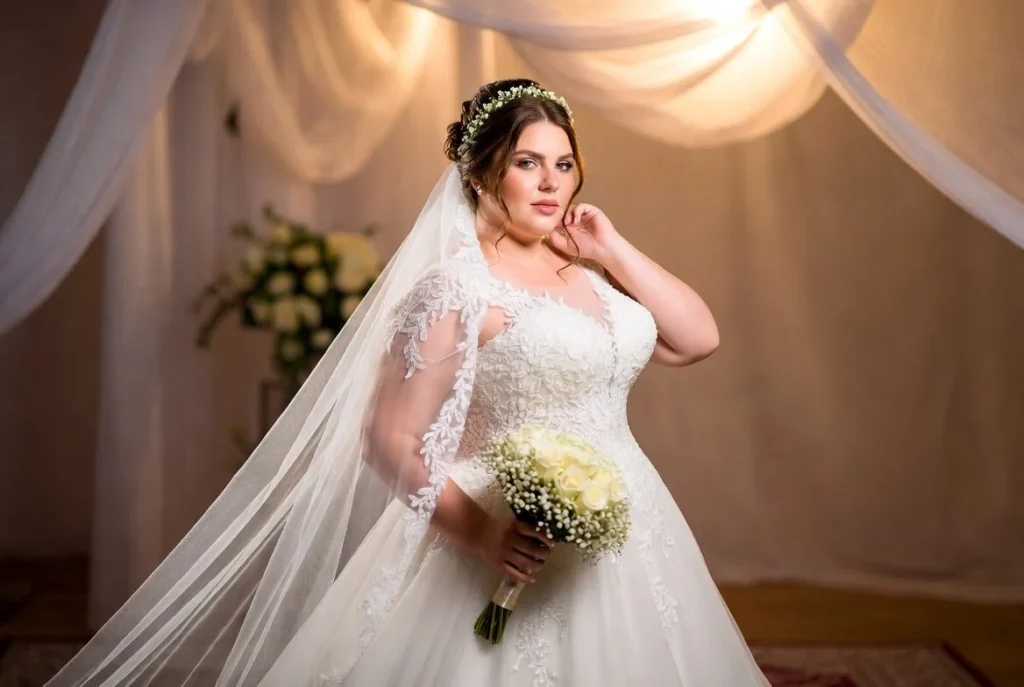
Support that holds you confidently through every hour, every dance, every photo. The complete guide to choosing, fitting, and wearing plus size corsetry that actually works.
Plus size corsetry for weddings and evening wear has come a long way from the restrictive, one-note garments of the past. Today’s well-constructed corset is a precision garment — one that sculpts, enhances, and supports for hours on end without pinching, without shifting, and without requiring you to disappear into the bathroom every 90 minutes to readjust everything. This guide covers every style, every fabric, every fit decision, and the products worth buying.
Why Plus Size Corsetry Actually Works
Off-the-rack formalwear still routinely fails curvy bodies — gaping at the bust, pulling across the hip, and requiring layers of shapewear that cost more in discomfort than they deliver in shape. A well-made plus size corset solves all three problems at once, and does it with more elegance and adjustability than any shapewear garment on the market.
5 Reasons to Choose Corsetry Over Shapewear
Unmatched Structural Support
Flat and spiral steel boning, strong waist tapes, and sturdy busks hold everything in place regardless of how long the event runs or how much movement it demands. This eliminates the need for separate shapewear under strapless or low-back gowns entirely. Quality corsetry can reduce the waist by 4–6 cm or more without the breath-stealing compression of rigid Spanx — because the reduction is distributed across the whole torso, not concentrated at the midsection alone. The frame also directs posture, reducing fatigue and keeping your dress hanging exactly as it should from ceremony to final dance.
Comfort That Lasts All Day
Breathable fabrics — cotton coutil, light mesh, and silk blends — maintain airflow through the chaos of photographs, travel between venues, and hours on the dance floor. Soft linings and flat seams reduce friction at the underarm, rib, and hip pressure points that traditional shapewear always seems to find. The secret advantage of lacing is that it works both ways: you can loosen tension for dinner and re-cinch for pictures. Flexible panels mean you can take a full breath, laugh properly, give speeches, and toast without the pinching that ends most shapewear’s usefulness by mid-afternoon.
A Sculpted Silhouette That’s Actually You
A well-constructed corseted bodice raises the bust, defines the waist, and smooths the front for a seamless line under mermaid, A-line, sheath, or column gowns. Different cuts serve different goals: underbust for layering and neckline freedom, mid-bust for lift without full coverage, longline for belly control under form-fitting crepe, sweetheart for strapless and formal looks. The result isn’t a stranger in the mirror — it’s a cleaner, more supported version of your own shape. Cup choices extend from A to H-plus, and hip gores add ease for seated and dancing.
A Bespoke Fit Nobody Else Can Offer
Custom corsetry employs precise bust, waist, hip, and torso length measurements, then positions lacing, side panels, and closures based on your specific torso height and cup requirements. You choose fabric, color, neckline shape, sleeve overlays, and even boning count — trading off control for comfort according to what your event demands. This eliminates the requirement for additional shapewear altogether and produces a corseted feeling that still flows with your body rather than against it. It’s particularly valuable for curvy women who find that no single ready-to-wear size accommodates both their bust and hip simultaneously.
Confidence That Doesn’t Quit
A smooth foundation ensures even fitted crepe and satin gowns sit flat throughout a long evening without constant adjustment. The choice between a light cinch for comfort and a full lace-down for a sharper shape belongs entirely to you — and you can change it throughout the day. Beyond the event, corset tops and belts work beautifully over blazers, with skirts, or tucked into wide-leg trousers for everyday and work looks. For many women, a well-fitted corset stops being a solution to a fit problem and starts being a fashion statement — a visible expression of body pride and personal style. It’s a total game-changer when nothing ever fits right off the rack.
Choose Your Corset Style
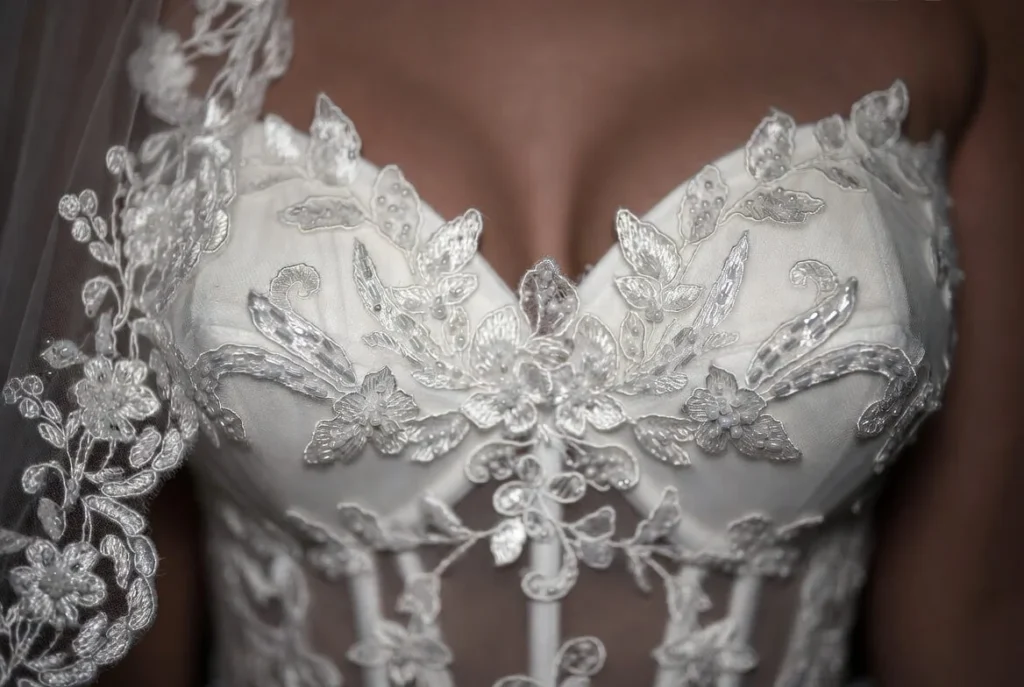
The right corset style depends on your gown silhouette, neckline, and how much of the corset you want to show. Here are the three main styles and exactly what to pair each with.
Overbust
Most structuralCovers and supports the bust entirely, which makes it the best choice for strapless or sweetheart necklines where a separate bra would migrate during a long ceremony. The full rigidity of the bodice helps keep the structure anchored as the skirt flares — particularly useful under heavy satin ball gowns. Look for smoothing power-mesh linings under the outer satin shell, and ask about removable chiffon sleeves for ceremony-to-reception transitions.
Underbust
Most versatileSculpts the waist and gives you complete freedom to choose your bra or top, which is invaluable when your gown features an intricate neckline, translucent panels, or off-the-shoulder sleeves. It layers beautifully beneath sheer blouses, corset shirts, and mesh bodices. Accommodates short and long torsos through lacing adjustments and modesty panels. Choose brocade with rigid boning for architectural shape, or mesh for summer venues and warm climates.
Bustier
Softest feelBlends soft corsetry with a structured top — shorter and less rigid than a full corset, but offering medium shaping and support without the sensation of being fully boned. The ideal compromise for long receptions and travel days where you need to look polished without feeling dressed. Contemporary cuts pair beautifully with mixed textures: satin bustier, chiffon skirt, and mesh insert for a modern look that reads glamorous from every angle.
🛍️ Our Top Picks — Amazon 2026
Every product below was selected for construction quality, inclusive sizing, verified fit reviews from curvy wearers, and versatility beyond a single event.

Glamorise Women’s Full Figure MagicLift Longline Minimizer Bra
The closest thing to a built-in corseted bodice in ready-to-wear form. Glamorise’s MagicLift Longline combines the structural function of a corset with everyday wearability — the extended torso panel smooths from underbust to hip, the inner sling lifts and separates without underwire pressure, and the multi-section back eliminates the dreaded band bulge under fitted gowns. Worn under evening wear or as a standalone corset top with a wide-leg trouser, this is one of the most versatile foundation pieces for any plus size formal wardrobe. The MagicLift design is gentle enough for all-day events and firm enough to make a difference in your silhouette from the first wear.
Available in: 36C–46H, multiple widths, hooks up the front
View on Amazon →
Glamorise Women’s WonderWire Front-Close Underwire Bra #1245
A front-closure underwire bra specifically engineered for larger cup sizes — and a godsend on your wedding morning when you’re already managing a gown, veil, and nerves simultaneously. The WonderWire distributes underwire pressure across a wider, cushioned channel so the wire sits comfortably on the ribcage without digging into the side breast tissue that causes misery by hour three of any formal event. Wide side panels contain lateral fullness under form-fitting gowns, and the front close means zero reaching around your back. One of the most trusted garments among plus size brides shopping on Amazon — the review section is packed with wedding-day testimonials.
Available in: 34D–48H — one of the widest range selections available
View on Amazon →
SCARLETON Women’s Plus Size Wide Cinching Corset Belt
The fastest, most versatile waist definition tool in any curvy woman’s wardrobe — and a much less committed entry point into corsetry than a full boned piece. SCARLETON’s wide belt cinches over blazers, knit dresses, jumpsuits, wrap dresses, and maxi gowns without requiring any alterations or measurements. The lace-up back gives 8–10 cm of adjustability, making it genuinely useful across weight fluctuations and different layers. In faux leather it reads evening and editorial; in neutral fabric it works from Monday morning to Saturday event. One piece, infinite outfits, ships in 2 days, returnable with no drama.
Available in: S–4XL, multiple colourways including black, ivory, nude, and burgundy
View on Amazon →ℹ️ As an Amazon Associate, Bra Calculator earns from qualifying purchases. Prices, availability, and sizing are subject to change. All picks are independently evaluated for plus size fit quality.
Visible or Hidden Support?
This is one of the most personal decisions in plus size corsetry — and both choices can be stunning. The right answer depends on your gown silhouette, how much adjustability you need throughout the day, and what level of drama feels right for your style.
Lace-Up & Visible
Visible boning, satin ribbon lacing, and velvet cord details make the support structure a statement. Particularly stunning on ball gowns, Victorian-inspired designs, and evening corset tops paired with dramatic skirts.
- Adds 3–5 cm of adjustability via lacing
- Accommodates weight fluctuations and travel bloat
- Stronger waist cinching than built-in boning
- Provides extra lift and separation for full busts
- Lacing can coordinate with jewellery and accessories
- Ceremony to reception: remove overskirt to reveal the corset top
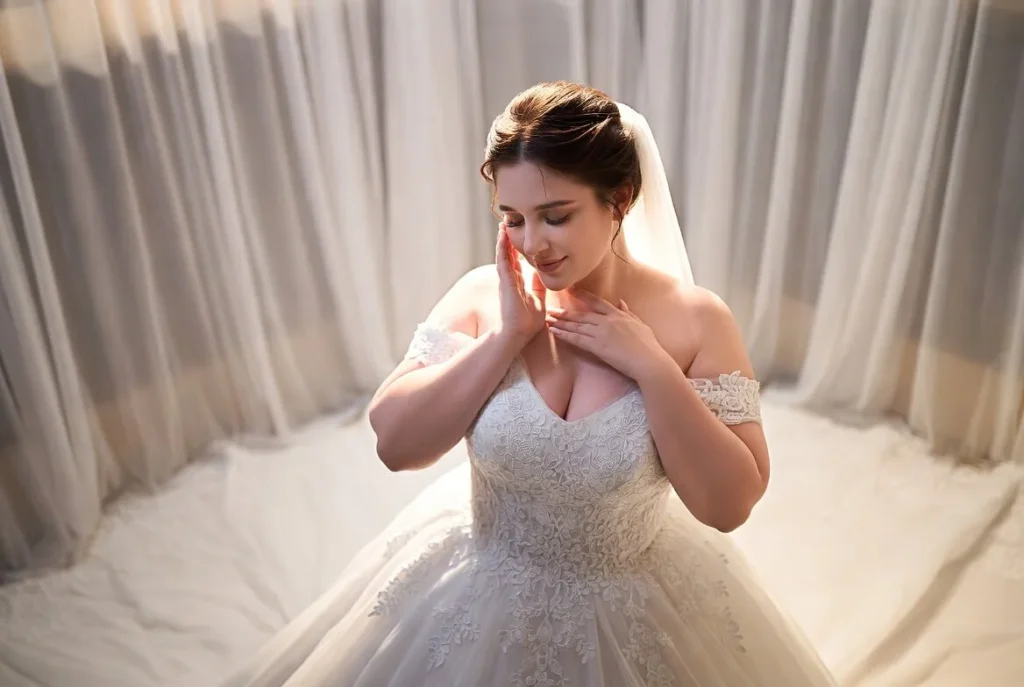
The Perfect Fit Process — Start to Finish
This is the part most guides skip over — and the part that makes or breaks the entire experience. A corset that’s even slightly off in torso length or bust containment will be uncomfortable by hour two and unwearable by hour four. Start 8–12 months out, and build in time for a real mock-up fitting.
Bust over fullest point, underbust snugly, waist at narrowest, high hip at fullest, and torso length from underbust to waist. Measure in centimetres, not inches, for corset ordering. Record the ribcage spring — the difference between your underbust and high hip — and decide on a realistic waist reduction target: 5–7 cm is comfortable for all-day wear; 8–10 cm is achievable for key moments but requires frequent lacing adjustments.
An A-line with a longline corset complements a fuller midsection by smoothing from bust to hip. A fit-and-flare pairs best with a mid-bust style that frees the hip flare. A column gown needs an integrated or invisible corset to keep clean lines. Try sample silhouettes to discover what actually flatters your frame before committing to construction.
A muslin mock-up tests the lacing path, boning map, and torso length before any expensive fabric is cut. Wear your actual undergarments — strapless bra, shapewear, or none — because these affect the fit line in ways that measurements alone won’t predict. While trying the toile, test bust containment, waist comfort, and hip flare. Sit for 10 minutes, climb stairs, and do a test dance. If anything pulls, restricts breathing, or digs in: fix it now, not at the final fitting.
Bodies change — weight, water retention, posture, and muscle tone all shift over the months of wedding planning. Re-measure 6 to 8 weeks out and again at the final fitting. If anything has shifted, update the order before the final fabric is finished rather than trying to lace around a discrepancy on the day.
Wear your finished corset for 30–60 minutes daily in the week before the event, laced snug but not to maximum reduction. This allows the boning to flex gently around your specific shape, the lacing to find its natural tension path, and you to practice breathing and moving in it comfortably. A seasoned corset on your wedding day is a completely different — and significantly more comfortable — experience than putting on a brand-new piece for the first time under pressure.
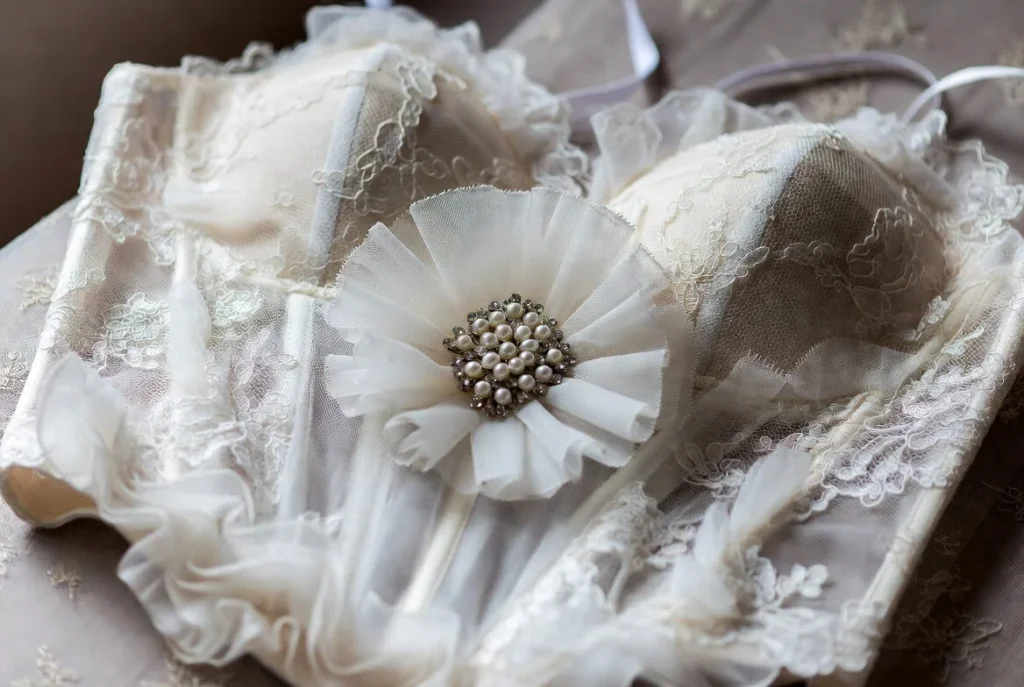
Choosing the Right Materials
The fabric and boning combination determines how your corset breathes, holds its shape, photographs, and feels across a 10-hour event. Here’s what each material delivers and where it works best.
Beyond the Wedding Day — Get More Wear from Your Corset
A well-made corset is not a single-use garment. It’s a wardrobe investment that — with proper care — can anchor looks across events, seasons, and years. The most versatile corsets are the ones that were built with this in mind from the beginning.
Evening and Event Versatility
A tailored corset functions beautifully beneath a satin gown to soften seams — or as an exposed bodice with a tulle or chiffon skirt for a crisp, fashion-forward look at a gala. Your black satin bustier can pair with a column skirt for a formal event and switch to wide-leg trousers for a cocktail party the following weekend. The addition of overskirts, removable sleeves, or sheer toppers transforms the same corset from ceremony-formal to reception-ready in under two minutes.
Casual and Work Styling
Think of a corset top as a structured tank with serious fashion intent. For casual days: a denim corset over a cotton tee with straight jeans and clean trainers. For work: a matte crepe bustier under a sharp blazer creates clean lines that read professional and intentional — not costumed. A wide corset belt over a knit dress defines the waist beautifully without the commitment of full boning. In cooler months, a wool-blend corset beneath a cardigan gives you shape without bulk.
Care & Long-Term Value
| Corset Part | Care Method | Frequency | What to Avoid |
|---|---|---|---|
| Satin / silk shell | Spot clean · Professional dry clean | After every formal event | Machine wash — warps boning and dulls hardware |
| Mesh / cotton lining | Spot clean · Refresh spray on lining only | After each wear | Submerging — especially with metal components |
| Boning channels | Air flat for 12–24 hours after wear | Every wear | Folding over boning — causes permanent creases |
| Steel busk & grommets | Dry thoroughly · Check for rust at grommets | Monthly | Damp storage — causes metal tarnish and rust |
| Lacing cord | Replace when fraying or stretching | Every 12–18 months | Synthetic elastic replacements — always use flat cord |
| Storage | Lay flat, busk closed, laces loose · Acid-free tissue between layers | Ongoing | Hanging — gravity distorts panels and waist curve |
🔗 Essential Fit Tools — Bra Calculator
- AI Smart Fit Bra Calculator — find your exact bra size before corset shopping
- How to Measure Bust, Underbust & Hips at Home — the foundation of every corset order
- Bra Fit Problems Guide — diagnose issues that your corset will need to compensate for
- Cup Size Visuals — A to H+ — understand your cup volume before selecting a corset style
- International Size Charts — essential for ordering from UK or EU corset makers
- Full Bra Size Chart — cross-reference your measurements with the brand’s chart
- How to Know If Your Bra Fits — the same five-check process applies to corset mock-up fittings
Before you order any corset — know your measurements. The single most common reason a corset doesn’t fit is incorrect underbust or torso length measurement. Our AI calculator takes your numbers and gives you a precise result in under 2 minutes, including the correct band and cup combination that your corset maker needs to start.
Get My Measurements Right →Frequently Asked Questions
What makes plus size corsetry different for weddings and evening wear?
Plus size bridal and evening corsetry is engineered specifically for sustained comfort across long events. That means wider boning channels to distribute pressure more evenly, longer busks to accommodate fuller torsos, stronger waist tapes to maintain shape under the weight of a full gown, and multi-panel construction that takes account of hip spring and bust fullness together. Breathable fabrics and adjustable lacing are non-negotiable in this context — you’re wearing this for 8–12 hours, not 30 minutes.
Which corset style works best under a gown?
Underbust corsets are the most versatile — they work with virtually any neckline and let you choose your own bra or top. Longline styles are best for mermaid and fit-and-flare gowns where tummy and hip smoothing matter. Overbust sweetheart styles are the strongest choice for strapless ball gowns, because they provide full bust containment without a separate bra that can migrate during a long ceremony. The most important factor: match the corset type to the gown’s specific construction requirements, not just the silhouette category.
Should my corset be visible or hidden in the dress?
Both options work beautifully — the decision comes down to the gown and your aesthetic. Hidden integrated corsets keep the outer fabric completely clean, making them ideal for column gowns, sheaths, and bias-cut satin where visible structure would show through. Visible lace-up corsets add drama and a deliberate fashion statement, particularly on ball gowns and Victorian-inspired designs. The practical advantage of visible lacing is real adjustability — 3–5 cm of room to loosen for dinner and re-cinch for portraits, which invisible integrated corsets can’t offer.
How do I find the right size?
Measure bust (over fullest point), underbust (snugly), waist (narrowest), and high hip (fullest) in centimetres using a soft tape. Record torso length from underbust to waist. Then consult the specific maker’s size chart — not generic US/UK sizes — and compare your uncorseted measurements directly. For comfortable all-day wear, aim for a waist reduction of 5–7 cm. Look for a parallel, even lacing gap at the back as the key sign of correct fit; if the gap is wide on one side and narrow on the other, the torso length or hip measurement is off.
Can I sit, dance, and eat comfortably in a corset?
Yes — with the right construction and proper seasoning. Choose spiral steel boning (not flat steel throughout) for flexibility, breathable fabric for airflow, and lacing that you can adjust during the day. Season the corset in the week before the event by wearing it 30–60 minutes daily — this allows the boning to flex gently around your body’s specific shape. On the day itself, stay hydrated, eat light in the hours before getting dressed, and plan one or two lacing adjustments — loosen for the meal, re-tighten for portraits. A properly fitted and seasoned corset should feel supportive, not restrictive.
How do I care for my corset after the event?
Never machine wash — it warps boning, stretches panels, and damages metal hardware irreversibly. After wearing, lay the corset flat on a clean towel and air for 12–24 hours to let moisture escape from all layers. Spot clean sweat marks at the busk or makeup marks at the neckline with a damp cloth and mild soap — blotting only, never scrubbing. For satin, velvet, or silk-shell corsets, take to a professional dry cleaner with bridal or corsetry experience. Store flat (never hung) with the busk closed, laces loosely tied, and acid-free tissue between layers and around metal hardware.
Can I wear the same corset beyond the wedding day?
Absolutely — and a well-made corset really should. Pair it under evening gowns, as an exposed bustier with wide-leg trousers or satin skirts, or with a blazer for a structured work look. A wide corset belt version works over knit dresses and jumpsuits for casual and semi-formal occasions. If it’s a wedding gown corset you want to preserve, consider having the train removed and the hem altered — you can get multiple events from the corset bodice with different skirts or trousers. With proper care, a quality corset maintains its structure and shape for years of regular use.
Final Word on Plus Size Corsetry
The corset that works is the one that was chosen carefully, fitted accurately, and worn with intention. Start with your measurements — not a guess, not the size you ordered last year. Match the corset style to your specific gown and neckline. Build in time for a real mock-up fitting. Season the piece before the event. And on the day itself: adjust as needed, breathe fully, and move freely.
Confidence in a perfectly fitted corset is different from confidence in everything else. It’s structural. It doesn’t fade by hour three, it doesn’t require mental energy to maintain, and it doesn’t need you to stand in a particular way to hold everything in place. That’s the whole point.
- Start measuring 8–12 months out
- Match corset type to gown silhouette
- Request a toile fitting — always
- Choose breathable fabric for long events
- Season the corset before the day
- Plan 2–3 lacing adjustments through the day
- Air flat 12–24h after wearing
- Store flat with acid-free tissue