28DD vs 30D: Are They Sister Sizes? (Bra Fit Guide 2026)
Here’s a question that comes up constantly among women with fuller busts on a narrower frame: is a 28DD really the same as a 30D? The short answer is yes — but the longer answer explains why the band makes all the difference between a bra that supports you properly and one that quietly fails you all day long.
Quick Answer
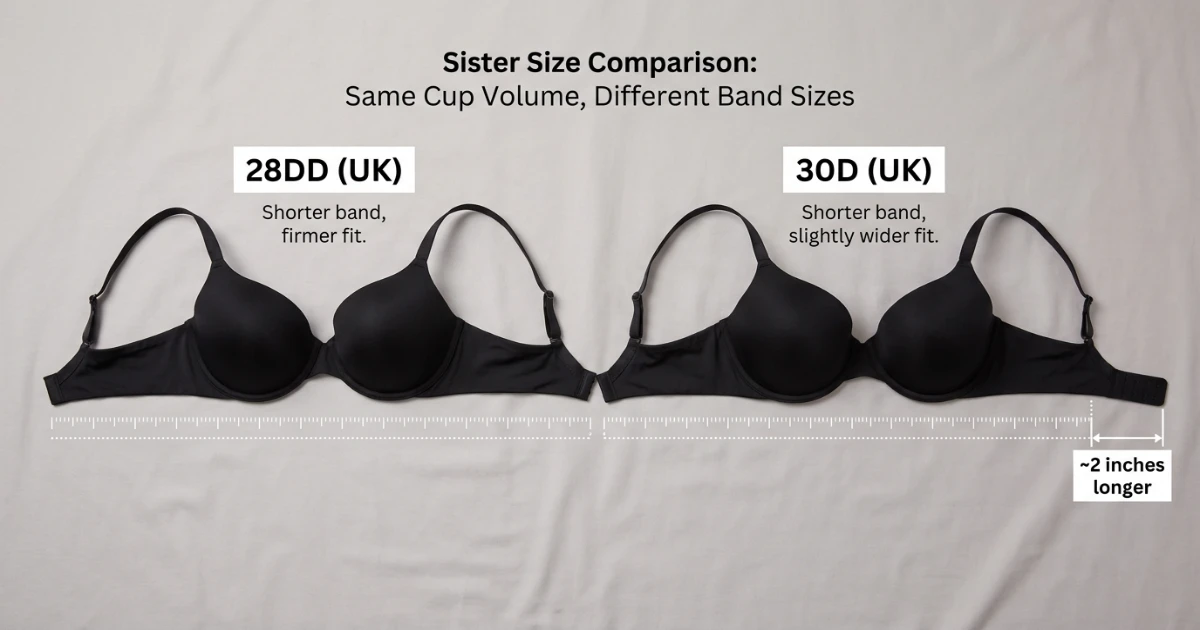
28DD and 30D are sister sizes — they hold nearly identical cup volume despite having different band sizes and cup letters. The critical difference is the band: a 28DD wraps two inches tighter around the ribcage than a 30D, delivering firmer, more direct support. The right choice between them comes down to your actual underbust measurement and how much band tension your body tolerates comfortably.
Key Takeaways
- 28DD and 30D are sister sizes — cup volume is approximately equal; only the band size and cup letter differ.
- A 28DD band sits two inches tighter around the ribcage than a 30D, providing noticeably firmer support and lift.
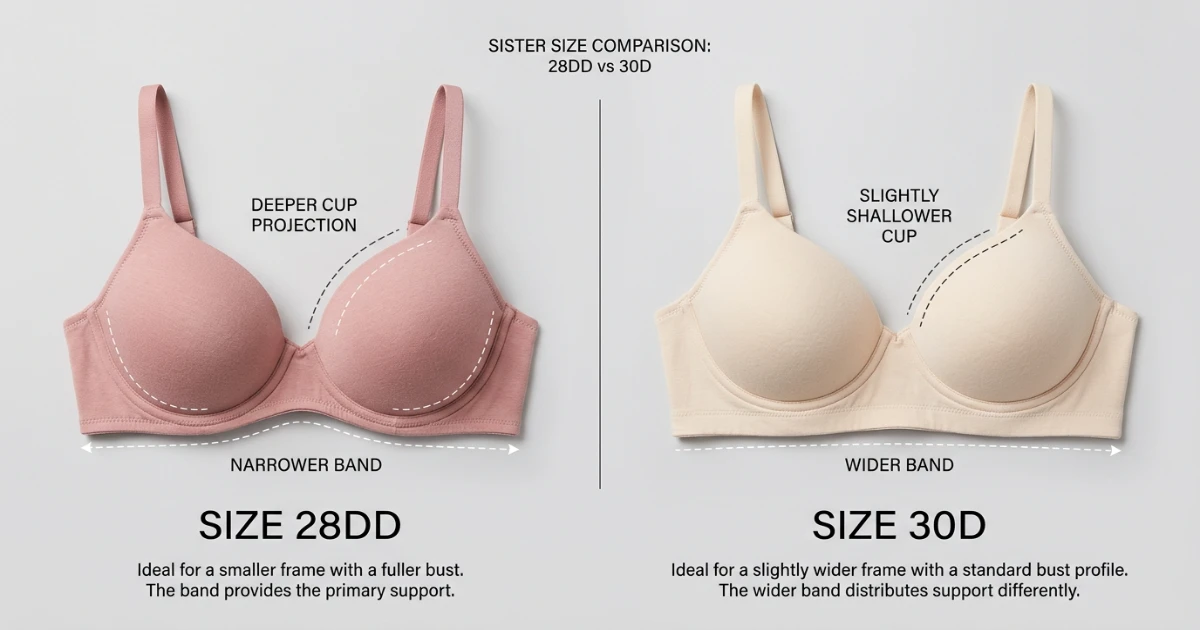
- The cup in a 28DD is narrower and deeper; the 30D cup is wider and slightly shallower — this affects fit for different breast shapes.
- If your true underbust measures around 28 inches, a 28DD will fit as designed. If it’s closer to 30 inches, a 30D is your actual size.
- A 30D band starting on the tightest hook is a sign the band is already too loose and will wear out faster than it should.
- 28DD is a genuinely uncommon size in high-street stores; 30D is much more widely available and can substitute in a pinch.
- Neither size is interchangeable without trade-offs — switching bands changes both support and cup shape simultaneously.
Understanding Sister Sizes
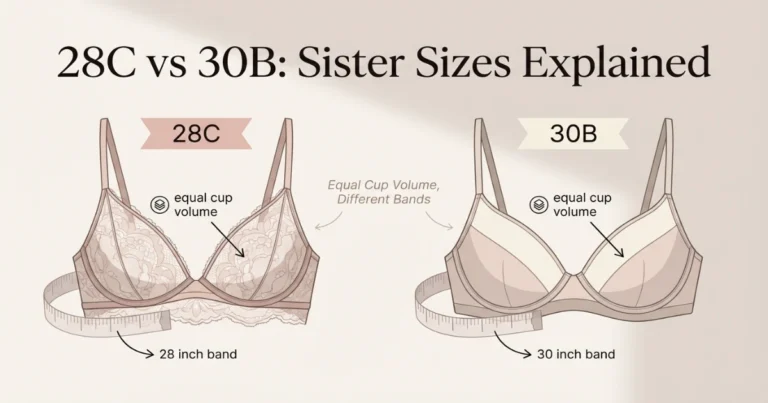
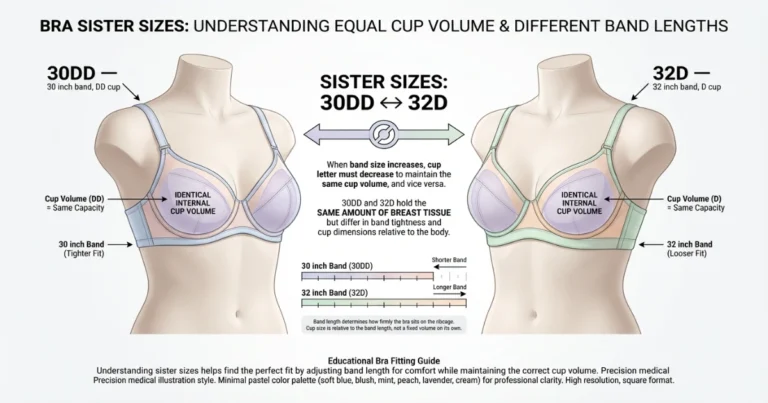
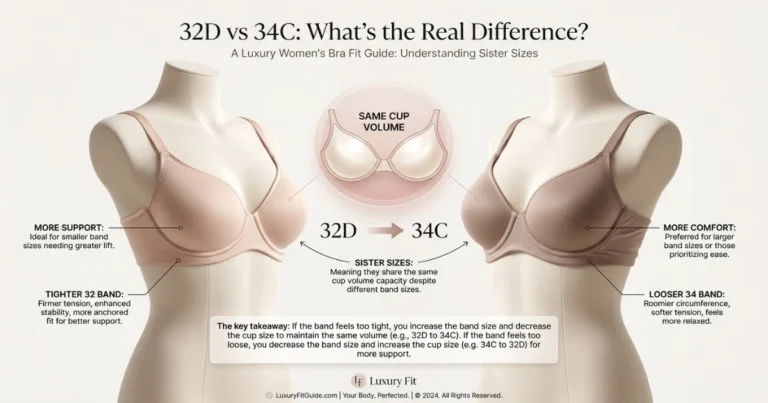
Sister sizes are one of the most genuinely useful concepts in bra fitting, and also one of the most misunderstood. The principle is simple: when you increase the band by two inches, you drop one cup letter to maintain the same cup volume. When you decrease the band by two inches, you go up one cup letter. The volume stays the same; only the band width — and the cup letter attached to it — changes.
This is possible because cup letters are proportional, not fixed. A “DD cup” on a 28-inch band is physically smaller than a “DD cup” on a 36-inch band, because the cups are scaled to match the circumference of the band they’re attached to. So when a 28-inch band gains two inches to become a 30-inch band, its attached D cup is drafted slightly larger to compensate — resulting in approximately the same internal volume despite the smaller letter.
Why Switching Band Sizes Changes More Than Just Tightness
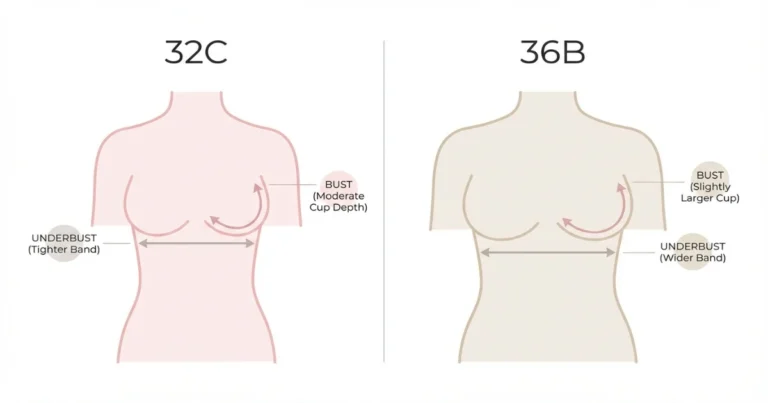
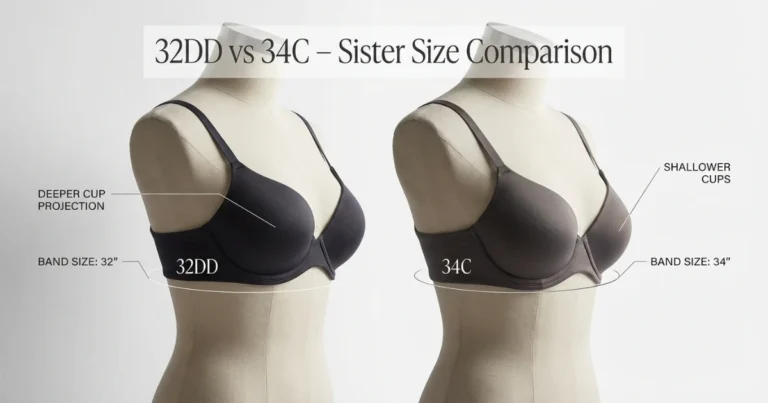
Women sometimes assume that going from a 28DD to a 30D is a simple loosening of the band with everything else staying equal. In practice, the cups also change shape. A 28DD cup tends to be narrower across the base and deeper from front to back — a construction suited to a narrower chest. A 30D cup is drafted with a wider base to span the broader frame. For projected breast shapes, the deeper 28DD cup often fits better. For wide-set or shallower breasts, the 30D’s wider cup can be more comfortable.
Sister sizing is most useful when your correct size is unavailable, when you’re deciding between two sizes on the borderline, or when you want to understand how a tighter or looser band would change your daily experience. Learn more about how the system works in our complete sister sizes guide.
Measurement Breakdown: 28DD vs 30D
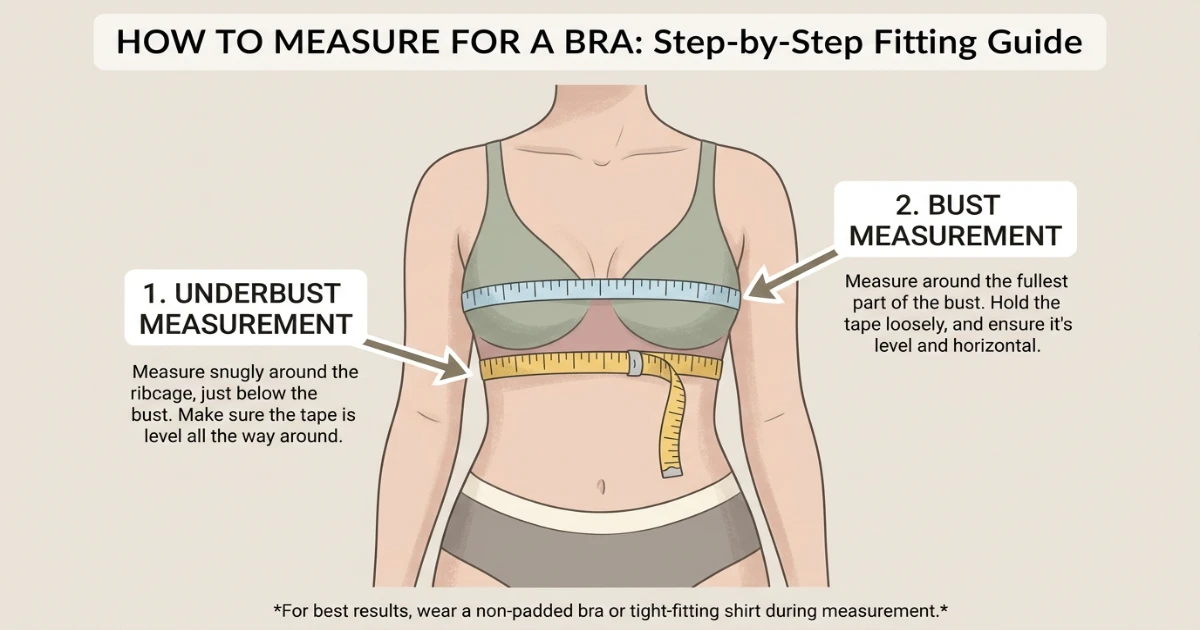
Using standard US sizing — where cup size equals the difference in inches between bust and underbust — here’s what these two sizes represent in actual body measurements:
28DD
| Underbust | ~28 in / ~71 cm |
| Bust | ~33 in / ~84 cm |
| Difference | ~5 in / ~12.5 cm |
| Band tension | Firm, close-fitting |
30D
| Underbust | ~30 in / ~76 cm |
| Bust | ~34 in / ~86 cm |
| Difference | ~4 in / ~10 cm |
| Band tension | Relaxed, moderate |
A note on DD sizing: In US sizing, DD is equivalent to E in UK sizing — both represent a 5-inch bust-to-underbust difference. If you’re shopping UK brands (which tend to offer better coverage of smaller bands), you may see the same cup labeled as “E” rather than “DD.” They mean the same thing.
Notice that the bust measurement in a 30D is about one inch larger than in a 28DD. This is because the wider band adds circumference across the whole bra structure, including the cups. Both measurements describe a similar breast volume, but the absolute numbers on the tape measure look different because the starting point — the underbust — differs by two inches.
If your underbust genuinely measures 28 inches, the 28DD band will fit exactly as intended. If your ribcage is closer to 30 inches, a 28DD band will feel uncomfortably constrictive — regardless of how accurate the cup size is. Getting your underbust measurement right is the foundation of everything else. Our step-by-step measuring guide shows you exactly how to do it accurately at home.
Band Size Difference: The Foundation of Bra Support
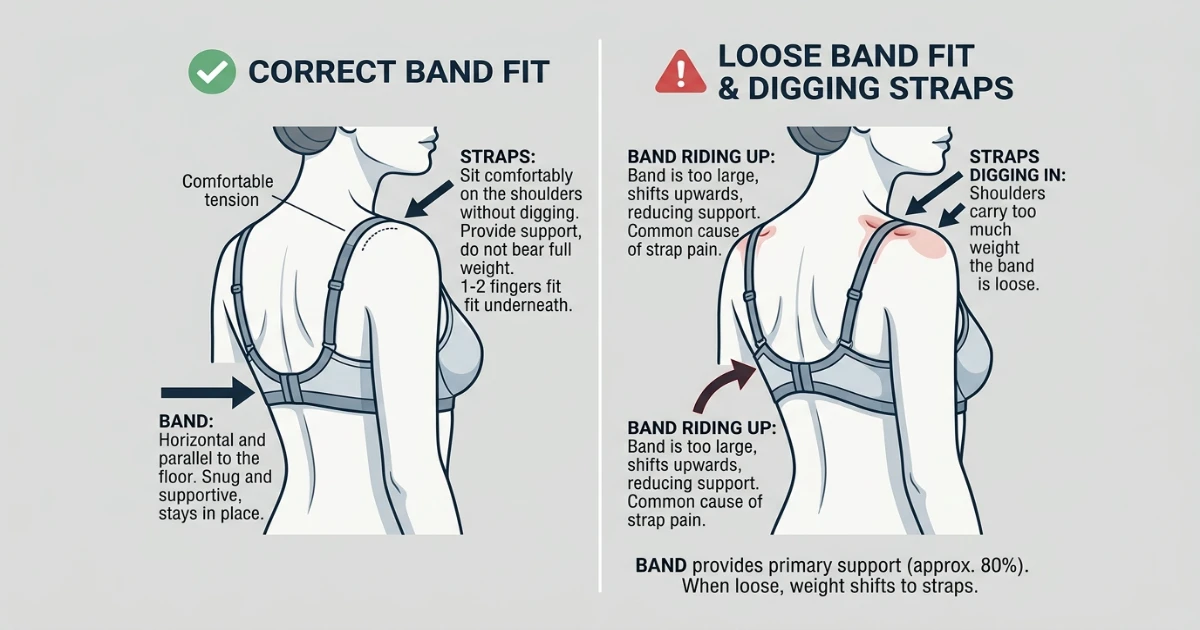
The bra band carries approximately 80% of the structural support load. This isn’t a rough estimate — it’s how well-constructed bras are designed to work. The band anchors the garment against your ribcage, distributes the weight of breast tissue, and keeps everything positioned correctly. When the band isn’t doing its job, the straps compensate, leading to shoulder aches, neck tension, and a bra that constantly shifts out of place.
How a 28DD Band Feels Compared to 30D
A 28DD band is two inches shorter in its natural, unstretched length than a 30D. When both are fastened around the same body, the 28DD exerts noticeably more tension. For a woman with a true 28-inch underbust, this feels like appropriate support — snug, stable, and secure. For someone with a 30-inch ribcage wearing a 28DD, it will feel uncomfortably tight, possibly leaving red marks or making deep breathing difficult.
Conversely, a woman with a 28-inch underbust wearing a 30D may find the band drifts, rides up at the back, or requires constant adjustment. The bra’s weight — which is more significant in fuller cup sizes like DD/D — shifts entirely to the straps, creating the shoulder digging and neck tension that so many women mistakenly attribute to “just what bras feel like.”
How Elastic Stretch Changes the Equation Over Time
New bras should always be fastened on the loosest hook, with the tighter hooks serving as adjustment reserve as the elastic softens with washing and wear. A bra that starts on its tightest hook is already running on borrowed time — and this is particularly important for fuller-cup sizes like DD/D where the band handles more load. If a 30D fits you only on the tightest hook when new, a 28DD will likely serve you better and last longer. Our guide on why bra bands ride up explains the mechanics in detail and offers practical fixes for common band fit problems.
Cup Volume: Why DD and D Can Mean the Same Thing
The idea that a DD cup and a D cup hold the same volume sounds counterintuitive — but it makes complete sense once you understand how cup sizing is constructed. Cup letters don’t represent a fixed amount of breast tissue. They represent a proportional relationship between band and bust.
A DD on a 28-inch band means the bust measures 5 inches more than the underbust. A D on a 30-inch band means the bust measures 4 inches more than the underbust. The actual bust measurement works out to approximately 33 inches (28DD) versus 34 inches (30D) — close, but not identical. The difference comes from the wider band contributing slightly more circumference to the total bust measurement.
In terms of what the cup actually holds, these sizes are near-equivalent. The 28DD cup tends to be deeper with a narrower base, while the 30D cup is shallower with a wider base — but total volume is comparable. This is why sister sizing works as well as it does: the cups are drafted differently for different frames, but they accommodate similar tissue volumes. See how different sizes compare visually in our cup size visual guide.
Fit Differences You’ll Actually Notice Day to Day
Understanding sister sizes on paper is one thing. Here’s what the difference actually feels like when you put these two sizes on:
Wearing a 28DD
- Immediate firm support: The band makes its presence known from the moment you fasten it. For the right body, this feels secure and reassuring rather than tight.
- Less shoulder tension: Because the band carries more load, straps can be set looser. Many women in a proper 28-band bra find they no longer need to tighten straps daily.
- Better lift: A firmer band lifts breast tissue more effectively, which improves silhouette and comfort under clothing.
- Deeper cup projection: The narrower, deeper cup suits round or projected breast shapes particularly well.
- Potential discomfort if too small: If your actual ribcage is 29–30 inches, a 28DD will feel suffocating. Red marks after removal and the urge to unhook the bra the moment you’re home are reliable signs the band is too small for you.
Wearing a 30D
- More relaxed feel: The wider band feels less constricting, making it more comfortable for all-day wear if your ribcage genuinely measures 30 inches.
- Wider cup coverage: The 30D cup’s broader base works well for wide-set or less projected breast shapes.
- Band migration risk: If your underbust is 28 inches, a 30D band will likely drift upward at the back, pushing the front down and the straps forward — the classic sign of a band that’s too loose.
- Strap overload: With a larger band doing less work, straps often compensate by bearing more weight, which leads to the shoulder and neck discomfort that many women with fuller busts find exhausting.
Most persistent fit problems in both these sizes trace back to a band that doesn’t match the actual underbust. For a thorough guide to diagnosing and fixing fit issues, our bra fit problems resource covers the full range of common complaints.
28DD or 30D — Which One Is Actually Yours?
Both sizes have a legitimate place. The question is which one matches your anatomy.
Choose 28DD if you…
- Measure 27–28.5 inches at the underbust
- Find the 30D band slides up or shifts during the day
- Prefer firm, structured support — especially for activity
- Have a projected or round breast shape needing deeper cups
- Currently wear a 30D on the tightest hook only
Choose 30D if you…
- Measure 29–30.5 inches at the underbust
- Find a 28DD leaves marks or restricts breathing
- Prefer a more relaxed, less constricting band feel
- Have a wider chest or broader back naturally
- Struggle to find 28-band styles in the designs you want
If you’re sitting at 28.5 to 29 inches — genuinely between these two sizes — it’s worth trying both in person if possible. In that grey zone, personal preference for band tightness matters, and trying each size on a retailer’s fitting room loop (rather than buying and returning) will tell you more than any guide can. Our bra fit checklist gives you a clear set of signals to look for in the fitting room. And if you’re starting from scratch with sizing, our full size charts are a useful reference point alongside your measurements.
Breast shape also plays a role that measurement alone can’t capture. Projected, round, or close-set breasts often work better in the narrower, deeper 28DD cup; wide-set or shallow breasts may find the 30D’s cup shape more naturally accommodating. Use our breast shape identifier if you’re unsure which category describes you.
The Sister Size Ladder
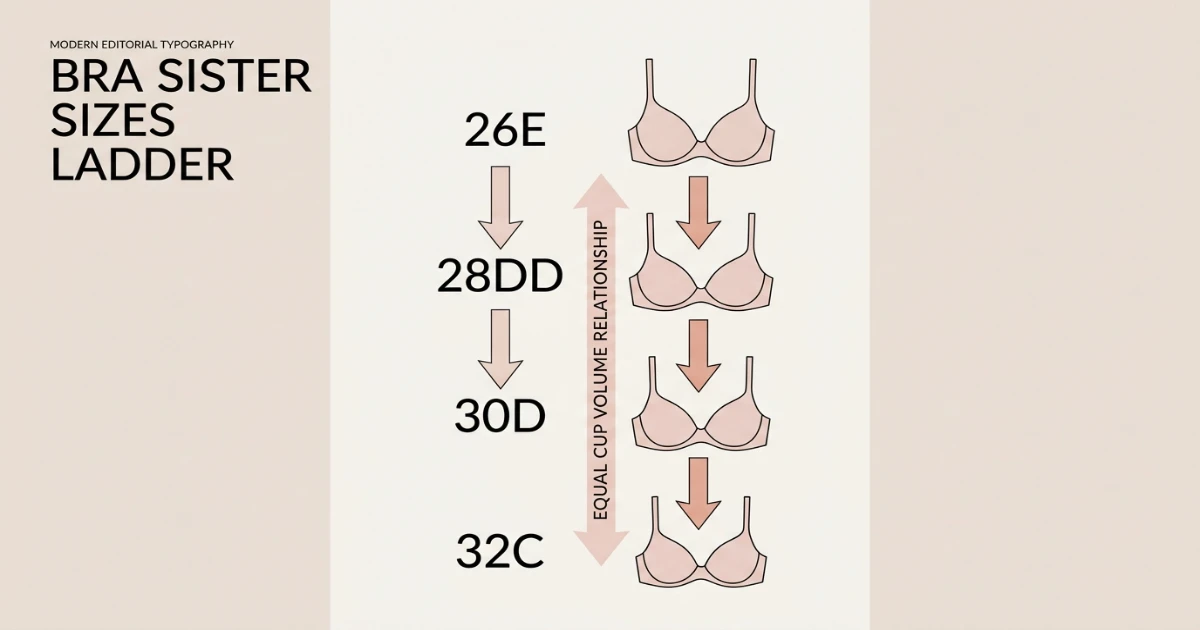
28DD and 30D are two rungs on a longer ladder of sizes that all share the same approximate cup volume. Understanding the full ladder helps when you’re shopping across brands with different size availability, or when you’re refining your fit by experimenting with adjacent sizes.
Moving up the ladder (wider band, smaller cup letter) gives you more breathing room but less band tension. Moving down (narrower band, larger cup letter) increases firmness and lift. For petite-framed women with fuller busts, the 26E option exists but is exceptionally rare in retail — making 28DD the practical lower limit for most shoppers in this volume range.
One important caveat: the further you move from your true size on the ladder, the more the fit diverges. A 32C may hold the same volume as a 28DD on paper, but the cup shape, underwire width, and overall construction will feel substantially different on the body — not just looser. Use our sister size calculator to see your complete equivalence range, and our bra size chart calculator to cross-reference your measurements against your options.
Quick At-Home Fit Test
Whether you’re testing a new 28DD or a 30D you’ve been wearing for months, these six checks take under two minutes and will tell you whether the fit is working for your body.
- Band tension check: Slide two fingers under the back band. They should fit snugly — but just. If you can fit your whole hand with room to spare, the band is too loose and the D/DD cups won’t be positioned correctly.
- Band level check: Stand sideways in a mirror. The back band should run in a level horizontal line — not angling upward toward your shoulder blades. Riding up at the back is the clearest sign of a band that’s too big.
- Cup coverage check: Press around the top and sides of each cup. All breast tissue should be inside — no overflow at the top, no escape under the arm or toward the armhole.
- Gore check: The center panel (gore) between the cups should lie flat against your sternum without floating away or pressing uncomfortably into tissue. A floating gore typically means the cups are too small; pain from the gore usually points to the cups being too narrow for your breast root width.
- Underwire check: Trace the wire with one finger from one end to the other. It should encircle the full base of each breast, resting on your chest wall — not pressing on breast tissue at any point.
- Strap independence check: Loosen your straps slightly until they’re barely taut, then assess support. If the bra still positions breast tissue correctly with minimal strap tension, the band is doing its job. If the bra collapses without tight straps, the band is carrying too little load.
Still uncertain whether 28DD or 30D is the right fit for your measurements? Our AI-powered calculator factors in both your measurements and your current fit complaints to recommend the most accurate size for your body.
Try the AI Smart Fit Calculator →28DD vs 30D: Side-by-Side Comparison
| Feature | 28DD | 30D |
|---|---|---|
| Band tightness | Firm — 28-inch underbust | Relaxed — 30-inch underbust |
| Cup volume | ~Equal (sister sizes) | ~Equal (sister sizes) |
| Cup shape | Narrower base, deeper projection | Wider base, slightly shallower |
| Support level | High — firm band does more work | Moderate — depends on band fit |
| Comfort all-day | Best for 27–28.5 inch ribcage | Best for 29–30.5 inch ribcage |
| Spillage risk | Low when correctly sized | Low when correctly sized |
| Gaping risk | Low for projected breast shapes | Low for wide-set breast shapes |
| Best ribcage measurement | 27–28.5 in (68–72 cm) | 29–30.5 in (74–77 cm) |
| Retail availability | Specialist brands; less common | Widely stocked in most stores |
People Also Ask
28DD and 30D are sister sizes — they hold approximately the same cup volume but use different band sizes and cup letters. A 28DD has a firmer, narrower band with a deeper cup; a 30D has a wider, more relaxed band with a shallower cup. Both hold similar amounts of breast tissue, but they fit differently on the body.
In terms of overall circumference, yes — a 30D has a two-inch wider band. In terms of cup volume, they are approximately equal as sister sizes. The 30D bust measurement is about one inch larger on paper (34 inches versus 33 inches), but this reflects the wider band, not a meaningful difference in breast tissue capacity.
The sister sizes of 28DD are 30D (one band size up, one cup letter down) and 26E (one band size down, one cup letter up). All three hold approximately the same cup volume but deliver it through different band widths and cup constructions.
Because the 28DD band is two inches shorter in its natural length. When fastened around the same ribcage, the 28DD must stretch further to close, creating more tension against the body. For a true 28-inch underbust, this feels like proper support. For a larger ribcage, it feels restrictive and uncomfortable.
Yes, as a practical substitute — particularly when 28DD isn’t available. The cup volume is similar, so breast coverage should be roughly equivalent. The trade-off is a looser band, which reduces support and lift. Using the tightest hook helps initially, but bands stretch with wear, so a substitute 30D will loosen faster than a correctly sized 28DD would.
Sister sizes are bra sizes that hold approximately equal cup volume despite different band-and-cup letter combinations. The rule: increase band by two inches, decrease cup by one letter (and vice versa) to maintain volume. For example: 26E, 28DD, 30D, and 32C are all sister sizes. Cup letters are proportional to the band, not fixed volumes — which is why this works mathematically.
No — 28DD is considered a specialist size and is rarely stocked in mainstream retail chains. Most high-street stores begin their range at 32A or 30B at the smallest. UK specialist brands such as Bravissimo, Panache, and Freya tend to offer the most comprehensive coverage of 28-band sizes including DD and beyond.
Mass-market retailers stock sizes that sell in the highest volume, which has historically centred on bands between 32 and 38. Petite band sizes like 28 represent a smaller commercial segment, so fewer mainstream brands produce them. Many women with genuine 28-inch ribcages end up wearing a 32-band bra with cups adjusted down — a compromise that delivers poor support and a bra that works harder against the body than with it.
Related Bra Size Comparisons
Take the guesswork out of whether you’re a 28DD or a 30D. Enter your measurements and our calculator will give you a clear recommendation — including your full sister size range.
Calculate My Bra Size →Sizing note: Bra sizing varies significantly between brands, countries, and construction styles. Measurements and fit guidance in this article reflect general US and UK sizing conventions and are intended as a starting point. DD in US sizing corresponds to E in UK sizing — always check a brand’s specific size guide when purchasing. Trust how a bra feels on your body over what the label says.