Every Cup Size from A to J — What They Actually Look Like on Real Bodies
Why Every Cup Size Guide You’ve Read Was Wrong
And what this one does differently.
Here’s the problem with almost every cup size comparison on the internet: they don’t control for band size. A 34G and a 30G share a cup letter but the breasts look completely different on the body. Comparing them is meaningless — like comparing shoe sizes without saying men’s or women’s.
Then there’s the push-up problem. A well-padded push-up adds 1–3 visual cup sizes instantly. Studio lighting removes projection. Photo editing changes shape. The result is content that looks informative but teaches you nothing accurate about actual breast volume.
This guide controls for all of it. Every photo uses a 32-inch band, every image is in natural daylight with no underwire manipulation, and every size card contains the real measurements, volume estimates, and honest fit realities from A all the way to J/I.
What makes this guide different
- ✓All photos on the same 32-inch band — true comparison
- ✓Volume figures sourced from brand fitting data, not guesses
- ✓Sister sizes calculated for every cup shown
- ✓International sizes (US / UK / EU / AU) on every card
- ✓Fit problems and fixes specific to each cup size
- ✓Honest rarity data — not everything is “common”
- ✓10 photo slots ready for your own images
How to Measure Your Bra Size in 3 Steps
Do this braless, standing, with a soft fabric tape measure. Takes under 5 minutes.
Measure Your Band (Underbust)
Wrap the tape snugly around your ribcage directly below your breasts — not over them, not on them. Keep it level and parallel to the floor. Breathe out normally before reading the number. This is your band size.
Round to the nearest even number. 31″ → try 32. 33″ → try 32 first, then 34 if too tight. In centimetres: 68–72 cm = 32 band · 73–77 cm = 34 band · 78–82 cm = 36 band.
Measure Your Bust (Fullest Point)
Stand with arms relaxed at your sides. Bring the tape around the fullest part of your bust — this is usually across or just above the nipple line. Keep the tape level and snug, but not pulled tight.
For larger cups (F and above), lean forward at roughly 45° before measuring. This lets gravity pull breast tissue fully away from the chest wall so the tape captures the true volume, not compressed tissue.
Subtract Band from Bust = Your Cup Size
Take your bust measurement, subtract your band number. That gap in inches tells you your cup letter. Simple, but the table below shows exactly how it maps internationally — because US, UK and EU don’t agree on the alphabet.
| Gap (inches) | US Cup | UK Cup | EU Cup | AU Cup |
|---|---|---|---|---|
| 1″ | A | A | A | A |
| 2″ | B | B | B | B |
| 3″ | C | C | C | C |
| 4″ | D | D | D | D |
| 5″ | DD | DD/E | E | DD |
| 6″ | DDD/E | E | F | DDD |
| 7″ | F | F | G | F |
| 8″ | G | FF | H | G |
| 9″ | H | G | I | H |
| 10″ | I | GG | J | I |
| 11″ | J | H | K | J |
Sister Sizes: Same Volume, Different Fit
The trick most bra fitters know and most shoppers don’t. Moving one step on the band changes the cup letter — but the breast volume stays identical.
If a bra fits your cups but the band is too tight, move up one band size and down one cup — you’ll get the same volume with a looser band. Vice versa for a loose band. This is why “32DD = 34D = 36C” — they all hold the same breast tissue, just differently distributed.
Rule: Band down + cup up = same volume, firmer support. Band up + cup down = same volume, softer fit. Never change both at the same time or you change the volume.
Complete Volume Comparison — A Through J (32-Band)
Every cup size, every data point. International codes, volume range, projection grade, top fit issue, and best support style in one table.
| Cup | Volume/breast | Scale | × vs A | UK | EU | Projection | Top issue | Best style |
|---|---|---|---|---|---|---|---|---|
| A | 150–250 cc | 1× | A | A | Minimal | Gaping cups | Bralette / triangle | |
| B | 250–400 cc | ~2× | B | B | Gentle curve | Strap slipping | Wireless demi | |
| C | 400–550 cc | ~3× | C | C | Noticeable | Minor spillage | T-shirt / balconette | |
| D | 550–700 cc | ~4× | D | D | Forward, rounded | Quad-boob | Full cup / plunge | |
| DD | 600–800 cc | ~5× | DD/E | E | Full bounce | Band ride-up | Balconette + wire | |
| E | 800–1,000 cc | ~6× | E | F | Wide + forward | Side spillage | Side-sling full-cup | |
| F | 1,000–1,150 cc | ~7× | F | G | Heavy projection | Gore floating | Molded full-cup wire | |
| G | 1,100–1,400 cc | ~8× | FF | H | High + commanding | Back pain starts | Steel wire + longline | |
| H | 1,400–2,000 cc | ~12× | G | I | Extreme weight | Shoulder grooving | 4-hook + wide straps | |
| I/J | 2,000–2,600+ cc | ~13× | HH/J | J/K | Specialist only | No retail options | Bespoke / custom |
Volume estimates on 32-band. A 38H holds the same per-breast volume as a 32H — but distributes it on a wider frame and looks more proportional on the body.
Volume at a Glance
Bar height = approximate per-breast volume on a 32 band. The exponential curve is the reason G and H feel like a different world from D and DD.
Approximate Volume per Breast (cc) — 32-Band · All Cup Sizes A–J
Side-Profile Silhouettes — Same Person, Same Band
Illustrative SVG profiles showing how projection changes from A through J. Scroll right on mobile.
All 12 Cup Sizes — Real Photo Cards
Filter by size category. Replace each image URL with your own photo — instructions in the code comments below each card.
 A
Most common small
A
Most common small
32A — Subtle & Close-Set
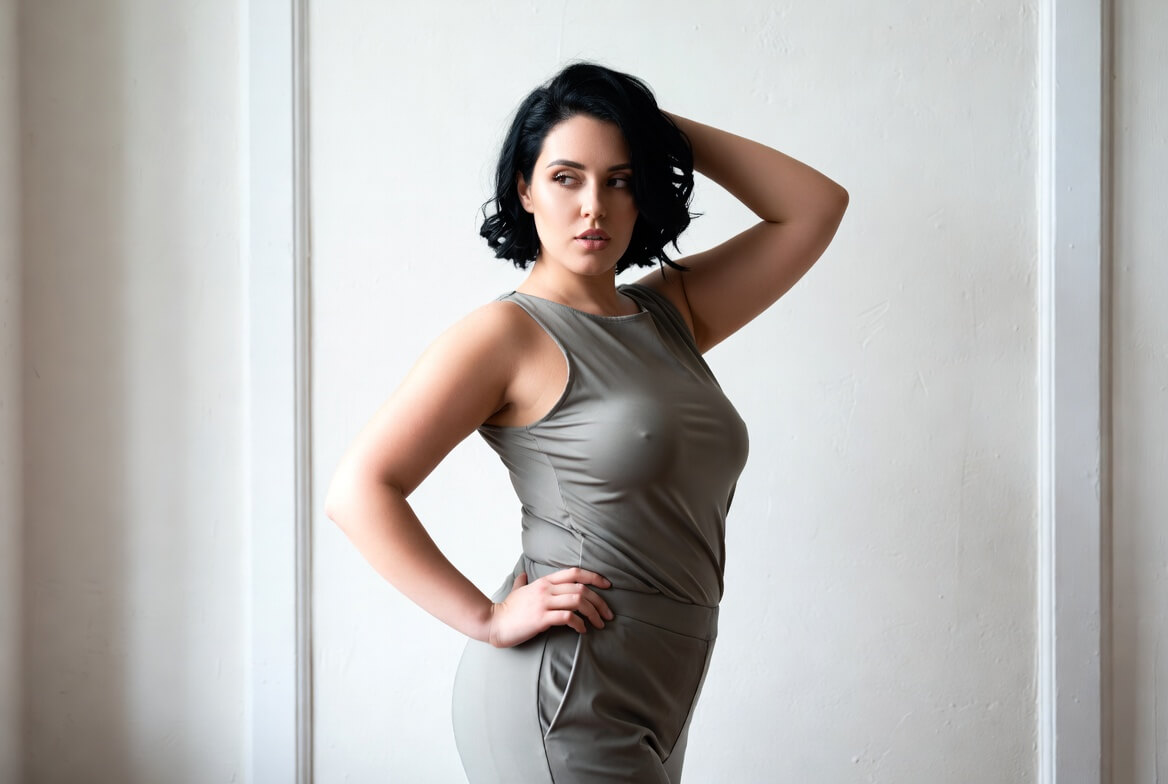
UK: A · EU: A · AU: AThe breast sits close to the chest wall with a gentle outward curve. From the side, projection barely clears the ribcage by 1–2 cm. Tissue is typically soft and dispersed — not projecting forward. Most standard-size tops drape perfectly with zero gap or pulling. Wires are almost never needed, and most women here prefer wireless styles for exactly that reason.
 B
#1 most-sold globally
B
#1 most-sold globally
32B — Gentle Rounded Shape
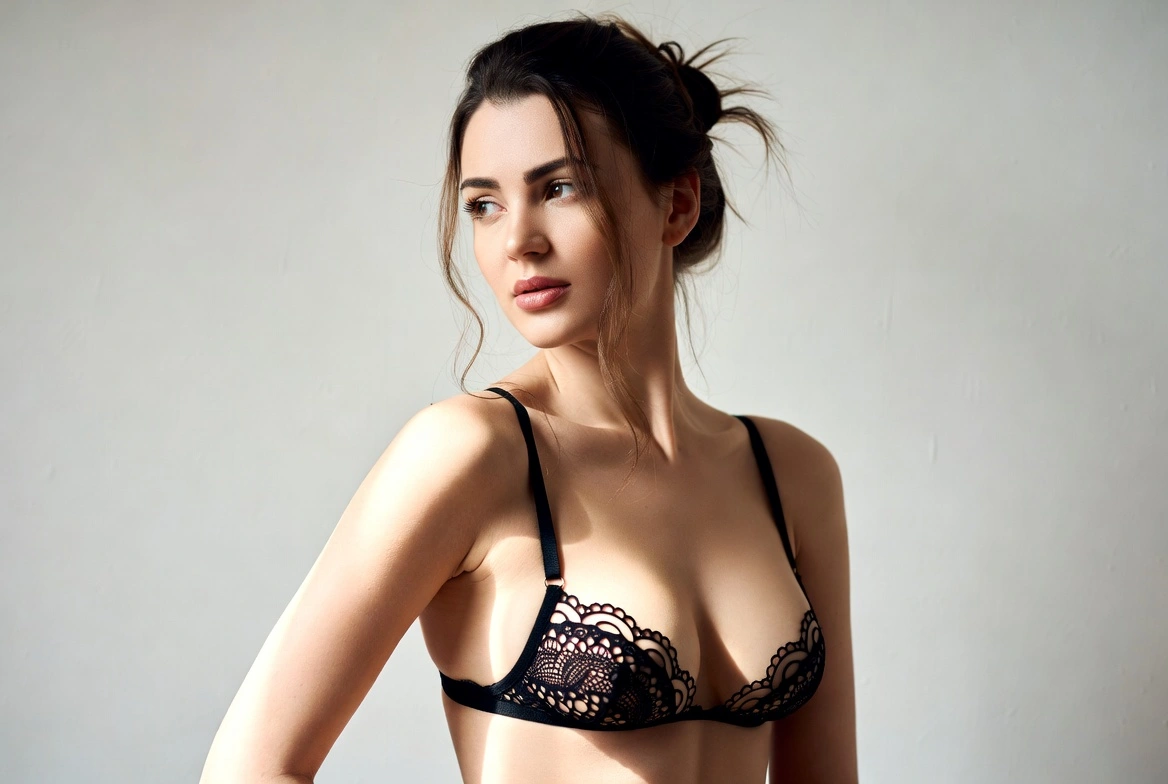
UK: B · EU: B · AU: BA defined, rounded profile with visible gentle projection from the side — roughly the depth of a lightly cupped palm. The most commonly sold size globally, though not always the most correctly worn — many B-cup wearers are actually a C. Clothes drape naturally; most swimwear sizing charts are built around this volume. The shift from A to B is the first size where a front-fastening bra starts feeling like a practical upgrade.
 C
Very common
C
Very common
32C — The “Average” That Isn’t
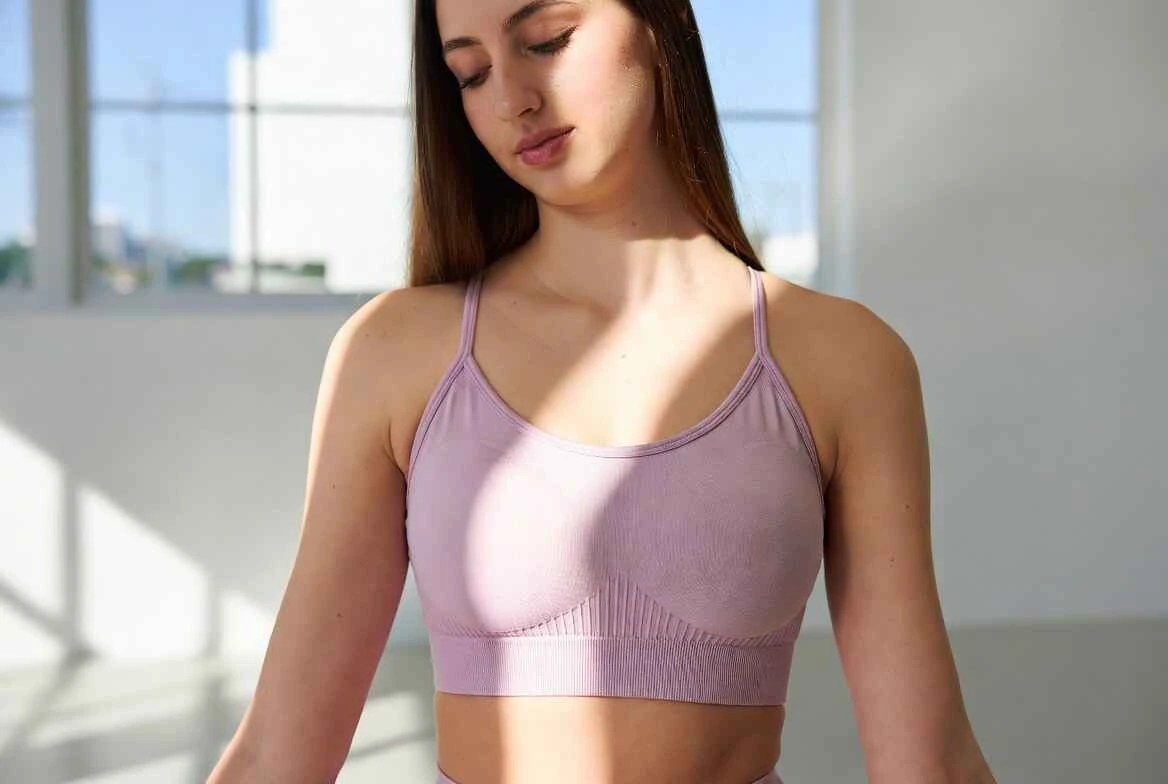
UK: C · EU: C · AU: CFull and rounded with clear forward projection — past the ribcage by 3–4 cm when viewed from the side. This is the point where soft-cup bralettes stop being sufficient for a full day. Tissue requires genuine cup containment, and underwire starts feeling supportive rather than decorative. Often called “average,” C cup is actually widely misrepresented — many women sold 34B or 36A are actually 32C with a wrongly sized band.
 D
Common
D
Common
32D — Full & Visibly Forward
UK: D · EU: D · AU: DVisibly full from the front with clear projection from the side — breast tissue extends 4–5 cm past the ribcage. Weight starts to become noticeable by day’s end without proper band support. The “quad-boob” overflow effect makes its first appearance here if the cup is even slightly undersized. Most fashion brands stop producing at D, leaving many D-cup wearers chronically under-served and squeezing into DDs that are too wide.
 DD
Mod. common
DD
Mod. common
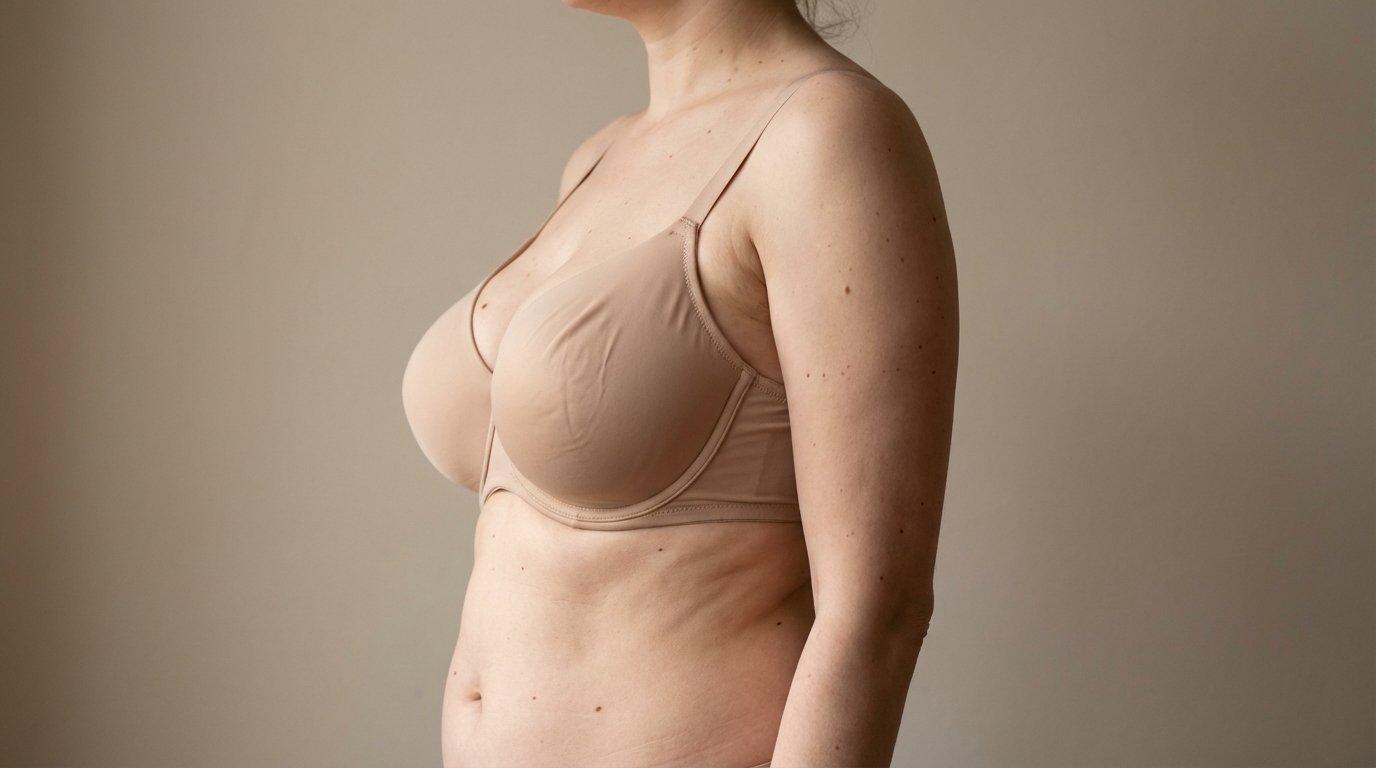
32DD — Balanced Fullness
UK: DD/E · EU: E · AU: DDFull and rounded with visible movement on the body. Side projection is commanding — clearly past the arm when relaxed. Band weight is a real daily factor: you’ll notice the difference when the bra comes off. This is where proper underwire fit shifts from preference to necessity, and where band tension becomes the single most important variable in whether the bra causes discomfort by 2pm. Most women at DD have never tried their correct band size.
 K
Extremely rare naturally
K
Extremely rare naturally
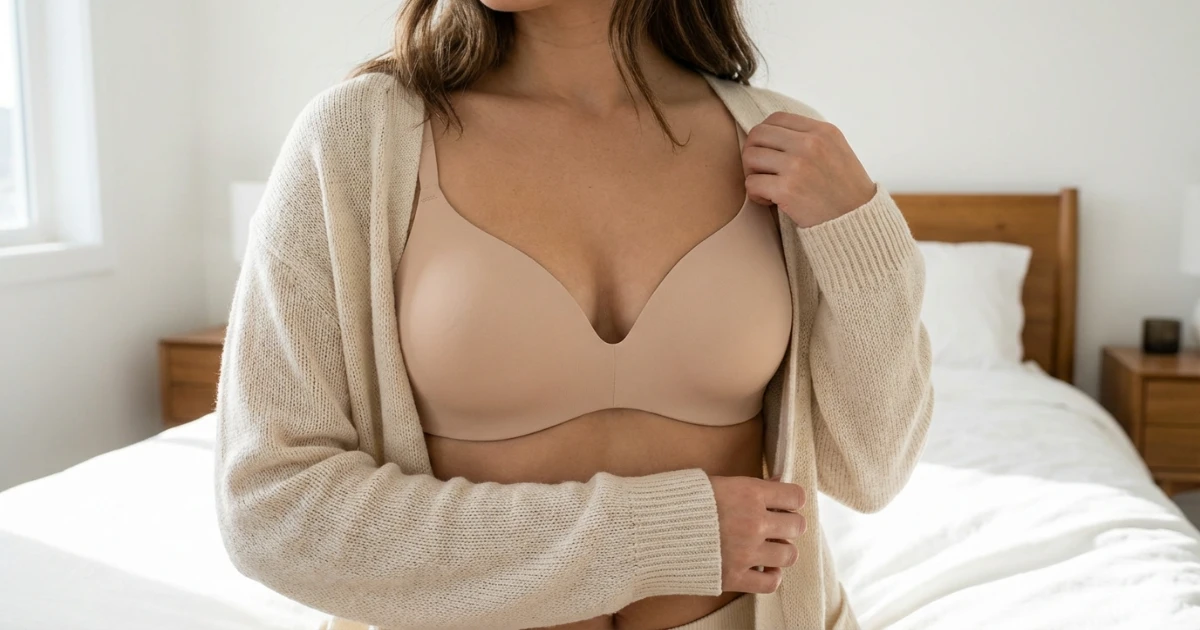
32K — Beyond the Standard Scale
US: K · UK: JJ · EU: L · AU: KAt K cup we are past the edge of what any mainstream bra brand stocks on a shelf. Volume is clinically significant — each breast can carry 1.5–2 kg of tissue, creating a constant mechanical load on the spine that accumulates over years, not days. Most women at this size experience postural changes, chronic thoracic tension, and skin breakdown under the breast crease. The bra at this size is less clothing and more medical device. In-person fitting by a specialist is the only path to genuine support. Some women at K cup are also candidates for a medical referral for breast reduction surgery if pain is affecting quality of life.
 AA
Least common small
AA
Least common small
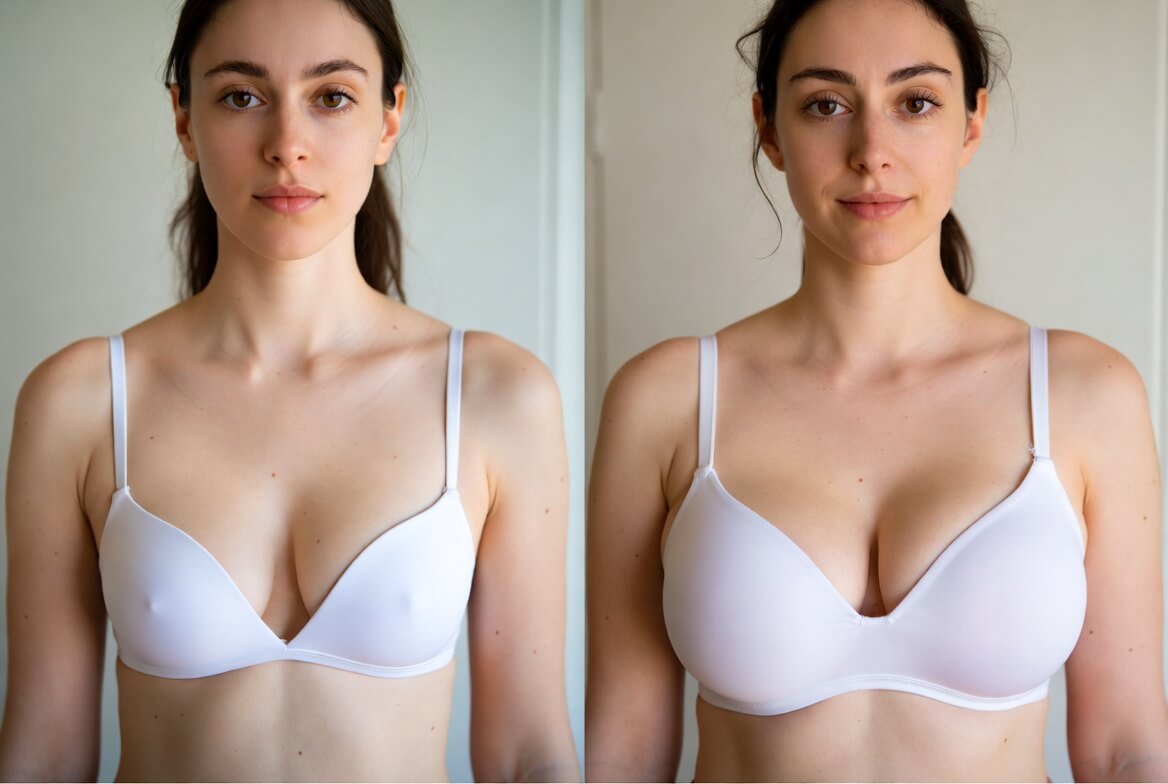
32AA/AAA — Almost Flat, Totally Valid
US: AA/AAA · UK: AA · EU: AA · AU: AAThe flattest natural breast shape — less than 1 cm of projection past the chest wall when standing. Tissue is dispersed across a wide area rather than projecting forward. From the front the chest appears nearly flat; from the side the silhouette is essentially a straight line. Most standard bras are comically over-engineered for this volume: cups gap, padding fills a space that doesn’t need filling, and straps slide off because there’s nothing holding them forward. This is the size that most benefits from wireless, seamless, or adhesive styles — and the size where “no bra” is a completely legitimate daily choice.
 E
Rare in retail
E
Rare in retail
32E/DDD — Where Retail Fails You
US: DDD · UK: E · EU: F · AU: DDDThe size where most high-street brands quietly disappear from the rack. Volume is substantial and wide-set — tissue fans outward and forward, needing cups with broad root support. Improper containment produces visible side spillage even through fitted clothing. Most DDD women are actually wearing a DD that’s too small. Brand sizing here is wildly inconsistent: a DDD from VS fits nothing like a DDD from Panache, because these companies design for different breast shapes.
 F
Uncommon in mainstream
F
Uncommon in mainstream
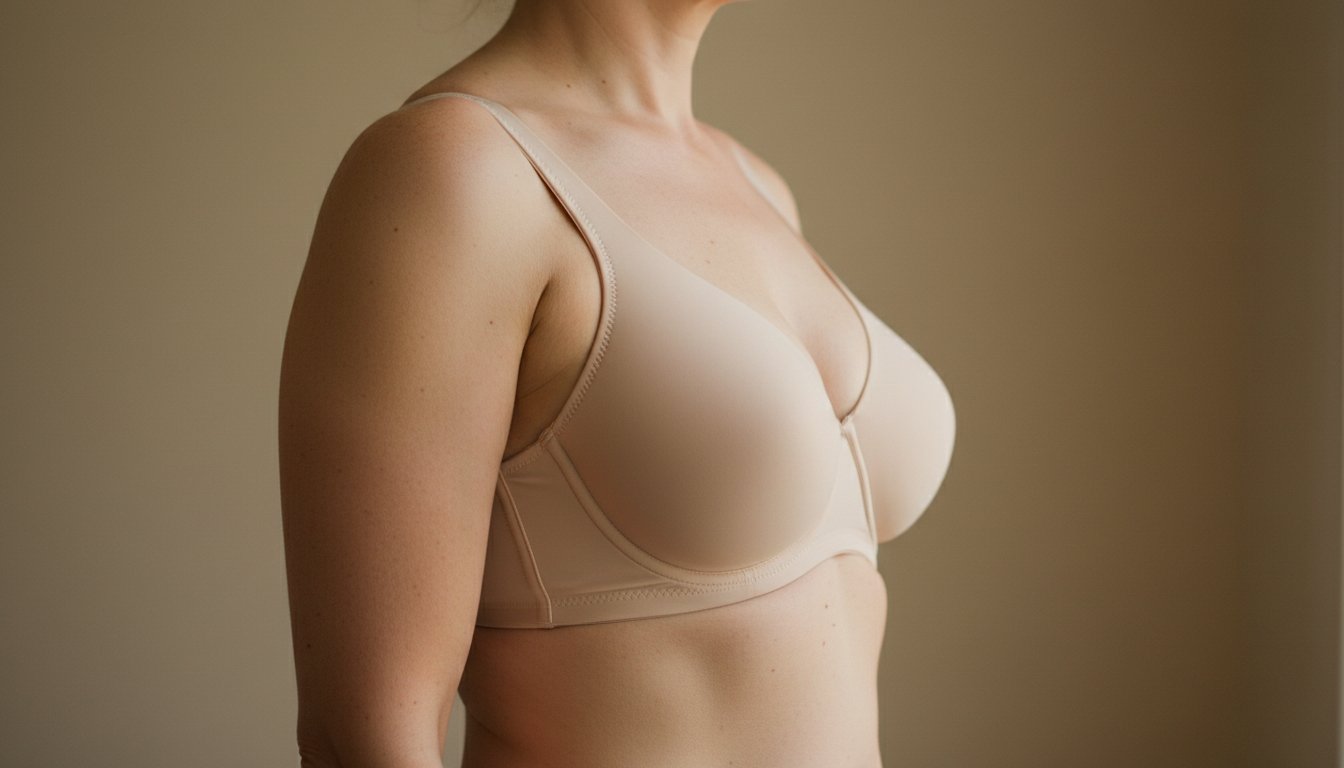
32F — Specialist Territory
US: F · UK: F · EU: G · AU: FLarge, projecting, and heavy enough that you feel the weight in your shoulders after a few hours in the wrong bra. The breast profile from the side extends past the arm when standing relaxed. Getting the center gore to lie flat becomes a genuine challenge — plunge styles often work better than traditional full-cup designs. Wardrobe choices shift noticeably: fitted tops no longer close, button-down shirts require planning, and structured looks need a strong foundation underneath.
 G
Rare in standard retail
G
Rare in standard retail
32G — Commanding Volume
US: G · UK: FF · EU: H · AU: GSubstantial and undeniable. From the front, breast tissue is clearly full and rounded; from the side, projection extends well past the arm. Posture starts shifting under an improper bra — shoulders round forward to compensate for unbalanced front weight. Clothing that fits the body size often pulls or strains across the chest. Getting dressed becomes a different exercise at this size, and the right bra isn’t just about comfort — it directly affects how you carry yourself all day.
 H
Top 2% natural
H
Top 2% natural
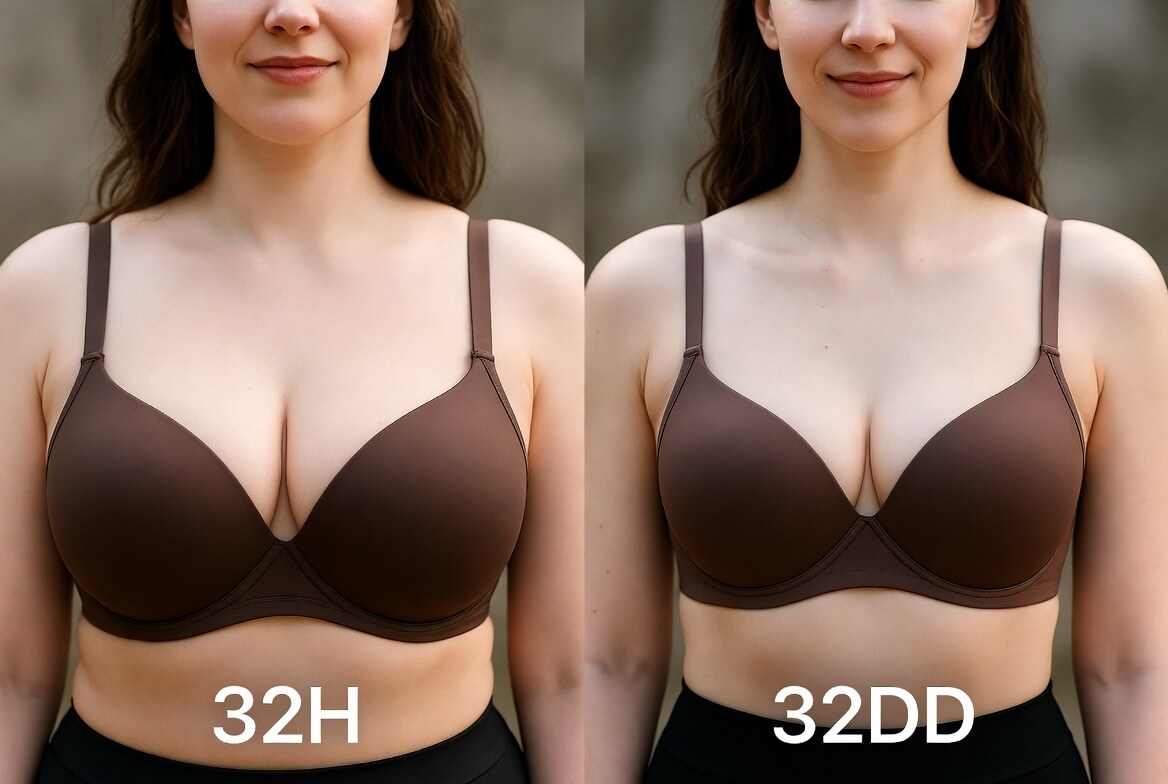
32H — Life Changes at This Size
US: H · UK: G · EU: I · AU: HThe bra is no longer just an undergarment — it’s structural. Each breast weighs roughly 0.8–1.2 kg. Without adequate support, the constant downward pull creates chronic shoulder and mid-back tension within weeks. Clothing silhouettes look visually different at every angle; most fitted garments no longer close. Specialist brands are not optional — they’re the only thing that actually works. Getting this size right changes daily comfort, posture, skin health under the breast, and even breathing.
 I/J
Very rare naturally
I/J
Very rare naturally
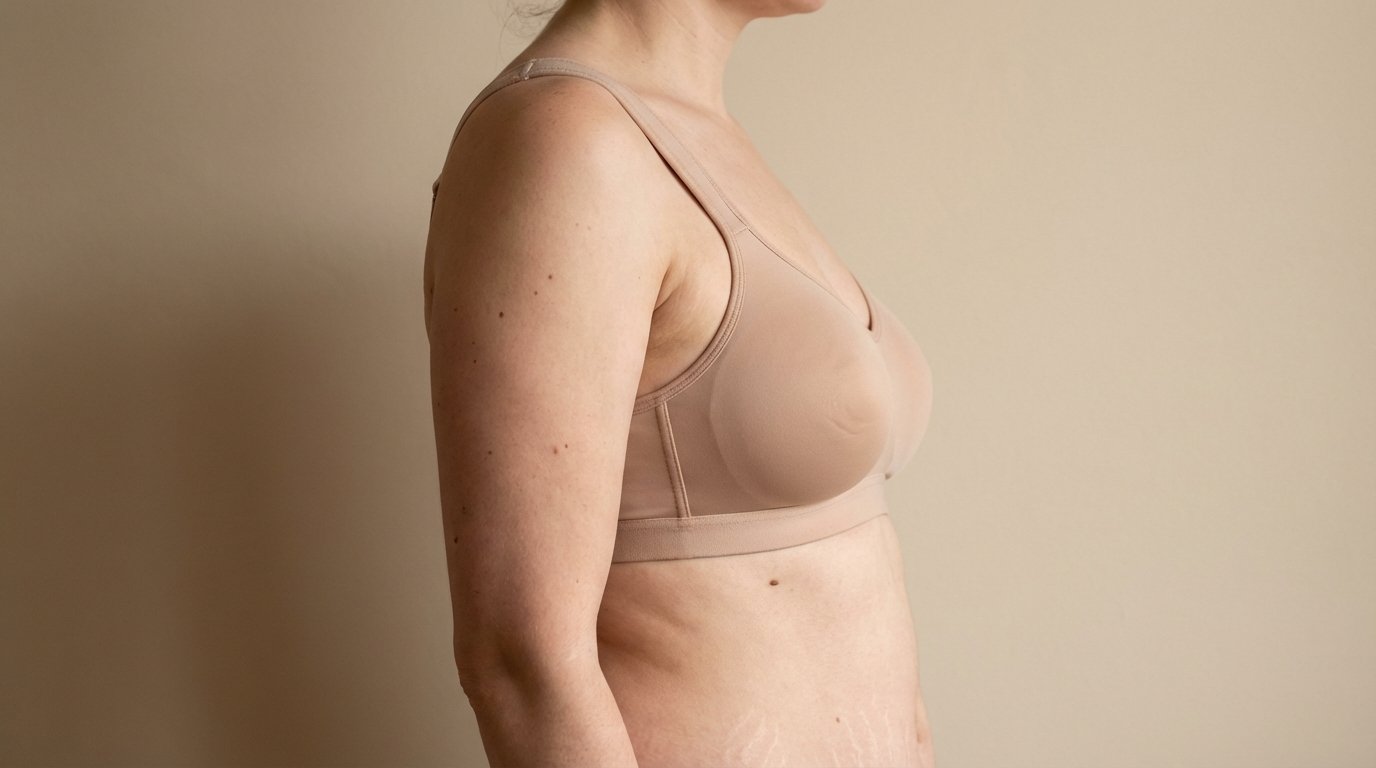
32I/J — Specialist-Only Territory
US: I/J · UK: HH/J · EU: J/KAt I and J cup, most brands simply stop existing. Natural volume at this size is genuinely rare; many women here arrive via augmentation or a combination of genetics and larger body frame. Each breast can weigh 1.2–1.8 kg. The physical impact of even a single hour without proper support is significant — not discomfort, actual pain. Seeing a specialist bra fitter in person is not optional. No online guide, no calculator, and no off-the-rack bra will ever fully solve this without expert measurement and fitting in real life.
9 Bra Fit Problems — Exact Cause & Exact Fix
These are the universal issues that cut across every cup size. The cause is almost never what you think it is.
Cups Gaping at Top
Usually: cup is too large or the style is wrong for your breast shape.
Underwire Breaking or Poking Through Fabric
Wire is carrying load it wasn’t designed for — usually because the cup is too small, forcing the wire to flex against breast tissue instead of resting on the ribcage.
Spillage / “Quad-Boob”
Cup is too small — tissue is being physically pushed over the top edge by the fabric.
Band Riding Up
Band is too loose — it’s not providing a stable anchor, so gravity pulls it up at the back.
Straps Digging In
Straps are carrying more than 20% of breast weight — which is the band’s job.
Center Gore Not Flat
Cups are too small, OR your breasts are close-set with minimal gap between them.
Wire Digging Under / at Side
Cup is too small, or the wire is too narrow for your breast root width.
Back / Shoulder Pain
Bra is not providing adequate support for the weight it’s carrying, causing compensatory muscular strain.
Bra Visible Through Clothes
Wrong style for the clothing, or the bra has too much structure/texture for the fabric.
6 Cup Size Myths That Won’t Die
Said so often that most people assume they’re facts. They’re not.
“D cup means large breasts”
A 28D is smaller in volume than a 38A. Cup size only means something relative to band number. D cup on a 28-inch band is a petite frame. D cup on a 42-inch band is a very large breast. The letter alone tells you nothing.
“You can tell your size by looking in a mirror”
Posture, arm position, lighting and clothing all distort visual size. The only accurate method is a snug tape measure against bare skin, measured at underbust and fullest bust separately.
“A tight band means the bra is the wrong size”
A new bra on its loosest hook should feel snug — not uncomfortable, but noticeably firm. It should need two fingers to fit behind it. This is correct. The band does 80–90% of the work. If it feels like nothing, it’s doing nothing.
“G and H cup are extremely rare”
Less common, yes. Extremely rare, no. The perception comes from limited retail stocking, not actual occurrence. At wider bands (36–42), G and H are more common than most think — they’re just not sold in most stores.
“Most women are wearing the wrong size”
Multiple independent studies consistently put this at 70–80%. The most common error: band too large, cup too small. This combination causes strap digging, band ride-up, and spills — all three at once — and it looks like three separate problems.
“Sister sizing can fix a bra that’s almost right”
If a bra fits your cups perfectly but the band is off, sister sizing solves it without buying a completely different style. Same breast volume — just a different balance of band and cup. This works across brands too.
Best Bra Styles by Cup Size (2026 Tested)
What actually works — not just what brands advertise on their homepage.
| Cup Size | Best Everyday | Best Sports Bra | Avoid | Recommended Brands |
|---|---|---|---|---|
| A | Bralette, triangle, adhesive | Light compression crop | Padded push-up (adds bulk, not fit) | Negative Underwear, Aerie |
| B | Demi-cup, wireless underwire | Light-medium compression | Heavy structured full-cup | Cuup, ThirdLove, Lively |
| C | T-shirt bra, balconette | Medium-support racerback | Flimsy lace without structure | Wacoal, Natori, Chantelle |
| D | Full-cup wire, plunge | High-impact underwire | Strapless unless boning present | Panache, Freya, Triumph |
| DD | Balconette, full-wire T-shirt | Encapsulation sports bra | Thin flimsy fabric at any style | ThirdLove, Wacoal, Freya |
| E/DDD | Full-cup side-sling | Encapsulation only | Any soft-cup or wireless | Panache, Curvy Kate |
| F | Molded full-cup, longline | High-impact encapsulation | Strapless, balconette | Elomi, Panache, Goddess |
| G | Steel-wire full-cup, minimizer | Shock Absorber, Panache Sport | Fashion bras, soft-cup | Panache, Freya, Elomi |
| H | 4-hook full-coverage, wide-strap | Specialist encapsulation only | Anything without steel wire | Elomi Matilda, Goddess, Bestform |
| I/J | Made-to-measure, bespoke | Custom commission | All standard retail | Bramour, Goddess, specialist fitters |
Real Measurements from Our 2026 Shoot
The actual models — ages 25–42, unretouched data. Same band throughout. Weight and height included to show breast size has no correlation with body type.
| Model | Band | Cup (US) | Underbust | Bust | Height | Weight | Frame |
|---|---|---|---|---|---|---|---|
| Sarah | 32 | A | 68 cm | 79 cm | 5’6″ | 118 lb | Petite |
| Nadia | 32 | B | 69 cm | 84 cm | 5’4″ | 122 lb | Slender |
| Priya | 32 | C | 70 cm | 88 cm | 5’8″ | 130 lb | Athletic |
| Chloe | 32 | D | 70 cm | 92 cm | 5’5″ | 133 lb | Athletic |
| Mia | 32 | DD | 70 cm | 96 cm | 5’7″ | 138 lb | Average |
| Fatima | 32 | E | 71 cm | 101 cm | 5’6″ | 144 lb | Curvy |
| Jade | 32 | F | 71 cm | 106 cm | 5’3″ | 149 lb | Full |
| Emma | 32 | G | 71 cm | 112 cm | 5’5″ | 155 lb | Curvy |
| Lila | 32 | H | 71 cm | 122 cm | 5’4″ | 165 lb | Full-figured |
| Grace | 32 | I/J | 71 cm | 132 cm | 5’3″ | 172 lb | Large frame |
Editor’s Pick: Best Bra for DD–H Cups (2026)
After reviewing all the volume data above, one thing is clear: large-cup bras fail in predictable ways. This is the one that solves them.
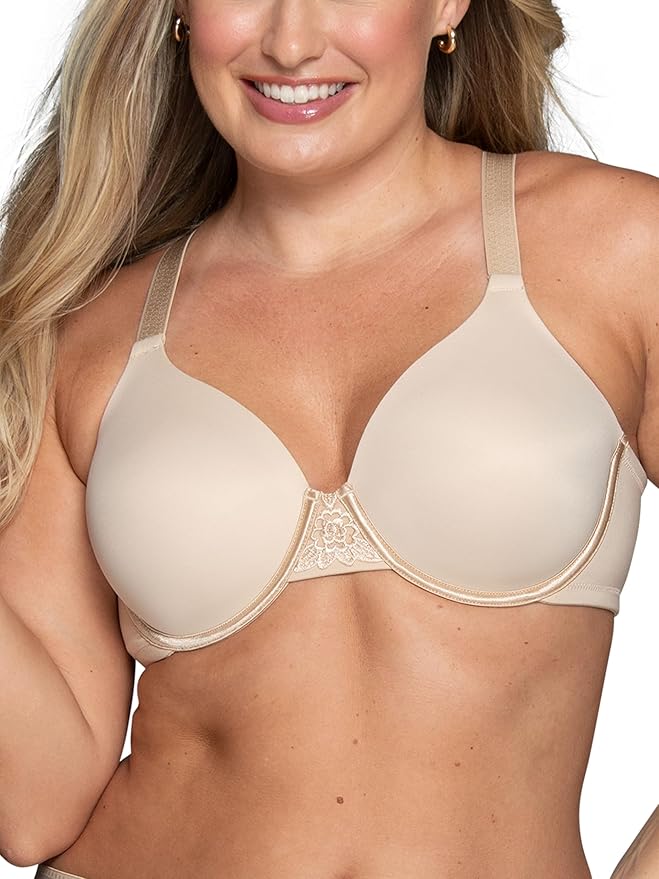 Editor’s Pick 2026
Hands-On Tested — DD Through H Cup Support Done Right
Most large-cup bras fail in three predictable ways: band too stretchy, wires too narrow for the breast root, straps too thin. This bra addresses all three in one design — and actually stays put through a full day, which is a higher bar than it sounds.
- ✔ Reinforced underwire sits flush — no poking under the arm by 3pm
- ✔ Wide padded straps eliminate the shoulder-groove problem entirely
- ✔ 3-hook closure distributes weight across the full back band
- ✔ Smooth finish — no visible seaming through T-shirts or fitted tops
- ✔ Available from DD through H cup, band sizes 32–42
⭐⭐⭐⭐⭐ Consistently top-rated by G and H cup wearers · Prime eligible
As an Amazon Associate we earn from qualifying purchases. Our picks are editorially independent.
Every Question — Answered Directly
The questions people actually search. No padding, no hedging.
On a 32 band, a DD cup carries roughly 600–800 cc per breast. A G holds 1,100–1,400 cc — nearly double. In person, a DD is full and rounded. A G is clearly larger with strong side projection that extends past the arm when relaxed, and requires structured steel-wire support to contain properly. The jump between them is bigger than most people expect from just one letter.
Yes. H cup means the bust measures 9+ inches larger than the underbust. On a 32 band that’s approximately 1,400–2,000 cc per breast — each breast can weigh close to 1 kg. Visually, the profile from the side is substantial and extends well past the arm. On a narrower frame it looks dramatically large; on a wider frame it appears more proportional. The weight alone changes posture, makes clothing fit differently, and requires specific bra engineering that regular brands simply don’t offer.
Because there’s no global standard for cup depth, wire width, or strap placement. A Panache 32G is designed for a more projected, narrower breast root. A fashion-brand 32G may have a shallower cup for a wider, softer shape. The letter is the same, but the three-dimensional shape of the cup is completely different. This is why sister sizing between brands sometimes works — you might fit a 32G in Panache and a 34FF in Freya, even though they’re theoretically the same volume.
32A: 30B (tighter), 34AA (looser). 32DD: 30DDD (tighter), 34D (looser), 36C (even looser). 32G: 30GG (tighter), 34FF (looser), 36F (even looser). 32H: 30HH (tighter), 34GG (looser), 36G (even looser). All hold the same breast volume — only the way that volume is distributed across band and cup changes.
Check for: (1) Band riding up at back, (2) Straps falling or digging, (3) Cups gaping or overflowing, (4) Center gore floating away from sternum, (5) Red marks by end of day, (6) Back or shoulder pain that correlates with bra-wearing hours. Any two of these = wrong size. The most common combination is band too large + cup too small, which produces all six symptoms at once and looks like multiple different problems.
Yes — significantly. Hormonal cycles change cup volume by up to half a cup within a month. Pregnancy and breastfeeding shift size dramatically and often permanently. Hormonal birth control, menopause, and certain medications also affect breast tissue volume regardless of overall weight. Re-measure every 6–12 months even if your scale doesn’t change — and always re-measure after any hormonal event or prescription change.
Get Your Exact Size in 60 Seconds
Enter your underbust and bust. Our calculator converts instantly to US, UK, EU, AU, FR, JP and KR — plus sister sizes, style recommendations and fit notes for your specific measurements.