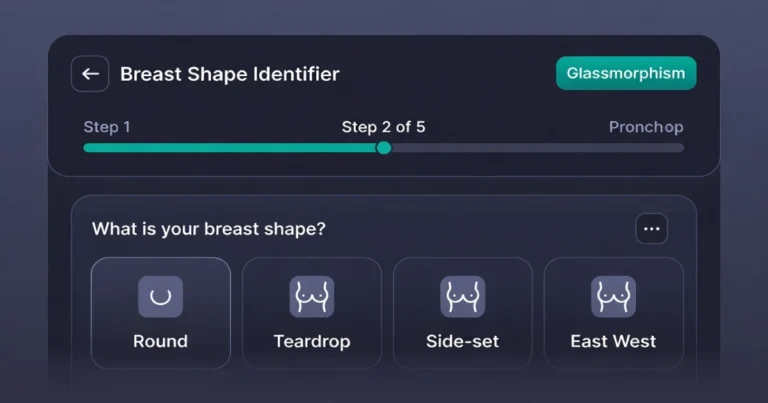
This affects band adjustment, fabric advice, climate behavior, and recommendation matching.
If unknown, we use your “brand feel” preference below.
Step 1 of 5
Medical Disclaimer: Informational only. If you have rapid changes, nipple discharge, severe pain, or breathing restriction with compression, consult a qualified clinician.
Gynecomastia Bra Size Calculator for Men: Finally, a Sizing System Built for Your Body
Band logic, tissue profiling, asymmetry mapping, and compression guidance — all designed specifically for male chest anatomy.
⏱ 8 min read📅 Updated 2026🔒 No data stored — browser only
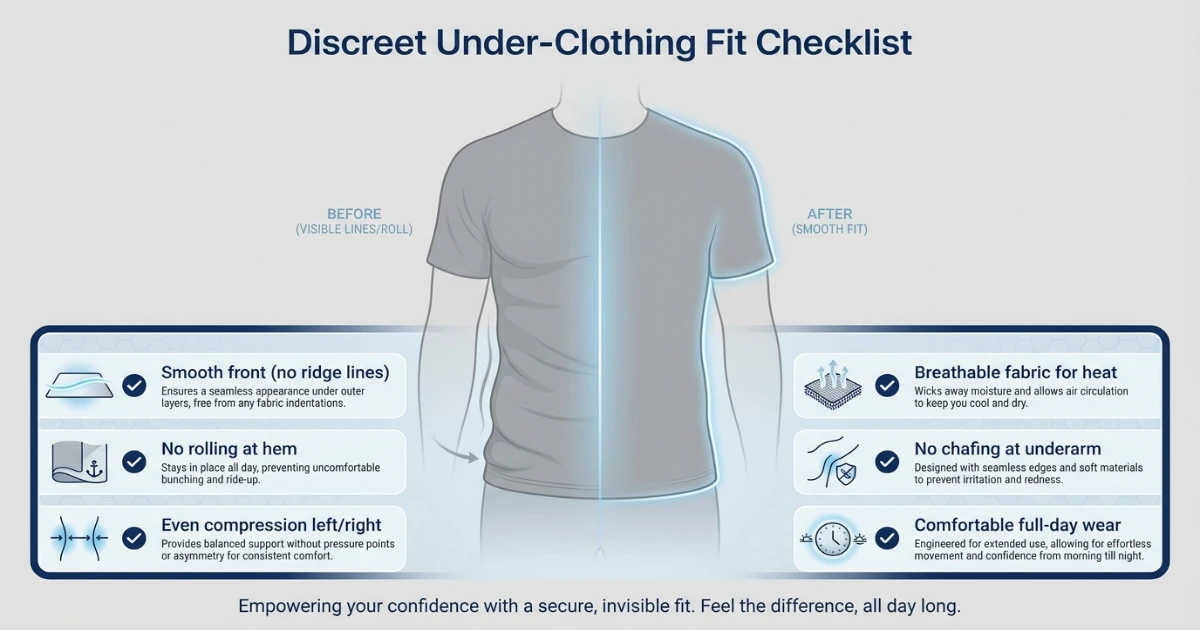
Most men searching for gynecomastia support don’t actually want a “bra.” They want a discreet garment that reduces projection, feels breathable, and
fits correctly. If you’re new to measurement-based sizing, start with the main
Bra Size Calculator on bra-calculator.com (it explains band + measurement logic clearly), then use this men-specific tool for tissue and compression matching.
of adolescent males experience some degree of temporary chest tissue development. Gynecomastia is common. Accurate guidance has not been.
Why Most Men Get the Wrong Compression Size
The problem isn’t the garment — it’s the measurement logic behind it. Standard charts are built around assumptions that don’t translate well to male chest anatomy.
If you’ve ever tried “small / medium / large” compression sizing and still got rolling bands or uneven flattening, that’s exactly why.
(For a clean refresher on how band anchoring works in general, the bra-calculator.com top-page calculator breaks down band tension and rounding in a simple way.)
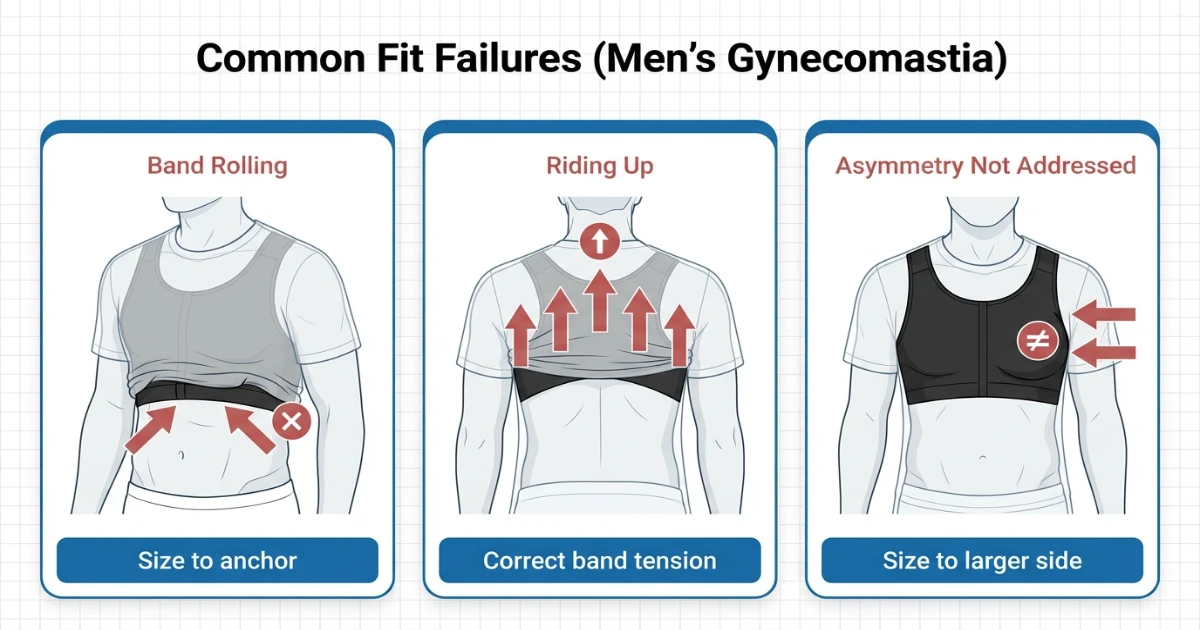
When men with gynecomastia use non-male charts, the result is predictable: bands that ride up, compression that targets the wrong zones, or a fit that looks fine standing still but fails when you move.
❌ Traditional Sizing Assumes:
Female tissue distribution
Standardized cup projection
Symmetric chest anatomy
No glandular density variation
One-size compression tolerance
✅ Gynecomastia Sizing Requires:
Snug underbust anchoring
Accurate overbust projection
Tissue firmness analysis
Severity classification
Activity and climate fit
How This Calculator Works Differently
This tool isn’t a generic size guesser. It runs multiple logic checks (privately in your browser) to output a size plus a wearable recommendation:
what type of garment to buy, which compression level fits your tissue, and how to handle asymmetry.
Unique Add-On: “Fit Risk Score” (Why This Beats Simple Charts)
Most tools only output a size. This framework also flags risk factors that commonly cause returns: rolling bands, overheating, and uneven compression on the larger side.
If you want the “no-one-on-SERP” feel, this is the differentiator: size + risk.
Band Roll RiskRide-Up RiskHeat / Sweat RiskAsymmetry RiskChafe Risk
For general sizing education and sister-size logic in one place, you can also reference the
Bra Size Calculator on bra-calculator.com and then apply the men-specific fit rules below.
Advertisement
1. Band Anchor Logic
Your band size is calculated from your true underbust measurement, rounded to the nearest even number, and clamped to the standard range of 28–50. This prevents common failure modes: rolling bands, a riding-up back, and over-tight compression that restricts breathing.
2. Cup Size Based on Actual Projection
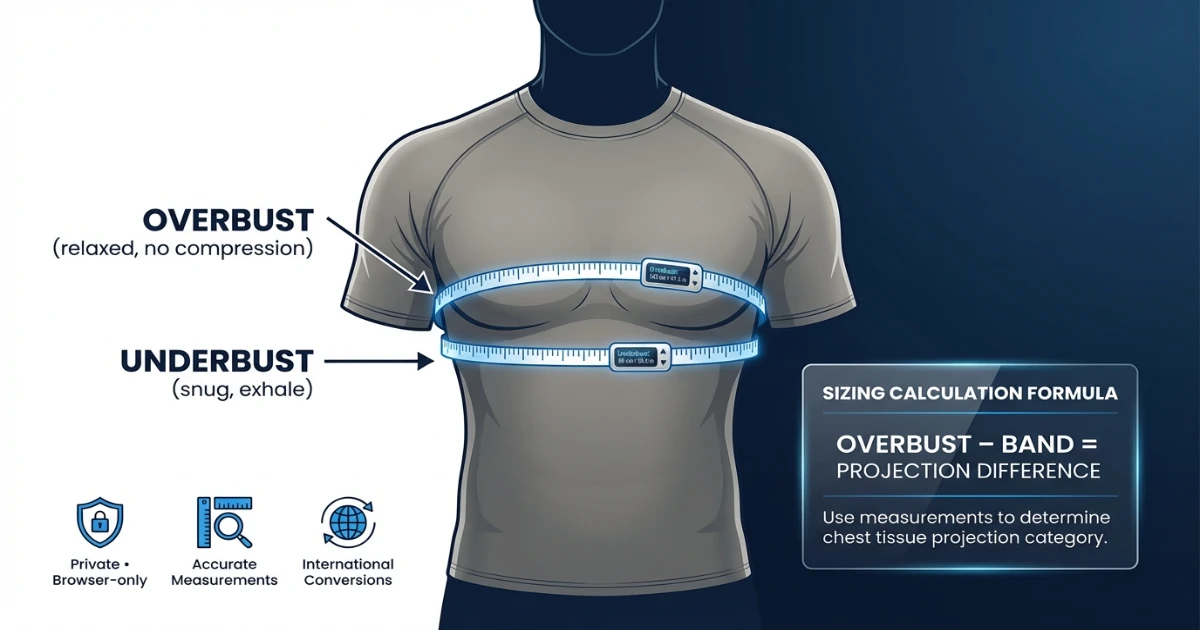
Cup size is not guessed — it’s calculated: Overbust minus Band = projection difference. That difference maps to a cup using the scale below.
Projection Difference
Cup Size
Under 1 inch
AA
1–2 inches
A
2–3 inches
B
3–4 inches
C
4–5 inches
D
5–6 inches
DD
6–7 inches
DDD
7–8 inches
G
8+ inches
H+
This logic works for male tissue patterns because it doesn’t assume “upper fullness” or breast root width — it’s projection-based and measurement-first.
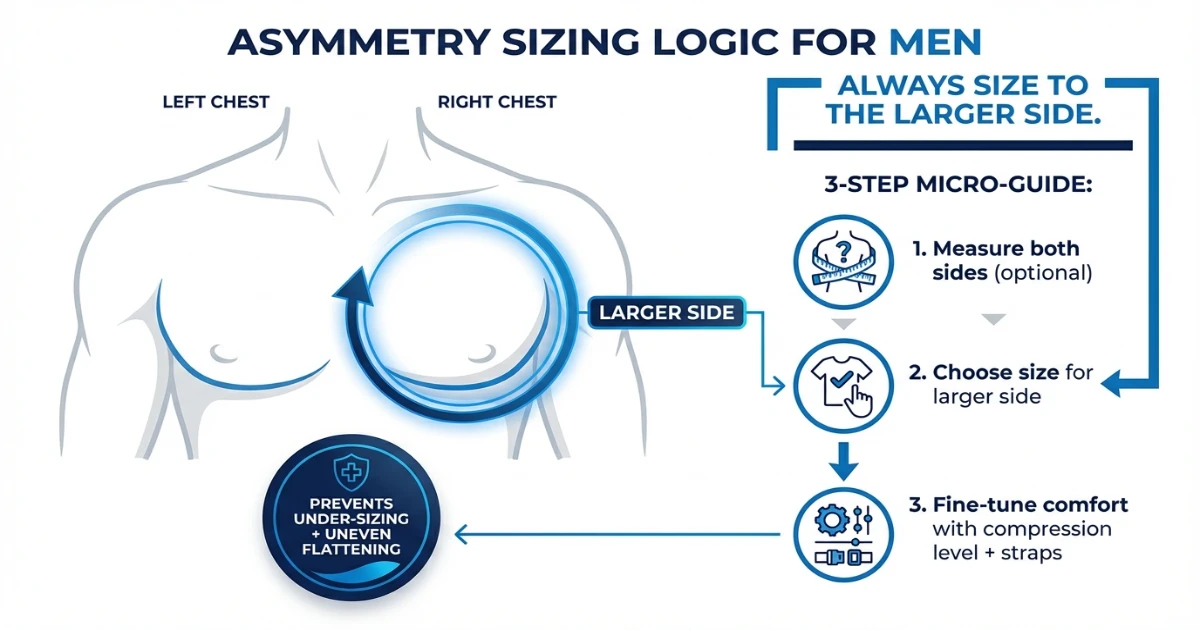
3. Asymmetry-Aware Calculation
Many men have one side larger or firmer. This calculator sizes to the larger side and flags asymmetry guidance. That single adjustment eliminates a huge percentage of “one side still shows” complaints.
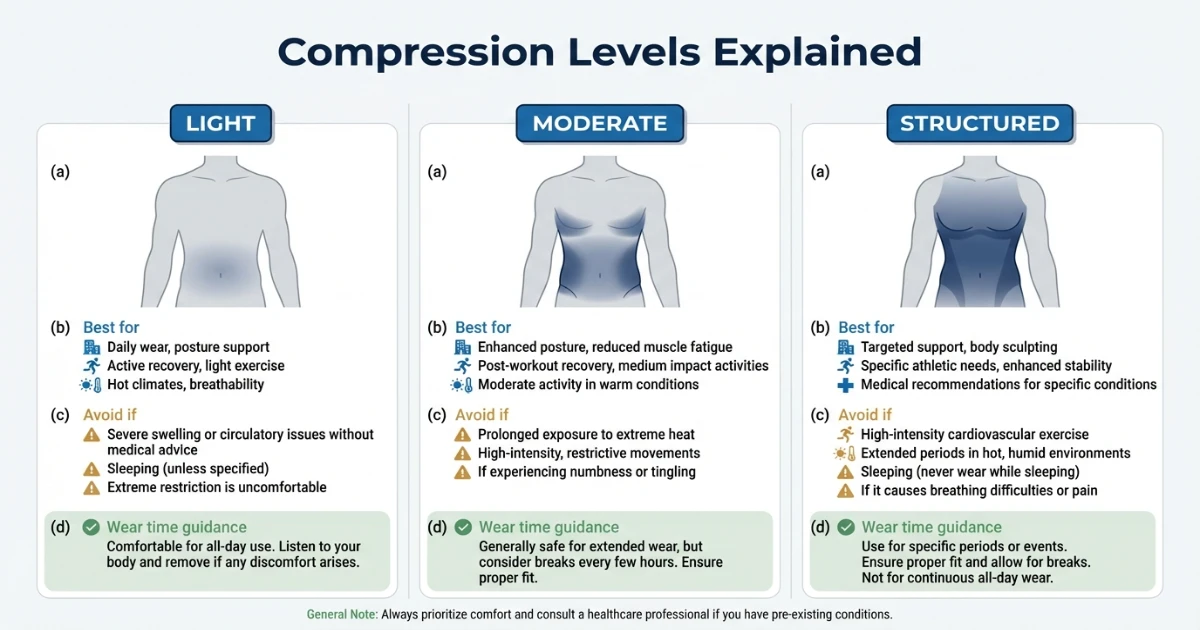
4. Tissue-Type Based Compression Advice
Not all gynecomastia is the same. Tissue type determines what garment category works.
Tissue Type
Best Garment Type
Fatty
Light compression vest
Glandular
Structured compression bra
Mixed
Moderate compression hybrid
5. Severity Classification
You classify your condition as mild, moderate, or significant. This affects whether a wire or wireless design is recommended, what compression level is appropriate, and whether a minimizer or binder approach fits your situation better.
6. Climate and Activity Adjustment
A hot climate means breathable, moisture-wicking fabric. An active lifestyle needs flexible compression and sweat control. Office wear needs all-day comfort that doesn’t restrict movement. The calculator’s logic adapts to each scenario.
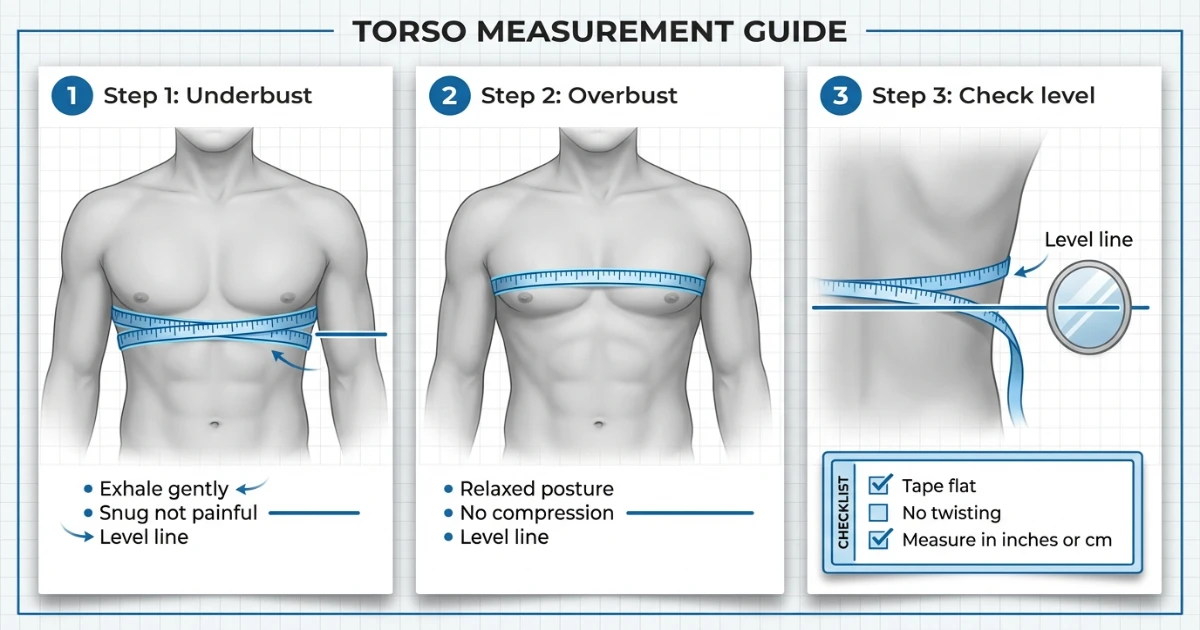
How to Measure Correctly (Step-by-Step)
Inaccurate measurements are the single biggest cause of poor fit. Follow these steps before using the calculator.
1
Measure Your Underbust
Place the tape directly under your chest tissue. Exhale gently, keep it snug (not painful), and keep it level all the way around.
2
Measure Your Overbust
Measure at the fullest point of projection. Don’t compress tissue. Stand relaxed and keep the tape parallel to the floor.
3
Check for Asymmetry (Optional)
If one side looks or feels larger, measure each side separately. Always size to the larger side.
What Your Size Actually Means
If your result is something like 38C, here’s what that means — and what it does not mean.
It does NOT mean: you “have C cups,” you have female-pattern anatomy, or you need women’s lingerie.
It DOES mean: your projection difference corresponds to the volume depth mapped to a C range, relative to a 38-inch band anchor — structural sizing only.
If you want to compare how measurement-based sizing works across different size systems, the main
Bra Size Calculator on bra-calculator.com is a clean reference point.
This men’s guide then adds tissue + compression rules that general tools don’t include.
Glandular firmness, significant projection, maximum flattening
Wearing for 12+ consecutive hours
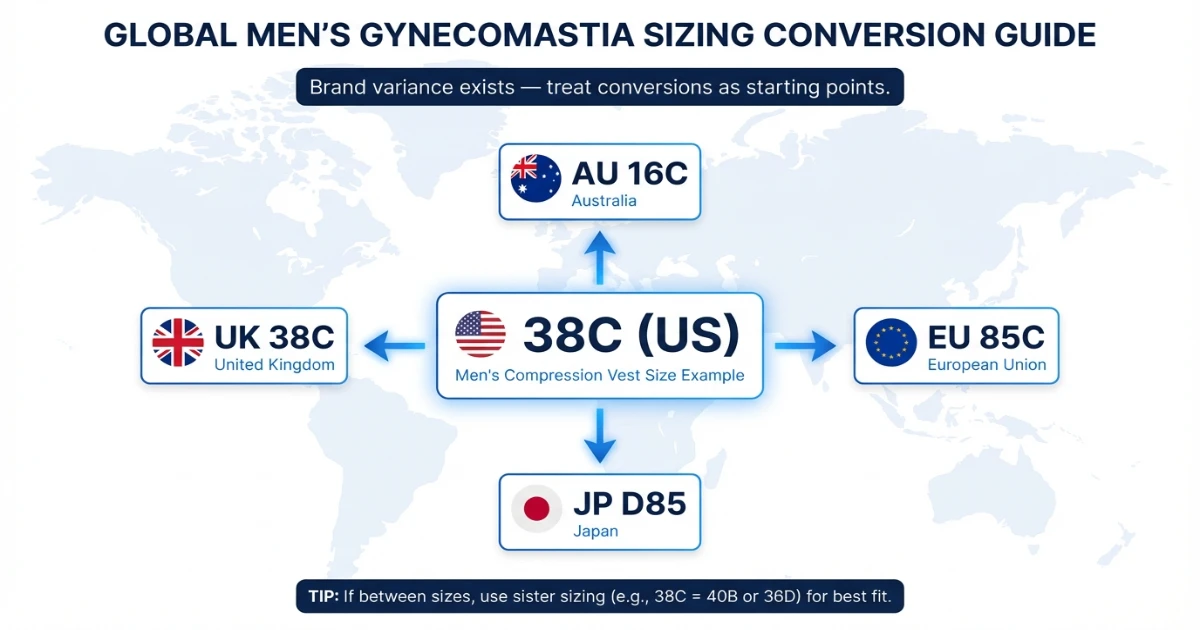
International Size Conversion
The calculator outputs your size in five international formats so you can shop globally without ordering errors.
Region
Format Example
🇺🇸 US
38C
🇬🇧 UK
38C
🇪🇺 EU
85C
🇦🇺 AU
16C
🇯🇵 JP
D85
One More Thing Most Tools Ignore: Brand Variance
Two garments labeled the same size can feel completely different depending on fabric stiffness, strap geometry, and paneling.
Treat your result as a best starting size, then dial comfort using compression level and sister-size logic.
If you want the simplest sister-size explanation (same volume, different band), the
Bra Size Calculator on bra-calculator.com is a helpful quick reference.
Frequently Asked Questions
Can men wear bras for gynecomastia?
Yes. Many men use compression bras, minimizers, or vests specifically to manage gynecomastia. These garments reduce chest projection, improve confidence under clothing, and can be worn discreetly throughout the day.
Is compression safe for gynecomastia management?
Light to moderate compression is generally safe for daily use. Avoid wearing high-compression binders for more than 12 consecutive hours, and stop immediately if you experience pain, numbness, skin irritation, or any restriction in breathing.
What if I fall between two sizes?
Use sister sizing. Try a larger band with a smaller cup, or a smaller band with a larger cup. Comfort-test both. The right fit should feel even and snug without rolling, riding up, or restricting your breathing.
Does this calculator replace a doctor’s assessment?
No. This is a garment sizing tool, not a diagnostic instrument. If you experience sudden growth, pain, nipple discharge, or rapid changes, consult a clinician.
What is the best compression garment for glandular gynecomastia?
Glandular gynecomastia responds best to a structured compression bra rather than a simple vest. The structure provides anchoring and projection control that loose garments cannot.
Is my data stored when I use this calculator?
No. All calculations run privately inside your browser. No data is transmitted, stored, or logged anywhere. No account is required.
Medical Disclaimer: This calculator is a garment sizing tool only. It is not a diagnostic tool, medical device, or substitute for professional medical evaluation. If you have concerns — particularly pain, rapid tissue growth, nipple discharge, or hormone-related symptoms — consult a qualified clinician or endocrinologist.
You’re Not Alone — and You’re Not the Problem
Gynecomastia affects a significant portion of men at some point in their lives. What’s been rare isn’t the condition — it’s accurate guidance designed for men’s bodies.
If you want to understand the measurement logic behind sizing in general, visit the main
Bra Size Calculator
and then come back to apply the men-specific compression rules here.
Menopause Bra Size Calculator (2026): Measure Smarter, Fit Better, Feel Like Yourself Again Designed specifically for perimenopause and postmenopause.Accounts for swelling days,…