Find Your Perfect Maternity Bra Size
with Our Free Maternity Bra Size Calculator
Personalised for your stage of pregnancy, nursing & pumping — based on your exact measurements.
Where are you right now?
Choose the stage closest to your current journey.
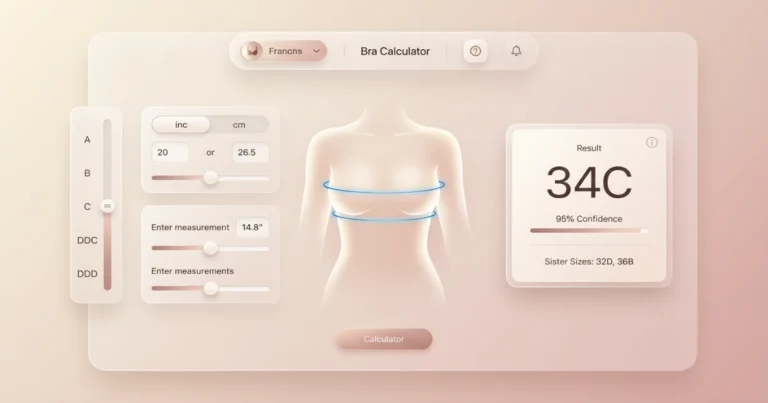
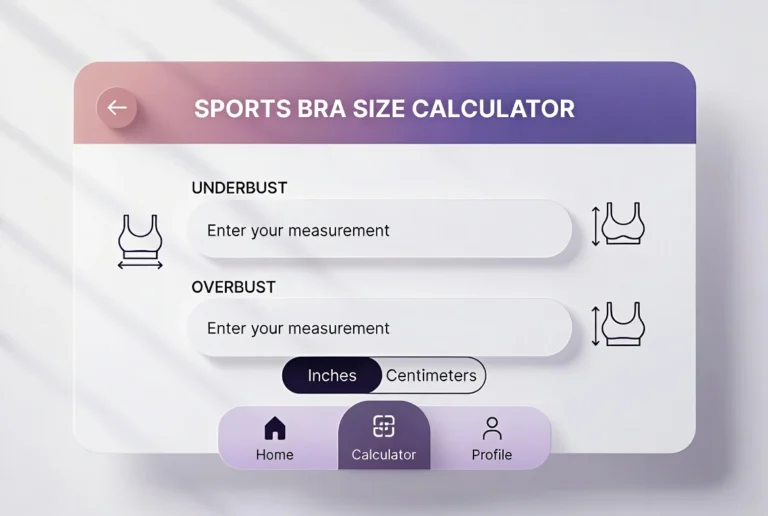
Your measurements
Use a soft tape measure directly against your skin — no clothing.
Please enter a valid underbust measurement.
This determines your band size number
Please enter a valid bust measurement.
The difference from your band determines your cup
If you’ve ever stood in a fitting room holding four bras in completely different sizes and walked out empty-handed — you’re not alone. Pregnancy changes your body faster than almost any bra brand’s sizing guide can keep up with. The good news? Once you understand why your size changes and how to measure correctly with our free Maternity Bra Size calculator at each stage, finding a maternity bra that actually fits stops feeling like guesswork.
This guide covers everything from your very first trimester bra fitting to hands-free pumping bras postpartum — written for real women, not just a sizing chart.
When Should You Buy Your First Maternity Bra?
Most women need their first maternity bra between weeks 8 and 16 — whenever your regular bra starts to feel tight, uncomfortable, or leaves red marks. Don’t wait until it’s painful.
The honest answer is: there’s no single “right” week. Your body is running the show here, not a calendar. Some women feel ready for a bigger, softer bra at 6 weeks. Others make it comfortably to 20 weeks before their pre-pregnancy bras stop working. Both are completely normal.
What is consistent is the signal your body gives you. If you’re noticing any of these, it’s time:
- Red marks or indentations on your skin after taking your bra off
- Your bra straps digging into your shoulders by mid-afternoon
- The underwire sitting on breast tissue rather than below it
- Spillage over the top or sides of the cups
- Breast tenderness that gets worse while wearing your usual bra
- The band riding up your back instead of staying horizontal
One thing worth knowing: most experts suggest buying maternity bras in small batches rather than stocking up all at once. Your size can shift significantly between trimesters, and what fits perfectly at 20 weeks may feel completely different at 36.
How to Measure Yourself for a Maternity Bra at Home
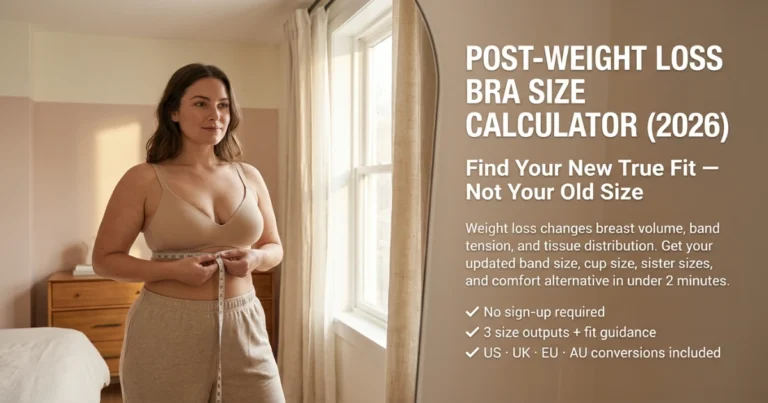
You need two measurements: your underbust (snugly around your rib cage, just below your breasts) and your fullest bust (loosely around the fullest point). The difference between them gives your cup size.
All you need is a soft tape measure and a mirror. Here’s the method, step by step:
Step 1 — Measure Your Band (Underbust)
Stand straight and breathe out normally. Wrap the tape measure around your rib cage, directly below your bust. The tape should be snug — not tight, not loose. It should sit parallel to the floor all the way around. Write this number down.
Step 2 — Measure Your Bust (Fullest Point)
Keep breathing normally. Wrap the tape loosely around the fullest part of your bust — usually across the nipple line. Don’t pull it tight or push it against the skin. The goal is to capture the fullest shape, not compress it. Write this number down too.
Step 3 — Calculate Your Cup Size
Subtract your underbust measurement from your bust measurement. The difference tells you your cup size:
| Difference (inches) | Cup Size | Example (34″ underbust) |
|---|---|---|
| Less than 1″ | AA | 34AA |
| 1″ | A | 34A |
| 2″ | B | 34B |
| 3″ | C | 34C |
| 4″ | D | 34D |
| 5″ | DD / E | 34DD |
| 6″ | DDD / F | 34DDD |
| 7″ | G | 34G |
| 8″ | H | 34H |
Measuring in Centimetres?
No problem — our calculator supports both. If you prefer centimetres, just toggle to “Centimetres” before entering your measurements. The logic is identical; we handle the conversion.
How Much Do Breasts Change During Pregnancy?
On average, breasts increase by 1–2 cup sizes during pregnancy and may grow another 1–2 sizes when milk comes in. The band size typically increases by 2–6 inches as the ribcage expands. Individual variation is wide.
Here’s something that surprises a lot of people: it’s not just your cups that change. Your entire rib cage expands to accommodate your growing lungs and the shifting of internal organs as your uterus grows. This is why your band size goes up — and why a bra that fit your cups perfectly in the first trimester might feel like a corset by the third.
Here’s roughly what happens across each stage:
The takeaway: plan to re-measure at least three or four times — once per trimester and again when milk arrives. Our size calculator above projects your likely size across each stage, which is helpful for planning ahead.
The 5 Types of Maternity Bra — and Which One You Actually Need
The term “maternity bra” gets used loosely. In reality there are at least five distinct types, each designed for a specific situation. Buying the wrong type is the most expensive mistake you can make — so let’s break it down.
1. Everyday Maternity Bra
Wire-free (or flexible wire) with stretch fabric, at least three hook-and-eye rows, wide adjustable straps, and full-coverage cups. This is your workhorse. Most women wear this style from around the second trimester through early postpartum. Look for 95–5% cotton-elastane blends for breathability — especially important as your core temperature runs higher during pregnancy.
2. Maternity Sleep Bra
A crop-bra style with no closures, no wire, and maximum softness. Worn at night when breasts feel heavy and sore — particularly in the first trimester and when milk comes in. Some women wear these as light-support daytime bras in the early weeks before buying a fitted everyday bra. They’re also useful for holding breast pads in place overnight.
3. Nursing Bra
Designed for postpartum feeding. The key difference from an everyday maternity bra is the drop-cup or crossover mechanism that allows you to uncover one breast at a time — ideally with one hand. Most midwives recommend buying at least 3 nursing bras so you always have a clean, dry one available.
→ See our full guide to choosing the right nursing bra
4. Hands-Free Pumping Bra
A specialised bra with holes, zips, or velcro panels that hold breast pump flanges in place without you holding them. This frees up both hands while expressing. A good pumping bra holds the flanges at the correct angle without compressing breast tissue — compression restricts milk flow and can cause blocked ducts.
5. Sports Maternity Bra
High-impact support with individual encapsulation cups (each breast in its own cup) rather than compression-style. Compression sports bras can feel very uncomfortable as breasts enlarge and become tender. Look for front-zip or wide-strap styles with soft inner linings. Safe, comfortable exercise during pregnancy has significant benefits — you shouldn’t have to give it up because you can’t find a bra that works.
What Does a Properly Fitting Maternity Bra Feel Like?
A well-fitting maternity bra should feel invisible within minutes of putting it on. No digging, no slipping, no adjusting. The band sits horizontally, the cups contain fully without spillage, and the straps carry weight without cutting in.
Here’s a quick fit check you can do at home once you have a bra on:
The Band Test
Slide two fingers under the back band. They should fit snugly but not strain to get in. If you can fit your whole hand underneath, the band is too loose. If you can’t fit two fingers at all, it’s too tight. The band should sit horizontally across your back — not riding up.
The Cup Test
Look for smooth fabric across the cups with no wrinkling (too big) and no spillage over the top, sides, or under the arms (too small). The centre gore — the piece of fabric or wire between the cups — should sit flat against your sternum. If it’s being pushed out, you need a larger cup size.
The Strap Test
Your straps should sit comfortably on your shoulders without slipping or digging in. Remember: straps are for positioning the bra, not for bearing weight. The band does approximately 80% of the support work. If your straps keep slipping, the band is likely too loose.
The Comfort Test
Wear the bra for 30 minutes at home before deciding. What feels fine in a fitting room can become unbearable by 2pm. Walk around, raise your arms, sit and stand. If it’s digging anywhere after half an hour, it’s not the right fit — regardless of what the label says.
Should You Wear Underwire During Pregnancy?
Most healthcare professionals and lactation consultants recommend avoiding underwire during pregnancy and breastfeeding. It can compress growing breast tissue and may contribute to blocked milk ducts postpartum.
This is one of the most Googled maternity bra questions, and the short answer is: it’s not worth the risk, even if you loved your underwire bras before pregnancy.
Here’s why. As your breasts grow, they change shape — not just size. The breast tissue spreads further under your arm and toward your chest. Underwire that once sat perfectly below the tissue will now increasingly sit on it, restricting lymphatic flow and creating pressure on developing milk-producing glands.
Postpartum, this becomes more serious. Underwire that compresses breast tissue during breastfeeding is linked to an increased risk of mastitis and blocked ducts — both of which are painful and disruptive to milk supply. It’s simply not worth it when modern wire-free maternity bras offer genuinely excellent support.
How Is a Nursing Bra Different from a Maternity Bra?
A maternity bra supports growing breasts during pregnancy. A nursing bra has the same support features plus a drop-cup or crossover mechanism for breastfeeding access. Many women use nursing bras from the third trimester onwards so they’re ready to go postpartum.
The practical difference comes down to that opening mechanism. Standard maternity bras are pull-on or clip-shut in a conventional way. Nursing bras have:
- Drop-down cups — a clip on each strap that unhooks to fold the cup down, exposing one breast at a time
- Crossover cups — stretchy fabric that pulls aside easily with one finger
- Zip-front access — some pumping and sports styles use a zip down the centre
The golden standard is a nursing clip that opens with just your thumb — because when you’re holding a hungry baby in one arm, that other hand needs to work alone. Test any nursing bra’s clip mechanism before buying.
A note on sizing: nursing bras fit a little differently because milk supply fluctuates throughout the day. Your breasts are fullest first thing in the morning before a feed, and smallest several hours after one. Many lactation consultants recommend sizing nursing bras when breasts are “medium” — not engorged, not fully emptied. This gives you the most wearable fit across the full cycle.
What Are Sister Sizes and When Should You Use Them?
Sister sizes share the same cup volume with a different band size. Going up one band and down one cup (e.g. 34D → 36C) gives identical cup volume. Use sister sizes when your primary size isn’t available or when the band feels wrong mid-pregnancy.
This is genuinely useful knowledge during pregnancy, because you’ll often find that your exact size isn’t in stock — or that the band has become uncomfortable but the cups are still right.
The rule is simple: every time you go up a band size, drop down one cup letter. Every time you go down a band size, go up one cup letter. The cup volume stays the same.
| Smaller Sister | Your Size | Larger Sister | When to use the sister |
|---|---|---|---|
| 32E | 34D | 36C | Band riding up → try 36C. Straps slipping → try 32E. |
| 34DD | 36D | 38C | Ribcage expanding faster than cups → move up the sister. |
| 36F | 38E | 40DD | Mid-pregnancy when band needs extra room without buying new bras. |
| 32G | 34FF | 36F | Large cup sizes — sister sizing is especially useful in less-stocked ranges. |
Our calculator above shows you three sister sizes alongside your primary recommendation — helpful for those moments when your exact size is unavailable online or in-store.
Maternity Bra Size Chart — What to Expect Each Trimester
This chart gives approximate size progressions based on an average starting size. Your progression will depend on your individual body — use it as a planning guide, not a guarantee. Always re-measure for your actual size.
| Pre-Pregnancy Size | 1st Trimester | 2nd Trimester | 3rd Trimester | When Milk Comes In |
|---|---|---|---|---|
| 32A | 32B | 34B | 34C | 34D–36C |
| 32B | 32C | 34C | 34D | 36D–36DD |
| 34B | 34C | 34D | 36D | 36E–38D |
| 34C | 34D | 36D | 36DD | 38DD–38E |
| 34D | 34DD | 36DD | 36E | 38E–38F |
| 36B | 36C | 36D | 38D | 38DD–40D |
| 36D | 36DD | 38DD | 38E | 40E–40F |
| 38C | 38D | 38DD | 40DD | 40E–42DD |
Want your personalised size rather than an average? Scroll up to use our calculator — it gives you a size specific to your measurements and pregnancy stage, plus a full stage-by-stage size projection for planning ahead.
5 Common Maternity Bra Sizing Mistakes (And How to Avoid Them)
These come up again and again — and every single one is easy to avoid once you know what to look for.
Mistake 1 — Buying in Bulk at One Size
It’s tempting to find a bra that fits and buy five of them at once. Resist. Your size will change significantly between trimesters and again postpartum. Buy 2–3 of any single size at most, then re-measure every 4–8 weeks.
Mistake 2 — Measuring Over Clothing
Even a thin t-shirt can add more than an inch to your measurements. Always measure directly against your skin. No bra, no vest — just the tape.
Mistake 3 — Fitting on the Tightest Hook
When you try a maternity bra for the first time, fit it on the loosest outer hook. If the bra fits well there, it’ll last longer as the fabric stretches — you can tighten it inward over the weeks.
Mistake 4 — Ignoring the Band and Focusing Only on the Cups
The band does 80% of the work. A bra with a perfect cup size but too-loose band won’t support you properly — and will leave you with sore shoulders from overworked straps. If in doubt between two sizes, go for the better band fit and adjust the cup with a sister size.
Mistake 5 — Buying Nursing Bras Too Early
Your size when milk comes in can be dramatically different from your size at 30 weeks. If you buy all your nursing bras mid-pregnancy, you may find none of them fit postpartum. Buy 1 nursing bra at 36–38 weeks to try, then buy the rest once your milk supply has stabilised (usually 4–6 weeks postpartum).
Ready to Find Your Size?
Everything in this guide points toward one practical action: getting measured properly for where you are right now. Your body is doing something extraordinary, and it deserves a bra that keeps up with it.
Scroll back up to use our free calculator — enter your measurements, choose your stage, and get your personalised size in under two minutes. No email required, no accounts, no upsell. Just your size.
And when your size changes in a few weeks — which it will — come back and run it again. We’ll be here.