Perfect Fit, Every Time.
Our intelligent fitting engine analyzes your measurements, breast shape, and lifestyle to deliver a recommendation that actually works — in under 60 seconds.
Your Measurements
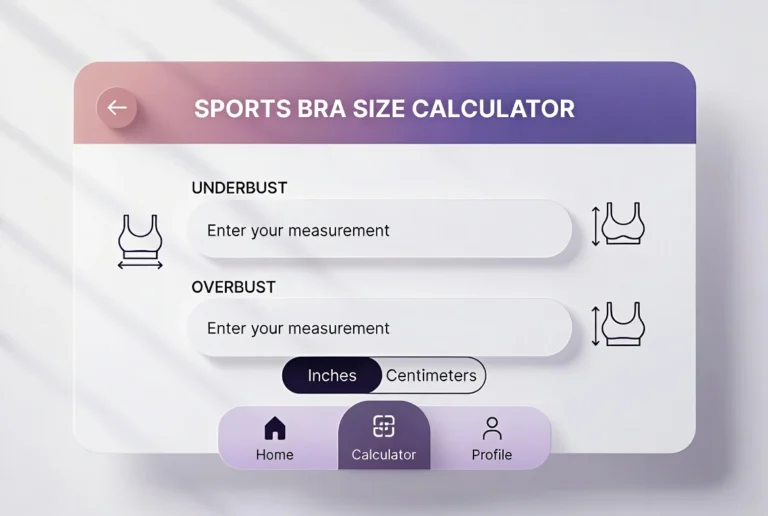
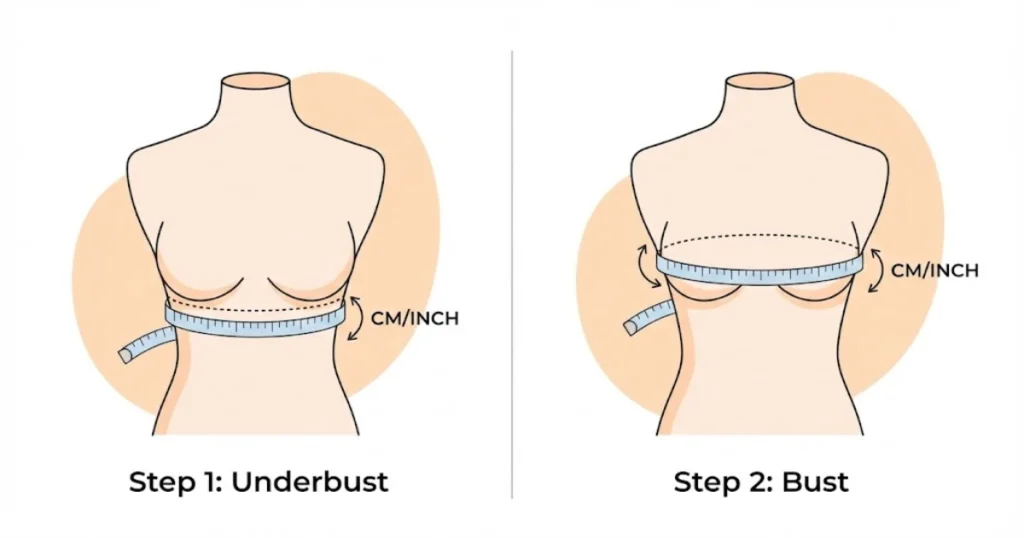
Underbust: Wrap firmly around your ribcage just beneath your breasts. Exhale gently and note the reading.
Bust: Measure around the fullest part, tape parallel to the floor. Lean slightly forward for accuracy.
Wear a non-padded bra or nothing for best results.
Shape & Preferences
Breast ShapeStyle & System
Precision in Three Steps
Questions & Answers
How accurate is this calculator?
Our AI achieves up to 98% accuracy by cross-referencing inputs against thousands of verified fittings, accounting for shape, firmness, and brand quirks.
What if I’m between sizes?
Sister sizes offer the same cup volume with a different band balance. Use Band Comfort to fine-tune — both are mathematically equivalent in cup volume.
How does the AI analysis work?
We analyze your bust-to-underbust differential, shape, firmness, and fit issues against our database to produce a calibrated, personalized recommendation.
Do band sizes vary by brand?
Yes. If a 34B feels tight in the band, try a 36A — same cup volume, looser band. Sister sizing is designed exactly for this.
What is the difference method?
The inch difference between bust and underbust determines cup size: 1″=A, 2″=B, 3″=C, 4″=D. Our engine also factors shape and comfort preference.
When should I re-measure?
Every 6–12 months. Measure in the morning before exercise, wearing a non-padded bra or nothing for maximum accuracy.
The “Anti-Guessing” Guide: How Our AI Smart Fit Bra Calculator Finds Your True Size (And Shape)
Let’s be honest: buying a bra online usually feels like a gamble. You measure yourself, order the size the chart tells you, and wait. When it arrives, the cups gape, the straps slip, or the band digs in. You return it. Repeat.
Why does this happen? Because standard size charts are outdated. They rely on simple math (Band + Cup) and ignore the most important factor: Your Body Shape.
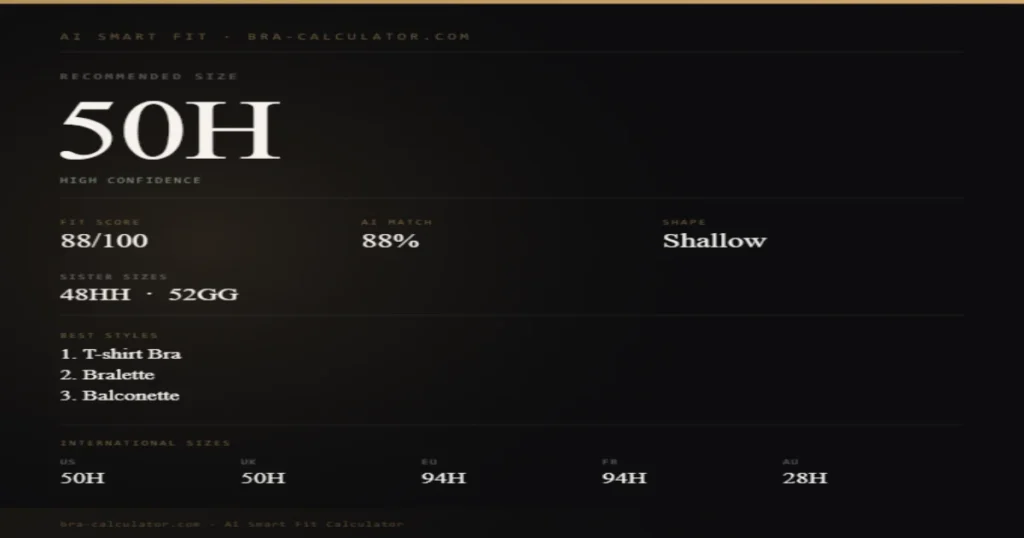
We built the AI Smart Fit Bra Calculator to fix this. It’s not just a number cruncher; it’s a virtual fitter. It combines your raw measurements with “human” logic—analyzing breast shape, tissue firmness, and current fit issues—to recommend a bra that actually fits.
Here is exactly how it works, how to measure correctly, and why “Shape” is the missing piece of your puzzle.
New to bra sizing? Start with our basic bra size calculator.
Why Traditional Calculators Get It Wrong (The “Shape Gap”)
Most online calculators use a static equation: Bust minus Band = Cup Size.
While this gives you a baseline, it fails for about 80% of women because it ignores geometry.
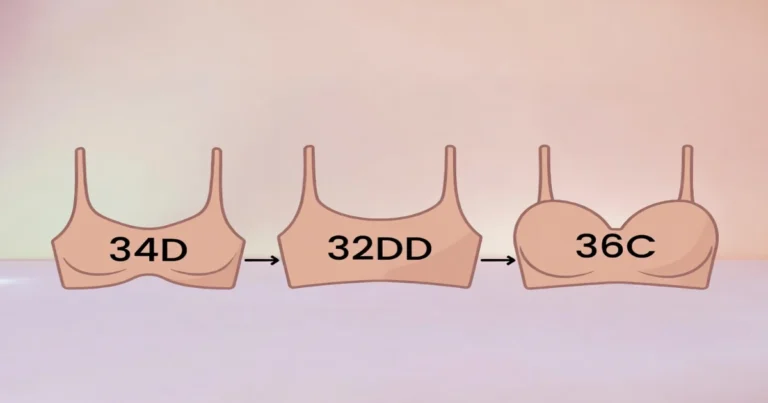
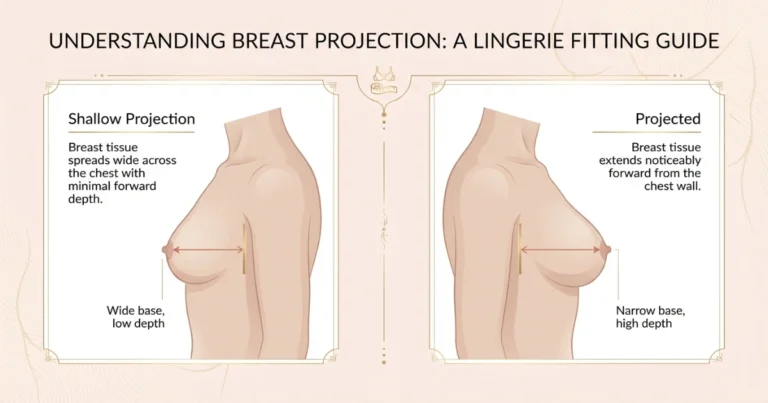
Two people can both measure as a 34D, yet need completely different bras:
- Person A (Shallow Shape): Breast tissue is spread wide across the chest. A standard 34D cup might gape at the top, making them think the cup is too big.
- Person B (Projected Shape): Breast tissue sticks out further from the chest. They need deeper cups; a standard 34D might crush them or cause “quad-boob.”
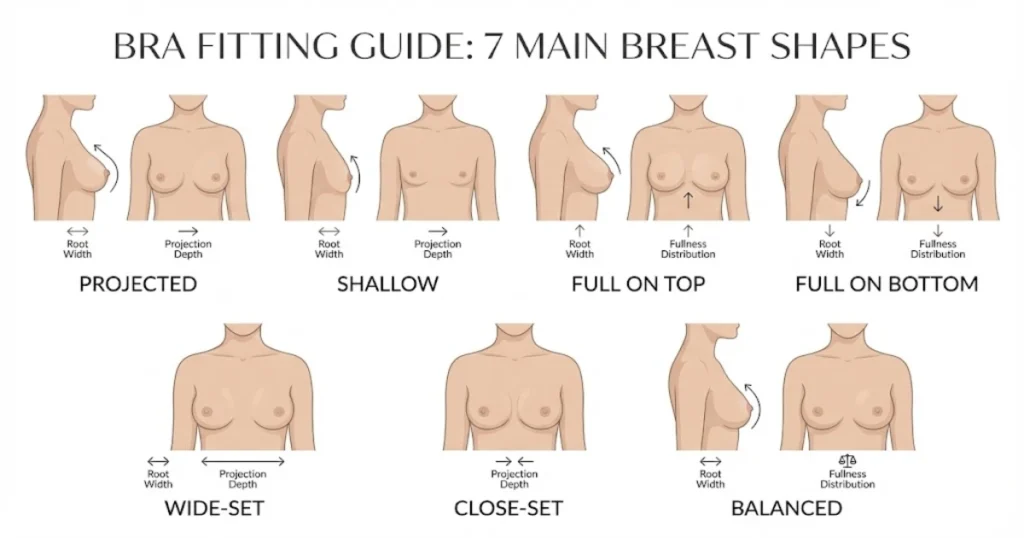
The AI Advantage: Our calculator applies Shape Logic. If you tell it you have “shallow” breasts,it filters out deep plunge styles and recommends Balconettes or Demis—even if the size is the same.
Step-by-Step: How to Measure for the AI Calculator
For the algorithm to work, your data needs to be precise. Grab a soft tape measure and follow these steps.
Tip: Wear a non-padded bra or go braless for the most accurate numbers.
1. The Underbust (Your Anchor)
This is the most critical measurement because the band provides 80% of the support.
- How: Wrap the tape around your ribcage, directly under your bust.
- The Secret: Pull it snug. Not painful, but tight enough that the tape doesn’t slide around. If you measure this loosely, your band will ride up later.
2. The Bust (Your Volume)
- How: Wrap the tape around the fullest part of your breasts (usually the nipple line).
- The Secret: Keep the tape level across your back. Do not pull it tight; let it rest gently on your skin.
Diagnosing Your “Fit Symptoms”
A human fitter doesn’t just measure you; they ask, “What’s annoying you about your current bra?” Our calculator does the same. Here is how we interpret your symptoms:
“Why do my cups gape at the top?”
- The Common Myth: “The cup is too big.”
- The Reality: It’s often a Shape Mismatch. You likely have “bottom-full” or “shallow” breasts but are wearing a “full cup” style designed for top-fullness.
- The Fix: The calculator will suggest styles with a more open neckline, like a Demi or Balconette.
“Why does my band ride up my back?”
- The Reality: Your band is too big. A bra band should sit low and parallel to the ground.
- The Fix: You need to size down in the band and size up in the cup (see Sister Sizes below).
“Why do my straps keep slipping?”
- The Reality: This is rarely a strap problem; it’s usually a band problem. If the band is too loose, the straps set too wide and fall off sloping shoulders.
- The Fix: A tighter band brings the straps closer together.
The Magic of “Sister Sizing” (Your Plan B)
Sizing isn’t rigid. Different brands cut bras differently. This is why our calculator provides your Sister Sizes.
What is a Sister Size?
It is a size that holds the exact same volume of breast tissue but has a different frame (band length).
The Rule of Thumb:
- If you go DOWN a band size $\rightarrow$ Go UP a cup size.
- If you go UP a band size $\rightarrow$ Go DOWN a cup size.
Example for a standard 34C:
- 32D: Same cup volume, but a tighter, more supportive band. (Great if your 34C band rides up).
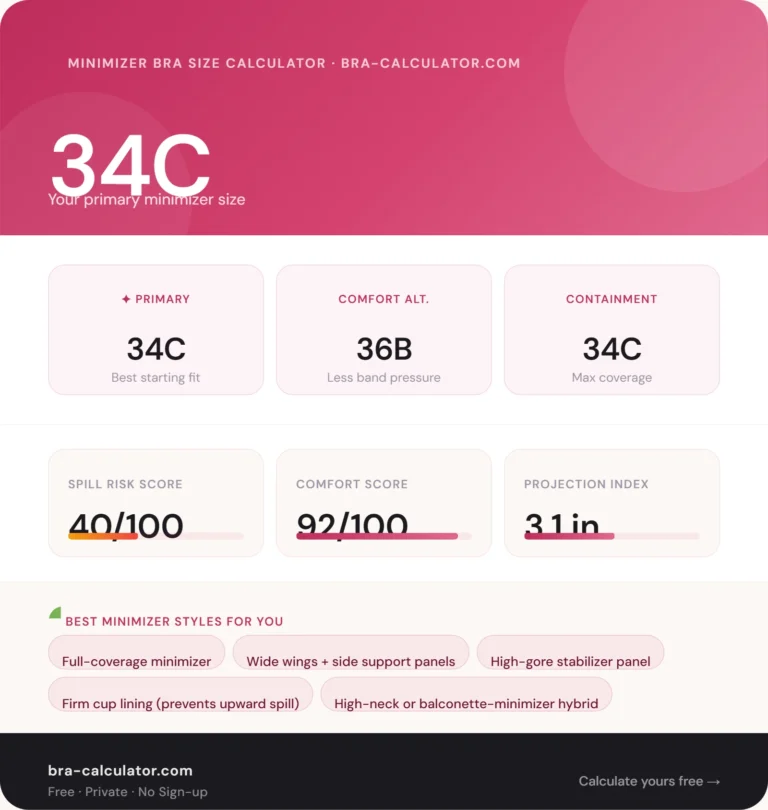
- 36B: Same cup volume, but a looser, more relaxed band. (Great if your 34C feels suffocating).
Recommended Styles Based on Your Shape
Best Bras for 32C (Top 2 Buyer Picks)
If your measurements confirm 32C, these two styles cover everyday smooth wear and active support without flattening.

Everyday Seamless T-Shirt Bra (32C Friendly)
- ✔ Smooth molded cups — invisible under fitted tops
- ✔ Balanced projection support for moderate volume
- ✔ Ideal daily comfort without gaping
- ✔ Great starter fit for confirmed 32C measurements

Medium-Impact Sports Bra (Encapsulation Support)
- ✔ Encapsulation style — supports without flattening
- ✔ Reduces bounce during cardio & workouts
- ✔ Stable band for better lift than compression-only styles
- ✔ Strong match for active 32C wearers
Once the calculator crunches your numbers and shape, it suggests a “Wardrobe Profile.” Here is a quick guide to what those terms mean:
- For Wide-Set Breasts (Gap in the middle): Look for Plunge styles. They have a lower center wire (gore) that won’t poke your sternum.
- For Bottom-Fullness (Swooping): Look for Balconette styles. They lift from the bottom like a shelf, creating a flattering shape without gaping at the top.
- For Soft/Relaxed Tissue: Look for Cut-and-Sew (Seamed) cups. Molded foam cups are hard to fill if your tissue is soft; seamed cups mold to you.
Frequently Asked Questions About Bra Sizing & Fit
How do I know my bra size without measuring?
You can’t determine an accurate bra size without measuring. Guessing usually leads to poor fit, discomfort, and high return rates.
However, if you already wear a bra and it feels wrong (for example, the band rides up or cups spill), you can use sister sizing logic as a temporary adjustment:
- If the band feels loose → go down a band, up a cup
- If the band feels too tight → go up a band, down a cup
For best results, always measure and use a calculator designed for real-world fit—not just numbers.
Does bra size change with weight loss or gain?
Yes. Breast tissue contains fat, so even a 5–7 lb weight change can affect:
- Cup volume
- Band tightness
- Overall support level
Life stages such as pregnancy, postpartum, menopause, or fitness changes can also impact size. That’s why experts recommend re-measuring every 6 months or whenever your bras stop feeling comfortable.
What is the difference between UK and US bra sizing?
US and UK sizing systems are similar up to a DD cup, but differ after that.
- US sizing often jumps from DDD to G
- UK sizing uses more precise steps like E, F, FF, G, GG
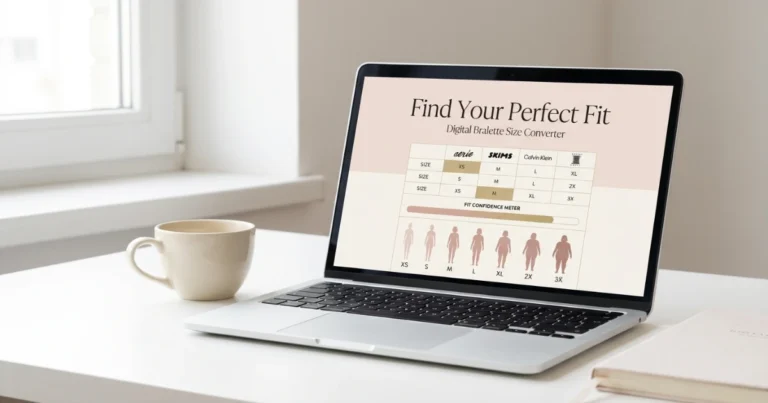
This is why many people feel confused when shopping internationally. A good calculator should automatically convert sizes across systems so you don’t have to guess.
Why does my bra band ride up in the back?
A band riding up usually means:
- The band is too large
- The band has lost elasticity
- The cups are too small, forcing the band to compensate
The band provides about 80% of a bra’s support, so a secure, level band is essential. Trying a smaller band with a sister cup size often fixes this issue.
Why do my bra cups gape even when the size seems right?
Cup gaping doesn’t always mean the cup is too big. It can also happen when:
- The bra style doesn’t match your breast shape
- The cups are molded and too rigid
- You’re full on bottom and the cup is designed for full-on-top shapes
This is where shape-based recommendations matter just as much as size.
What are sister sizes and when should I use them?
Sister sizes are bra sizes with the same cup volume but different band lengths.
Example:
- 34C → 32D or 36B
You should use sister sizes when:
- The cups fit but the band doesn’t
- You’re between sizes
- You prefer a snug or relaxed fit depending on comfort
A smart calculator should always show sister sizes so you have flexible options.
Why does one bra size fit in one brand but not another?
Bra sizing is not fully standardized. Different brands vary in:
- Band firmness
- Cup depth
- Wire width
- Overall construction
That’s why the “same size” can feel different across brands. Fit guidance and style recommendations help reduce this frustration.
How often should I replace my bras?
Most bras last 6–12 months, depending on:
- How often you wear them
- Fabric quality
- Washing method
If the band stretches easily, straps keep slipping, or support feels weak, it’s time for a replacement—even if the size hasn’t changed.
Recommended Styles Based on Your Shape
Once the calculator crunches your numbers and shape, it suggests a “Wardrobe Profile.” Here is a quick guide to what those terms mean:
- For Wide-Set Breasts (Gap in the middle): Look for Plunge styles. They have a lower center wire (gore) that won’t poke your sternum.
- For Bottom-Fullness (Swooping): Look for Balconette styles. They lift from the bottom like a shelf, creating a flattering shape without gaping at the top.
- For Soft/Relaxed Tissue: Look for Cut-and-Sew (Seamed) cups. Molded foam cups are hard to fill if your tissue is soft; seamed cups mold to you.
Frequently Asked Questions About Bra Sizing & Fit
How do I know my bra size without measuring?
You can’t determine an accurate bra size without measuring. Guessing usually leads to poor fit, discomfort, and high return rates.
However, if you already wear a bra and it feels wrong (for example, the band rides up or cups spill), you can use sister sizing logic as a temporary adjustment:
- If the band feels loose → go down a band, up a cup
- If the band feels too tight → go up a band, down a cup
For best results, always measure and use a calculator designed for real-world fit—not just numbers.
Does bra size change with weight loss or gain?
Yes. Breast tissue contains fat, so even a 5–7 lb weight change can affect:
- Cup volume
- Band tightness
- Overall support level
Life stages such as pregnancy, postpartum, menopause, or fitness changes can also impact size. That’s why experts recommend re-measuring every 6 months or whenever your bras stop feeling comfortable.
What is the difference between UK and US bra sizing?
US and UK sizing systems are similar up to a DD cup, but differ after that.
- US sizing often jumps from DDD to G
- UK sizing uses more precise steps like E, F, FF, G, GG
This is why many people feel confused when shopping internationally. A good calculator should automatically convert sizes across systems so you don’t have to guess.
Why does my bra band ride up in the back?
A band riding up usually means:
- The band is too large
- The band has lost elasticity
- The cups are too small, forcing the band to compensate
The band provides about 80% of a bra’s support, so a secure, level band is essential. Trying a smaller band with a sister cup size often fixes this issue.
Why do my bra cups gape even when the size seems right?
Cup gaping doesn’t always mean the cup is too big. It can also happen when:
- The bra style doesn’t match your breast shape
- The cups are molded and too rigid
- You’re full on bottom and the cup is designed for full-on-top shapes
This is where shape-based recommendations matter just as much as size.
What are sister sizes and when should I use them?
Sister sizes are bra sizes with the same cup volume but different band lengths.
Example:
- 34C → 32D or 36B
You should use sister sizes when:
- The cups fit but the band doesn’t
- You’re between sizes
- You prefer a snug or relaxed fit depending on comfort
A smart calculator should always show sister sizes so you have flexible options.
Why does one bra size fit in one brand but not another?
Bra sizing is not fully standardized. Different brands vary in:
- Band firmness
- Cup depth
- Wire width
- Overall construction
That’s why the “same size” can feel different across brands. Fit guidance and style recommendations help reduce this frustration.
How often should I replace my bras?
Most bras last 6–12 months, depending on:
- How often you wear them
- Fabric quality
- Washing method
If the band stretches easily, straps keep slipping, or support feels weak, it’s time for a replacement—even if the size hasn’t changed.