32B Bra Size: Is It Small or Medium? Measurements, Sister Sizes & What It Looks Like
The direct answer to every 32B question in one place: what the label means, whether it counts as small or medium, exact measurements in inches and cm, sister sizes, comparisons and the fit fixes that actually work.
Quick answer: 32B is a small-to-modest B-cup size — a B-cup volume (about a 2 in / 5 cm bust-to-underbust difference) built on a narrow 32 in band. It’s on the smaller side of the overall size range but is not the smallest band or cup available. Closest sister sizes: 30C (firmer band) and 34A (looser band). Full bust for a 32B is typically 33–34 in (84–86 cm).
What Does a 32B Bra Size Mean?
The number describes the band scale. The letter describes the difference between your ribcage and full bust.
A 32B is not a universal picture of one body type. It is a garment size made from two linked measurements: a 32 band and a B cup. The B cup generally represents about two inches of difference between the fullest bust measurement and the underbust. The actual cup volume is then scaled to the 32 band.
That scaling matters. A 32B does not hold the same volume as a 36B, even though both labels use the letter B. The 36B is built on a wider frame and therefore has a larger cup. This is also why 32B, 30C and 34A can sit in the same sister-size family: the band changes, the cup letter changes, but the approximate cup capacity stays similar.
Many people arrive at 32B because it is widely stocked, not because it is automatically their best fit. That does not make 32B “wrong”; it simply means the label should be checked against your measurements and fit signs. A band that rides up, cups that cut in, persistent gaping or a floating center gore can all point to a different size or cup shape.
Useful distinction: cup size describes volume, while breast shape describes how that volume is distributed. A shallow 32B, projected 32B and wide-set 32B can need very different bras even though the size label is identical.
Is 32B Small or Medium?
This is the single most-searched question about 32B — here’s the direct answer, plus where it actually sits on the full size range.
32B is a small-to-modest bra size. The 32 band is narrower than the most common band sizes (34 and 36), and the B cup is one step above the smallest cup (A). So while 32B isn’t the smallest size that exists, it sits toward the smaller end of the range in most mainstream stores — which is exactly why it reads as “small” in casual conversation but isn’t classified as extreme or unusually small in professional bra fitting.
Three separate questions get bundled into “is 32B small,” so it helps to answer each on its own:
Is the band small?
Yes, relatively. 32 in is narrower than the most-stocked 34 and 36 bands, though smaller bands (28, 30) do exist and are less common in stores.
Below-average bandIs the cup small?
Not especially. B is only one letter above A, the smallest standard cup, and cup letters continue well past D — B sits in the lower-middle of the full range.
Lower-middle cupIs the overall volume small?
Modest, not tiny. Because cup volume scales with the band, a 32B holds noticeably more than a 28B or 30A, but less than a 34B or 36B.
Genuinely modestIs it “medium” instead?
In everyday language some people call 32B “medium” because B sits near the middle of common retail cup letters (A–D). Both descriptions are informal — there’s no official small/medium/large scale in bra sizing.
No official scale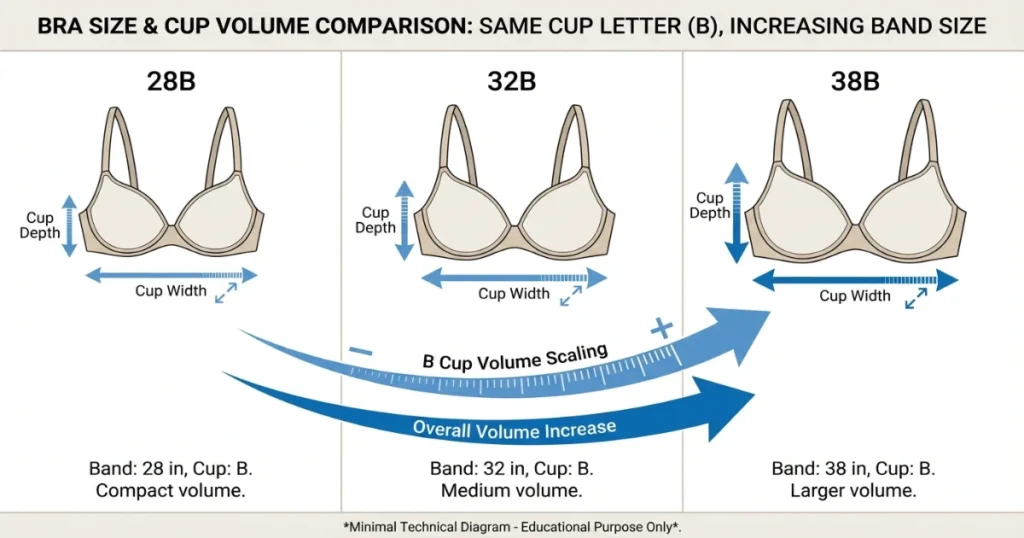
Better question to ask yourself: rather than whether 32B is small or medium, check whether the band stays level, the cups contain your tissue and the bra feels stable through normal movement. That tells you far more than a size label.
32B Bra Size Measurements in Inches and CM
Use these figures as a starting point, then confirm the result with the brand’s chart and the way the bra sits on your body.
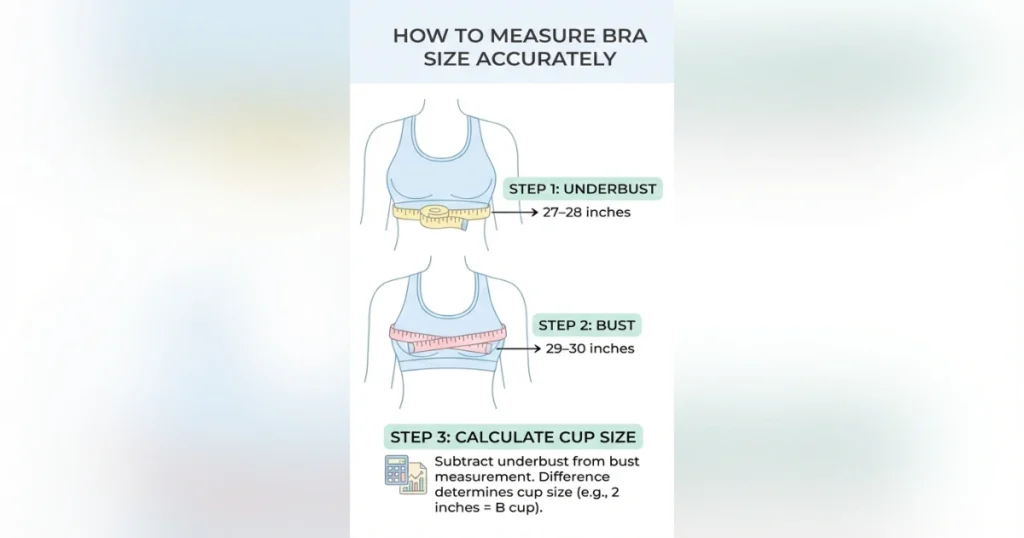
| Measurement method | Typical snug underbust | Typical full bust | How 32B is reached |
|---|---|---|---|
| Modern direct-fit approach | About 31–32 in 79–81 cm | About 33–34 in 84–86 cm | Band stays close to the measured ribcage; roughly 2 in difference suggests B. |
| Legacy “plus-four” approach | About 27–28 in 69–71 cm | About 29–30 in 74–76 cm | Four inches are added to the underbust before assigning the band label. |
| Brand-specific chart | Varies | Varies | Some brands build firmer or stretchier bands, so their own chart may shift the recommendation. |
“If I’m a 32B, what’s my bust size?” Using the modern direct-fit method, your full bust measurement is typically 33–34 in (84–86 cm), taken around the fullest part of the chest, with an underbust of roughly 31–32 in (79–81 cm).
Do not treat one chart as a universal rule. The most useful result is the size that gives you a level band, contained cups, comfortable wires and stable support—not the result produced by one formula alone.
- 1Measure the underbustPlace the tape directly under the bust on bare skin. Keep it level and firm enough that it does not slide.
- 2Measure the full bustMeasure around the fullest point without pressing breast tissue inward or pulling the tape too tightly.
- 3Compare the two numbersA difference close to 2 inches, or about 5 cm, usually points toward a B cup as a starting point.
- 4Check the bra, not only the calculationFasten a new bra on the loosest hook. The band should stay level and the cups should contain all tissue without cutting in.
For a measurement-based recommendation, use the Bra Size Calculator. It is especially useful when your underbust falls between two band ranges or when your current 32B fits differently across brands.
What Does a 32B Look Like?
There is no single 32B silhouette. Frame width, breast root, projection and tissue placement all change the appearance.
On a narrow torso, 32B can look rounded and clearly defined because the volume occupies more of the chest width. On a broader or more muscular frame, the same cup volume may look flatter because it is spread across a wider base. Neither appearance is more “correct”; they are simply different distributions of the same approximate volume.
Breast shape also changes how clothing sits. A shallow 32B may look subtle from the side but fuller from the front. A projected 32B may create more forward depth. Wide-set tissue can leave a natural space at the center, while close-set tissue may create cleavage more easily. These differences are why two people wearing the same size can have completely different experiences in the same molded bra.

Structured Push-Up Bra for a More Defined 32B Silhouette
- Angled padding can bring wide-set tissue inward
- Works best when the cups sit flush without a ridge
- Useful for lower necklines or extra shape under clothing
- Skip heavy padding if it creates overflow or a floating gore
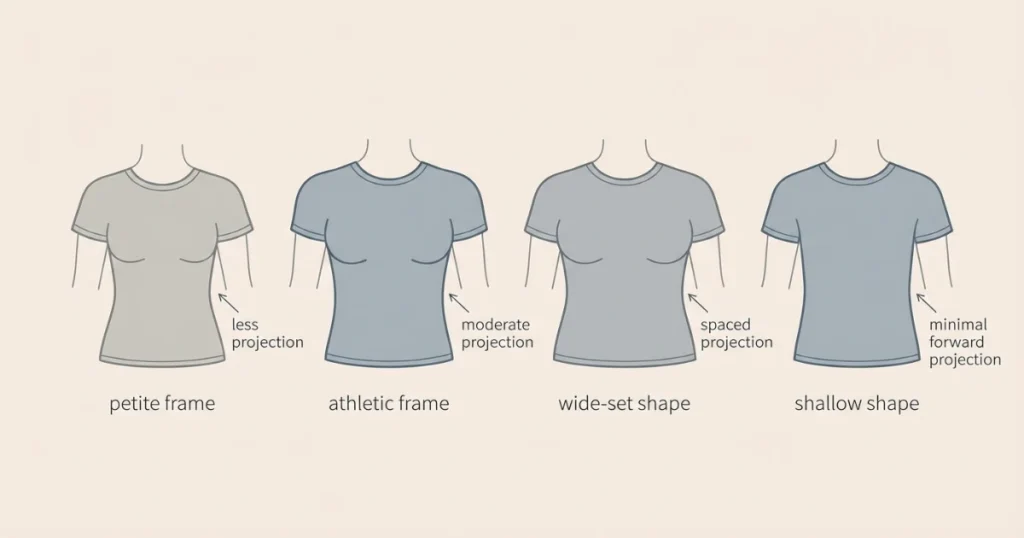
Narrow or petite frame
The bust may look proportionally fuller because the cup volume sits on a smaller chest wall. A firm 32 band can still be correct if the ribcage truly matches it.
Often looks fullerAthletic or broad frame
Pectoral muscle and a wider chest can spread the same breast volume across more surface area, creating a shallower visual profile.
Often looks widerWide-set tissue
A natural center gap is common. Side-support or inward-angled cups may improve shape without forcing the breasts into an unnatural position.
Center space is normalShallow shape
Tissue is distributed over a broader base with less forward depth. Lower-cut cups and flexible materials often sit more smoothly than tall molded cups.
Needs shallower cups32B Sister Sizes
Sister sizing keeps roughly the same cup capacity while changing the band length.
The closest sister sizes to 32B are 30C and 34A. Move to 30C when the 32 band feels loose but the cup volume feels right. Move to 34A when the 32 band feels too firm and the cups fit comfortably.
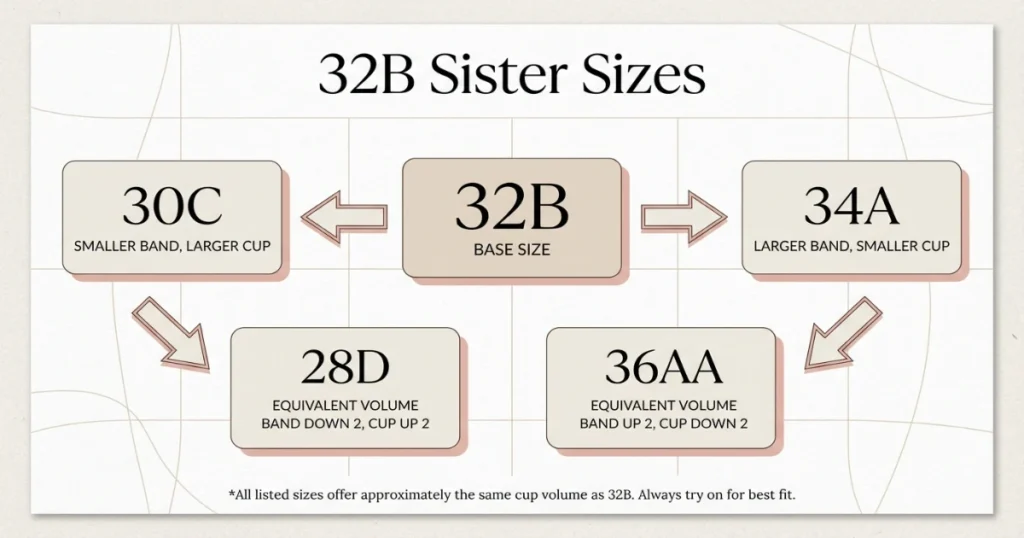
| Current fit issue | Size to try | Why |
|---|---|---|
| 32B cups fit, but band rides up | 30C | Shorter band with roughly the same cup capacity. |
| 32B cups fit, but band feels too tight | 34A | Longer band with roughly the same cup capacity. |
| 32B band fits, but cups spill | 32C | Same band with one cup more room. |
| 32B band fits, but cups wrinkle throughout | 32A or another cup shape | The cup may be too large, or the bra may simply be too tall or projected. |
Use the Sister Size Calculator to see tighter and looser equivalents instantly.
32B vs Nearby Bra Sizes
The right comparison depends on whether the problem is the band, the cup or both.
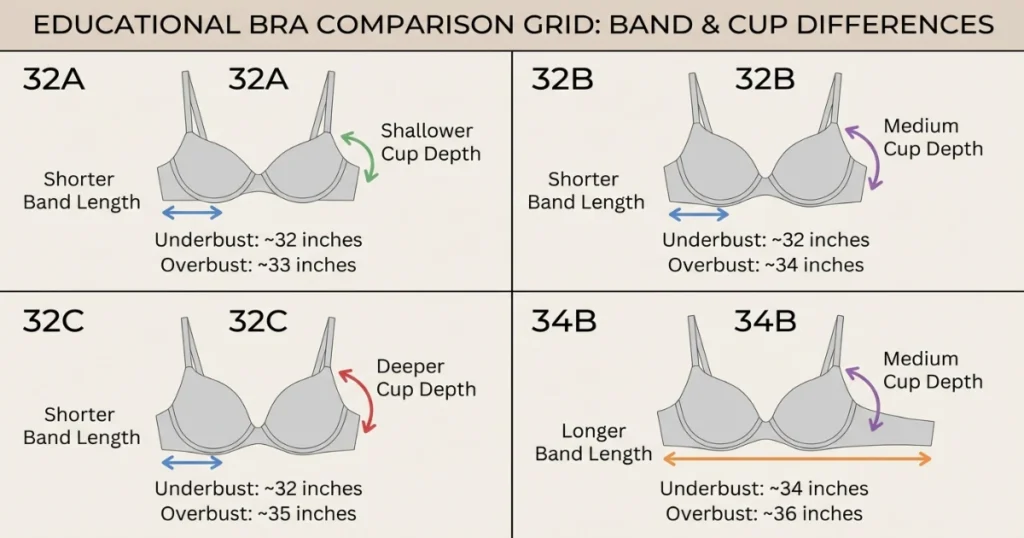
- Same 32 band
- About 2-inch cup difference
- More cup capacity than 32A
- Choose when 32A cuts in or feels shallow
- Same 32 band
- About 1-inch cup difference
- Less cup capacity
- Choose when 32B is genuinely roomy across the whole cup
- Same 32 band
- One cup smaller than 32C
- Works when the cup edge sits smoothly
- May be too small if the gore floats or tissue spills
- Same 32 band
- One cup more capacity
- More depth or coverage, depending on style
- Try when 32B cuts in but the band feels correct
- Longer band
- Similar cup capacity to 30C
- Better when a 30 band feels restrictive
- Less firm anchoring than 30C
- Shorter, firmer band
- Closest tighter sister size
- Useful when 32B rides up
- Not the same as 30B, which has a smaller cup
- Shorter band
- Similar cup capacity to 34A
- Usually provides firmer support
- Best when 34A shifts or rides up
- Longer, looser band
- Closest looser sister size
- Useful when 32B feels tight around the ribs
- May reduce support if the band is too loose
- Shorter, narrower band
- Noticeably less cup volume than 34B
- Right when the ribcage truly measures close to 32 in
- 34B is not a sister size of 32B — it’s a genuinely bigger size
- Wider band, same cup letter
- Meaningfully more cup capacity than 32B
- Closest 34B sister size is actually 32C, not 32B
- Try if your underbust reads closer to 34 in
- Same 32 band
- Two full cup sizes smaller than 32D
- Right when cups sit smooth with no spill
- A jump straight to 32D from 32B usually signals a measurement or fit-check error
- Same 32 band
- Meaningfully deeper, fuller cup
- Needed when 32C still cuts in or spills
- Check 32C first — it’s the more common in-between step
Best Bra Styles for 32B
Construction should match shape and purpose. The cup letter alone cannot choose the best style for you.
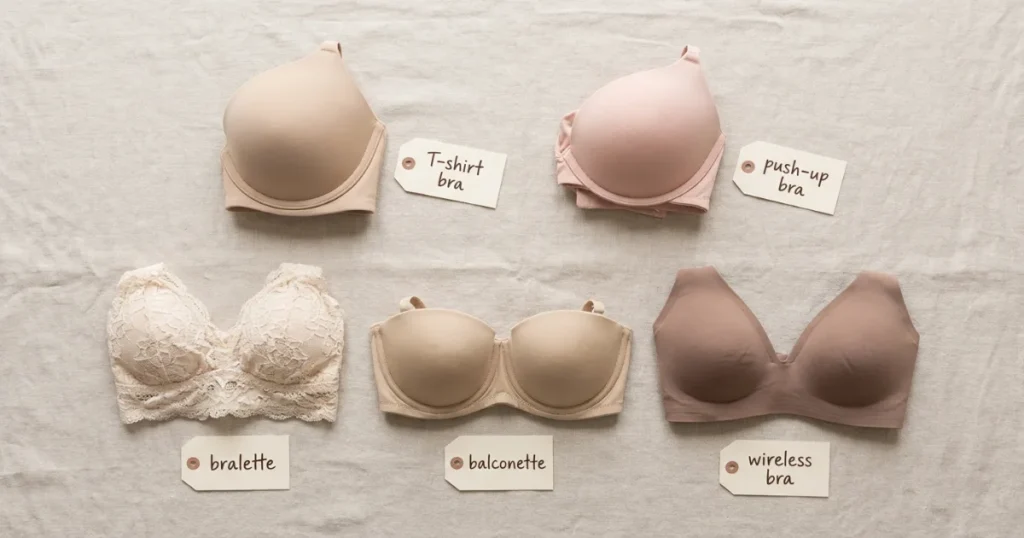

Soft Wireless Bra for a Natural 32B Fit
- Flexible cups can reduce gaping on softer or uneven tissue
- Useful for everyday wear, travel and low-impact activity
- Best when the underband is firm enough to stay level
- Choose a structured style instead when strong lift is needed
T-shirt bra
A good everyday choice when the molded cup matches your breast shape and sits flush along the neckline.
Good under fitted clothingBalconette or half-cup
Often works well for shallow, wide-set or lower-full shapes because the cup is shorter and more open across the top.
Strong shape matchWireless bra
Comfortable for daily wear when the underband is stable and the cup provides enough separation for your shape.
Comfort-first choiceBralette
Many 32B wearers fit standard small bralettes well, but sizing still varies by ribcage and fabric stretch.
Relaxed supportPush-up bra
Useful for lift or cleavage, particularly for wide-set tissue, provided the padding does not force tissue over the cup edge.
Goal-dependentVery tall rigid cup
Not automatically wrong, but it often gaps on shallow or short-root 32B shapes even when the cup volume is correct.
Use with cautionCommon 32B Fit Problems and What They Mean
A fit problem is a clue. Change the part of the size or construction that is actually causing it.
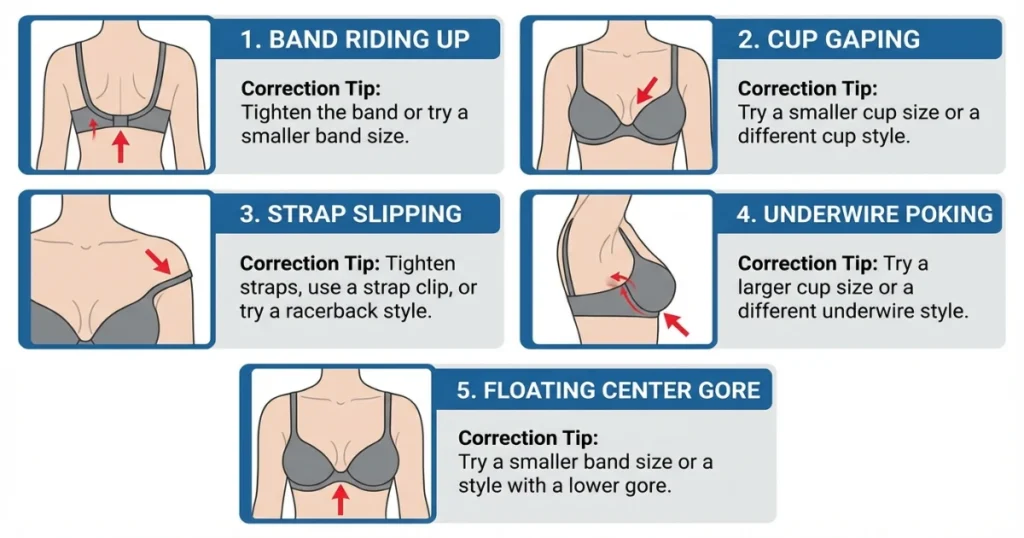
The band rides up
The band is probably too loose or too stretchy to anchor the cups.
The cups gape only at the top
This often points to a tall or projected cup shape rather than a cup that is universally too large.
The cup edge cuts in
The cup may be too small, too closed on top or too shallow for your tissue.
The center gore floats
The cups may lack enough depth, or the center may be too tall for close-set tissue.
The straps keep slipping
Straps may be set too wide for your shoulders, or the band may be riding upward.
The wire sits on breast tissue
The cup may be too small or the wire may be too narrow for your breast root.
32B International Size Conversion
The cup letter usually stays B in these systems, while the band label changes.
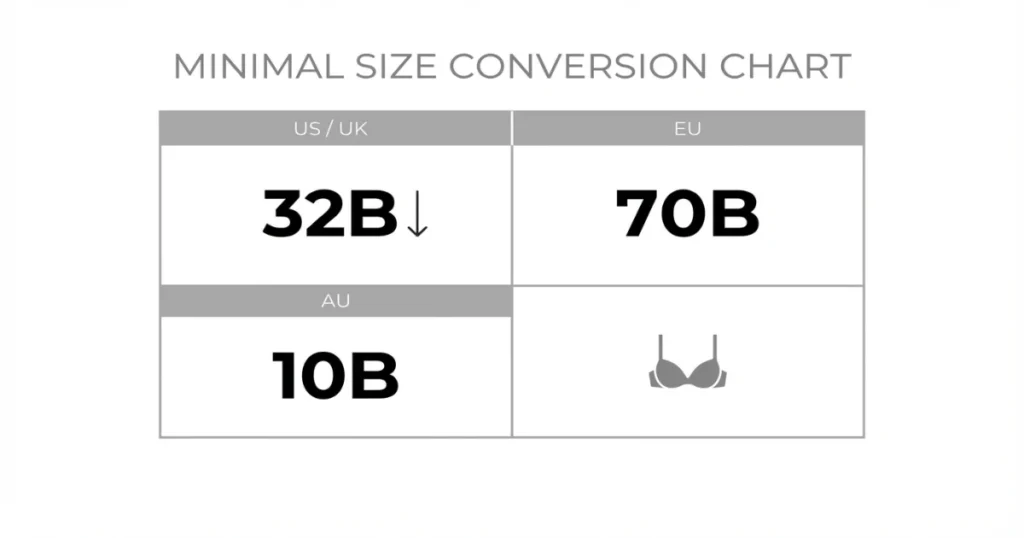
Use the Global Bra Size Converter before ordering internationally. Brand construction can still differ after conversion, so check the product’s own size chart and return policy.
Related 32B Tools and Guides
Frequently Asked Questions About 32B
Direct answers to the exact questions people ask before buying or changing sizes.
Confirm Whether 32B Is Really Your Best Fit
Use your measurements as the starting point, then let band stability, cup containment and comfort confirm the result.