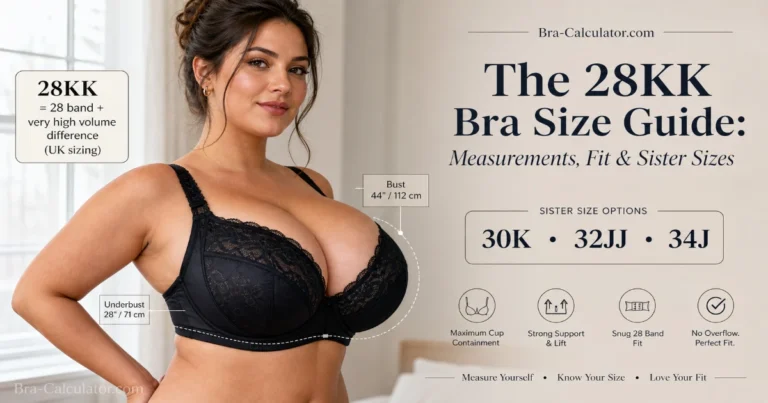
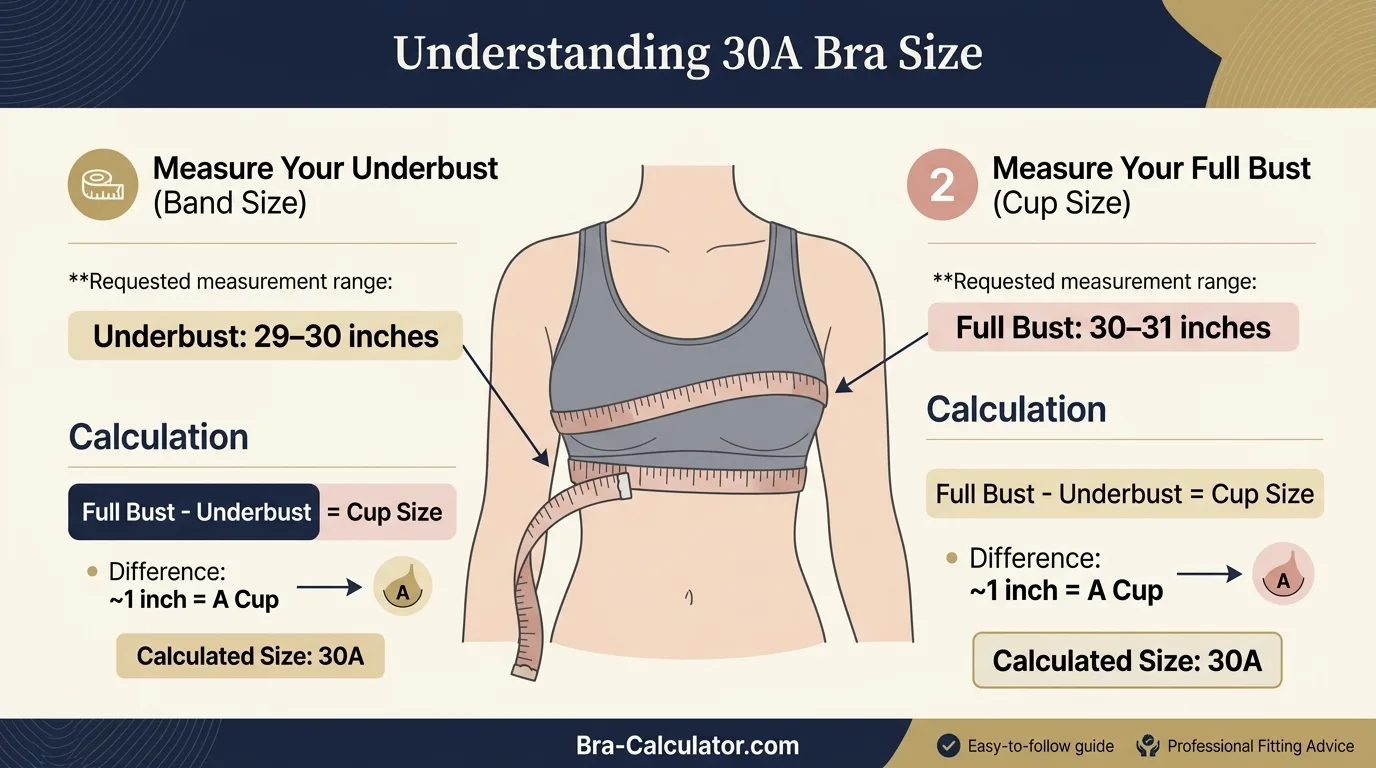
A 30A bra size usually means your underbust is around 29–30 inches and your full bust is around 30–31 inches. That is about a 1-inch difference, which creates an A cup on a narrow 30 band. A 30A is a small overall bra size, but it is not the same as 32A or 34A because cup volume changes with band size. A well-fitted 30A bra should sit close to the body, keep the band level, avoid cup gaping, and give a smooth natural shape without needing heavy padding.
30A at a Glance
| Attribute | Detail |
|---|---|
| Band Size | 30 inches — usually fits 29–30″ underbust |
| Full Bust Measurement | Usually around 30–31 inches |
| Cup Difference | About 1 inch — A cup |
| General Category | Small band + small cup volume |
| Sister Sizes | 28B tighter band · 32AA looser band |
| Common Fit Issue | Cup gaping, loose band, strap slipping, stiff molded cups |
| Best Bra Styles | Triangle, bralette, demi, plunge, lightly lined wireless |
| US / UK Size | 30A in both US and UK sizing |
| EU Size | 65A |
| AU / NZ Size | 8A |
What Is a 30A Bra Size?
30A is a small-band bra size that combines a 30 band with an A cup. In simple measurement terms, it usually fits someone with an underbust around 29–30 inches and a full bust around 30–31 inches. The cup difference is about 1 inch, which places it in the A cup range.
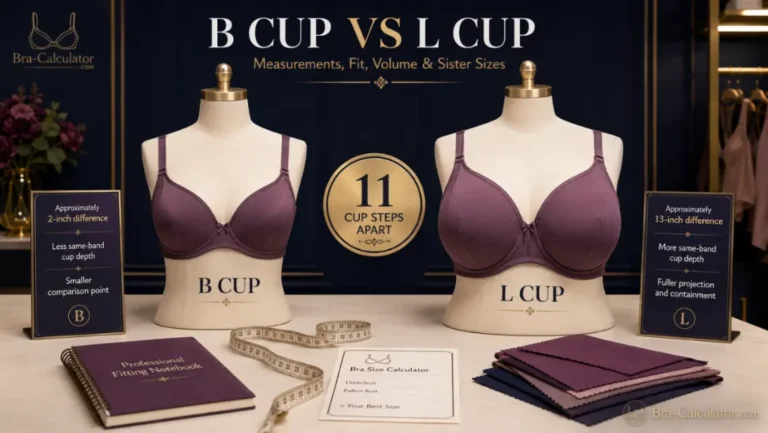
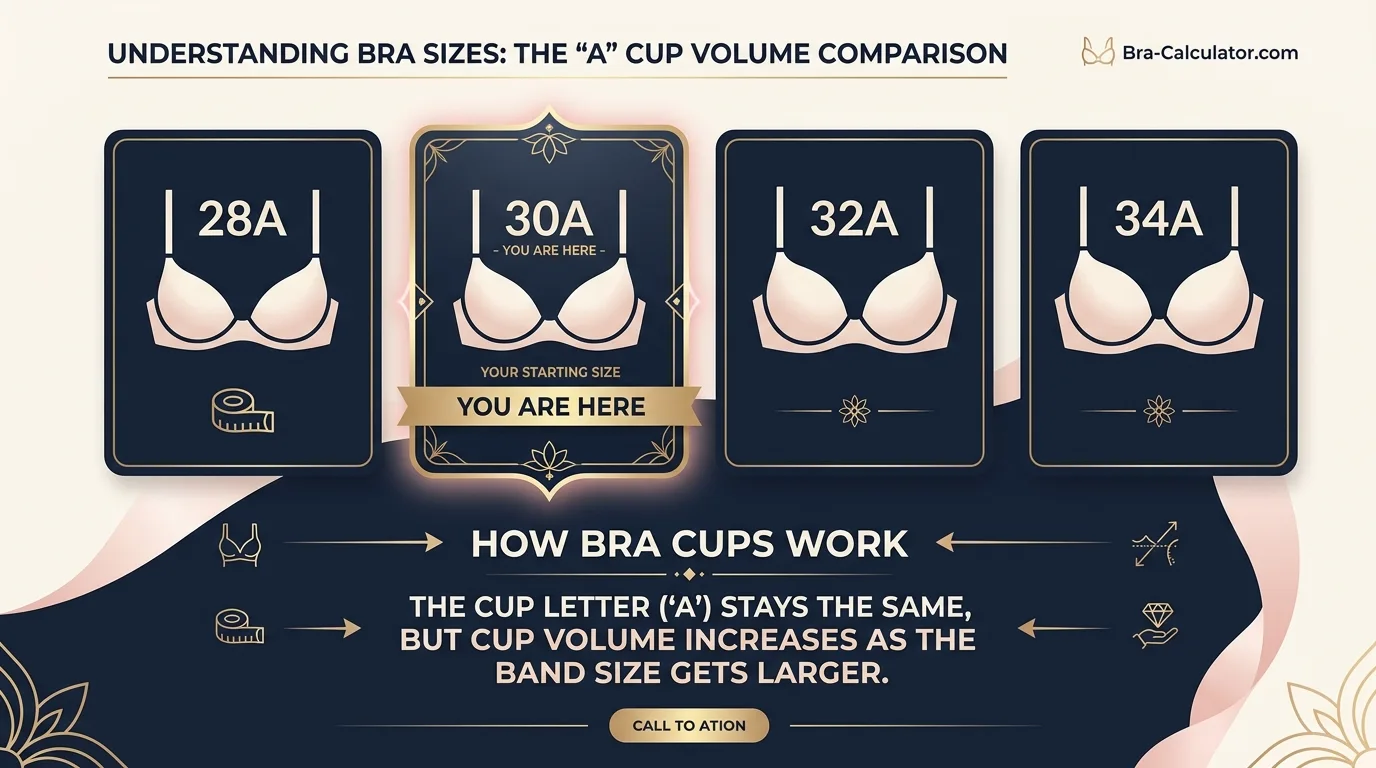
The most important thing to understand is that 30A is not the same volume as every A cup. A 30A is smaller than a 32A and 34A because the cup is built on a narrower band. Cup letters only make sense when paired with band size. This is why a 30A can look petite and subtle, while a 38A holds noticeably more cup volume even though the letter is the same.
30A is often worn by people with a narrow ribcage, petite frame, athletic frame, or shallow breast shape. The bust may sit close to the chest wall with light projection. Some 30A wearers have wide-set tissue, some have almost flat upper fullness, and some have gentle lower fullness. Because the cup volume is light, comfort usually matters more than heavy support.
The biggest mistake with 30A is sizing up into 32A or 34AA just because those sizes are easier to find. A 32A may feel easier to fasten, but it can ride up, slide around, and make the cups gap. A true 30 band gives a cleaner anchor on a narrow ribcage. If the band is correct but the cups still gape, the problem is usually cup shape — not your body.
30A Bra Measurements
To confirm whether you are close to 30A, measure your underbust and full bust against bare skin. Keep the tape level and use a mirror if possible. Because 30A has a small cup difference, even a half-inch measuring error can change the result toward 30AA or 30B.
About 1 inch difference = A cup on a 30 band
| Nearby Size | Typical Underbust | Typical Full Bust | When It Fits Better |
|---|---|---|---|
| 30AA | 29–30″ | 29.5–30.5″ | If 30A cups gape in soft styles |
| 30A | 29–30″ | 30–31″ | Your reference size |
| 30B | 29–30″ | 31–32″ | If 30A cuts in or feels shallow |
| 28B | 27–28″ | 29–30″ | If 30A cup volume fits but band rides up |
| 32AA | 31–32″ | 31.5–32.5″ | If 30A band feels too tight but cup volume is right |
Wrap the tape around your ribcage directly under your bust. Pull it snug, not painful. If you measure around 29–30 inches, a 30 band is a good starting point.
Measure around the fullest part of your bust without pressing the tape into the body. For 30A, this is usually around 30–31 inches.
A difference of around 1 inch usually points to an A cup. Less may suggest AA. Closer to 2 inches may suggest B.
The band should stay level, the cups should sit smooth, and the straps should not slide. If the cup gaps only at the top, try a lower-cut shape before changing size.
30A Measurement Visual
What Does 30A Look Like?
30A usually looks petite, subtle, and close to the body. From the side, projection is light. From the front, the bust may look softly rounded, shallow, athletic, wide-set, or almost flat depending on breast shape. This is a small overall bra size, but it can still need a real bra fit if the wearer wants coverage, smoothing, shape, or outfit support.
Compared with 28A, 30A has a slightly wider band and a slightly larger scale. Compared with 32A, 30A has a smaller cup volume and a firmer band. This is why 30A should not automatically be replaced with 32A. If your ribcage is truly closer to 30 inches, a 32 band may move too much and make the cups look emptier than they really are.
In clothing, a well-fitted 30A gives a sleek, clean line. T-shirts usually lie flat. Button-down shirts are usually easier to wear than they are for fuller cup sizes. Swimwear may require more careful selection because many bikini tops are designed for B/C cup volume. For dresses or formal outfits, lightly lined plunge bras, triangle bras, sticky covers, or sewn-in cups may be more useful than a tall molded bra.

Lightly Structured Balconette — Smooth Shape Without Heavy Padding
- Lower neckline helps reduce top cup gaping
- Light structure creates a smooth everyday outline
- Works well for small cup volume and shallow shapes
- Useful under fitted tops, dresses, and light fabrics

Wireless Seamless Bralette — Soft Hold for Small Band Comfort
- Stretch fabric follows shallow A cup volume naturally
- No stiff molded cup, tall gore, or hard underwire
- Great for daily comfort, lounging, travel, and layering
- Useful when traditional 30A cups feel too rigid
Narrow Ribcage
30A looks compact and subtle. A true 30 band prevents slipping better than a loose 32 band.
Firm 30 bandShallow Shape
Breast tissue may sit wide and close to the chest. Demi, plunge, and triangle styles often work best.
Low cup heightMore Space Between Breasts
Triangle and plunge bras may sit more naturally than tall center-gore bras.
Flexible Shape
Soft stretch cups can reduce the empty-cup effect that happens with rigid molded foam.
Stretch fabricIs 30A Considered Small?
Yes, 30A is considered a small bra size. It has both a narrow band and light A cup volume. But “small” should not be confused with “invalid” or “no fit needed.” A small bust can still experience cup gaping, loose bands, strap slipping, uncomfortable wires, and bad outfit shaping if the bra is poorly designed.
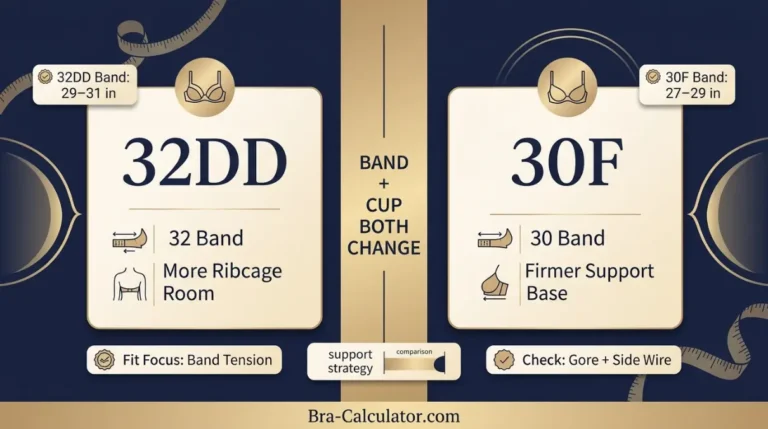
Many 30A wearers are pushed into 32A because it is easier to find. But 32A is not the same size. It has a larger band and more cup volume. If your underbust is closer to 30 inches, a 32 band may feel comfortable at first but become unstable during wear. The cups may gape because the band is not anchoring the bra correctly.
30A is a normal, valid, and wearable small-band size. The goal is not to force more volume into the cup. The goal is a clean fit that follows your body.
If 30A cups gap, try a lower-cut style first. If every 30A gaps even in soft styles, try 30AA. If 30A cuts in, try 30B.
30A Sister Size & Fit Problem Visual
30A Sister Sizes
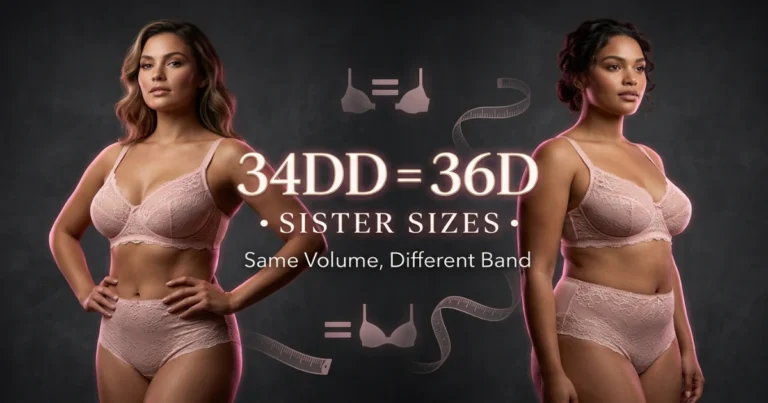
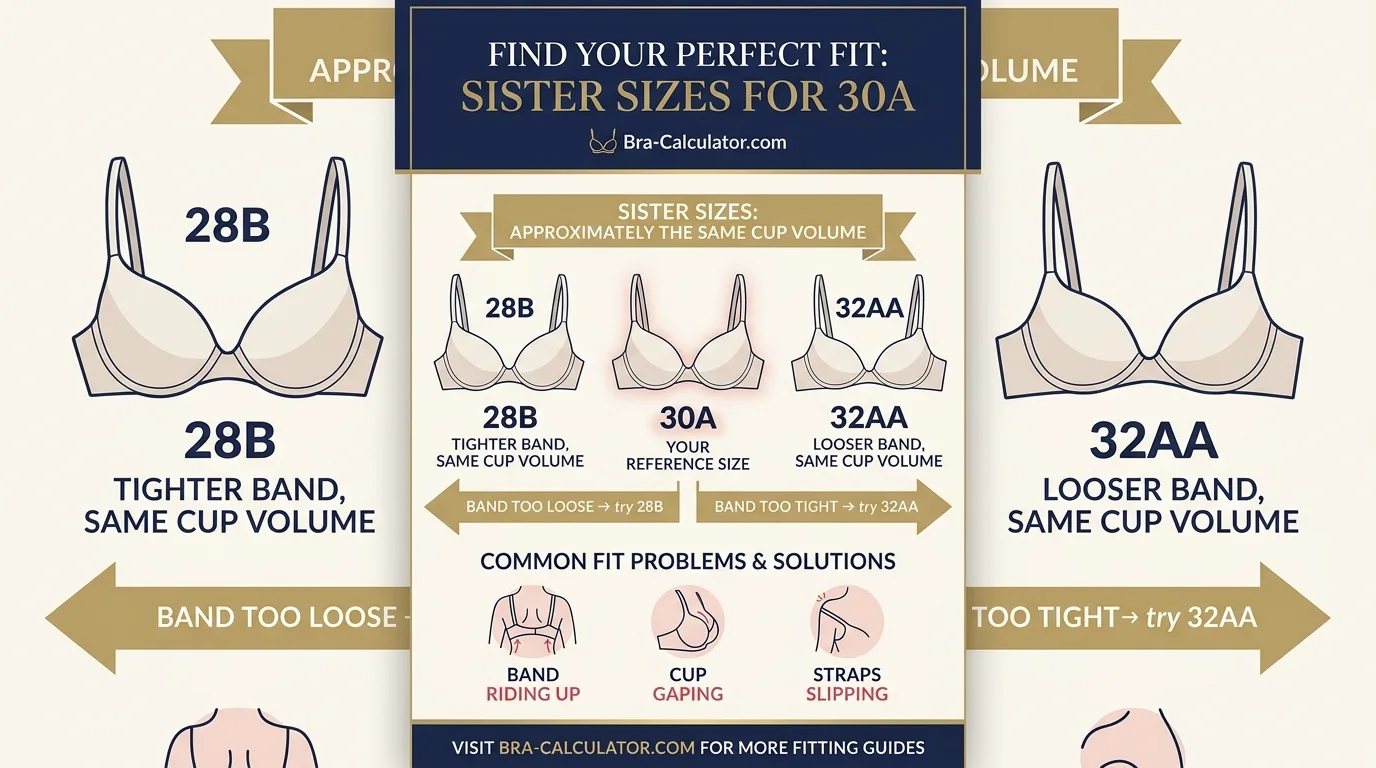
Sister sizes keep similar cup volume while changing the band. For 30A, the main sister sizes are 28B and 32AA. If the 30A cup volume feels correct but the band is too loose, 28B may fit better. If the 30A band feels too tight but the cup volume feels right, 32AA may feel easier.
This matters because many 30A fit issues are actually band issues. A cup can gape when the band is too loose, even if the cup volume is technically correct. A smaller band holds the cups closer to the body and often makes the same cup volume look smoother.
Rule: Down one band → Up one cup | Rule: Up one band → Down one cup | Example: 30A ≈ 28B ≈ 32AA.
| Tighter Sister Size | Reference Size | Looser Sister Size |
|---|---|---|
| 28B | 30A — You | 32AA |
| 26C | 30A | 34AAA |
30A vs Other Sizes
These comparisons help you decide whether 30A is truly your best fit or whether you should test 30AA, 30B, 28B, or 32AA.
- About 1-inch difference
- More volume than 30AA
- Better if 30AA feels too flat or tight
- Same band, smaller cup
- Try if 30A gaps even in soft styles
- One cup smaller than 30B
- Subtle small-cup shape
- Best if cups sit smooth
- Same band, more cup depth
- Try if 30A cuts in, presses tissue, or creates overflow
- Reference size
- Good for 29–30 inch underbust
- Looser than 28B
- Sister size — similar cup volume
- Tighter band
- Try if 30 band rides up
- Firmer band
- Better if underbust is truly 29–30 inches
- Sister size — similar cup volume
- Looser band
- Use only if 30 band feels too tight
Best Bra Styles for 30A
30A usually needs low-profile shaping more than strong support. The best bras for 30A are soft, flexible, low-cut, and not overly deep. Avoid tall molded cups that assume more upper fullness. A bra that follows your body will usually look better than one trying to create a larger cup shape.
Low cup height follows shallow tissue and reduces top-cup gaping.
Stretch fabric adapts to light A cup volume without stiff empty space.
Lower coverage creates a smooth rounded line under everyday tops.
Works well when the gore feels too tall or the breast tissue sits more toward the sides.
Rigid foam cups can stand away from the body and create visible empty space.
Heavy padding may create a hard edge or unnatural shape on small cup volume.
Common Fit Problems with 30A
The cup may be too tall, too molded, or designed for more upper fullness than you have.
The 30 band may be too loose, or the elastic may be too stretchy.
Straps may be set too wide, or the band may not be anchoring the bra.
Some wired bras are too structured for 30A volume, especially with tall center gores.
The cup may be too small or too shallow.
International Size Conversion for 30A
30A is usually consistent in US and UK sizing. In European sizing, 30A is commonly converted to 65A. In Australia and New Zealand, it is usually close to 8A. The A cup letter stays mostly consistent, but the band number changes by region.
If you are buying internationally, use the Global Bra Size Converter before checkout so you match both band and cup correctly.
Related 30A Tools & Guides
Use these supporting pages to confirm your measurements, compare cup visuals, and find the right sister size if 30A is almost correct but not perfect.
| Guide / Tool | Why It Helps |
|---|---|
| Bra Size Calculator | Calculate your exact band and cup size from underbust and bust measurements. |
| Cup Size Visuals | Compare A cup with AA, B, C, D, DD, E, F, G, H, and J visually. |
| Sister Size Calculator | Find 30A sister sizes like 28B and 32AA. |
| Global Bra Size Converter | Convert 30A to EU 65A, AU 8A, and other international systems. |
| AI Smart Fit Bra Calculator | Check fit symptoms like cup gaping, band riding up, and strap slipping. |
Frequently Asked Questions
30A usually means a 29–30 inch underbust and a 30–31 inch full bust. It is a small band with a small A cup volume.
Yes, 30A is a small bra size. It has both a narrow band and light cup volume.
The main sister sizes of 30A are 28B and 32AA. 28B is tighter, while 32AA is looser.
30A and 32AA have similar cup volume, but 30A has a tighter band. The fit and support feel different.
Yes. 30A is smaller in cup volume than 32A because cup volume increases with band size.
The cup may be too tall, too stiff, or the wrong shape. Try demi, triangle, plunge, or soft wireless bras.
Choose 30A if the cups sit smooth. Try 30B if the 30A cup cuts in, presses tissue, or feels too shallow.
Choose 30A if your underbust is closer to 29–30 inches. Choose 32AA only if the 30 band feels too tight but the cup volume feels right.
30A is usually converted to EU 65A.
30A is usually close to AU/NZ 8A.
Yes, but light padding usually works better than heavy push-up padding. Thick padding can create gaping or a hard edge.
Triangle bras, bralettes, demi cups, plunge bras, and lightly lined wireless bras are usually best for 30A.
Find Your Best 30A Fit
Measure your underbust and bust to confirm whether 30A, 30AA, 30B, 28B, or 32AA is your most comfortable match.
Nearby sizes and related guides
- 30AA Bra Size Guide: Measurements, Fit, Sister Sizes & Best Styles
- The 30B Bra Size Guide: Measurements, Fit & Sister Sizes
- The 28A Bra Size Guide: Measurements, Fit & Sister Sizes
- The 32A Bra Size Guide: Measurements, Fit & Sister Sizes
- 32AA Bra Size Guide: Measurements, Fit, Sister Sizes & Best Styles
- The 28B Bra Size Guide: Measurements, Fit & Sister Sizes
- Sister size bra calculator
- All bra size guides and charts
- Bra size calculator