Bra Fitting Guide • Step-by-Step • 2026
How to Measure
Your Bra Size
The only measurement guide with a live calculator, interactive diagrams, and a complete fit checker — everything you need to find your true size in under 10 minutes.
Why Accurate Bra Measurements Matter
Wearing the wrong bra size is not a minor inconvenience — it compounds daily. A band that’s too loose provides almost no support, pushing the entire load onto your shoulder straps. Straps that dig in chronically can cause nerve impingement and shoulder grooving. Cups that compress your breast tissue restrict lymphatic drainage. And none of this is obvious from the outside, which is why most people spend years in the wrong size without ever identifying the source of their discomfort.
The good news: getting your measurement right takes less than ten minutes and requires nothing more than a soft measuring tape. The guide below walks you through every step, and the live calculator at the bottom gives you your size instantly once you have your measurements.
Measure Your Underbust
Your underbust measurement determines your band size — the number in your bra size (e.g. the “34” in 34B). This measurement does the most structural work in your bra, providing approximately 80% of your total support.
Underbust (Band) Measurement
Wrap the tape snugly under your breasts, parallel to the floor. It should feel like a firm hug — not constricting. Read on exhale. This number, rounded to the nearest even number, is your band size.
- Stand naturally with arms relaxed at your sides
- Wrap the tape around your ribcage directly below your breasts — not above them, not at the widest point of your ribs
- Keep the tape level and parallel to the floor all the way around
- The tape should feel snug — like a firm hug. You should be able to slide two fingers underneath, but no more
- Breathe normally and read the measurement on exhale
- Round to the nearest even number → this is your band size
✓ Correct Posture
- Stand with feet shoulder-width apart
- Shoulders relaxed and level — not pulled back
- Chin parallel to the floor, looking forward
- Arms hanging naturally at sides
- Weight distributed evenly on both feet
- Breathe normally throughout
✗ Common Mistakes
- Arching the back forward or backward
- Pulling shoulders unnaturally back
- Looking down at the tape (tilts posture)
- Holding your breath when reading
- Wearing bulky clothing that adds inches
- Twisting the tape even slightly
Measure Your Bust
Your bust measurement, taken at the fullest point, determines your cup size. The difference between this measurement and your band size maps to a cup letter — and understanding how that relationship works is what makes bra sizing click.
Bust (Fullest Point) Measurement
Place the tape at the fullest point — usually across the nipple line. Keep it level. Do not compress breast tissue. The tape should skim the surface, not indent it.
- Keep the same posture as your underbust measurement
- Place the tape at the fullest point of your bust — typically across the nipple line, or wherever your breasts project most
- Keep the tape level and parallel to the floor all the way around your back
- The tape should skim your breast tissue without compressing it — this is the key difference from the underbust measurement
- If breasts are uneven, measure the larger side
- Note this number in inches (or cm) — you’ll use it with your underbust to calculate your cup size
For Pendulous Breasts
If your breasts hang lower, lean forward 45° before measuring. This ensures you capture the full projection of breast tissue rather than just the area above the natural fall point. This is one of the most commonly missed steps for larger cup sizes.
For Asymmetrical Breasts
It is completely normal to have breasts of different sizes. Always fit and measure from the larger side — a small insert or pad can fill the smaller cup. Never size down to the smaller breast, as this causes compression and spillage on the larger side.
Post-Surgical / Reconstruction
After any breast surgery, remeasure from scratch — do not use pre-surgery measurements. Scar tissue, implant placement, and healing changes can significantly alter your measurements. See our Post-Mastectomy Bra Calculator for specialist guidance.
During Pregnancy / Nursing
Breast size changes significantly throughout pregnancy and varies day-to-day while nursing. Measure every 4–6 weeks and invest in nursing-specific bras with a slightly larger cup than your current measurement — breasts often swell further when milk comes in.
Calculate Your Size
Once you have both measurements, the calculation is straightforward. Your band size is your underbust rounded to the nearest even number. Your cup size is the difference between your bust and band measurements — each inch equals one cup letter.
Cup Size Conversion Chart
| Difference (inches) | US Cup | UK Cup | EU Cup | Volume comparison |
|---|---|---|---|---|
| 0″ | AA | AA | AA | |
| 1″ | A | A | A | |
| 2″ | B | B | B | |
| 3″ | C | C | C | |
| 4″ | D | D | D | |
| 5″ | DD / E | DD | E | |
| 6″ | DDD / F | E | F | |
| 7″ | G | F | G | |
| 8″ | H | FF | H | |
| 9″ | I | G | I | |
| 10″ | J | GG | J |
Band Size Formula
Band = underbust (rounded to nearest even number)
Example: underbust 33 inches → try both 32 and 34. Start with 34 if you’re between sizes — you can always tighten using your back hooks.
Cup Size Formula
Cup = bust measurement − band size
Example: bust 37″ − band 34 = 3 inch difference = C cup. Result: 34C. Use the chart above for all cup equivalents.
Live Size Calculator
Enter your measurements below. Your size calculates instantly as you type — no button needed.
The Fit Check
Measurements give you a starting size. The fit check tells you if it’s actually working. Try on your calculated size and go through this checklist — each point tells you something specific about what to adjust if something feels off.
- Band sits level across your back — not riding up toward your shoulder blades
- Center gore lies flat against your sternum with no gaping
- All breast tissue is fully contained within the cups — no overflow at sides, top, or underarm
- Straps stay in place without digging in or sliding off
- You fastened it on the loosest hook when new (this allows room as elastic relaxes over time)
- Underwire (if wired) sits on your chest wall — not on breast tissue
- You can breathe, move your arms, and raise them above your head comfortably
- Band rides up: Band is too large. Size down one band and up one cup (sister size)
- Cups gap at top: Cups are too large, or you need a different cup shape for your breast profile
- Spillage / overflow: Cup is too small. Size up one cup letter in the same band
- Underwire on breast tissue: Cup is too small — the underwire should sit entirely on your chest wall
- Straps digging in: Band is probably too loose; you’re over-relying on straps for support
- Wrinkling in cups: Cups are too large for your breast shape — try a smaller cup or a different style
- Center gore floating: Cup is too small — breast tissue is pushing the gore away from your sternum
 Recommended 2026
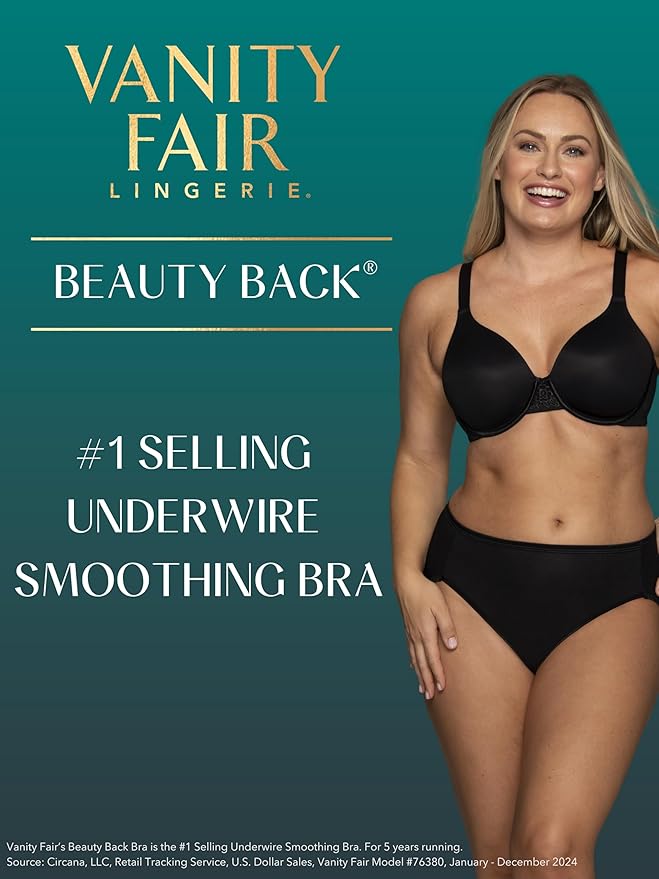
Best Bra for DD, G & H Cup Sizes
Once you’ve confirmed you’re a D cup or above, finding a bra with adequate engineering matters significantly. Most mainstream styles aren’t designed for the support requirements of larger cups — leading to the back pain, strap pressure, and bounce that give larger busts a bad reputation.
- Built specifically for DD through H cup — underwire and construction sized accordingly
- Wide band distributes load away from shoulder straps
- Reduces bounce and shoulder pressure effectively
- Smooth moulded cups work under fitted tops without visible seaming
- Available in a wide band range — check the size chart against your measurements
⭐⭐⭐⭐⭐ Consistently rated by DD+ cup wearers for daily support
As an Amazon Associate, we earn from qualifying purchases. This does not affect our editorial recommendations.
Choosing the Right Style for Your Shape
Bra size is only half the equation. Breast shape affects which styles will actually work for your anatomy — and getting this right eliminates a huge amount of fitting frustration that measurements alone can’t solve.
Full on Top
More volume above the nipple line than below. You need a cup that closes at the top without compressing.
- Full-cup bras
- Balconette with good top coverage
- Avoid: push-up and demi styles
Full on Bottom
Most volume below the nipple line. Common profile; most standard bra styles are designed around this shape.
- T-shirt bras
- Push-up and demi styles
- Balconette for lift
Wide-Set Breasts
Noticeable gap between breasts. Standard center gores can feel like they’re pushing outward.
- Plunge bras (low, narrow gore)
- Front-closure bras
- Avoid: high center gore styles
Close-Set Breasts
Little to no natural gap. Standard bras can push breasts uncomfortably together.
- Wide-gore bras
- T-shirt bras
- Racerback styles
Tubular / Narrow
Less natural base width, more forward projection. Standard cups often gape at the sides.
- Full-coverage underwire
- Moulded cup styles
- Avoid: soft cups and lace bralettes
Asymmetrical
One breast larger than the other — extremely common. Always fit the larger side first.
- Removable-pad styles
- Soft, flexible cup materials
- Consider a dedicated fitter for larger differences
Advanced Fitting Tips
Seasonal Changes
Breasts can swell slightly in warm weather and during hormonal changes. Keep two sizes on rotation if you notice seasonal variation — most people find a half-cup difference is enough to account for this.
Brand Variation
No two brands cut the same. A 34C in one brand may fit more like a 34D in another. Your measurements are your anchor — expect to try adjacent sizes whenever you switch brands, especially for the first time.
Bra Lifespan
The elastic in a bra’s band degrades with washing. A bra bought new should fasten on the loosest hook — as the elastic relaxes over months of use, you move to tighter hooks. When you’ve reached the tightest hook, it’s time to replace.
Washing Rules
Tumble drying destroys elastic faster than almost anything else. Hand wash in cool water or machine wash cold in a mesh lingerie bag. Lay flat or hang to dry — never tumble dry. This can double the lifespan of a well-made bra.
Life Stage Remeasuring
Pregnancy, breastfeeding, menopause, and significant weight changes all require a fresh measurement. Don’t rely on measurements from a previous life stage — your size can change by two or more cup sizes during these transitions.
When to See a Fitter
If you’ve measured accurately and still can’t find comfort, a professional fitting is worth the hour. Department store fitters are free. Specialist lingerie boutiques often have deeper knowledge for extended sizes, unusual shapes, or post-surgical needs.
Are Bra Size Calculators Reliable?
A bra size calculator is reliable when it asks for the right measurements, explains the sizing system it uses, and treats the result as a strong starting size rather than a permanent label. The most accurate calculators use at least two measurements — a snug underbust and a loose full-bust measurement — then show sister sizes and fit-check guidance so you can adjust after trying the bra on.
What makes a calculator accurate?
A good calculator should accept inches and centimetres, separate band calculation from cup calculation, explain US/UK/EU differences, and give sister sizes. It should not rely only on a generic size chart or ask for a clothing size instead of body measurements.
When is the result only a starting point?
The result still needs a fit check because breast shape, tissue softness, brand cut, wire width, and fabric stretch can change how the same labelled size feels. Your measured size is the anchor; the final best fit may be one cup or one sister size away.
Are Calculators Reliable for Larger Cup Sizes?
Bra size calculators can be reliable for larger cup sizes, but the measurement method matters more. DD+ and full-bust sizing often needs a looser full-bust measurement, sometimes a slight forward lean, and a careful fit check because projected, pendulous, soft, or asymmetrical tissue can be underestimated by a simple standing bust measurement.
Use a loose bust tape
Do not pull the tape into the breast tissue. Compression is the main reason larger cup sizes calculate too small.
Lean slightly if needed
For pendulous or projected breasts, a slight forward lean can capture the full tissue volume better than standing perfectly upright.
Check the wire placement
If the underwire sits on breast tissue or the center gore floats, the cup is usually too small even if the calculator result looked reasonable.
For larger cup sizes, the final size is usually best confirmed by trying the calculated size plus one adjacent cup size and one sister size. For example, if the calculator gives 36G, also check whether 36GG or 34GG gives better containment and band support.
What Measurements Do You Need to Calculate Bra Size Accurately?
The two essential measurements are underbust and full bust. The underbust creates the band size; the difference between the full bust and the band creates the cup size. For more complex fits, you may also record a leaning bust, lying bust, and current best-fitting bra size, but the core calculation starts with the first two numbers.
| Measurement | How to take it | What it controls | Common mistake |
|---|---|---|---|
| Snug underbust | Directly under the bust, firm and level | Band size | Holding breath or pulling tape painfully tight |
| Full bust | At fullest point, loose and level | Cup size difference | Compressing tissue and calculating a cup too small |
| Leaning bust | Lean forward slightly and measure around full tissue | Helpful for projected or pendulous breasts | Skipping it when standing bust underestimates volume |
| Fit symptoms | Band, cup, strap, gore and wire behavior | Final adjustment | Trusting the number without checking the bra on body |
How Do Bra Cup Sizes Actually Work?
A cup letter is not a fixed breast size. It is a difference measurement. An A cup usually means about a 1-inch difference between bust and band; a D cup usually means about a 4-inch difference. Because the cup is attached to the band, the same letter changes volume as the band changes. A 32D is smaller in total cup volume than a 38D, even though both use the letter D.
US vs UK Bra Sizing and International Conversion
US and UK bra sizing often look similar in smaller cups, but they separate after D/DD. This is where many online shopping mistakes happen. A US DDD is commonly equivalent to a UK E, while a UK FF or GG may not match the same letter in a US brand. EU and French systems also use different band numbers because they are based on centimetres rather than inches.
| Concept | US sizing | UK sizing | EU / FR sizing |
|---|---|---|---|
| Band numbers | Inches: 30, 32, 34, 36 | Inches: 30, 32, 34, 36 | Centimetres: 65, 70, 75, 80 / FR often +15 |
| DD+ cups | DD, DDD/F, G, H, I | DD, E, F, FF, G, GG | D, E, F, G, H, I |
| Shopping risk | DDD and F may be used differently by brand | Double letters continue after F | Band looks much larger but cup may be equivalent |
When buying from another country, convert the band and the cup system together. Do not convert the band but keep the same cup letter unless the brand specifically confirms that its cup sequence matches your usual system. For instant conversion, use the Global Bra Size Converter.
Why Different Brands Fit Differently in the Same Size
A labelled bra size is not perfectly standardized across brands. Two bras marked 34D can feel different because each brand chooses its own fit model, wire width, cup depth, fabric stretch, strap placement, gore height, and grading pattern. This is why your calculated size should be treated as a size range when you try a new brand.
Cup depth
Projected cups suit fuller or forward tissue. Shallow cups may gap or compress even in the correct letter size.
Wire width
A narrow wire can sit on breast tissue; a wide wire can wrap too far under the arm. Both can happen in the same labelled size.
Band stretch
Some bands run firm and supportive; others stretch quickly. This can make one 34 band feel like another brand’s 36.
How Can You Tell If Your Bra Cups Are Too Small?
Your cups are probably too small if breast tissue spills over the top, escapes at the sides, pushes the center gore away from the sternum, or causes the underwire to sit on breast tissue instead of the chest wall. A cup that is too small can also make the band feel tighter than it really is because the breast tissue is taking up space the cup does not provide.
- Top spillage or “quad-boob” line under clothing
- Side breast tissue escaping near the underarm
- Center gore floats instead of lying flat
- Underwire presses into breast tissue
- Cups feel tight even after adjusting straps
- Try one cup letter larger in the same band
- If the band also feels loose, try the tighter-band sister size
- For projected breasts, try deeper cups instead of only sizing up
- For close-set breasts, try a lower gore plunge style
- Recheck after scooping all tissue fully into the cup
How Often Should You Remeasure Your Bra Size?
Most people should remeasure every 6–12 months, and sooner after weight changes, pregnancy, nursing, menopause, surgery, major training changes, or any time bras that used to fit start feeling uncomfortable. Bra size is not permanent; it changes as body shape, tissue distribution, and band preference change.
Bra Measurement FAQ
Answers to the questions we hear most — each one written to give you a direct, usable answer rather than a paragraph that circles back to “consult a professional.”
You need only a soft measuring tape. Measure your underbust (snugly under your breasts, rounded to the nearest even number = your band size). Then measure your bust at the fullest point. Subtract band from bust: each inch of difference equals one cup size (1″=A, 2″=B, 3″=C, 4″=D, 5″=DD, 6″=DDD). Combine band and cup: e.g. 34 band + 3″ difference = 34C.
Without a bra is most accurate. If you prefer to wear one, choose a non-padded, non-minimizer bra that doesn’t alter your natural shape. Padded push-up styles add volume to the bust measurement and compress the underbust, producing inaccurate results that push you toward a larger cup and smaller band than you actually need.
Every 6–12 months as a baseline. Additionally, remeasure after any significant weight change (±10 lbs or more), at the start of pregnancy and again in the third trimester, when breastfeeding begins and ends, during or after menopause, and if you notice consistent discomfort with bras that previously fit well.
Bra sizing is not standardized. Each brand uses its own fit model, construction method, and grade rules — meaning a 34C at one brand can fit like a 34D at another. Fabric stretch also plays a role: a bra cut in a more elastic fabric effectively has a looser fit at the same label size. Your measurements are always your reliable anchor; expect to try adjacent sizes when switching brands for the first time.
A band that rides up your back during the day is almost always too large. The back should bear approximately 80% of the bra’s supportive load — when it’s too loose, it migrates upward because it can’t anchor against your body. The fix is to size down one band (and up one cup to maintain cup volume — this is called a sister size). Tightening your straps is not the solution and usually causes shoulder pain over time.
Breast asymmetry is very common — most people have a difference of at least half a cup size between sides. Always measure from and fit to the larger breast. For the smaller side, add a removable foam insert or pad to fill the cup. Never downsize to fit the smaller breast — this causes compression, spillage, and discomfort on the larger side.
For the underbust: snug enough that you can slide two fingers underneath, but no more. It should stay in place when you breathe normally without leaving marks or feeling constricting. For the bust: comfortably close but not compressing breast tissue at all — the tape should just skim the surface. Any compression here gives you an artificially small cup measurement.
Sister sizes are adjacent bra sizes that share the same cup volume but in a different band. For example, 34C, 36B, and 32D all have the same cup volume — they’re sister sizes of each other. If your cup fits but your band feels too tight, try the sister size with one band larger and one cup smaller. If the band is too loose, go one band smaller and one cup larger. Our live calculator above shows your sister sizes automatically.
Yes, but larger cup sizes need careful measurement. Use a loose full-bust measurement, avoid compressing tissue, and consider a slight forward lean if your breasts are projected or pendulous. Then confirm the result with a fit check: the gore should lie flat, the wire should sit on the chest wall, and no breast tissue should spill from the top or sides.
The most accurate online bra size calculators ask for real body measurements, accept both inches and centimetres, explain their cup and band logic, show sister sizes, and include fit troubleshooting. A calculator that only asks for your dress size or current bra size is less reliable because it does not measure your actual underbust and bust difference.
You need a snug underbust measurement and a loose full-bust measurement. The underbust determines the band size, while the difference between full bust and band determines the cup size. For larger, projected, pendulous, or asymmetrical breasts, a leaning bust measurement and a fit-symptom check can make the final recommendation more accurate.
US and UK sizing usually match through D and DD, but they diverge in larger cups. US brands may use DDD/F, G, H and I, while UK brands use DD, E, F, FF, G and GG. Always check the brand’s sizing system before ordering, especially at DD+ cup sizes.
International conversion charts translate both the band number and cup sequence between systems. US and UK bands are inch-based, while EU and many continental systems use centimetre bands. Cup letters also change after DD, so a safe conversion must convert the full size, not just the band or just the letter.
Cups are usually too small if you see top spillage, side overflow, a floating center gore, underwire sitting on breast tissue, or pressure marks around the cup edge. Try one cup size larger in the same band, or use a sister size if the band also needs adjustment.