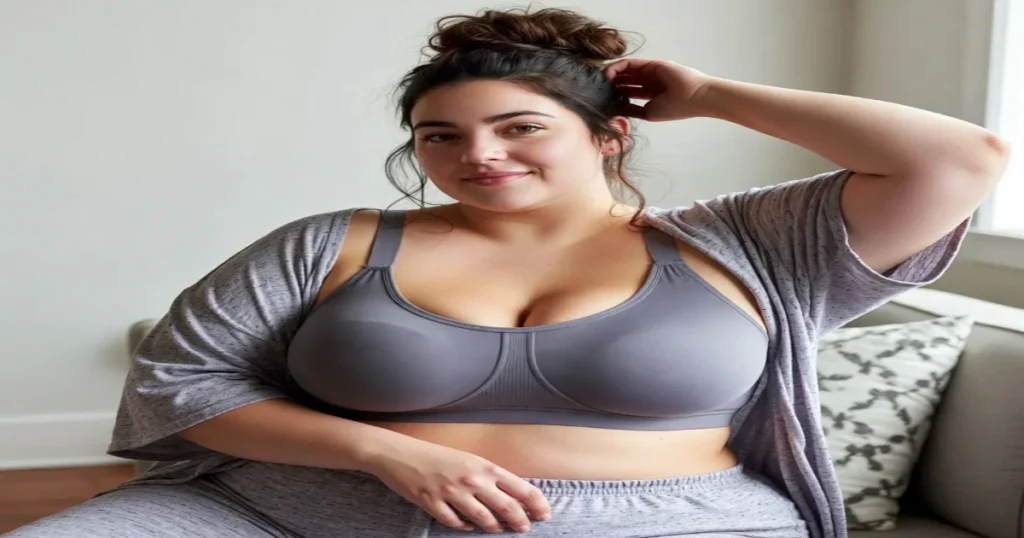
The best sleep bras for large busts are wire-free, full-coverage styles with wide bands (4–6cm), breathable cotton or bamboo fabric, and 4-way stretch construction that moves with your body during position changes. Top picks: Bravity Anti-Wrinkle Sleep Bra (best overall sleep-specific design), Glamorise MagicLift 1005 (best for G–K cups), and Warner’s No Side Effects (lightest wear). Always measure before buying — sleep bra fabrics are softer and stretchier than daytime bras, so most large-bust women need to size the cup up by half to one letter from their daytime size.
Best ForSide sleepers, sensitive breasts, postpartum recovery, shoulder and back pain, night sweats, post-surgery support
Avoid IfYou prefer completely compression-free sleep, are healing from specific breast surgeries where even soft fabric is contraindicated (consult your surgeon)
Fit RuleSize cup up half to one letter vs. your daytime bra. Prioritize band width over cup padding. Test fit lying on your side before removing the tag.
Ideal FeaturesWide band (4–6cm), wire-free, 4-way stretch, seamless or flat-seam, cotton/bamboo/modal fabric, full-coverage cups
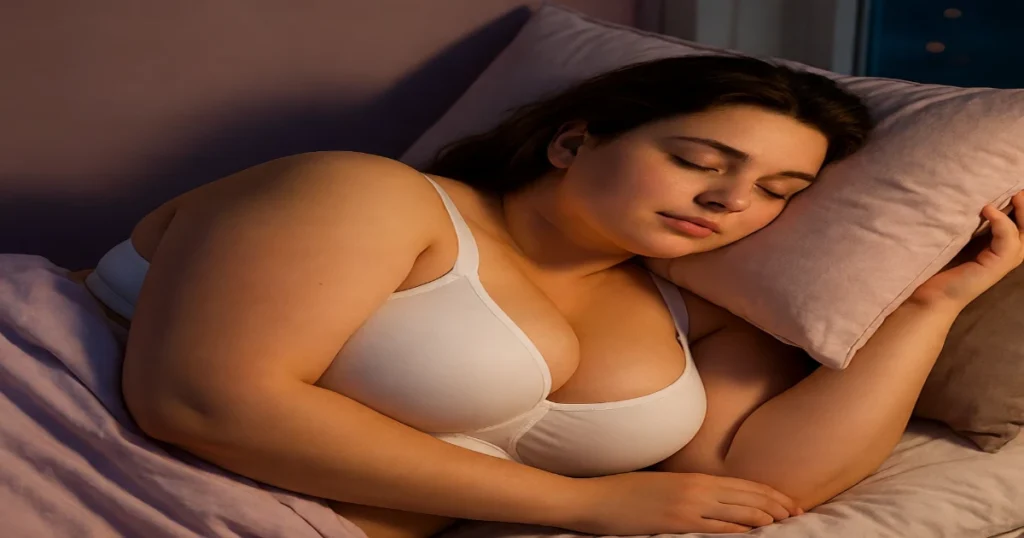
For women with large breasts, nighttime is not a break from breast support — it is a different kind of demand. When you lie on your side, your breast tissue falls entirely toward the mattress, creating a sustained lateral stretch on Cooper’s ligaments for 7–8 hours. When you sleep on your back, unsupported heavy tissue spreads outward toward the armpits. A correctly fitted sleep bra does not compress or constrict — it simply holds breast tissue gently in a neutral position, reducing the overnight mechanical forces that cause morning soreness, skin friction, and long-term ligament stress.
This guide explains exactly what a large-bust sleep bra needs to do differently from a daytime bra, how to size it correctly (sleep bra sizing differs from daytime sizing in ways most guides ignore), and which products have the right construction for D cup and above. Before shopping, use our free bra size calculator — your sleep bra starting point is your measured size, not your tag size.
📌 Key Takeaways
- Wire-free is non-negotiable for sleep. Eight hours of underwire contact against the ribcage creates pressure point issues and potential lymphatic restriction. Every sleep bra in this guide is entirely wire-free.
- Size the cup up from your daytime bra. Sleep bra fabrics are softer and stretchier — the same numeric size fits looser. A 36F daytime wearer typically needs 36G or 36FF in a sleep bra.
- Band width is the most important structural feature. A band of at least 4–6cm stays level when you roll from back to side. Narrow bands roll up, creating a pressure ridge rather than support.
- 4-way stretch fabric is essential for large cups. When you breathe deeply or roll over, stiff fabric creates tug and pull against heavy breast tissue. 4-way stretch accommodates movement without shifting the bra position.
- Test fit lying down, not standing up. A bra that fits beautifully upright can gap, dig, or lose position the moment you’re horizontal. Always lie on your side before removing the tag.
- Rotate 2–3 sleep bras. Wearing the same bra every night accelerates elastic wear and doesn’t allow complete drying between wears — both compromise support quality over time.
- Remeasure after any significant change. Pregnancy, nursing, weight change, and menopause all shift breast volume and tissue distribution. Use our size calculator before each new purchase.
What Are Large Bust Sleep Bras?
Large bust sleep bras are a distinct product category from both daytime bras and lounge bralettes. They are specifically engineered for the demands of nighttime wear: horizontal body position, 7–8 hours of continuous contact, frequent position changes (rolling, turning), and the absence of upright gravitational forces that daytime bra structures rely on.
For D cup and above, these specific nighttime demands require three things that standard wireless bras don’t always deliver: sufficient cup depth to contain volume when lying on the side (where tissue spreads differently than when standing), a wide enough band to stay level when rolling between positions, and fabric with enough stretch to accommodate the different breast tissue distribution that occurs in each sleeping position.
1. Gentle Support — Not Compression
Sleep bras should hold, not squeeze. Large breast tissue needs containment — a neutral position where tissue is not pulling on ligaments — without the compression that daytime bras use to manage bounce and projection. The goal is support that you stop thinking about within minutes of lying down.
2. 4-Way Stretch Construction
4-way stretch (horizontal and vertical) is critical for large bust sleep bras. When you breathe deeply or roll from side to back, heavy breast tissue shifts position significantly. Stiff fabric resists this shift and either pulls the bra out of position or creates tug against the skin. 4-way stretch fabric moves with you and springs back.
3. Breathable, Temperature-Regulating Fabric
The area under large breasts traps heat and moisture more than smaller cup sizes — more surface area in contact, more tissue mass generating heat. Cotton, bamboo viscose, and modal fabrics breathe naturally and manage moisture through absorbency. For women with night sweats, moisture-wicking performance knits actively pull sweat away from the skin surface.
4. Wide Band — Stays Level Horizontally
The band must be wide enough (minimum 4–6cm) to stay level when your body position changes from vertical to horizontal and through side-to-side rolling. Narrow bands that stay put when you’re standing often roll up or create a pressure ridge at the underbust when you’re lying on your side with your full torso weight pressing down.
5. Zero Hard Components
No underwire, no rigid gore, no stiff closure hardware, no heavy boning. Any hard element becomes a pressure point during 7–8 hours of lying contact. Even a small hook-and-eye closure can create a bruising pressure point against the sternum or spine during extended sleep. Sleep bras should be entirely pliable from edge to edge.
6. Seamless or Flat-Seam Interior
Raised seams that are invisible when you’re briefly trying a bra on become noticeable irritation points after 3–4 hours of immobile contact. For large busts where fabric covers more surface area and is in contact with more skin, seamless construction or genuine flatlock stitching (not just sewn-down standard seams) makes a significant practical difference in overnight comfort.
Why Sleeping in a Bra Benefits Large Bust Women
Alleviates Overnight Breast Soreness
Heavy breast tissue shifts significantly when you lie down. Side sleeping in particular causes the entire breast mass to fall toward the mattress, creating a sustained lateral pull on Cooper’s ligaments — the connective tissue that maintains breast shape and position. Without support, this pull is maintained for the entire duration of sleep, and waking soreness is the direct result. A correctly fitted sleep bra keeps breast tissue in a neutral, supported position regardless of body position, measurably reducing this ligament stress.
For women experiencing cyclical breast pain (premenstrual tenderness), postpartum breast fullness, or menopausal breast sensitivity, nighttime support is often the single most effective non-pharmaceutical comfort measure. The gentle, non-compressive hold of a sleep bra reduces the tissue shifting that intensifies pain during these physiologically sensitive periods.
Reduces Skin-on-Skin Irritation Under the Bust
Skin-on-skin contact under the bust is a common source of nighttime discomfort for large-bust women: heat accumulates in the fold, sweat cannot evaporate effectively, and the resulting warm, moist environment causes chafing, rash, and in some cases fungal skin infections. A breathable sleep bra creates a physical barrier between the breast and the torso skin, and its fabric wicks or absorbs moisture rather than trapping it. The underbust area specifically benefits from the wide, flat band that lifts the breast away from the torso skin.
Reduces Long-Term Ligament Stress
Cooper’s ligaments are the fibrous connective tissue that anchors breast tissue to the overlying skin and the underlying pectoral fascia. They maintain breast shape and position. Once stretched, they do not return to their original length — ligament stretch is cumulative and irreversible. Large breasts exert substantially more gravitational and lateral force on these ligaments than smaller cup sizes, and side sleeping concentrates this force for 7–8 consecutive hours nightly. Whether sleep bras definitively prevent long-term sagging remains scientifically inconclusive, but they measurably reduce the overnight mechanical forces that cause ligament stretch.
Post-Surgery and Maternity Applications
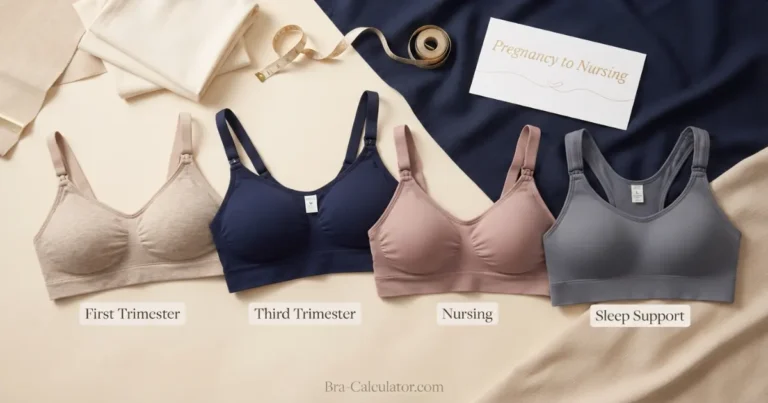
After breast surgery (reduction, augmentation, or mastectomy), most surgeons advise light, wire-free support at night to stabilize healing tissue and reduce movement-related swelling. Sleep bras with front closures and soft, non-abrasive fabric are the standard recommendation. For postpartum women, nursing-accessible designs with pull-aside panels or clip-down cups allow night feeding access while maintaining gentle support throughout sleep. The breathable fabric manages the increased perspiration common in the postpartum period.
Anatomy of the Perfect Large Bust Sleep Bra
🧵 The Fabric
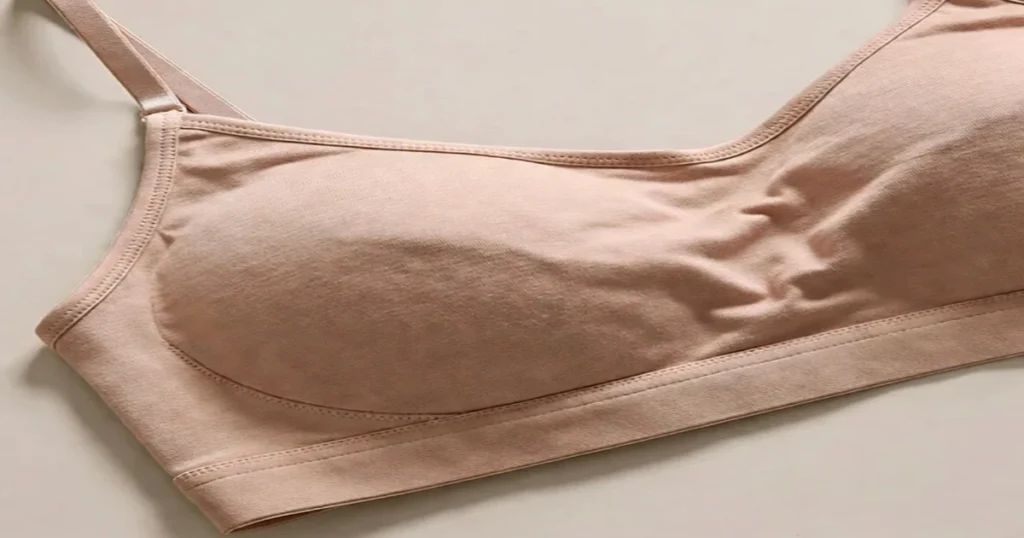
95–100% cotton or bamboo viscose blends with 5–10% elastane for stretch. 4-way stretch is non-negotiable for large cups. Avoid stiff synthetics, heavy lace, and any fabric that traps heat. For night sweats: moisture-wicking modal or performance knit.
🏋️ The Band
Minimum 4–6cm wide. Seamless or softly stitched underbust edges. Must stay level front to back when lying on your side — test this before removing the tag. Front closure optional but useful for limited shoulder mobility.
💪 The Straps
Wide, adjustable, and low-stretch. Should stay in position during all sleep positions without digging. Racerback or U-back distributes load and prevents strap slip for G+ cup sizes. Avoid thin spaghetti straps that concentrate weight.
🫙 The Cups
Full-coverage, seamless or lightly structured soft cups. Must encapsulate all tissue when lying on your side — test this specifically. Lightly padded cups reduce nipple show-through. No molded rigid cups that lose shape when you’re horizontal.
🔒 The Closure
Minimal hardware. Pullover styles have zero closure pressure. Front hooks work well for easy on/off. Back closures must be padded or covered so hardware doesn’t press against the spine during sleep. No boning, no rigid gore.
📏 The Coverage
Higher cup edges prevent tissue from escaping when you roll onto your side. Side support panels keep lateral tissue from migrating toward the armpit overnight. Deeper lower cup supports full-on-bottom breast shapes that need base lift even lying down.
Best Fabrics for Large Bust Sleep Bras — Comparison
| Fabric | Breathability | Moisture | Stretch | Best For |
|---|---|---|---|---|
| Cotton (95–100%) | ★★★★★ | Absorbs (holds) | ★★★☆☆ | Cool sleepers, sensitive skin, natural fibre preference |
| Bamboo Viscose | ★★★★★ | Absorbs + releases | ★★★★☆ | Warm sleepers, soft texture preference, sensitive skin |
| Modal | ★★★★☆ | Absorbs + wicks | ★★★★★ | Night sweats, postpartum, G–K cup sizes needing most stretch |
| Performance Knit (moisture-wicking) | ★★★☆☆ | Wicks actively | ★★★★★ | Heavy night sweats, hot climates, very active sleepers |
| Stiff Synthetic (avoid) | ★☆☆☆☆ | Traps | ★★☆☆☆ | Not recommended for sleep wear — traps heat and irritates skin |
Best Sleep Bras for Large Busts — Expert-Tested Picks
Every recommendation below is evaluated specifically for large-bust nighttime performance: cup containment when lying on the side, band stability during rolling, fabric softness for extended skin contact, and size range coverage for D cup and above. These are not daytime bras repurposed for night — each is assessed for how it actually performs through a full night of sleep for larger cup sizes.
| Best For | Bra | Cup Range | Fabric | Wire | Rating |
|---|---|---|---|---|---|
| Best Sleep-Specific | Bravity Anti-Wrinkle | S–XL | Soft elastic blend | Wire-Free | ★★★★ |
| Best G–K Cup Sleep | Glamorise MagicLift 1005 | B–K | Cotton blend | Wire-Free | ★★★★ |
| Best Night Sweats | Glamorise MagicLift #1064 | B–K | Moisture-wicking | Wire-Free | ★★★★½ |
| Best Lightweight | Warner’s No Side Effects | Standard | Smooth knit | Wire-Free | ★★★★ |
| Best Budget | Playtex 18 Hour | D–DD+ | Cool Comfort cotton | Wire-Free | ★★★★½ |
| Best Smooth Under PJs | SPANX Bra-Llelujah | Up to 40DD | Hosiery/foam | Underwire* | ★★★★★ |
*SPANX Bra-Llelujah includes underwire — best used for lounging/pre-sleep relaxation; for those comfortable with light underwire only.
Bravity Anti-Wrinkle Sleep Bra for Women
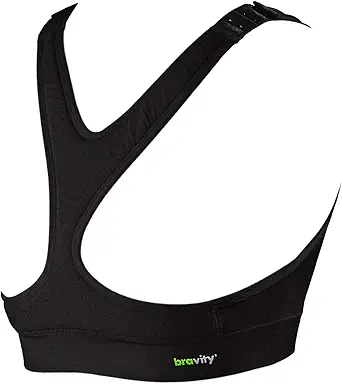
The Bravity is the only bra in this guide designed exclusively and specifically for sleep — not a daytime bra adapted for nighttime, but a product whose entire design philosophy is built around what happens to breast tissue during 7–8 hours of horizontal, rolling sleep.
The defining feature is the Y-shaped padded front panel. For large-bust side sleepers, when breast tissue falls toward the mattress, the chest skin folds against itself between the breasts. Over years, this nightly folding creates the distinctive vertical chest creases (décolletage lines) that are mechanically distinct from facial wrinkles and unresponsive to skincare. The Y-panel holds breasts gently separated, keeping the skin between them flat throughout the night. For women with larger breasts where this fold is more pronounced, the effect is more significant.
The Y-panel serves a dual function: it prevents chest skin folding, and it provides the gentle separation that reduces the lateral pulling force on Cooper’s ligaments that side sleeping creates. Entirely wire-free and seamless, the fabric moves with every position change without losing the Y-panel’s position. Bonus: the set includes the BraviSport bra, applying the same Y-shape concept to light daytime activity.
Key Sleep Features for Large Busts
- Y-shaped padded front panel holds breasts separated overnight — directly addresses the mechanical cause of nocturnal décolletage wrinkles
- Wire-free and entirely pliable from edge to edge — no hard component creates a pressure point during 7–8 hours of horizontal contact
- Seamless back stays level when rolling side to side — specifically designed for side sleepers who change position frequently
- Adjustable straps correctly position the Y-panel for different bust heights — important for large busts where panel height alignment affects separation effectiveness
- Includes BraviSport bra for light daytime activity — racer-back with removable pads, extending the Y-shape concept to low-impact movement
✓ Pros
- Only sleep-specific design in this guide
- Y-panel directly prevents chest wrinkles
- Bonus BraviSport included
- No wire, no hard components at all
- Effective for side and back sleepers
✗ Cons
- Size range stops at XL (check chart)
- Minimal structural lift (sleep-only design)
- Wrinkle results take weeks of consistent use
| Design | Y-shaped padded front panel; seamless wide back |
| Wire Type | Wire-free; no hard components |
| Primary Use | Sleep — specifically designed for horizontal wear |
| Bonus Included | BraviSport bra for light daytime activity |
| Best For | Side sleepers; chest wrinkle prevention; postpartum |
| Care | Cold wash; air dry flat |
Glamorise MagicLift Active Support Bra Wirefree 1005
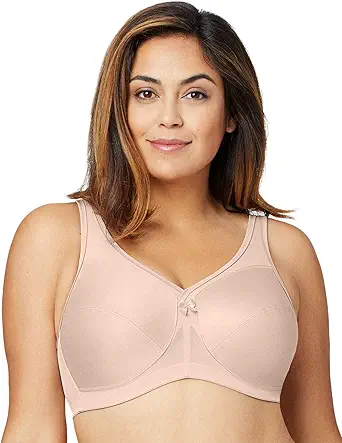
For large-bust women in the G, H, J, or K cup range, the Bravity and other standard sleep bras often don’t provide adequate cup depth and band load capacity to genuinely contain and support at nighttime. This is where the MagicLift 1005 becomes the practical answer: its MagicLift inner band provides wire-equivalent structural support without any wire, its cotton-blend fabric breathes throughout the night, and its size range (band 30–58, cups B–K) covers the full spectrum of large-bust sizing that most sleep bra brands ignore entirely.
The 6,220+ customer reviews with a consistent 4.1-star average provide real-world large-bust validation that no single review or test can replicate. These are women in extended cup sizes reporting on how this bra performs overnight — exactly the use case that matters here. The cotton-blend fabric is particularly appropriate for sleep: it breathes naturally without synthetic feel, is gentle on sensitive underbust skin, and remains soft against skin even after many washes.
While the MagicLift 1005 is a daytime bra by design, its wire-free construction, full-coverage cotton cups, and structural inner band make it among the most functional sleep bras available for G+ cup sizes where sleep-specific options simply don’t exist in extended sizes.
Key Sleep Features for Large Busts
- MagicLift inner band provides wire-equivalent structural hold without any wire contact — critical for heavy G+ cup volumes that light sleep bralettes cannot genuinely contain overnight
- Cotton-blend fabric breathes naturally throughout the night — gentle on sensitive skin, maintains softness after repeated washing
- Band 30–58, cups B–K — the most inclusive size range of any pick in this guide, covering sizes that no dedicated sleep bra brand offers
- Wide back panel stays level when rolling from side to side — validated through 6,220+ reviews across the full size range
- Full-coverage cups prevent tissue from escaping laterally when lying on the side — essential for G+ cup sizes where volume is significant
✓ Pros
- Best structural support for G–K cup sleep
- 6,220+ large-bust verified reviews
- Cotton breathes naturally
- Exceptional size range for extended cups
✗ Cons
- Daytime bra used for sleep (not sleep-specific)
- Cotton absorbs (doesn’t wick) moisture
- Back closure hardware for large bands
| Band / Cup Range | 30–58 band | B–K cup |
| Wire Type | Wire-free (MagicLift inner sling) |
| Material | Cotton blend |
| Coverage | Full coverage |
| Best Sleep Cup Range | G through K (where sleep-specific options are unavailable) |
| Care | Machine wash cold, delicate; line dry |
Glamorise MagicLift Moisture Control Wirefree #1064
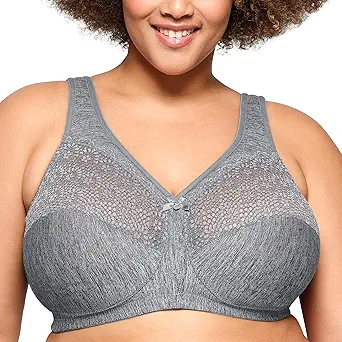
The MagicLift #1064 is the moisture-wicking sibling of the 1005 — same MagicLift inner band architecture and B–K size range, but with proprietary moisture-management fabric in place of cotton. For large-bust women who experience night sweats — whether from perimenopause, hormonal medication, postpartum hormonal shifts, or simply sleeping warm — this fabric difference is meaningful overnight.
Large breasts generate more body heat than smaller cup sizes and create a larger area of trapped skin-on-skin contact. The combination of heavy breast tissue, warm nights, and cotton fabric creates a consistently damp underbust environment that wakes many large-bust women during the night. The #1064’s moisture-wicking synthetic actively pulls sweat away from the skin surface and moves it to the outer fabric where it can evaporate — keeping the underbust area measurably drier through the night.
The same structural MagicLift inner band that makes this an excellent daytime bra also makes it one of the most structurally capable sleep bras for F, G, and H cups where standard sleep bras lack sufficient cup support for overnight containment.
Key Sleep Features for Large Busts
- Moisture-wicking proprietary fabric actively manages the higher overnight sweat load generated under large breast tissue — keeps underbust area drier than cotton alternatives
- MagicLift inner band provides wire-equivalent overnight support for F–K cups where standard sleep bralettes lack sufficient structural depth
- Band 30–58, cups B–K — same extended size range as the 1005, critical for large-bust sleepers in sizes unavailable in dedicated sleep bra brands
- Breathable upper cup construction reduces heat buildup across the chest wall during sleep — measurably cooler than padded or lined cup alternatives
- Wide padded straps stay in position through rolling movements without digging into shoulder tissue during extended horizontal wear
✓ Pros
- Best for night sweats and warm sleepers
- Wire-free structural support for F–K cups
- Exceptional size range
- Lighter feel than cotton at the same size
✗ Cons
- Synthetic feel (not natural fibre)
- Runs snug — check size chart carefully
- Back closure (no front option)
| Band / Cup Range | 30–58 band | B–K cup |
| Wire Type | Wire-free (MagicLift inner sling) |
| Material | Moisture-wicking synthetic blend |
| Best Sleep Application | Night sweats, postpartum, menopause, warm sleepers |
| Weight | ~104g |
| Care | Machine wash cold in mesh bag; line dry |
Warner’s No Side Effects Wireless Lift Bra
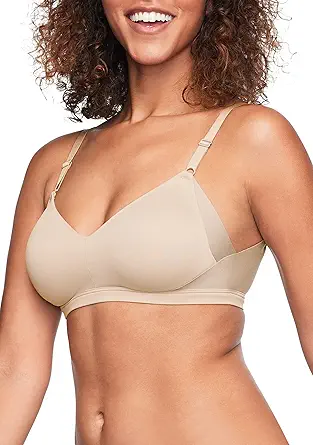
The Warner’s No Side Effects is the lightest pick in this guide at approximately 100g — and for women in the D to DD cup range who want the minimal possible nighttime support experience while still maintaining some tissue containment, this is the right choice. The elastic-free side and back panel edges are the defining feature: where most bras create a firm edge that becomes a pressure ridge during horizontal wear, the No Side Effects grades smoothly into surrounding fabric with no edge at all.
When you’re lying on your side for hours, even a moderately firm elastic edge against the ribcage or underarm becomes noticeable. The elastic-free construction of this bra eliminates that sensation entirely. At 100g, the bra registers as barely-there for light-to-moderate bust sizes making it among the closest to “wearing nothing” while still providing the gentle containment that reduces overnight tissue shifting and skin friction.
This is not the right choice for G, H, or K cup sizes needing genuine structural support overnight — for those, the MagicLift options above provide far more cup depth and band strength. For D and DD cups who primarily want to reduce bounce, friction, and skin-on-skin contact rather than achieve maximum lift, this is the most comfortable overnight option.
Key Sleep Features for Large Busts
- Elastic-free side and back panel edges — no pressure ridge against ribcage or underarm during extended horizontal wear
- ~100g total weight — lightest option in this guide, closest to a “wearing nothing” overnight experience while maintaining gentle containment
- Flexible cups provide gentle shape without compression — breast tissue contained without the flattened look that compressive sleep bras create
- Wire-free construction with no hard components — no pressure points at any contact point during a full night of sleep
- Front-adjustable straps set fit without removing the bra — convenient for pre-sleep strap adjustment when already in bed
✓ Pros
- Lightest option in guide — truly minimal feel
- No elastic edge pressure at sides/back
- Genuinely wire-free with no hard elements
- Front-adjustable straps
✗ Cons
- Light support — not for G+ cup overnight
- Standard size range only
| Wire Type | Wireless; no hard components |
| Weight | ~100g |
| Key Feature | Elastic-free side and back panel edges |
| Best Sleep Cup Range | D through DD (light-to-moderate bust volume) |
| Care | Machine wash cold in mesh bag; air dry |
| Model | RN2231A |
Playtex 18 Hour Ultimate Lift and Support Wire-Free Bra
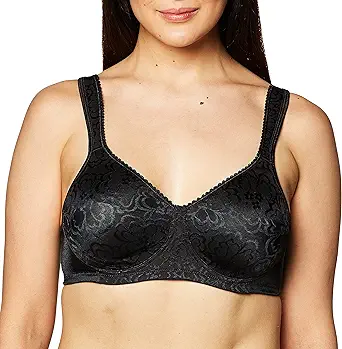
The Playtex 18 Hour earns its sleep bra inclusion through a combination of Cool Comfort stretch cotton (among the most breathable fabrics available in a budget wire-free bra), the TruSUPPORT four-way system that provides adequate cup depth for D and DD cups overnight, and the Comfortsoft cotton-covered band that does not create a pressure ridge during horizontal wear.
The “18 hour” claim is relevant to sleep use — if a bra is engineered to remain comfortable through an 18-hour daytime wearing, the 7–8 hour overnight requirement is within its designed range. The cotton fabric breathes through the night, managing the heat that accumulates under large-cup breast tissue without the synthetic feel that many nighttime sleepers find uncomfortable. For D through DD cup women who want a budget-accessible, proven wire-free bra that works overnight without investing in a dedicated sleep style, the Playtex 18 Hour is the practical answer.
Key Sleep Features for Large Busts
- Cool Comfort stretch cotton breathes through the night — manages underbust heat without synthetic feel, appropriate for temperature-sensitive sleepers
- Comfortsoft cotton-covered band does not create a pressure ridge during horizontal wear — the band stays comfortable even under full torso weight when side sleeping
- TruSUPPORT system with fuller cups provides adequate overnight depth for D and DD cup volumes — prevents tissue escape when lying on the side
- Cushioned no-slip straps stay in position during rolling movement without digging into the shoulder during extended horizontal wear
- Budget-accessible price point for women who want to rotate 2–3 sleep bras without significant cost per piece
✓ Pros
- Best budget value in guide
- Cool Comfort cotton breathes well
- Proven 18-hour comfort design
- No-ridge cotton band for sleeping
✗ Cons
- Cotton absorbs moisture (not wicking)
- Not for G+ cups overnight
- Standard size range only
| Wire Type | Wire-free (TruSUPPORT system) |
| Material | Cool Comfort stretch cotton blend |
| Best Sleep Cup Range | D through DD+ (check brand chart) |
| Coverage | Full coverage |
| Closure | Back hook-and-eye (padded) |
| Care | Machine wash cold; line dry |
SPANX Bra-Llelujah! Lightly Lined Full Coverage Bra
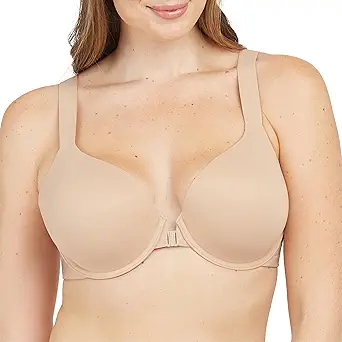
The SPANX Bra-Llelujah is included here specifically as a pre-sleep lounge bra rather than a dedicated sleep bra — important distinction. It includes underwire (which should not be worn for extended sleep), but its all-hosiery back fabric, Smart Stretch straps, and exceptionally smooth profile make it among the best options for the hours before sleep: the WFH day that runs into evening, the Netflix hours on the couch, the dinner-to-bedtime window when you want support without a structured daytime bra.
The front-hook closure is genuinely convenient for the pre-sleep bra swap — unfasten in seconds while lying on the couch and transition directly to your sleep bra without getting up. For women who want maximum smoothness and silhouette quality during evening hours at home — under loungewear, a thin robe, or a fitted sleep shirt worn before bed — the Bra-Llelujah delivers the cleanest profile of any pick here, with no visible bra lines under any fabric.
The distinction matters: this is not recommended for sleeping through the night due to the underwire, but it is an exceptional evening lounge bra that bridges daytime structure and nighttime sleep preparation.
Key Lounge Features for Large Busts
- All-hosiery back fabric — completely invisible under loungewear, sleep shirts, and thin robes worn during evening hours
- Smart Stretch straps remain flat and non-digging through hours of lounging — no shoulder imprint after extended evening wear
- Front-hook closure allows fast, lying-down removal at bedtime — convenient transition from evening support to sleep bra
- Foam-lined full-coverage cups maintain shape under thin evening wear without adding structure or bulk
- Dual wire system (stitch-down for 36C+) provides structural support appropriate for evening activity including cooking, walking, light movement
✓ Pros
- Best silhouette for evening lounging
- Front close — easy pre-sleep removal
- Invisible under any evening wear
- Exceptional build quality
✗ Cons
- Contains underwire — not for sleeping through the night
- Size range stops at 40DD
- Hand wash only
| Wire Type | Underwire (not for extended sleep) |
| Best Use | Evening lounging; pre-sleep support; WFH hours |
| Band / Cup Range | 32A–40DD (dual wire system) |
| Material | All-hosiery back; foam-lined cups; Smart Stretch straps |
| Closure | Front hook — convenient pre-sleep removal |
| Care | Hand wash cold; lay flat to dry |
The Sleep Bra Sizing Dilemma — Large Bust Edition
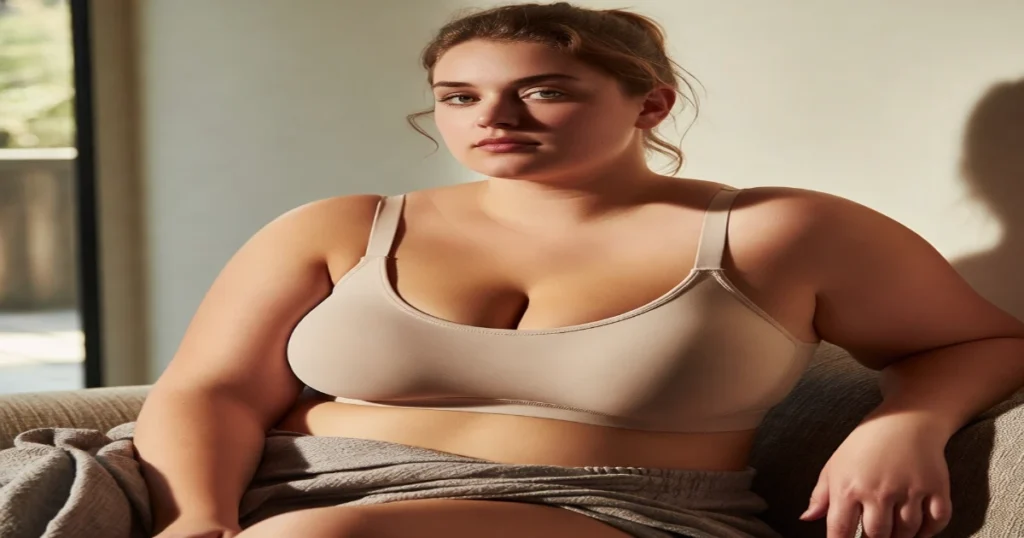
Sleep bra sizing is not the same as daytime bra sizing, and this is one of the most common reasons large-bust women buy the wrong sleep bra. The softer, stretchier fabrics used in sleep bras behave differently from the structured materials in daytime bras — the same numeric size in a cotton-stretch sleep fabric fits noticeably looser than in a power-mesh daytime band. Understanding this difference before you shop prevents most common sizing failures.
How to Measure Correctly for a Sleep Bra
Measure Standing, Then Leaning Forward
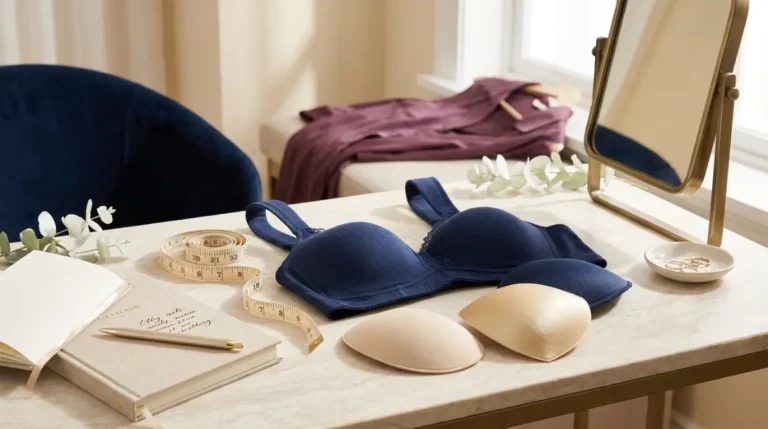
Measure your underbust firmly upright for the standard band measurement. Then measure your bust both upright and leaning forward 45 degrees — the average of these two bust measurements better represents your actual breast volume distribution during sleep, when you alternate between lying flat and lying on your side.
Use Your Measurements, Not Your Tag
Enter both measurements into our free bra size calculator for your base size. Sleep bras require you to apply an adjustment to this base size — your tag size from a daytime bra is not a reliable starting point because it may already reflect brand-specific adjustments that don’t transfer to softer sleep fabrics.
Apply the Sleep Bra Adjustment
From your calculated base size: size the cup up by half to one letter (36F base → try 36G or 36FF). For the band, stay the same or size down one if the sleep fabric runs loose on inspection. Sister sizes can help — if 36G is unavailable, try sister size 34H (same cup volume in a tighter band).
Test Fit Horizontally — Not Just Standing
Put the bra on and lie on your side. The band must stay level without riding up. The cups must fully contain tissue without overflow or gaping. Straps must stay in position without pulling. Test lying on your back and rolling side to side. If anything shifts more than minimally during this test, the fit is wrong — size adjust before removing the tag.
Check for Sleep-Specific Fit Issues
Red marks in the morning (band or strap was too tight), tissue outside the cups on the pillow-side when you wake (cups too small for side sleeping volume), band rolled up to the armpit (band too loose), or waking during the night to adjust (any fit problem amplified by hours of contact) — all indicate a sizing issue that will not resolve without correcting the fit.
Common Sizing Mistake — Using Your Day Bra Size Directly
Picking a sleep bra in your exact daytime size is the single most common sizing error. The softer fabric means the cup holds the same measurement less firmly — tissue that is contained in a 36F daytime bra can overflow a 36F sleep bra. Size up the cup. If you experience overnight discomfort despite following sizing guidance, check whether the fabric has stretched out (elastic fatigue) and whether the bra needs replacing.
Beyond Bedroom Use — When Sleep Bras Work for More
Loungewear + WFH
Sleep bras with minimal hardware and seamless construction work under oversized tees, loose knits, and pajama sets for low-activity home days. Cuts bounce during light movement without the structure of a daytime bra.
Light Activity
For yoga, stretching, short walks, and light Pilates, correctly fitting sleep bras with wide bands and double-layer fronts provide sufficient support. Not appropriate for running or any high-impact activity — use a rated sports bra.
Post-Surgery Recovery
Wire-free, soft, front-close sleep bras are the most common post-breast-surgery recommendation for nighttime wear. Avoid hardware that presses against incisions. Always follow your surgeon’s specific guidance for your procedure.
Maternity + Postpartum
Stretch fabrics accommodate daily size fluctuations during pregnancy. Nursing-accessible designs with pull-aside cups or clip-down straps allow night feeds while maintaining gentle support. Breathable fabric helps with postpartum night sweats.
Travel + Long-Haul Flights
Sleep bras are ideal for long-haul travel where extended wearing time and position changes mirror nighttime wear conditions. No metal for security screening, ultra-soft for reclined seating, and enough support to reduce fatigue bounce during transit.
Hot Weather Days
Cotton and bamboo sleep bras provide more breathability than most padded daytime bras. On high-heat days at home, a sleep bra under a loose tee offers sufficient support with maximum airflow — particularly useful for large-bust women who find daytime bras oppressively warm in summer.
Your Nighttime Comfort Ritual + Sleep Bra Care
Wash in Cold Water OnlyHandwash or machine wash on gentle cycle in cold water with mild enzyme-free detergent. Hot or warm water begins breaking down elastic on the first wash. Mesh laundry bags protect from snags and stretching in the machine.
Line Dry Flat — Never Machine DryAir dry flat to preserve cup shape and elastic tension. Machine drying — even on low heat — compresses the elastic and can permanently deform soft cups in a single cycle. Lay flat on a clean towel rather than hanging (which stretches straps and bands).
Rotate Between 2–3 Sleep BrasWear each bra maximum 2 consecutive nights before washing. A rotation of 3 gives each bra complete drying time, reduces per-piece wash frequency, and extends elastic lifespan. Include one front-closure and one pullover for variety.
Replace Every 6–9 MonthsSleep bras wear faster than daytime bras because they’re washed more frequently. When the band stretches past the tightest adjustment, the elastic has given out — the bra is no longer providing meaningful overnight support. Inspect monthly for band tension and cup shape retention.
Build a Bedtime RitualMake the sleep bra swap part of a consistent pre-sleep routine: remove daytime bra, do any skin or hair routine, put on sleep bra, then PJs. The physical cue of the sleep bra switch signals body readiness for rest — consistent rituals genuinely improve sleep onset.
Pair With Skin Care for UnderbustClean, dry underbust skin before putting on your sleep bra. If you experience heat rash or chafing under the bust, a thin layer of cornstarch or zinc-based cream creates a moisture barrier. Breathable sleep bra fabric then manages ongoing moisture throughout the night.