Elite 500+ Term Edition — Bra-Calculator.com
Inclusive Sizing
Glossary
World-class bra sizing reference covering fit, shape, support engineering, sports bras, global sizing systems, and shopping language — searched and filtered in real time.
500+ Curated Expert Terms
0
Total entries
A–Z
Jump navigation
11
Topic clusters
100%
Single-file, responsive
0
Total entries
0
Showing
0
Categories
26
Letter navigation
Global Sizing Guide
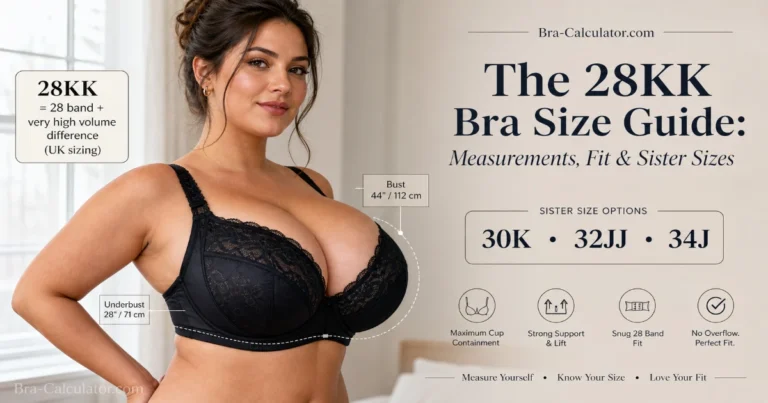
US, UK, EU, FR, AU, JP, KR, IN, and PK labels don’t map one-to-one past D cup. Treat any conversion as a starting point, then verify band tension, wire width, cup depth, gore behavior, strap placement, and upper-cup shape on the actual item.
US: DD, DDD/F, G, H, I after D — some brands simplify or skip labels.
UK: DD, E, F, FF, G, GG, H, HH — the most consistent fuller-bust reference.
EU: Centimeter bands (70, 75, 80, 85) — cup scaling varies significantly by brand.
JP/KR: Local grading assumptions affect fit — always check the specific brand’s own chart.
0 results showing
No matching terms found
Try broader keywords:
band, cup, wire, projection, sports, UK, sister, shape, fit
band, cup, wire, projection, sports, UK, sister, shape, fit
Quick fit check
Is your current size working for you?
Choose the fit signs you notice in the band, cups, center and straps. We’ll use them to suggest the most useful next step.
Please answer all four fit checks first.
What to try next
Private fit check — your answers stay in your browser and are used only for this on-page guidance. Nothing is stored or submitted.
Common Inclusive Sizing Glossary Questions
Expert answers to the most frequently asked bra fit and sizing questions.
Because the label describes only one part of fit. Cup depth, wire width, gore height, strap placement, stretch level, and breast shape explain most mismatches far better than the size tag alone. A technically correct size can still fail if any of these variables doesn’t match your body.
To understand real fit differences, explore our
breast size comparison charts
and visual guides.
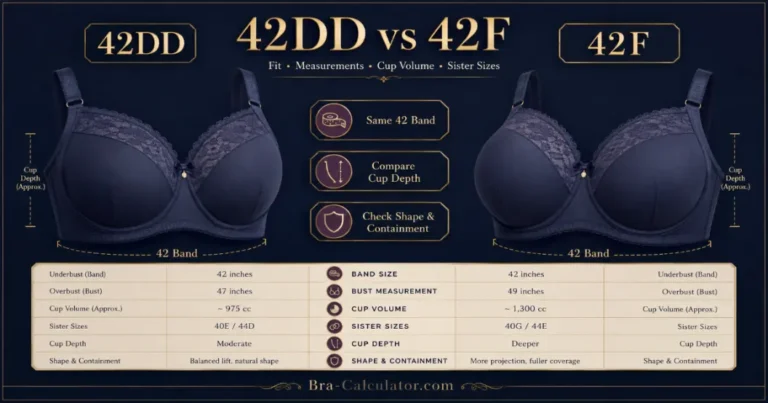
Brands use different patterns, grading methods, elastic tensions, cup shapes, and wire sets. A 34F in one brand can feel like a 34E or 34FF in another. The label is a starting point, not a universal standard — always expect to size-check across brands.
You can calculate your most accurate baseline using our
cup size calculator.
Start with band levelness and firmness — does the back sit level with the front? Then check wire placement (sitting around the root, not on tissue), gore behavior (floating or flat?), cup smoothness after scoop-and-swoop, and strap comfort during normal movement.
If you’re unsure, follow a structured approach using our
step-by-step sizing tool.
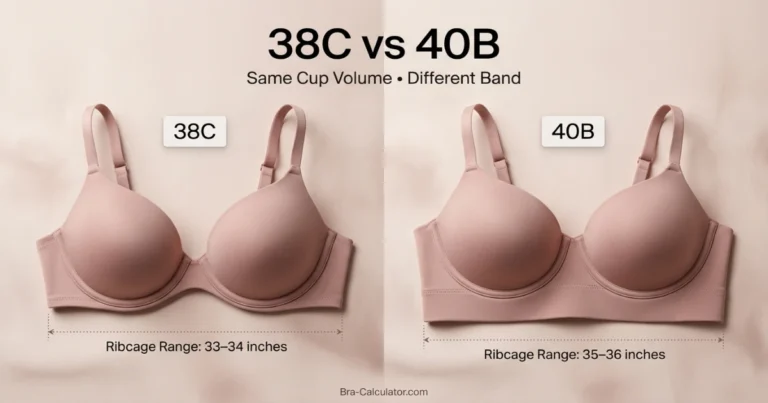
Not always. Cup volume may be similar, but wire width, strap position, and band behavior shift when you move too far from your original size. Sister sizing works best for small one-step band adjustments, not drastic changes across multiple band sizes.
Learn how it works in detail with our
complete sister size guide.
Yes — a well-fitted band provides roughly 80% of support. If straps are the only thing holding things up, the band is almost certainly too loose. Straps refine lift and position; they are not the primary support anchor and should never need to bear the full weight of the bust.
If your support feels off, compare sizes using our
size comparison hub
to see how band and cup changes affect fit.